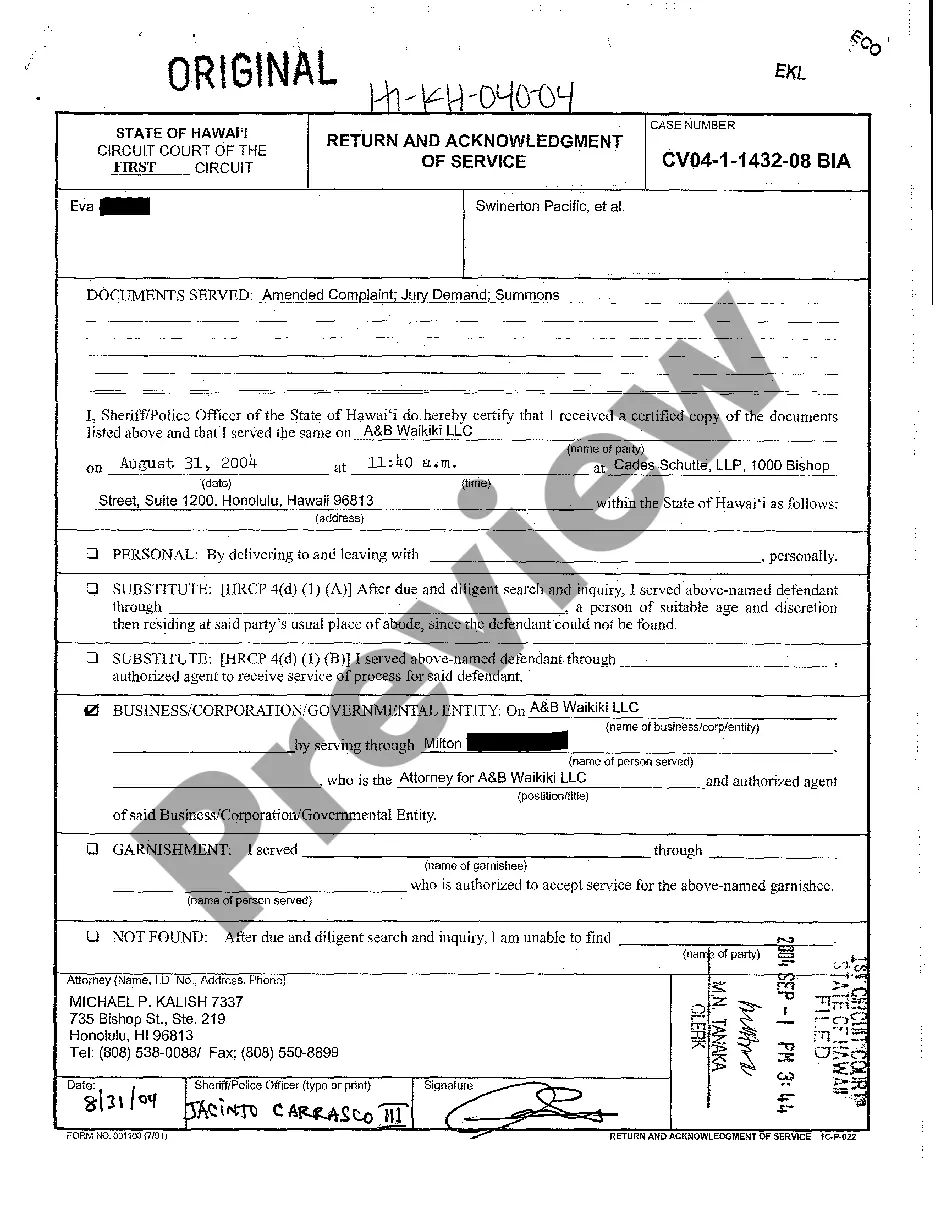
Partnership Agreement with Covenant not to Compete
What is this form?
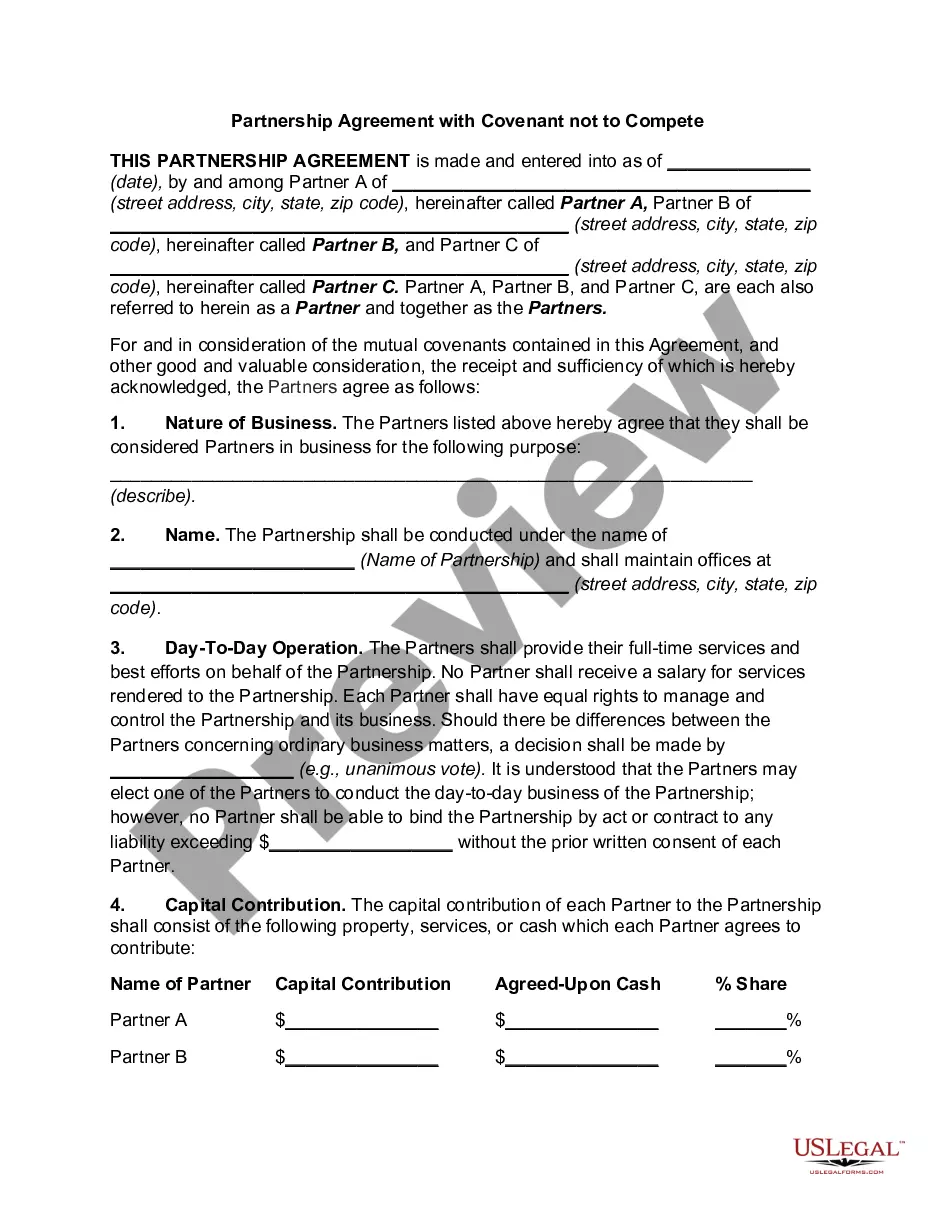
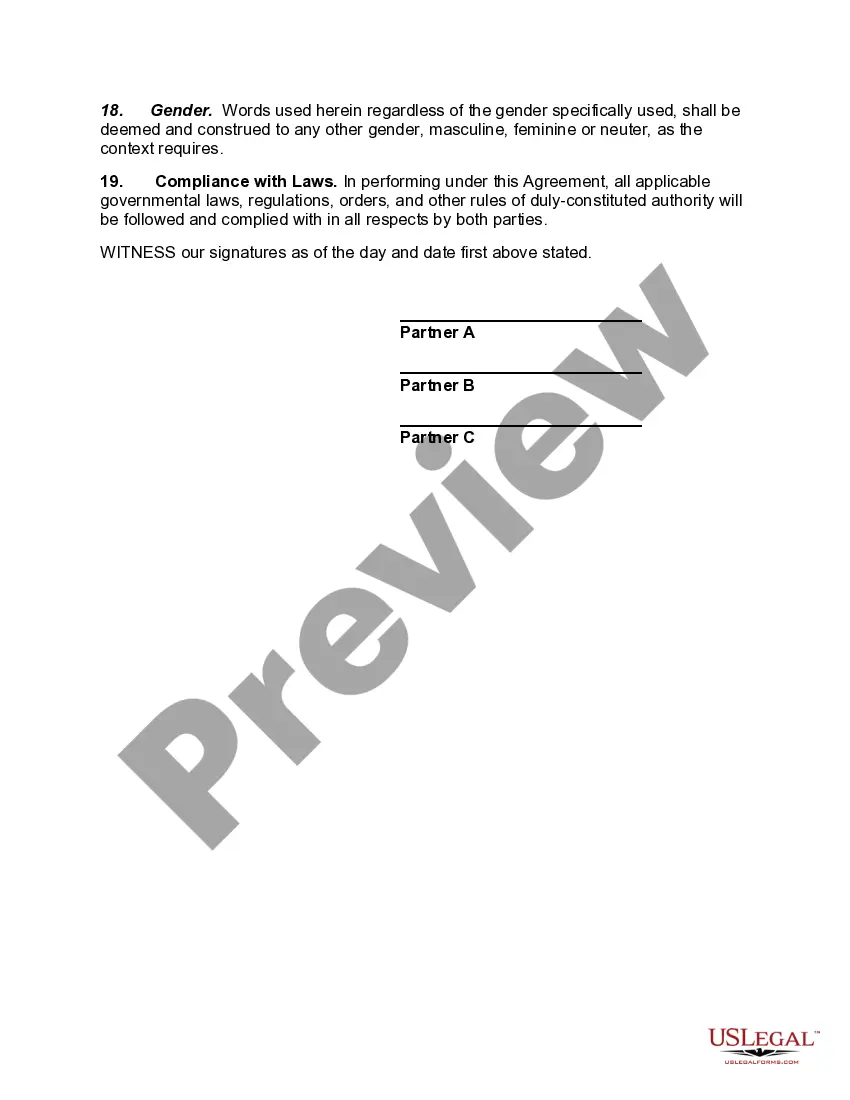
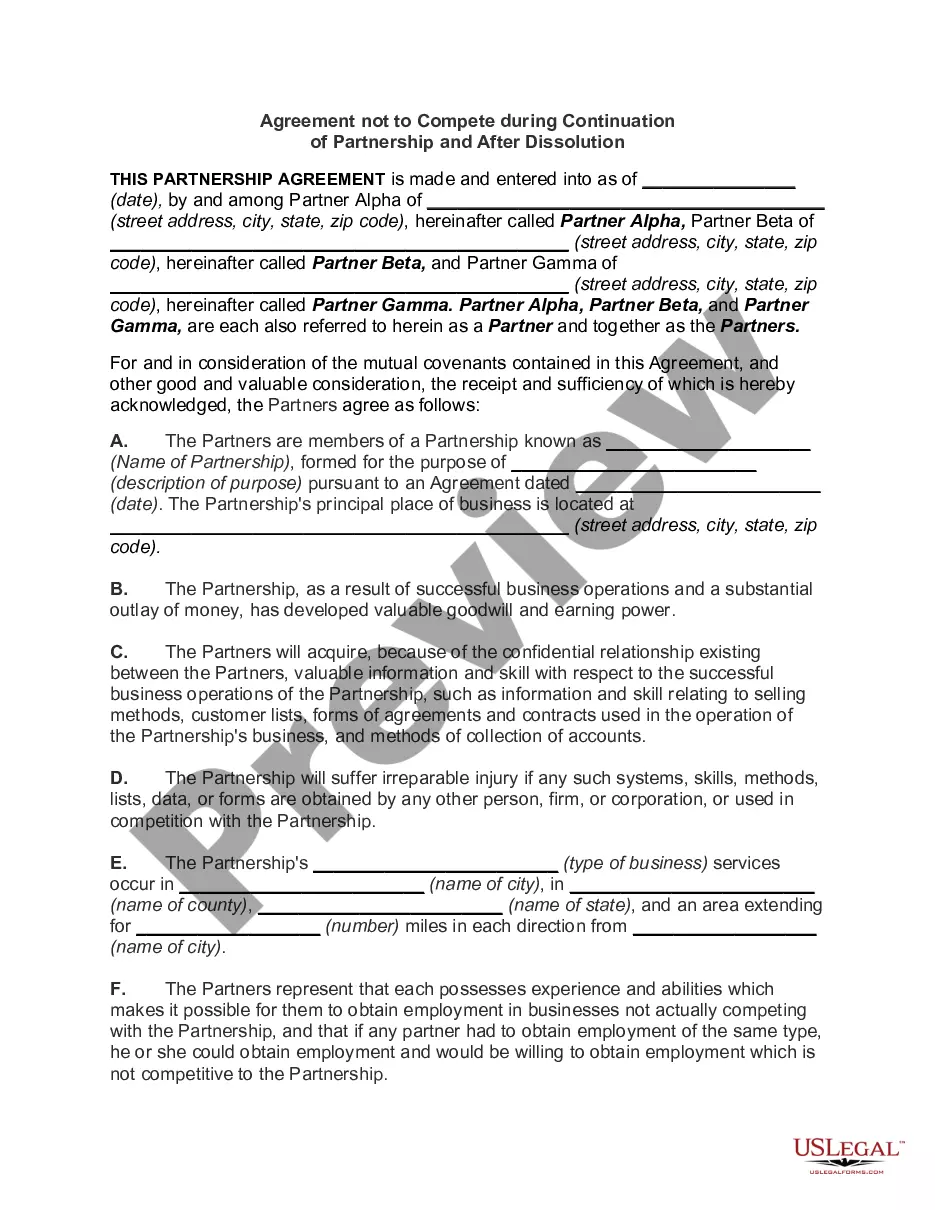
The Partnership Agreement with Covenant Not to Compete is a legal document that formalizes a partnership between two or more individuals or entities. It outlines the terms of the partnership, including the business goals, capital contributions, profit-sharing, and the important covenant not to compete, which prevents departing partners from engaging in competitive business activities. This agreement is essential for safeguarding the interests of the partners and ensuring a harmonious working relationship.
Form components explained
- Identification of partners and their contributions.
- Name and nature of the partnership.
- Management structure and decision-making processes.
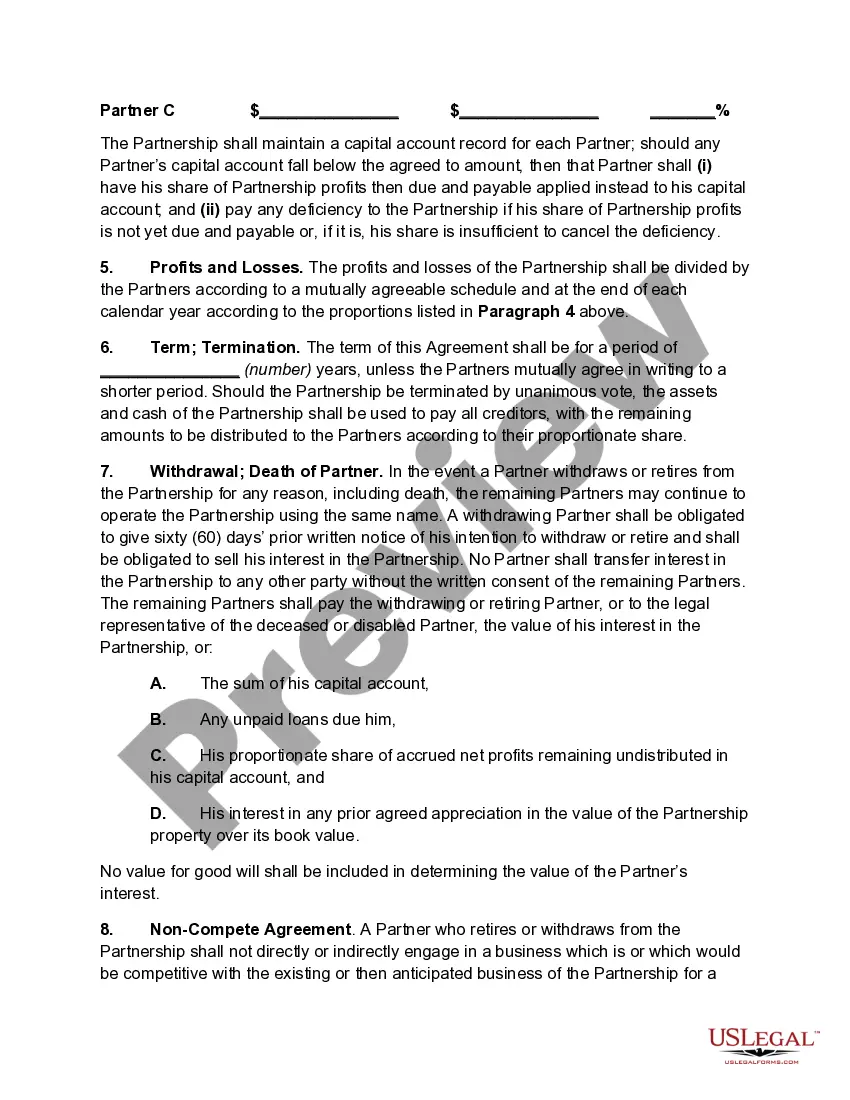
- Profit and loss distribution among partners.
- Terms of partnership duration, withdrawal, and death of a partner.
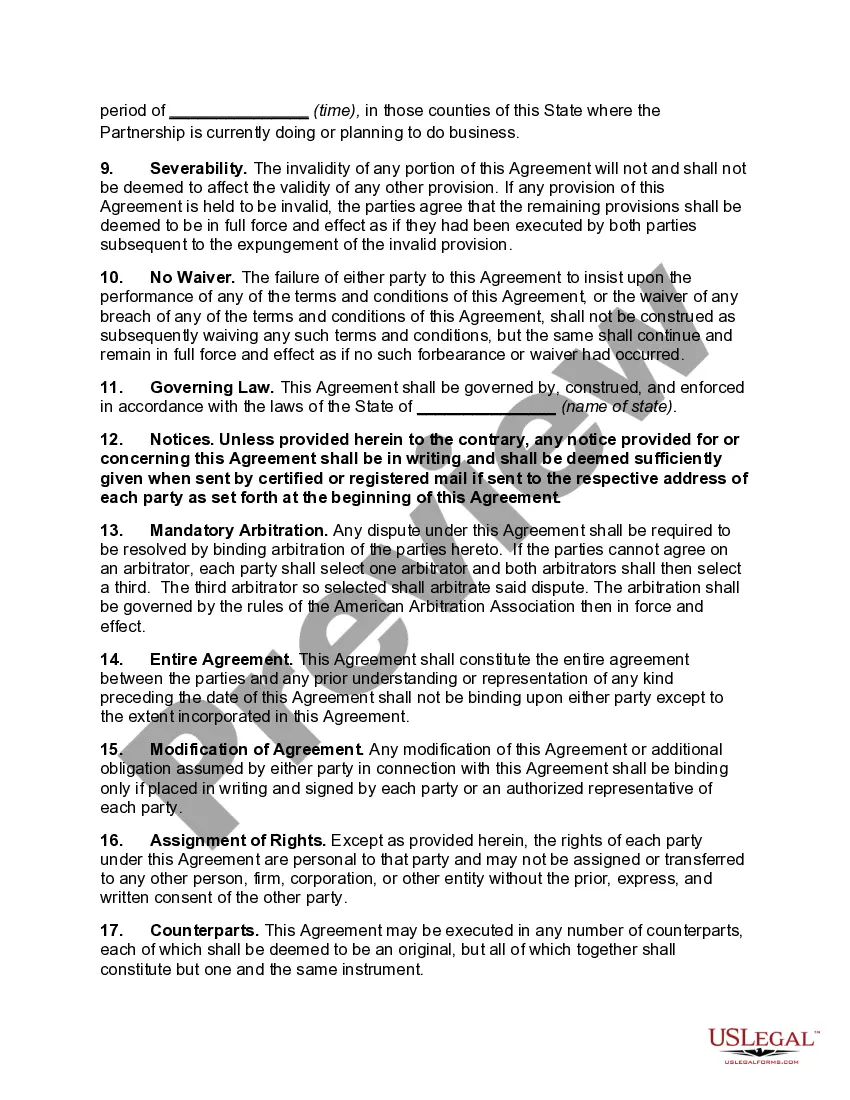
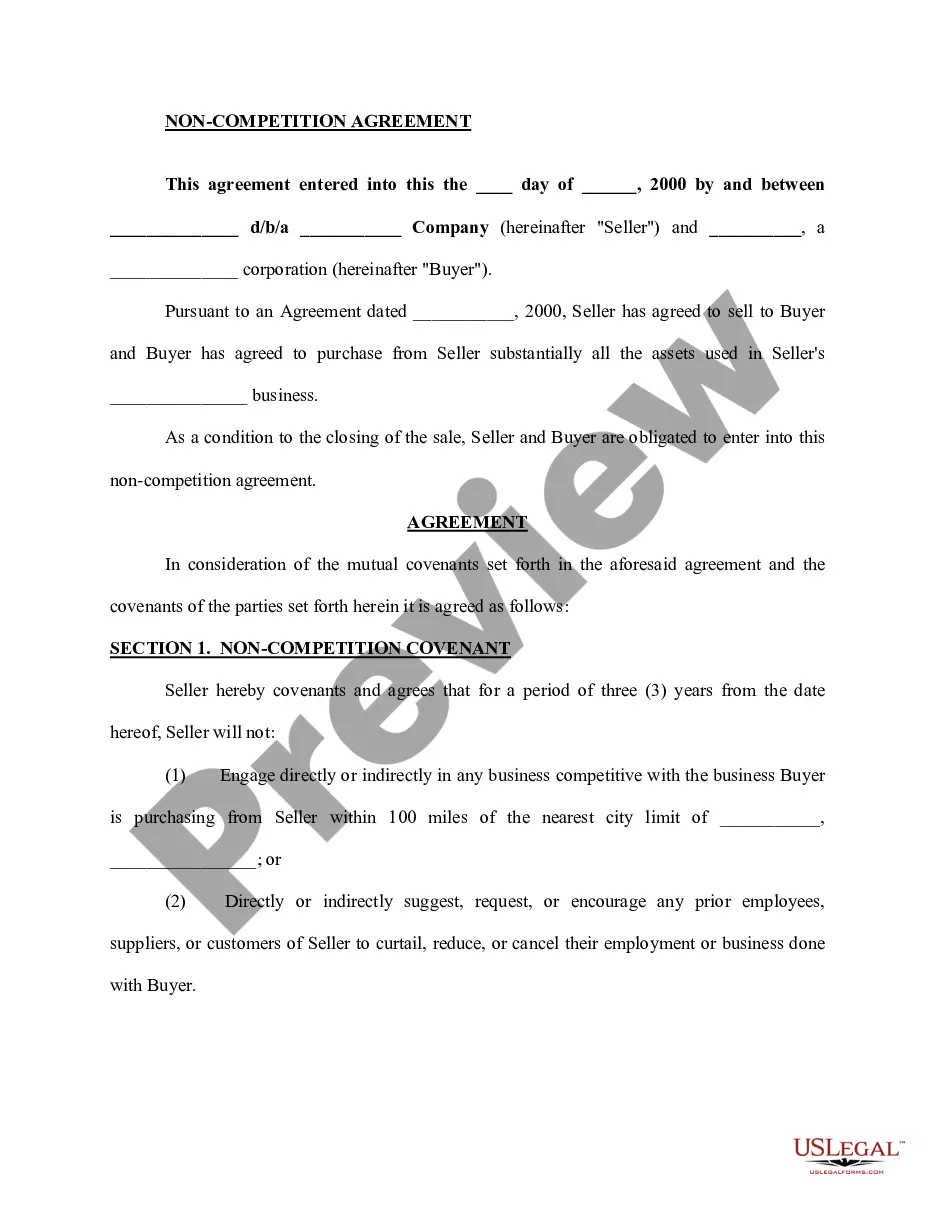
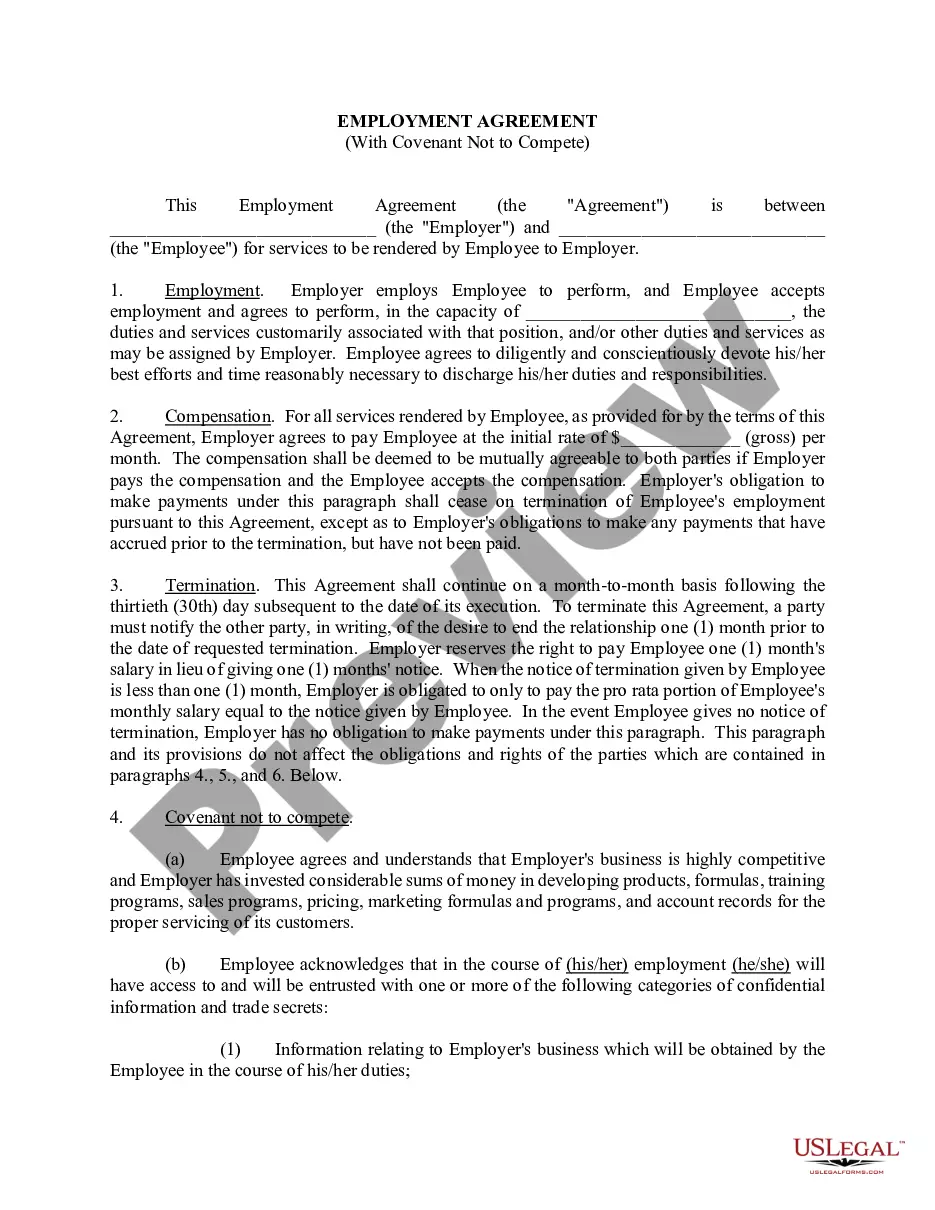
- Non-compete obligations for withdrawing partners.
When this form is needed
This form should be used when forming a partnership where the partners wish to limit competition after leaving the partnership. It is particularly useful in businesses where trade secrets, client relationships, and other competitive advantages exist. It ensures all partners are on the same page regarding their roles, contributions, and responsibilities while adding a layer of protection against future competition.
Who should use this form
- Individuals planning to enter into a partnership.
- Small business owners looking to formalize their business arrangements.
- Consultants and service providers who may deal with sensitive business information.
- Partners seeking to establish clear terms about competition after leaving the partnership.
Instructions for completing this form
- Identify all partners involved, including their names and addresses.
- Define the nature of the business and the name under which the partnership will operate.
- Outline each partner's capital contributions and profit-sharing proportions.
- Specify the terms related to the non-compete agreement, including duration and geographical limitations.
- Ensure all partners sign the agreement, confirming their consent and understanding of its terms.
Notarization requirements for this form
Notarization is not commonly needed for this form. However, certain documents or local rules may make it necessary. Our notarization service, powered by Notarize, allows you to finalize it securely online anytime, day or night.
Get your form ready online
Our built-in tools help you complete, sign, share, and store your documents in one place.
Make edits, fill in missing information, and update formatting in US Legal Forms—just like you would in MS Word.
Download a copy, print it, send it by email, or mail it via USPS—whatever works best for your next step.
Sign and collect signatures with our SignNow integration. Send to multiple recipients, set reminders, and more. Go Premium to unlock E-Sign.
If this form requires notarization, complete it online through a secure video call—no need to meet a notary in person or wait for an appointment.
We protect your documents and personal data by following strict security and privacy standards.

Make edits, fill in missing information, and update formatting in US Legal Forms—just like you would in MS Word.

Download a copy, print it, send it by email, or mail it via USPS—whatever works best for your next step.

Sign and collect signatures with our SignNow integration. Send to multiple recipients, set reminders, and more. Go Premium to unlock E-Sign.

If this form requires notarization, complete it online through a secure video call—no need to meet a notary in person or wait for an appointment.

We protect your documents and personal data by following strict security and privacy standards.
Mistakes to watch out for
- Failing to specify the non-compete clause adequately, including duration and scope.
- Omitting the details of each partner's capital contribution.
- Not including a clear decision-making process for resolving disputes.
- Neglecting to have all partners sign the agreement, which can lead to enforceability issues.
Benefits of completing this form online
- Convenient access to legally drafted templates available for immediate download.
- Editability, allowing partners to modify terms to fit their unique business needs.
- Reliable and up-to-date legal language, ensuring compliance with current laws.
- Quick completion without the need for physical meetings or appointments.
Legal use & context
- The agreement provides a clear framework for business operations and helps prevent misunderstandings among partners.
- The non-compete clause is enforceable in many states, but its terms must be reasonable in scope and duration to be valid.
- Properly executed, this agreement can protect business interests and facilitate smooth transitions when partners leave the partnership.
What to keep in mind
- A Partnership Agreement with Covenant not to Compete outlines essential business and operational terms for partners.
- It protects the partnership from competition by establishing clear rules for partners both during and after their engagement.
- Understanding the specific state laws regarding partnership agreements is critical to ensuring enforceability.
Looking for another form?
Form popularity
FAQ
- The two most common settings for legitimate non-competition agreements are the sale of a business and an employment relationship. When a non-compete agreement is ancillary to the sale of a business, it is enforceable if reasonable in time, geographic area, and scope of activity.
The seller's ability to compete. The seller's intent to compete. The seller's economic resources. Potential damage posed by the seller's competition. The seller's expertise in the industry in question.
In California, however, covenants not to compete are almost always not enforceable. California state law says that a covenant that restrains someone from engaging in a lawful profession, trade, or business is void.
The value of a non-competition agreement is represented by the present value of the cash flows that would be lost if the covenanter were to compete, adjusted for the effective probability that the covenanter would compete, and compete successfully.
On average, non-compete cases cost $10,000 or less. Many times an employer is seeking an injunction, which if the employer loses may result in a quicker resolution. Many times the issues are less factual and more legal. Legal issues require less discovery, which can be the most costly part of litigation.
What is a noncompete agreement? Keep the group small. Keep the restrictions reasonable and narrow. Provide consideration for the agreement. Get it in writing. Prepare multiple versions if necessary. Concede choice of law/forum. Provisions to include.
Study your competition. Write up the agreement. Have your agreement reviewed by a legal professional. Present the non-compete contract to your employee. If everyone is satisfied, sign and date the agreement.
In contrast, in many industries, a Non-Compete with a duration of 6-months will be considered reasonable, and therefore enforceable. The general rule is that the duration of the agreement should not exceed the time reasonably necessary to protect the employer's legitimate business interests.
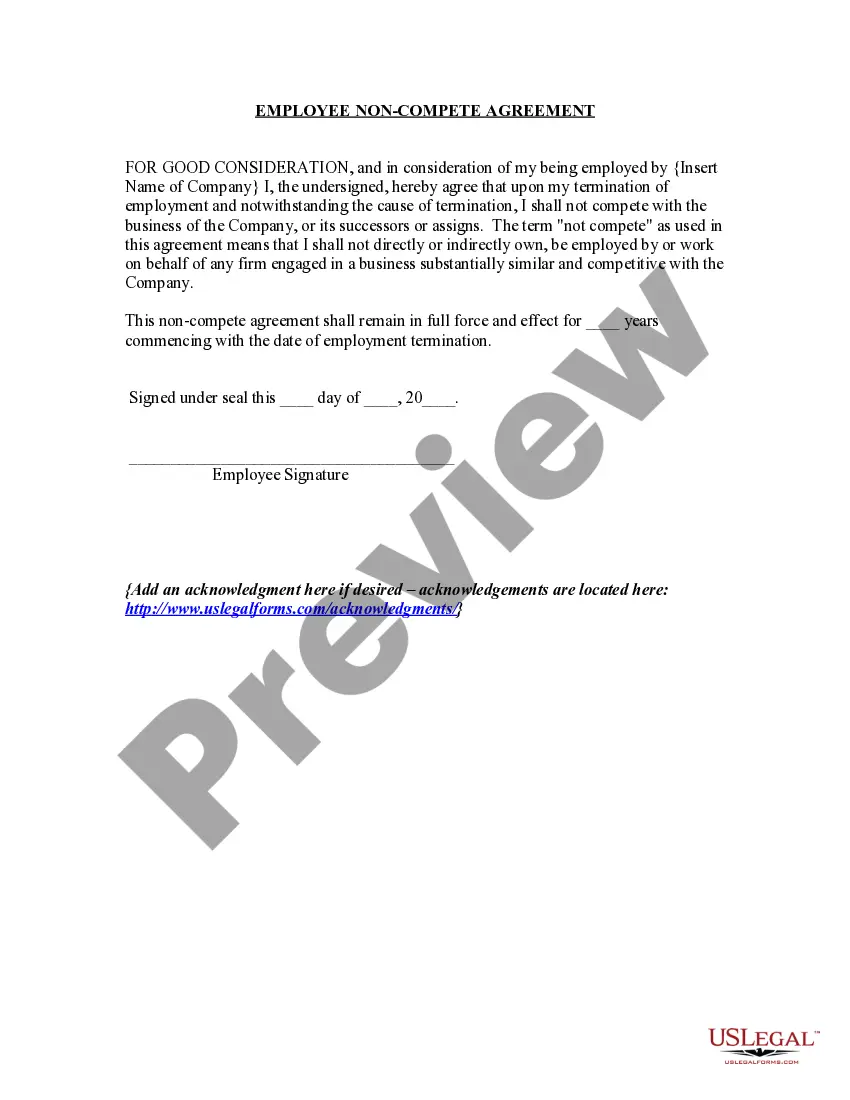
A traditional non-compete stops an employee from working for a competitor in a certain geographical area for a certain amount of time after leaving the company. A non-solicitation agreement prevents an employee from poaching customers, contracts or other employees from the company that first hired them.