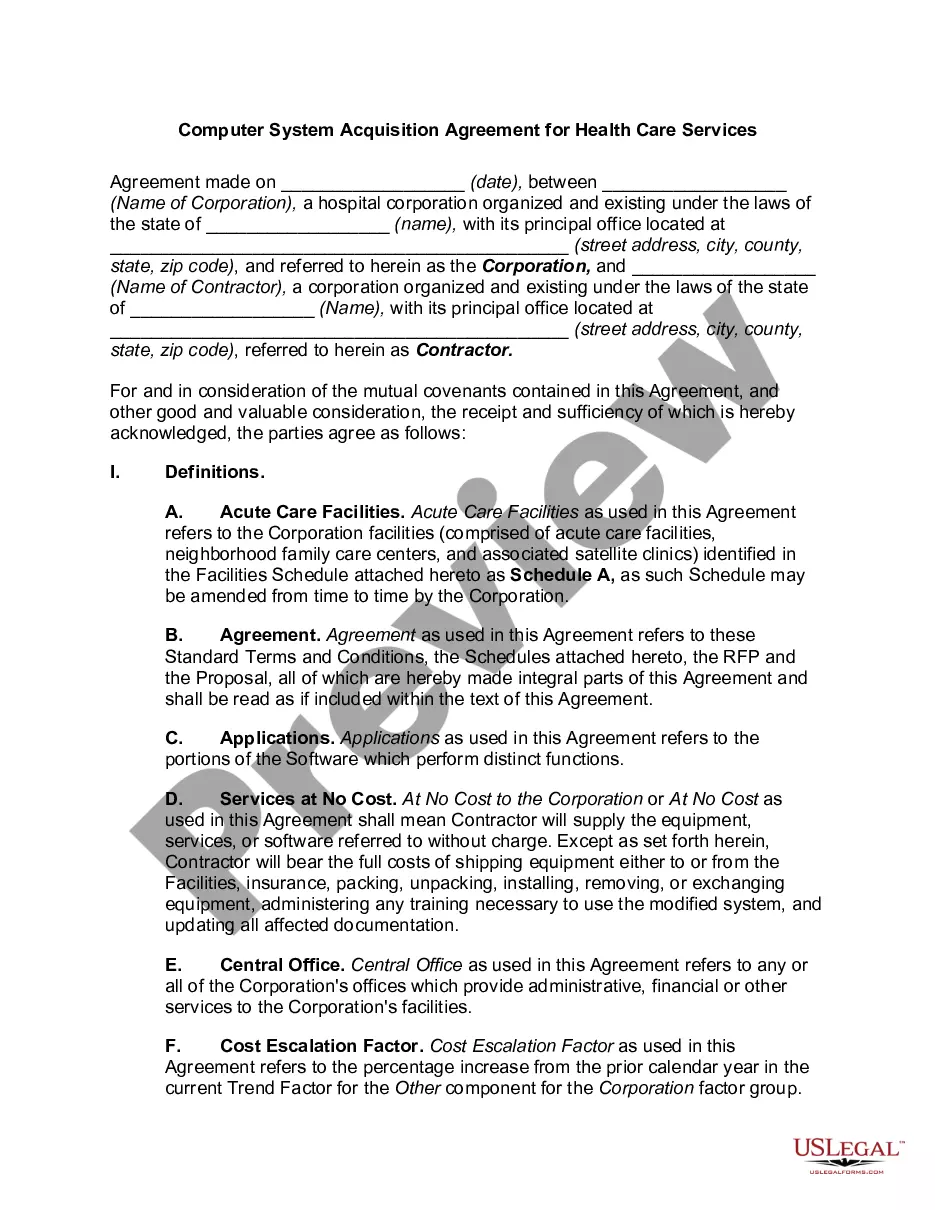
Georgia Letter from Landlord to Tenant as Notice to Tenant of Tenant's Disturbance of Neighbors' Peaceful Enjoyment to Remedy or Lease Terminates
Understanding this form
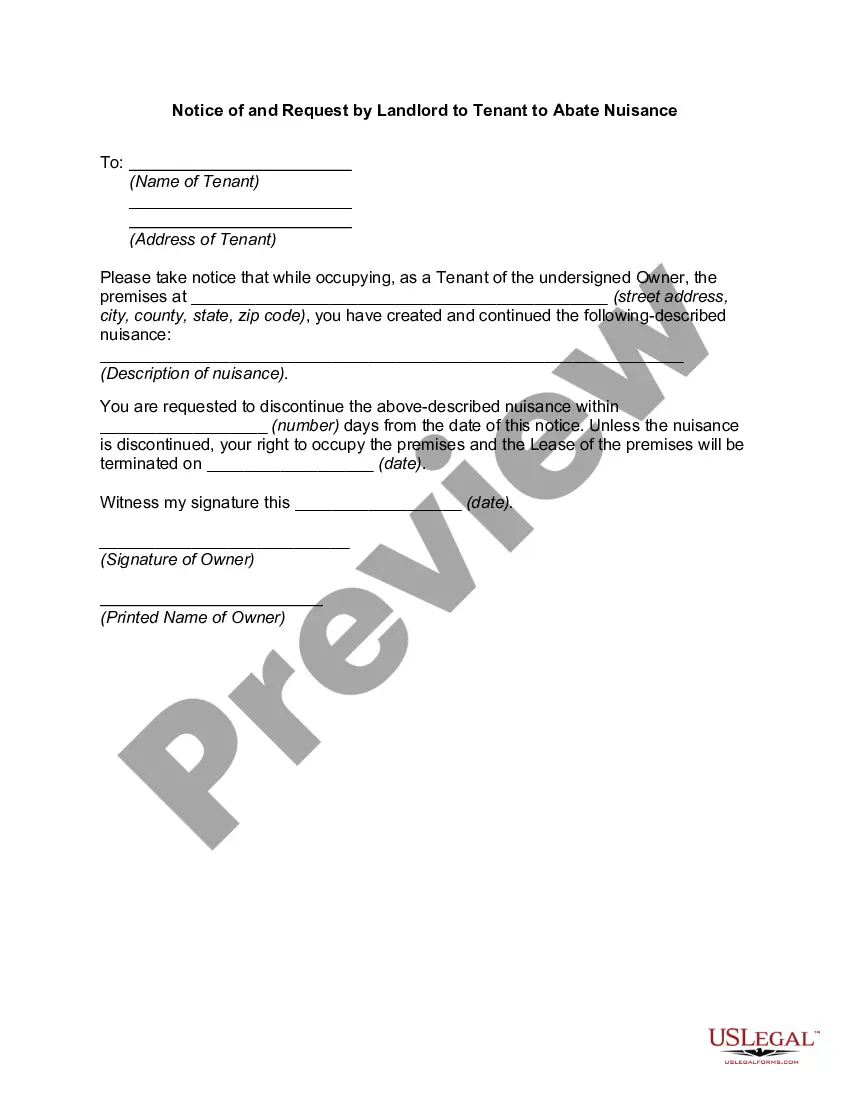
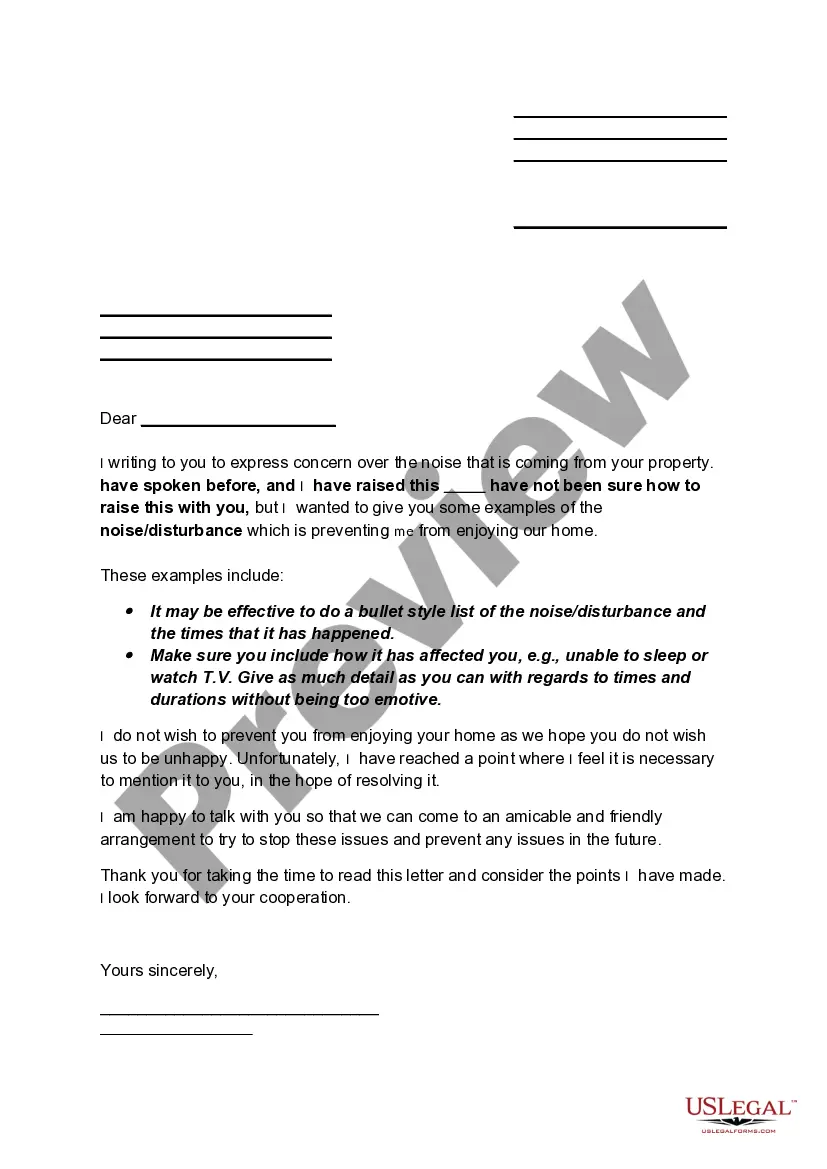
This form is a notice from a landlord to a tenant regarding the tenant's disturbance of neighbors' peaceful enjoyment. It serves to inform the tenant of their breaches in maintaining conduct that respects the rights of other occupants within the same community. The letter outlines the responsibilities of the tenant, their family, and guests, emphasizing the importance of quiet enjoyment, a foundational aspect of leasing agreements.
Main sections of this form
- Identification of the landlord and tenant.
- Discussion of the specific conduct causing disturbances.
- Notice period for the tenant to remedy the situation.
- Consequence of lease termination if the issue is not resolved.
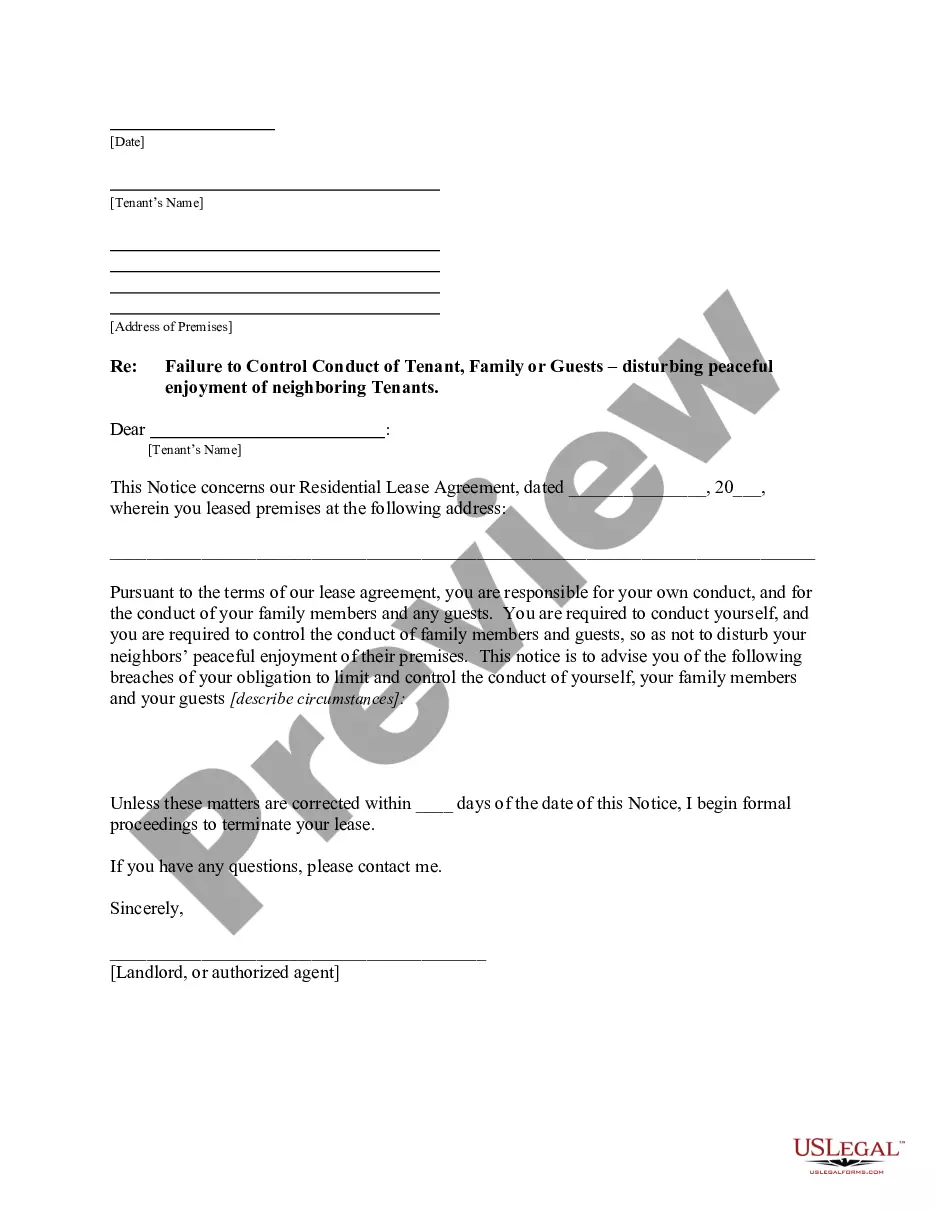
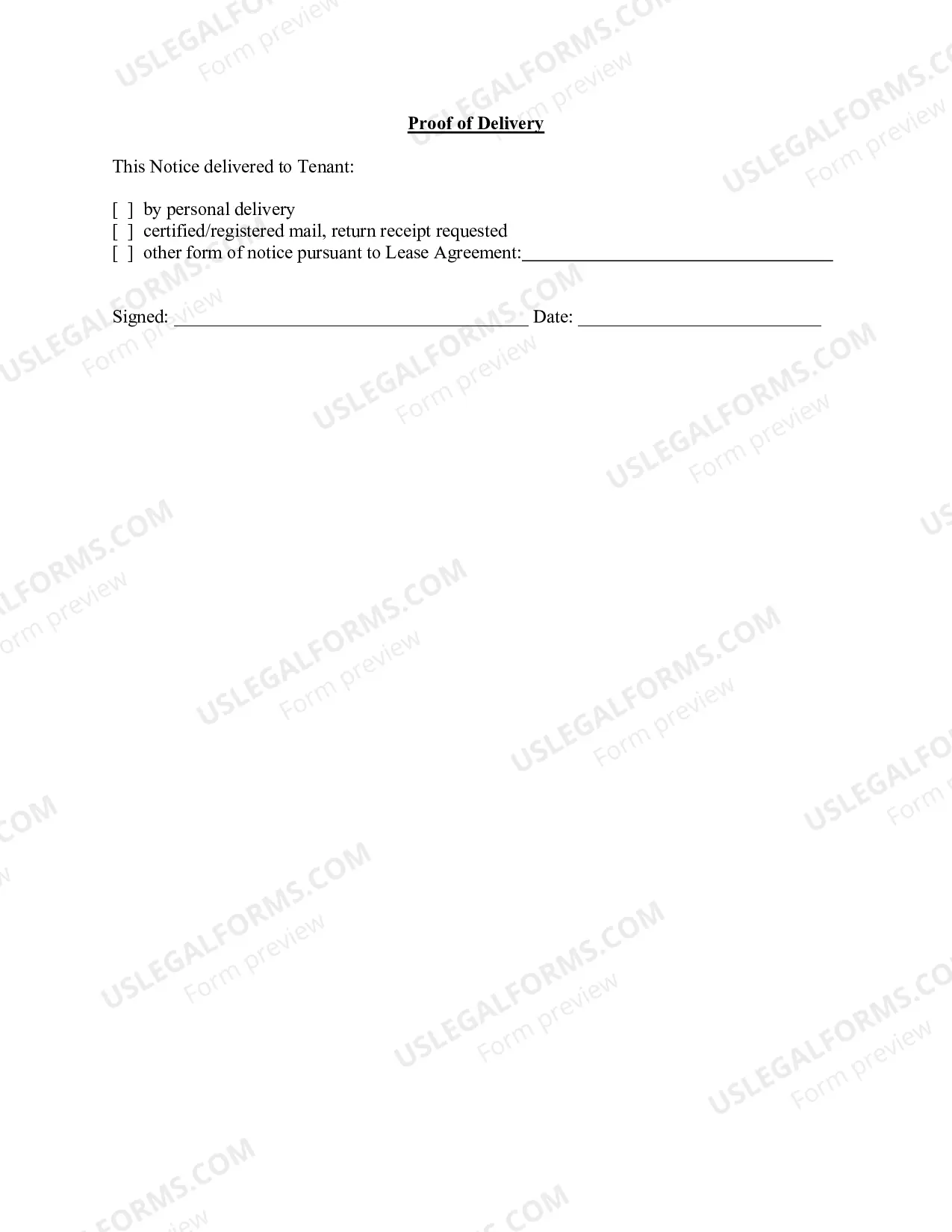
- Proof of delivery options for the notice.


When to use this form
This form should be used when a landlord needs to formally notify a tenant that their behavior is disrupting their neighbors. It is essential in situations where tenants have not adhered to the quiet enjoyment clause of their lease, which can involve excessive noise, disruptive activities, or any conduct that compromises the peace of other tenants.
Who should use this form
- Landlords seeking to formally address tenant disturbances.
- Property managers representing the landlord.
- Tenants who wish to understand their rights regarding neighborly conduct.
Instructions for completing this form
- Identify the parties by including the landlord's name and the tenant's name.
- Specify the nature of the disturbances being reported.
- Indicate the timeline for the tenant to address and remedy the issues.
- Outline potential consequences for failure to comply, including lease termination.
- Sign the notice and select the proof of delivery method.
Is notarization required?
Notarization is generally not required for this form. However, certain states or situations might demand it. You can complete notarization online through US Legal Forms, powered by Notarize, using a verified video call available anytime.
Get your form ready online
Our built-in tools help you complete, sign, share, and store your documents in one place.
Make edits, fill in missing information, and update formatting in US Legal Forms—just like you would in MS Word.
Download a copy, print it, send it by email, or mail it via USPS—whatever works best for your next step.
Sign and collect signatures with our SignNow integration. Send to multiple recipients, set reminders, and more. Go Premium to unlock E-Sign.
If this form requires notarization, complete it online through a secure video call—no need to meet a notary in person or wait for an appointment.
We protect your documents and personal data by following strict security and privacy standards.

Make edits, fill in missing information, and update formatting in US Legal Forms—just like you would in MS Word.

Download a copy, print it, send it by email, or mail it via USPS—whatever works best for your next step.

Sign and collect signatures with our SignNow integration. Send to multiple recipients, set reminders, and more. Go Premium to unlock E-Sign.

If this form requires notarization, complete it online through a secure video call—no need to meet a notary in person or wait for an appointment.

We protect your documents and personal data by following strict security and privacy standards.
Avoid these common issues
- Failing to provide clear details about the disturbance.
- Not including a specific timeline for remediation.
- Neglecting to sign the notice before delivery.
- Using vague language that may not fulfill legal requirements.
Benefits of completing this form online
- Immediate access to professionally drafted templates.
- Edit and customize the form to suit specific situations.
- Convenient download and storage options for easy retrieval.
- Guided completion ensures compliance with legal standards.
Legal use & context
- This form supports landlords in fulfilling their legal duty to maintain a peaceful living environment for all tenants.
- Using this notice can help prevent escalation of disputes and potential legal actions by documenting the tenant's behavior.
Main things to remember
- This form is a crucial tool for landlords to address tenant disturbances legally.
- Helping to ensure the quiet enjoyment of neighboring tenants is essential in landlord-tenant relations.
- The proper delivery and documentation can protect landlords from potential legal issues.
Looking for another form?

Form popularity
FAQ
Step 1: Mention the Reason for Giving a Notice. Step 2: Use Formal Language. Step 3: Mention the Date for Vacating. Step 4: Address the Formalities to Be Taken Care Of. Step 5: Proofread the Letter.
A covenant of quiet enjoyment insures an owner or tenant against a disturbance of his or her right to possess or use property. For example, a covenant of quiet enjoyment could prevent a tenant from being evicted by a person with superior title. Also called covenant for quiet enjoyment.
Lack of Basic Services - If the landlord is responsible for utility bill payments and fails to pay them and any utilities are turned off, the tenant may claim a breach of the covenant of quiet enjoyment. This also includes any issues within common areas of a property.
Dear (Name of landlord or manager), This letter constitutes my written (number of days' notice that you need to give based on your lease agreement)-day notice that I will be moving out of my apartment on (date), the end of my current lease. I am leaving because (new job, rent increase, etc.)
Dear (Name of landlord or manager), This letter constitutes my written (number of days' notice that you need to give based on your lease agreement)-day notice that I will be moving out of my apartment on (date), the end of my current lease. I am leaving because (new job, rent increase, etc.)
The covenant of quiet enjoyment states that a tenant has the right to enjoy his or her rental unit without substantial interference from the landlord. It ensures that tenants benefit from the full use and enjoyment of their rental unit.
Be in writing, Say the full name of the tenant or tenants, Have the address the notice is about, Say everything that the tenant did to break the lease or deserve a 3 day notice to leave, and include details and dates, Say clearly that the tenant has to move out as soon as the 3 days are up, and.
Under common law tenants have a right to 'quiet enjoyment' of the property. This is an implied term, or covenant, which has been expressed or implied in conveyances and leases of English land for centuries.'Quiet enjoyment' is a term so often misunderstood.