Relocation Agreement between Employer and Employee Regarding Moving Expenses
Overview of this form
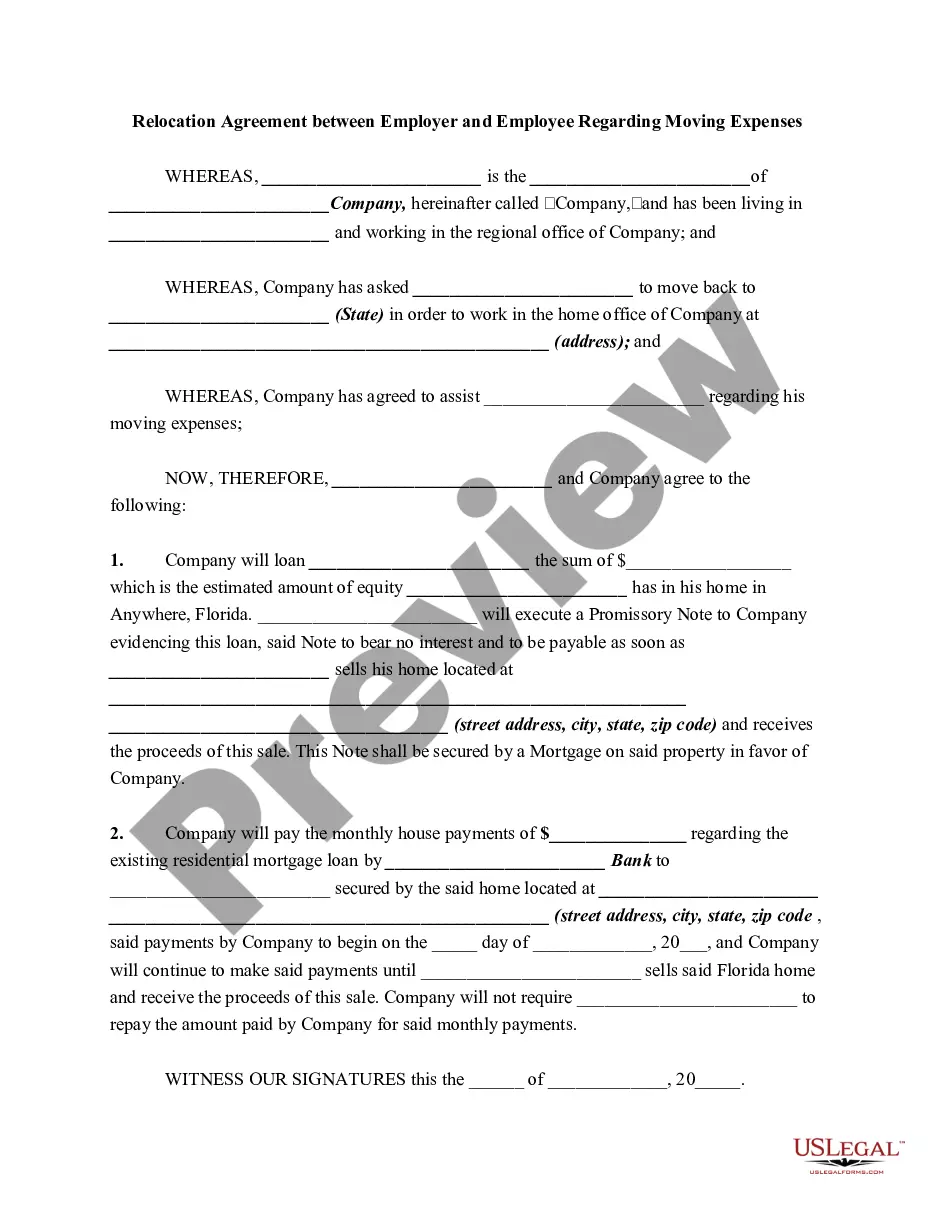
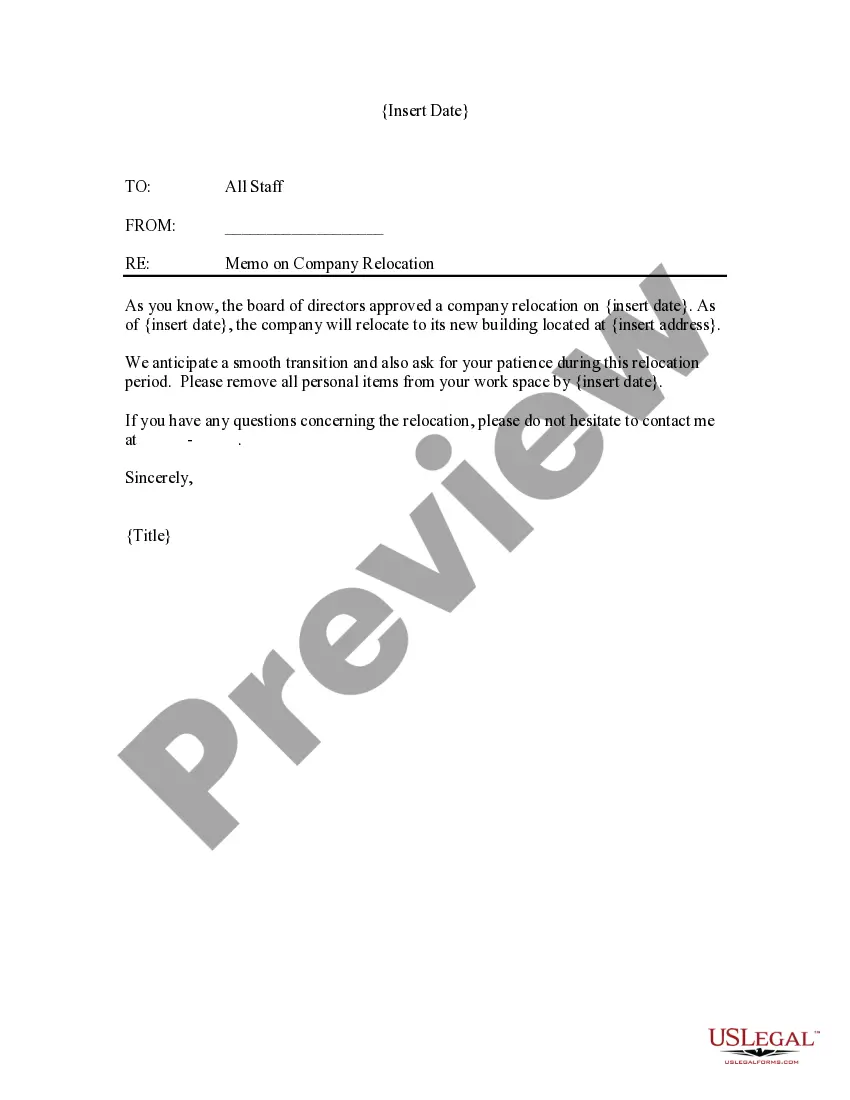
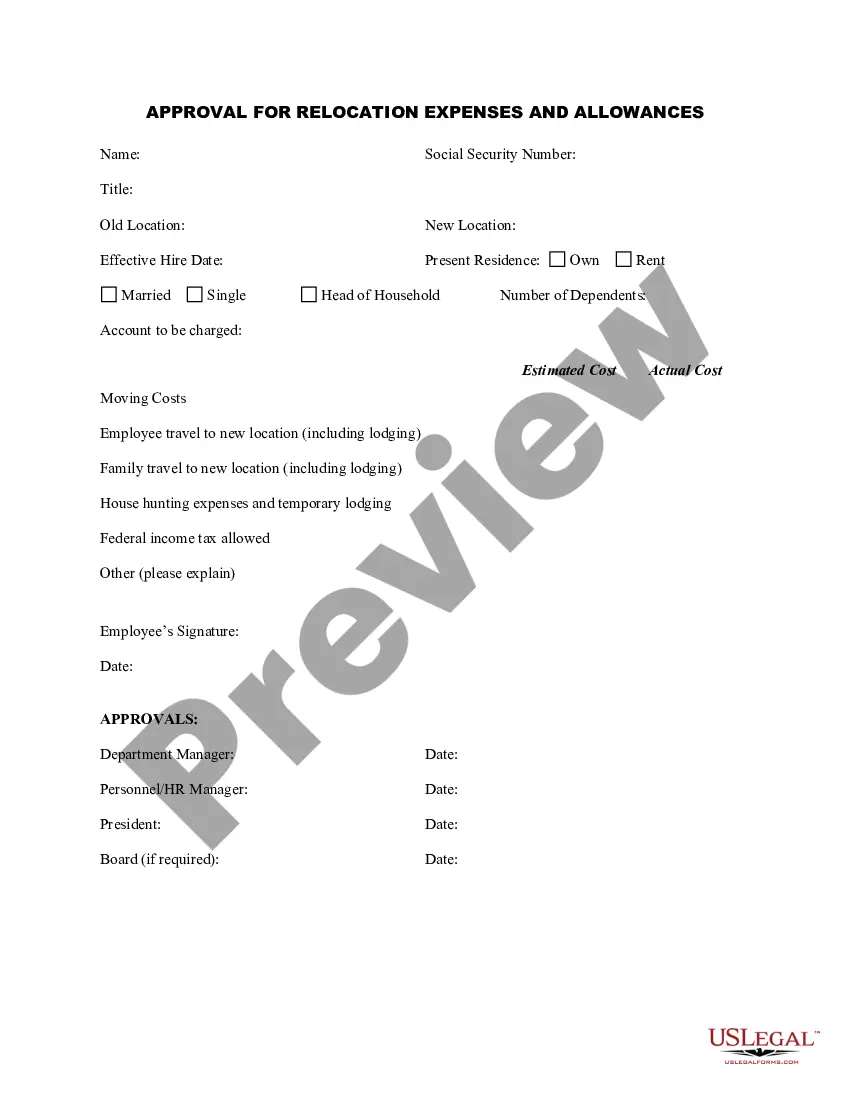
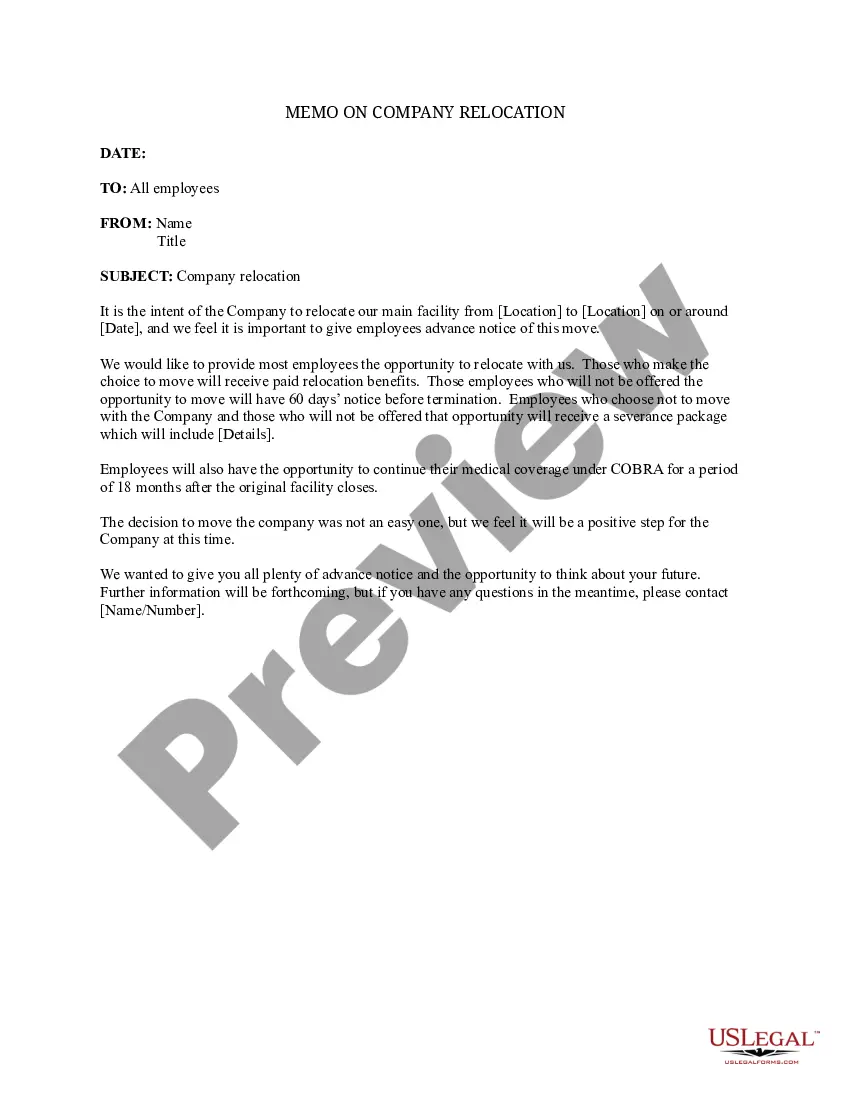
The relocation agreement between employer and employee regarding moving expenses is a legal document that outlines the terms under which an employer agrees to assist an employee with relocation costs. This form establishes a loan structure to cover the employeeâs home equity and addresses the companyâs responsibility for monthly mortgage payments during the transition period. This agreement is distinct from other employment contracts as it specifically pertains to relocation assistance and moving expenses.
Main sections of this form
- Identification of the parties involved (employer and employee).
- Details of the relocation request and destination.
- Loan amount representing the employee's home equity.
- Agreement on monthly mortgage payments covered by the employer.
- Conditions under which the loans and payments are to be repaid or waived.
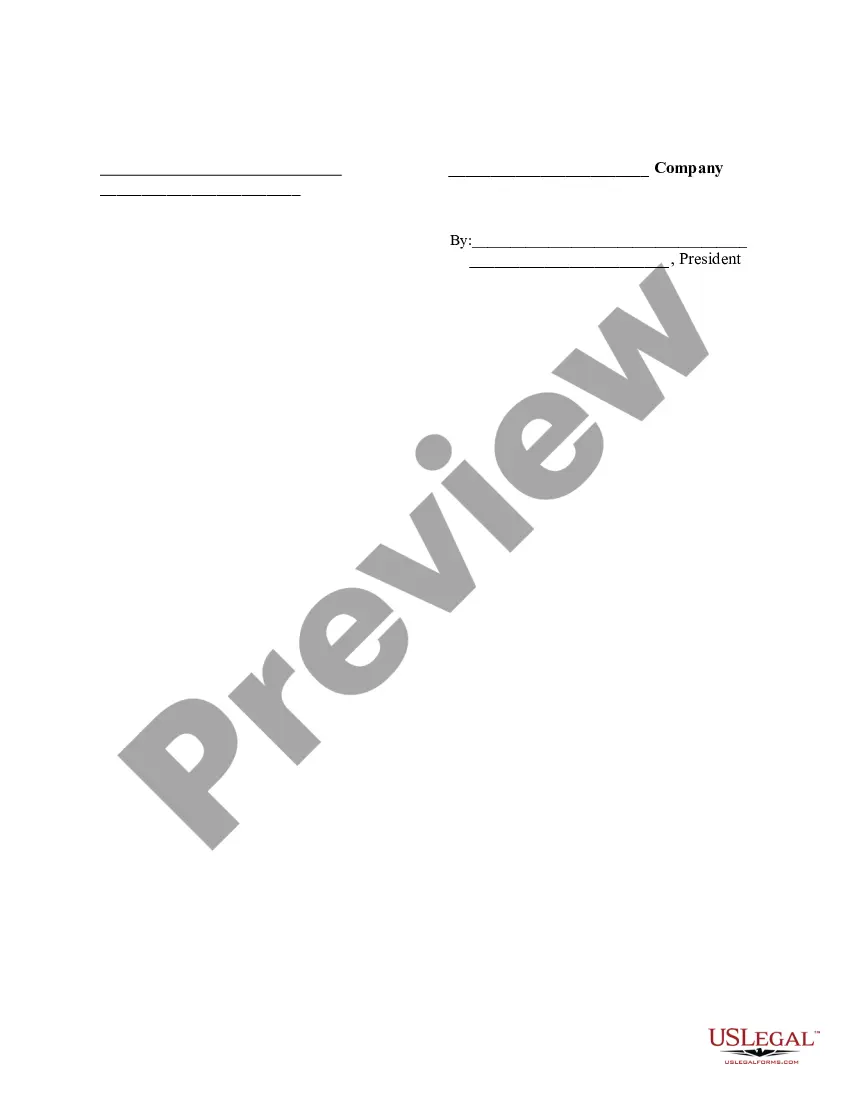
- Signatures of both parties, including the company president.
When to use this form
This form should be utilized when an employer decides to assist an employee in relocating to another area for work. Specific scenarios include job transfers, promotions that necessitate moving, or during company expansions requiring staff to move closer to headquarters. Use this form to clarify the terms of financial support related to moving expenses and home payments.
Who needs this form
- Employers looking to provide relocation assistance to employees.
- Employees required to move for job-related reasons.
- HR professionals coordinating employee relocation packages.
- Legal teams needing a formalized agreement regarding relocation expenses.
Instructions for completing this form
- Identify the parties by entering the names and titles of the employer and employee.
- Specify the current home address of the employee and the new job location.
- Enter the amount of the loan representing the employee's home equity.
- Detail the terms of monthly mortgage payments and any conditions for repayment.
- Ensure all parties sign and date the agreement to make it legally binding.
Is notarization required?
This form does not typically require notarization unless specified by local law. However, ensuring that both parties sign the agreement is crucial to its enforceability. If you have concerns about the validity of this document, consult with a legal expert or local authority for guidance.
Get your form ready online
Our built-in tools help you complete, sign, share, and store your documents in one place.
Make edits, fill in missing information, and update formatting in US Legal Forms—just like you would in MS Word.
Download a copy, print it, send it by email, or mail it via USPS—whatever works best for your next step.
Sign and collect signatures with our SignNow integration. Send to multiple recipients, set reminders, and more. Go Premium to unlock E-Sign.
If this form requires notarization, complete it online through a secure video call—no need to meet a notary in person or wait for an appointment.
We protect your documents and personal data by following strict security and privacy standards.

Make edits, fill in missing information, and update formatting in US Legal Forms—just like you would in MS Word.

Download a copy, print it, send it by email, or mail it via USPS—whatever works best for your next step.

Sign and collect signatures with our SignNow integration. Send to multiple recipients, set reminders, and more. Go Premium to unlock E-Sign.

If this form requires notarization, complete it online through a secure video call—no need to meet a notary in person or wait for an appointment.

We protect your documents and personal data by following strict security and privacy standards.
Avoid these common issues
- Failing to specify the exact loan amount can lead to misunderstandings.
- Not including the new job address or relevant relocation details.
- Omitting signatures from both parties, which can invalidate the agreement.
- Neglecting to document the repayment terms clearly.
Advantages of online completion
- Convenience of downloading and customizing the form to fit specific needs.
- Editable format allows for quick changes and updates as needed.
- Access to templates drafted by licensed attorneys ensures legal compliance.
- Time-efficient process without the necessity of in-person meetings with a lawyer.
Legal use & context
- This agreement serves as a binding document that outlines the financial support related to moving expenses.
- It helps prevent disputes by clearly defining loan terms and conditions for both parties.
- Local laws may impose additional requirements, so be aware of jurisdictional variations.
Summary of main points
- The relocation agreement is essential for formalizing financial assistance for employee moves.
- Complete the form carefully, ensuring all parties approve and sign the document.
- Consider local laws and regulations that might affect the agreement's terms and validity.
Looking for another form?

Form popularity
FAQ
Are Relocation Expenses for Employees Taxable When Paid by an Employer? The short answer is yes.Before Congress enacted the Tax Cuts and Jobs Act of 2017, the IRS permitted taxpayers to deduct certain moving expenses and exclude employer reimbursements for qualified moving expenses.
Dear _____(Sir or Madam), I am writing this letter to request you a relocation from my position at_________ to a similar position at the _______ located in _________. Due to some family issues, it is necessary for me to move in closer proximity to my family.
Are Relocation Expenses for Employees Taxable When Paid by an Employer? The short answer is yes.Before Congress enacted the Tax Cuts and Jobs Act of 2017, the IRS permitted taxpayers to deduct certain moving expenses and exclude employer reimbursements for qualified moving expenses.
Be polite and courteous. Mention the reasons for relocation along with appropriate proofs (if any). Since it is a request letter, so the tone must be in request format. Also, mention the relocation site that you have a preference for, justifying the choice.
Use your current contact details. Don't confuse the situation by using the address you are relocating to. Explain your situation clearly and positively. Reinforce the permanence of the relocation. Include your availability for interviews.
Debit "Relocation Benefits" or "Moving Expenses" for the same amount. For example, if you issue a $25,000 relocation benefit, credit the accrual account $25,000 and debit the expense account $25,000.
If you have moving expenses that are greater than the amount of reimbursement shown in box 12 of Form 1040, or your reimbursement was reported as wages in box 1, then you can file Form 3903 with your tax return to report moving expenses and reimbursements to the IRS.
A written relocation transfer request letter should begin with your contact information, the date, and the contact information for your supervisor or human resources manager. Your letter should begin with a formal salutation, your purpose for writing, and evidence supporting why your request should be considered.