Georgia Letter from Landlord to Tenant as Notice to remove Wild Animals in Premises
Overview of this form
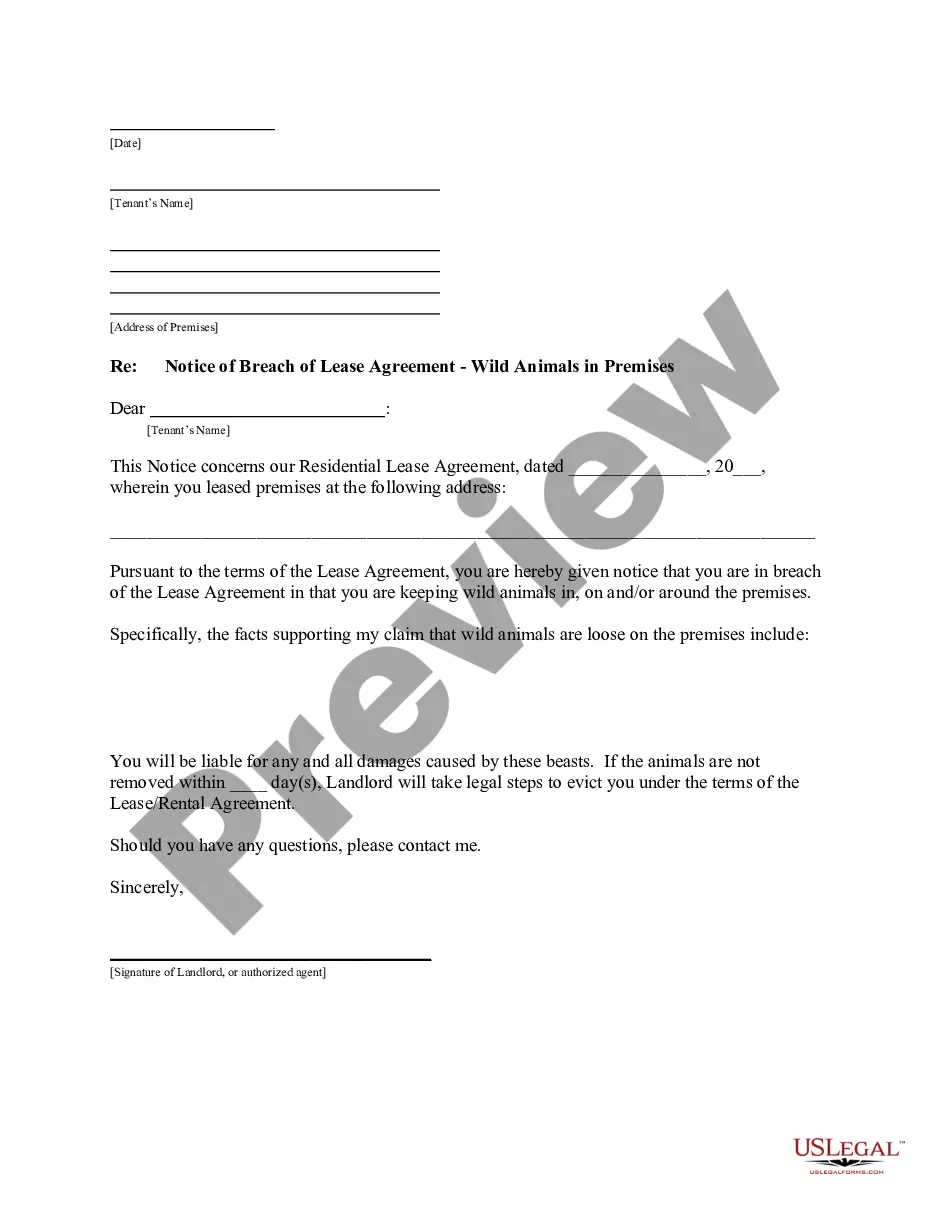
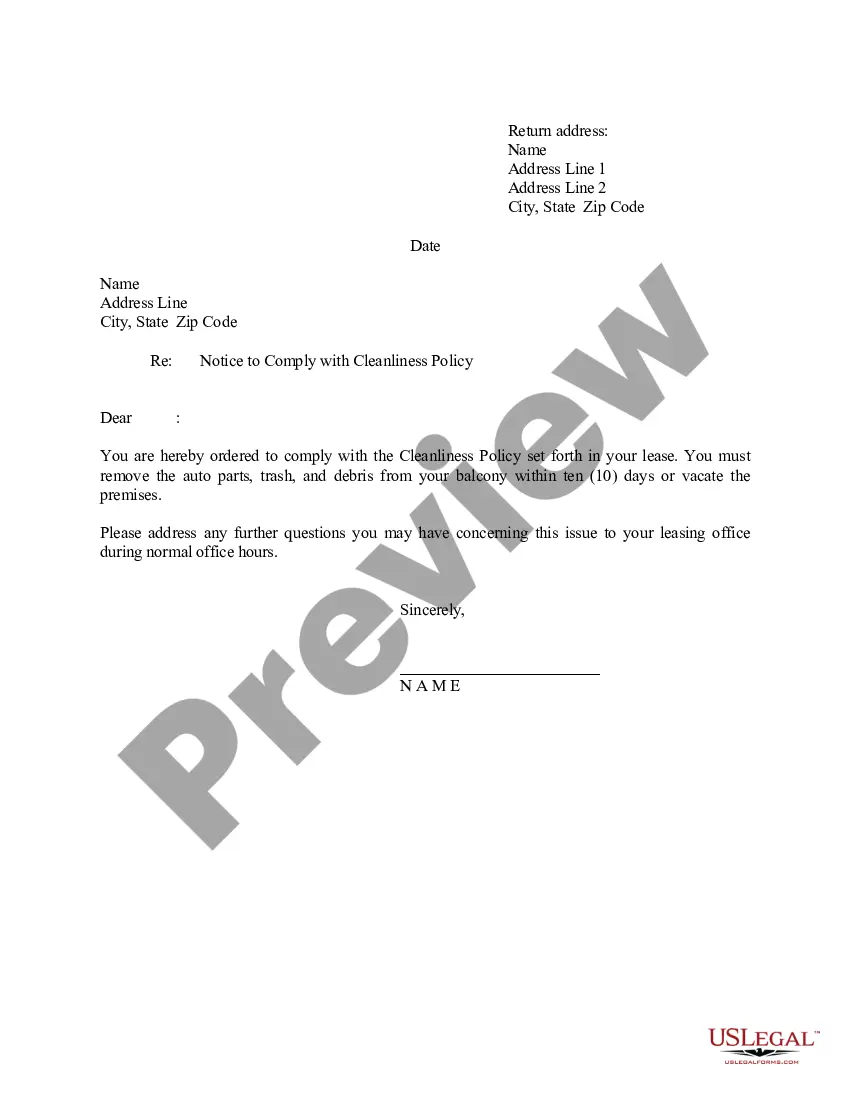
This Letter from Landlord to Tenant as Notice to Remove Wild Animals in Premises is a legal form used by landlords to inform tenants that they are violating the lease agreement by keeping wild animals on the property. This notice specifies the breach of terms and serves as a formal communication requesting the tenant to rectify the issue. It helps protect the landlord's rights and maintain the integrity of the rental property.
Key components of this form
- Identification of the landlord and tenant, including names and addresses.
- A clear statement of the lease agreement terms that have been breached.
- A description of the wild animals that are causing the breach.
- The landlord's signature, indicating the authenticity of the notice.
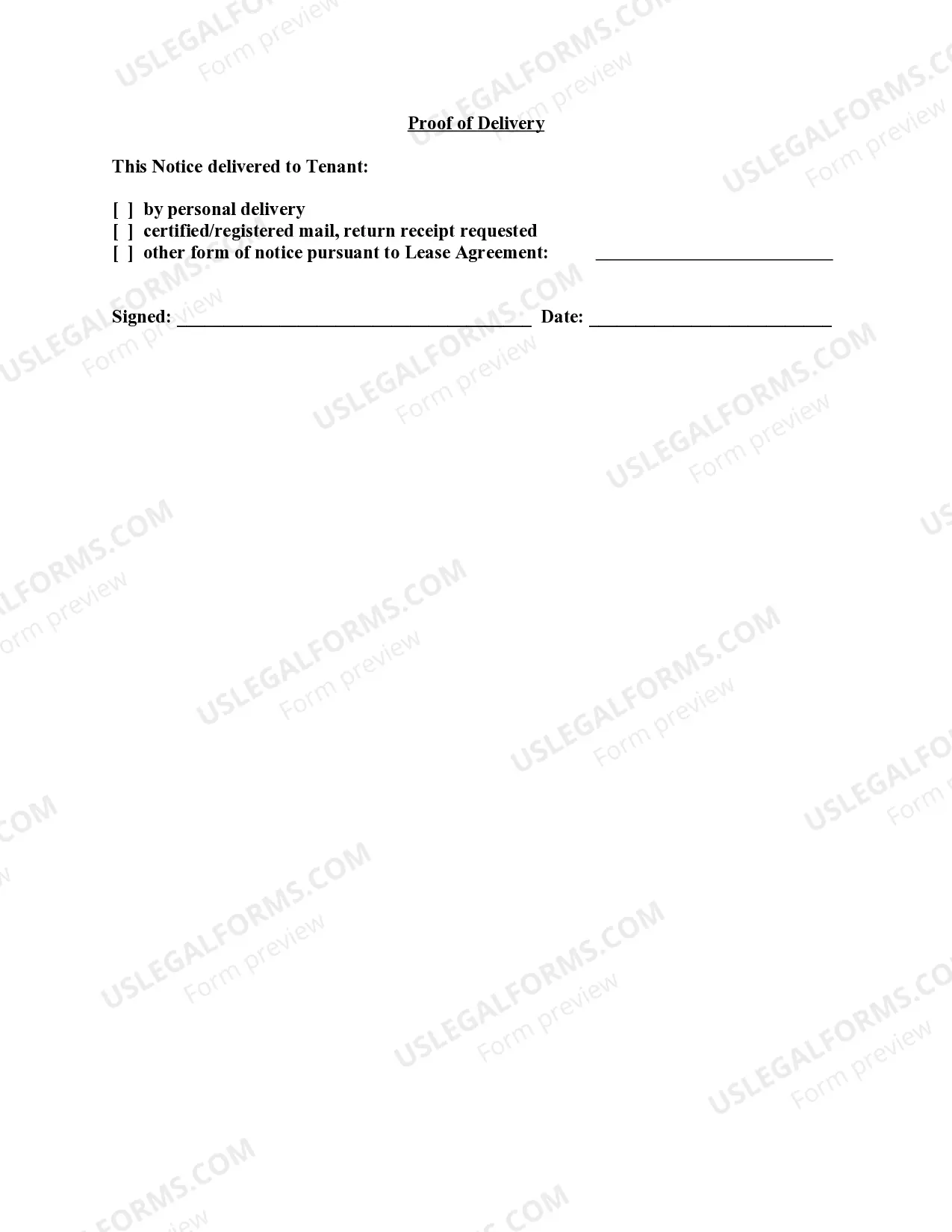
- Proof of delivery options, such as personal delivery or certified mail.

When to use this form
This form should be used when a landlord discovers that a tenant has introduced wild animals to the rental premises in violation of the lease agreement. Common scenarios include when a tenant keeps unauthorized pets, wildlife, or exotic animals on the property, which may pose a nuisance or safety hazard. The notice serves as an important step in documenting the issue and beginning the process of resolving it.
Intended users of this form
- Landlords who lease residential or commercial properties.
- Property managers acting on behalf of landlords.
- Tenants who receive notice of a breach regarding animal possession.
Instructions for completing this form
- Identify the parties involved, including the landlord's name and the tenant's name.
- Clearly state the terms of the lease that are being violated.
- Describe the types of wild animals that are present on the premises.
- Sign the document in the appropriate space provided for the landlord's signature.
- Select the delivery method for the notice, either personal delivery or through certified mail.
Is notarization required?
This form does not typically require notarization unless specified by local law. It is sufficient to deliver the notice as outlined to ensure legal acknowledgment of the breach.
Get your form ready online
Our built-in tools help you complete, sign, share, and store your documents in one place.
Make edits, fill in missing information, and update formatting in US Legal Forms—just like you would in MS Word.
Download a copy, print it, send it by email, or mail it via USPS—whatever works best for your next step.
Sign and collect signatures with our SignNow integration. Send to multiple recipients, set reminders, and more. Go Premium to unlock E-Sign.
If this form requires notarization, complete it online through a secure video call—no need to meet a notary in person or wait for an appointment.
We protect your documents and personal data by following strict security and privacy standards.

Make edits, fill in missing information, and update formatting in US Legal Forms—just like you would in MS Word.

Download a copy, print it, send it by email, or mail it via USPS—whatever works best for your next step.

Sign and collect signatures with our SignNow integration. Send to multiple recipients, set reminders, and more. Go Premium to unlock E-Sign.

If this form requires notarization, complete it online through a secure video call—no need to meet a notary in person or wait for an appointment.

We protect your documents and personal data by following strict security and privacy standards.
Mistakes to watch out for
- Failing to properly specify the terms of the lease that are being breached.
- Not providing enough detail about the wild animals present on the property.
- Neglecting to sign the notice, making it invalid.
- Using an incorrect delivery method that does not meet legal requirements.
Why use this form online
- Convenience of downloading and printing the form instantly.
- Easily customizable to suit specific lease agreements and situations.
- Reliability ensured by legal standards set by licensed attorneys.
Legal use & context
- This notice serves as a formal warning to the tenant regarding lease violations.
- Maintaining proper documentation can help in future legal proceedings if the issue escalates.
- Timely delivery of this notice can prevent further disputes regarding the tenancy.
Key takeaways
- The form officially notifies the tenant of their breach of the lease.
- It is crucial to provide clear details regarding the violation.
- Proper delivery and documentation of the notice are essential for legal purposes.
Looking for another form?
Form popularity
FAQ
In Georgia, a landlord must provide a tenant with written notice to vacate the premises. Typically, this notice period is 30 days, unless a lease agreement states otherwise. If the notice is related to the removal of wild animals on the property, it is crucial for the landlord to document this communication effectively. Using a Georgia Letter from Landlord to Tenant as Notice to remove Wild Animals in Premises ensures clarity and helps both parties proceed in a legal and organized manner.
When writing a letter to your landlord regarding pets, it is crucial to be clear and respectful. Start by stating your reason for the letter and mention any specific issues related to pets or wild animals, particularly in the context of a Georgia Letter from Landlord to Tenant as Notice to remove Wild Animals in Premises. You should also include any pet policies stipulated in your lease agreement and express your willingness to comply with reasonable requests. Finally, offer your contact information for any necessary follow-up, ensuring that your communication remains open and constructive.
An example of a letter for a tenant to move out would include the date, your address, and the tenant’s name. Clearly state your intent for them to vacate the property, provide a specific move-out date, and mention any necessary steps they need to take. For drafting your letter, the Georgia Letter from Landlord to Tenant as Notice to remove Wild Animals in Premises can provide an effective template for ensuring legal compliance.
When writing a letter to ask someone to leave your house, start by clearly stating your desire for them to vacate the premises. Include reasons for this request and a specific deadline for their departure. Maintain a courteous tone throughout the letter. A Georgia Letter from Landlord to Tenant as Notice to remove Wild Animals in Premises can serve as a helpful reference.
To ask a tenant to move out politely, you should communicate clearly and kindly. Begin by expressing appreciation for their time living in the property and share your reasons for the request, focusing on the necessity of the situation. Provide a reasonable timeline for their departure, and consider supplying helpful resources. For a structured approach, refer to a sample Georgia Letter from Landlord to Tenant as Notice to remove Wild Animals in Premises.
Yes, you can pursue legal action against your landlord for a rac, particularly if they have failed to provide a safe environment. Document all correspondence and attempts to resolve the matter. If the landlord's inaction leads to severe consequences, utilizing a Georgia Letter from Landlord to Tenant as Notice to remove Wild Animals in Premises can strengthen your case. Consulting with a legal professional is wise to understand your rights fully.
In crafting a termination letter to a tenant, begin with the date and your contact information at the top. State the reason for termination and reference any applicable lease agreements. Be sure to include the date by which the tenant must leave. Using a Georgia Letter from Landlord to Tenant as Notice to remove Wild Animals in Premises can provide a solid template to ensure you cover all legal aspects.
To write a letter to remove a tenant, start by addressing the tenant with their name. Clearly state your intention to terminate the tenancy and mention any relevant details, such as the reason for removal and the date by which they must vacate. You may refer to a Georgia Letter from Landlord to Tenant as Notice to remove Wild Animals in Premises as a guideline for legal wording. Make sure to keep the tone professional and respectful.
If a landlord finds out you have a pet, they will likely take action based on your lease terms, which may include fines or eviction. It's beneficial to take responsibility by discussing your situation with them. Being transparent can sometimes lead to a resolution that allows your pet to stay. Utilizing a Georgia Letter from Landlord to Tenant as Notice to remove Wild Animals in Premises can facilitate this conversation more formally.
Lying about pets on a rental application can lead to serious consequences, including eviction or loss of security deposit. Landlords value honesty, and discovering the truth can damage your rental history. If you've made a mistake, it's best to communicate openly with your landlord. A Georgia Letter from Landlord to Tenant as Notice to remove Wild Animals in Premises might create a clear dialogue for addressing the matter.