Georgia Contract for Deed Seller's Annual Accounting Statement
Overview of this form
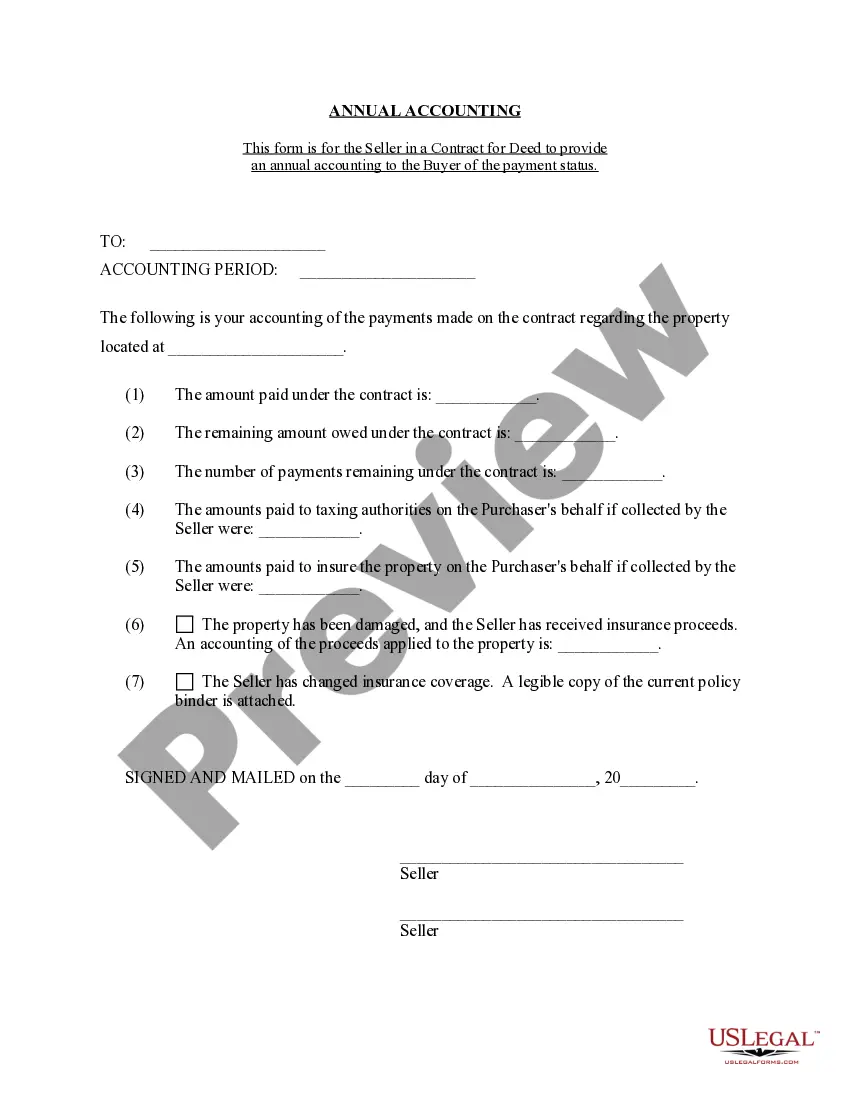
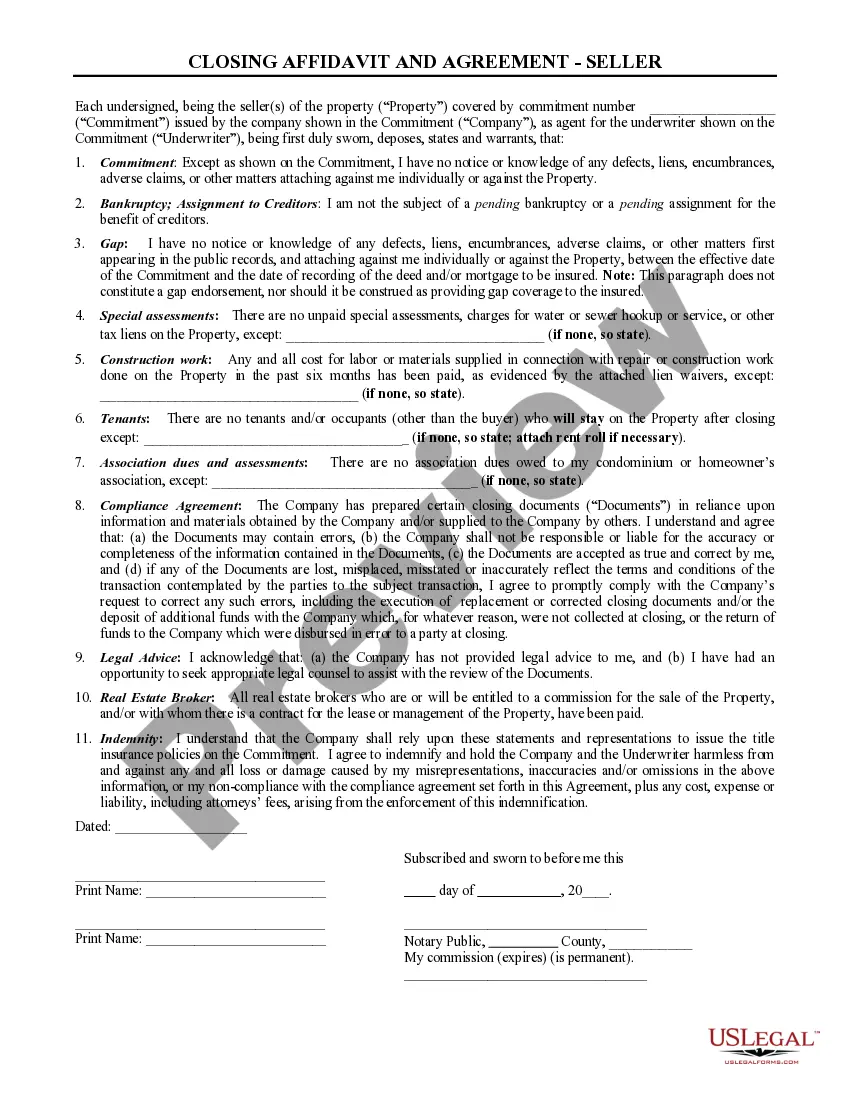
The Contract for Deed Seller's Annual Accounting Statement is a legal document that provides a summary of payments received by the seller from the purchaser in relation to a contract for deed. This form serves to notify the purchaser of the number and amount of payments made towards the purchase price and interest annually. Unlike other real estate forms, it specifically addresses the annual financial summary required under a contract for deed, ensuring transparency and accurate record-keeping between the parties involved.
Form components explained
- Details of the seller and purchaser
- Summary of payment amounts received
- Interest calculation associated with the payments
- Dates of each payment during the year
- Certification of the accuracy of the statement by the seller

Common use cases
This form is necessary when a seller needs to provide an annual financial summary to a purchaser who has an agreement under a contract for deed. It's typically used at the end of the financial year to formally document and communicate the total payments made, which is essential for the purchaser's records, tax reporting, and to maintain transparent communication between both parties. It ensures that both the seller and purchaser are aligned on the amounts paid and remaining obligations.
Who can use this document
- Contract for deed sellers providing annual accounting to purchasers
- Purchasers who require documentation of payments made
- Real estate professionals managing contract for deed transactions
Steps to complete this form
- Identify and enter the names of the seller and purchaser at the top of the document.
- List each payment made by the purchaser, including amounts and dates.
- Calculate and specify the total amount received during the year.
- Detail the interest charged on the outstanding balance, if applicable.
- Sign and date the document to certify its accuracy.
Notarization requirements for this form
This form does not typically require notarization unless specified by local law. Always check your stateâs regulations to ensure compliance.
Get your form ready online
Our built-in tools help you complete, sign, share, and store your documents in one place.
Make edits, fill in missing information, and update formatting in US Legal Forms—just like you would in MS Word.
Download a copy, print it, send it by email, or mail it via USPS—whatever works best for your next step.
Sign and collect signatures with our SignNow integration. Send to multiple recipients, set reminders, and more. Go Premium to unlock E-Sign.
If this form requires notarization, complete it online through a secure video call—no need to meet a notary in person or wait for an appointment.
We protect your documents and personal data by following strict security and privacy standards.

Make edits, fill in missing information, and update formatting in US Legal Forms—just like you would in MS Word.

Download a copy, print it, send it by email, or mail it via USPS—whatever works best for your next step.

Sign and collect signatures with our SignNow integration. Send to multiple recipients, set reminders, and more. Go Premium to unlock E-Sign.

If this form requires notarization, complete it online through a secure video call—no need to meet a notary in person or wait for an appointment.

We protect your documents and personal data by following strict security and privacy standards.
Common mistakes
- Failing to include all payment dates and amounts accurately.
- Not signing the form, which may invalidate the accounting statement.
- Missing interest calculations that could lead to disputes.
- Providing this form too late in the financial year.
Advantages of online completion
- Easy access to customizable templates drafted by licensed attorneys.
- Convenient downloading and printing options for immediate use.
- Ability to fill out forms online, reducing the risk of errors.
- Instant updates to reflect current legal standards.
Legal use & context
- This form is essential for maintaining accurate records of payments under a contract for deed.
- It serves as proof of payment and can be used in disputes regarding the owed amounts.
What to keep in mind
- The Seller's Annual Accounting Statement is vital for documenting payment history in contract for deed transactions.
- Accurate and timely completion of this form can prevent misunderstandings and disputes between parties.
- Using this form online offers convenience and legal reliability.
Looking for another form?
Form popularity
FAQ
A seller using a contract for deed doesn?t have that option, unless you agree to include that clause in your contract. Other benefits include: no loan qualifying, low or flexible down payment, favorable interest rates and flexible terms, and a quicker settlement.
Usually the contract requires the buyer to make payments over time with interest payable on the unpaid balance. Once a buyer pays all of the payments called for under the contract, the owner transfers to the buyer a deed to the property.
Contract for Deed Seller Financing. A contract for deed is used by some sellers who finance the sale of their homes. Seller's Ownership Liability. Buyer Default Risk. Seller Performance. Property Liens Could Hinder Purchase.
One of the biggest negatives that can occur with a land contract is when a buyer purchases a property on which the seller is still making mortgage payments.
A disadvantage to the seller is that a contract for deed is frequently characterized by a low down payment and the purchase price is paid in installments instead of one lump sum. If a seller needs funds from the sale to buy another property, this would not be a beneficial method of selling real estate.
A disadvantage to the seller is that a contract for deed is frequently characterized by a low down payment and the purchase price is paid in installments instead of one lump sum.The legal fees and time frame for this process will be more extensive than a standard Power of Sale foreclosure.
Loss of Service Control. A major disadvantage of contract management is that the organization gives up a considerable amount of control over the services that will be provided to customers. Potential Time Delays. Loss of Business Flexibility. Loss of Product Quality. Compliance and Legal Issues.
A contract for deed is an agreement for buying property without going to a mortgage lender. The buyer agrees to pay the seller monthly payments, and the deed is turned over to the buyer when all payments have been made.
A disadvantage to the seller is that a contract for deed is frequently characterized by a low down payment and the purchase price is paid in installments instead of one lump sum. If a seller needs funds from the sale to buy another property, this would not be a beneficial method of selling real estate.