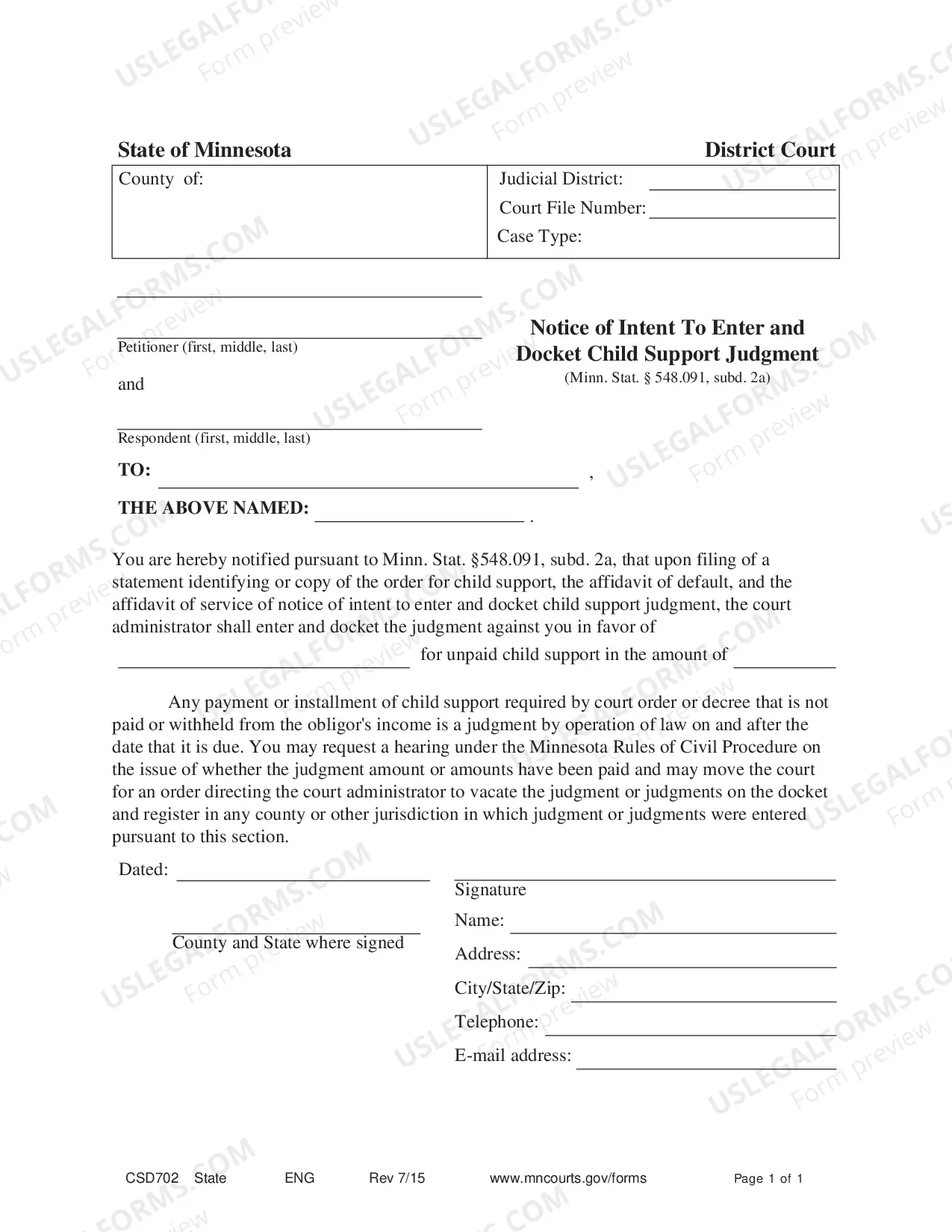
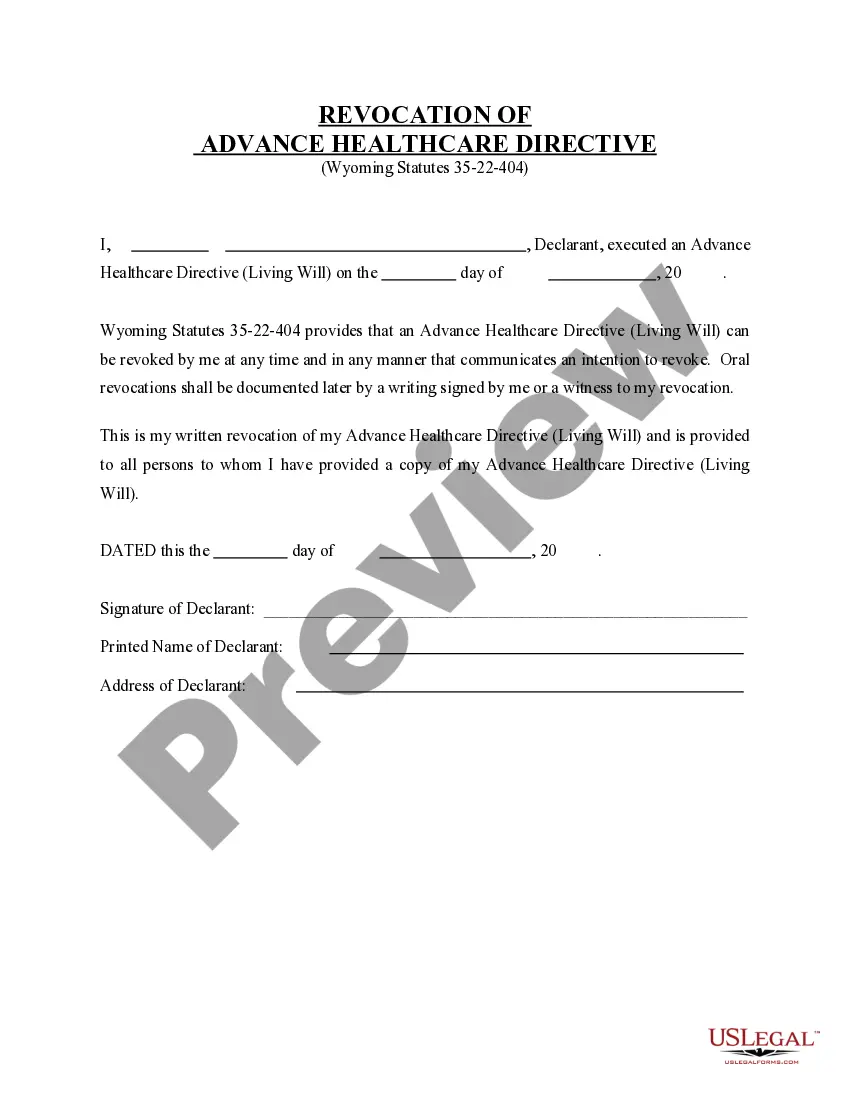
Wyoming Revocation of Advance Healthcare Directive
Understanding this form
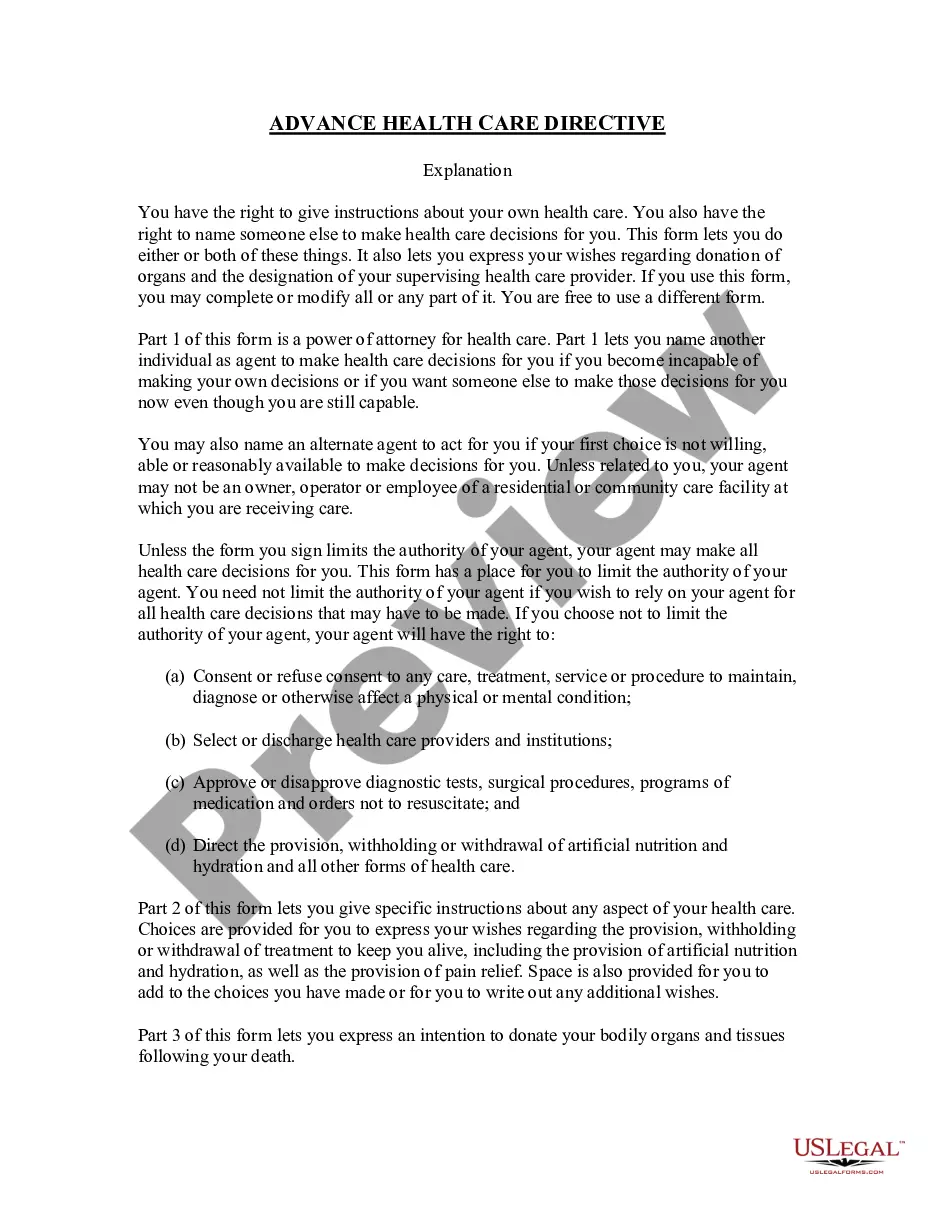
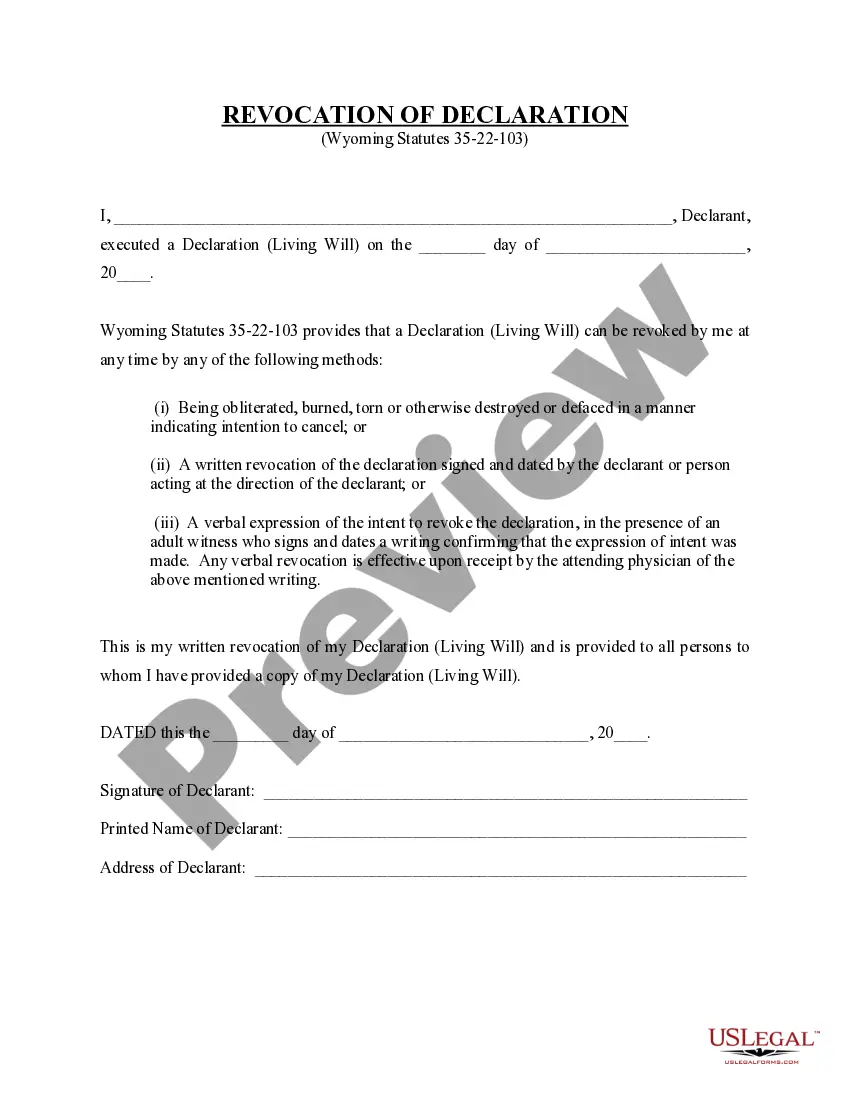
The Revocation of Advance Healthcare Directive is a legal document that formally cancels a previously established Advance Healthcare Directive (Living Will). Its purpose is to ensure that any prior decisions regarding medical treatment and life support are no longer valid. This revocation is essential for individuals who wish to change their healthcare preferences regarding life-sustaining treatments.
Form components explained
- Identification of the individual revoking the directive
- Reference to the previously executed Advance Healthcare Directive
- Delivery of this revocation to all parties that received the original directive
- Signature of the individual revoking their directive
- Date of the revocation
When this form is needed
This form is used when an individual wants to revoke their prior Advance Healthcare Directive. This may occur due to changes in health status, personal beliefs, or life circumstances that require a reevaluation of medical treatment preferences. It is important to ensure that all relevant parties are informed of this revocation to prevent any confusion regarding the individual's healthcare decisions.
Who this form is for
- Individuals who have previously completed an Advance Healthcare Directive and wish to revoke it
- Those experiencing significant changes in their health or personal circumstances
- Any person who wants to ensure their current healthcare wishes are clearly communicated
How to prepare this document
- Identify yourself as the individual revoking the directive.
- Clearly state that you are revoking your previous Advance Healthcare Directive.
- Reference the date of the original Advance Healthcare Directive.
- Sign and date the revocation document.
- Distribute the revocation to all parties who received the initial directive.
Does this document require notarization?
Notarization is generally not required for this form. However, certain states or situations might demand it. You can complete notarization online through US Legal Forms, powered by Notarize, using a verified video call available anytime.
Get your form ready online
Our built-in tools help you complete, sign, share, and store your documents in one place.
Make edits, fill in missing information, and update formatting in US Legal Forms—just like you would in MS Word.
Download a copy, print it, send it by email, or mail it via USPS—whatever works best for your next step.
Sign and collect signatures with our SignNow integration. Send to multiple recipients, set reminders, and more. Go Premium to unlock E-Sign.
If this form requires notarization, complete it online through a secure video call—no need to meet a notary in person or wait for an appointment.
We protect your documents and personal data by following strict security and privacy standards.

Make edits, fill in missing information, and update formatting in US Legal Forms—just like you would in MS Word.

Download a copy, print it, send it by email, or mail it via USPS—whatever works best for your next step.

Sign and collect signatures with our SignNow integration. Send to multiple recipients, set reminders, and more. Go Premium to unlock E-Sign.

If this form requires notarization, complete it online through a secure video call—no need to meet a notary in person or wait for an appointment.

We protect your documents and personal data by following strict security and privacy standards.
Avoid these common issues
- Failing to notify all parties who received the original directive.
- Not signing or dating the revocation document.
- Using unclear language that may lead to misinterpretation of your intentions.
Benefits of completing this form online
- Convenience: Download and complete from the comfort of your home.
- Editability: Easily customize the form to fit your specific needs.
- Reliability: The form is prepared by licensed attorneys to ensure legal compliance.
Main things to remember
- The revocation effectively cancels any prior decisions about medical treatment.
- It's crucial to inform all relevant parties of your decision to revoke.
- This form is specific to Wyoming and aligns with state laws on healthcare directives.
Looking for another form?

Form popularity
FAQ
In most cases, your health care documents will be honored in other states.Most states accept health care directives from other states as long as the documents are legally valid in the state where they were made -- but this is not always the case.
A person can also revoke their Advance Directive orally, by telling their healthcare provider that they no longer want either the entire document or any parts of it enforced.
An advance directive, alone, may not be sufficient to stop all forms of life-saving treatment.You retain the right to override the decisions or your representative, change the terms of your living will or POA, or completely revoke an advance directive.
Reviewing and changing advance directives You can change your directives at any time. If you want to make changes, you must create a new form, distribute new copies and destroy all old copies. Specific requirements for changing directives may vary by state.
An advance directive, alone, may not be sufficient to stop all forms of life-saving treatment.You retain the right to override the decisions or your representative, change the terms of your living will or POA, or completely revoke an advance directive.
Advance care directives are legally enforceable in NSW. Although NSW does not have specific legislation on advance care directives, the Supreme Court has said that valid advance care directives must be respected (as an extension to a person's right to determine their own medical treatment).
A person can change an Individual Healthcare Instruction by writing a new Advance Directive with the changes in it that she wants to make.A person can also revoke their Advance Directive orally, by telling their healthcare provider that they no longer want either the entire document or any parts of it enforced.
Advance Directives are referred to by different names depending on the state where you reside: advance directive, living will, declaration, power of attorney, patient advocate designation, etc.If someone disputes the validity of your health care directive, it may be challenged in court.