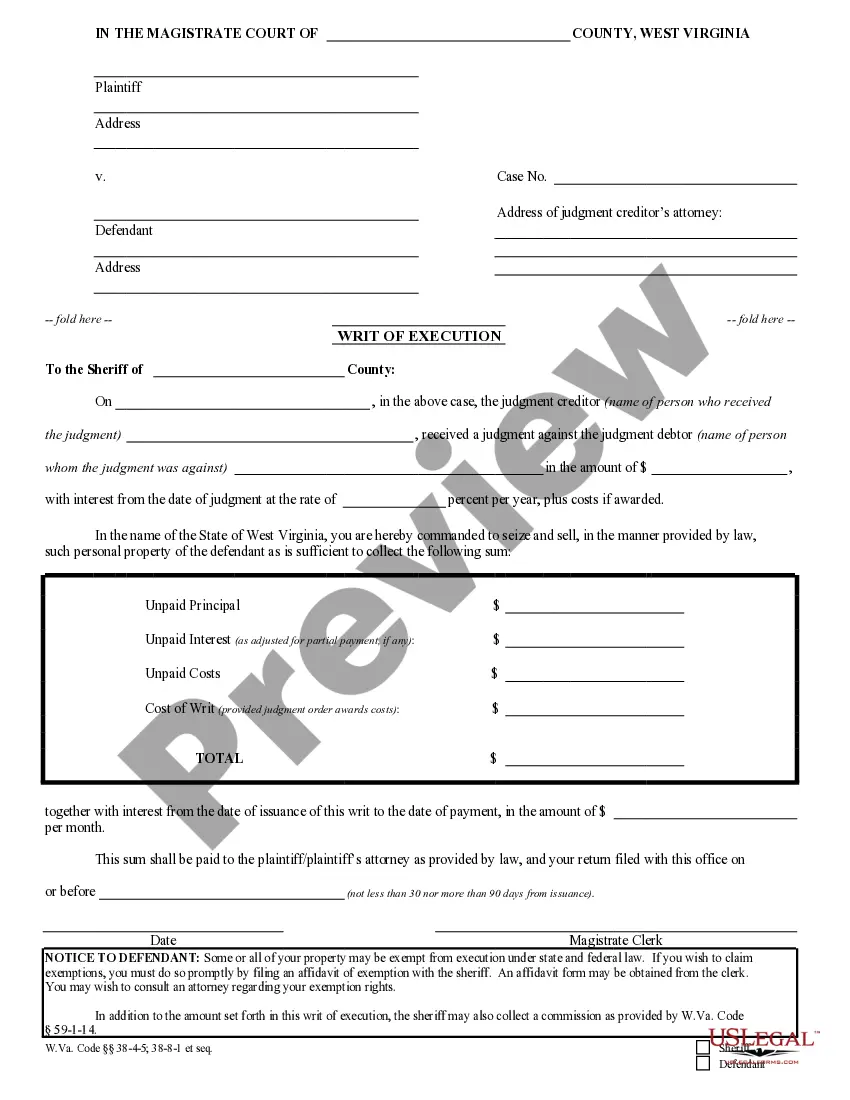
Wyoming Contract for Deed Package

Overview of this form package
The Wyoming Contract for Deed Package is a collection of essential legal documents designed for owner financing of real estate transactions. This package contains specific forms that facilitate the sale of property through a Contract for Deed, allowing buyers to make payments directly to sellers. With this package, users save up to 70% compared to purchasing each form individually, enabling a more affordable and efficient way to manage real estate financing arrangements in Wyoming.
Forms you’ll find in this package
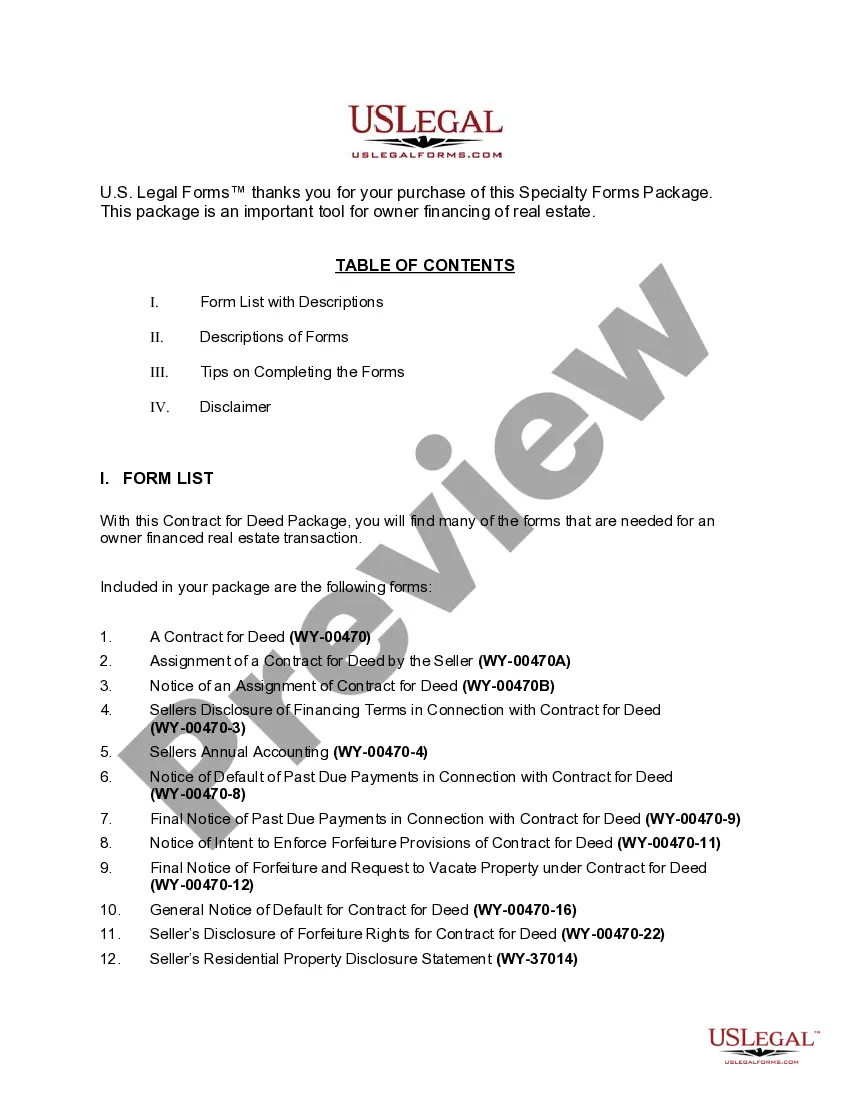
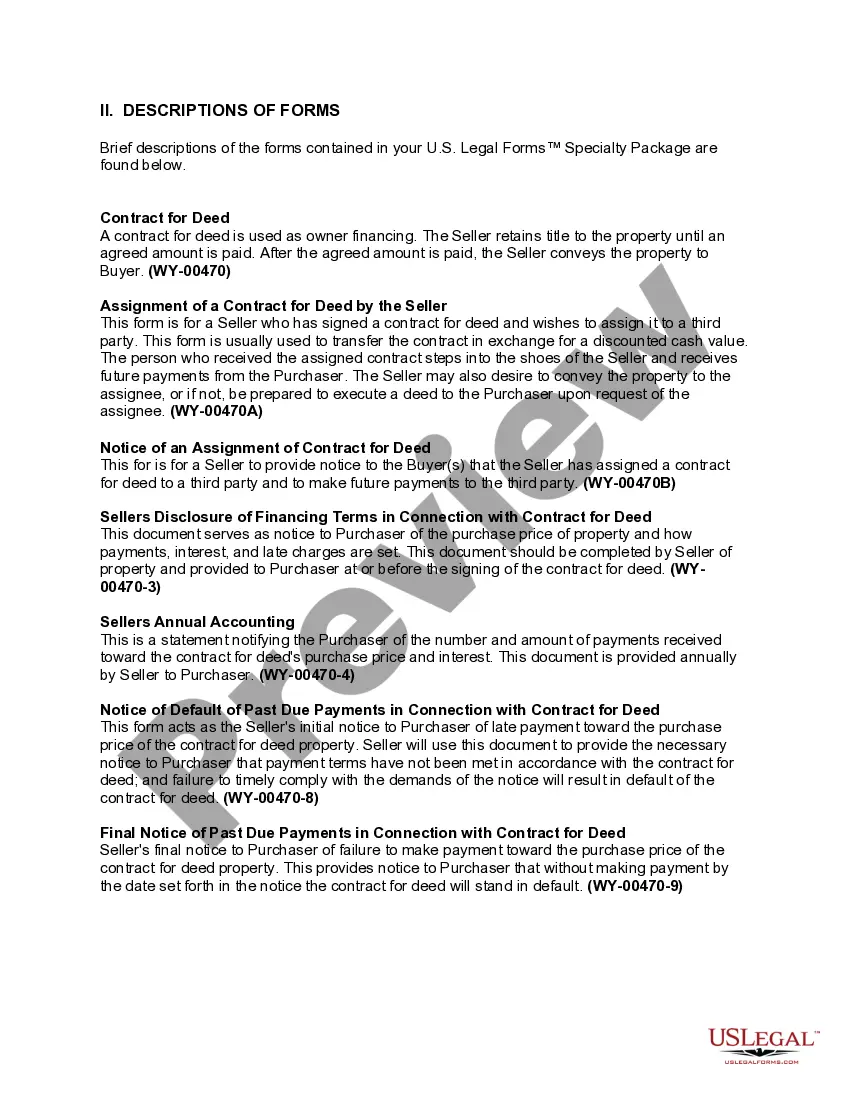
- Agreement or Contract for Deed for Sale and Purchase of Real Estate a/k/a Land or Executory Contract
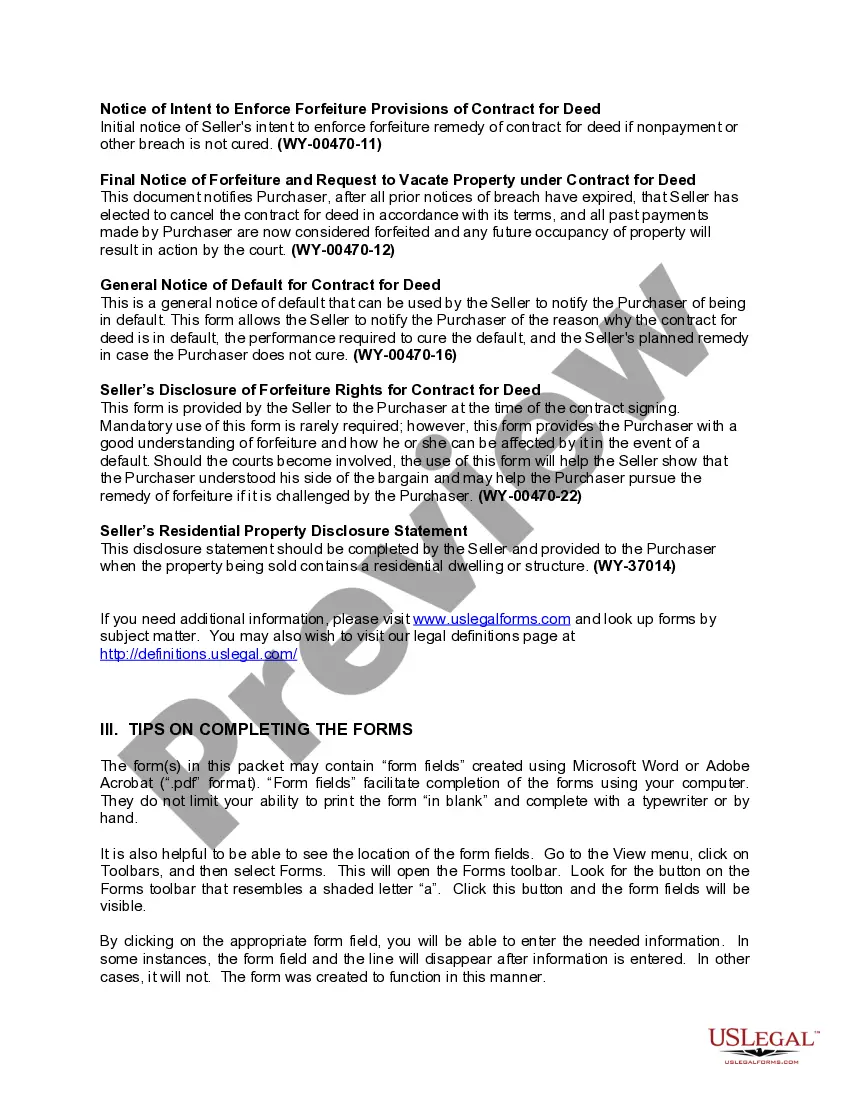
- Notice of Intent to Enforce Forfeiture Provisions of Contact for Deed
- Final Notice of Forfeiture and Request to Vacate Property under Contract for Deed
- General Notice of Default for Contract for Deed
- Seller's Disclosure of Forfeiture Rights for Contract for Deed
- Seller's Disclosure of Financing Terms for Residential Property in connection with Contract or Agreement for Deed a/k/a Land Contract
- Contract for Deed Seller's Annual Accounting Statement
- Notice of Default for Past Due Payments in connection with Contract for Deed
- Final Notice of Default for Past Due Payments in connection with Contract for Deed
- Assignment of Contract for Deed by Seller
- Notice of Assignment of Contract for Deed
When to use this document
This package is useful in several scenarios:
- When a seller wishes to offer owner financing instead of a traditional mortgage.
- When buyers and sellers need a structured process to outline payment terms for property sales.
- When there is a need to formalize the terms and conditions of a Contract for Deed.
- In situations involving owner financing where both parties want to clear understanding of rights and obligations.
Who should use this form package
- Sellers looking to offer financing options to potential buyers.
- Buyers interested in purchasing property through owner financing.
- Real estate agents who need documented agreements for transactions involving a Contract for Deed.
- Investors seeking to structure owner financing deals for properties.
How to prepare this document
- Review the included forms to understand their purpose and requirements.
- Identify the parties involved in the transaction and ensure accurate details are provided.
- Enter the purchase price, payment terms, and applicable interest rates where indicated.
- Complete the necessary disclosures required by law to protect both parties.
- Sign and date all forms where indicated, ensuring both buyer and seller have copies.
Do documents in this package require notarization?
Some forms in this package require notarization to be legally valid. US Legal Forms provides secure online notarization powered by Notarize, allowing you to complete the process through a verified video call, available 24/7.
Get your form ready online
Our built-in tools help you complete, sign, share, and store your documents in one place.
Make edits, fill in missing information, and update formatting in US Legal Forms—just like you would in MS Word.
Download a copy, print it, send it by email, or mail it via USPS—whatever works best for your next step.
Sign and collect signatures with our SignNow integration. Send to multiple recipients, set reminders, and more. Go Premium to unlock E-Sign.
If this form requires notarization, complete it online through a secure video call—no need to meet a notary in person or wait for an appointment.
We protect your documents and personal data by following strict security and privacy standards.

Make edits, fill in missing information, and update formatting in US Legal Forms—just like you would in MS Word.

Download a copy, print it, send it by email, or mail it via USPS—whatever works best for your next step.

Sign and collect signatures with our SignNow integration. Send to multiple recipients, set reminders, and more. Go Premium to unlock E-Sign.

If this form requires notarization, complete it online through a secure video call—no need to meet a notary in person or wait for an appointment.

We protect your documents and personal data by following strict security and privacy standards.
Mistakes to watch out for
- Failing to complete all necessary forms in the package, which could lead to legal issues later.
- Not providing the required disclosures to the buyer, potentially violating state laws.
- Ignoring the need for signatures or dates on forms, rendering them ineffective.
- Assuming all forms are universally applicable without checking for state-specific details.
Why use this package online
- Convenience of accessing legal documents from anywhere at any time.
- Editable forms allow users to fill in specific information digitally, streamlining the process.
- Cost-effective option, saving money compared to individual form purchases.
- Documents created by licensed attorneys ensure that all forms are legal and compliant with state laws.
Looking for another form?
Form popularity
FAQ
A disadvantage to the seller is that a contract for deed is frequently characterized by a low down payment and the purchase price is paid in installments instead of one lump sum. If a seller needs funds from the sale to buy another property, this would not be a beneficial method of selling real estate.
The disadvantages are that a preprinted contract may not adequately fit a given A contract for deed allows buyers to purchase a home that's financed by the seller. The seller keeps the deed to the property, and therefore the property's ownership, until the contract is fulfilled.
Purchase price. Down payment. Interest rate. Number of monthly installments. Responsibilities of the buyer and seller. Legal remedies for the seller if the buyer does not make payments.
A contract for deed is an agreement for buying property without going to a mortgage lender. The buyer agrees to pay the seller monthly payments, and the deed is turned over to the buyer when all payments have been made.
Generally, contract for deed sellers use IRS Form 6252 to report installment sales in the year in which they take place. You also use Form 6252 during each year you receive income from your contract for deed.
The buyer should record the contract for deed with the county recorder where the land is located and does so normally within four months after the contract is signed, though the time may vary depending on state law.
The Difference Between Renting to Own and a Contract for Deed. Renting to own usually means renting now, with an option to buy later. When you make this kind of deal, you are still a tenant, and the seller is still a landlord, until the final purchase. A contract for deed is very different.
The buyer must record the contract for deed with the county recorder where the land is located within four months after the contract is signed. Contracts for deed must provide the legal name of the buyer and the buyer's address.
In the first instance, if your deed is not recorded, there is nothing in the public record to stop the seller from conveying the property to another person.The second situation could happen if your seller fails to pay his or her debts and the seller's creditors file liens or judgments against your property.