West Virginia Last Will and Testament for a Widow or Widower with Adult Children
Overview of this form
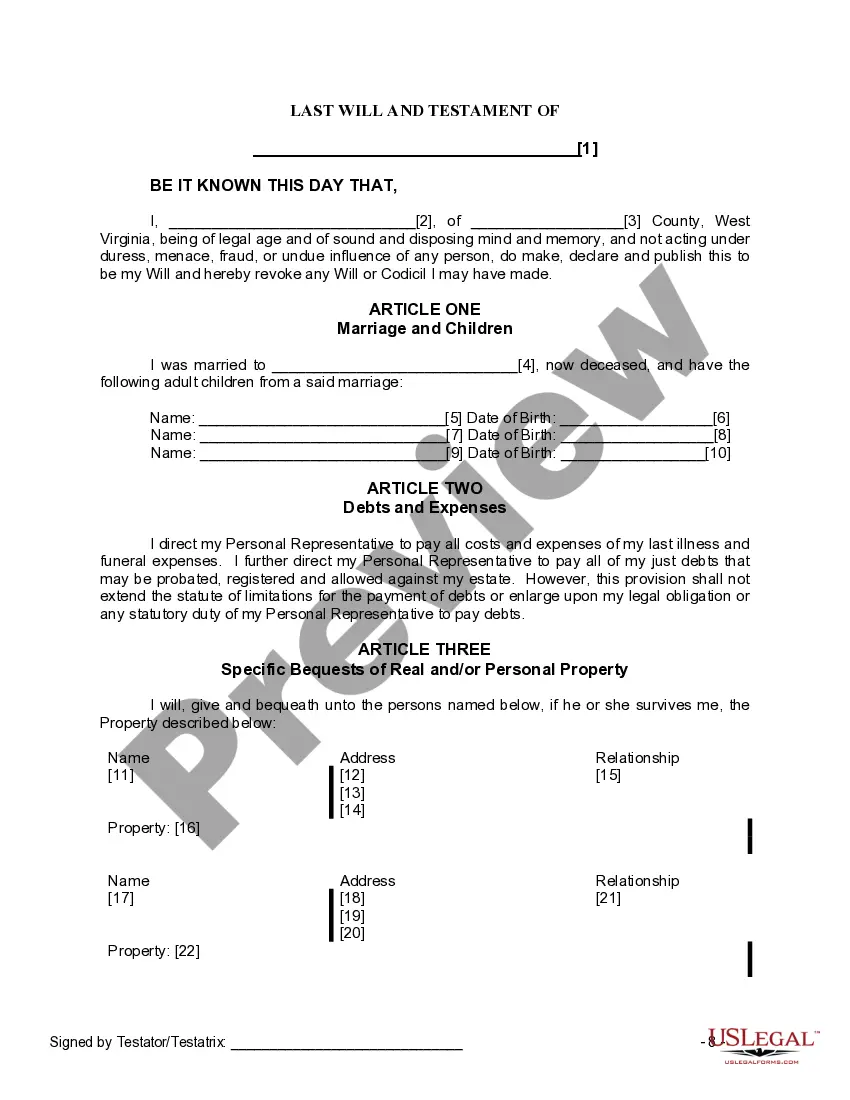
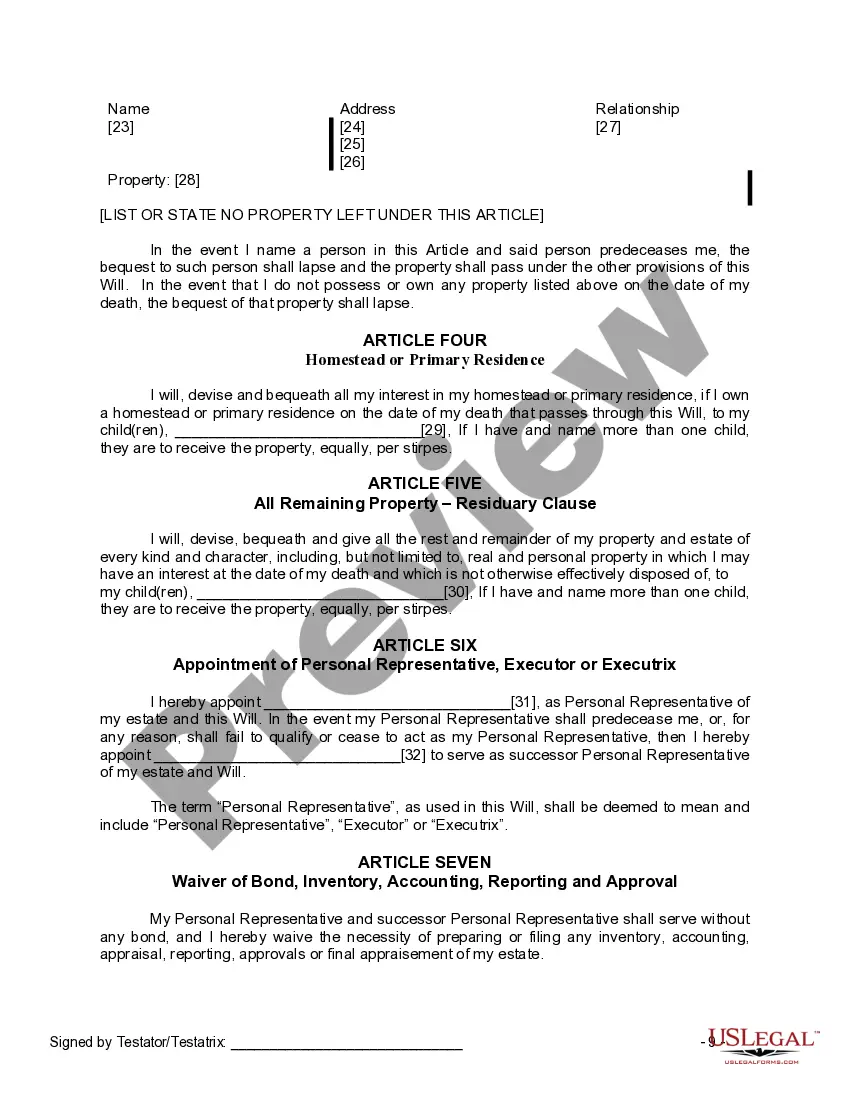
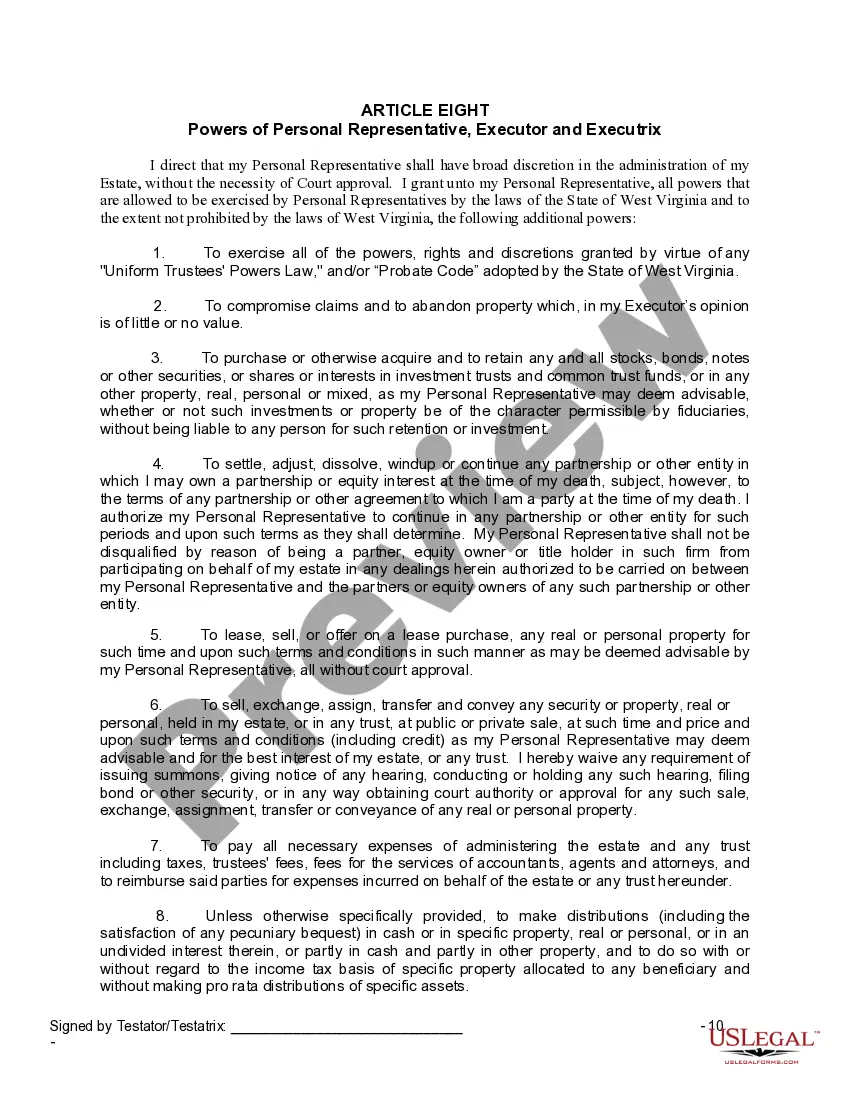
The Last Will and Testament for a Widow or Widower with Adult Children is a legal document that outlines how your assets will be distributed after your passing. Designed specifically for individuals who are widowed and have adult children, this form allows you to make important decisions regarding your estate, such as appointing a personal representative and specifying who will receive your property. This document helps ensure that your wishes are honored in a clear and legally enforceable manner, distinguishing it from other types of wills that may not account for these specific family dynamics.
Main sections of this form
- Appointment of a personal representative or executor to manage your estate.
- Designation of beneficiaries, including adult children, and specific assets bequeathed to them.
- Instructions for handling debts and expenses following your death.
- Provisions regarding the distribution of your homestead or primary residence.
- Option to waive the requirement for the personal representative to file a bond.
- Signing requirements to make the will legally valid.

Common use cases
This form is needed when a widow or widower wishes to establish a clear plan for the distribution of their assets after death. It is particularly useful in circumstances where you want to ensure your adult children receive specific items or shares of your estate. Additionally, this form is appropriate if you have unique family circumstances, such as from a previous marriage, that may affect inheritance decisions.
Intended users of this form
- Individuals who are widows or widowers and have adult children.
- People looking to have a formalized plan for asset distribution after their death.
- Those who wish to appoint a personal representative to manage their estate.
- Individuals with specific assets they want to pass on to their beneficiaries.
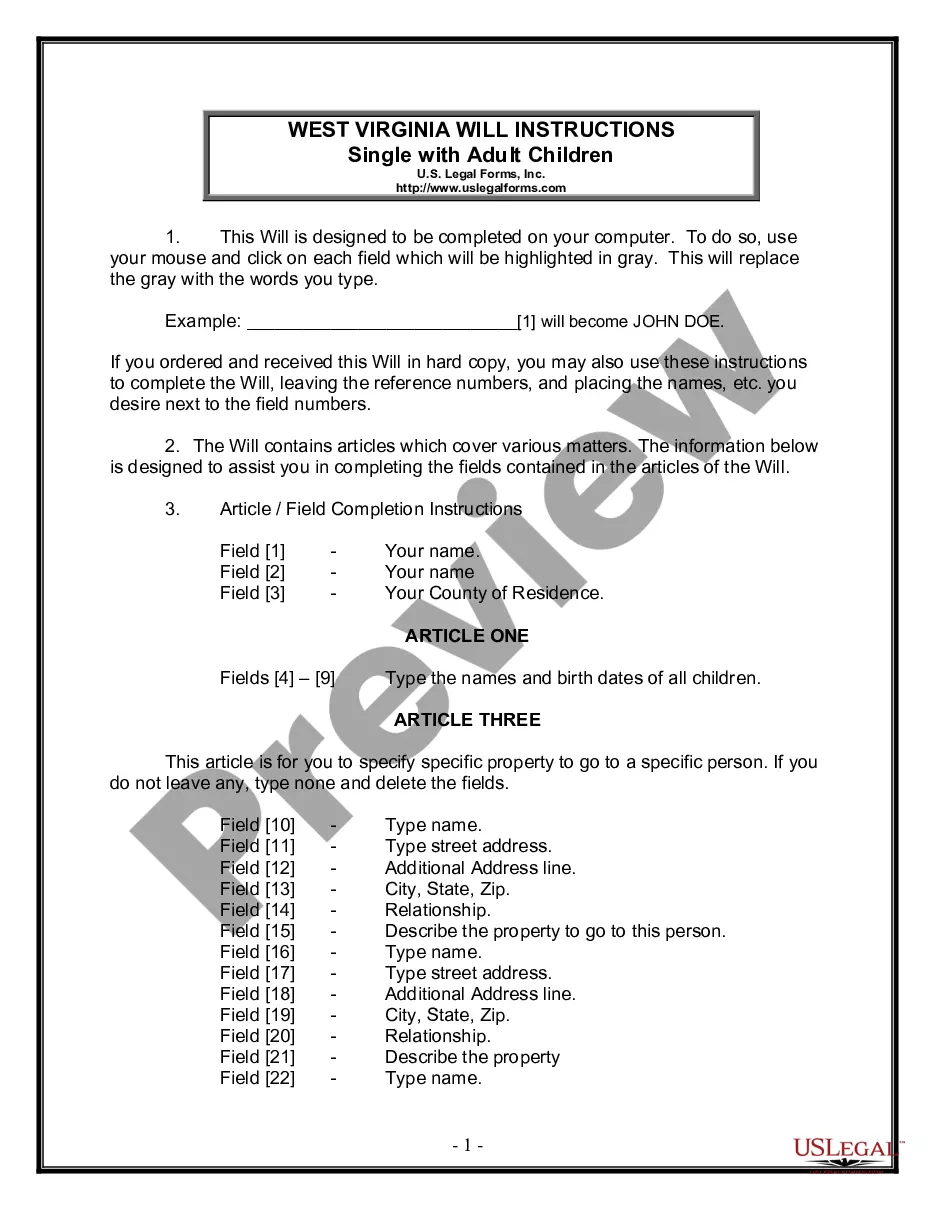
How to complete this form
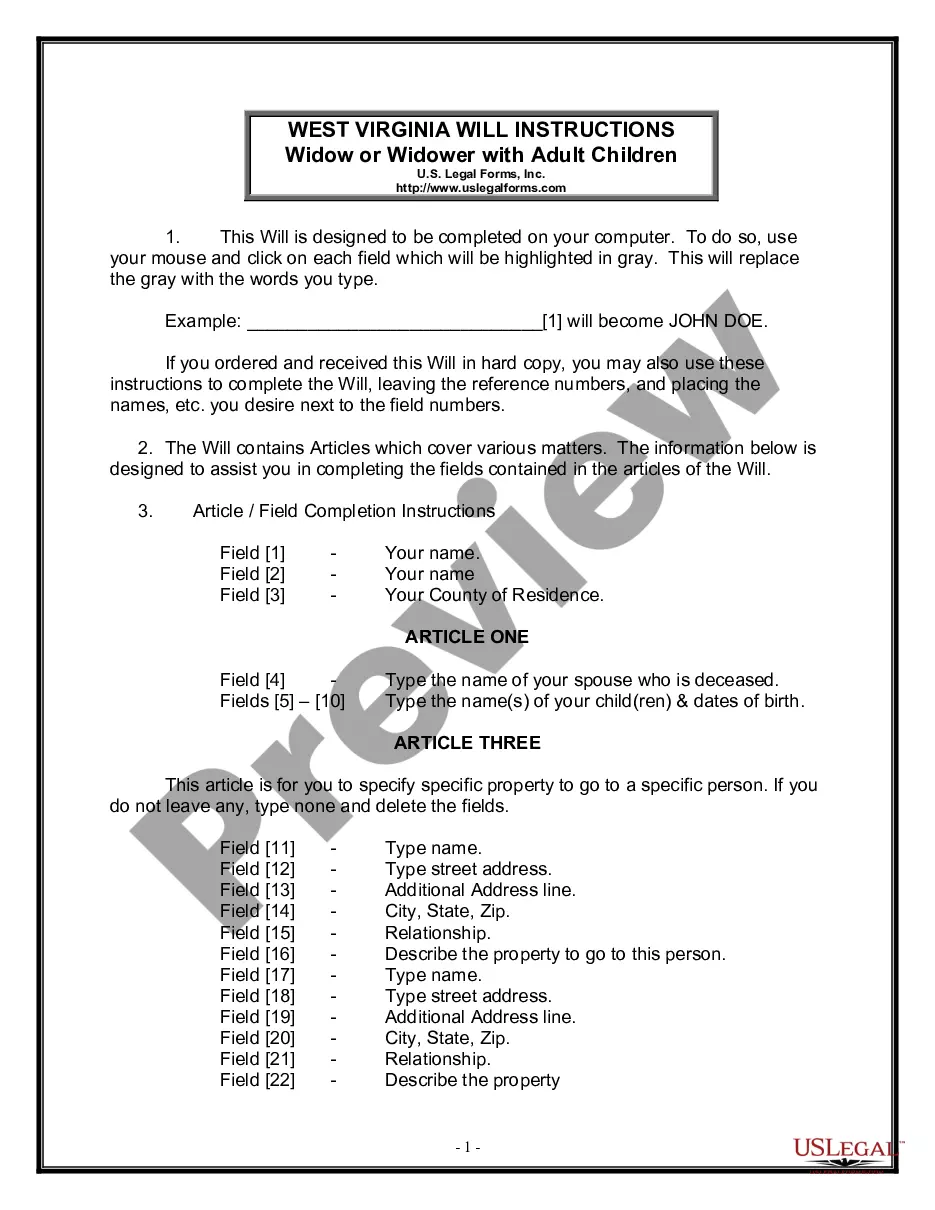
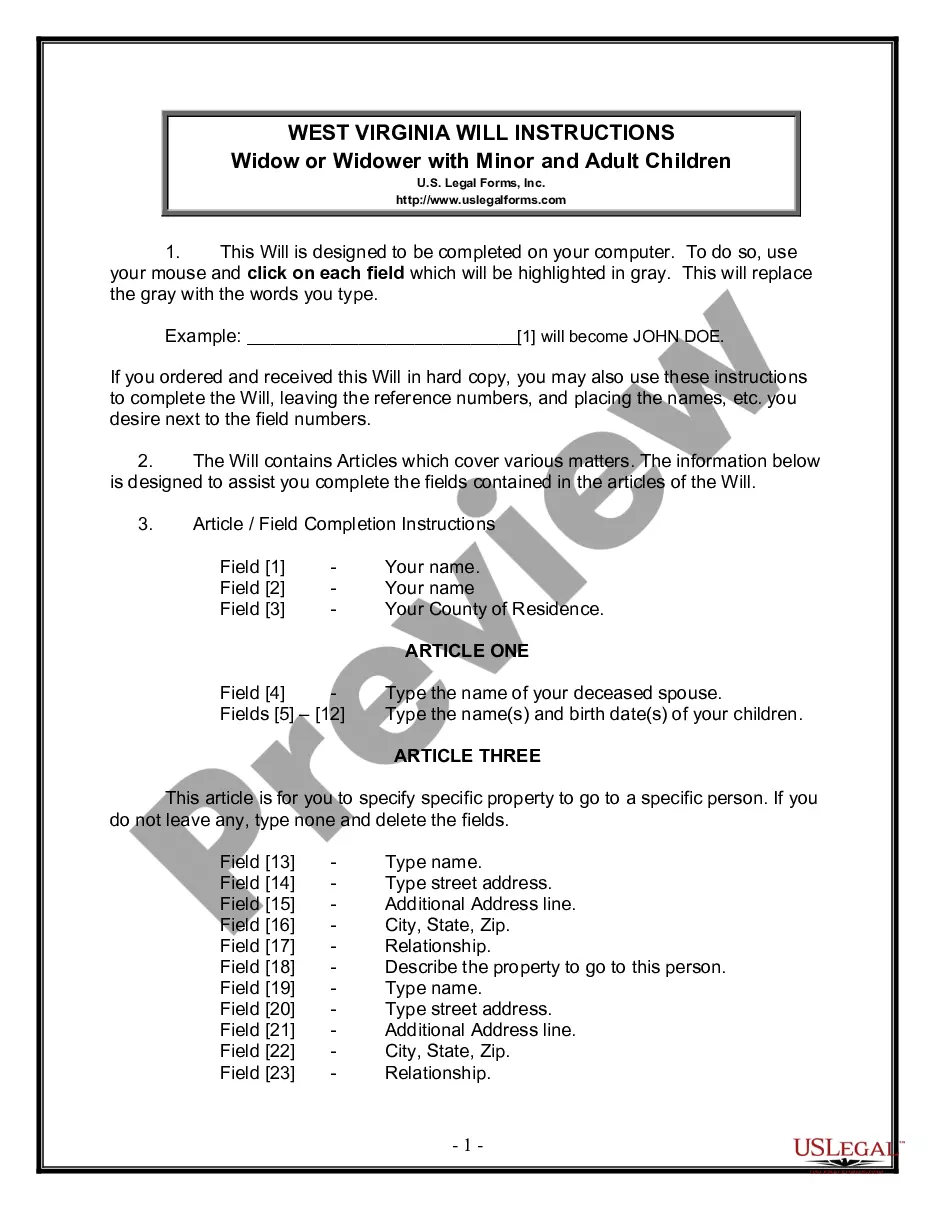
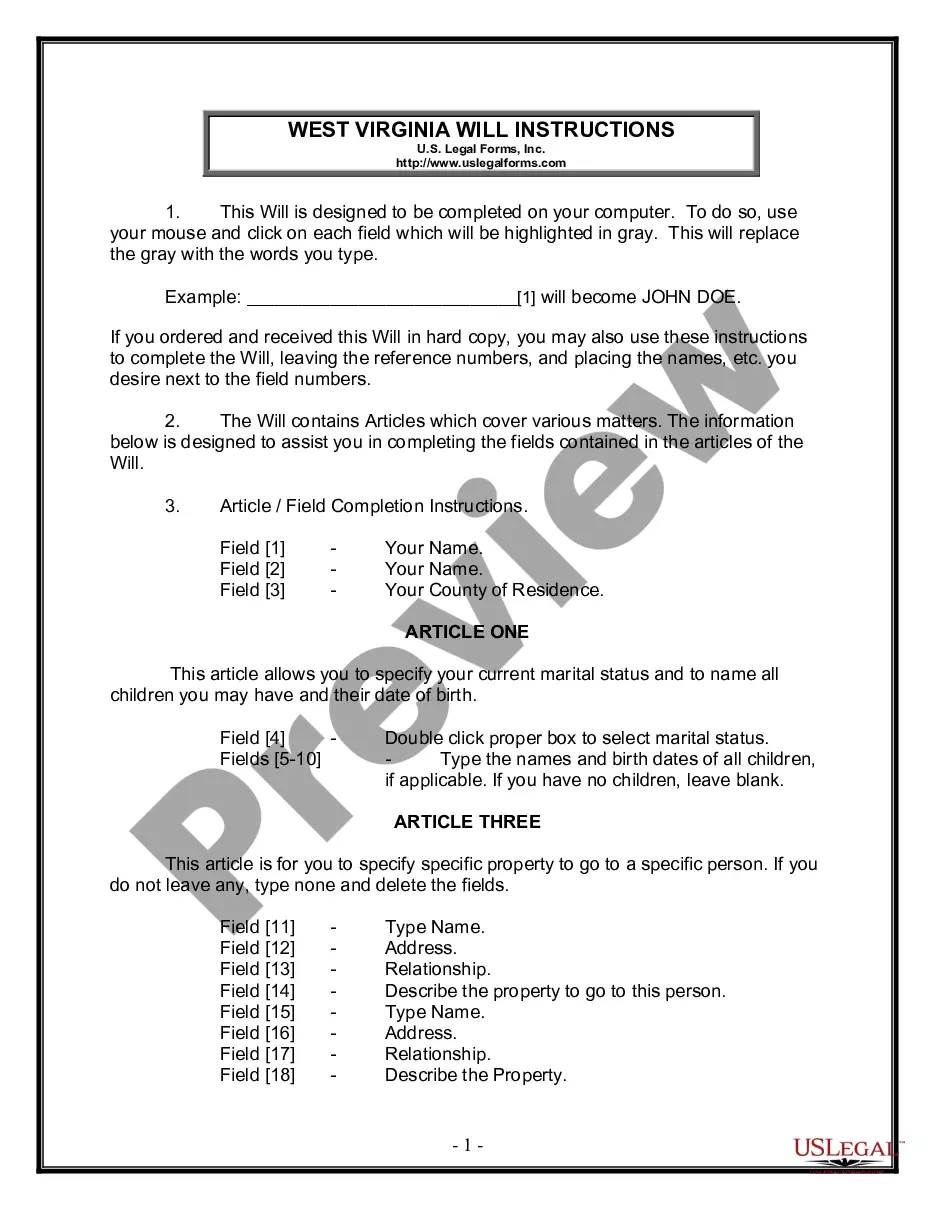
- Identify yourself by providing your name and county of residence.
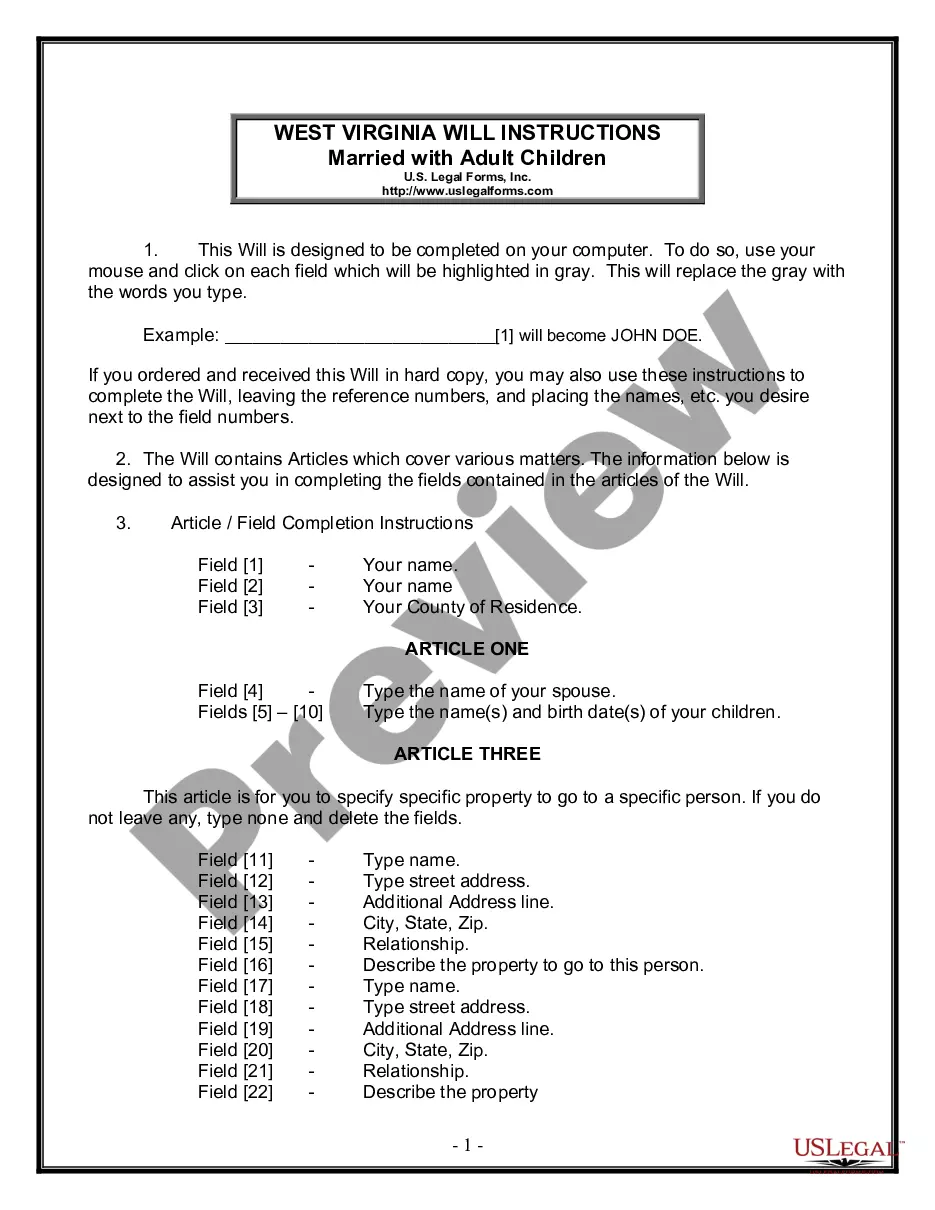
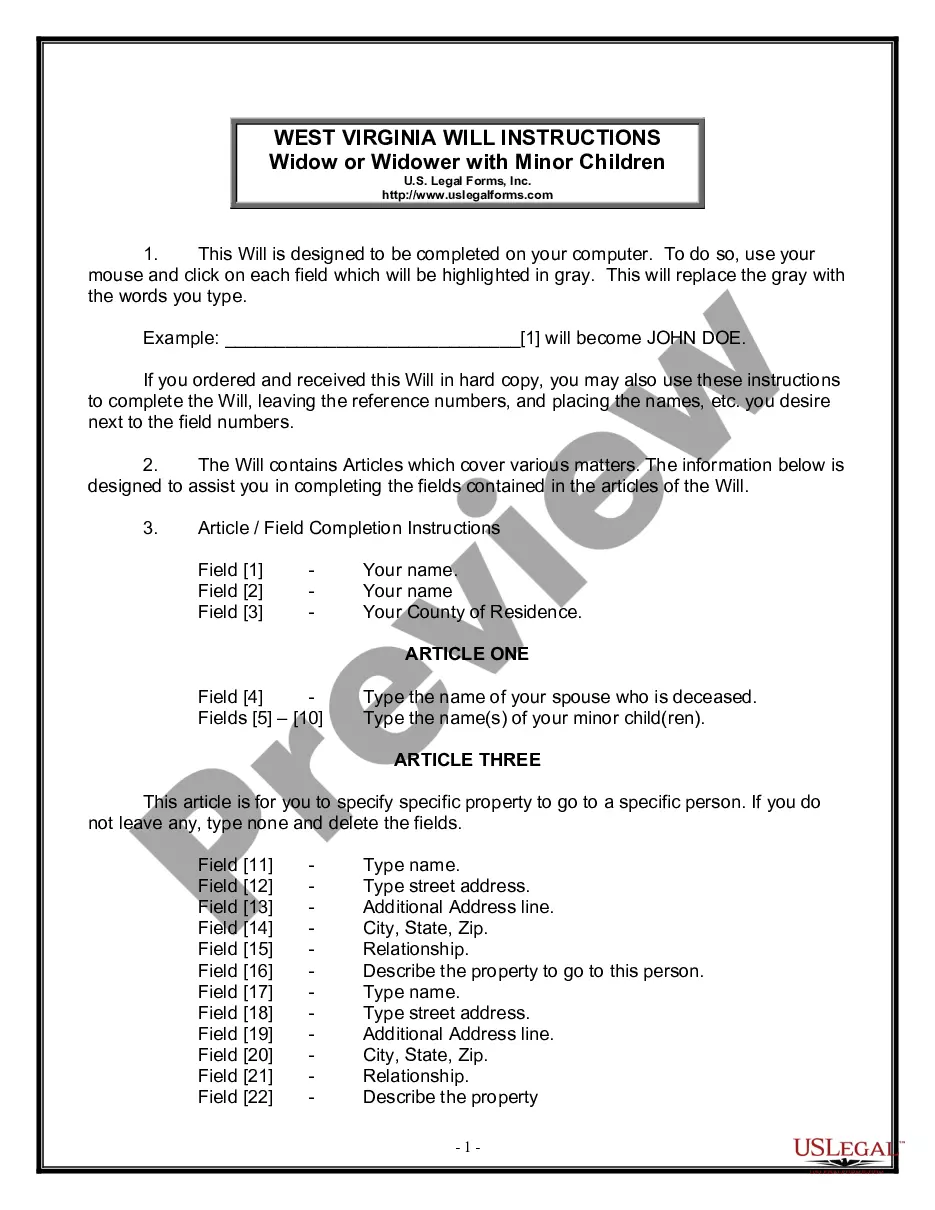
- Specify the name of your deceased spouse and list your adult children with their dates of birth.
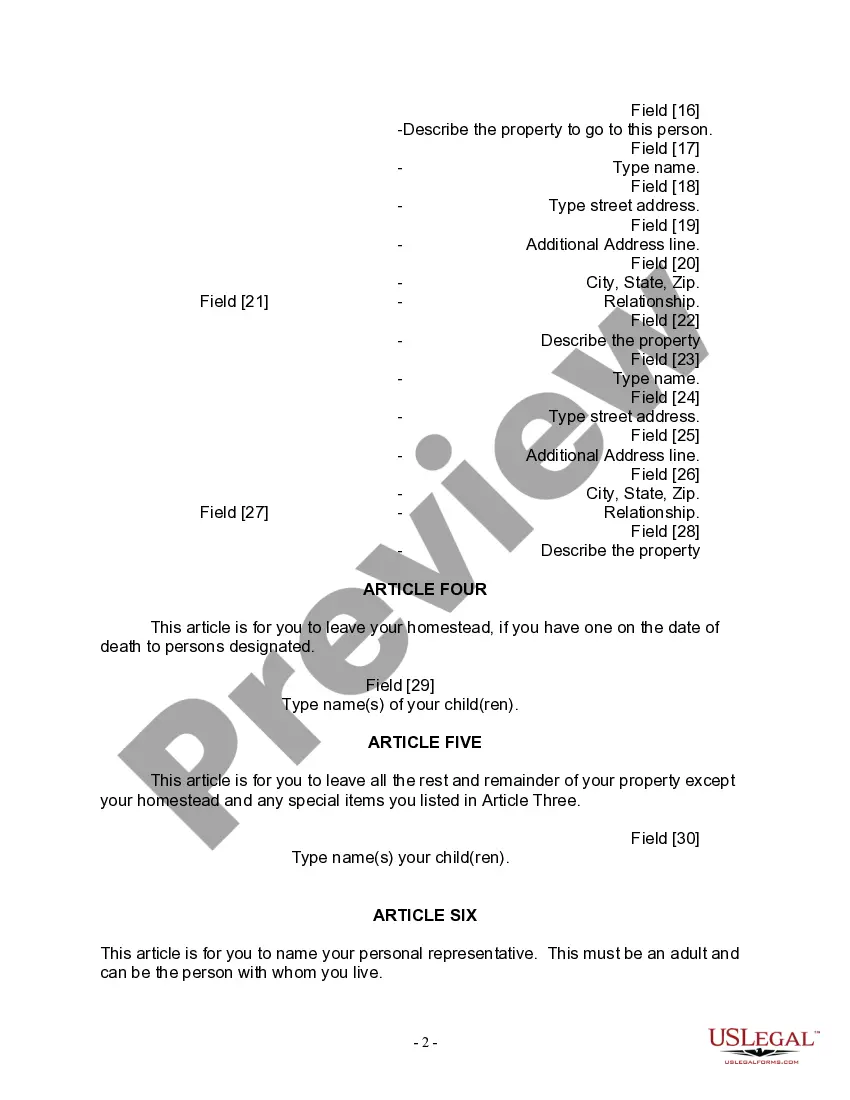
- Designate specific property or assets you wish to assign to specific individuals.
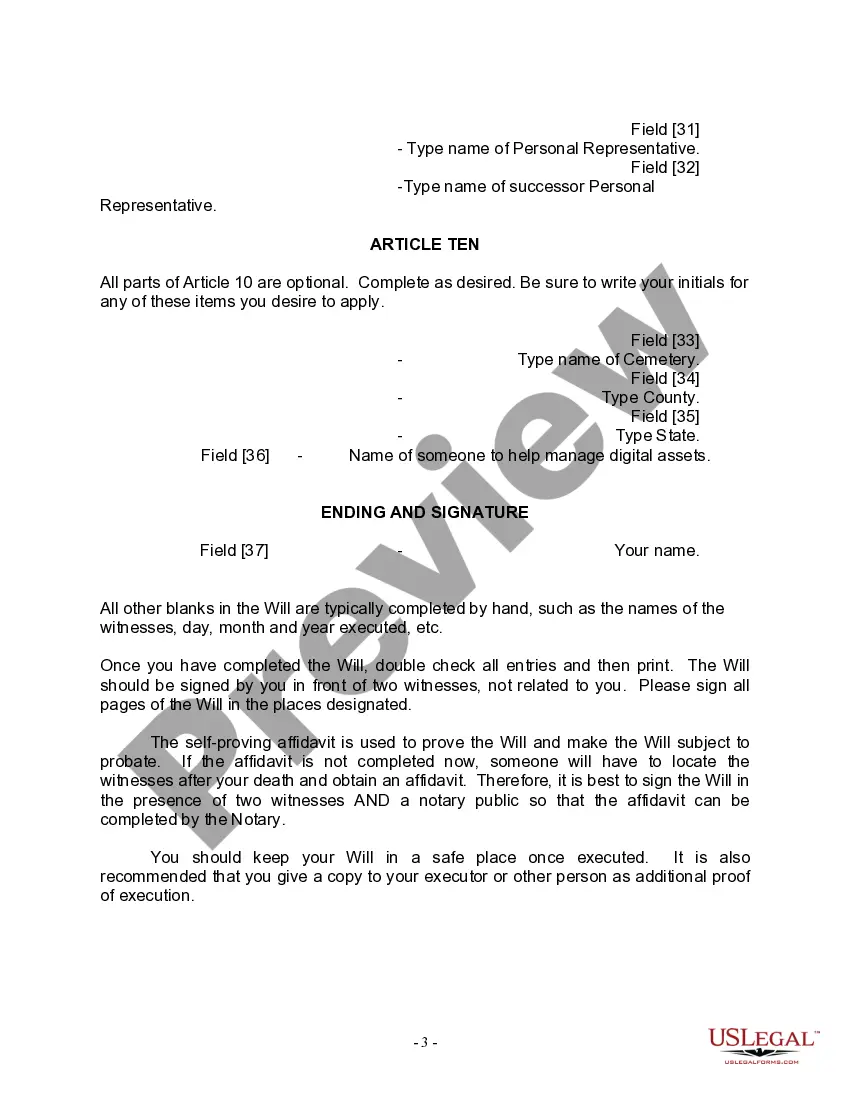
- Appoint your personal representative and, if desired, a successor representative.
- Complete and sign the document in front of two witnesses who are not named in your will.
Notarization guidance
Yes, this form must be notarized to be legally valid. Notarization ensures the authenticity of your will and can help streamline the probate process. US Legal Forms provides an integrated online notarization service, allowing you to complete this process securely via video call without the need to travel.
Get your form ready online
Our built-in tools help you complete, sign, share, and store your documents in one place.
Make edits, fill in missing information, and update formatting in US Legal Forms—just like you would in MS Word.
Download a copy, print it, send it by email, or mail it via USPS—whatever works best for your next step.
Sign and collect signatures with our SignNow integration. Send to multiple recipients, set reminders, and more. Go Premium to unlock E-Sign.
If this form requires notarization, complete it online through a secure video call—no need to meet a notary in person or wait for an appointment.
We protect your documents and personal data by following strict security and privacy standards.

Make edits, fill in missing information, and update formatting in US Legal Forms—just like you would in MS Word.

Download a copy, print it, send it by email, or mail it via USPS—whatever works best for your next step.

Sign and collect signatures with our SignNow integration. Send to multiple recipients, set reminders, and more. Go Premium to unlock E-Sign.

If this form requires notarization, complete it online through a secure video call—no need to meet a notary in person or wait for an appointment.

We protect your documents and personal data by following strict security and privacy standards.
Typical mistakes to avoid
- Failing to sign the will in the presence of the required witnesses.
- Not clearly identifying specific assets or property in the will.
- Overlooking the appointment of a successor personal representative.
- Assuming that joint property will pass through the will when it may not.
Advantages of online completion
- Convenience: Complete the form from home at your own pace.
- Editability: Easily modify the document as your circumstances change.
- Secure storage: Your completed documents can be stored securely online.
- Time-saving: Instant access means you can finalize your will without delay.
Summary of main points
- This Last Will and Testament is specifically designed for widows and widowers with adult children.
- Completing the form carefully can prevent potential disputes among heirs.
- Following state-specific requirements for witnessing and notarization is critical for the documentâs validity.
Looking for another form?
Form popularity
FAQ
Bold Jumping Spider. Golden Jumping Spider. Long-bodied Cellar Spider. Common House Spider. Picure of a Triangulate House Spider. Yellow Sac Spider. False Widow. Six-spotted Fishing Spider.
West Virginia is one of a minority of states that not only divide marital or community property acquired during the course of a marriage, but may also divide assets earned prior to the marriage regardless of which spouse is the title owner.
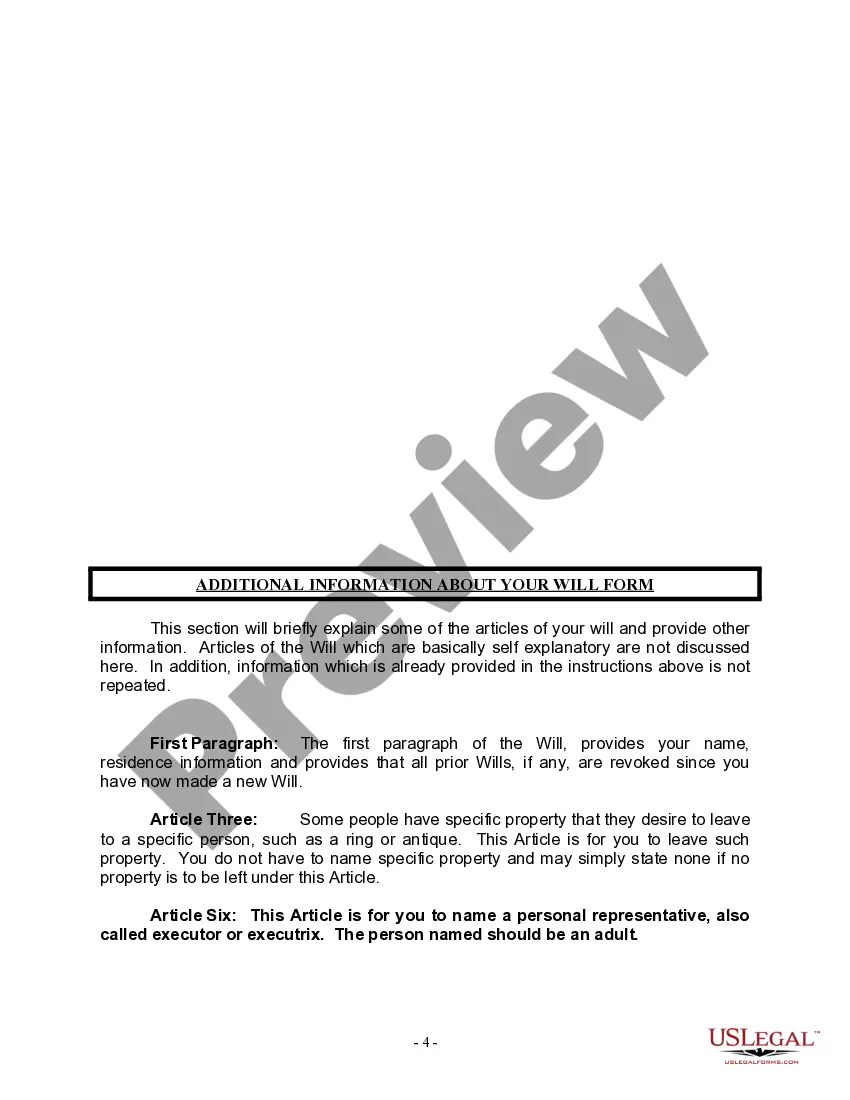
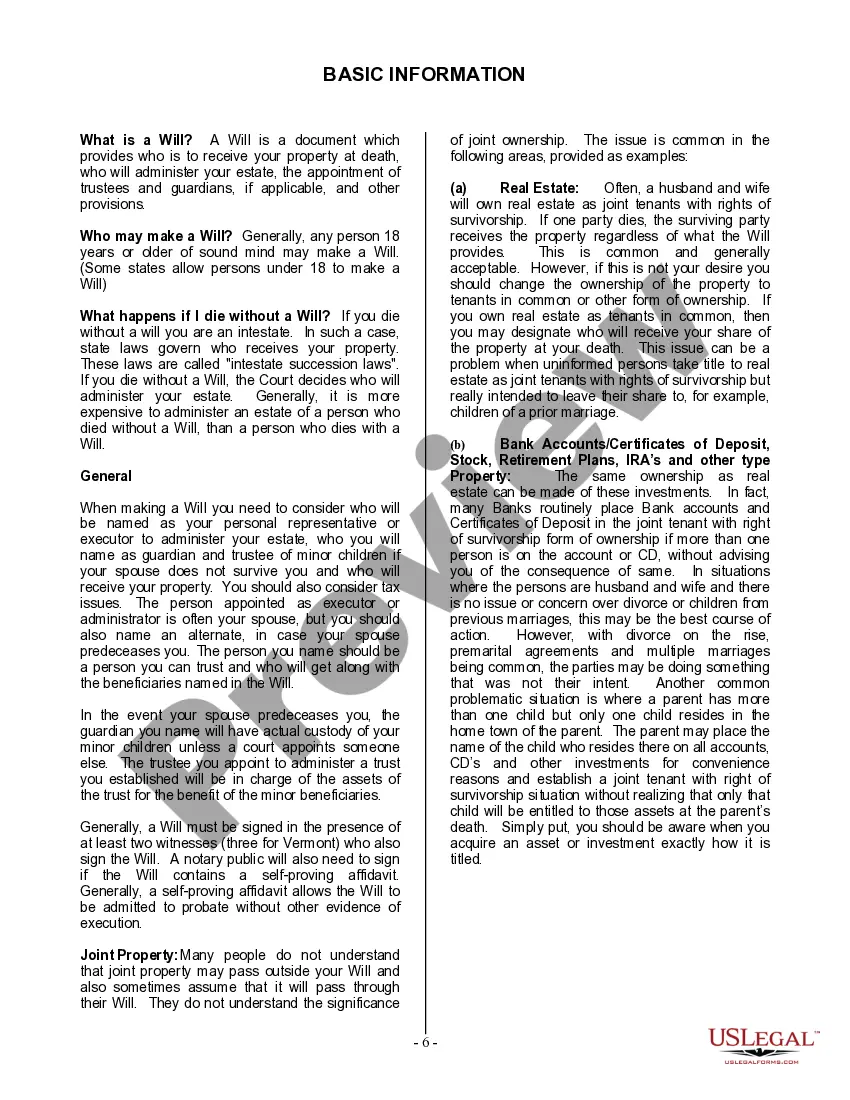
Many married couples own most of their assets jointly with the right of survivorship. When one spouse dies, the surviving spouse automatically receives complete ownership of the property. This distribution cannot be changed by Will.
If one dies, the house automatically belongs entirely to the surviving spouse without going through probate. This type of ownership also protects the surviving spouse's interest in the property from the people who may have been owed money by the deceased.The third type of home ownership is called a tenancy in common.
With survivorship, if one of them dies, the surviving spouse becomes the sole owner of the property. If there are no survivorship provisions, such as with tenants in common, then the surviving spouse retains half of the property but the remaining half goes into the deceased spouse's estate.
If you die without a will in West Virginia, your children will receive an intestate share of your property. The size of each child's share depends on how many children you have, whether or not you are married, and whether you or your spouse have children from another relationship.
Ohio, Arkansas and Kentucky are the only states that retain dower rights. Dower rights generally kick in after someone has died. A dower rights law entitles a surviving spouse to at least one-third of a deceased spouse's real property when they die.
Surviving spouses and domestic partners of intestate individuals will find that they are entitled to a solid portion of their deceased spouse's property, according to California inheritance laws.
If you and your spouse own your house jointly, the responsibility for the mortgage will pass to your surviving spouse. Your surviving spouse, who will now be the sole owner of the house, will also be responsible for the entire mortgage.