West Virginia Revocable Living Trust for Husband and Wife with No Children
What this document covers
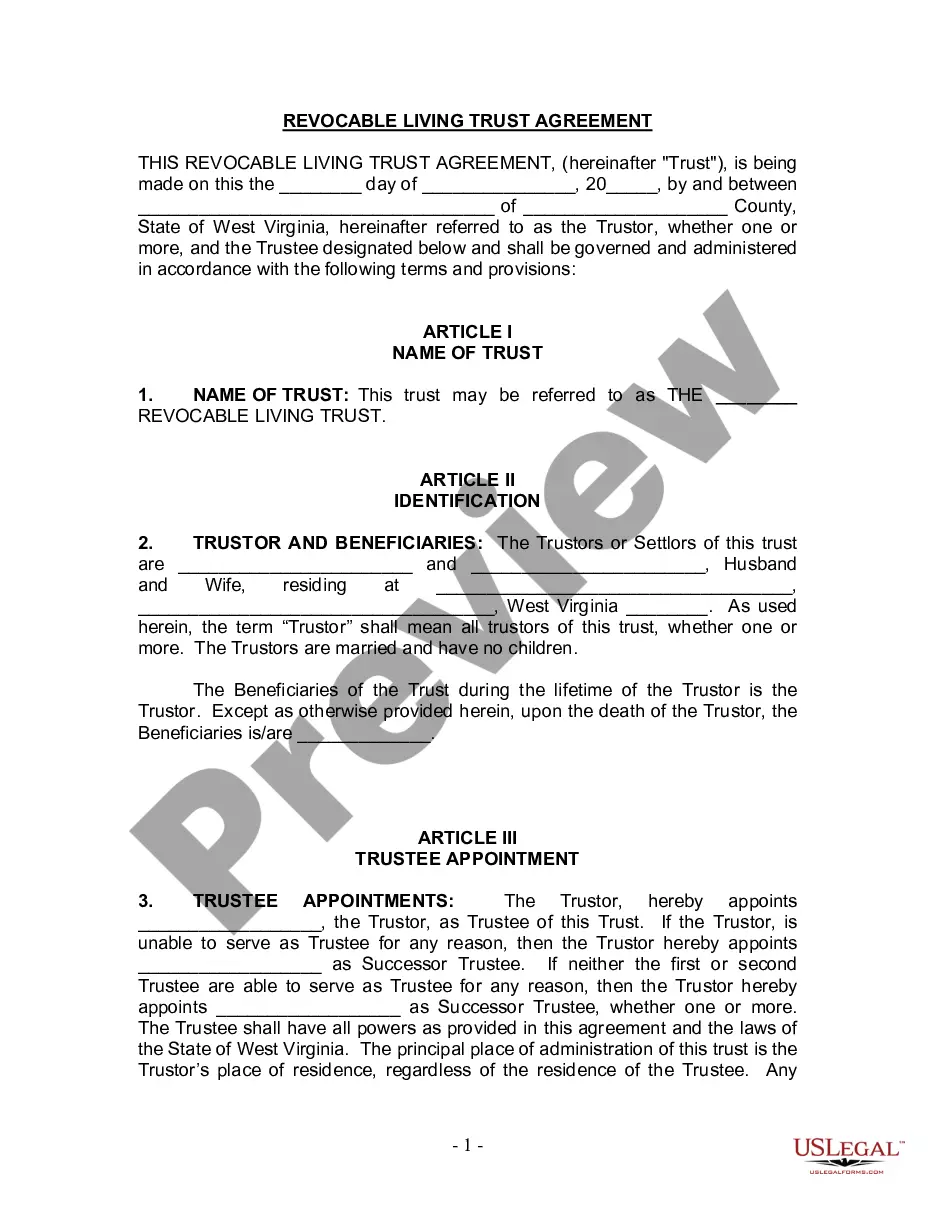
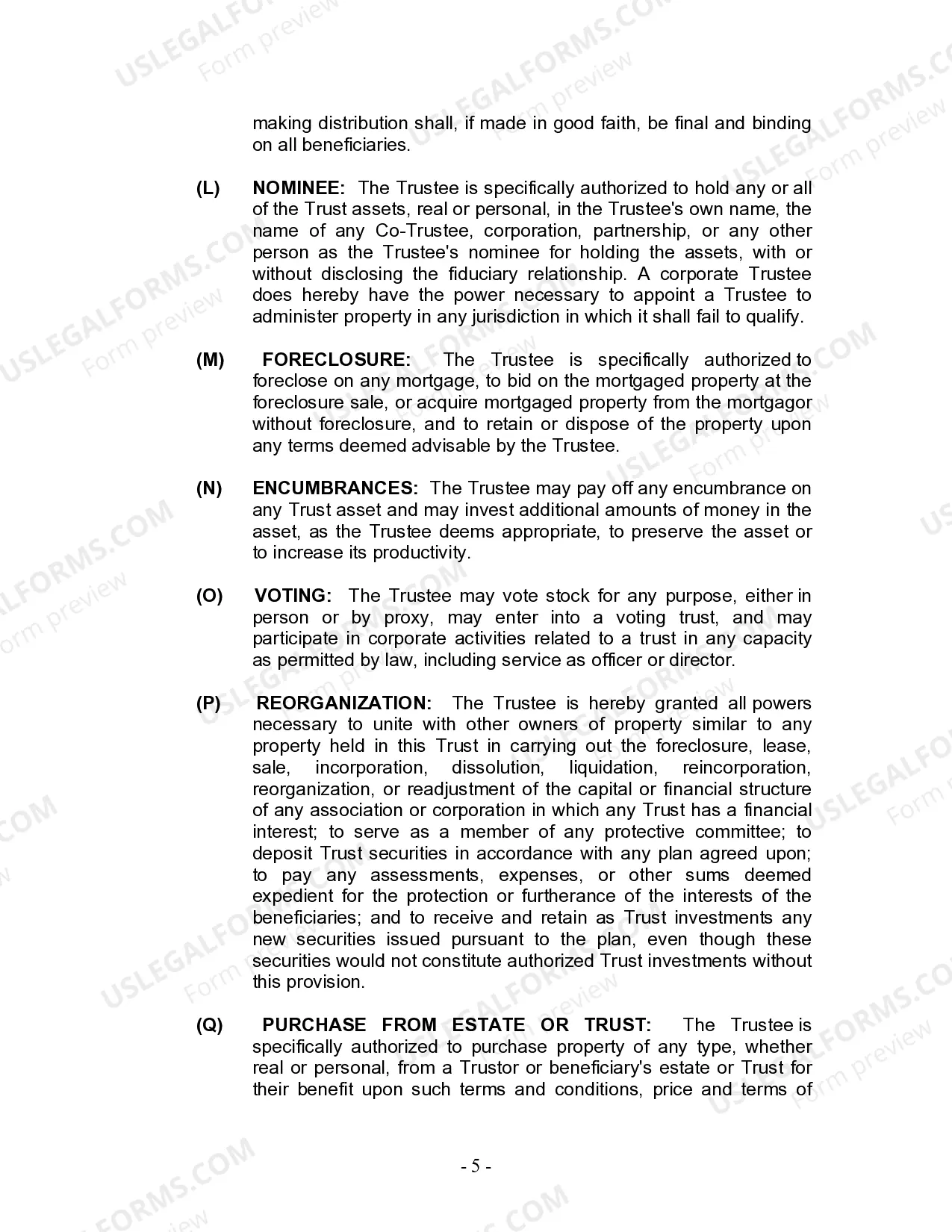
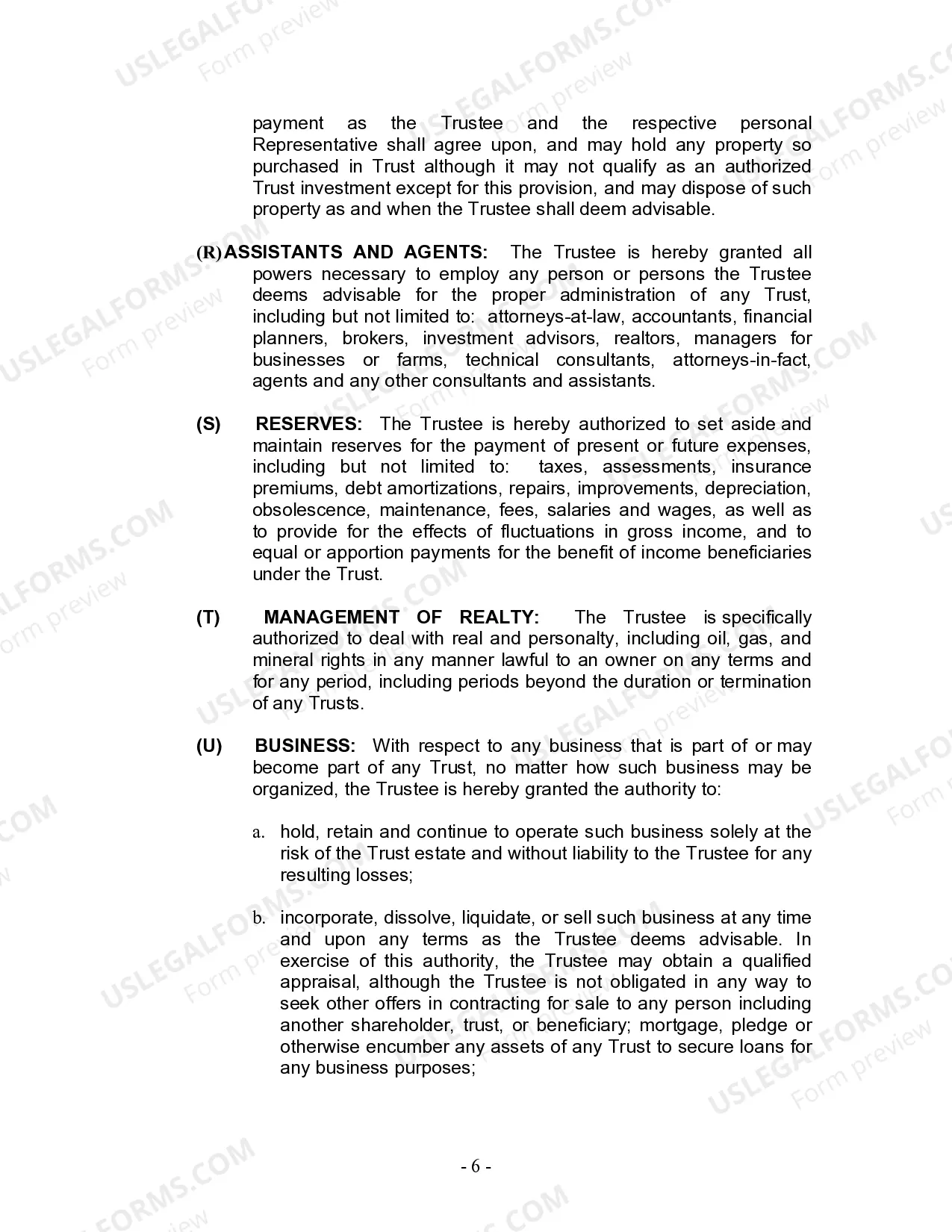
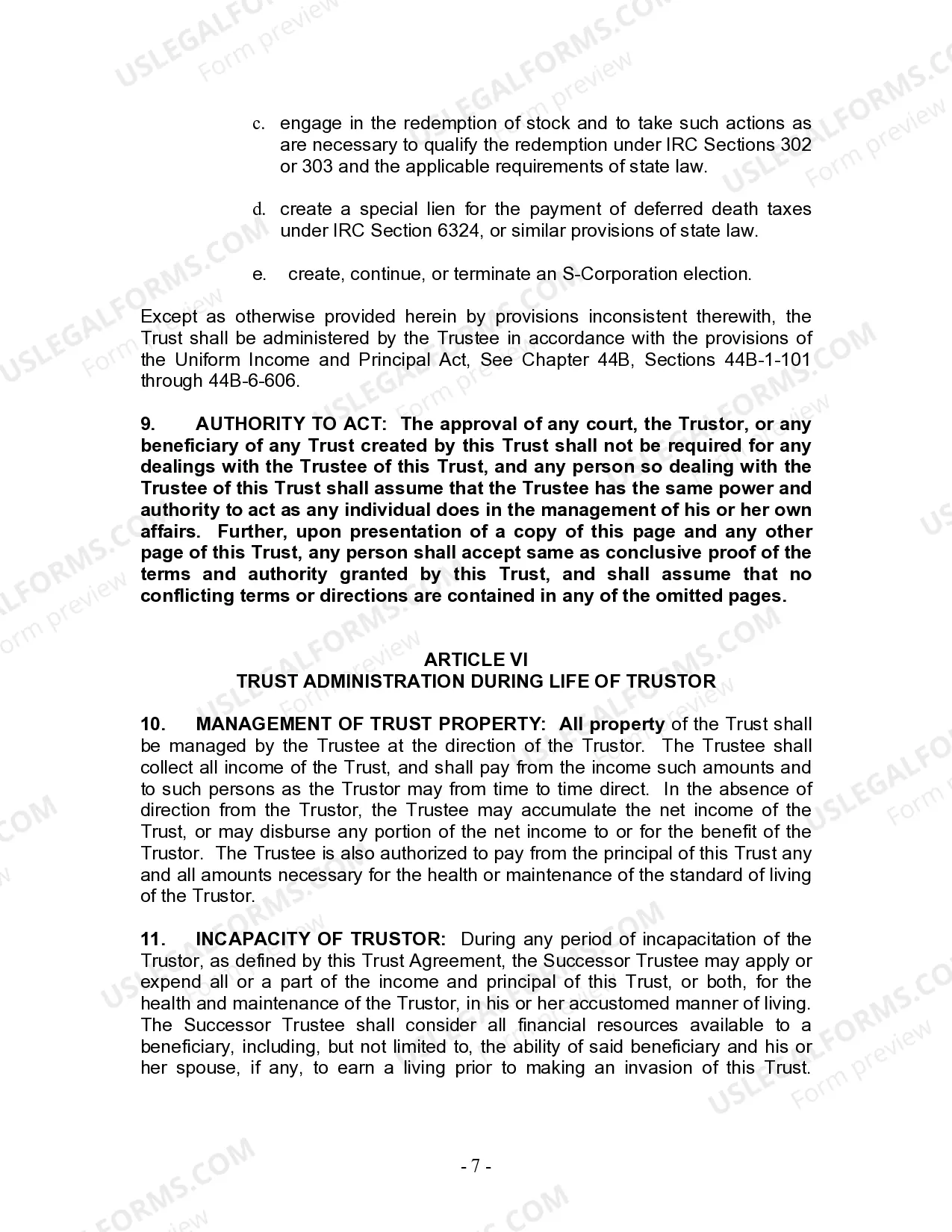
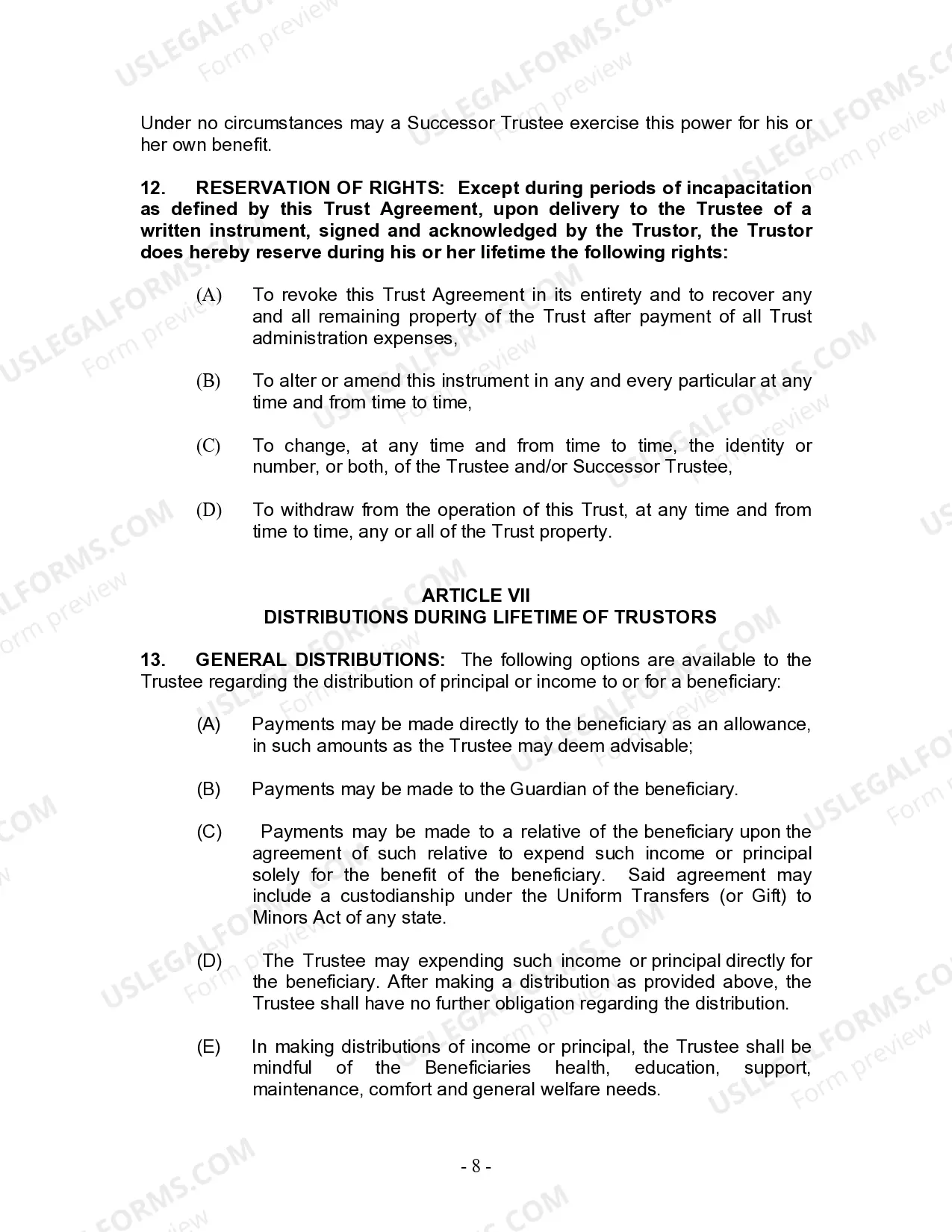
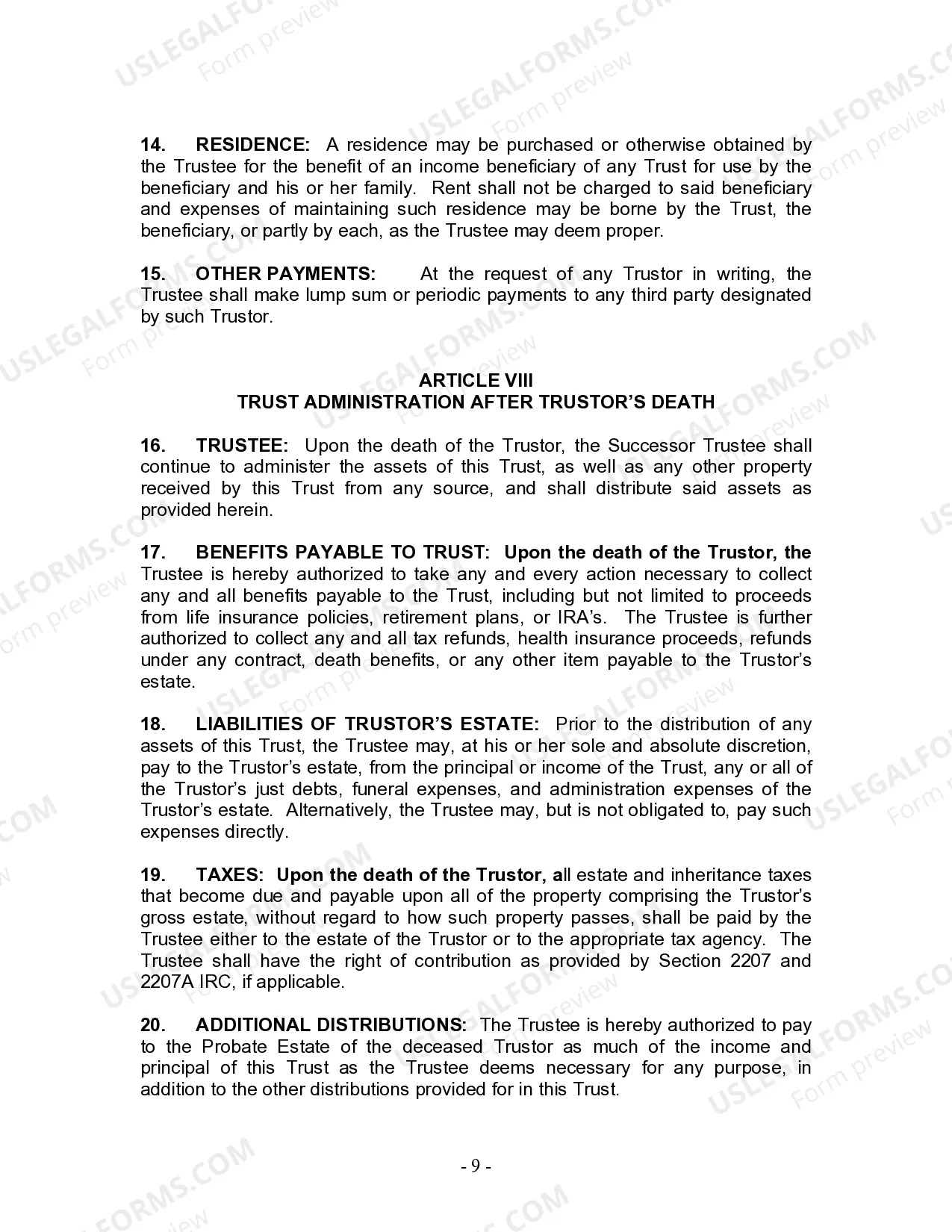
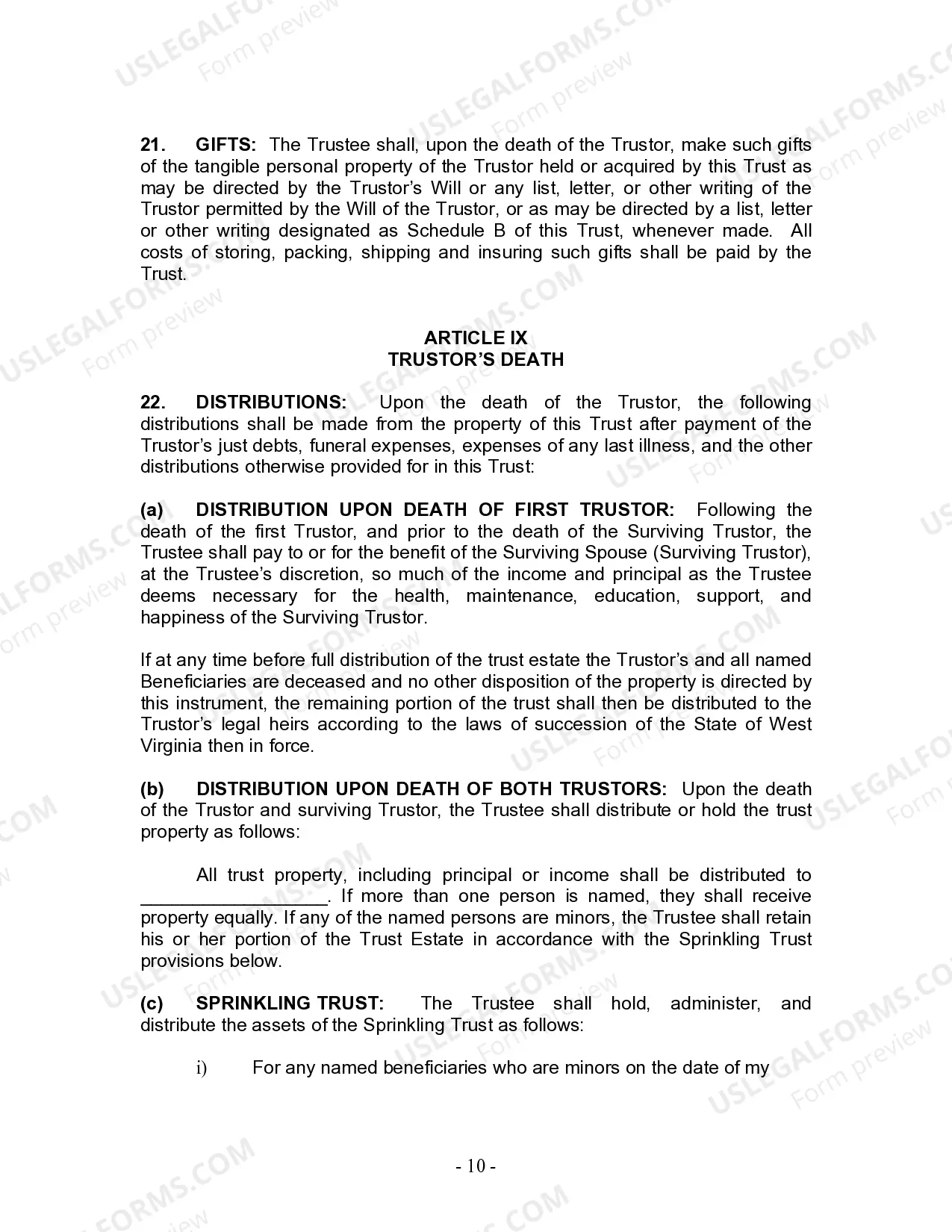
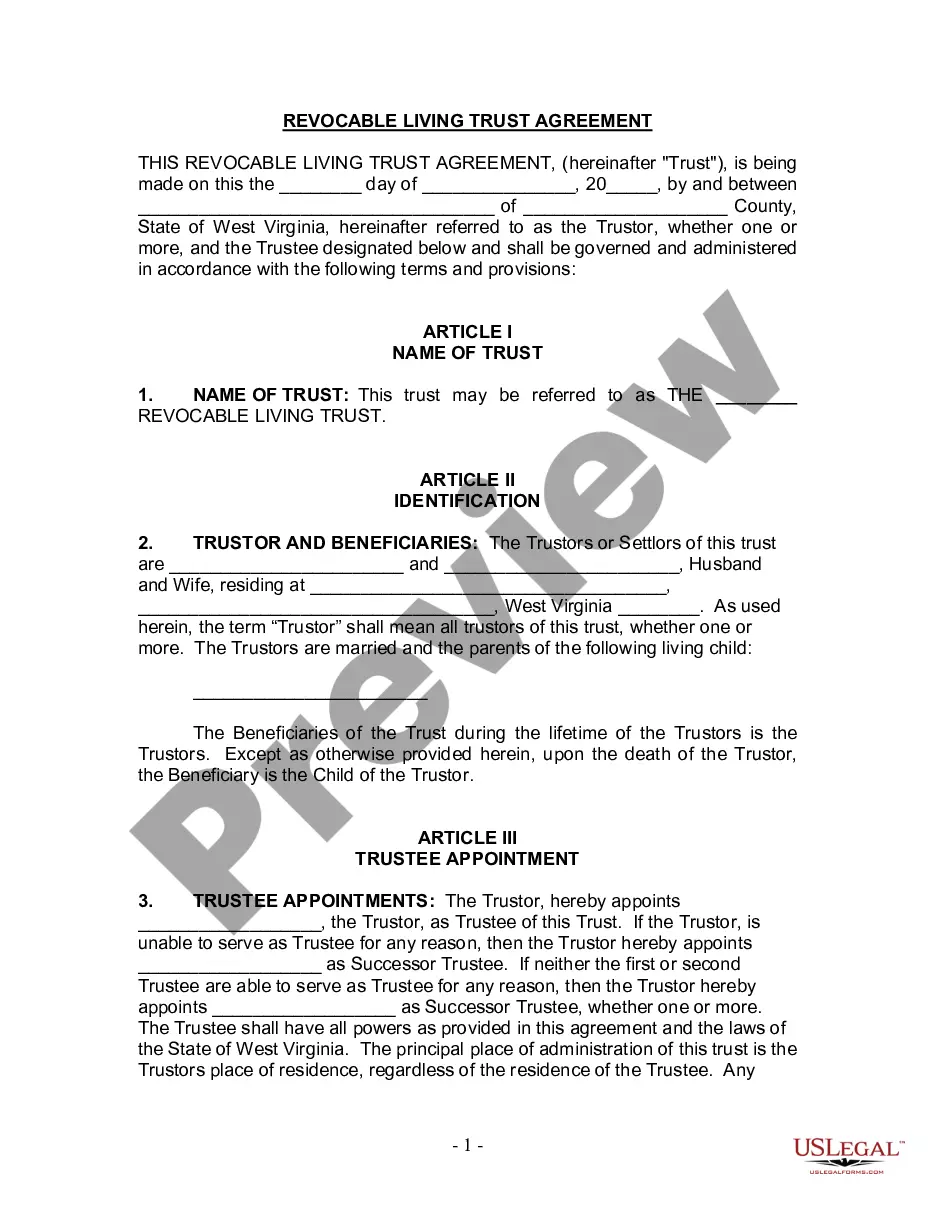
The Revocable Living Trust for Husband and Wife with No Children is a legal document that creates a trust during the lifetimes of a married couple. Designed specifically for couples without children, this form allows the trustors (the husband and wife) to manage their assets while retaining control over them. Unlike a Last Will and Testament, this trust avoids the probate process upon the death of the trustor, ensuring a more seamless transfer of assets to designated beneficiaries.
Key components of this form
- Identification of the trustors and beneficiaries, typically the husband and wife.
- Appointment of a trustee, which can be the trustor(s) themselves.
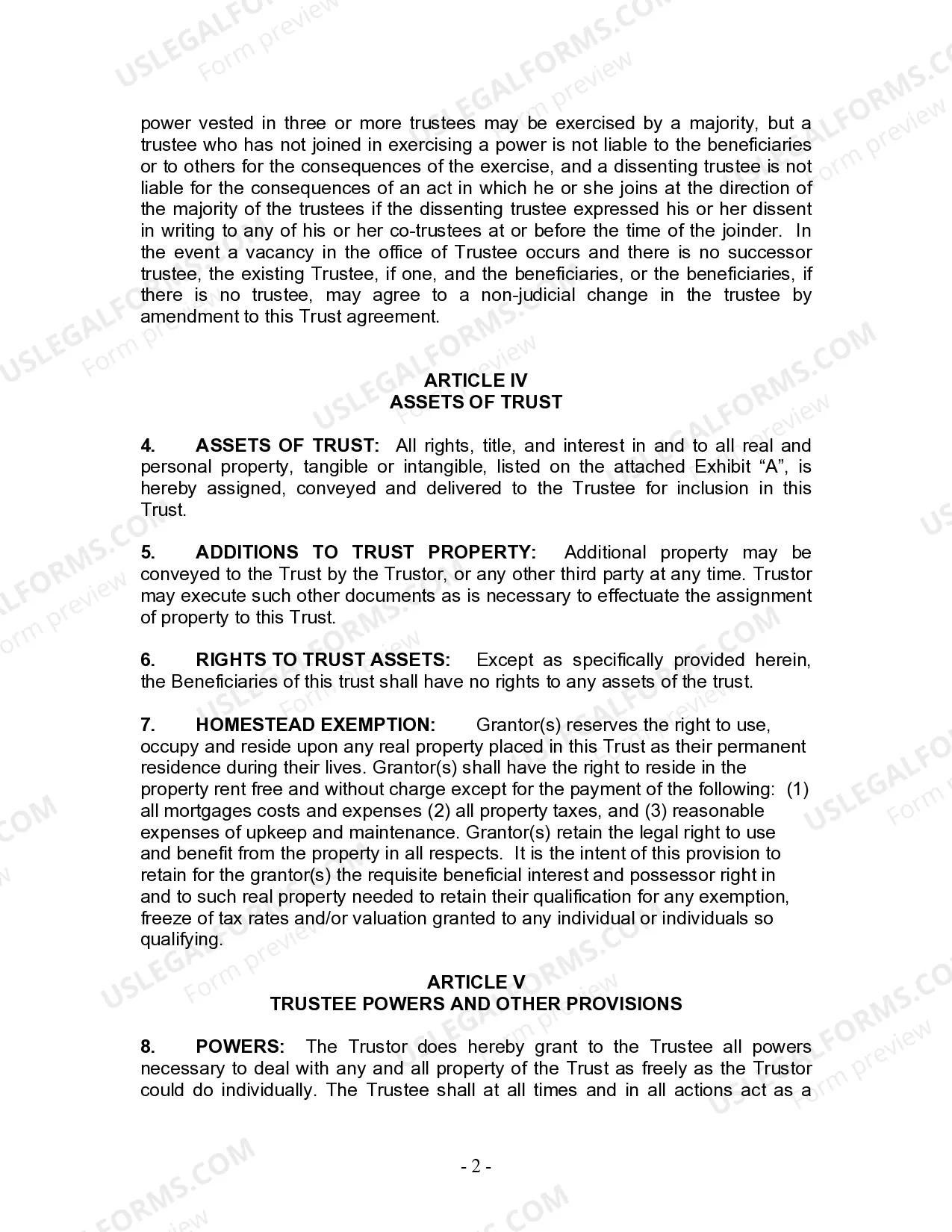
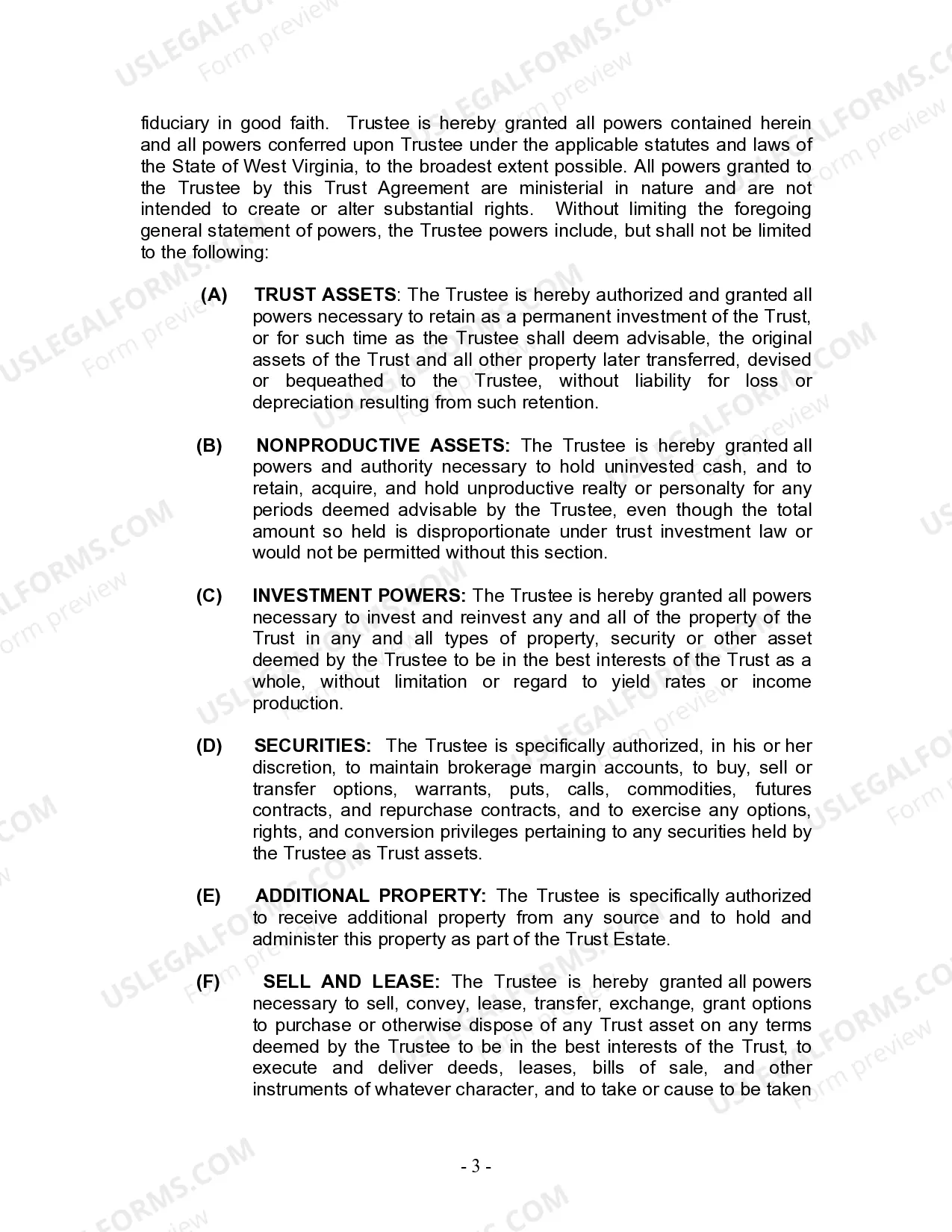
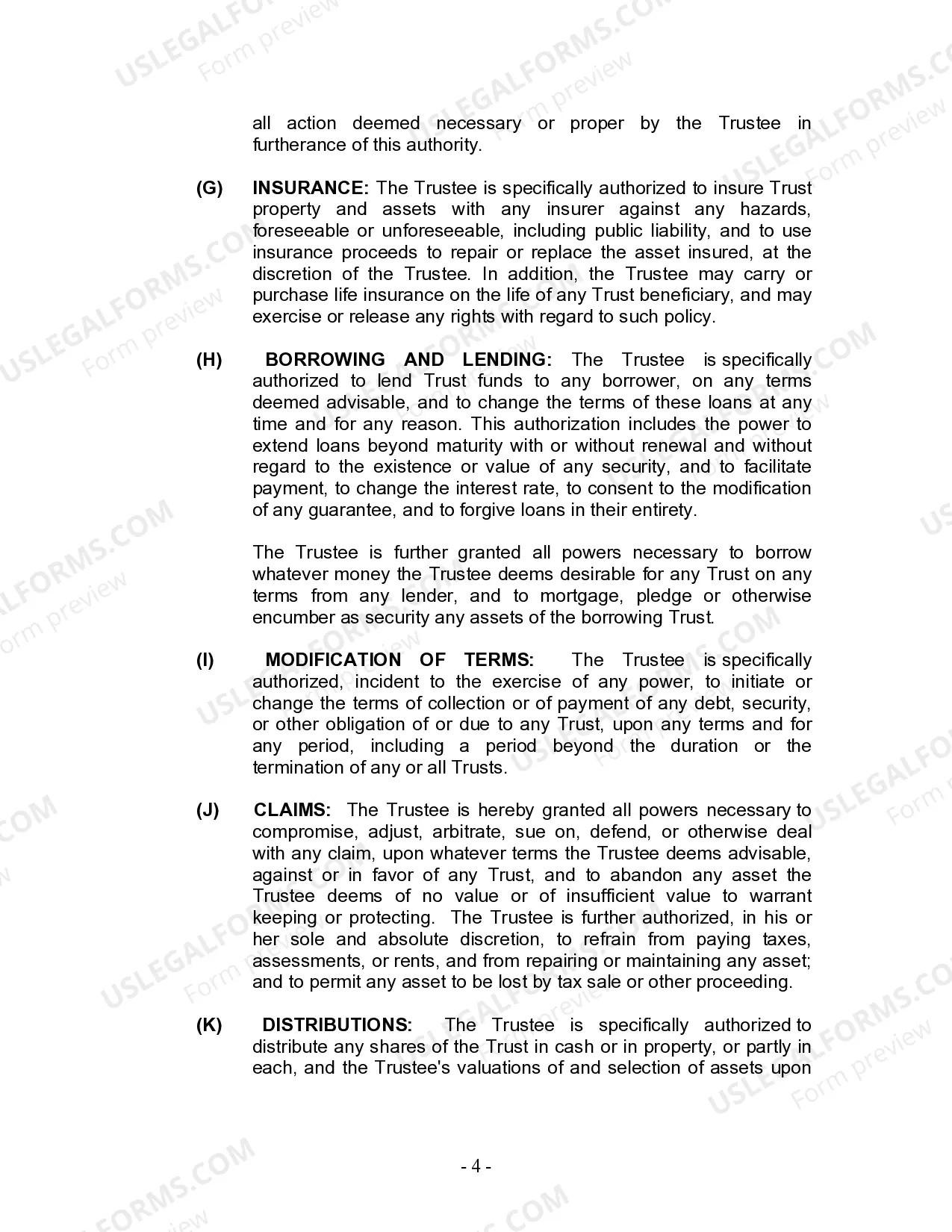
- Provision for management of trust assets during the trustors' lifetime.
- Rules for asset distribution upon the death of either or both trustors.
- Rights of the grantors to revoke or amend the trust at any time while they are alive.

Situations where this form applies
This form is useful for couples who want to streamline their estate planning process, particularly when they have no children. It is appropriate to use when you want to ensure your assets are managed according to your wishes after your death without the complications of probate, or if you wish to maintain control of your assets during your lifetime while providing for a seamless transition to your spouse in case either partner passes away.
Who needs this form
- Married couples without children looking to establish a straightforward estate plan.
- Individuals wanting to maintain control over their assets while ensuring a smooth transfer to their spouse upon death.
- Couples who wish to avoid the probate process to save time and expenses related to their estate after death.
Steps to complete this form
- Identify the parties involved, including the trustors (husband and wife) and trustee.
- Name the trust in the designated section of the document.
- List the assets that will be included in the trust, using Exhibit A for detailed descriptions.
- Complete any information regarding successors or additional trustees as necessary.
- Sign and date the document in the presence of a notary, if required by local law.
Notarization requirements for this form
This form does not typically require notarization unless specified by local law. However, it is advisable to execute the trust in front of a notary public to ensure its validity and authenticity, especially when dealing with significant assets.
Get your form ready online
Our built-in tools help you complete, sign, share, and store your documents in one place.
Make edits, fill in missing information, and update formatting in US Legal Forms—just like you would in MS Word.
Download a copy, print it, send it by email, or mail it via USPS—whatever works best for your next step.
Sign and collect signatures with our SignNow integration. Send to multiple recipients, set reminders, and more. Go Premium to unlock E-Sign.
If this form requires notarization, complete it online through a secure video call—no need to meet a notary in person or wait for an appointment.
We protect your documents and personal data by following strict security and privacy standards.

Make edits, fill in missing information, and update formatting in US Legal Forms—just like you would in MS Word.

Download a copy, print it, send it by email, or mail it via USPS—whatever works best for your next step.

Sign and collect signatures with our SignNow integration. Send to multiple recipients, set reminders, and more. Go Premium to unlock E-Sign.

If this form requires notarization, complete it online through a secure video call—no need to meet a notary in person or wait for an appointment.

We protect your documents and personal data by following strict security and privacy standards.
Typical mistakes to avoid
- Failing to include all significant assets in the trust documentation.
- Not naming a successor trustee, which can complicate management of the trust after the trustors' death.
- Overlooking to periodically update the trust to reflect changes in circumstances or laws.
- Neglecting to have the document notarized where applicable.
Why complete this form online
- Convenience of filling out and downloading the form from anywhere, saving time and travel.
- Editability allows users to make adjustments easily to meet personal needs.
- Access to guidance and resources that enhance understanding of legal concepts.
- Reliability ensured through templates drafted by licensed attorneys familiar with state laws.
Summary of main points
- The Revocable Living Trust allows married couples without children to manage their estate efficiently.
- It facilitates avoidance of probate, ensuring quicker distribution of assets.
- Trustors maintain control over their assets during their lifetime and can amend the trust as needed.
- Preparation tailored to West Virginia law ensures compliance and enforceability.
Looking for another form?

Form popularity
FAQ
Many married couples own most of their assets jointly with the right of survivorship. When one spouse dies, the surviving spouse automatically receives complete ownership of the property. This distribution cannot be changed by Will.
Surviving spouses and domestic partners of intestate individuals will find that they are entitled to a solid portion of their deceased spouse's property, according to California inheritance laws.
California is a community property state, which means that following the death of a spouse, the surviving spouse will have entitlement to one-half of the community property (i.e., property that was acquired over the course of the marriage, regardless of which spouse acquired it).
If you and your spouse own your house jointly, the responsibility for the mortgage will pass to your surviving spouse. Your surviving spouse, who will now be the sole owner of the house, will also be responsible for the entire mortgage.
If you die without a valid will, your state's intestacy laws determine the distribution of probate assets. Some states' laws provide that a surviving spouse automatically inherits all of the assets whether or not the couple had children together.
If you die without a will in West Virginia, your children will receive an intestate share of your property. The size of each child's share depends on how many children you have, whether or not you are married, and whether you or your spouse have children from another relationship.
California is a community property state, which means that following the death of a spouse, the surviving spouse will have entitlement to one-half of the community property (i.e., property that was acquired over the course of the marriage, regardless of which spouse acquired it).
When an individual dies intestate meaning no will or trust to bequeath assets state law determines how the assets are divided among potential heirs. For married couples with children, it is not automatic that the surviving spouse inherits all assets.Surviving children may include those from a prior marriage.
When a person dies without leaving a valid will, their property (the estate) must be shared out according to certain rules.A person who dies without leaving a will is called an intestate person. Only married or civil partners and some other close relatives can inherit under the rules of intestacy.