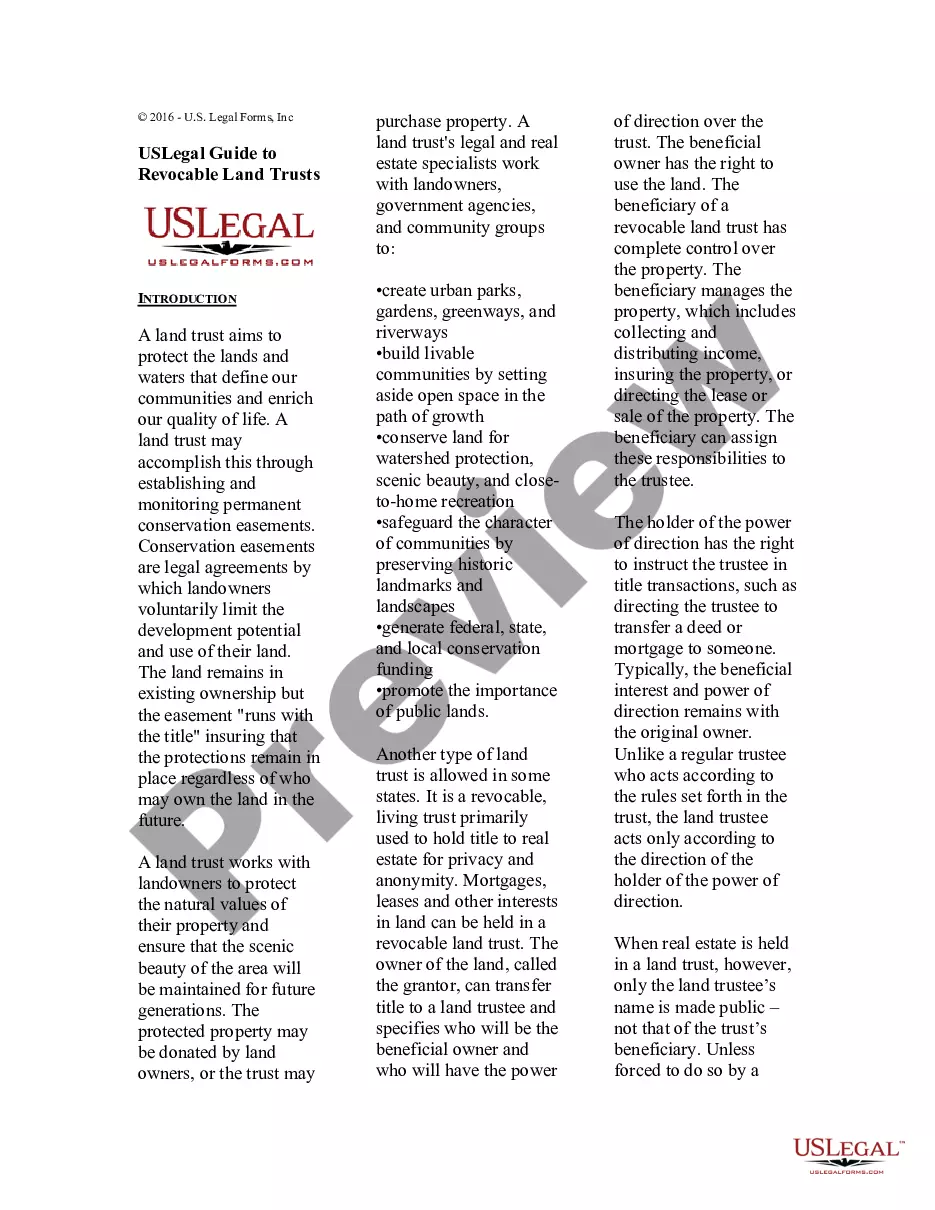
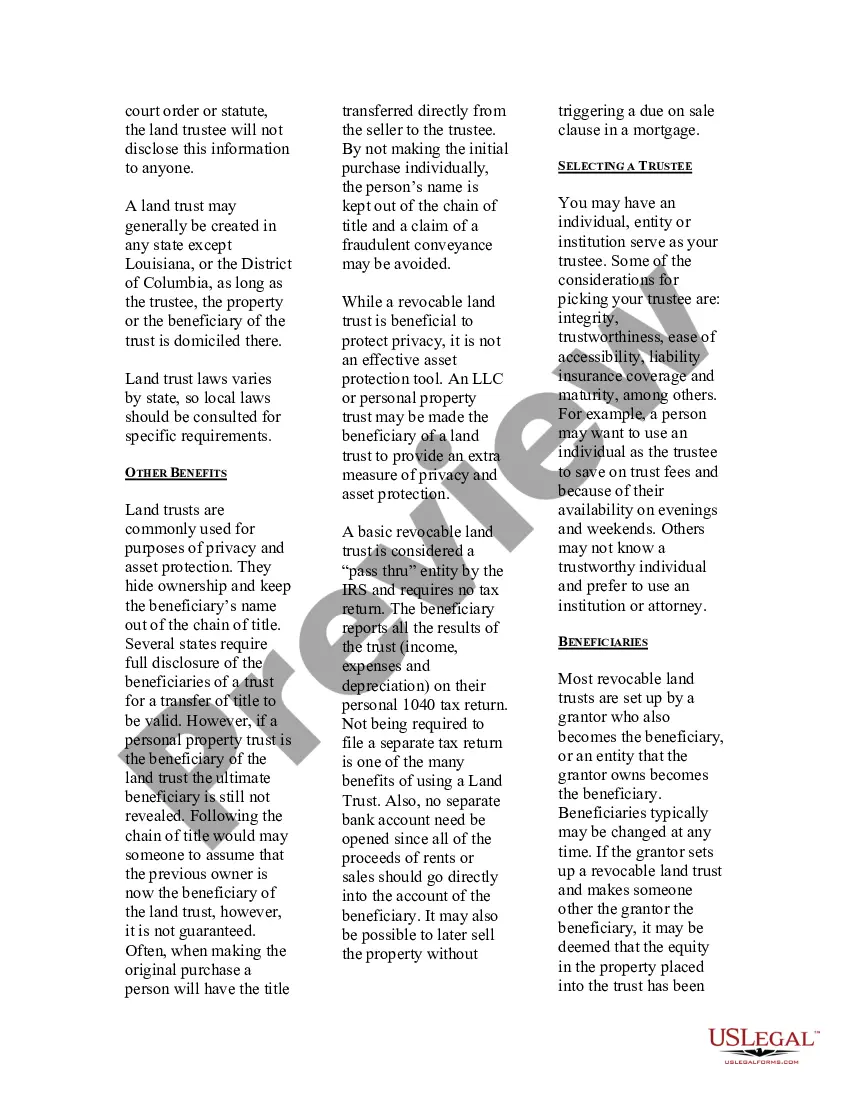
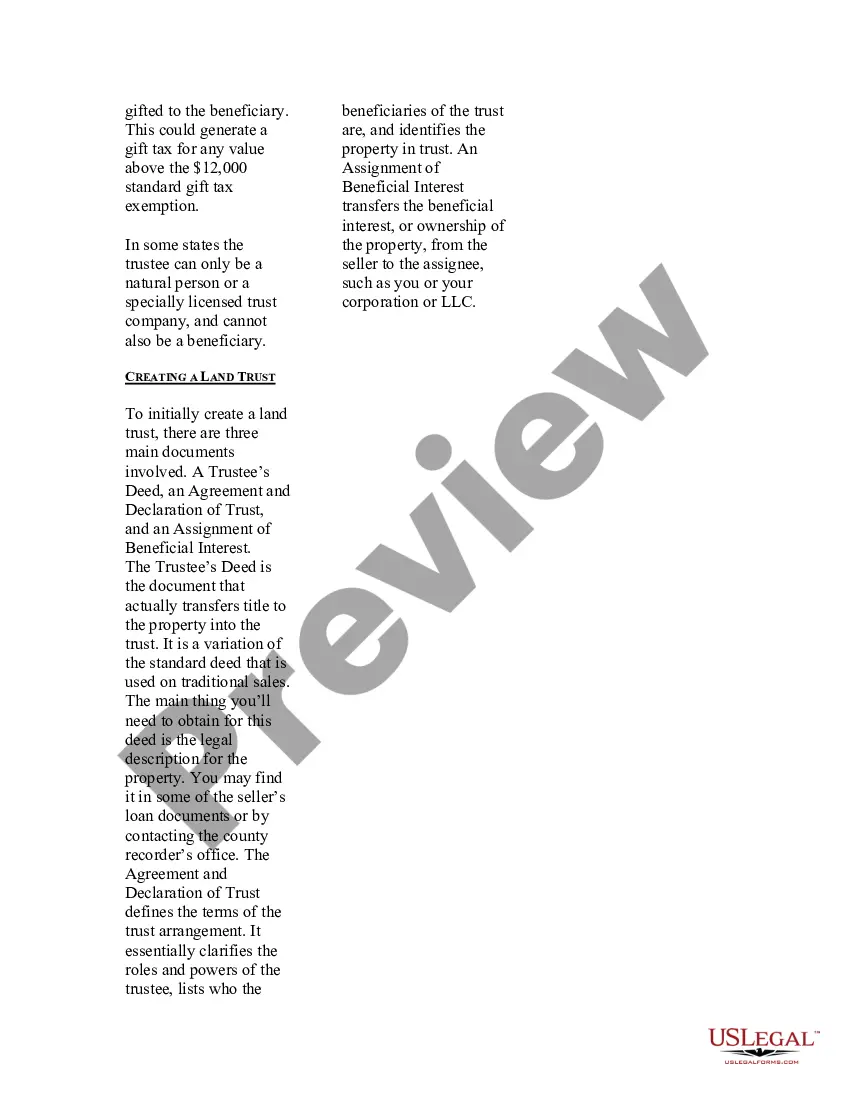
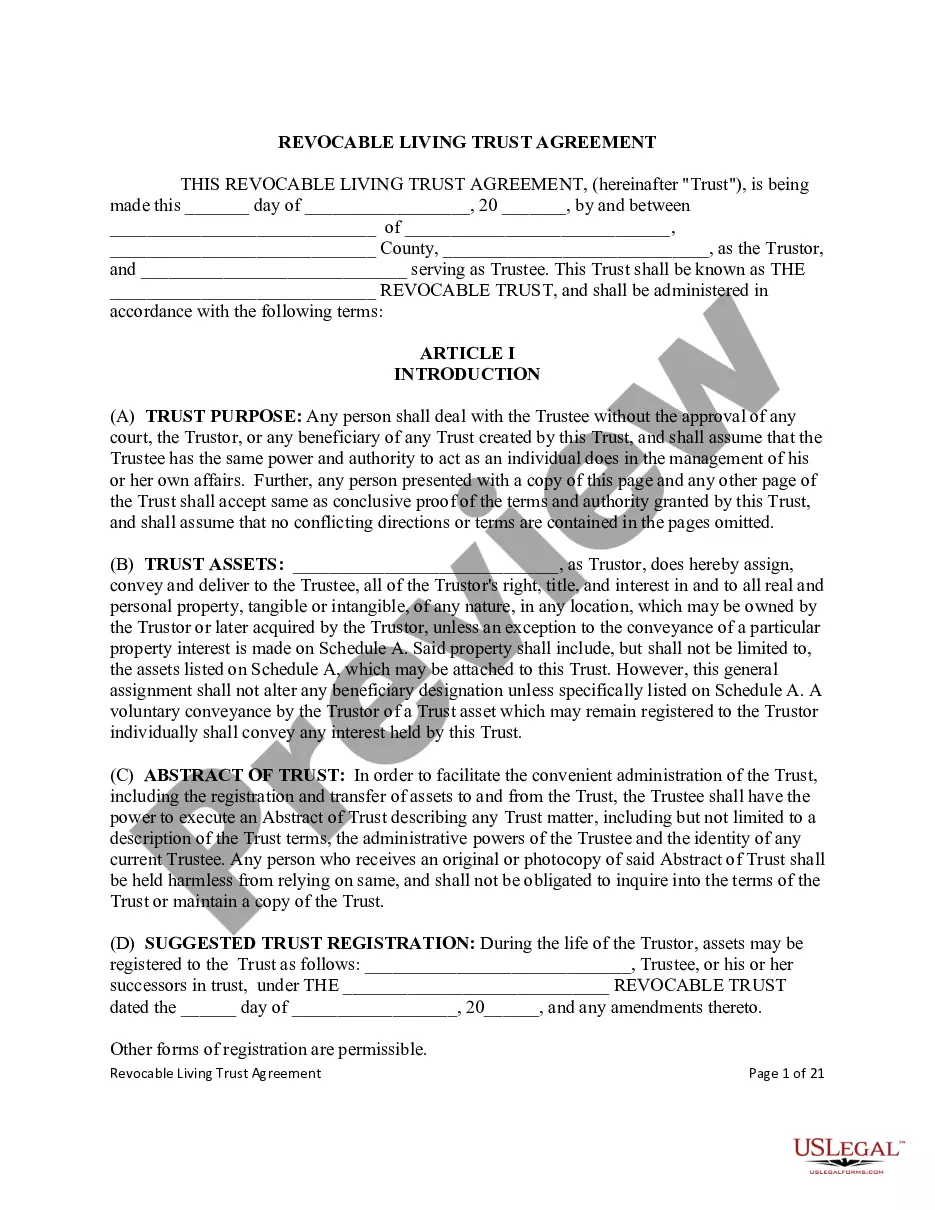
Wisconsin US Legal Guide to Revocable Land Trusts
Description
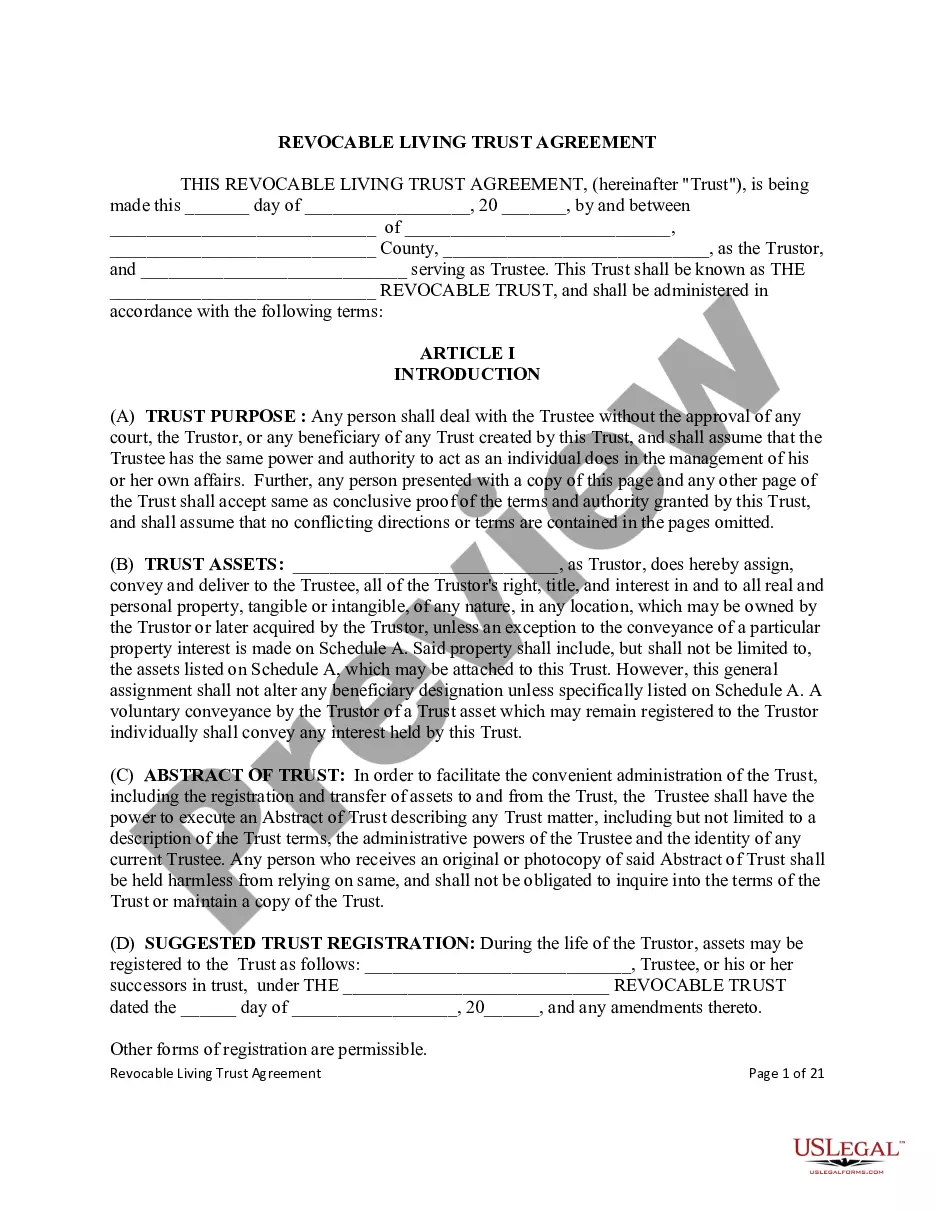
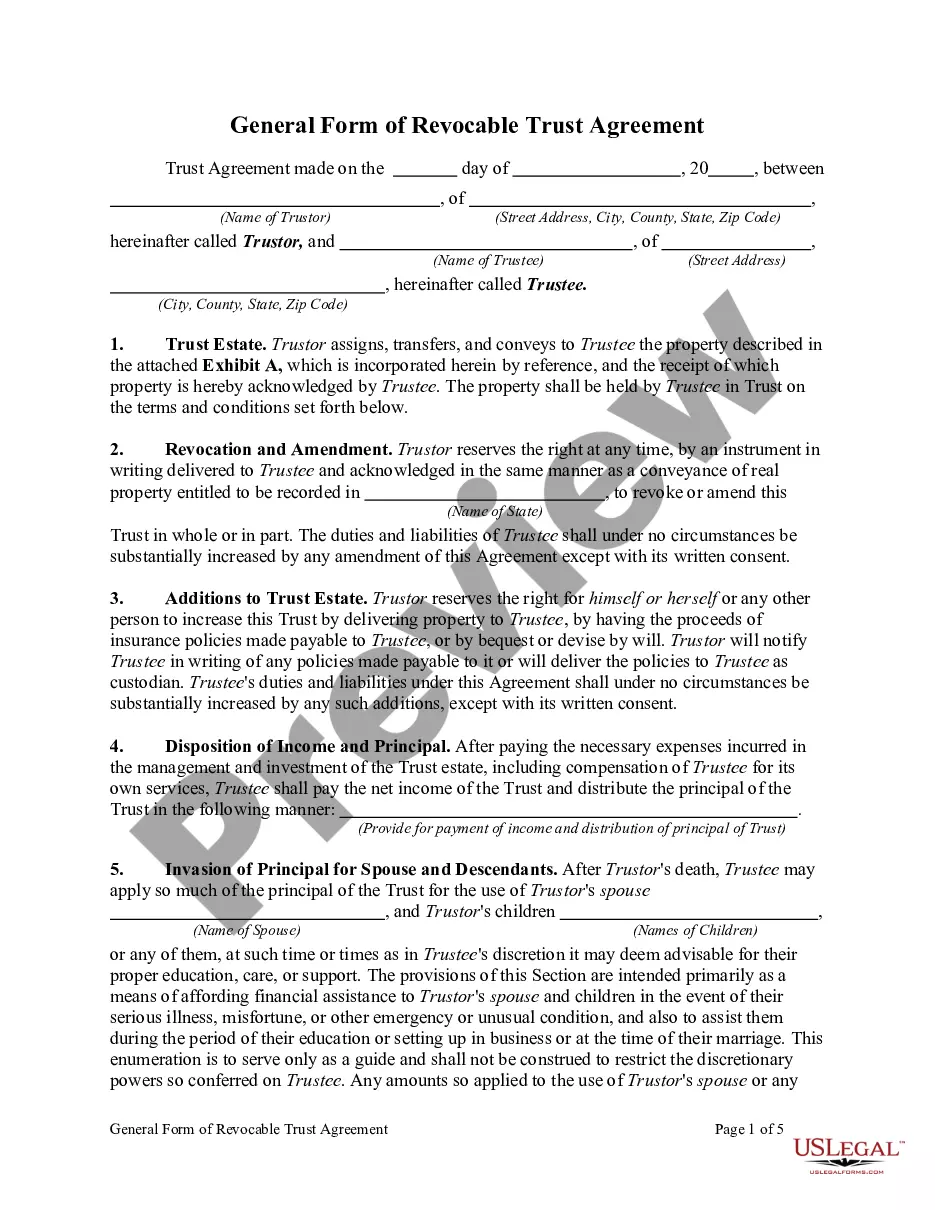
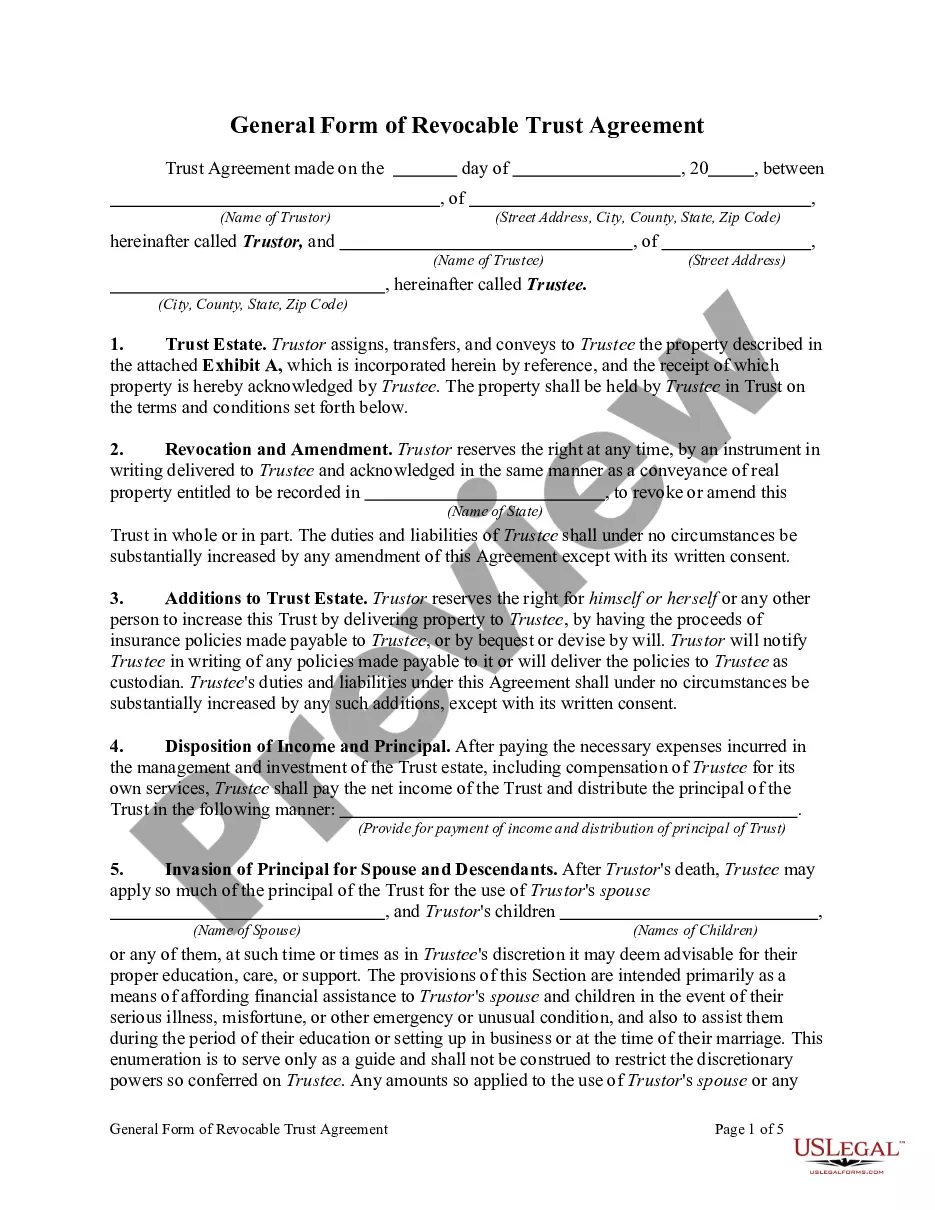
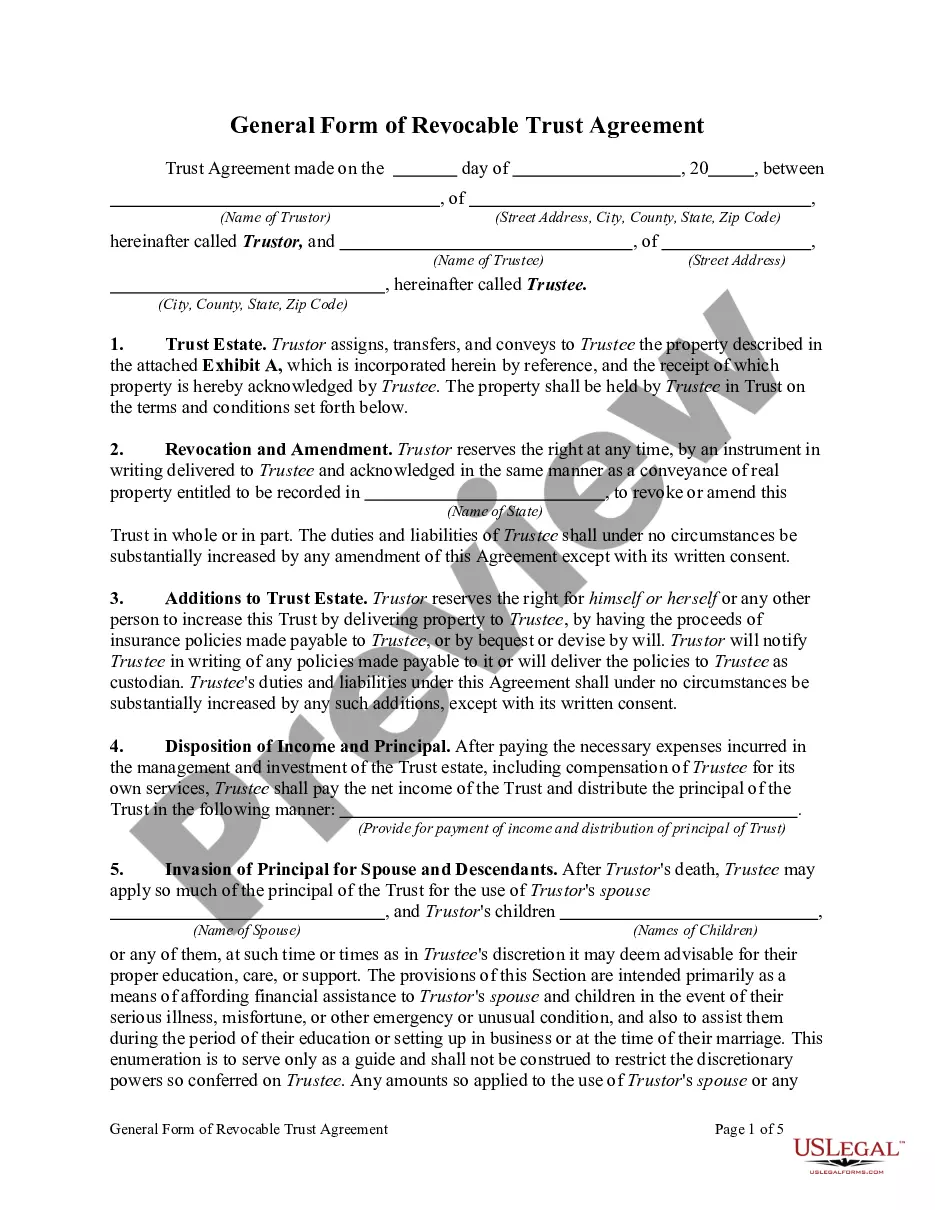
Get your form ready online
Our built-in tools help you complete, sign, share, and store your documents in one place.
Make edits, fill in missing information, and update formatting in US Legal Forms—just like you would in MS Word.
Download a copy, print it, send it by email, or mail it via USPS—whatever works best for your next step.
Sign and collect signatures with our SignNow integration. Send to multiple recipients, set reminders, and more. Go Premium to unlock E-Sign.
If this form requires notarization, complete it online through a secure video call—no need to meet a notary in person or wait for an appointment.
We protect your documents and personal data by following strict security and privacy standards.

Make edits, fill in missing information, and update formatting in US Legal Forms—just like you would in MS Word.

Download a copy, print it, send it by email, or mail it via USPS—whatever works best for your next step.

Sign and collect signatures with our SignNow integration. Send to multiple recipients, set reminders, and more. Go Premium to unlock E-Sign.

If this form requires notarization, complete it online through a secure video call—no need to meet a notary in person or wait for an appointment.

We protect your documents and personal data by following strict security and privacy standards.
Looking for another form?


How to fill out US Legal Guide To Revocable Land Trusts?
You might invest several hours online attempting to discover the authentic document template that aligns with the state and federal requirements you need.
US Legal Forms provides a vast array of authentic templates that are assessed by experts.
You can conveniently download or print the Wisconsin US Legal Guide to Revocable Land Trusts from the service.
Firstly, ensure that you have selected the right document template for your state/region of choice. Review the form details to confirm you have chosen the correct form. If available, use the Review option to browse through the document template as well.
- If you possess a US Legal Forms account, you may Log In and select the Download option.
- Following that, you can complete, modify, print, or sign the Wisconsin US Legal Guide to Revocable Land Trusts.
- Each authentic document template you acquire is yours permanently.
- To obtain an additional copy of the acquired form, navigate to the My documents tab and click on the relevant option.
- If this is your first time using the US Legal Forms site, follow the simple instructions below.
Form popularity
FAQ
Similar to the previous question, a notable downside to a revocable trust is that it does not provide protection from creditors. Since you maintain control over the assets, this could pose risks in certain situations. Moreover, revocable trusts may require updates over time to reflect changes in your circumstances. For a thorough analysis of these issues, the Wisconsin US Legal Guide to Revocable Land Trusts is a helpful resource.
Creating a revocable living trust in Wisconsin starts with drafting a clear trust document that outlines your instructions and identifies beneficiaries. You should then designate a trustee to manage the trust assets effectively. After completing the document, ensure you transfer your property into the trust to make it effective. For a step-by-step guide, refer to the Wisconsin US Legal Guide to Revocable Land Trusts.
Setting up a revocable trust in Wisconsin involves several critical steps. First, you should create a written trust agreement that specifies your wishes regarding the assets within the trust. Next, appoint a trustee who will manage the trust according to your directives. To finalize the process, transfer your assets into the trust. You can find comprehensive information in the Wisconsin US Legal Guide to Revocable Land Trusts.
To set up a land trust in Wisconsin, start by drafting a trust agreement that outlines the terms and beneficiaries. It’s important to select a reliable trustee who will manage the trust according to your intentions. After preparing the document, you’ll need to fund the trust by transferring the property into it. For detailed steps, the Wisconsin US Legal Guide to Revocable Land Trusts serves as a valuable resource in navigating this process.
One downside of a revocable trust is that it does not provide asset protection from creditors. This means your assets can still be vulnerable should legal actions arise. Additionally, since you retain control over the trust assets, it may not offer the privacy some individuals seek compared to other estate planning options. The Wisconsin US Legal Guide to Revocable Land Trusts highlights these potential drawbacks for your consideration.
If you place your land in a trust, the trust becomes the legal owner of the property, but you retain control as the trustee. This setup can ease the transfer of property upon death, avoiding probate delays. For a complete understanding of this process, our Wisconsin US Legal Guide to Revocable Land Trusts serves as an excellent resource.
In Wisconsin, a land trust operates by allowing a property owner to transfer the legal title of their property to a trustee, who manages it according to the owner's instructions. This arrangement maintains the owner's benefits and control over the property while providing confidentiality and simplified transfer processes. For specific regulations and details, check out our Wisconsin US Legal Guide to Revocable Land Trusts.
The 2 year rule refers to the time frame for certain trust transactions to avoid complications in probate and tax fields. It is essential to note that transferring assets into a trust within two years of death may complicate estate tax calculations. For a deeper dive into this rule and its implications, consult the Wisconsin US Legal Guide to Revocable Land Trusts.
Revocable living trusts can have some notable disadvantages, including costs related to setting them up and maintaining them. Additionally, these trusts do not offer creditor protection or tax advantages during the grantor's lifetime. If you're interested in more insights, our Wisconsin US Legal Guide to Revocable Land Trusts breaks down these aspects thoroughly.
One disadvantage of a land trust is limited protection against creditors. When you place property into a land trust, you may still face potential claims by creditors. Additionally, land trusts generally do not provide the same tax benefits as other estate planning tools. To better understand these risks, refer to our Wisconsin US Legal Guide to Revocable Land Trusts.