Wisconsin Third Party Subpoena Duces Tecum
Understanding this form
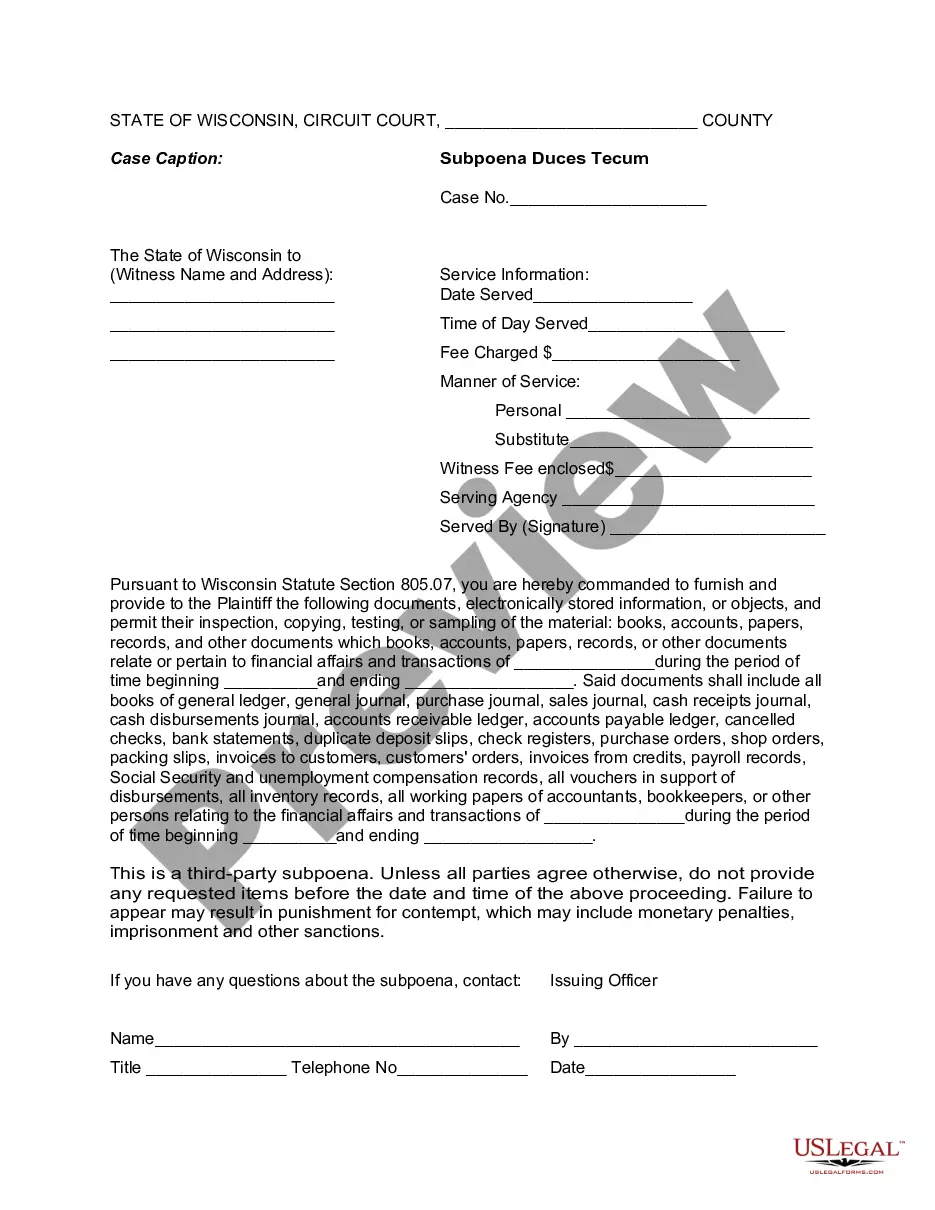
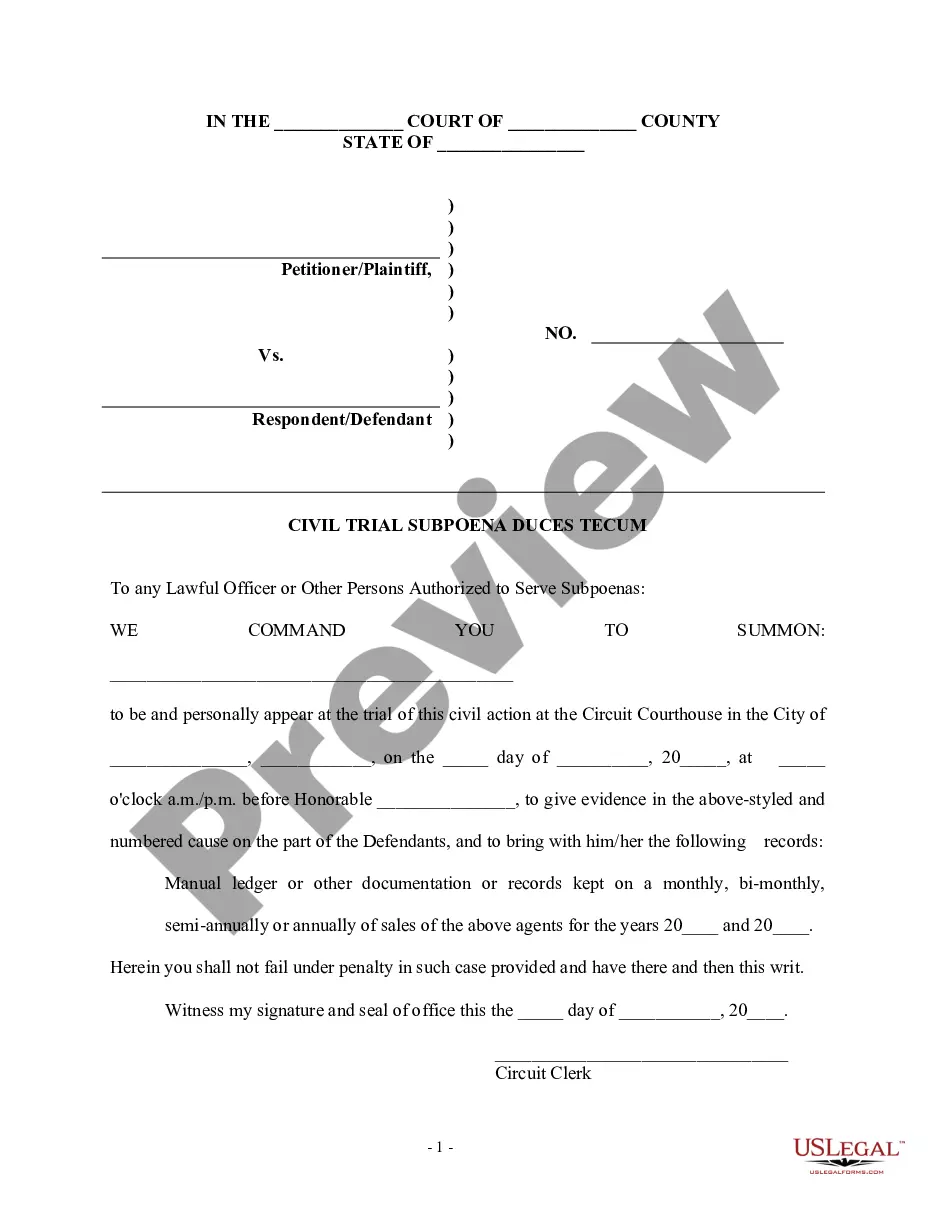
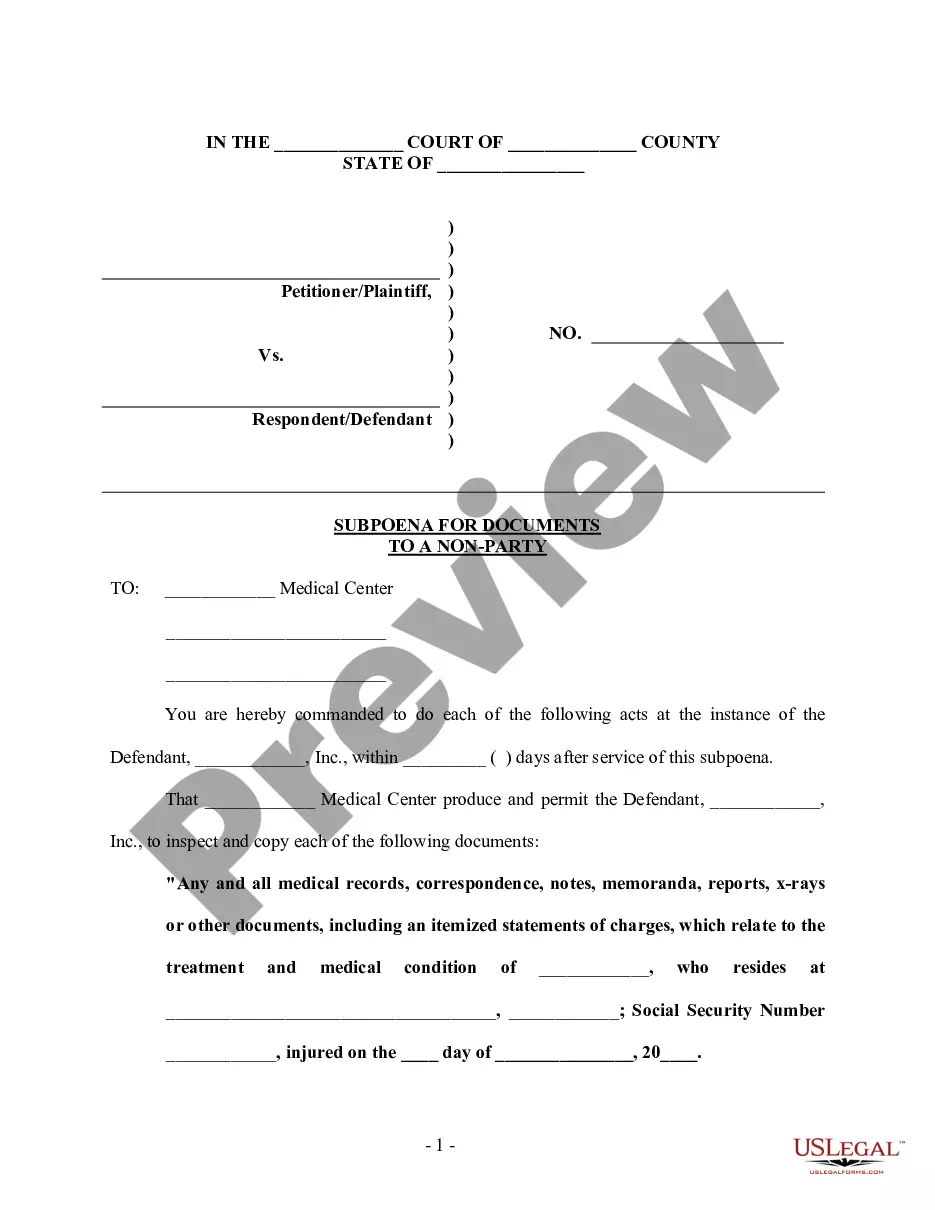
The Wisconsin Third Party Subpoena Duces Tecum is a legal document used to compel a third party to produce documents or evidence for a legal proceeding. Unlike a typical subpoena, this form specifically requests the production of records, data, or tangible items relevant to the case. It is essential for facilitating the discovery process in legal disputes by gathering necessary information that may support either party's claims or defenses.
Form components explained
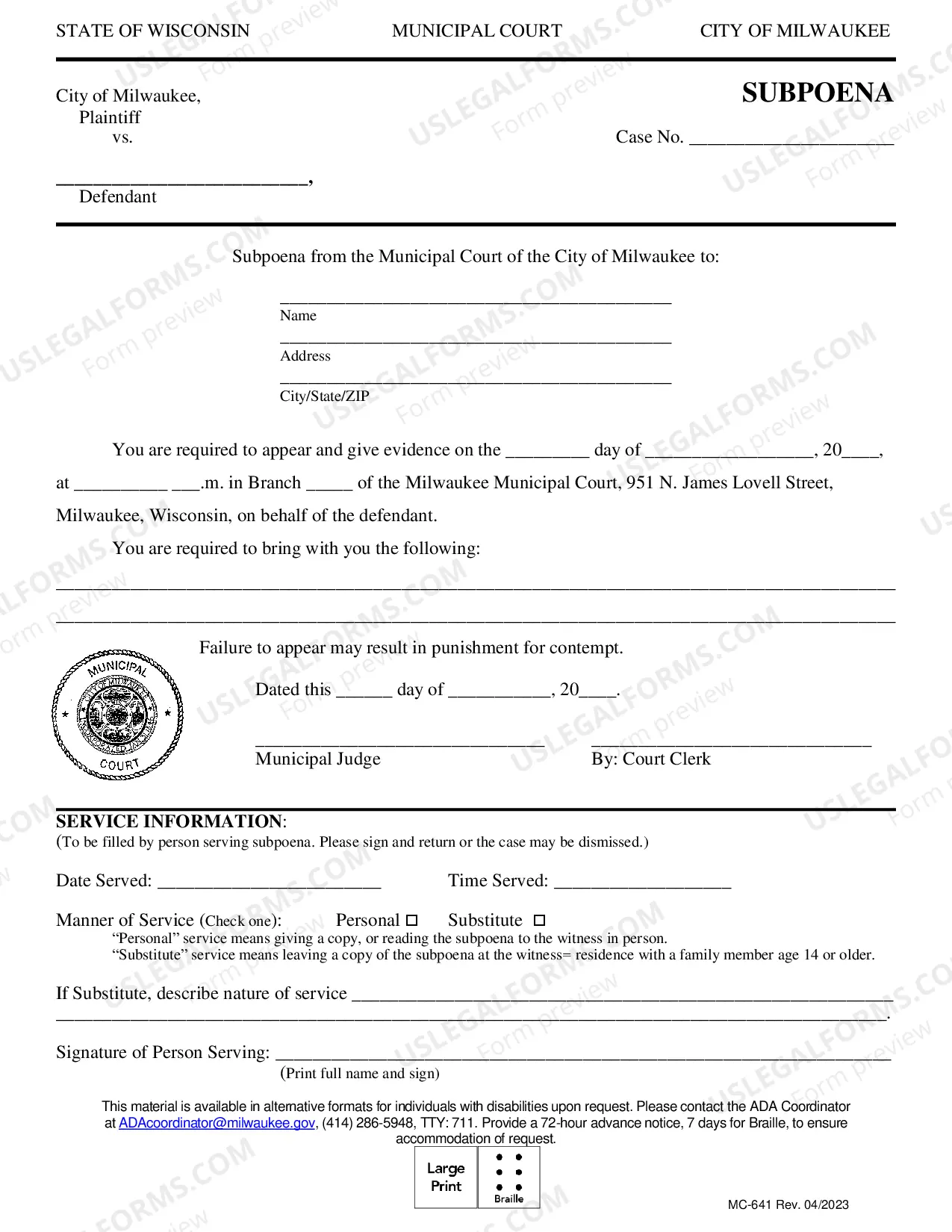
- Case caption: Identifies the parties involved and the court handling the case.
- Witness name and address: Specifies the individual or entity from whom documents are being requested.
- Service information: Details on how and when the subpoena was served.
- List of requested documents: Specifies the types of documents and records required.
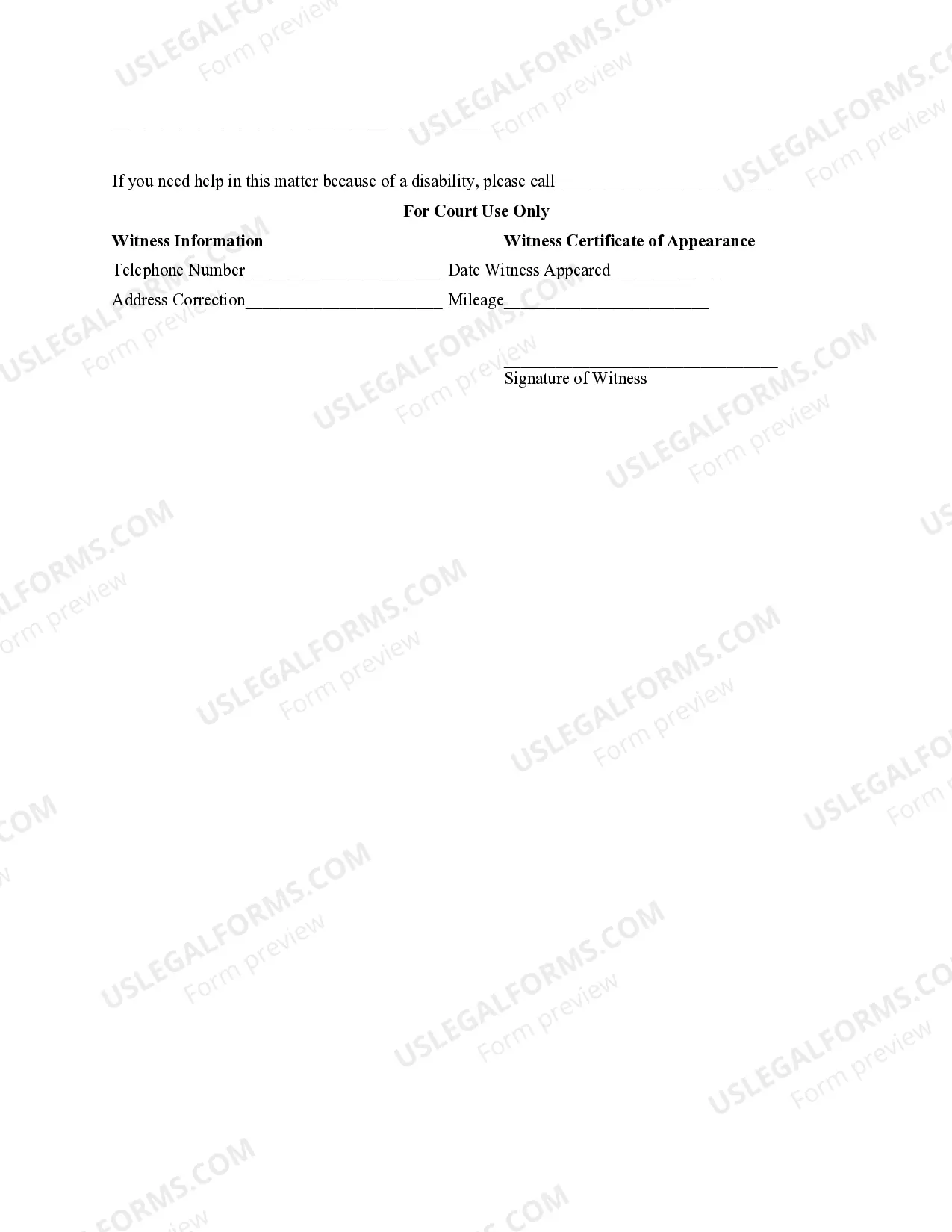
- Issuing officer information: Includes the name and contact details of the attorney or clerk responsible for the subpoena.
Situations where this form applies
This form should be used when a party in a legal case needs to obtain documents from a third party that may provide crucial evidence. Situations may include gathering financial records, correspondence, or any physical evidence that supports a claim or defense. This document ensures compliance with legal standards while preserving the rights of all involved parties during the discovery phase.
Who can use this document
- Attorneys representing clients in a legal action needing evidence from a third party.
- Parties involved in a lawsuit seeking to gather documents relevant to their case.
- Individuals or entities required to obtain information from other parties for legal purposes.
Instructions for completing this form
- Fill in the case caption with the names of the parties and the court case number.
- Enter the name and address of the third party from whom documents are requested.
- Specify the documents that need to be produced, including details on the nature and timeframe of the information required.
- Complete the service information, including how and when the subpoena was served.
- Sign and date the subpoena to validate its issuance.
Does this form need to be notarized?
Notarization is generally not required for this form. However, certain states or situations might demand it. You can complete notarization online through US Legal Forms, powered by Notarize, using a verified video call available anytime.
Get your form ready online
Our built-in tools help you complete, sign, share, and store your documents in one place.
Make edits, fill in missing information, and update formatting in US Legal Forms—just like you would in MS Word.
Download a copy, print it, send it by email, or mail it via USPS—whatever works best for your next step.
Sign and collect signatures with our SignNow integration. Send to multiple recipients, set reminders, and more. Go Premium to unlock E-Sign.
If this form requires notarization, complete it online through a secure video call—no need to meet a notary in person or wait for an appointment.
We protect your documents and personal data by following strict security and privacy standards.

Make edits, fill in missing information, and update formatting in US Legal Forms—just like you would in MS Word.

Download a copy, print it, send it by email, or mail it via USPS—whatever works best for your next step.

Sign and collect signatures with our SignNow integration. Send to multiple recipients, set reminders, and more. Go Premium to unlock E-Sign.

If this form requires notarization, complete it online through a secure video call—no need to meet a notary in person or wait for an appointment.

We protect your documents and personal data by following strict security and privacy standards.
Common mistakes to avoid
- Failing to provide sufficient notice to all parties involved as required by Wisconsin law.
- Not clearly specifying the documents or evidence being requested, leading to confusion.
- Failing to sign and date the subpoena, which is essential for its validity.
Why complete this form online
- Immediate access to professionally drafted templates saves time.
- Editable forms allow customization to meet specific legal needs and circumstances.
- Secure storage and retrieval of documents ensures confidentiality and ease of access.
Legal use & context
- Subpoenas can be enforced in a court of law and are an important aspect of legal discovery.
- Failure to comply with a subpoena may result in legal penalties, including contempt of court.
Summary of main points
- The Wisconsin Third Party Subpoena Duces Tecum is used to compel document production from non-parties.
- Proper notice must be given to all involved parties before serving the subpoena.
- Accurate completion of the form is essential for its enforceability in a court setting.
Looking for another form?

Form popularity
FAQ
The name of the court where your case is filed. The title of the action. The case number. A command that a specific person appear at a stated date, time, and place to testify (or testify and provide documents)
Consider Engaging an Attorney. Businesses: Notify Anyone Else of Importance. Identify all individuals who have responsive documents. Instruct individuals on how to search for and collect documents. Comply with the subpoena and provide the requested documents. Object to the subpoena. Move to quash the subpoena.
Under HIPAA, any subpoena duces tecum that is not accompanied by a court order must contain a written statement and accompanying documentation demonstrating that the requesting party made reasonable efforts to (1) notify the patient whose records are being requested, or (2) secure a qualified protective order.
(a) Subpoenas and subpoenas duces tecum shall be issued by the agency or presiding officer at the request of a party, or by the attorney of record for a party, in accordance with Sections 1985 to 1985.4, inclusive, of the Code of Civil Procedure.
The name of the court where your case is filed. The title of the action. The case number. A command that a specific person appear at a stated date, time, and place to testify (or testify and provide documents)
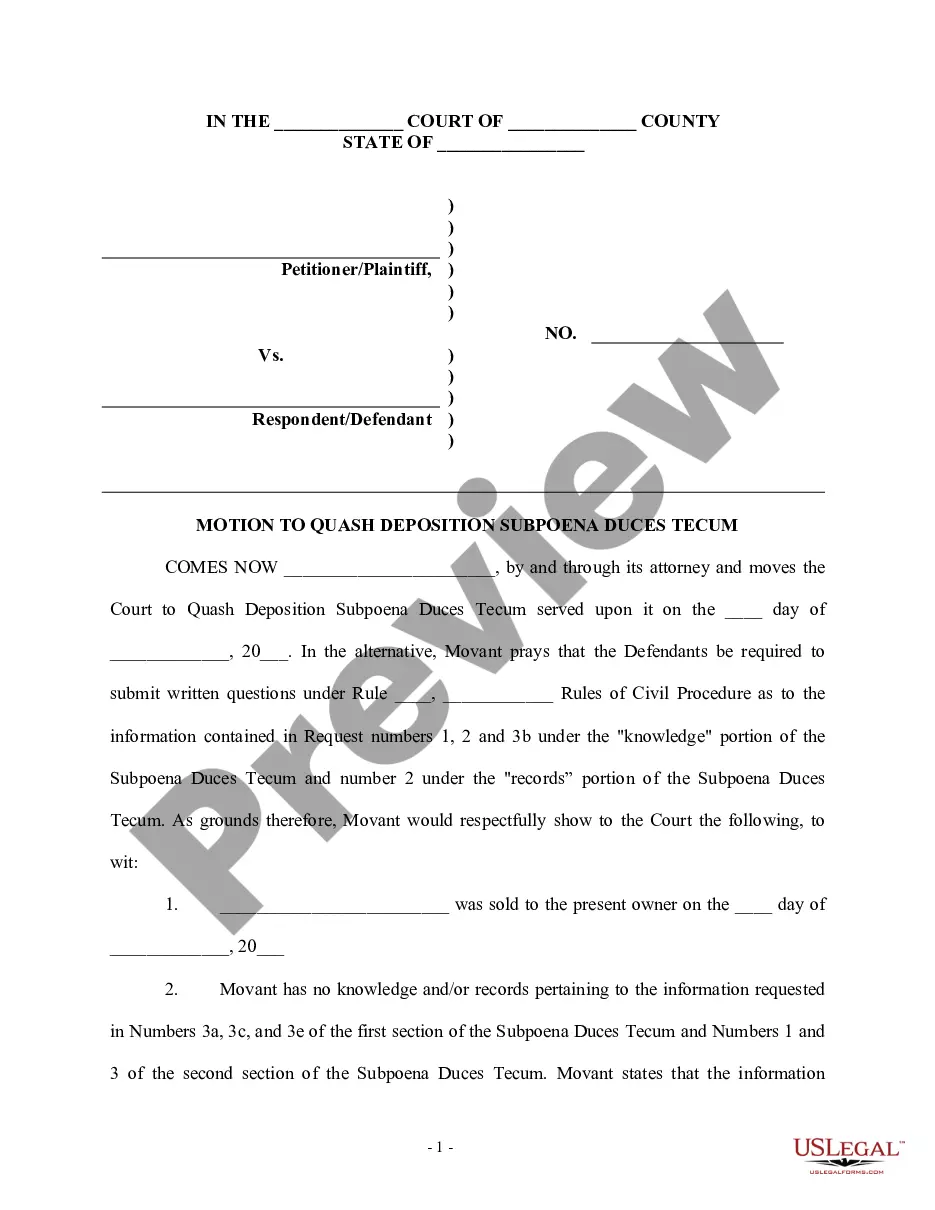
They can object to the subpoena in writing, after which the party that issued the subpoena must ask the court to rule on whether or not the subpoena can be enforced. The third party can also go to court themselves by filing a motion for a protective order or a motion to quash the subpoena.
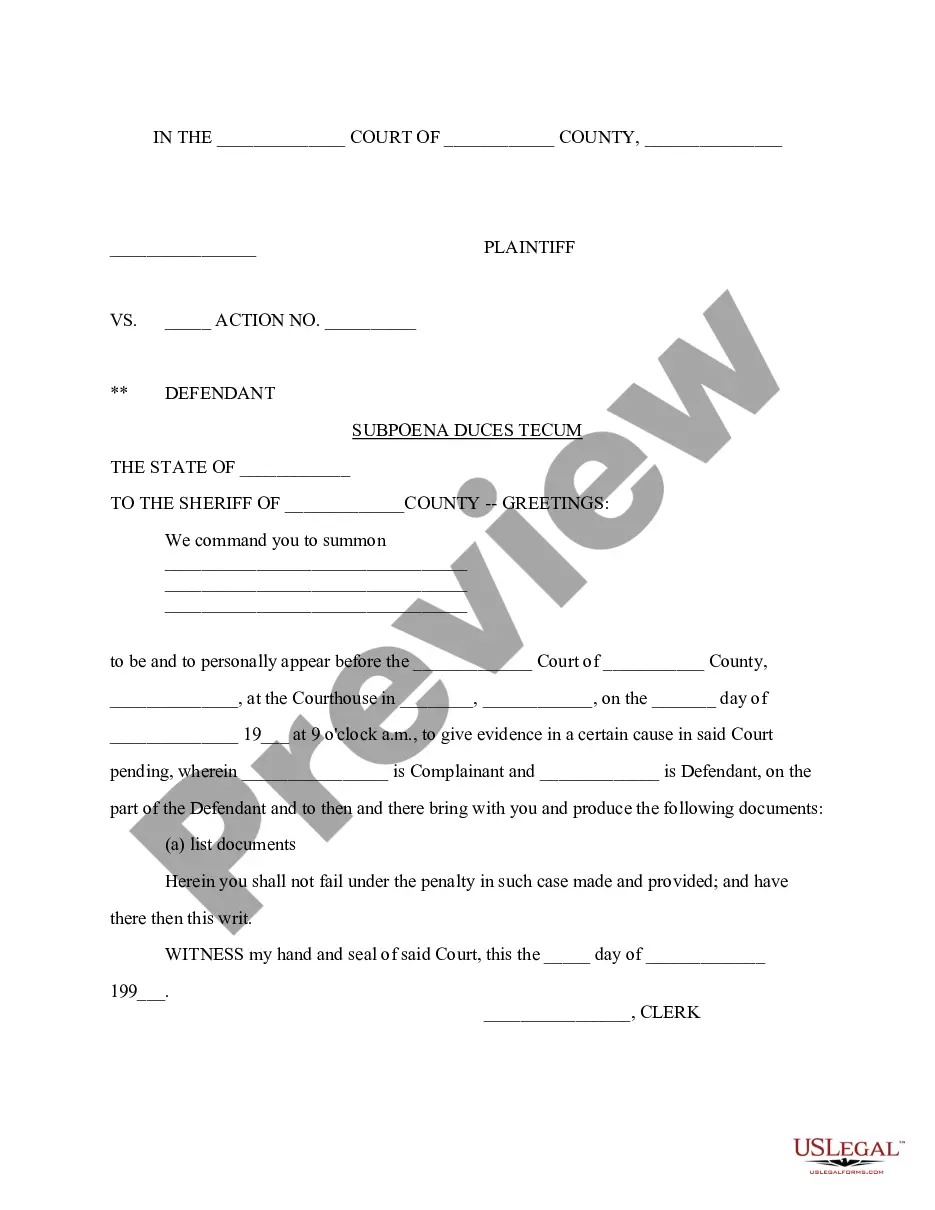
A Subpoena Duces Tecum (meaning 'subpoena for production of evidence') is a court order requiring the person subpoenaed to produce books, documents or other records under his or her control at a specified time/place in a court hearing or a deposition.
A subpoena is an Order that is issued to require the attendance of a witness to testify at a particular time and place. A subpoena duces tecum is an Order that requires a witness to bring documents, books or other items under his, her or their control, that he she or they is bound by law to produce into evidence.