Wisconsin Drainage Contract for Contractor
Understanding this form
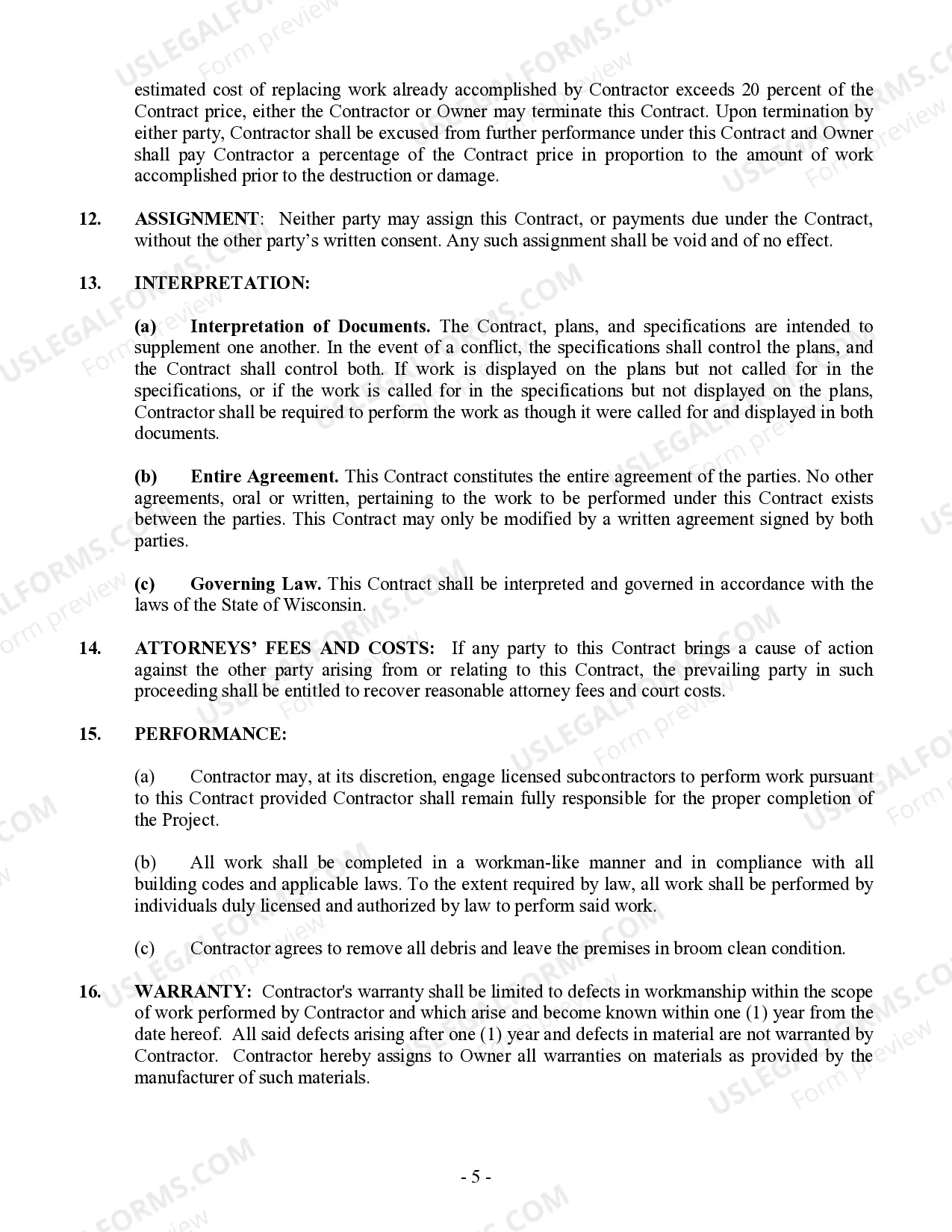
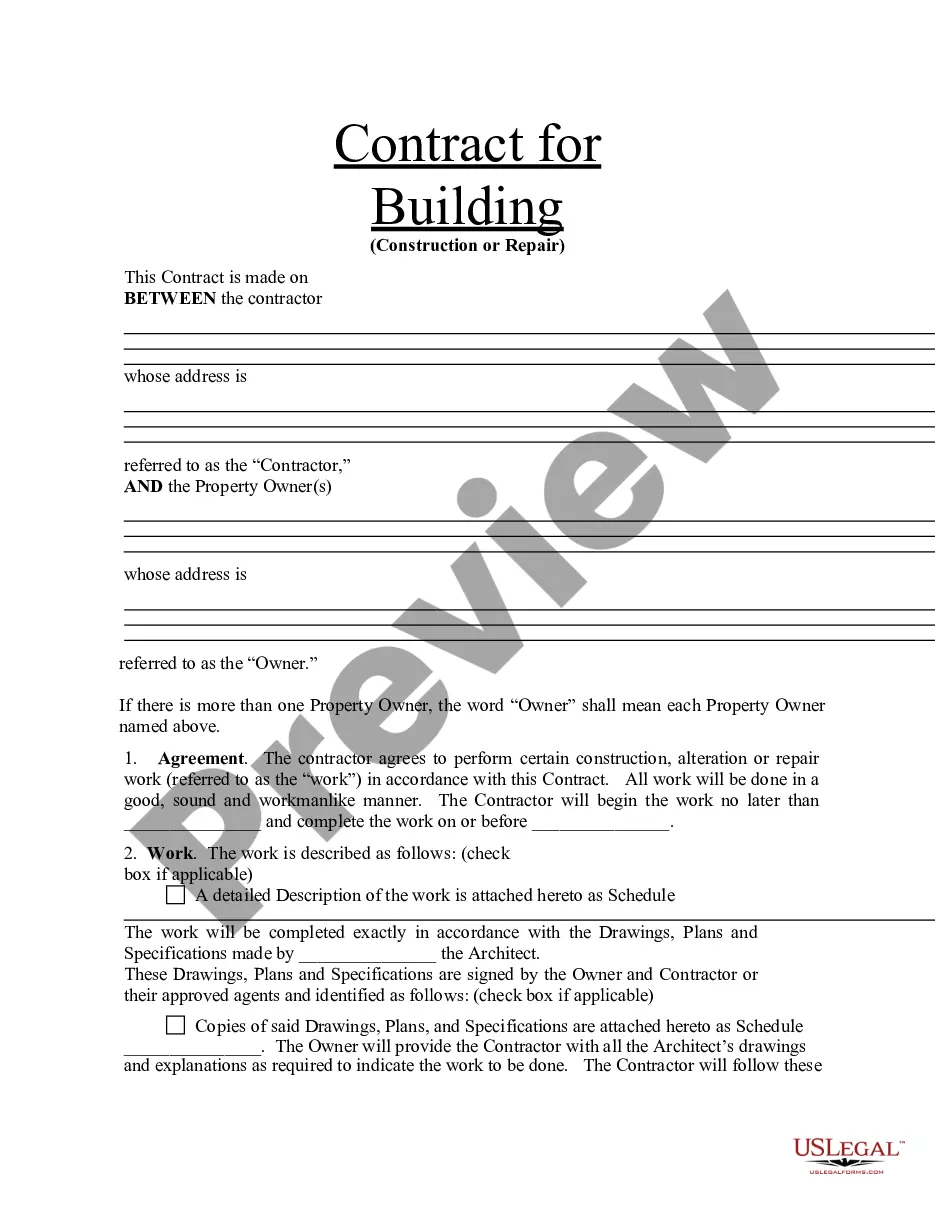
The Drainage Contract for Contractor is a legal document that establishes an agreement between a drainage contractor and a property owner for drainage services. This form can be executed with either a cost plus or fixed fee payment arrangement. It encompasses important terms related to change orders, warranties, and insurance requirements, ensuring compliance with Wisconsin state laws. Unlike informal agreements, this contract provides a detailed framework that protects both parties' rights and clarifies their responsibilities in the project.
Form components explained
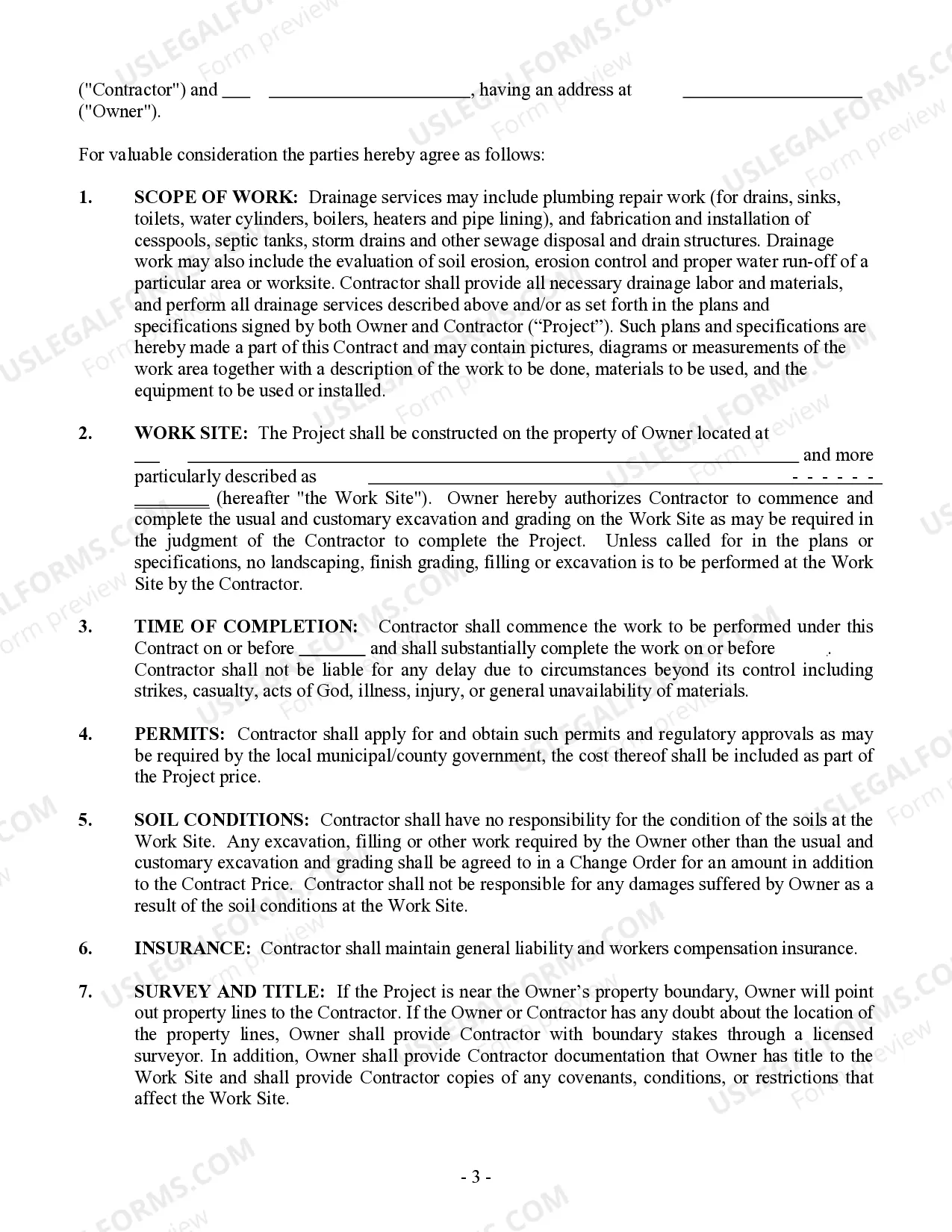
- Parties involved: Clearly identifies the contractor and the property owner.
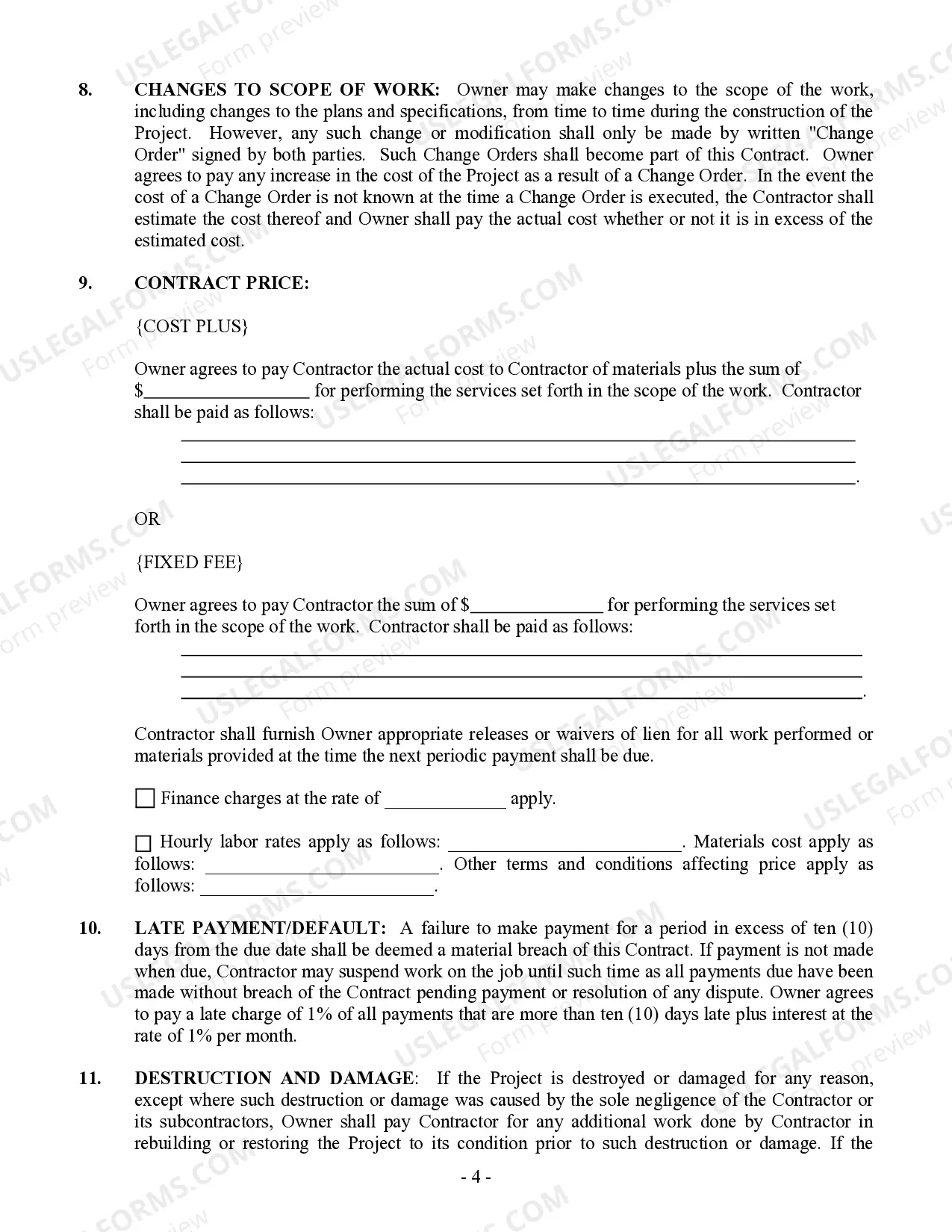
- Payment structure: Options for cost plus or fixed fee arrangements.
- Change orders: Processes for modifying work scope and costs.
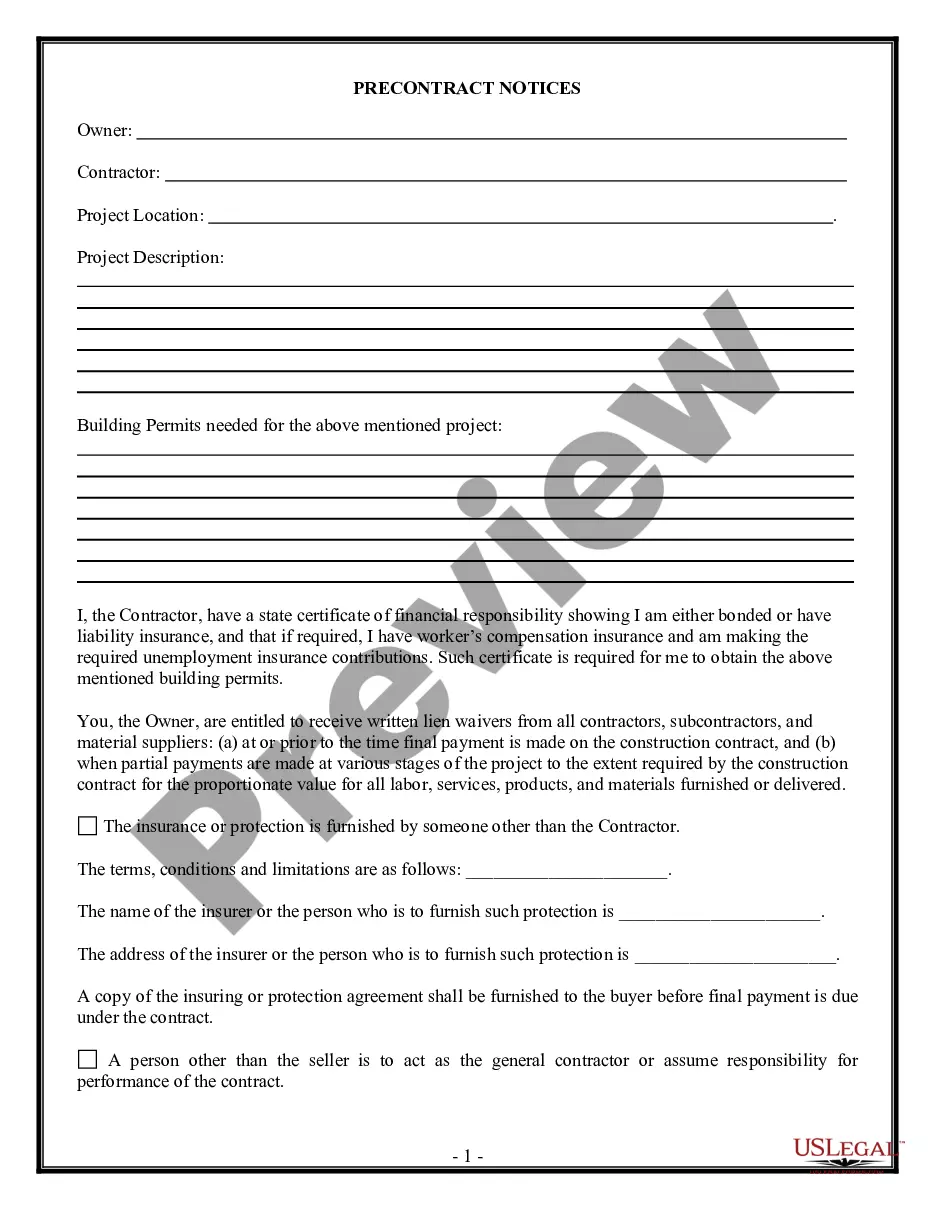
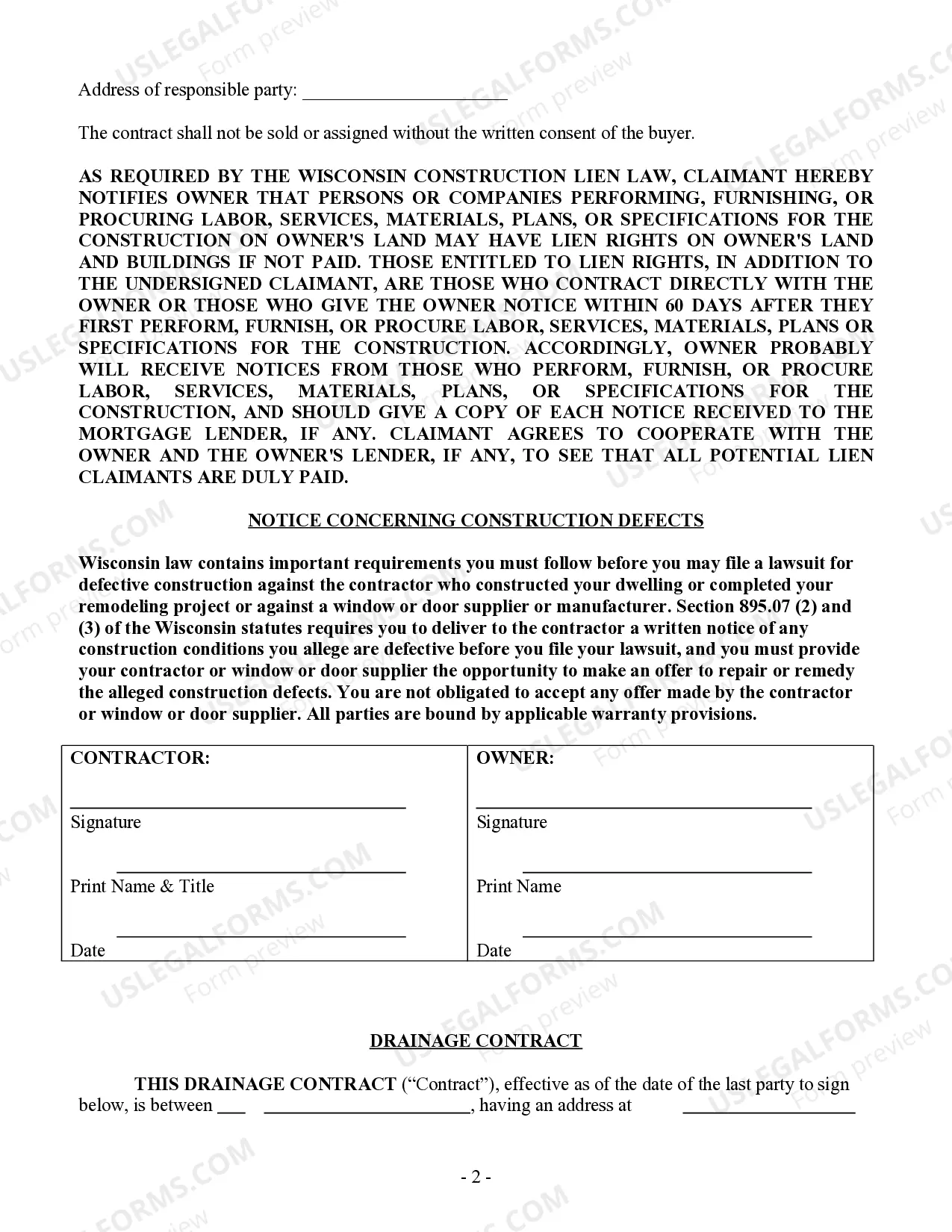
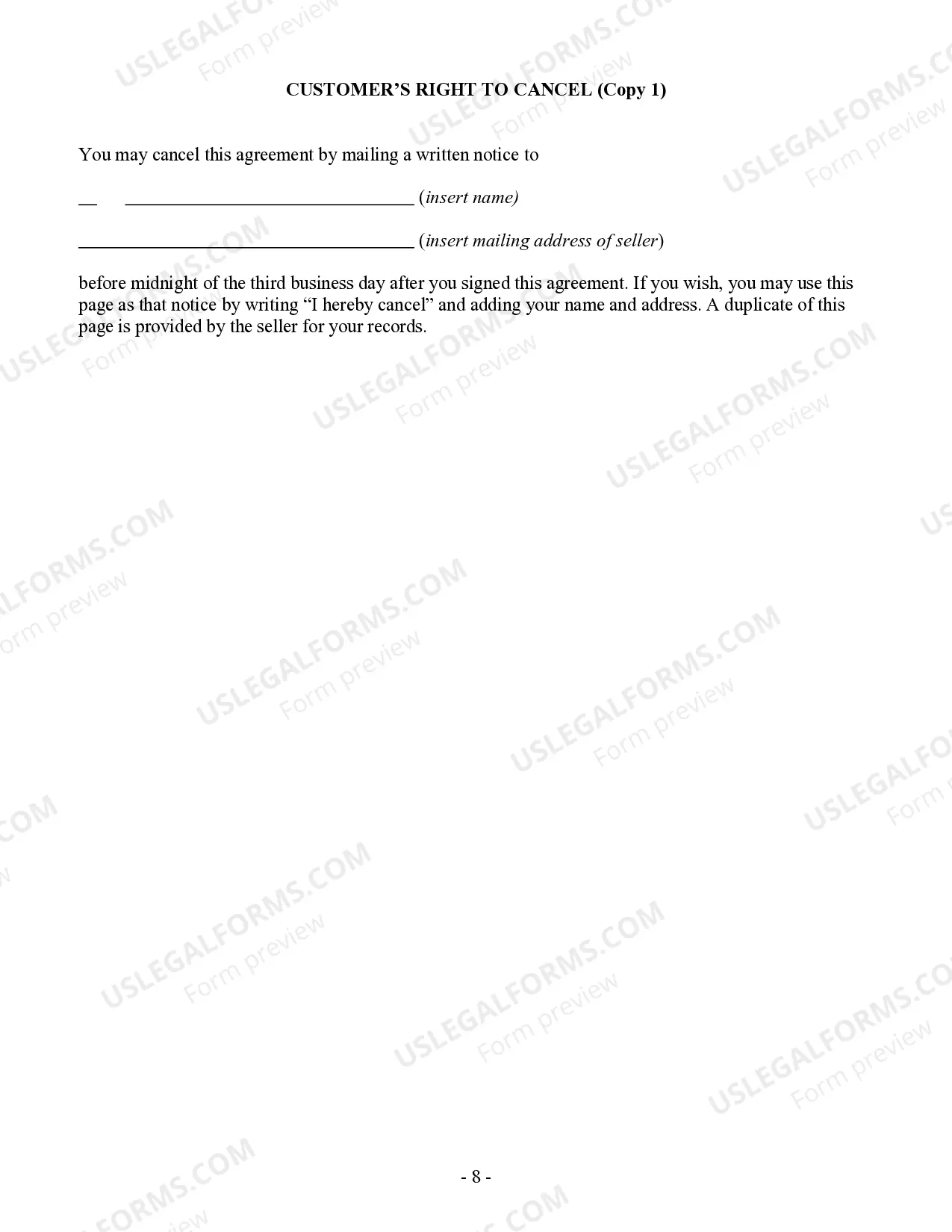
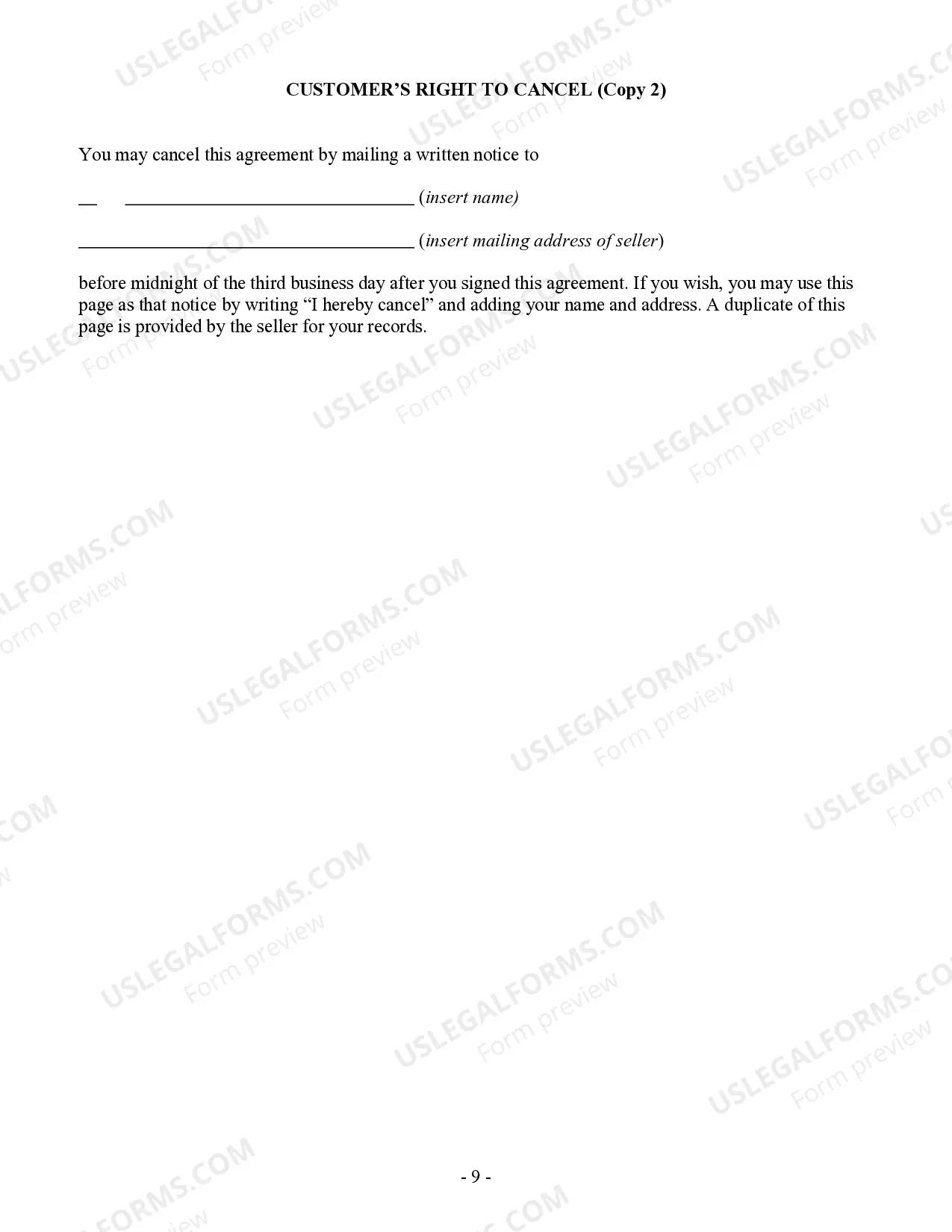
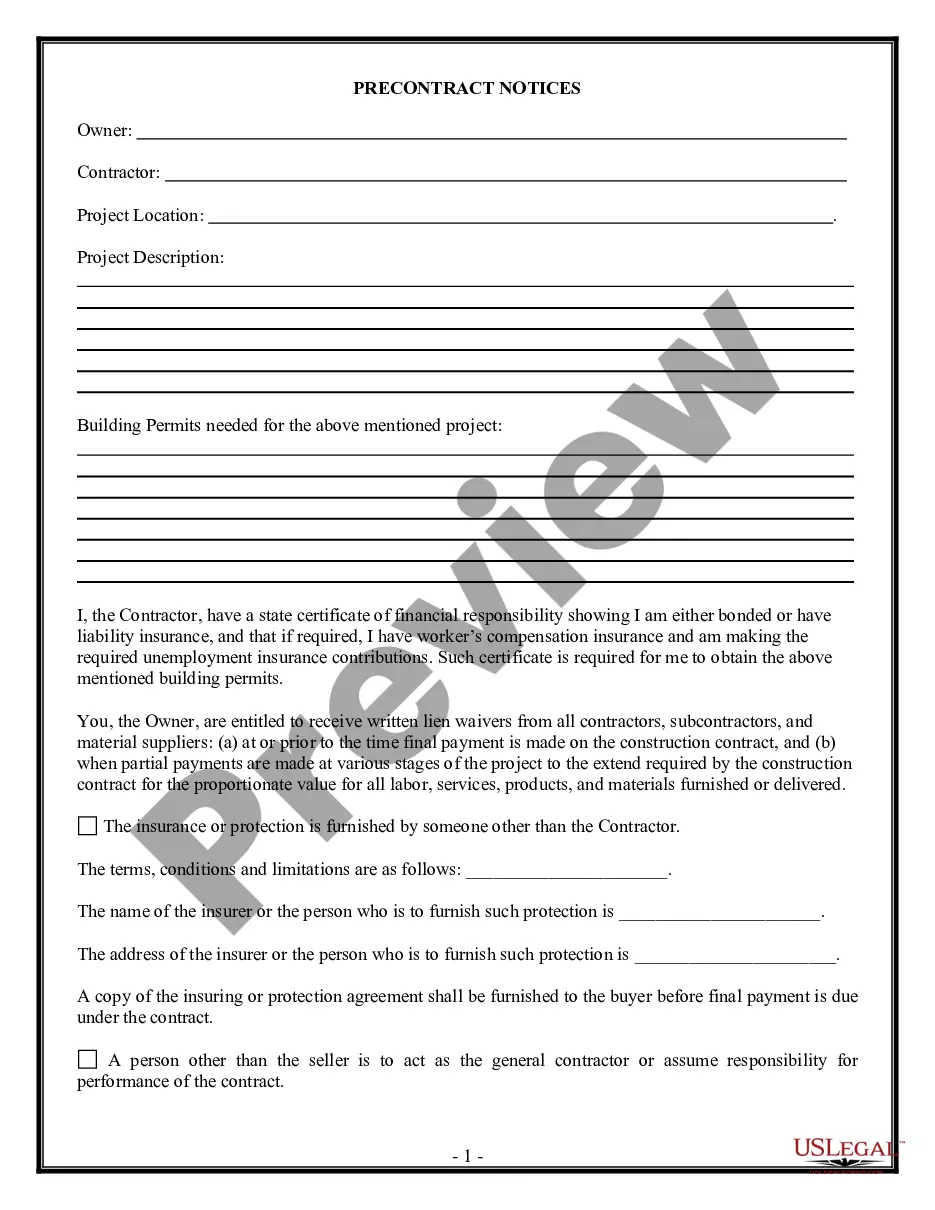
- Liens and payment rights: Provisions for lien waivers and rights of laborers or suppliers.
- Insurance requirements: Stipulations for liability and workersâ compensation insurance.
- Governing law: Specifies that the agreement follows Wisconsin laws.

When this form is needed
This form should be used when a property owner engages a drainage contractor to perform drainage work on their property. It is particularly useful when the scope of work requires clear terms concerning payment, responsibilities, and legal protections against potential liens. Whether dealing with a new drainage system installation or repairs to existing drainage issues, having a formal contract helps prevent misunderstandings and provides a legal basis for dispute resolution.
Who should use this form
- Property owners hiring a drainage contractor for the first time.
- Contractors looking to formalize their agreement with property owners.
- Individuals in Wisconsin seeking clear terms for drainage construction projects.
- Owners requiring protection against potential lien claims from contractors or suppliers.
How to complete this form
- Identify the parties: Fill in the names and addresses of the contractor and the property owner.
- Specify the property: Include the location of the work site for the drainage project.
- Fill in payment details: Decide on the payment structureâcost plus or fixed feeâand outline any rates or percentages.
- Detail insurance information: Provide the name and address of the insurer and attach relevant documentation.
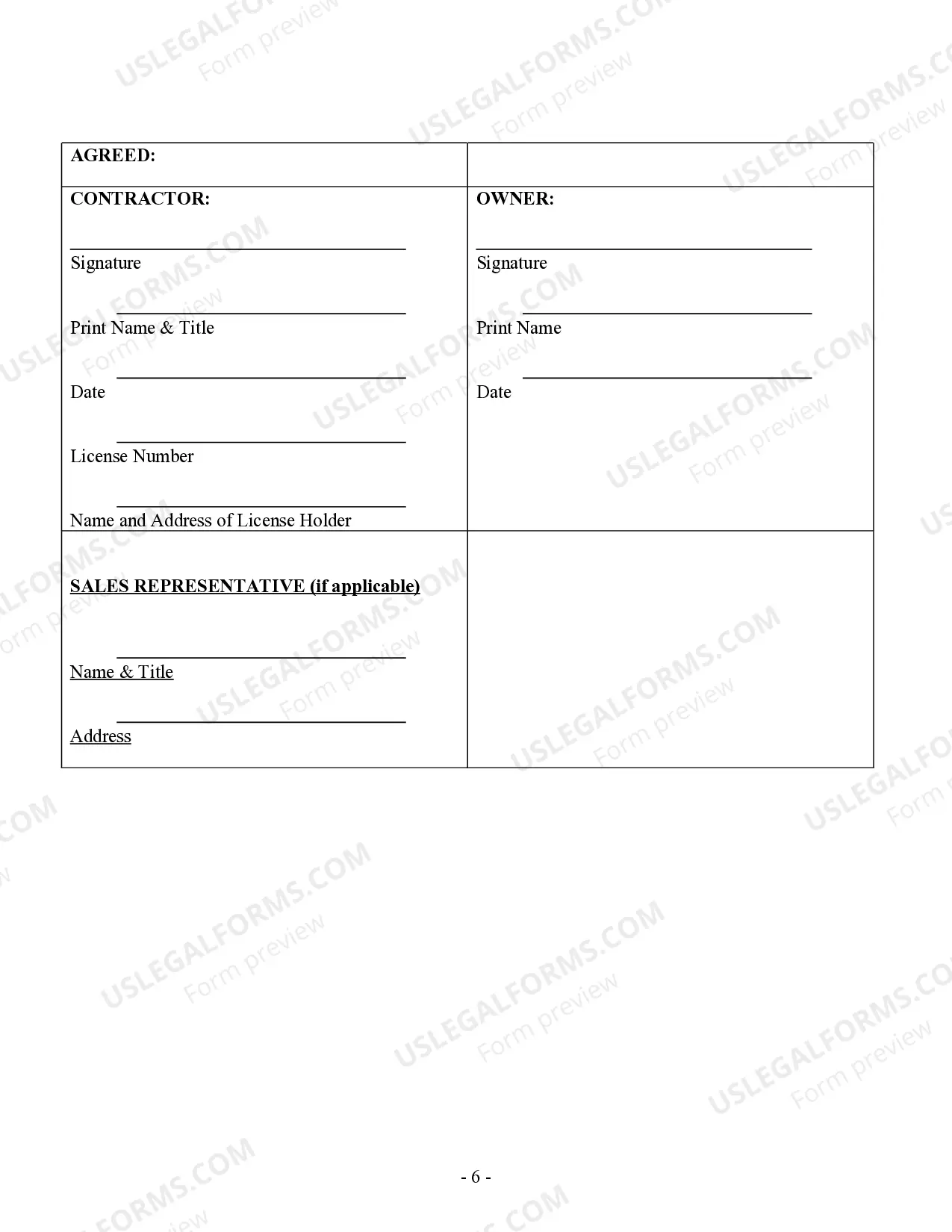
- Sign and date the contract: Ensure both parties sign the agreement to make it legally binding.
Notarization requirements for this form
This form does not typically require notarization to be legally valid. However, some jurisdictions or document types may still require it. US Legal Forms provides secure online notarization powered by Notarize, available 24/7 for added convenience.
Get your form ready online
Our built-in tools help you complete, sign, share, and store your documents in one place.
Make edits, fill in missing information, and update formatting in US Legal Forms—just like you would in MS Word.
Download a copy, print it, send it by email, or mail it via USPS—whatever works best for your next step.
Sign and collect signatures with our SignNow integration. Send to multiple recipients, set reminders, and more. Go Premium to unlock E-Sign.
If this form requires notarization, complete it online through a secure video call—no need to meet a notary in person or wait for an appointment.
We protect your documents and personal data by following strict security and privacy standards.

Make edits, fill in missing information, and update formatting in US Legal Forms—just like you would in MS Word.

Download a copy, print it, send it by email, or mail it via USPS—whatever works best for your next step.

Sign and collect signatures with our SignNow integration. Send to multiple recipients, set reminders, and more. Go Premium to unlock E-Sign.

If this form requires notarization, complete it online through a secure video call—no need to meet a notary in person or wait for an appointment.

We protect your documents and personal data by following strict security and privacy standards.
Common mistakes to avoid
- Failing to specify the payment structure clearly, leading to potential disputes.
- Not including necessary insurance information, which could expose both parties to risk.
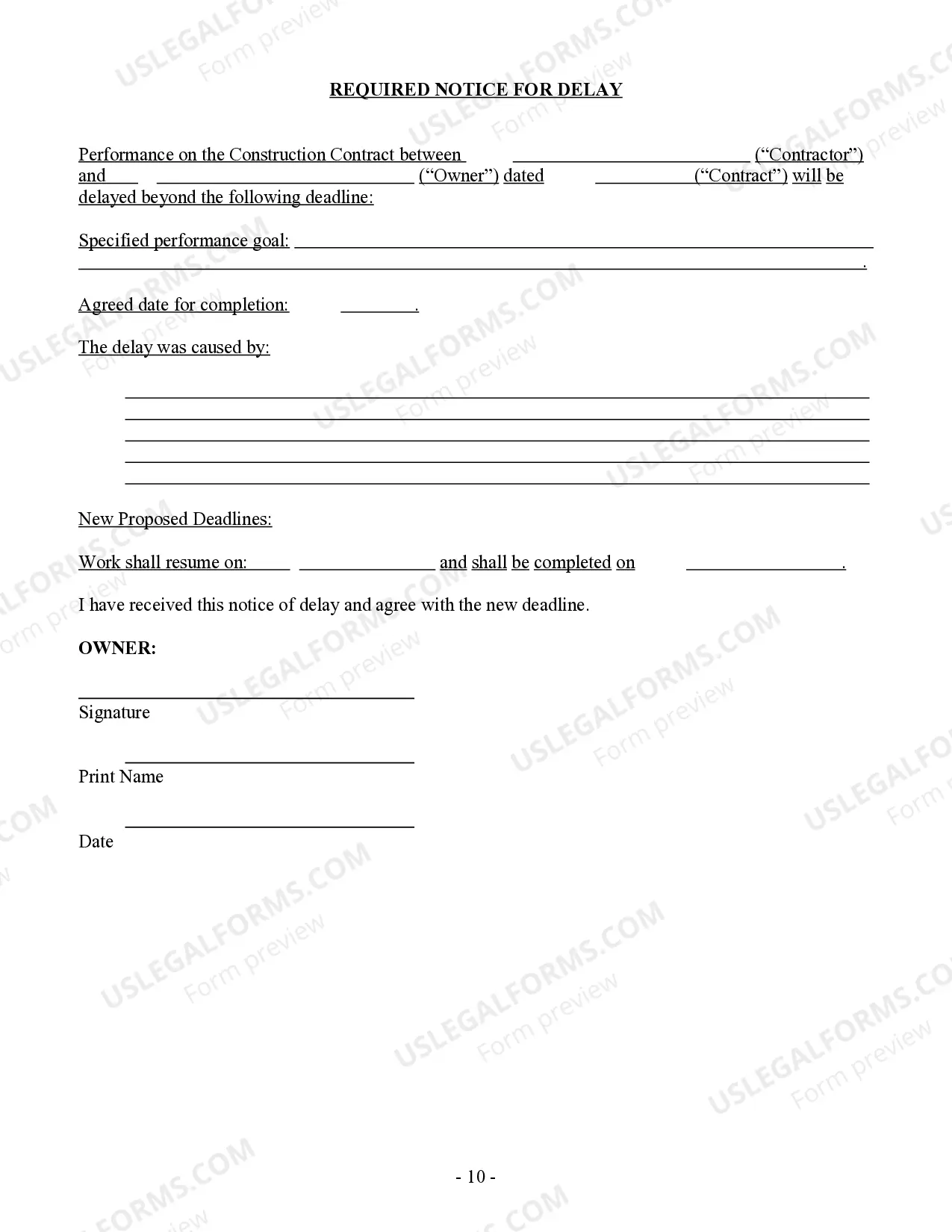
- Omitting change order clauses that can result in misunderstandings about project scope.
- Not ensuring both parties sign the contract, which makes it unenforceable.
Benefits of completing this form online
- Convenience: Download and complete the form from anywhere at any time.
- Editable: Tailor the contract to meet specific needs and project details easily.
- Reliable: Utilize legally vetted language drafted by licensed attorneys to ensure compliance.
Legal use & context
- This contract is enforceable in Wisconsin, providing legal recourse in case of disputes.
- Outline of lien rights is crucial for protecting both parties financially during construction.
- Failure to adhere to the written terms can lead to breaches of contract and potential legal issues.
Summary of main points
- The Drainage Contract for Contractor establishes a clear agreement between property owners and contractors, detailing obligations and rights.
- Using this form helps prevent misunderstandings and provides protections under Wisconsin law.
- Accurate completion of the form is essential to ensure its effectiveness and legality.
Looking for another form?
Form popularity
FAQ
According to the Consumer Protection act, if the contractor is more than 30 days late past the original promised date, the deposit then does become refundable. However, if the customer agrees to an extension of the scheduled start date, the deposit is no longer refundable, period.
The only way the contractor can keep your deposit is if you signed a written contract specifying the deposit is nonrefundable.If your husband gave cash to the contractor, he may deny receiving the deposit.
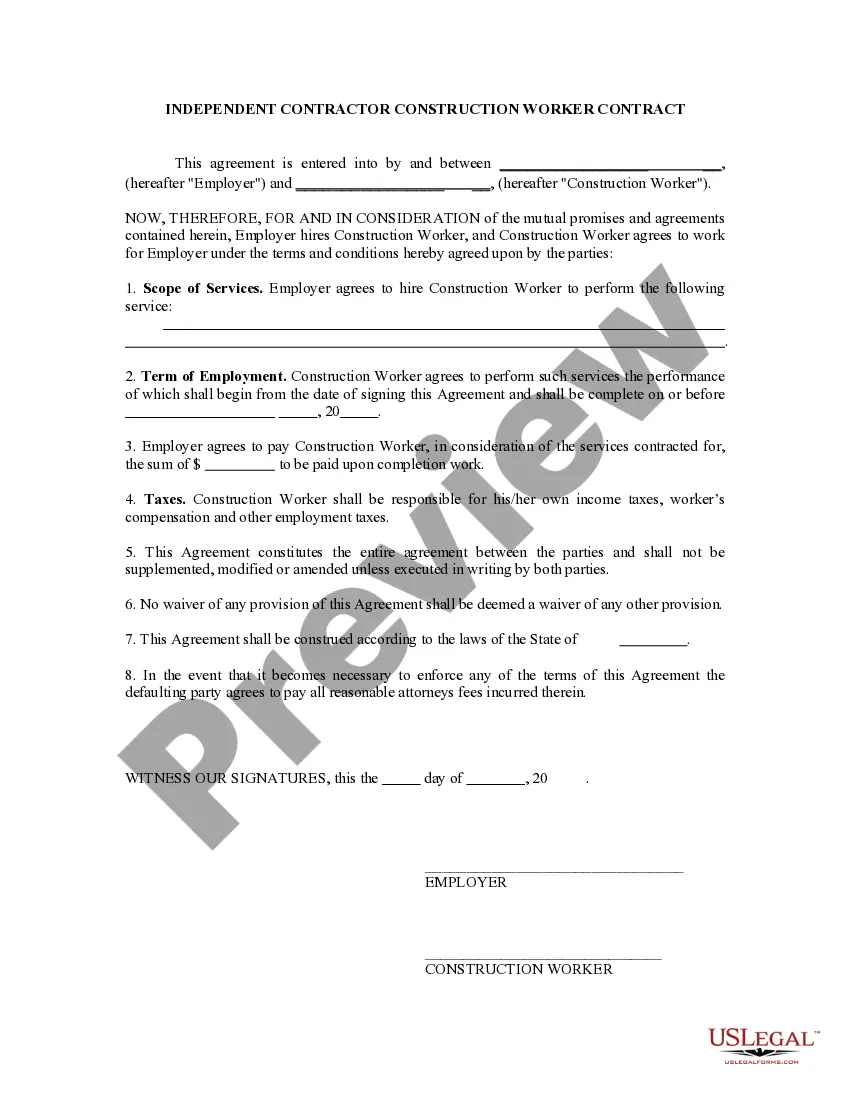
If you run a small business that hires 1099 contractors, also known as independent contractors, it is vital that you have them sign an independent contractor contract. This is because there is a significant gray area between who is classified as an independent contractor and who is classified as an employee.
Three days can turn into three years or more if the contractor does not use the right forms or give the right warnings in their forms. If you cancel your contract, the contractor has to refund all money you paid within ten business days, and remove all liens that were filed.
Businesses can keep your deposit or advance payments, or ask you to pay a cancellation charge, only in certain circumstances.Businesses must take reasonable steps to reduce their losses (eg by re-selling the goods or services). Non-refundable deposits should only be a small percentage of the total price.
Go to Small Claims Court. Small claims court is a legal venue for homeowners who feel they are owed money back from a contractor. Hire an Attorney. File a Complaint with the State. Pursue a Bond Claim. Post Reviews.
Point to the Original Terms. Before working together, there should be some sort of payment agreement to cut down on invoice disputes. Ask Questions. Ask questions to find out where the miscommunication was. Come to an Agreement. Adjust Your Terms if Necessary. Final Word.
Both parties should sign the contract, and both should be bound by the terms and conditions spelled out in the agreement. In general that means the contractor will be obliged to provide specified materials and to perform certain services for you. In turn, you will be required to pay for those goods and that labor.
In Wisconsin, a potential lien claimant must file a mechanics lien within 6 months after the last day on which labor and/or materials were furnished to the project, but at least 30 days after the filing of a Notice of Intention to File a Claim of Lien.