Washington Petition for Dissolution of Marriage with or without children
What is this form?
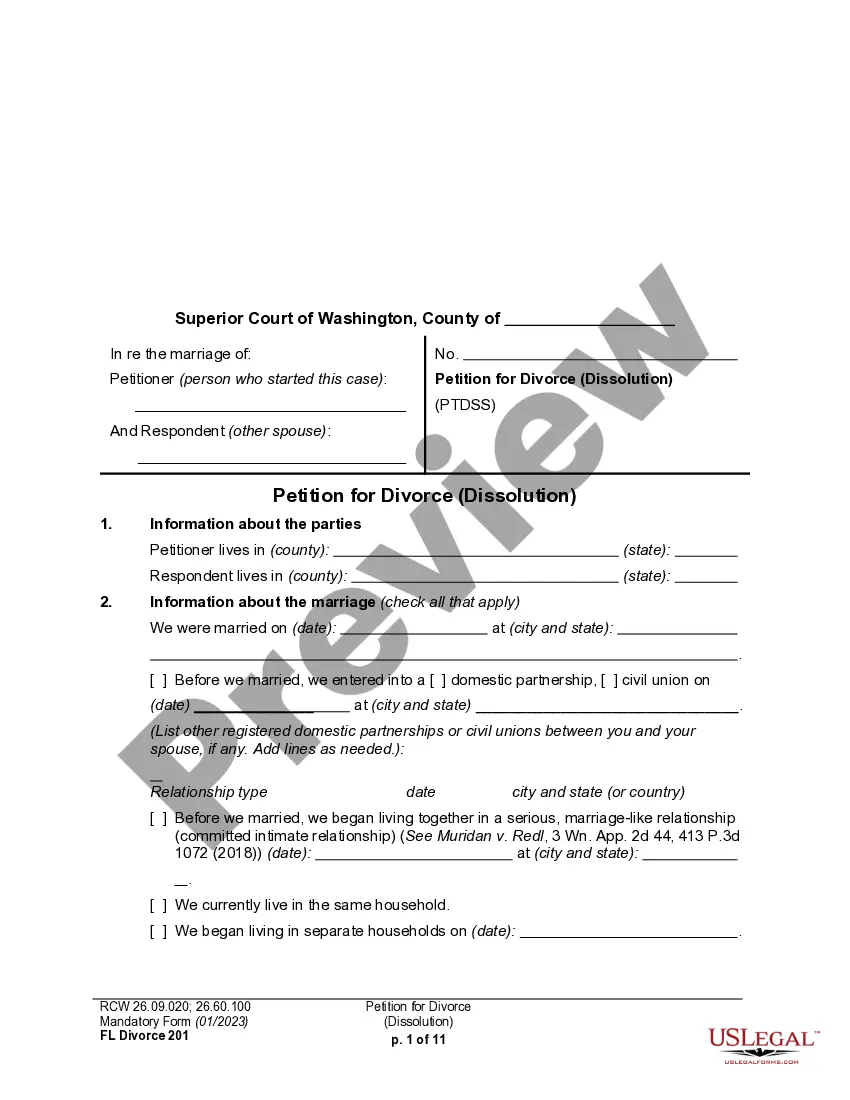
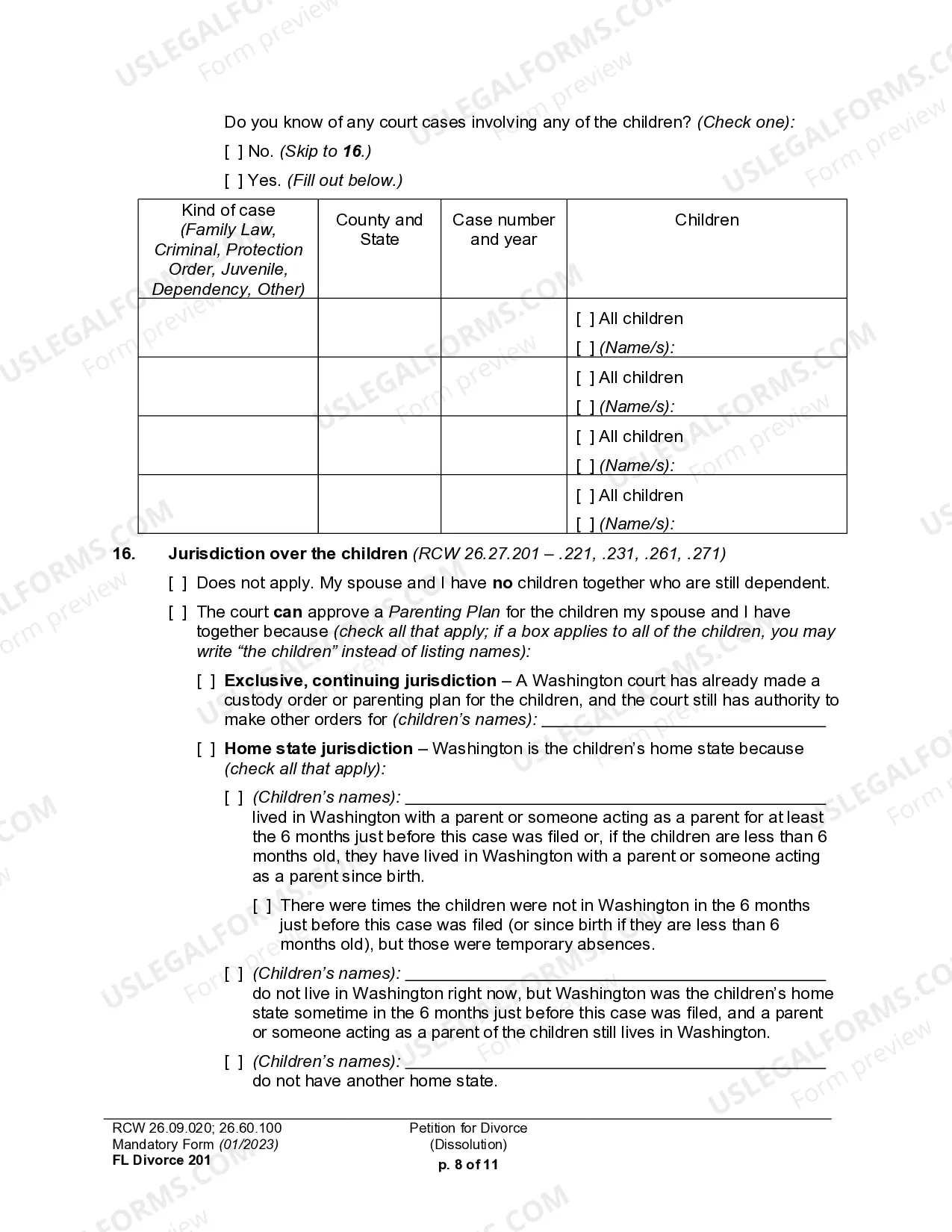
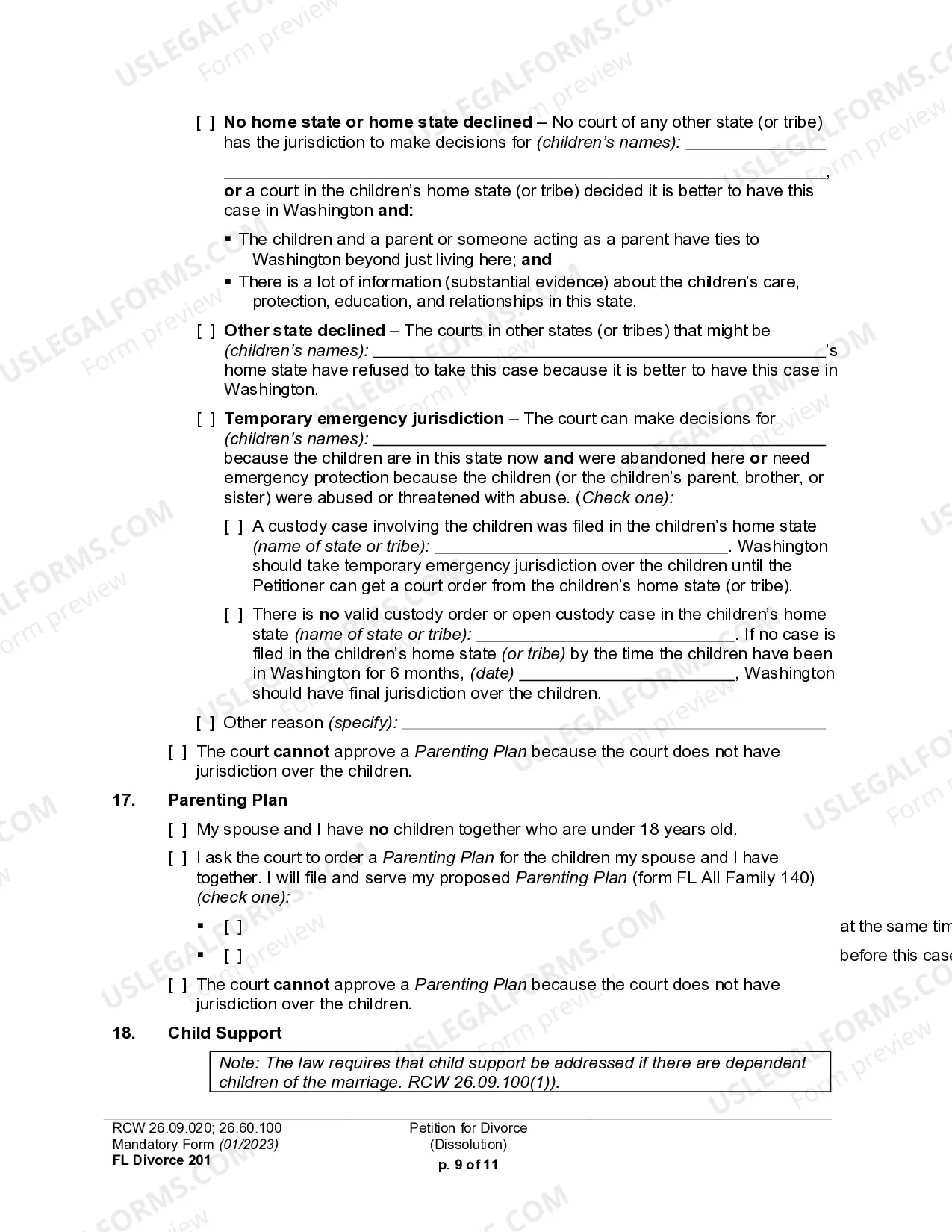
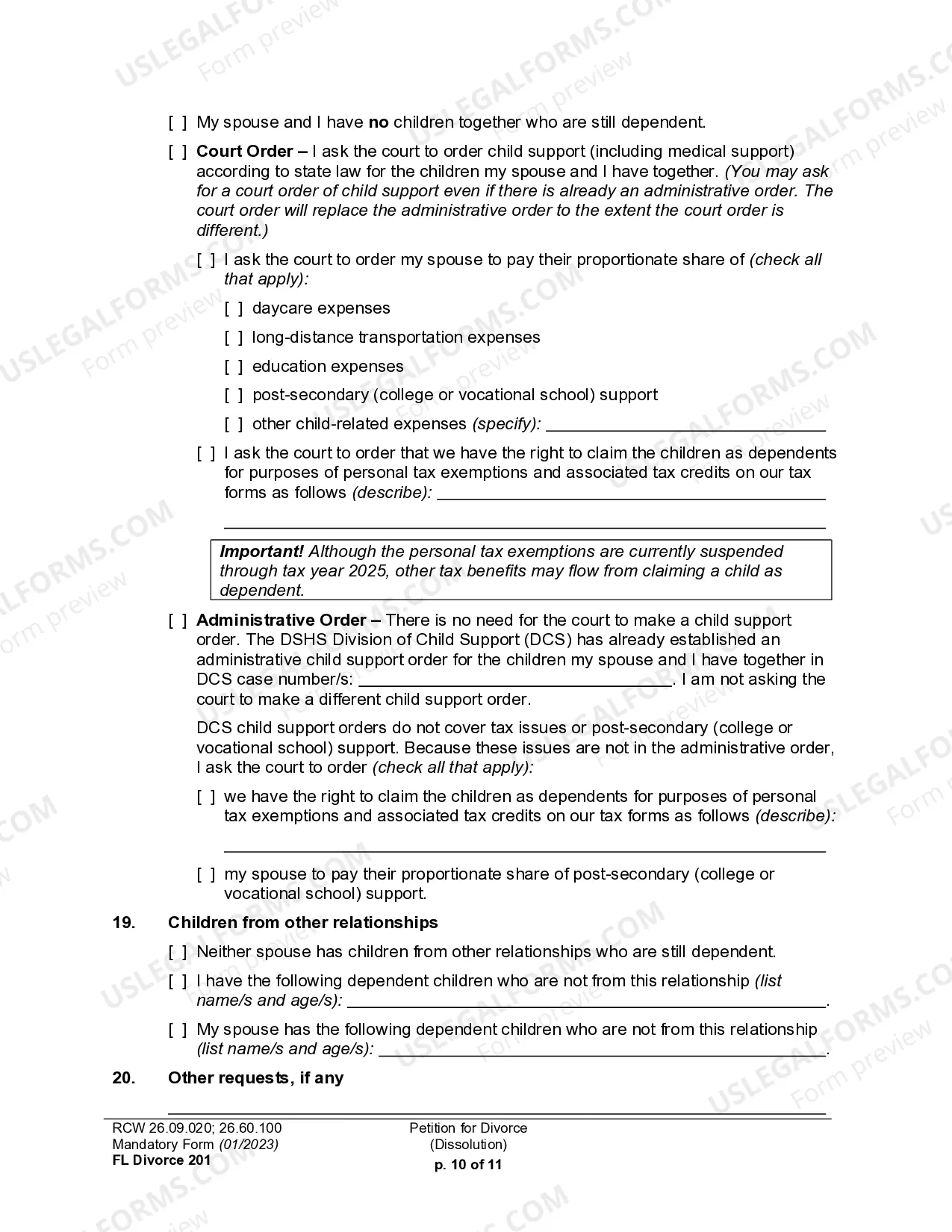
The Petition for Dissolution of Marriage is an official court form used in Washington state to initiate a divorce proceeding. This form allows a Petitioner, the person filing for divorce, to formally request the dissolution of their marriage, whether or not there are children involved. It is essential for legally terminating the marital relationship and addressing any related issues such as asset division and, if applicable, child custody and support.
Form components explained
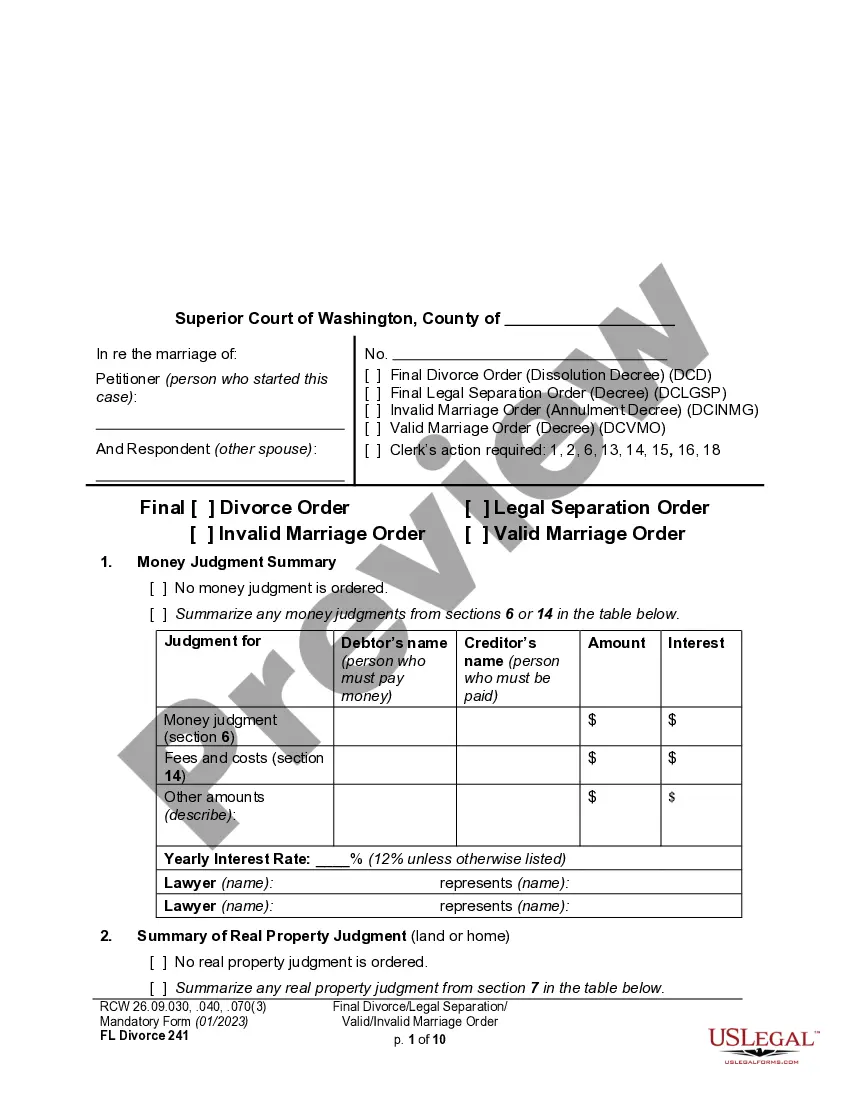
- Information about the parties: Identifies the Petitioner and Respondent with their addresses.
- Information about the marriage: Provides details regarding the marriage date and circumstances leading to the separation.
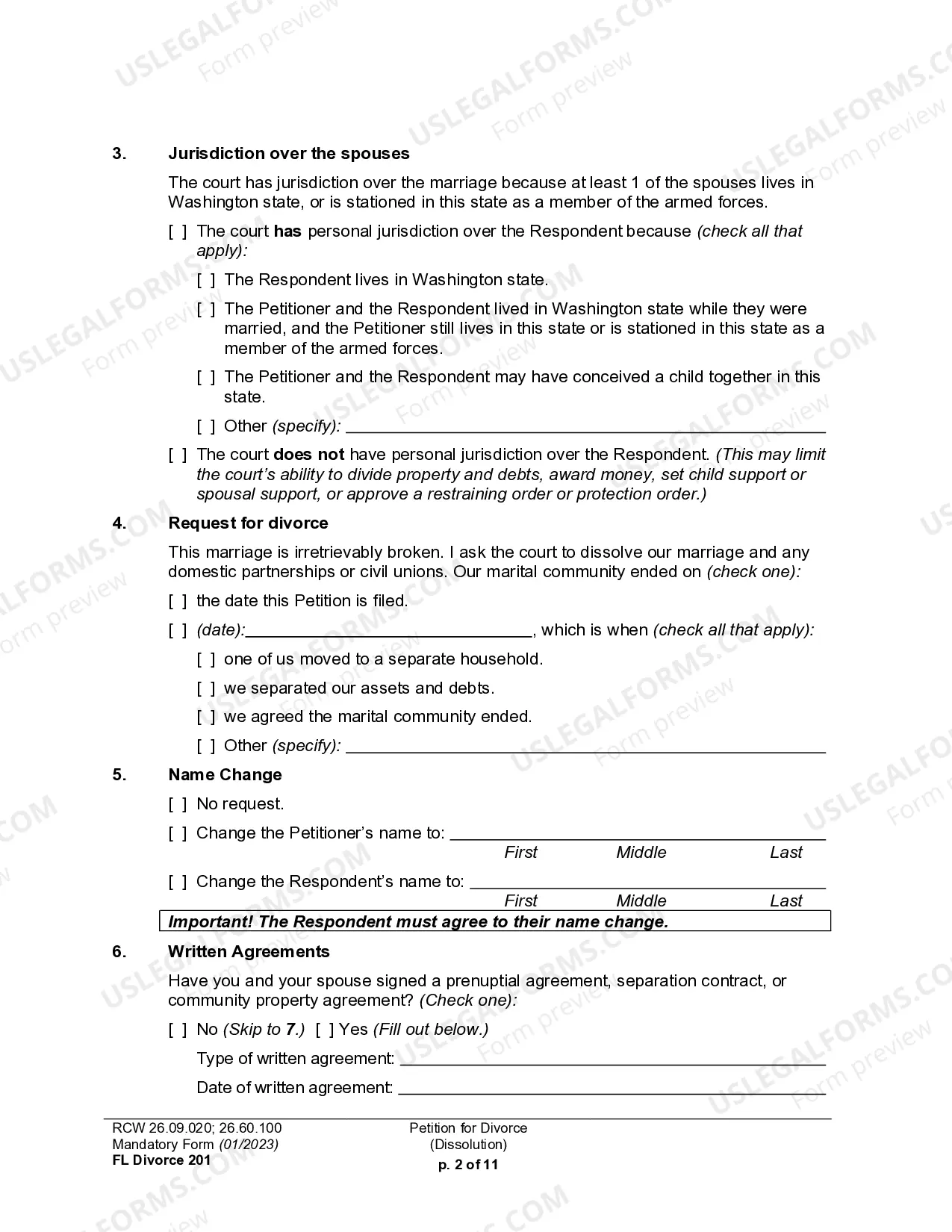
- Request for divorce: States the grounds for the divorce and when the marital community ended.
- Jurisdiction over spouses: Establishes the court's authority to decide on the case based on the residency of the parties.
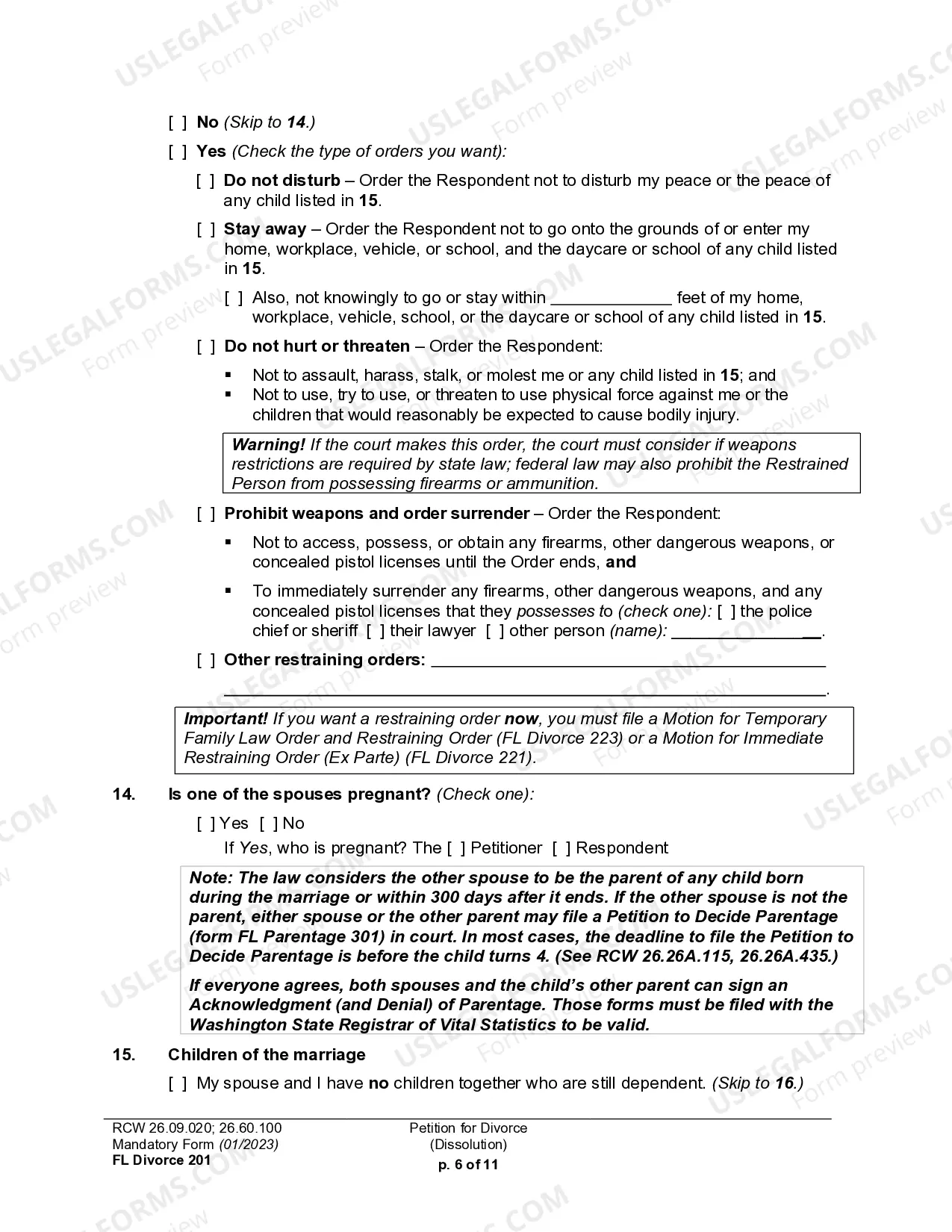
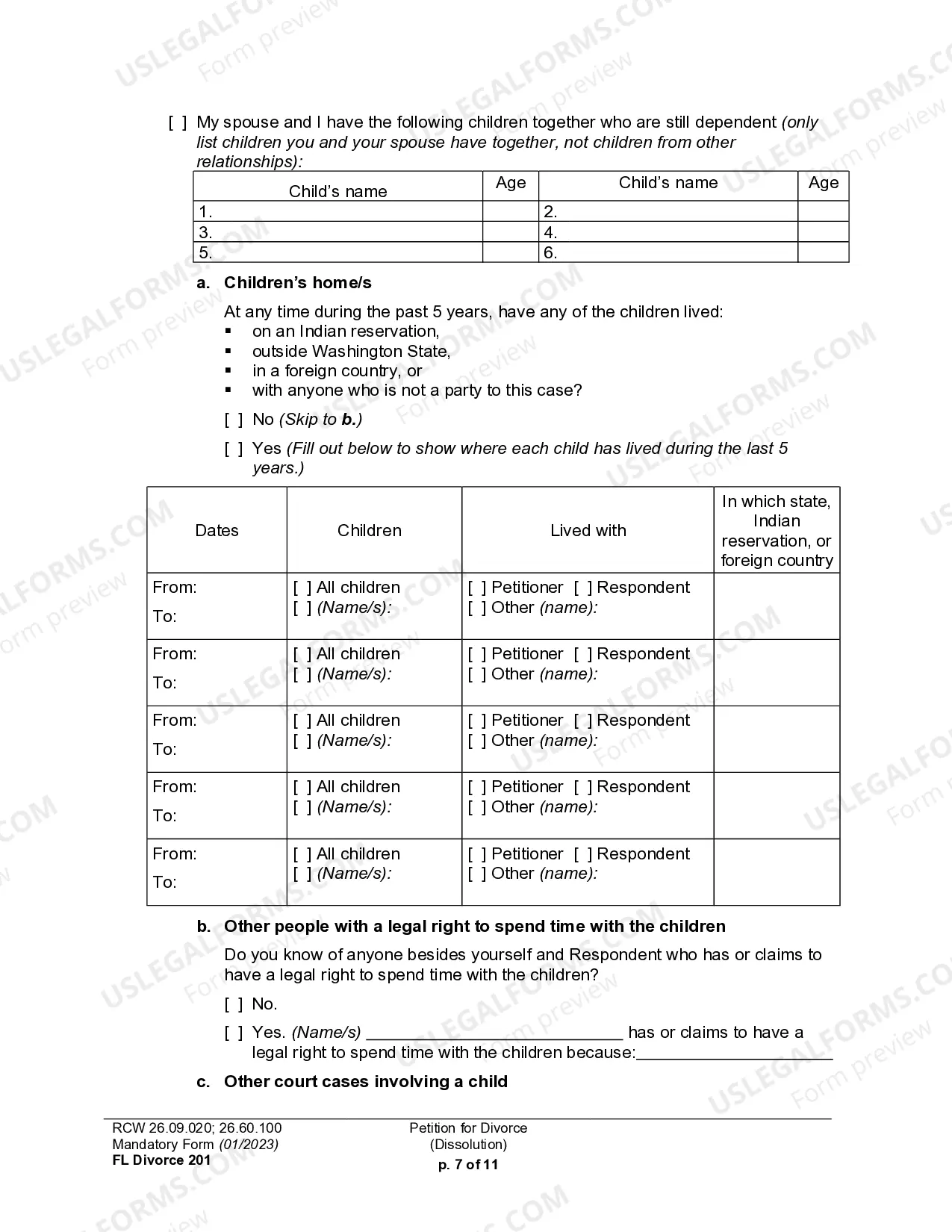
- Children of the marriage: Addresses custody, visitation rights, and any support obligations.
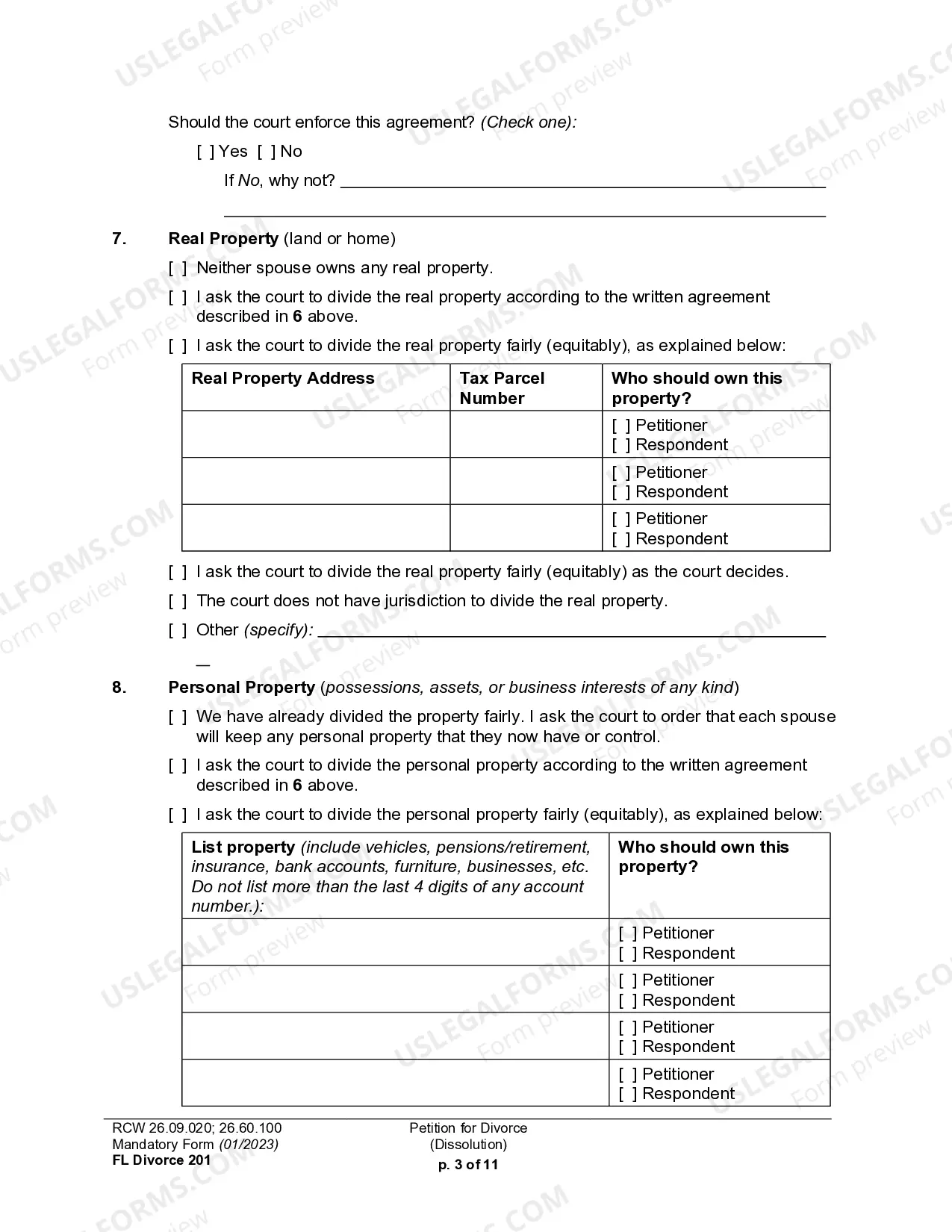
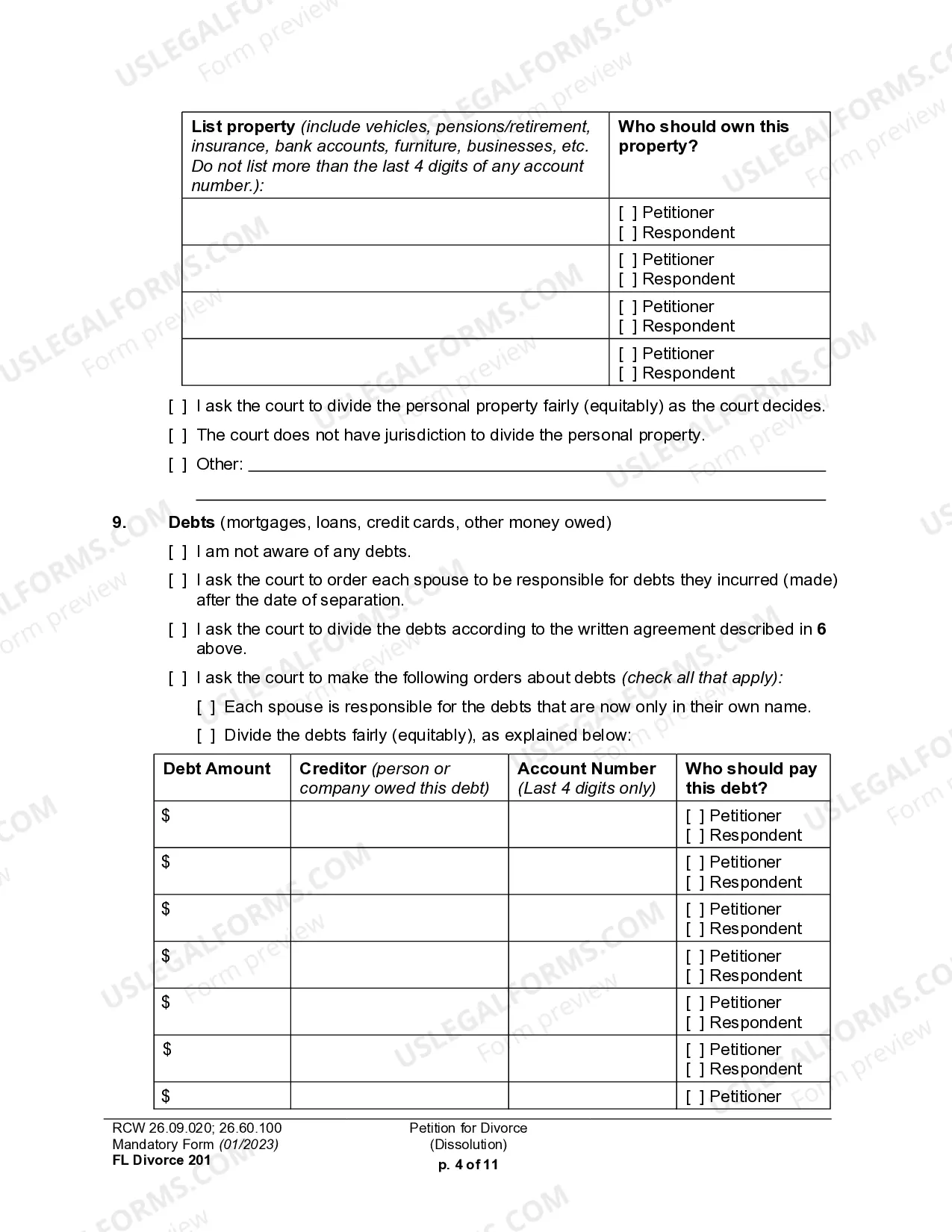
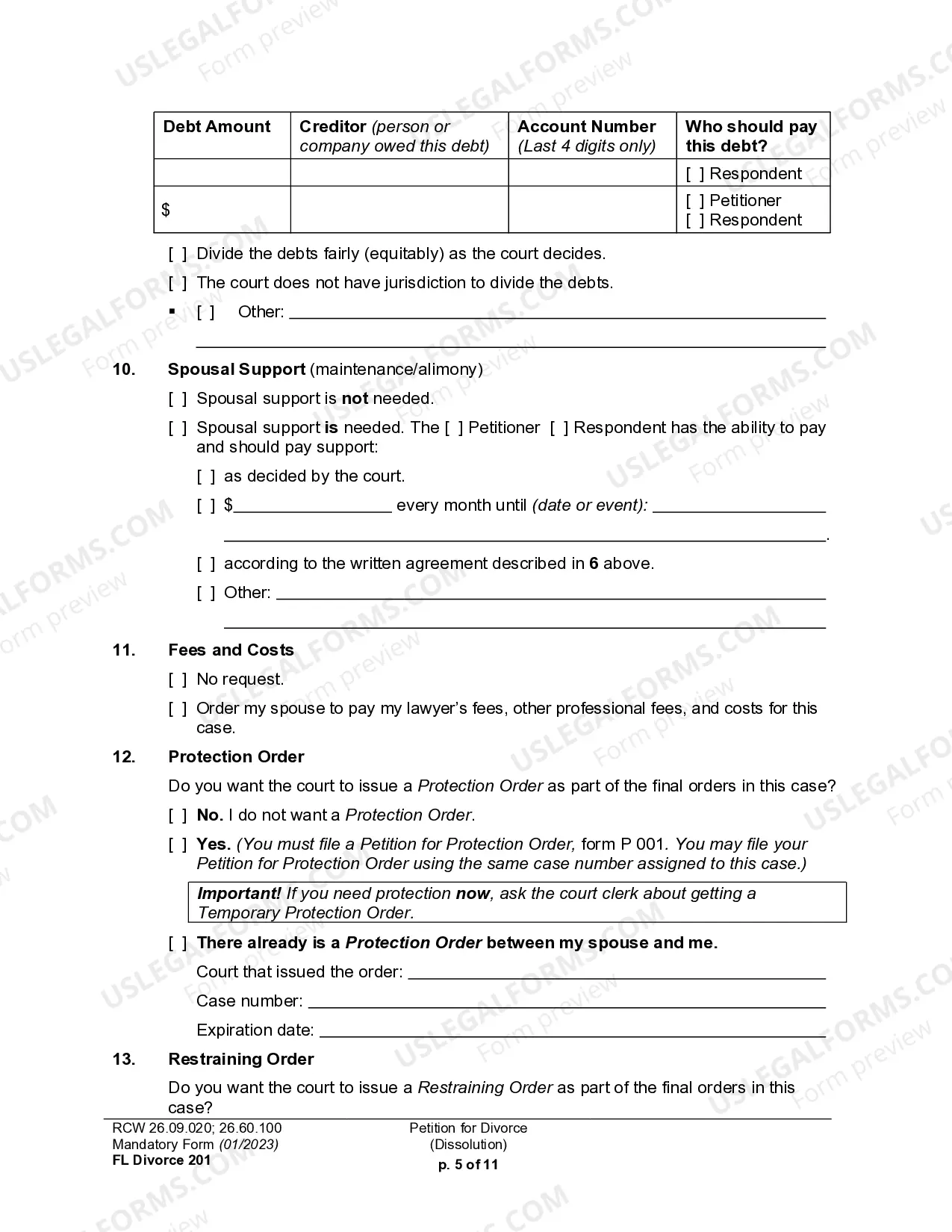
- Property and debt division: Outlines how marital property and debts will be distributed.

When to use this document
This form should be used when one spouse wants to formally end their marriage. It is appropriate for individuals who have lived in Washington state and are seeking legal assistance to finalize their divorce. It applies whether or not there are children involved, and it is essential to establish legal grounds, particularly when division of assets or custody of children is involved.
Who this form is for
- Individuals who wish to initiate divorce proceedings in Washington state.
- Spouses who have been married and reside in Washington state or have sufficient ties to the state.
- Those with or without dependent children who are seeking custody arrangements.
Completing this form step by step
- Identify the parties: Fill in the names and addresses of both the Petitioner and the Respondent.
- Provide marriage details: Specify the date of marriage and surrounding circumstances.
- State the request for divorce: Clearly indicate when the marriage ended and provide necessary details supporting this claim.
- Detail children involved: If applicable, list any children from the marriage and outline custody and support requests.
- Define property and debt distribution: Indicate how you wish to divide property and debts accrued during the marriage.
Does this form need to be notarized?
This form does not typically require notarization unless specified by local law. However, consider consulting with a legal professional to ensure all state requirements are met.
Get your form ready online
Our built-in tools help you complete, sign, share, and store your documents in one place.
Make edits, fill in missing information, and update formatting in US Legal Forms—just like you would in MS Word.
Download a copy, print it, send it by email, or mail it via USPS—whatever works best for your next step.
Sign and collect signatures with our SignNow integration. Send to multiple recipients, set reminders, and more. Go Premium to unlock E-Sign.
If this form requires notarization, complete it online through a secure video call—no need to meet a notary in person or wait for an appointment.
We protect your documents and personal data by following strict security and privacy standards.

Make edits, fill in missing information, and update formatting in US Legal Forms—just like you would in MS Word.

Download a copy, print it, send it by email, or mail it via USPS—whatever works best for your next step.

Sign and collect signatures with our SignNow integration. Send to multiple recipients, set reminders, and more. Go Premium to unlock E-Sign.

If this form requires notarization, complete it online through a secure video call—no need to meet a notary in person or wait for an appointment.

We protect your documents and personal data by following strict security and privacy standards.
Common mistakes
- Failing to provide complete and accurate information about both parties.
- Not specifying how children, if any, will be cared for and supported post-divorce.
- Neglecting to address the division of property and debts clearly.
Why use this form online
- Convenience of completing the form at your own pace and from the comfort of your home.
- Editability allows for easy corrections and updates before submission.
- Access to reliable legal templates ensures that your form meets state requirements.
- The Petition for Dissolution of Marriage is essential for initiating divorce proceedings in Washington State.
- It is crucial to provide complete and accurate information regarding the marriage and children.
- Understand the implications of property and debt division as part of the dissolution process.
Looking for another form?
Form popularity
FAQ
You have until your spouse files an answer to your complaint to cancel the divorce. By filing first you are the plaintiff and she will be the defendant. At trial, if your divorce case goes that far, you would go first.This means the reason for the divorce doesn't matter.
When you get divorced, community property is generally divided equally between the spouses, while each spouse gets to keep his or her separate property. Equitable distribution: In all other states, assets and earnings accumulated during marriages are divided equitably (fairly) but not necessarily equally.
There is one advantage to being the one to file the divorce. The person who files the divorce, under the code of civil procedure, is called the plaintiff and the other party is called the defendant.Another advantage to being a plaintiff is the way a non-suit is handled under the code of civil procedure.
One of the main legal advantages that a person gains by filing the divorce petition before his or her spouse does is that the filer can request a Standing Order from the court when filing the petition.If the matter should go to a hearing, the person who files the petition usually presents his or her case first.
Establish Jurisdiction and Venue. Start by determining which county you can petition for divorce in and find the local courthouse in that county. Petition for Dissolution of Marriage. Serve the Summons. Mediation/Support. Settlement.
The name given to the spouse that files first for divorce is the Petitioner and the spouse that files second is called the Respondent. The clearest advantage to filing for divorce first is that at trial the Petitioner gets to present his/her evidence first.
If you are expecting a relatively simple and low-conflict divorce, it probably does not matter whether you or your spouse initially file for divorce. The petitioner also gets to cite the reason for divorce, which the respondent may or may not agree with.
One of the main legal advantages that a person gains by filing the divorce petition before his or her spouse does is that the filer can request a Standing Order from the court when filing the petition.If the matter should go to a hearing, the person who files the petition usually presents his or her case first.
In a divorce process where the other party is not in agreement or has a conflict that still exists, he or she may contest the divorce proceeding. In some of these situations, the child custody matter may wait until the more important immediate concerns are taken care of through mediation.