Washington Codicil to Will Form for Amending Your Will - Will Changes or Amendments
Overview of this form
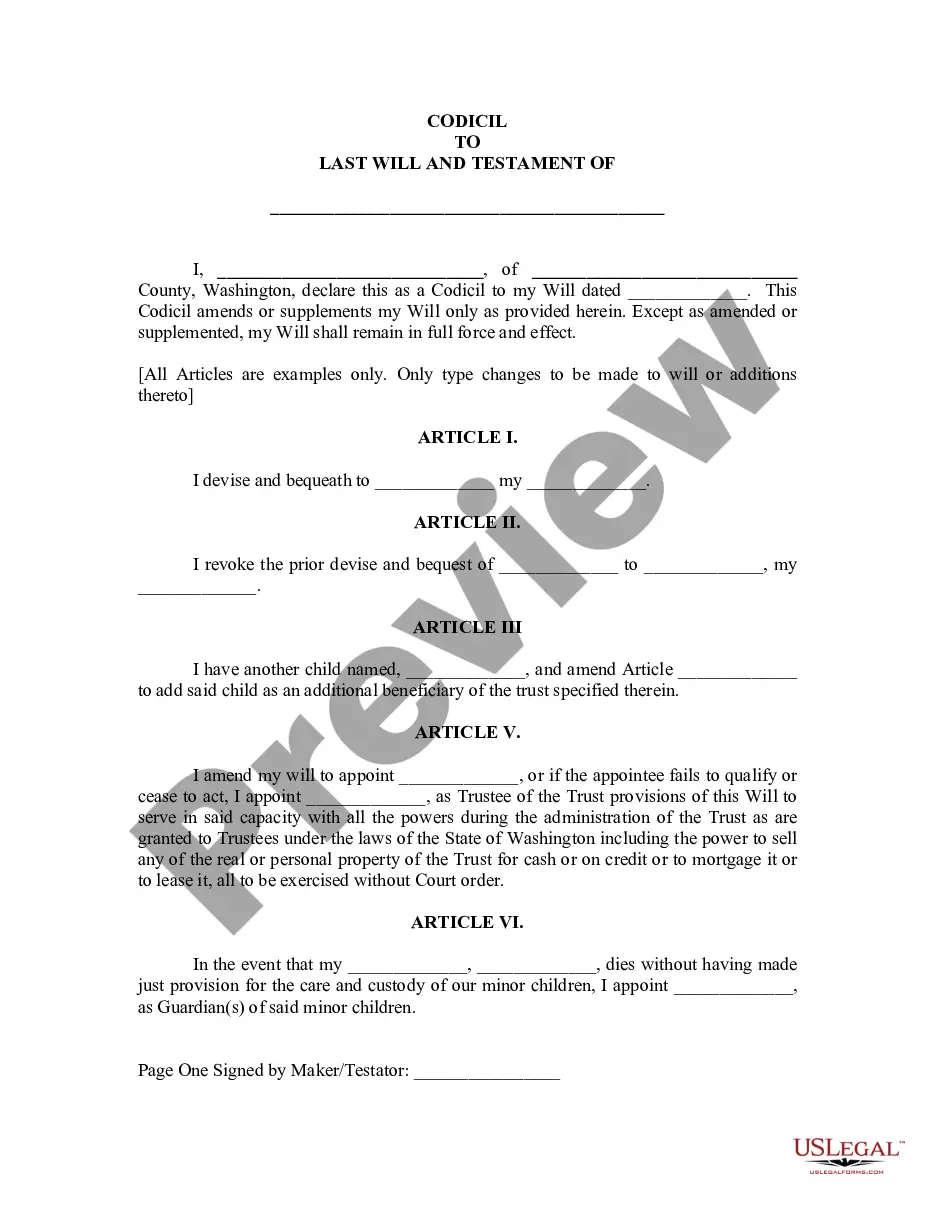
The Codicil to Will Form is used to amend an existing will without the need to create an entirely new document. This form allows you to make specific changes, additions, or revocations within your will while ensuring that the original will remains valid except for the amendments made. It is essential for those who want to update their estate plan due to changes in circumstances, such as a new beneficiary or changes in property distribution. Unlike a full will, a codicil provides a streamlined way to make necessary adjustments with less complexity.
What’s included in this form
- Maker/Testator's name and details to identify the original will.
- Articles to add or change specific bequests and beneficiaries.
- Provisions for appointing or revoking trustees and guardians.
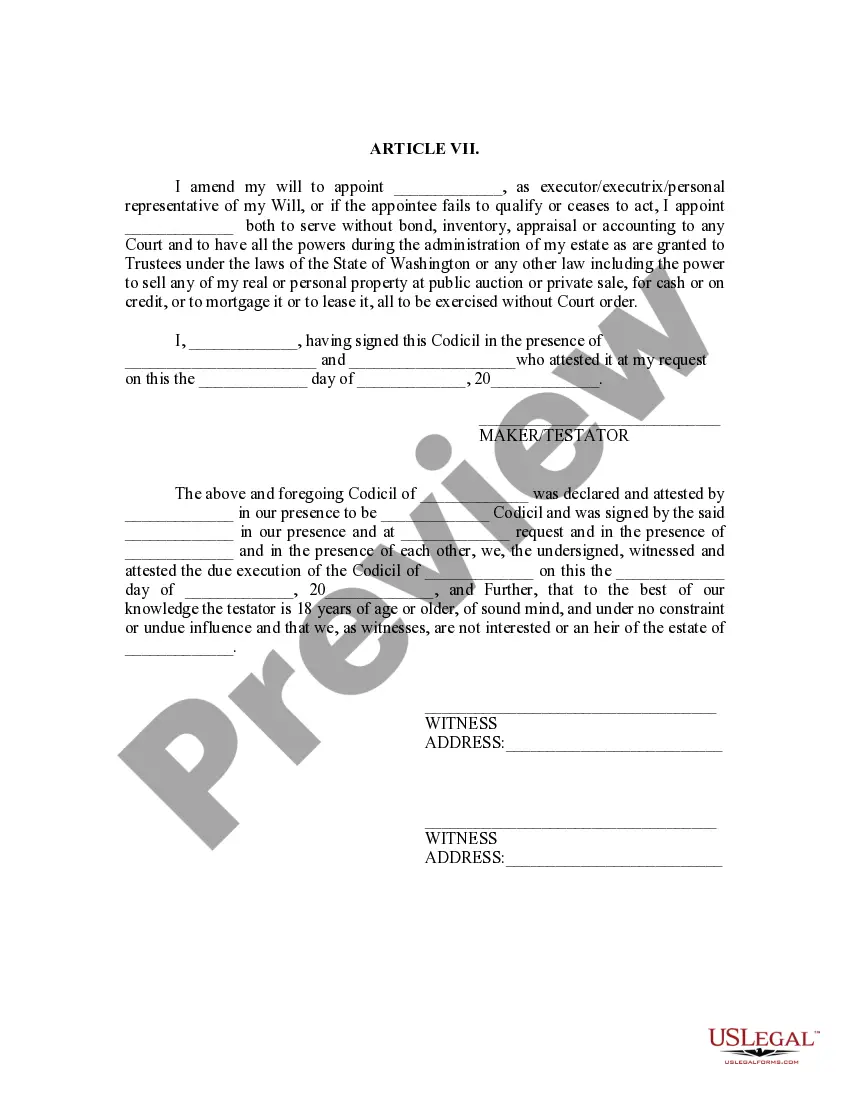
- Execution requirements including signatures and witness clauses.
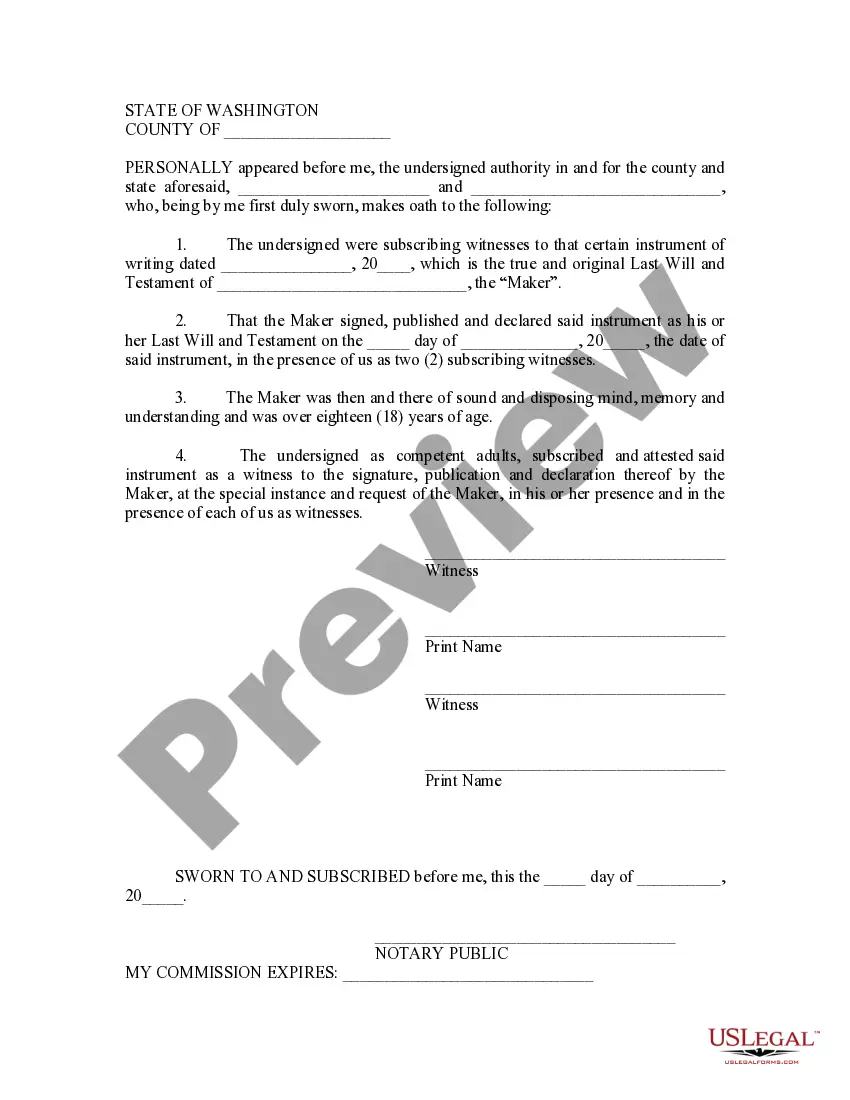
- Notarization section to validate the codicil.

When to use this document
This form should be used when you need to make changes to your existing will but do not want to rewrite the entire document. Common situations include adding a new beneficiary, changing the executor of the estate, or revoking specific bequests. It is ideal for those who experience life events such as marriage, divorce, the birth of a child, or significant changes in financial status.
Who should use this form
- Individuals who already have a will and wish to make minor adjustments.
- People experiencing changes in personal circumstances like marriage or the birth of a child.
- Those who want to revoke or change specific bequests without drafting a new will.
- Residents of Washington looking to comply with state-specific requirements.
Steps to complete this form
- Begin by filling in your name and details, including the date of your original will.
- List the specific changes or articles you wish to add or amend in your will.
- Designate any new beneficiaries, trustees, or guardians as needed.
- Have at least two witnesses sign the form, affirming that you are of sound mind and acting without undue influence.
- Consider having the codicil notarized to enhance its legal validity.
Does this form need to be notarized?
This form must be notarized to be legally valid. US Legal Forms provides secure online notarization powered by Notarize, allowing you to complete the process through a verified video call.
Get your form ready online
Our built-in tools help you complete, sign, share, and store your documents in one place.
Make edits, fill in missing information, and update formatting in US Legal Forms—just like you would in MS Word.
Download a copy, print it, send it by email, or mail it via USPS—whatever works best for your next step.
Sign and collect signatures with our SignNow integration. Send to multiple recipients, set reminders, and more. Go Premium to unlock E-Sign.
If this form requires notarization, complete it online through a secure video call—no need to meet a notary in person or wait for an appointment.
We protect your documents and personal data by following strict security and privacy standards.

Make edits, fill in missing information, and update formatting in US Legal Forms—just like you would in MS Word.

Download a copy, print it, send it by email, or mail it via USPS—whatever works best for your next step.

Sign and collect signatures with our SignNow integration. Send to multiple recipients, set reminders, and more. Go Premium to unlock E-Sign.

If this form requires notarization, complete it online through a secure video call—no need to meet a notary in person or wait for an appointment.

We protect your documents and personal data by following strict security and privacy standards.
Mistakes to watch out for
- Failing to clearly specify what is being amended or added in the will.
- Not having the required number of witnesses sign the form.
- Neglecting to date the codicil properly.
- Not ensuring that the witnesses are not beneficiaries of the will to avoid conflicts of interest.
Benefits of using this form online
- Convenience of completing the form at your own pace from anywhere.
- Editable format allows for easy adjustments to the content before finalizing.
- Access to legal templates drafted by licensed attorneys to ensure accuracy.
- Quick download and printing options, making it easy to complete the signing process.
Looking for another form?



Form popularity
FAQ
The Washington Codicil to Will Form is a legal document used to amend an existing will without rewriting the whole document. It lets you add, change, or revoke specific bequests, appoint or revoke trustees and guardians, and keeps the rest of the will intact. Use it after life changes such as marriage, birth, or asset shifts; it includes execution, witness, and notarization sections.
To make your own codicil using this form, identify the maker (your) name and the original will, then specify the exact changes or additions—such as new bequests or updated beneficiaries—and any changes to trustees or guardians. Complete the execution section with signatures and witnesses, and use the notarization area if you want it validated.
Yes. A codicil form like this lets you amend your will without formal legal help, but you must follow the form's WA execution requirements: sign in the presence of witnesses, and complete the required witness clauses and notarization if included. For complex changes, consult a licensed attorney.
Free codicil forms are available online from reputable sources. This Washington Codicil to Will Form provides fields to identify the original will, note changes to bequests, adjust trustees or guardians, and includes execution and notarization sections. Always ensure the form meets Washington requirements and consider professional advice for complex matters.
To write a codicil in Washington State, identify the original will within the form, specify the exact changes (bequests, beneficiaries, trustees, or guardians), and complete the execution section with signatures and witnesses. A notarization area is provided to further validate the codicil.
This form amends an existing will rather than creating a completely new document. It focuses on identifying the original will, specifying only the changes to be made—such as new bequests or updated trustees and guardians—and includes dedicated execution, witness clauses, and notarization to validate those amendments while keeping the rest of the will intact.