Washington Form - Work for Hire Agreement - Musical Arrangement
Description
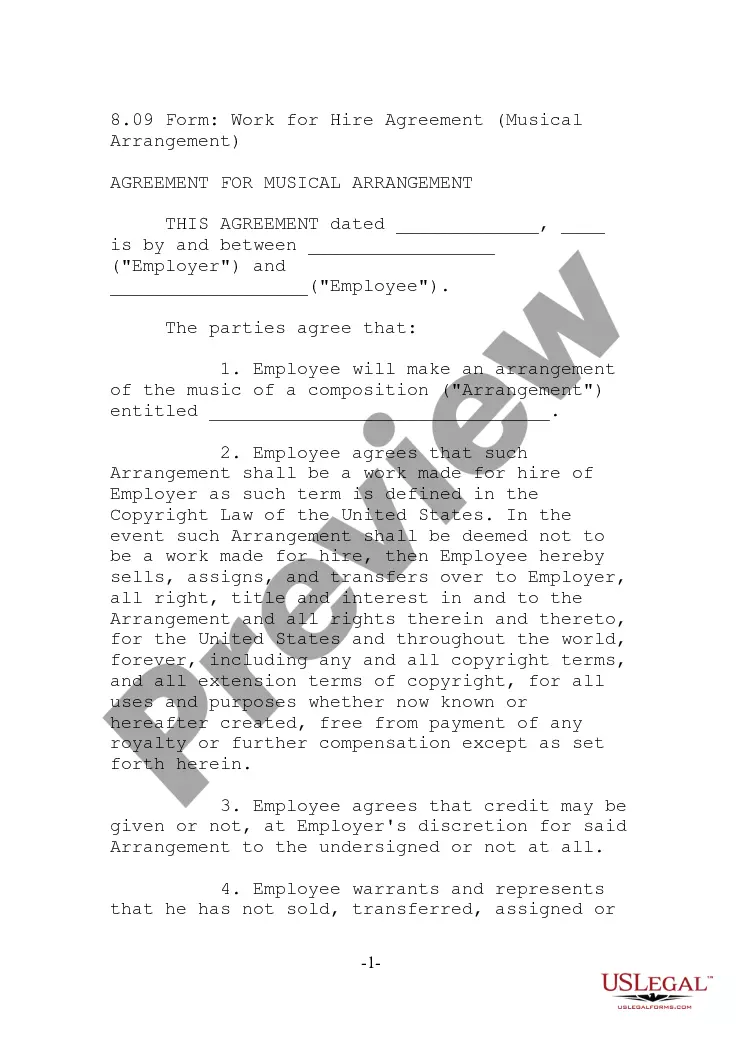
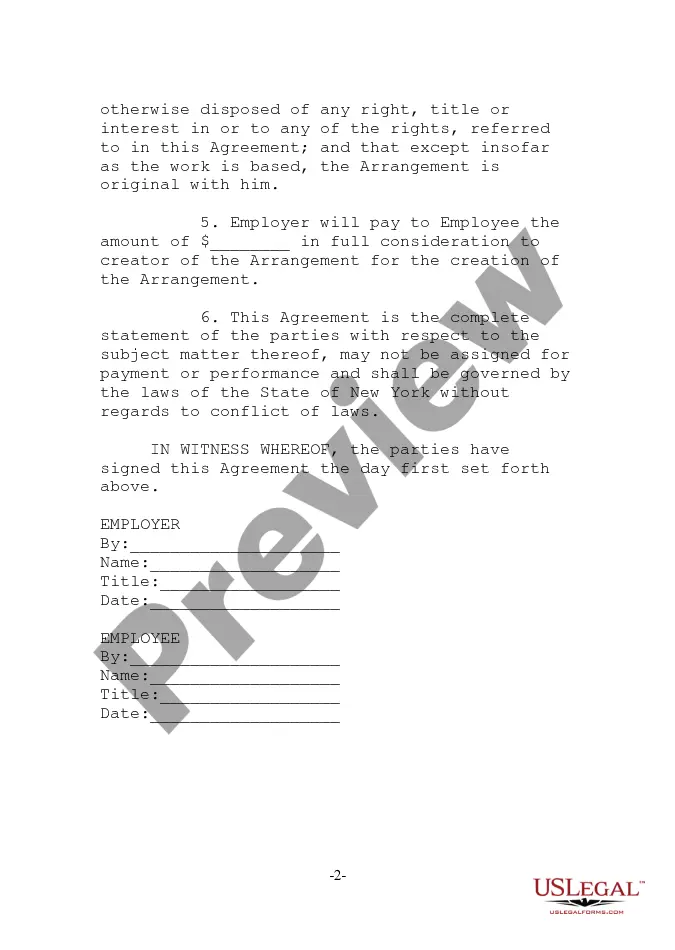


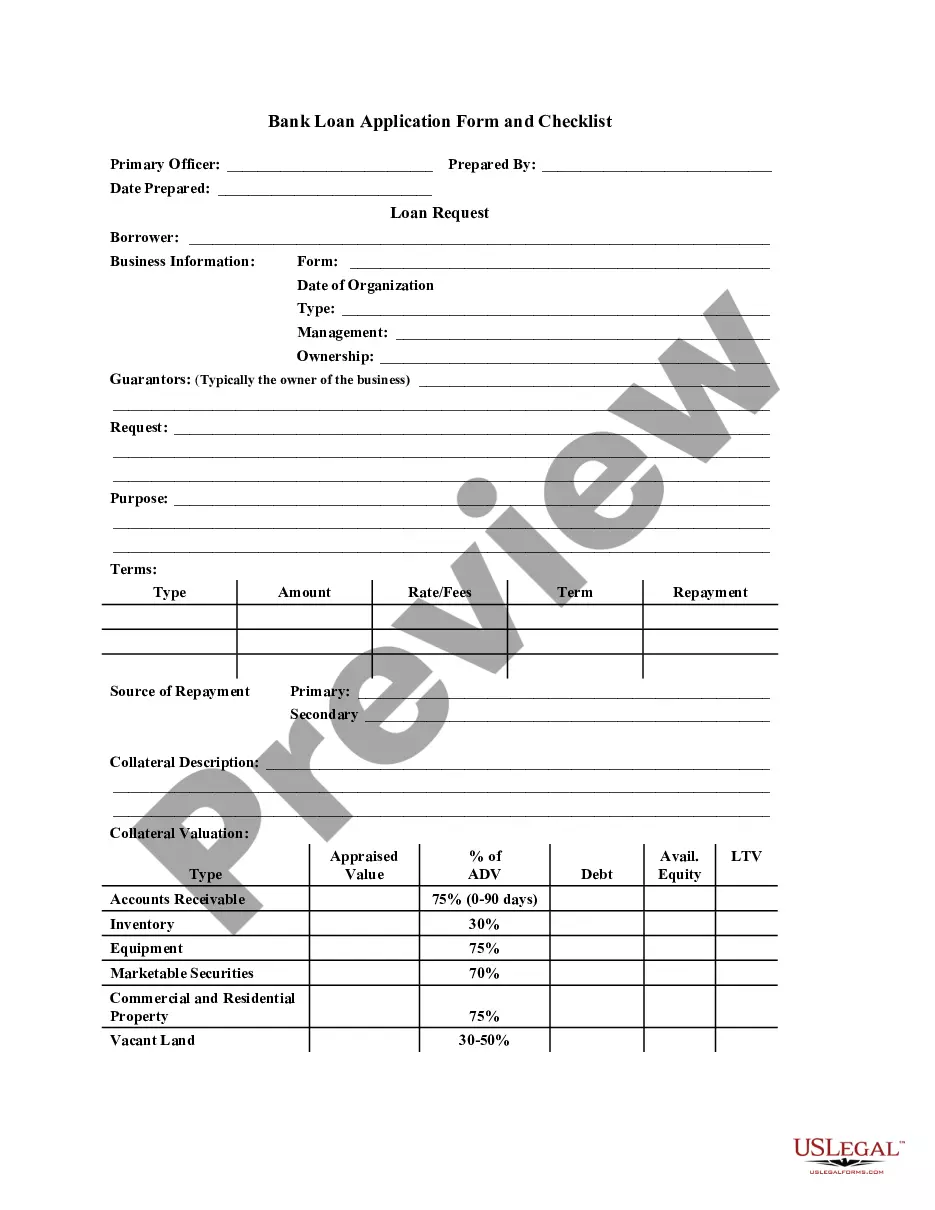

How to fill out Form - Work For Hire Agreement - Musical Arrangement?
If you have to complete, acquire, or printing legal record layouts, use US Legal Forms, the most important variety of legal types, which can be found on the web. Use the site`s easy and hassle-free look for to get the paperwork you require. Numerous layouts for business and person uses are categorized by classes and states, or keywords and phrases. Use US Legal Forms to get the Washington Form - Work for Hire Agreement - Musical Arrangement in a couple of mouse clicks.
When you are presently a US Legal Forms buyer, log in for your accounts and then click the Download key to get the Washington Form - Work for Hire Agreement - Musical Arrangement. You can also gain access to types you in the past saved from the My Forms tab of the accounts.
Should you use US Legal Forms initially, refer to the instructions below:
- Step 1. Be sure you have selected the shape for the proper city/region.
- Step 2. Take advantage of the Review choice to look over the form`s content. Never overlook to read the explanation.
- Step 3. When you are unsatisfied using the kind, utilize the Look for industry at the top of the monitor to locate other versions from the legal kind format.
- Step 4. Once you have found the shape you require, go through the Buy now key. Select the rates program you favor and add your qualifications to sign up to have an accounts.
- Step 5. Method the deal. You can use your bank card or PayPal accounts to accomplish the deal.
- Step 6. Choose the structure from the legal kind and acquire it on the system.
- Step 7. Full, modify and printing or indicator the Washington Form - Work for Hire Agreement - Musical Arrangement.
Each legal record format you purchase is yours permanently. You have acces to each kind you saved inside your acccount. Go through the My Forms portion and decide on a kind to printing or acquire again.
Be competitive and acquire, and printing the Washington Form - Work for Hire Agreement - Musical Arrangement with US Legal Forms. There are millions of professional and condition-particular types you can use for the business or person needs.
Form popularity
FAQ
Elements of a work-for-hire agreement Scope of the project?exactly what is to be done or produced. Due date of the project?negotiated with regard to both parties' schedules. Rights to be sold. Payment terms. Confidentiality terms (if any) Arbitration terms (if any) Severability?getting out of the agreement.
Lane explains that a work-for-hire agreement means the client owns the copyright to whatever the artist creates: ?From the very moment the thing is created, it's owned by the client or your employer.? In contrast, when an artist assigns the copyright, the artist owns the copyright, and is selling that copyright to the ...
A work for hire contract is used in almost all music recording projects to ensure that a label (or a DIY artist) owns everything created as a result of the services of others involved in the recording process such as session musicians, producers, engineers, mixers, and masterers.
Work-for-hire agreements are common in film, TV, and advertising, in which production companies often hire composers to create music specifically for their projects. Instead of receiving an initial fee and subsequent royalties, a work-for-hire creator receives only a one-time up-front fee for their work.
What is a work-for-hire agreement? Kristie Scott, attorney and owner of Light Path Law, explains that a work-for-hire agreement is, in its basic form, "an agreement where freelancers agree to give up a portion of their rights to whatever particular service they're providing."
A work for hire agreement is a one-time contract that guarantees the recipient an upfront cost, or other form of payment, in return for services. This wildly different from receiving royalties, so pay close attention as we break down what you need to know.
Under U.S. copyright law and in some other jurisdictions, if a work is "made for hire," the employer ? not the employee (composer) ? is considered the legal author. This means that the employee is not entitled to the work's publishing rights despite the fact that they were the composer.
There are two situations in which a work made for hire is produced: (1) when the work is created by an employee as part of the employee's regular duties and (2) when a certain type of work is created as a result of an express written agreement between the creator and a party specially ordering or commissioning the work ...