Model Statement of ERISA Rights
Understanding this form
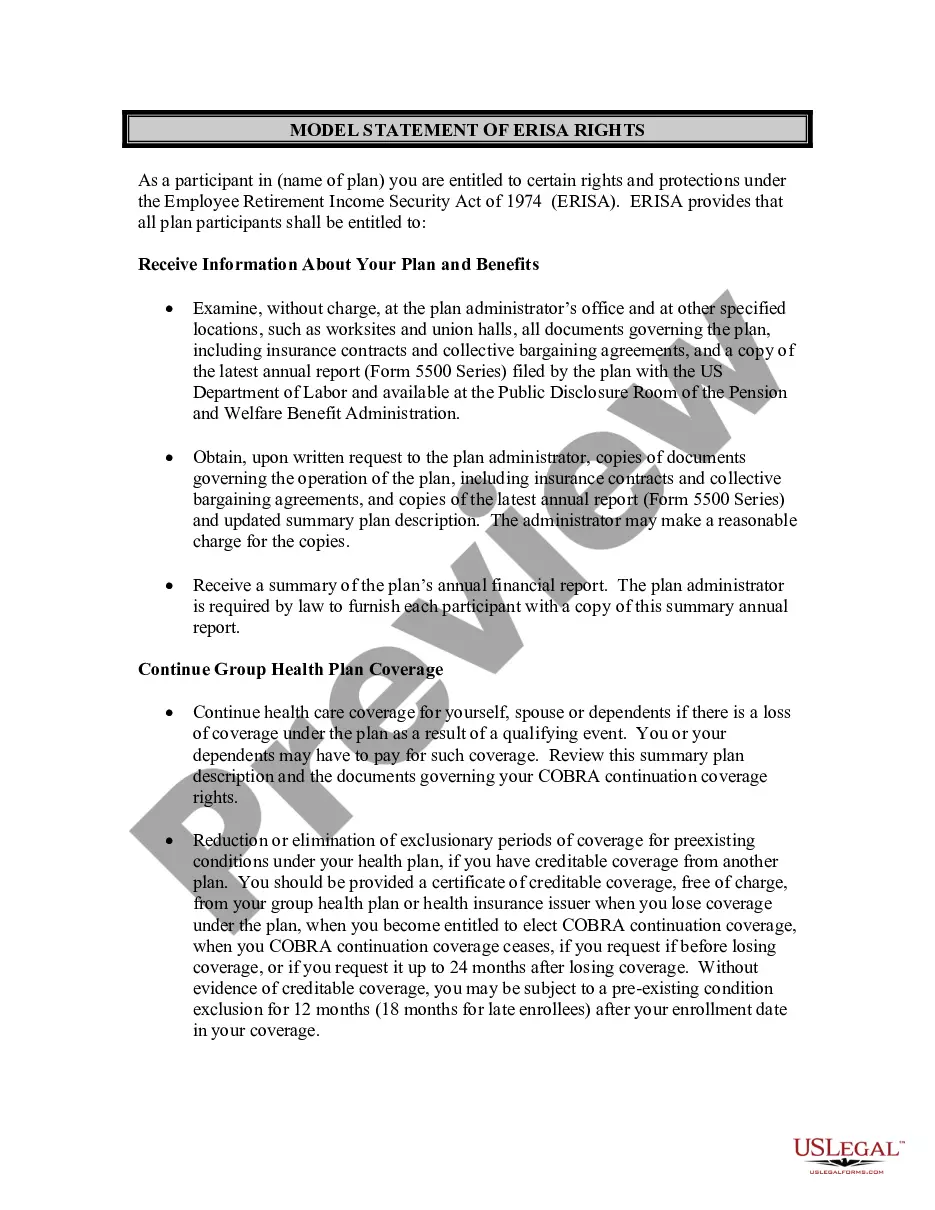
The Model Statement of ERISA Rights is a document that informs employees of their rights under the Employee Retirement Income Security Act of 1974 (ERISA). This form outlines entitlements related to employee benefit plans, ensuring participants are aware of their rights to information, health coverage, and legal enforcement. Unlike other legal forms, this statement is specifically tailored to help employees understand their ERISA protections and the responsibilities of plan fiduciaries.
Form components explained
- Right to receive information about the employee benefit plan and its governing documents.
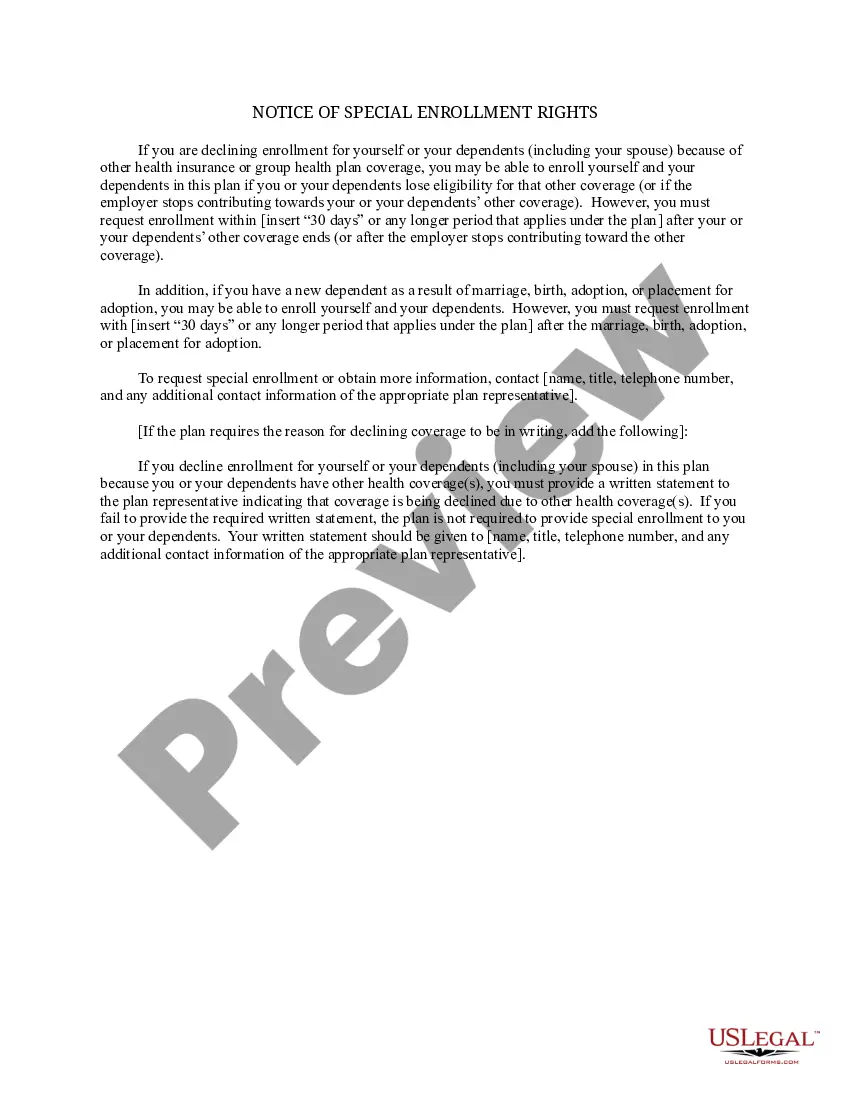
- Eligibility to continue group health plan coverage after a qualifying event.
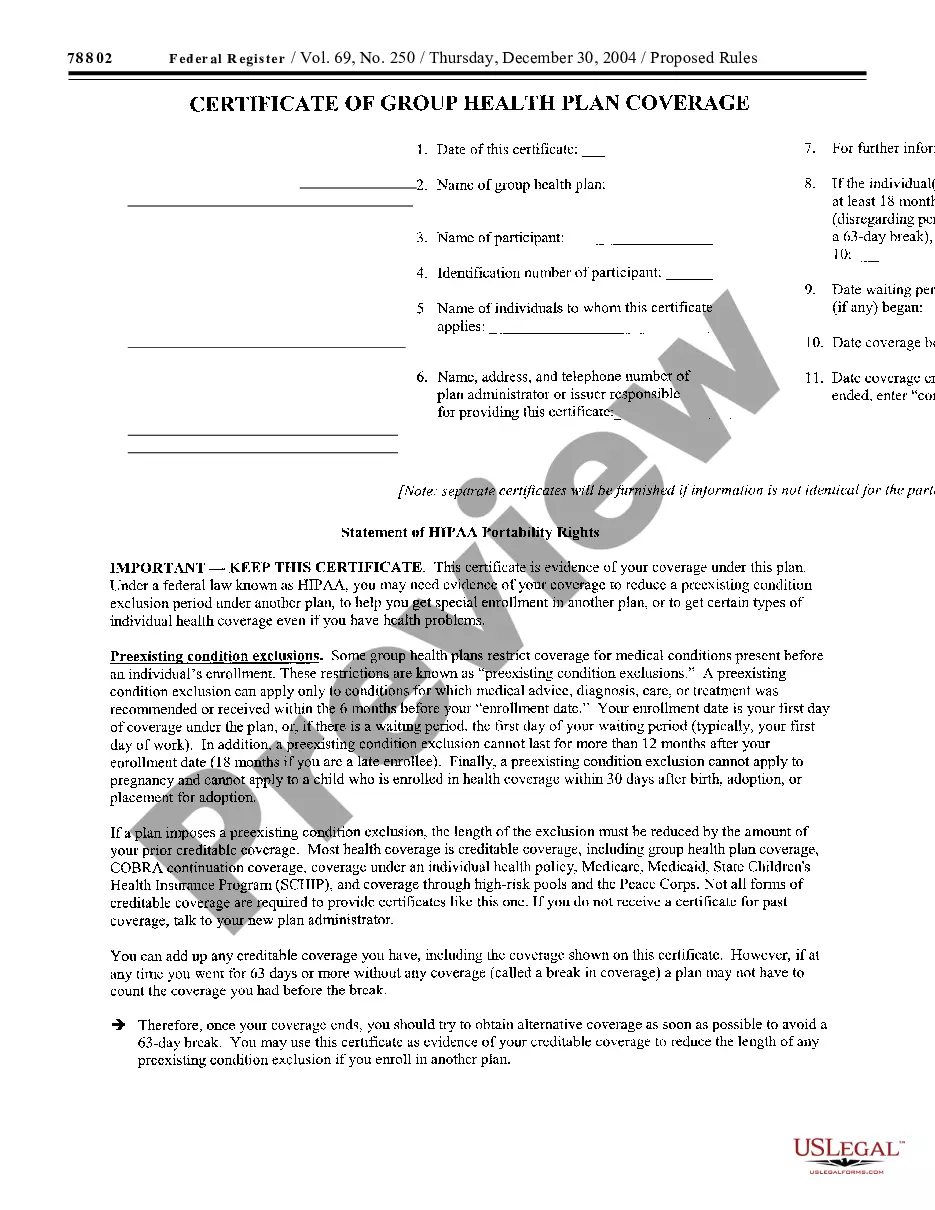
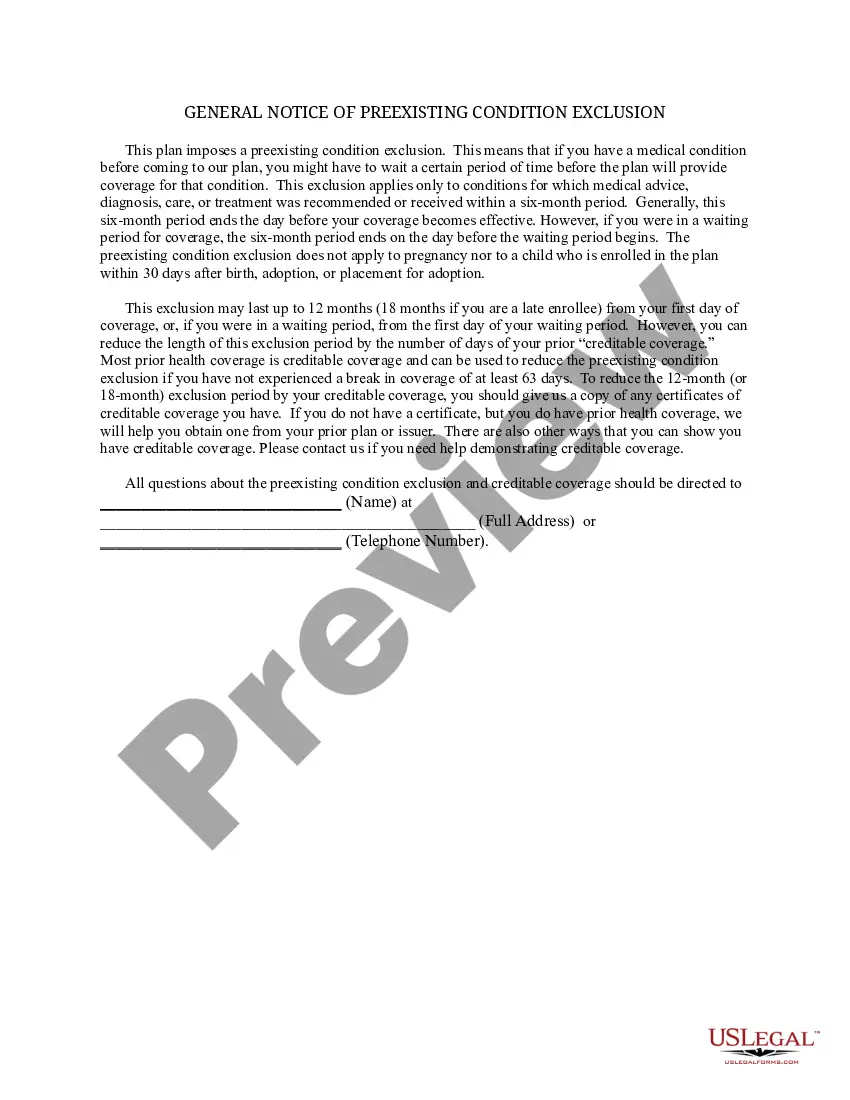
- Information on preexisting condition exclusions and the importance of a certificate of creditable coverage.
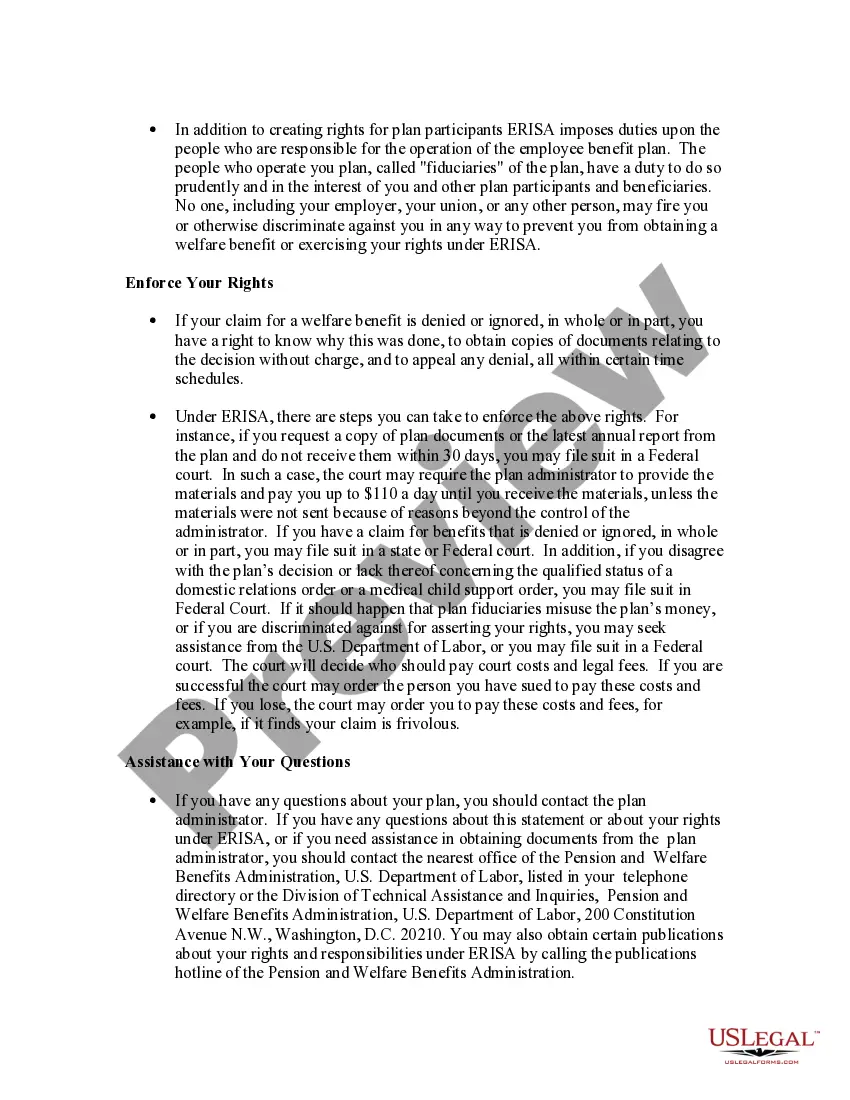
- Duties imposed on plan fiduciaries to act in the best interest of participants.
- Procedures for enforcing rights and appealing denied claims.
Situations where this form applies
This model statement is to be provided to employees when they begin participation in a benefit plan. It is also necessary to distribute this form whenever there are changes to the plan or employees experience qualifying events, such as employment termination or reductions in work hours, affecting their health coverage. Utilizing this form ensures compliance with ERISA regulations and informs employees of their rights.
Who can use this document
- Employers and plan administrators responsible for employee benefit plans.
- Employees participating in health, retirement, or similar benefit plans.
- Human resources professionals tasked with compliance with ERISA requirements.
Steps to complete this form
- Fill in the name of the specific employee benefit plan at the beginning of the document.
- Ensure accurate details about employees' rights and the plan's coverage are included.
- Provide contact information for the plan administrator for questions related to the plan.
- Distribute the statement to all current plan participants, especially during changes in benefits.
Notarization guidance
This form does not typically require notarization to be legally valid. However, some jurisdictions or document types may still require it. US Legal Forms provides secure online notarization powered by Notarize, available 24/7 for added convenience.
Get your form ready online
Our built-in tools help you complete, sign, share, and store your documents in one place.
Make edits, fill in missing information, and update formatting in US Legal Forms—just like you would in MS Word.
Download a copy, print it, send it by email, or mail it via USPS—whatever works best for your next step.
Sign and collect signatures with our SignNow integration. Send to multiple recipients, set reminders, and more. Go Premium to unlock E-Sign.
If this form requires notarization, complete it online through a secure video call—no need to meet a notary in person or wait for an appointment.
We protect your documents and personal data by following strict security and privacy standards.

Make edits, fill in missing information, and update formatting in US Legal Forms—just like you would in MS Word.

Download a copy, print it, send it by email, or mail it via USPS—whatever works best for your next step.

Sign and collect signatures with our SignNow integration. Send to multiple recipients, set reminders, and more. Go Premium to unlock E-Sign.

If this form requires notarization, complete it online through a secure video call—no need to meet a notary in person or wait for an appointment.

We protect your documents and personal data by following strict security and privacy standards.
Mistakes to watch out for
- Failing to distribute the statement at appropriate times, such as upon employee enrollment or plan changes.
- Omitting the correct plan name or details, leading to confusion for plan participants.
- Not including contact information for the plan administrator, which can hinder communication and understanding.
Why complete this form online
- Immediate access to the form allows for quick distribution to employees.
- Ease of use enables users to fill out and customize the form to fit specific plan details.
- Ensures compliance with ERISA requirements in a straightforward and reliable manner.
Legal use & context
- The form is designed to inform employees of their rights under federal law.
- Provides a basis for legal action if rights are denied or ignored by the plan.
- Serves as documentation to demonstrate compliance with ERISA requirements.
Quick recap
- Understanding your rights under ERISA is vital for effective management of your employee benefits.
- Employees are entitled to critical information regarding their benefit plans and the actions to take when claims are denied.
- Utilizing this form fosters transparency and accountability within employee benefit plans.
Looking for another form?
Form popularity
FAQ
Summary Plan Description (SPD) A reporting requirement of the Employee Security Act (ERISA) that obligates employers to describe the plan's funding, eligibility requirements, risks, and so forth within 90 days after an employee has entered the plan.
The Employee Retirement Income Security Act (ERISA) requires plan administrators to give to participants and beneficiaries a Summary Plan Description (SPD) describing their rights, benefits, and responsibilities under the plan in understandable language. The SPD includes such information as: Name and type of plan.
A Summary Plan Description (SPD) is a document that employers must give free to employees who participate in Employee Retirement Income Security Act-covered retirement plans or health benefit plans.
The Summary Plan Description (SPD) is one of the important 401(k) plan documents that provides plan participants (and their beneficiaries) with the most important details of their benefit plan, like eligibility requirements or participation dates, benefit calculations, plan management instructions, and general member
ERISA requires plans to provide participants with plan information including important information about plan features and funding; sets minimum standards for participation, vesting, benefit accrual and funding; provides fiduciary responsibilities for those who manage and control plan assets; requires plans to
The summary plan description is an important document that tells participants what the plan provides and how it operates. It provides information on when an employee can begin to participate in the plan and how to file a claim for benefits.
The plan describes the program benefits and how the plan works. The plan must answer specific questions such as the plan name, the plan's IRS-assigned number, the employer's name and address, and a statement of health and accountability rights.