Washington Employee Dress Code Policy - General
Description
Get your form ready online
Our built-in tools help you complete, sign, share, and store your documents in one place.
Make edits, fill in missing information, and update formatting in US Legal Forms—just like you would in MS Word.
Download a copy, print it, send it by email, or mail it via USPS—whatever works best for your next step.
Sign and collect signatures with our SignNow integration. Send to multiple recipients, set reminders, and more. Go Premium to unlock E-Sign.
If this form requires notarization, complete it online through a secure video call—no need to meet a notary in person or wait for an appointment.
We protect your documents and personal data by following strict security and privacy standards.

Make edits, fill in missing information, and update formatting in US Legal Forms—just like you would in MS Word.

Download a copy, print it, send it by email, or mail it via USPS—whatever works best for your next step.

Sign and collect signatures with our SignNow integration. Send to multiple recipients, set reminders, and more. Go Premium to unlock E-Sign.

If this form requires notarization, complete it online through a secure video call—no need to meet a notary in person or wait for an appointment.

We protect your documents and personal data by following strict security and privacy standards.
Looking for another form?




How to fill out Employee Dress Code Policy - General?
Are you presently in a role that necessitates you to handle documentation for either business or personal reasons almost every day.
There are numerous legal document templates available online, but finding reliable ones is challenging.
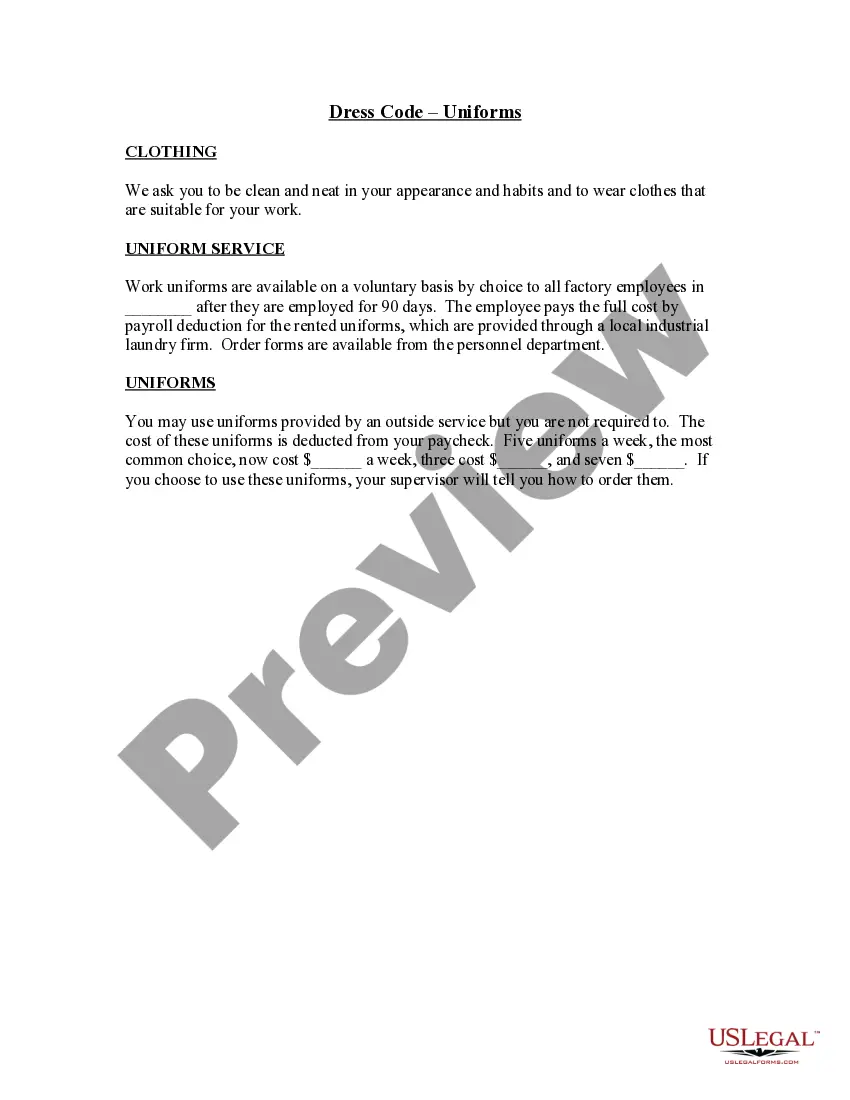
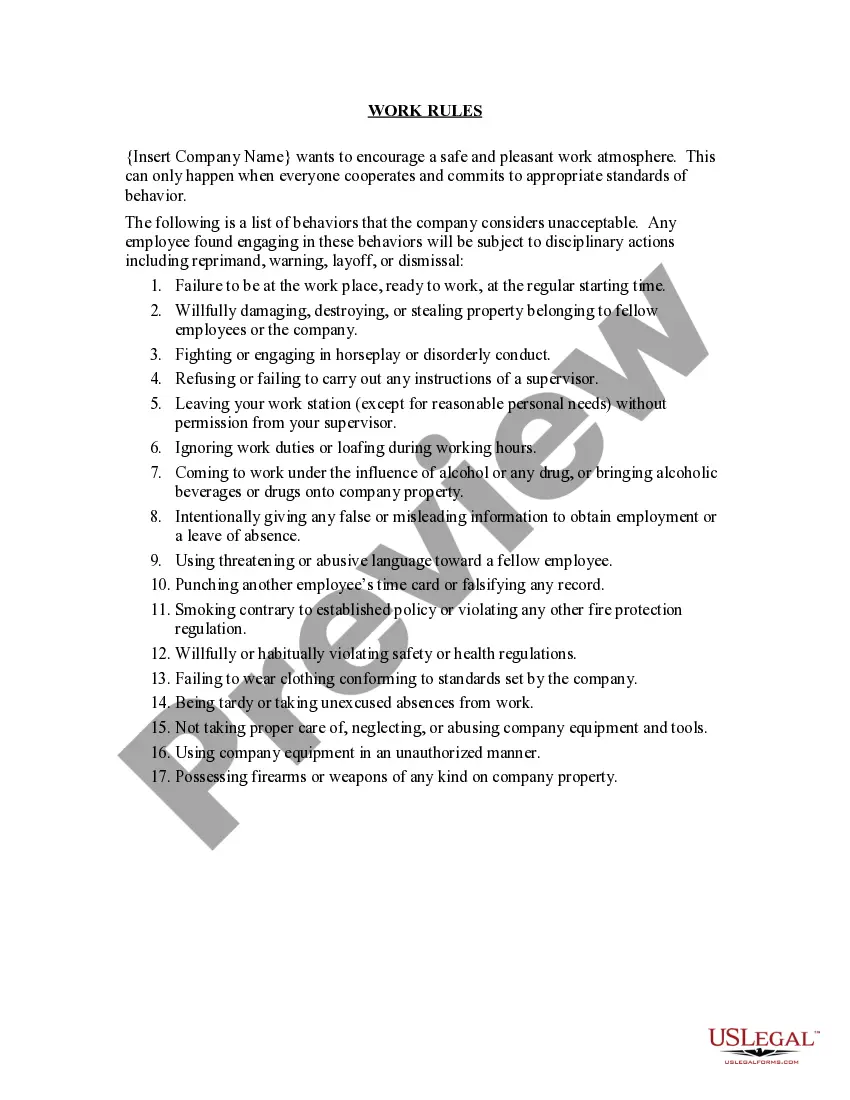
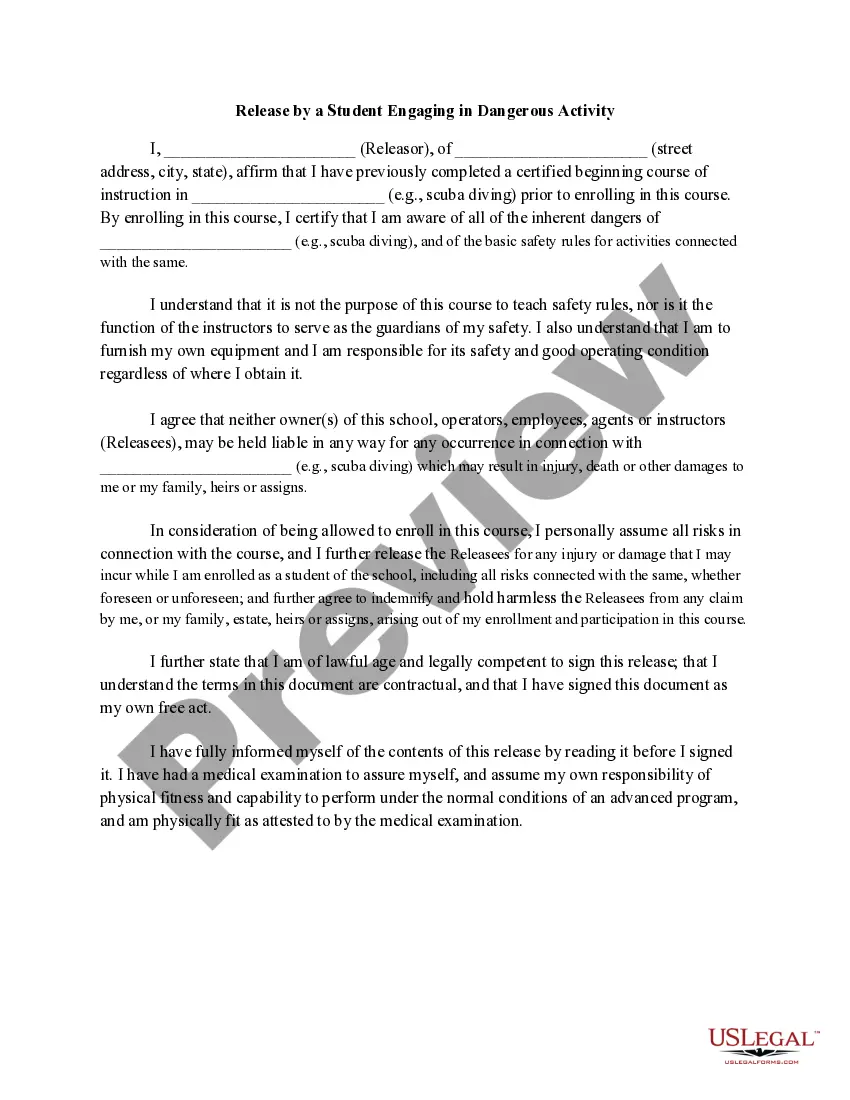
US Legal Forms provides a vast array of template options, such as the Washington Employee Dress Code Policy - General, designed to comply with federal and state regulations.
Find all the document templates you have purchased in the My documents section.
You can obtain an additional copy of the Washington Employee Dress Code Policy - General anytime, if needed. Just click on the desired template to download or print the document.
Utilize US Legal Forms, one of the largest repositories of legal templates, to save time and avoid mistakes.
The service provides professionally crafted legal document templates that can be used for a variety of purposes.
Create an account on US Legal Forms and begin simplifying your life.
- If you are already familiar with the US Legal Forms website and have an account, simply Log In.
- Then, you will be able to download the Washington Employee Dress Code Policy - General template.
- If you do not have an account and want to start using US Legal Forms, follow these instructions.
- Select the template you need and confirm it is for the correct city/area.
- Utilize the Review button to inspect the document.
- Read the description to ensure you have selected the right template.
- If the template is not what you are looking for, use the Search field to find the template that meets your requirements.
- When you locate the correct template, click Get now.
- Choose the pricing plan you want, fill in the necessary details to create your account, and pay for your order using PayPal or a credit card.
- Select a convenient file format and download your version.
Form popularity
FAQ
Business casual is the most common dress code in American workplaces, and it can vary based on each workplace. Men typically wear dress pants or khaki pants with collared button-up shirts, and they may also wear a sweater over this shirt. Women can wear business separates and blouses or shirts without collars.
Dress codes are perfectly legal- as long as they're grounded in real business needs and don't discriminate. Human rights tribunals have even upheld dress codes which apply different rules to men and women in some circumstances.
There are typically four types of corporate dress codes: business formal, business professional, business casual, and casual.
Generally, a carefully drafted dress code applied consistently does not violate anti-discrimination laws. So long as the dress code does not favor one gender over the other it is usually acceptable by law for employers to have a private dress code.
Dress codes are used to communicate to employees what the organization considers appropriate work attire. A dress code or appearance policy allows an employer to set expectations regarding the image it wants the company to convey. Dress codes can be formal or informal and might include the use of uniforms.
Appropriate business casual dress typically includes slacks or khakis, dress shirt or blouse, open-collar or polo shirt, optional tie or seasonal sport coat, a dress or skirt at knee-length or below, a tailored blazer, knit shirt or sweater, and loafers or dress shoes that cover all or most of the foot.
Casual Dress Code The key differentiators of business attire in a casual workplace include allowing employees to wear jeans, shorts, and athletic shoes daily. Additionally, clothing items such as t-shirts, sandals, and very informal pants and shirts are allowed.
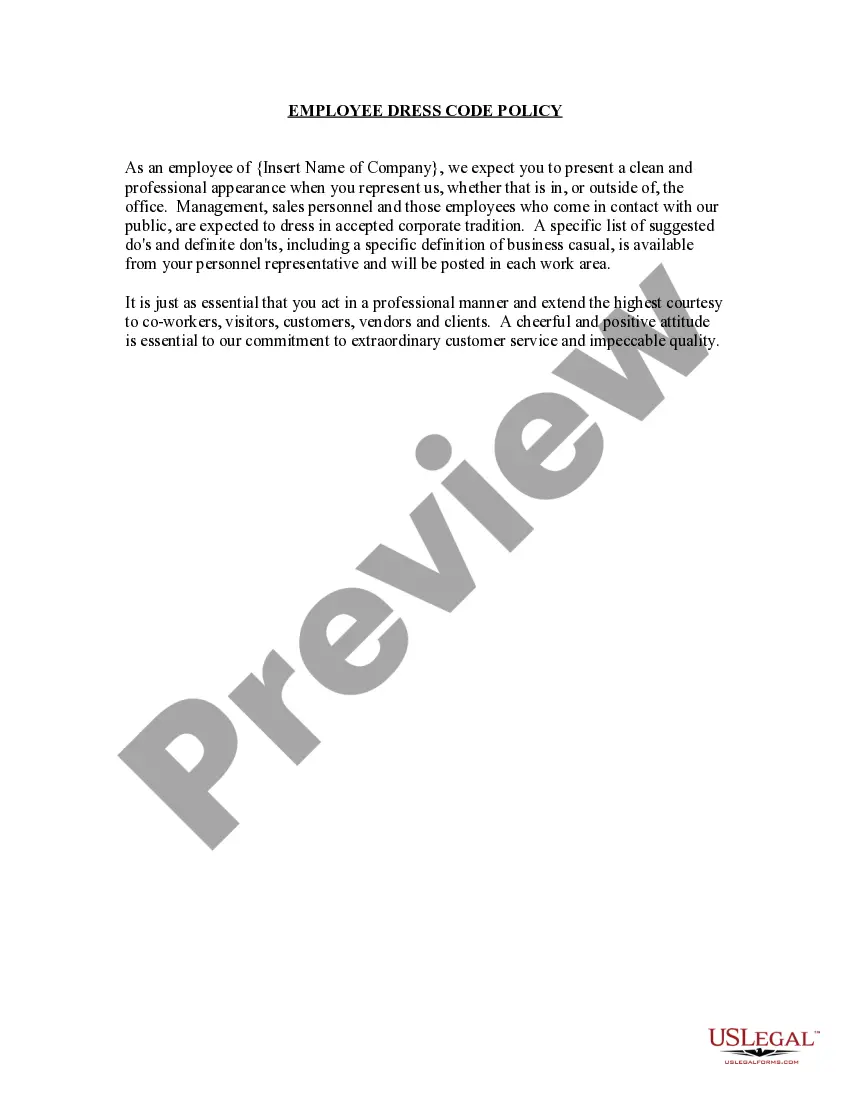
Dress code policies reinforce a positive and professional image of the company, especially when employees interact with clients, prospects, or business partners on a regular basis. A company's employee handbook will typically contain the rules of the dress code.
The dress code: You should clearly state what the general dress code of the company is and should also list exceptions when employees may need to follow a different dress code. Accommodations: To prevent any possible issues, state that employees can address any concerns about the dress code to human resources.
Everyone is expected to be well-groomed and wear clean clothing, free of holes, tears, or other signs of wear. Clothing with offensive or inappropriate designs or stamps are not allowed. Clothing should not be too revealing. Clothing and grooming styles dictated by religion or ethnicity are exempt.