Washington Paving Contract for Contractor
Overview of this form
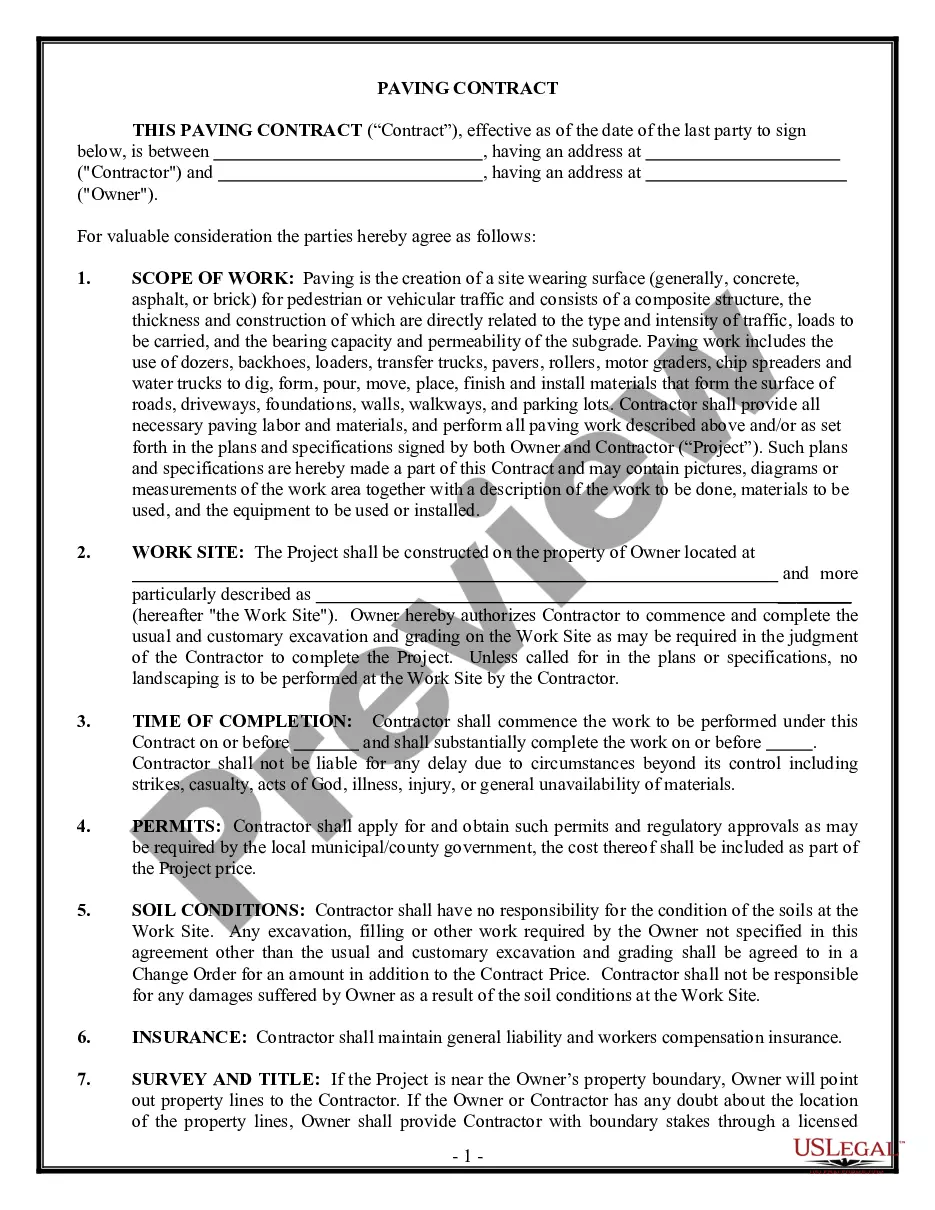
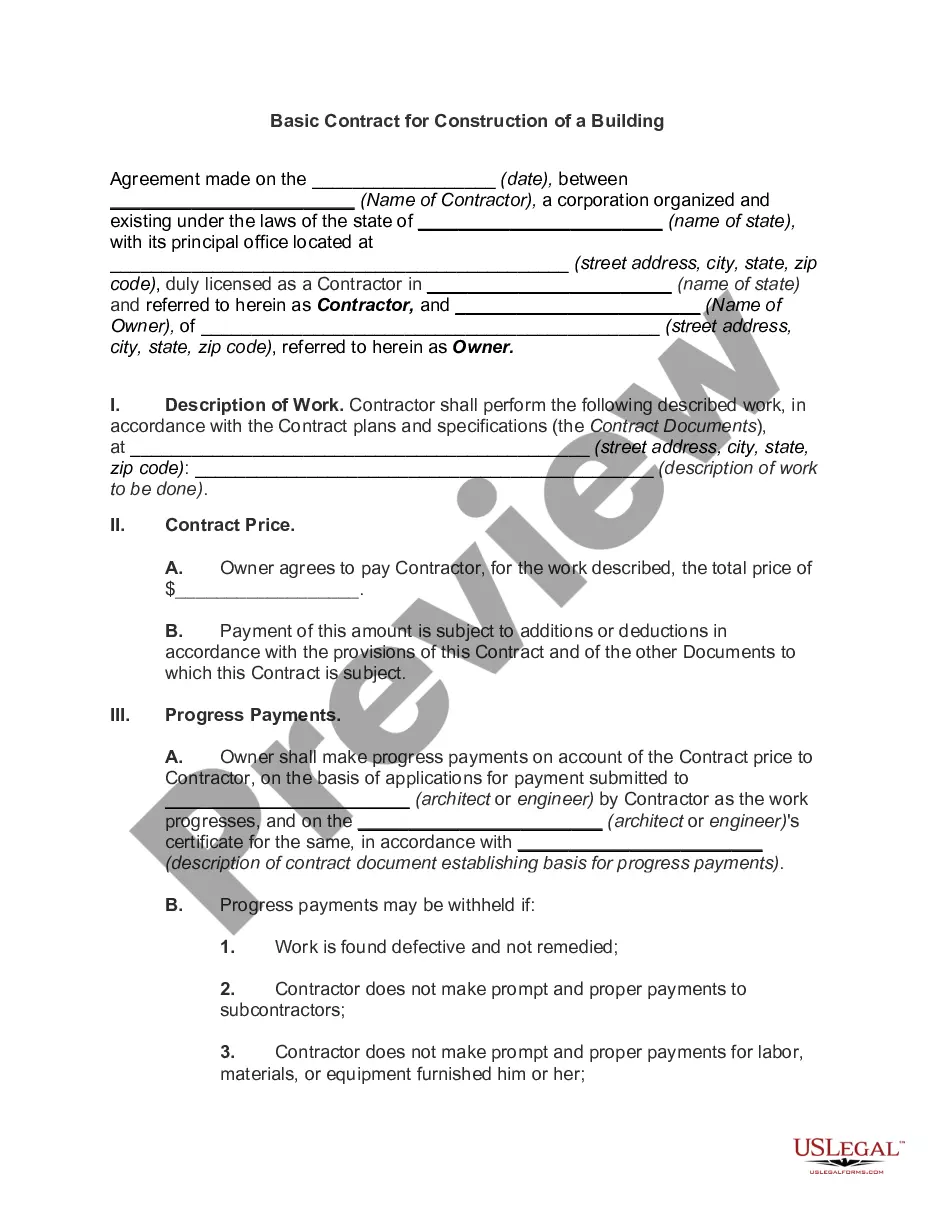
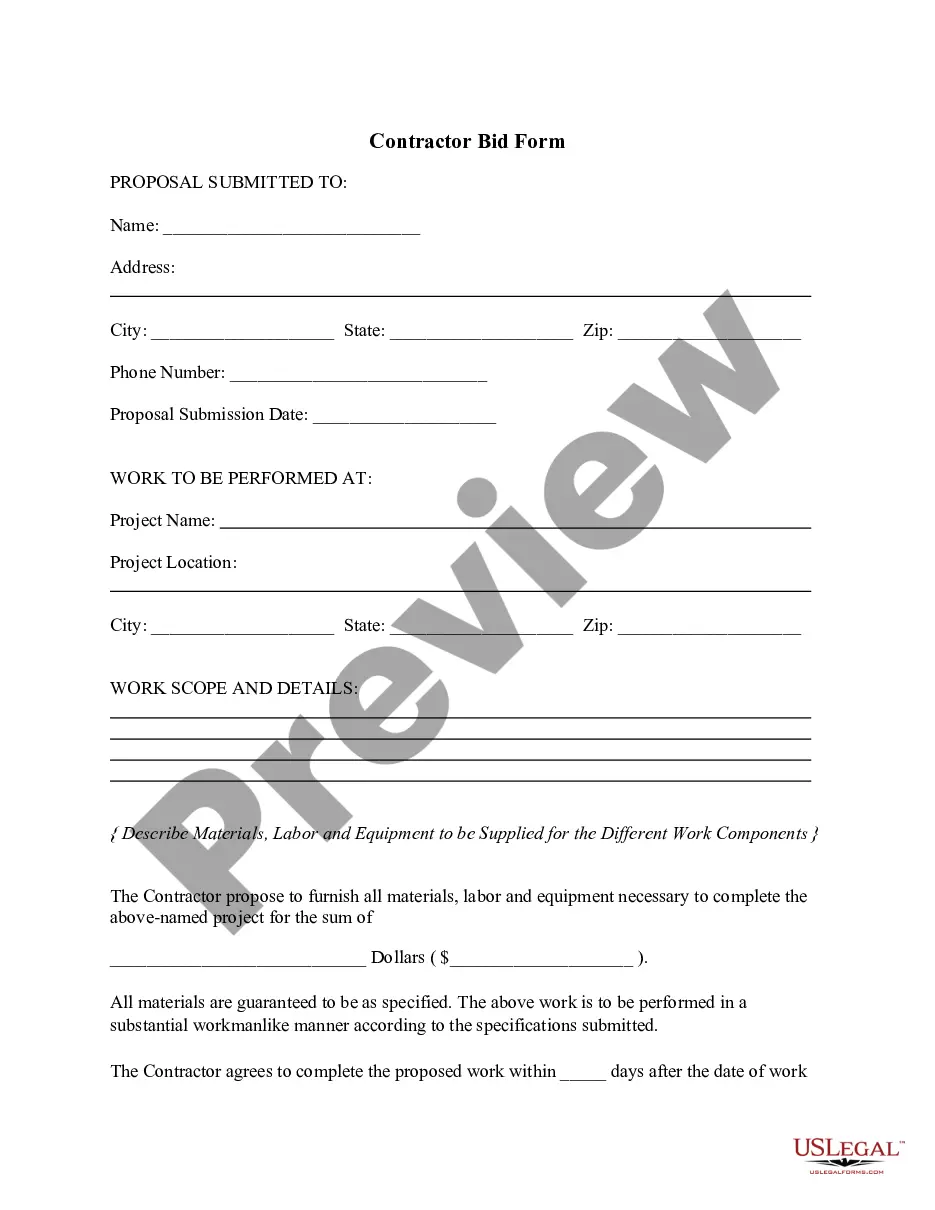
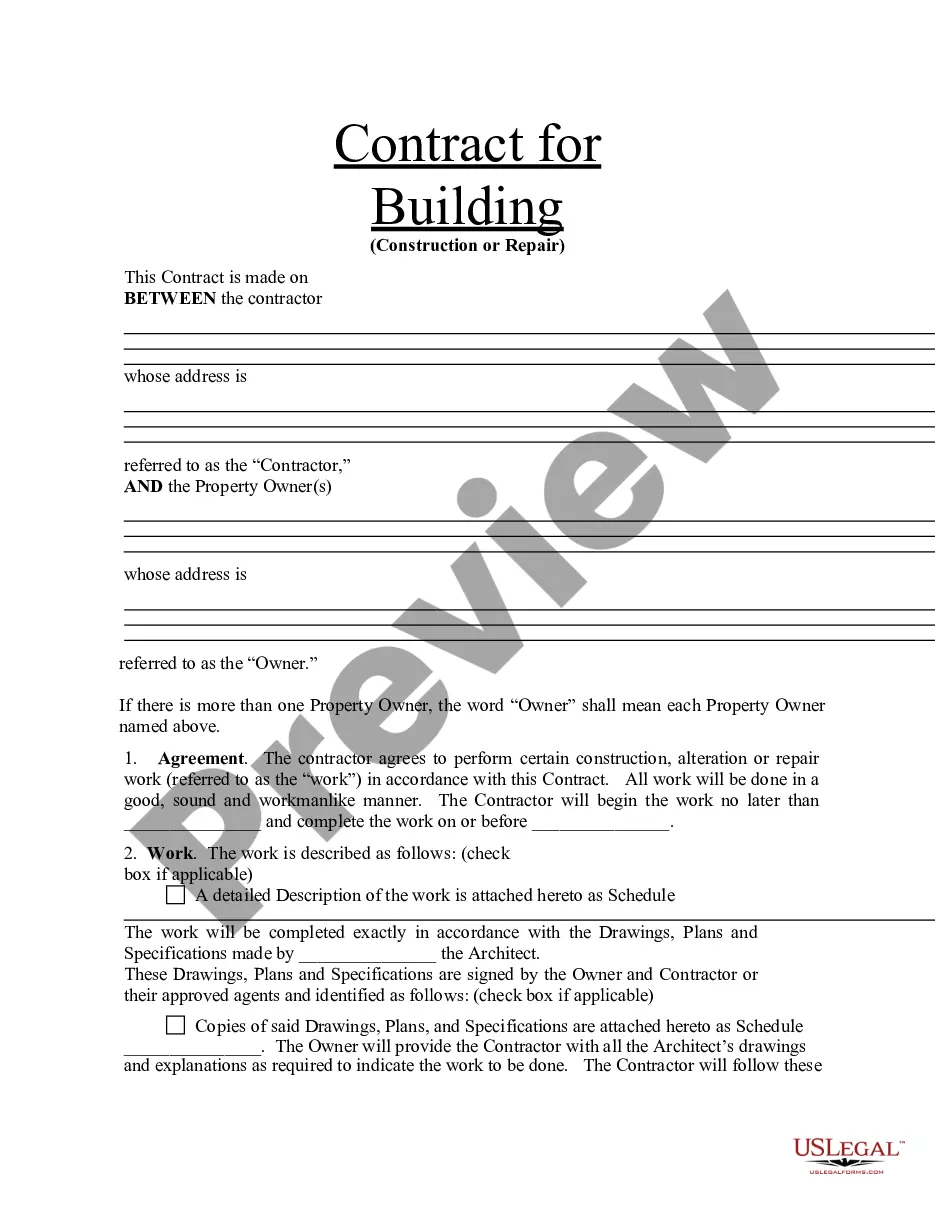
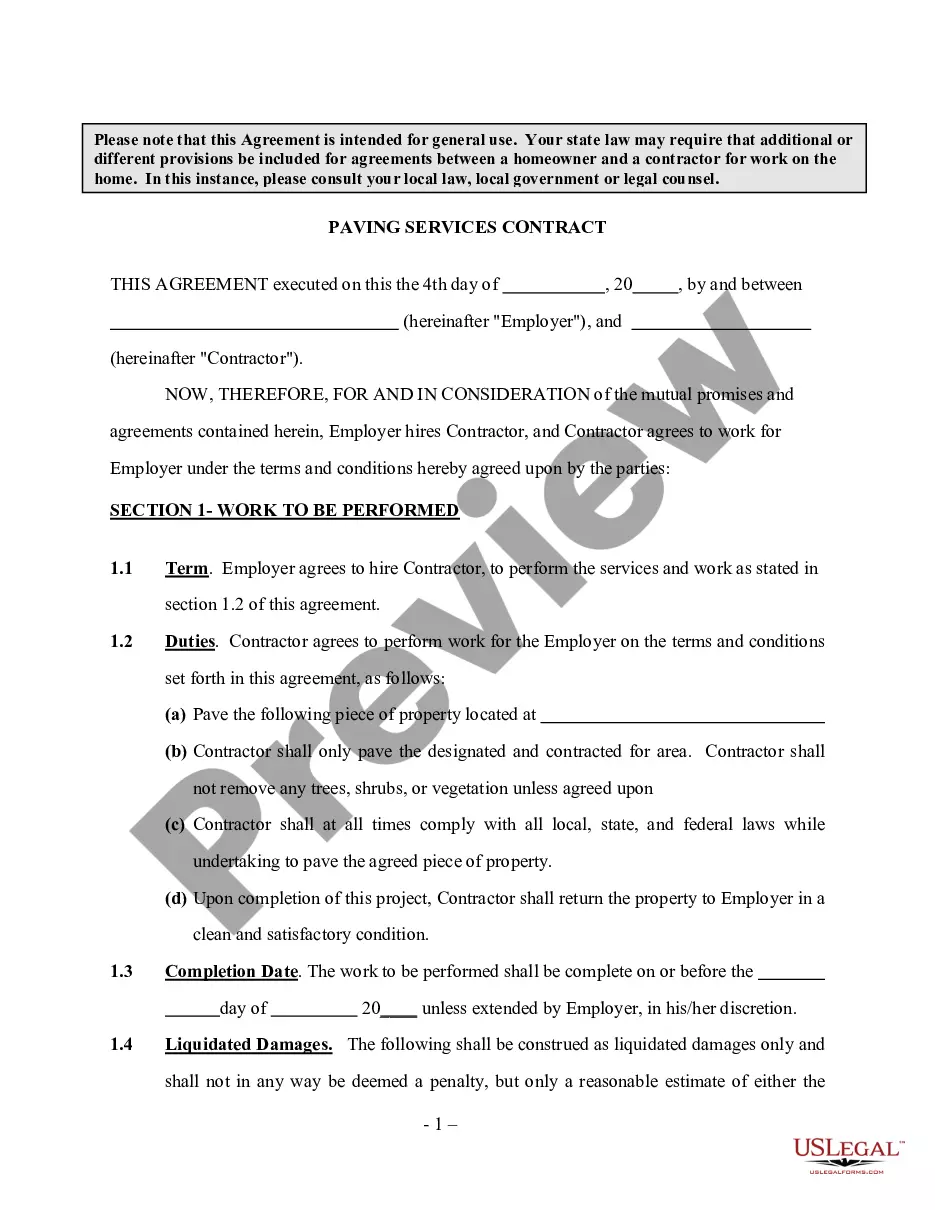
The paving contract for contractors is a formal agreement between paving contractors and property owners. It outlines the terms of the paving project, including payment arrangements, site information, warranties, and insurance requirements. This contract differs from generic agreements by specifically catering to the needs of paving work and ensuring compliance with Washington state laws.
Form components explained
- Permits: Specifies the contractor's responsibility for obtaining necessary local permits.
- Soil conditions: Clarifies that the contractor is not liable for site soil conditions.
- Insurance: Mandates the contractor to maintain liability and workers' compensation insurance.
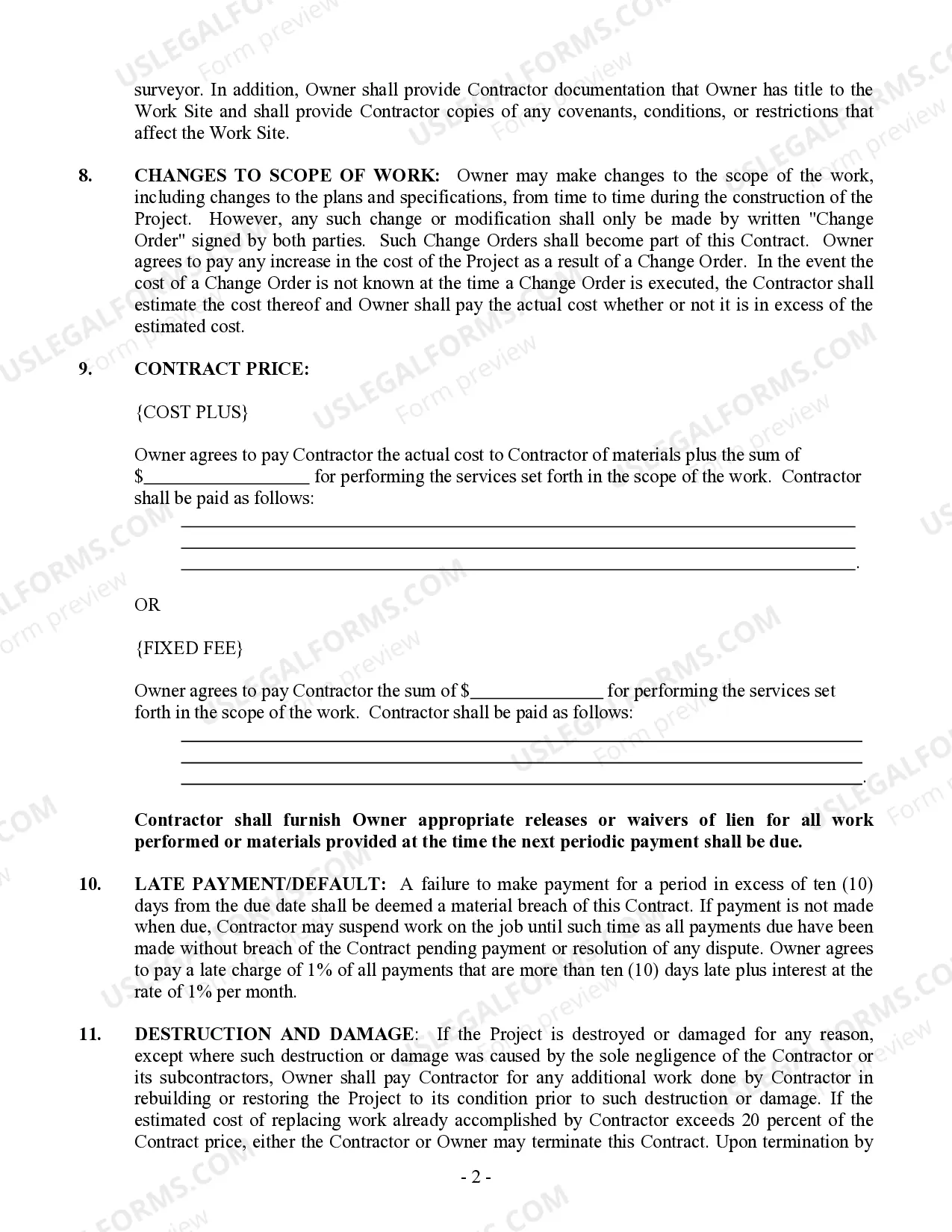
- Change orders: Outlines how changes to the project scope are handled and agreed upon.
- Contract price: Defines payment structures, including cost-plus and fixed fee methods.
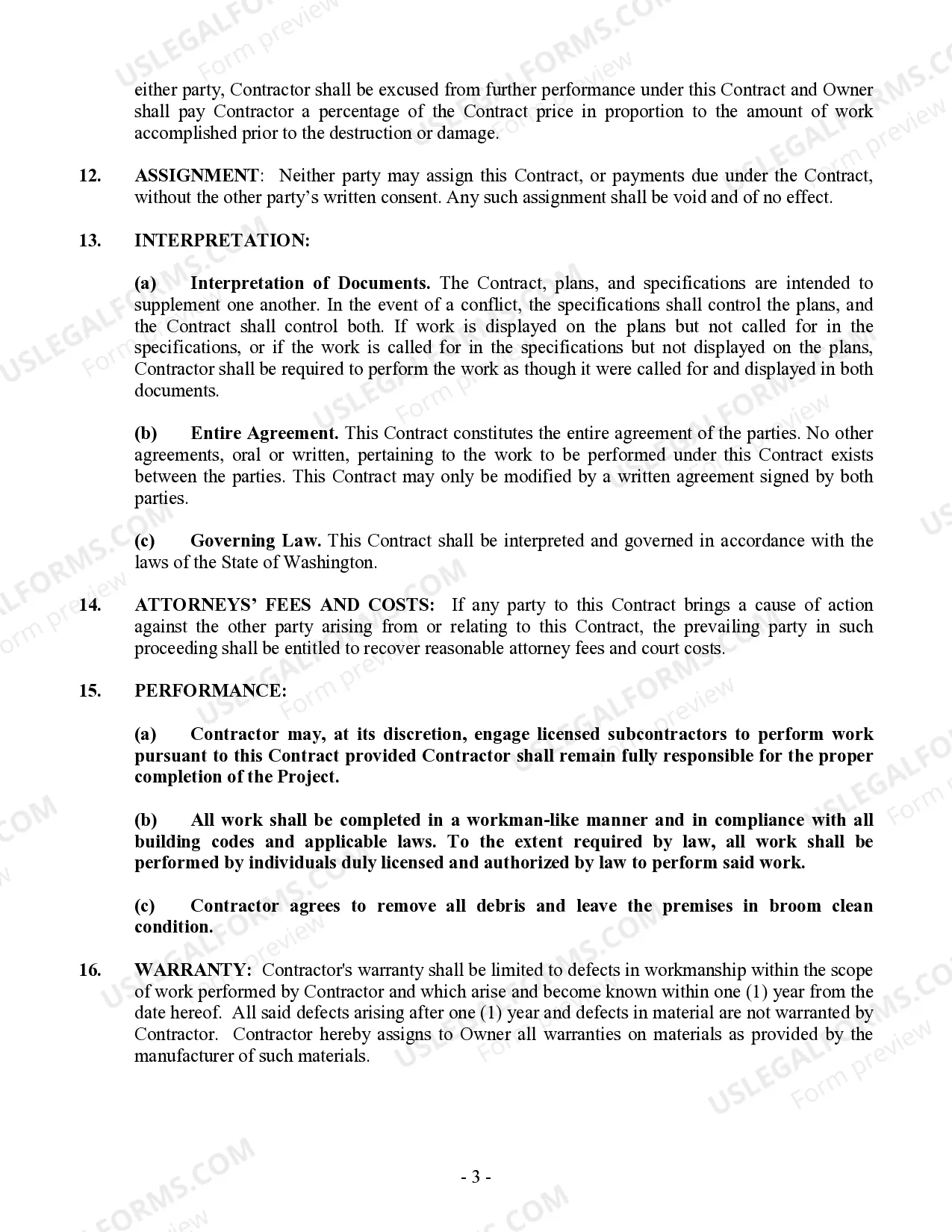
- Warranty: Limits the contractor's warranty to one year for workmanship defects.
When to use this document
This paving contract should be used when a property owner hires a contractor for paving services, such as driveways, parking lots, or roads. It is appropriate in situations involving new installations, repairs, or modifications to existing paving work, where the terms need clear definition and legal backing to ensure project completion and satisfaction.
Who should use this form
- Property owners needing paving services.
- Paving contractors looking to establish formal agreements.
- Individuals or businesses involved in construction projects requiring paving work.
Completing this form step by step
- Identify the parties involved: Clearly state the names and addresses of the contractor and the property owner.
- Specify the project details: Provide a description of the work to be done, including location and any necessary specifications.
- Outline payment terms: Indicate whether the payment will be cost-plus or fixed fee and detail any deposit or payment schedule.
- Include legal requirements: Ensure both parties are aware of permit obligations and insurance coverage.
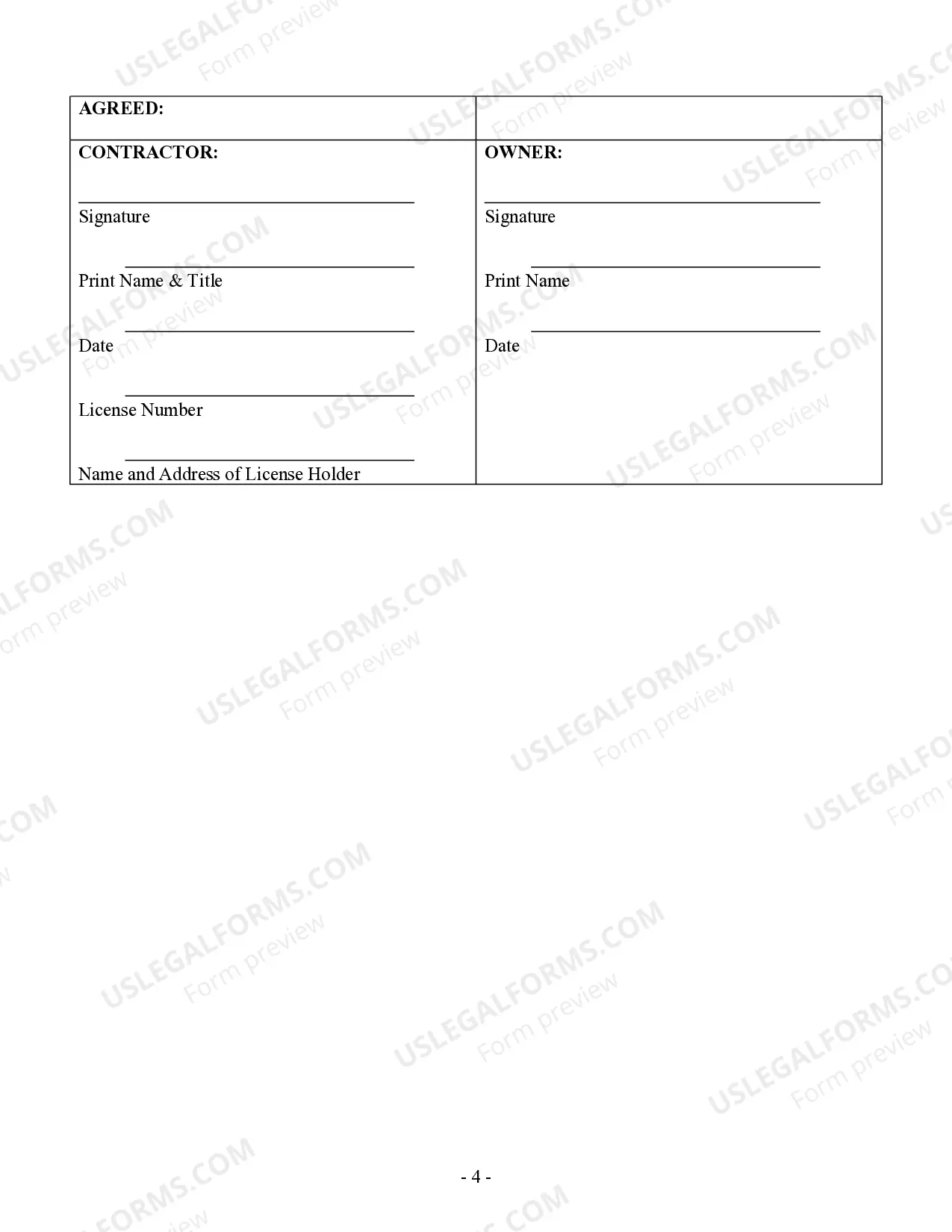
- Collect signatures: Have both parties sign and date the contract to make it legally binding.
Notarization requirements for this form
Notarization is not commonly needed for this form. However, certain documents or local rules may make it necessary. Our notarization service, powered by Notarize, allows you to finalize it securely online anytime, day or night.
Get your form ready online
Our built-in tools help you complete, sign, share, and store your documents in one place.
Make edits, fill in missing information, and update formatting in US Legal Forms—just like you would in MS Word.
Download a copy, print it, send it by email, or mail it via USPS—whatever works best for your next step.
Sign and collect signatures with our SignNow integration. Send to multiple recipients, set reminders, and more. Go Premium to unlock E-Sign.
If this form requires notarization, complete it online through a secure video call—no need to meet a notary in person or wait for an appointment.
We protect your documents and personal data by following strict security and privacy standards.

Make edits, fill in missing information, and update formatting in US Legal Forms—just like you would in MS Word.

Download a copy, print it, send it by email, or mail it via USPS—whatever works best for your next step.

Sign and collect signatures with our SignNow integration. Send to multiple recipients, set reminders, and more. Go Premium to unlock E-Sign.

If this form requires notarization, complete it online through a secure video call—no need to meet a notary in person or wait for an appointment.

We protect your documents and personal data by following strict security and privacy standards.
Common mistakes
- Failing to specify clear payment terms can lead to disputes.
- Not addressing soil conditions may result in unexpected costs.
- Overlooking necessary permits can cause legal issues later in the project.
- Forgetting to document change orders can create misunderstandings between the parties.
Why complete this form online
- Convenience: Downloadable and ready-to-use format saves time.
- Editability: Easily customize the form to fit specific project needs.
- Reliability: Developed by licensed attorneys to ensure all legal bases are covered.
Legal use & context
- This contract serves as a binding agreement between the contractor and the property owner.
- It helps prevent disputes by clearly outlining rights, responsibilities, and liabilities.
- This contract adheres to Washington state laws regarding construction and paving work.
Quick recap
- The paving contract is essential for formal agreements between property owners and contractors.
- It includes specific terms vital for project clarity and legal protection.
- This contract is tailored for compliance with Washington state laws.
Looking for another form?
Form popularity
FAQ
The first layer should be 3 to 4 inches thick. It should be graded fairly smooth and then compacted with a heavy rolling machine.
Summary: Paver Driveway vs Asphalt Driveway Three major takeaways from comparing these two types of driveways: Asphalt is cheaper than pavers in up-front installation costs. Pavers are lower maintenance and generally have a longer lifespan. You have more design and visual variety options with pavers.
On top of this layer, residential driveways typically use 2 to 3 inches of asphalt, whereas commercial driveways use about 3 inches. The type of asphalt mix can also affect the thickness, with open-graded mixes having different requirements than traditional mixes.
Asphalt paving costs $7 to $13 per square foot. You'll pay $2 to $6 per square foot for new materials and $5 to $7 per square foot for installation. New Driveway Paving Cost Paving a new asphalt driveway costs $7 to $13 per square foot, including minimal grading services.
An overlay or resurface can be used on an asphalt driveway, parking lot, or road way.An existing asphalt surface is the best base for new asphalt. Damaged or troubled areas are repaired before the installation of asphalt.
Which is the best type of asphalt? Both of the types of asphalt are great, it simply depends on the needs of the homeowner. If a homeowner needs a heavier weight load, then the 41B asphalt type should be selected. For ordinary driveway use, then the 41A is the choice that most homeowners choose.
Asphalt Thickness:Asphalt driveways need to be a minimum of 2 thick and are typically 3 (compacted).
It is safe to pave asphalt over concrete. Concrete is a great base material because it is stable and allows for excellent compaction of the asphalt above. In fact, many miles of concrete roads are paved over with asphalt every year.
Two inches is the industry standard for asphalt overlays and surface courses because it properly bonds the surface course to the binder course. If a surface course is too thin it won't have the surface area and other properties to properly bond which will result in raveling, cracking, and other asphalt issues.