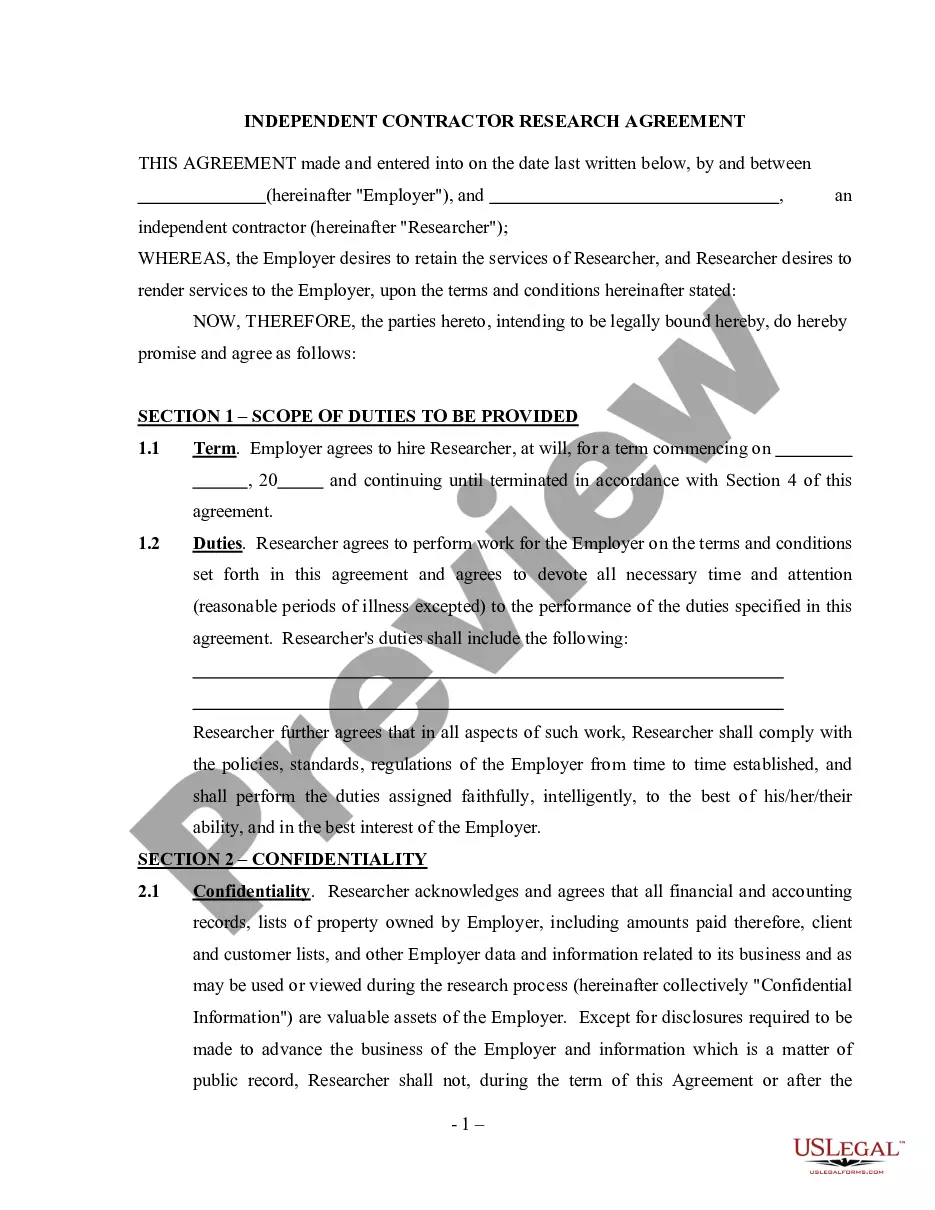
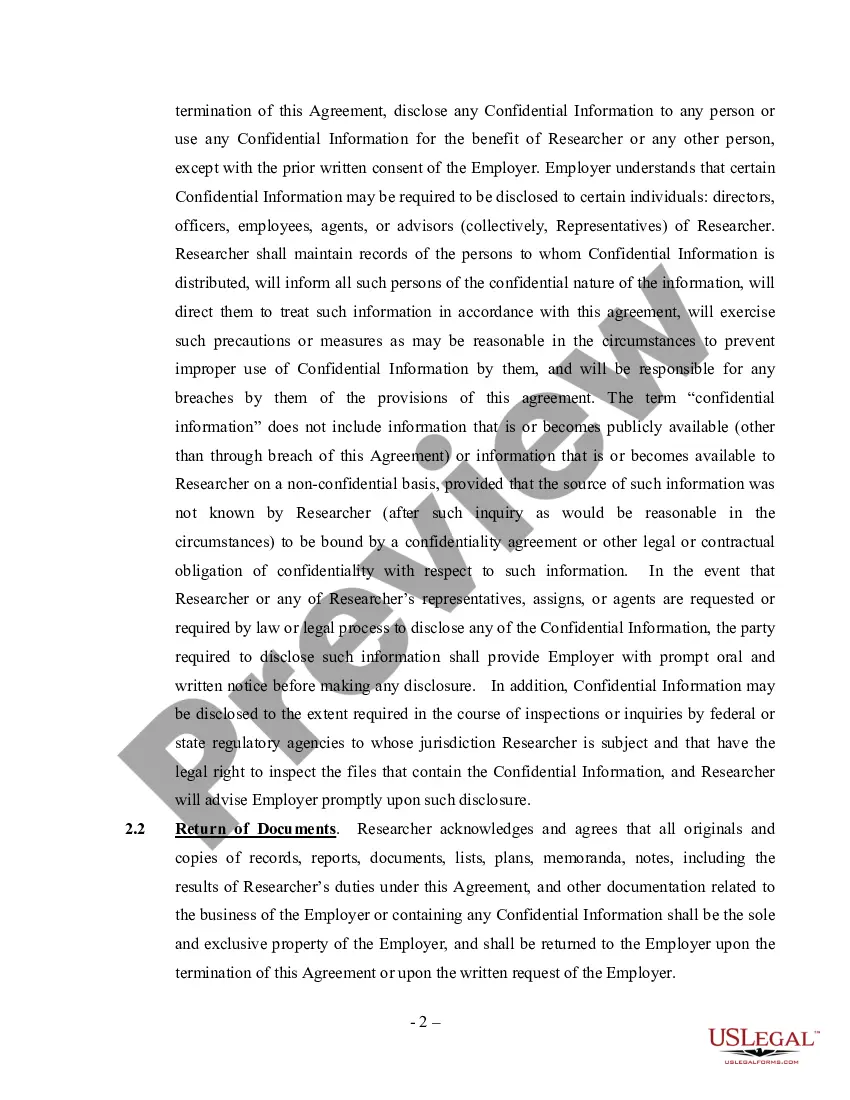
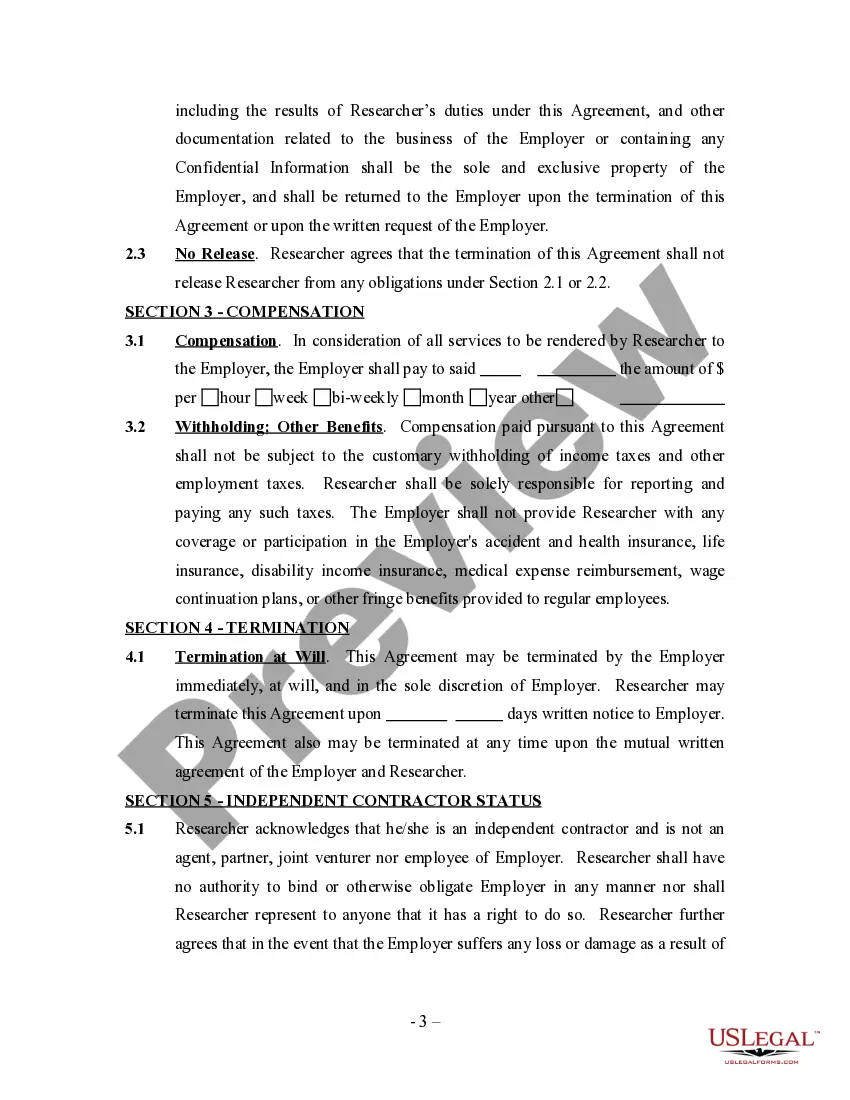
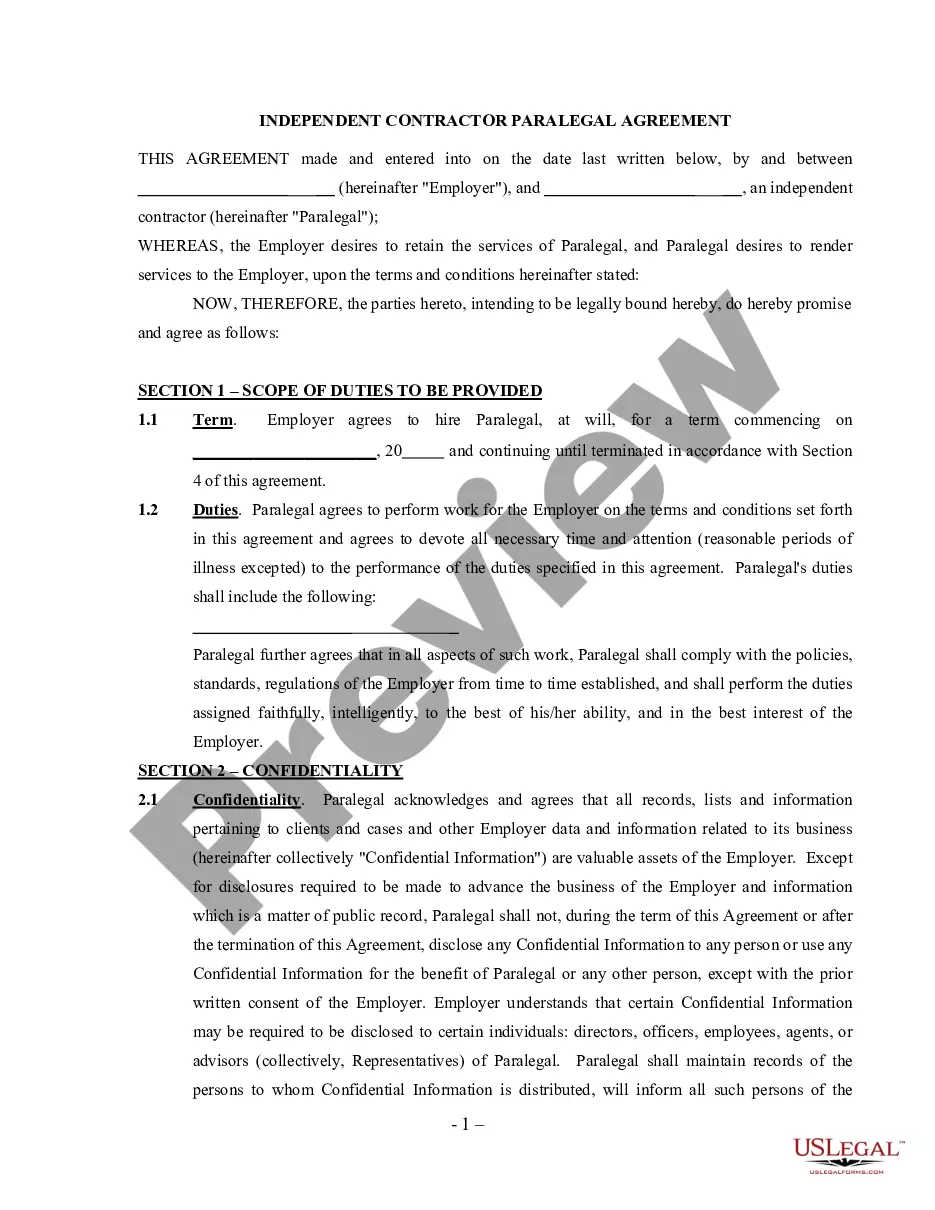
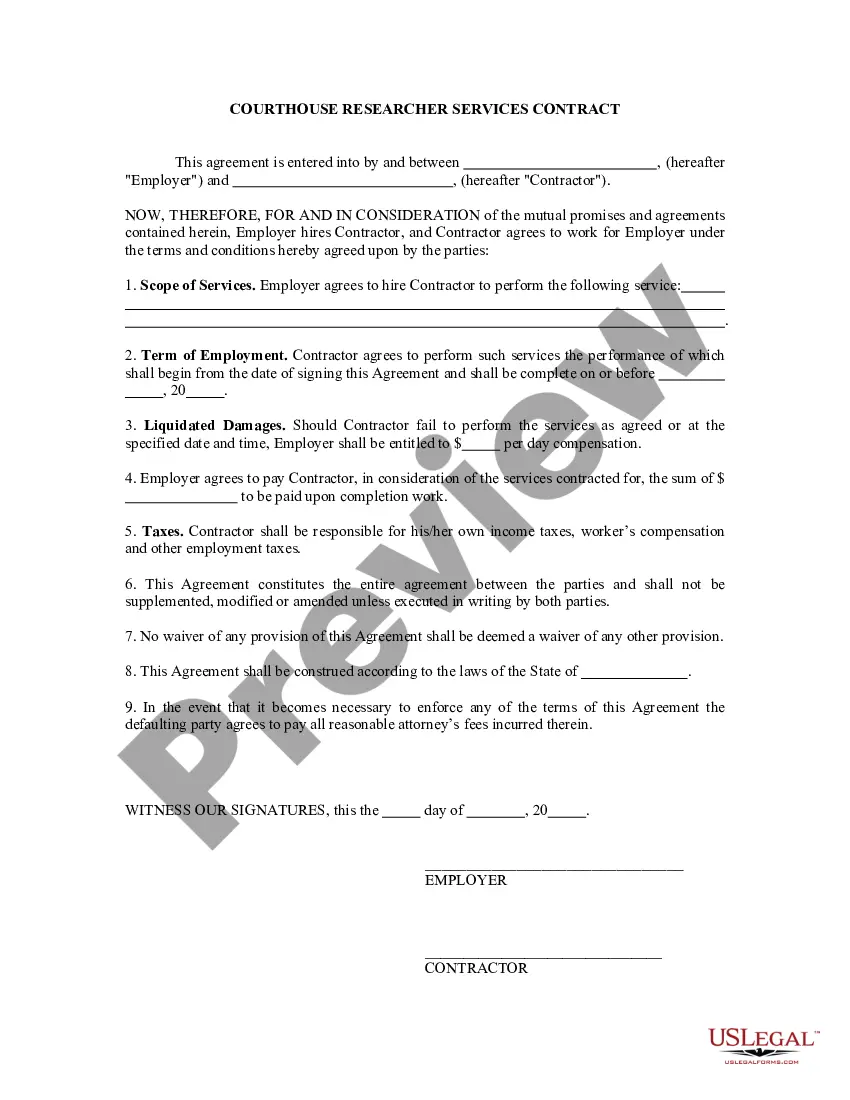
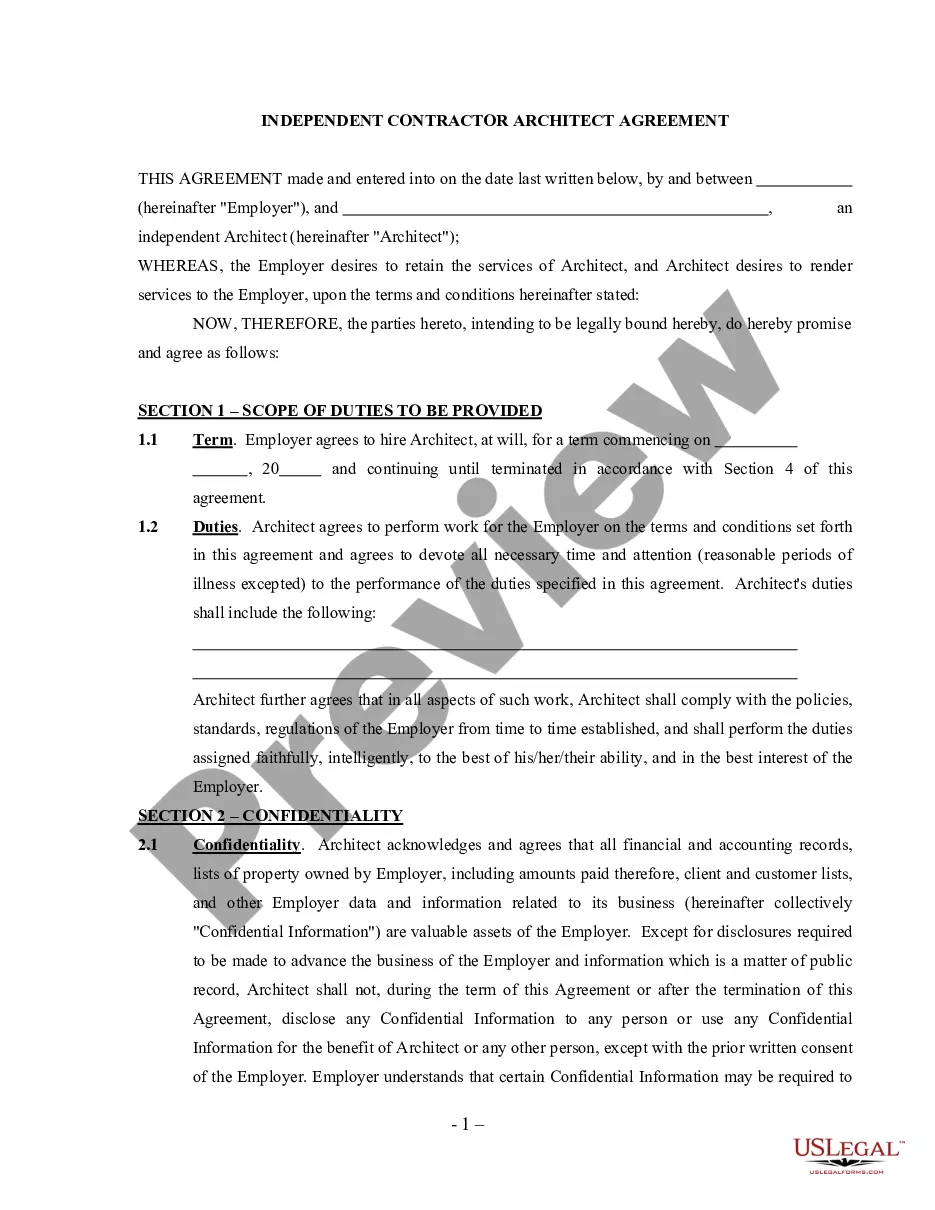
This is a contract between an employer and a researcher whereby researcher is hired as an independent contractor to provide research or research related activities for the employer.
Vermont Research Agreement - Self-Employed Independent Contractor
State:
Multi-State
Control #:
US-INDC-35
Format:
Word;
Rich Text
Instant download
Description
Free preview
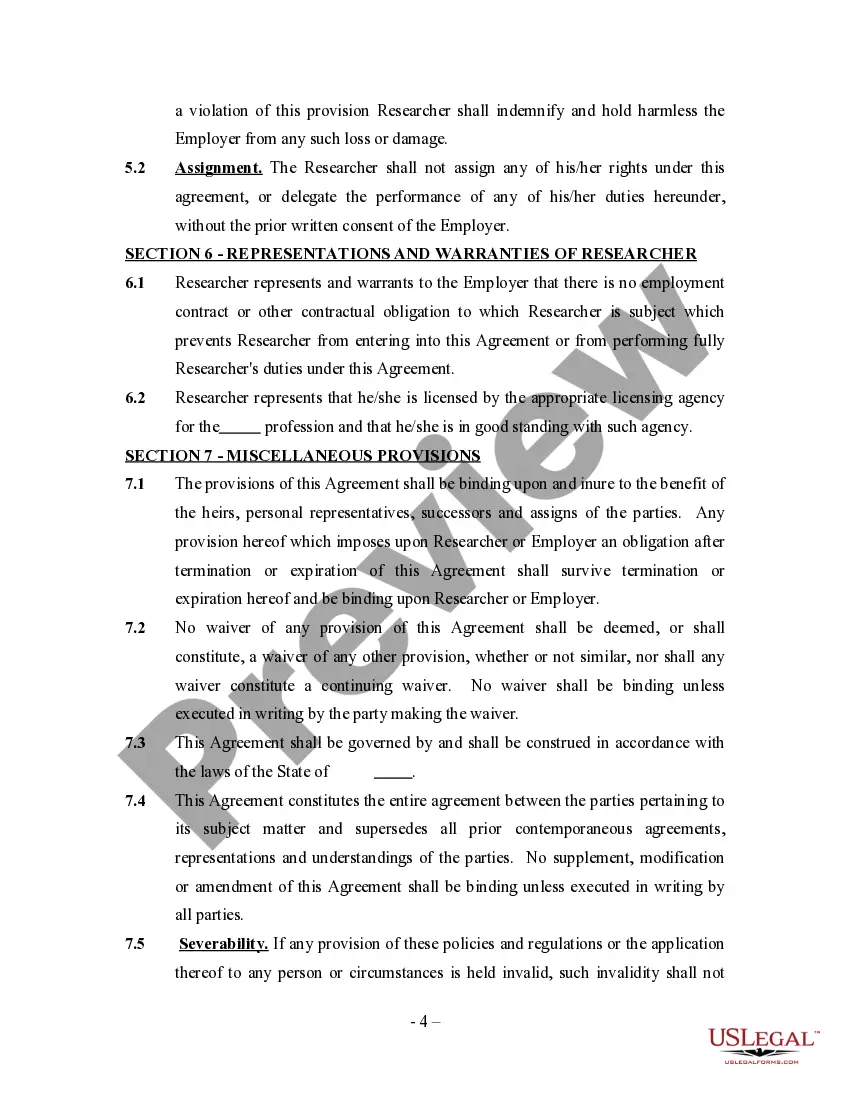
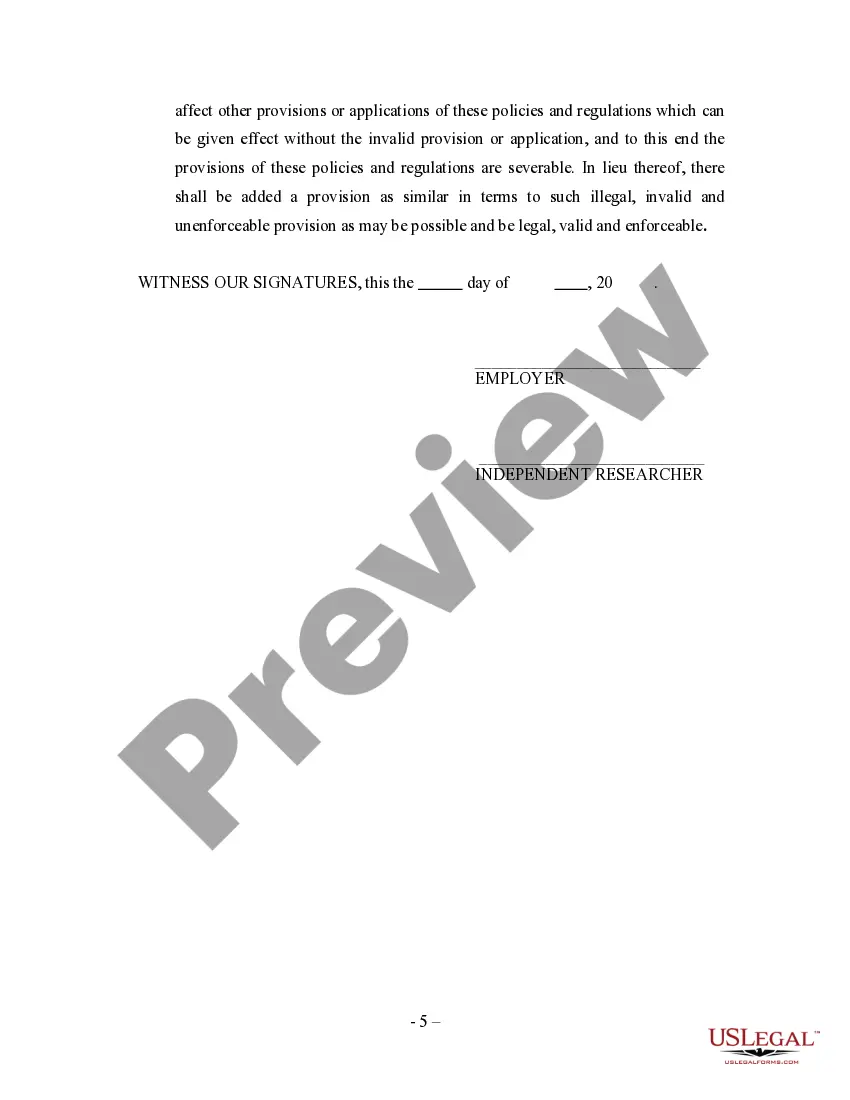
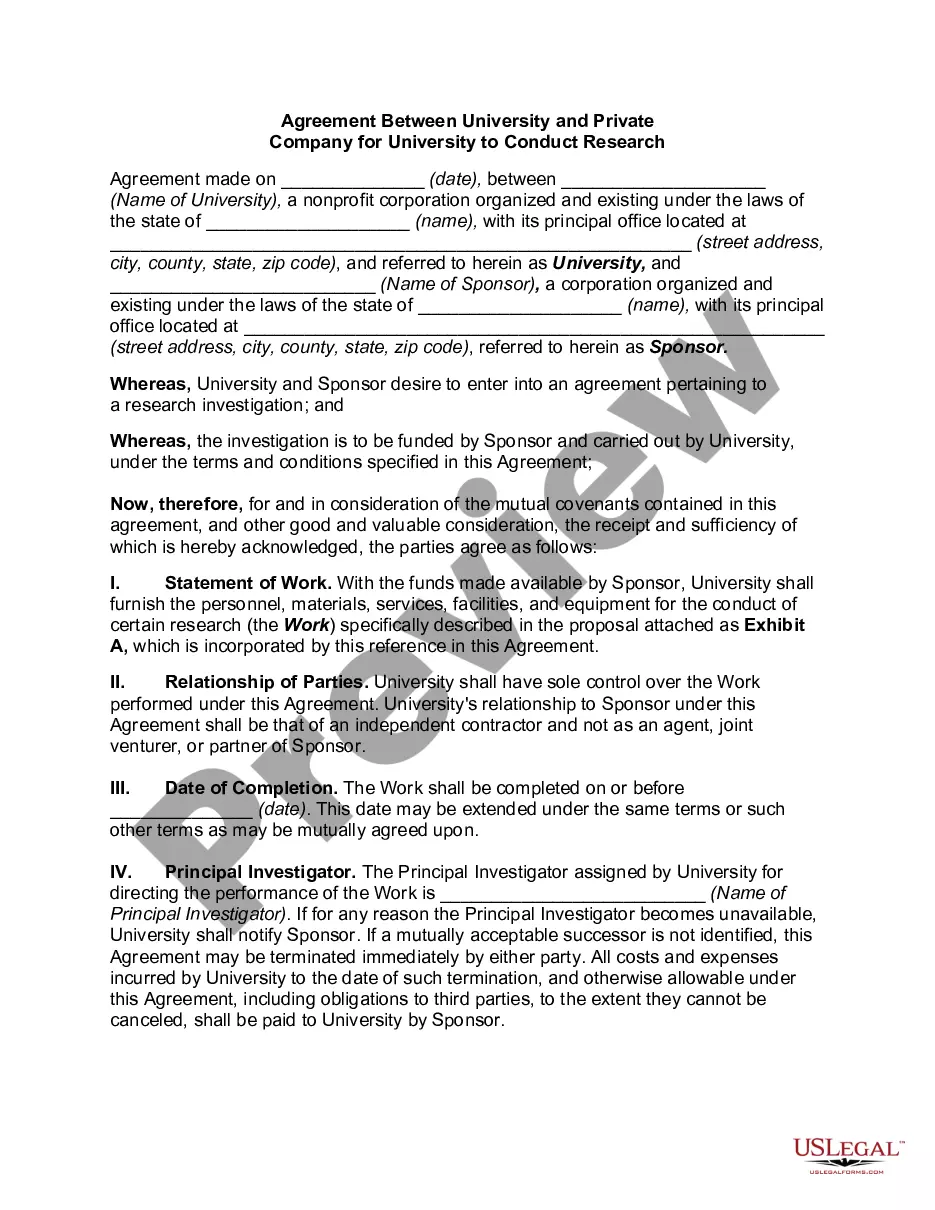
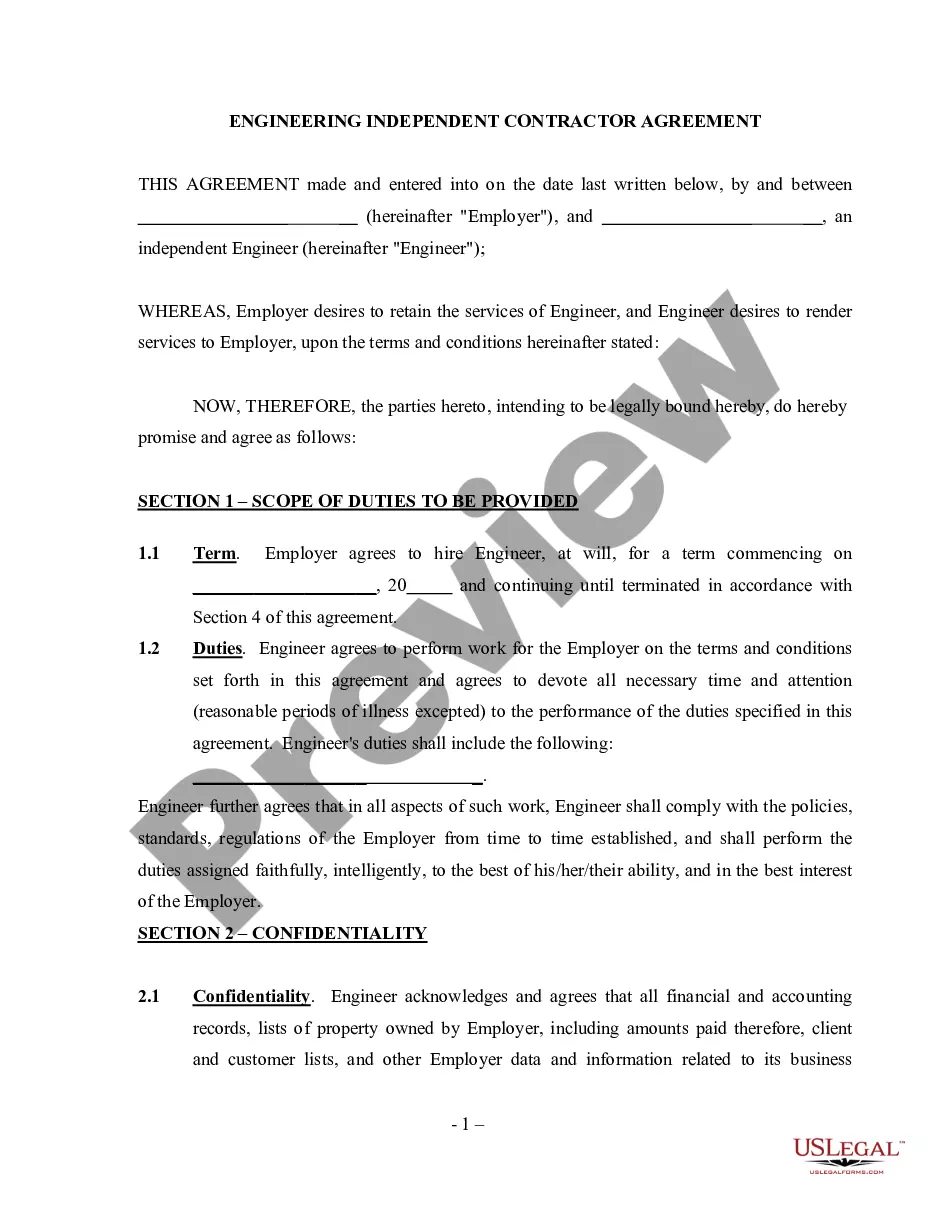
Get your form ready online
Our built-in tools help you complete, sign, share, and store your documents in one place.
Built-in online Word editor
Make edits, fill in missing information, and update formatting in US Legal Forms—just like you would in MS Word.
Export easily
Download a copy, print it, send it by email, or mail it via USPS—whatever works best for your next step.
E-sign your document
Sign and collect signatures with our SignNow integration. Send to multiple recipients, set reminders, and more. Go Premium to unlock E-Sign.
Notarize online 24/7
If this form requires notarization, complete it online through a secure video call—no need to meet a notary in person or wait for an appointment.
Store your document securely
We protect your documents and personal data by following strict security and privacy standards.

Make edits, fill in missing information, and update formatting in US Legal Forms—just like you would in MS Word.

Download a copy, print it, send it by email, or mail it via USPS—whatever works best for your next step.

Sign and collect signatures with our SignNow integration. Send to multiple recipients, set reminders, and more. Go Premium to unlock E-Sign.

If this form requires notarization, complete it online through a secure video call—no need to meet a notary in person or wait for an appointment.

We protect your documents and personal data by following strict security and privacy standards.
Looking for another form?



How to fill out Research Agreement - Self-Employed Independent Contractor?
You can spend time online searching for the legal document template that meets the state and federal requirements you need.
US Legal Forms offers a multitude of legal documents that have been reviewed by professionals.
You can easily access or download the Vermont Research Agreement - Self-Employed Independent Contractor from the service.
If available, use the Examine button to review the document template as well.
- If you already possess a US Legal Forms account, you can sign in and then click the Obtain button.
- After that, you can complete, modify, print, or sign the Vermont Research Agreement - Self-Employed Independent Contractor.
- Every legal document template you secure belongs to you permanently.
- To acquire an additional copy of any purchased form, visit the My documents section and click the appropriate button.
- If you are using the US Legal Forms website for the first time, follow these simple instructions.
- First, ensure you have selected the correct document template for the county/town you choose.
- Review the form details to confirm you have selected the correct one.
Form popularity
FAQ
The contract should state who pays which expenses. The contractor is usually responsible for all expenses including mileage, vehicle maintenance, and other business travel costs; work supplies and tools; licenses, fees, and permits; phone and internet expenses; and payments to employees or subcontractors.
Cons of Independent Contracting Employers like contractors because they can avoid paying for taxes and benefits, and that means those costs fall entirely on independent contractors. Contractors must withhold their own federal, state, and local taxes. They may also have to submit quarterly estimated taxes to the IRS.
An independent contractor agreement is a legally binding document signed by a 1099 employee and the company that hires them. It outlines the scope of work and the terms under which that work will be completed, which goes a long way to making sure both parties are on the same page about the project from the start.
Doing Work as an Independent Contractor: How to Protect Yourself and Price Your ServicesProtect your social security number.Have a clearly defined scope of work and contract in place with clients.Get general/professional liability insurance.Consider incorporating or creating a limited liability company (LLC).More items...?15-Oct-2019
Protect Yourself When Hiring a ContractorGet Proof of Bonding, Licenses, and Insurance.Don't Base Your Decision Solely on Price.Ask for References.Avoid Paying Too Much Upfront.Secure a Written Contract.Be Wary of Pressure and Scare Tactics.Consider Hiring Specialized Pros for Additional Guidance.Go With Your Gut.
Traditionally, an Interconnection Agreement (ICA) is a regulated contract between telecommunications carriers for the purpose of interconnecting their networks and passing traffic on the PSTN.
An independent contractor agreement is a contract between a freelancer and a company or client outlining the specifics of their work together. This legal contract usually includes information regarding the scope of the work, payment, and deadlines.
Contract work provides greater independence, it can give you more predictable control of your work, and for many people, greater job security than traditional full-time employment. However, you are responsible for your own taxes, contracts, benefits and vacations.
1. PURPOSE. To establish a legal contract between the college and individuals who provide a service to the college and to determine whether an individual is an independent contractor or an employee based on Internal Revenue Service criteria.
General liability insurance is essential for independent contractors because: It protects you and your business. Independent contractors have the same legal obligations and liability exposures as larger firms. They can be sued for damaging client property, causing bodily harm, or advertising injury.