Limitation on Substances Covered by Lease
What this document covers
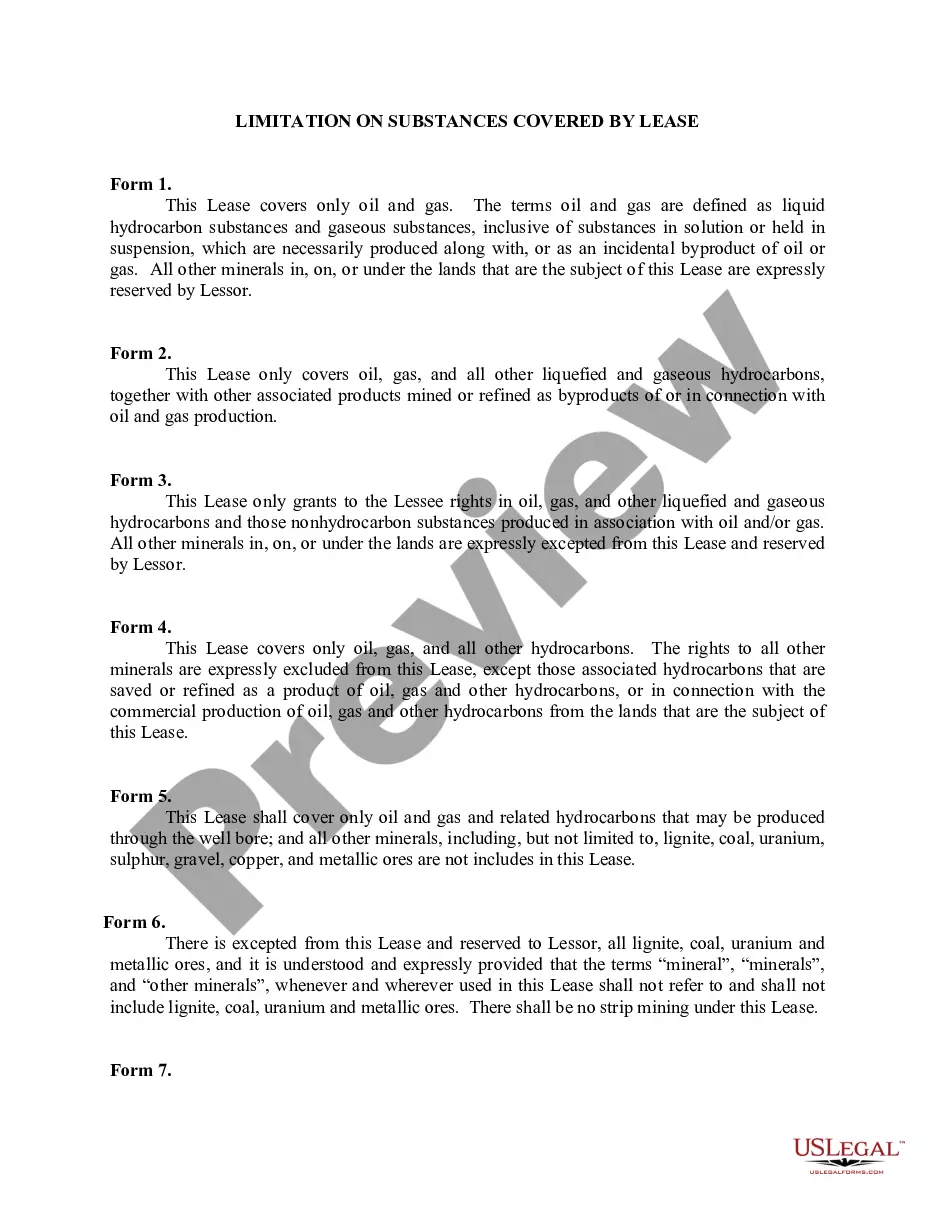
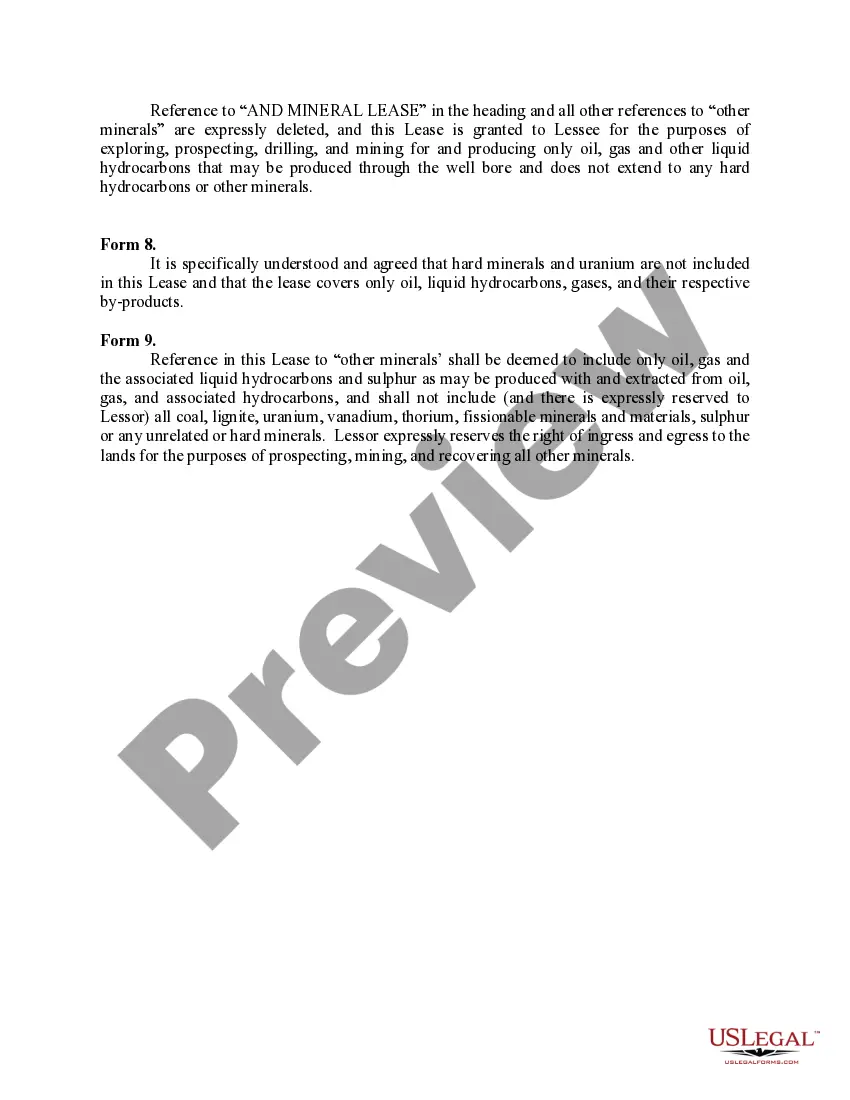
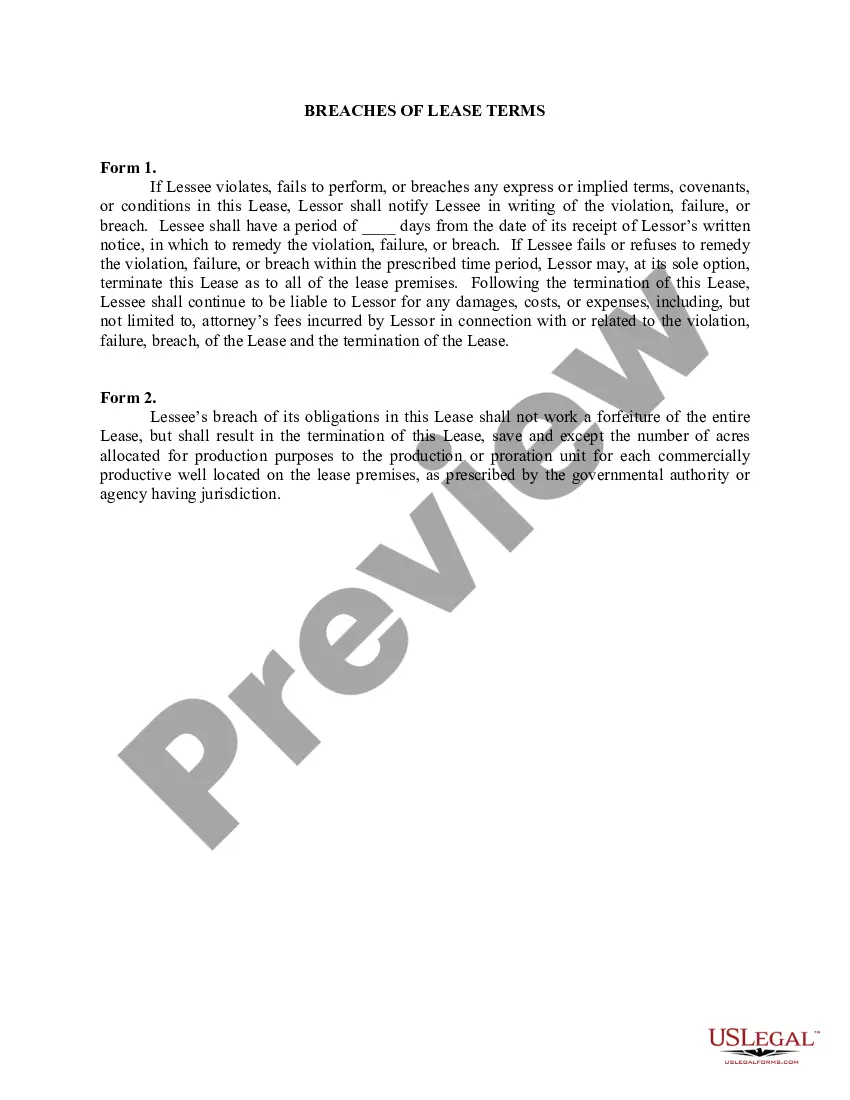
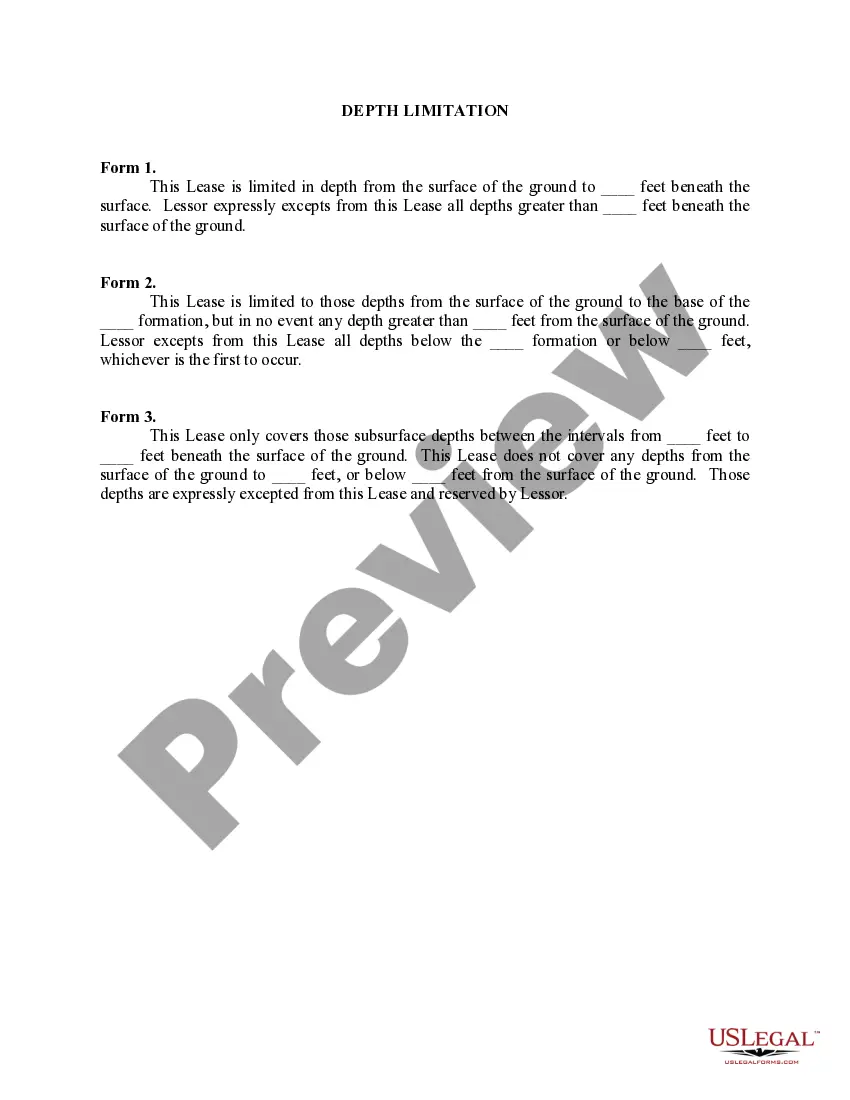
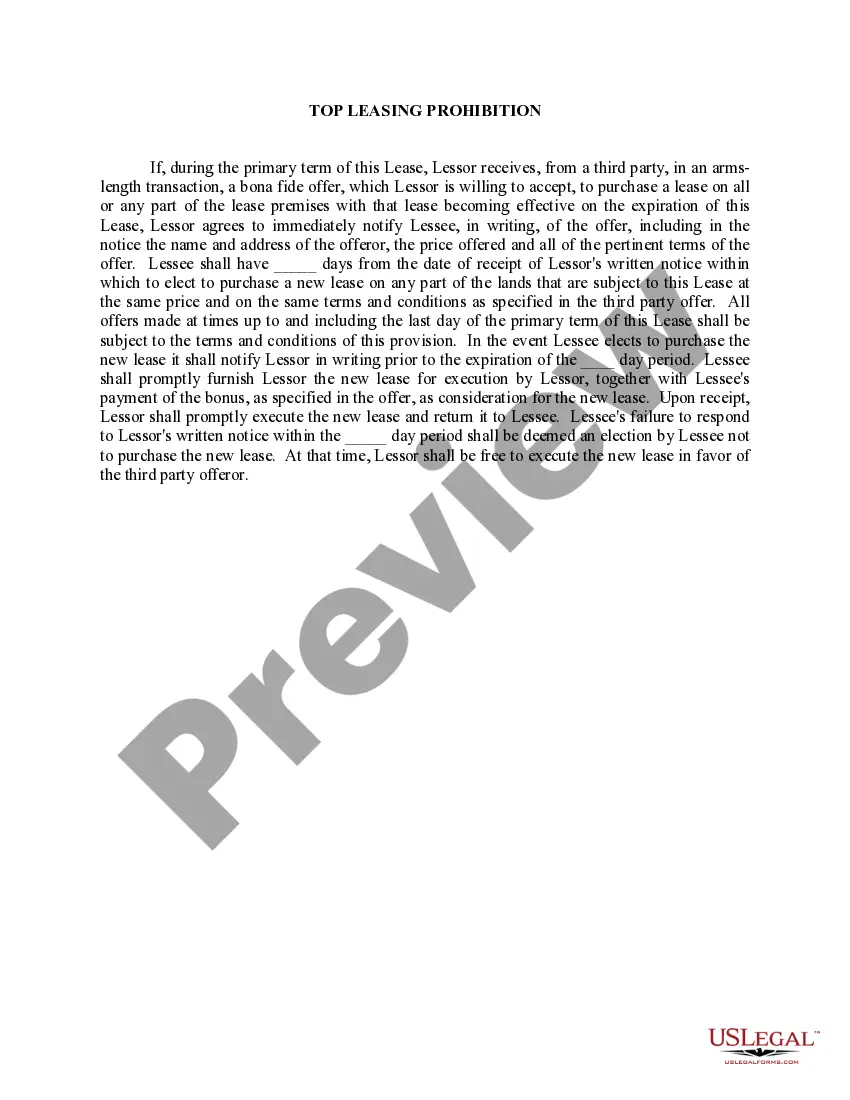
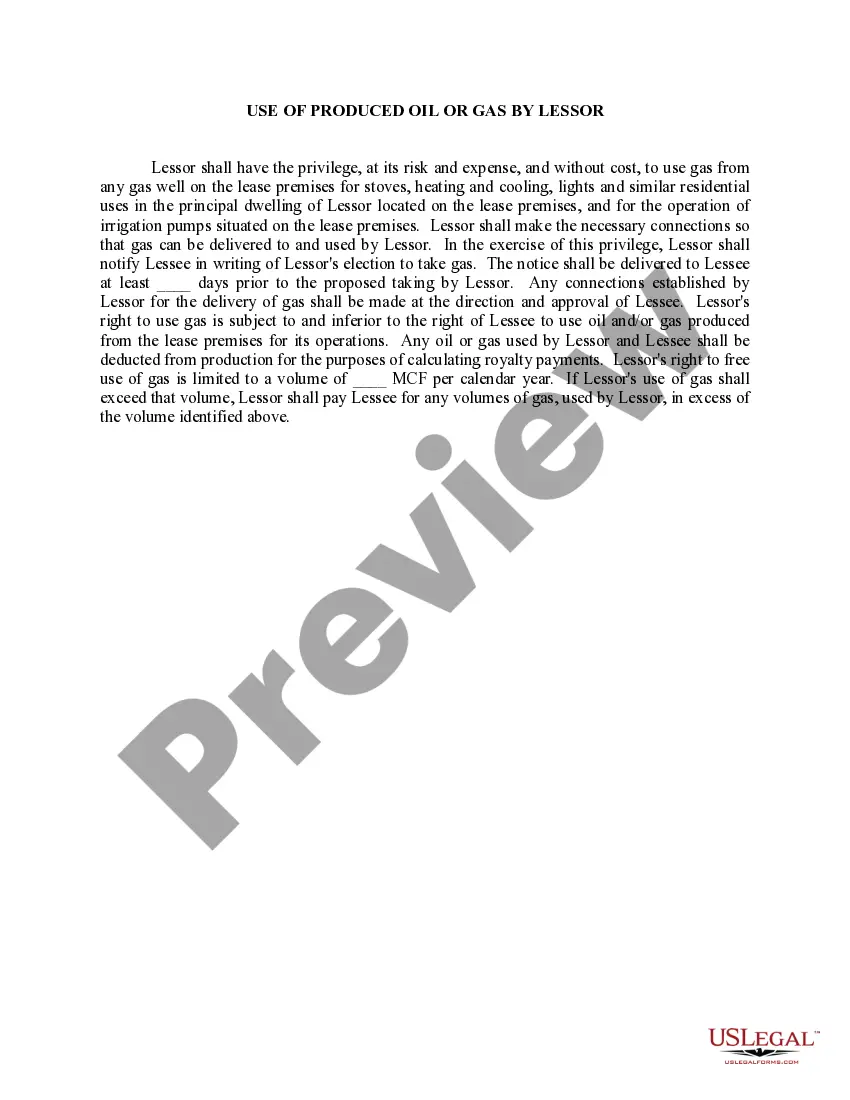
The limitation on substances covered by lease form is a legal document that specifies what substances are included and excluded under an oil and gas lease agreement. This form allows landlords (lessors) to restrict the rights granted to the lessee in the standard lease form, focusing specifically on oil, gas, and related hydrocarbons, while reserving rights to other minerals. This clarity helps protect the lessor's interests and defines the parameters of the lease agreement for both parties.
Form components explained
- Definition of covered substances: Specifies that only oil and gas, along with certain hydrocarbons, are covered.
- Reservation of rights: Clarifies which minerals are expressly reserved by the lessor, preventing any rights transfer.
- Restrictions on mining: Outlines any prohibitions on mining activities unrelated to oil and gas.
- Conditions for byproducts: States which specific byproducts from oil and gas production are included.
- Non-coverage of hard minerals: Clearly excludes hard minerals such as coal, uranium, and metallic ores from the lease.
Common use cases
This form should be used in situations where a lessor intends to enter into an oil and gas lease but has concerns about the extraction of other minerals. It is valuable for protecting property rights and ensuring that the lessee's rights to extract resources are strictly limited to oil and gas and their associated byproducts. For example, if a landowner wants to lease their land for oil drilling but wishes to exclude rights to valuable minerals like coal or uranium, this form is essential.
Who needs this form
- Landowners looking to lease their property for oil and gas exploration.
- Lessors who want to clearly define what substances can be extracted from their land.
- Individuals or businesses engaged in lease negotiations who need to outline specific limitations on mineral extraction.
- Property owners concerned about the environmental and financial impact of mineral extraction on their land.
How to complete this form
- Identify the parties involved: Clearly state the names of the lessor and lessee.
- Specify the lease area: Include the legal description of the property being leased.
- Define the covered substances: Use the form to outline what is included and reserved under the lease.
- Detail restrictions: Clearly state any prohibitions on mining or extraction of other minerals.
- Sign and date: Ensure all parties review and sign the document, dating it appropriately.
Does this document require notarization?
This form does not typically require notarization unless specified by local law. It is recommended to check local regulations to ensure compliance.
Get your form ready online
Our built-in tools help you complete, sign, share, and store your documents in one place.
Make edits, fill in missing information, and update formatting in US Legal Forms—just like you would in MS Word.
Download a copy, print it, send it by email, or mail it via USPS—whatever works best for your next step.
Sign and collect signatures with our SignNow integration. Send to multiple recipients, set reminders, and more. Go Premium to unlock E-Sign.
If this form requires notarization, complete it online through a secure video call—no need to meet a notary in person or wait for an appointment.
We protect your documents and personal data by following strict security and privacy standards.

Make edits, fill in missing information, and update formatting in US Legal Forms—just like you would in MS Word.

Download a copy, print it, send it by email, or mail it via USPS—whatever works best for your next step.

Sign and collect signatures with our SignNow integration. Send to multiple recipients, set reminders, and more. Go Premium to unlock E-Sign.

If this form requires notarization, complete it online through a secure video call—no need to meet a notary in person or wait for an appointment.

We protect your documents and personal data by following strict security and privacy standards.
Common mistakes to avoid
- Failing to specify exclusions clearly, leading to misunderstandings later.
- Not including a legal description of the property, which can cause enforcement issues.
- Omitting signatures from both parties, which can render the lease non-binding.
Benefits of completing this form online
- Convenient access: Download and complete the form at your convenience.
- Editability: Easily update sections to meet specific legal needs.
- Reliability: Ensure that the form has been drafted by licensed attorneys, providing legal validity and peace of mind.
Legal use & context
- The Limitation on Substances Covered by Lease can help prevent disputes over mineral rights in the future.
- It serves as a legal safeguard for lessors who wish to retain ownership of other valuable minerals.
- The formâs enforceability may vary based on state-specific laws regarding oil and gas leases.
What to keep in mind
- This form clarifies the specific substances covered in an oil and gas lease.
- It protects the lessor's rights to other minerals by explicitly stating exclusions.
- A well-completed form can minimize misunderstandings and legal disputes.
Looking for another form?

Form popularity
FAQ
A rental concession is a compromise by a landlord made to the original terms of a lease. Concessions are usually some form of rebate that a property owner offers to try to persuade a tenant to move into the residence. They can be monetary compensation, some type of a discount, or a physical good or service.
If the tenant pays for leasehold improvements, the capital expenditure is recorded as an asset on the tenant's balance sheet. Then the expense is recorded on income statements as amortization over either the life of the lease or the useful life of the asset, whichever is shorter.
Leasehold improvements are any changes made to a rental property in order to customize it for the particular needs of a tenant. These can include alterations such as painting, installing partitions, changing the flooring, or putting in customized light fixtures.
Any malicious or accidental damage to the property caused by a tenant or their guests is the tenant's responsibility. However, it should still be reported to the property manager or landlord. Malicious damage could be a hole punched in a wall or even nails hammered into the wall without a landlord's permission.
Simply put, a concession is any reduction in price, rent or other benefit provided to a tenant or buyer as an inducement to buy or lease1.Say, for example, you are a landlord letting an apartment unit at $1,200 a month over a year-long lease.
Often, landlords will provide a 'leasehold improvement allowance' for their tenants which is merely a set amount they agree to pay for. If the improvements you want cost more than the allowance, you will be responsible for those extra costs.
ESSENTIAL ELEMENTS OF A VALID LEASE AGREEMENT. Competent Parties. Legal Purpose. Statute of Frauds. Reversionary Right. Property Description. Mutual Assent (Offer and Acceptance) Consideration.
Can a tenant claim for improvements made during the lease? The position differs in the case of immovable and movable property. Tenant can claim for:The claim arises only once the lease is terminated and lessee vacated the property.
In cases like this, landlords are entitled to deduct the remaining tax basis in capitalized leasehold improvements made for a particular tenant upon termination of the lease if such improvements are irrevocably disposed of or abandoned and won't be used by a subsequent tenant.