Top Leasing Prohibition
Overview of this form
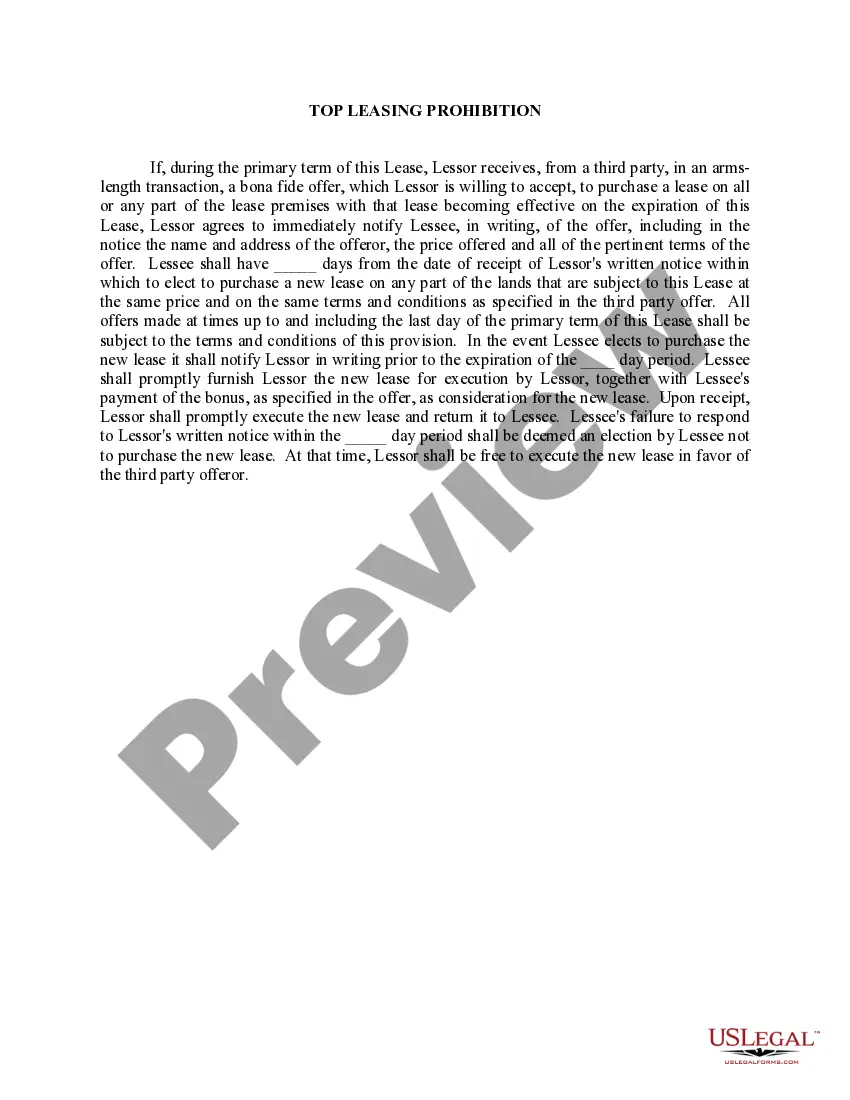
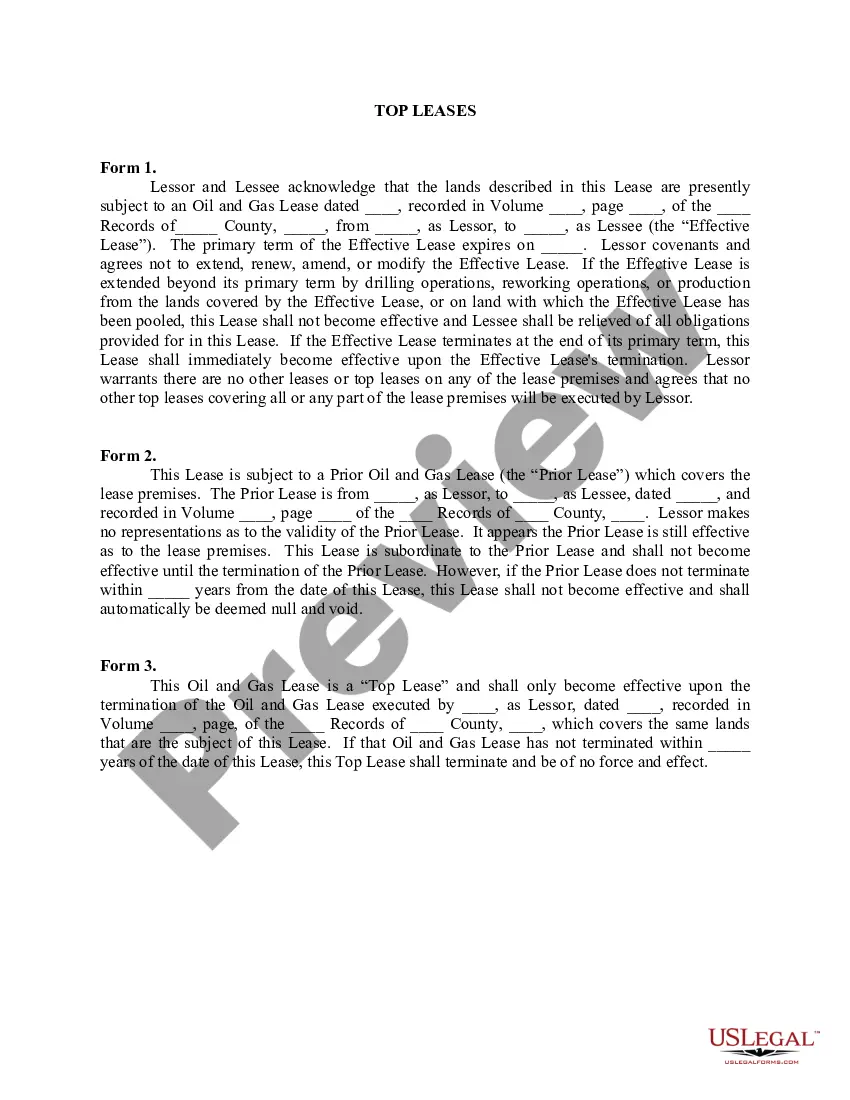
The Top Leasing Prohibition form is a lease rider that allows a lessor to include additional provisions in an Oil and Gas Lease. This form is crucial for lessors who wish to set specific limitations on the lessee's rights or address particular concerns that arise during a lease transaction. It provides a structured process for the lessor to manage third-party offers to lease the property, ensuring they have the right to accept such offers before the lessee can proceed.
Key components of this form
- Notification clause: Requires lessor to inform lessee of any bona fide third-party offers to lease.
- Response timeline: Specifies the time frame within which the lessee must respond to the offer.
- Purchase rights: Outlines lessee's right to purchase a new lease at the same terms as the third-party offer.
- Execution of the lease: Details the process for executing the new lease if the lessee elects to proceed.
- Failure to respond: States the implications if the lessee does not respond in a timely manner.

When to use this form
This form is useful when a lessor receives an offer from a third party to lease their property while an existing lease is still in effect. It protects the lessor's interests by requiring the lessee to respond to the offer, ensuring they have the opportunity to purchase a new lease if desired.
Who can use this document
- Lessors looking to maintain control over their property and its leasing rights.
- Attorneys representing lessors in lease negotiations.
- Real estate professionals involved in oil and gas leases.
Steps to complete this form
- Identify the parties involved: Clearly state the names and addresses of the lessor and lessee.
- Specify the notice timeline: Determine the number of days the lessee has to respond to the lessor's notification.
- Enter the details of the third-party offer: Include the name of the offeror, the offered price, and key terms.
- Indicate the process for responding: Outline how the lessee must notify the lessor if they decide to purchase the new lease.
- Review and finalize: Ensure all information is correct before signatures are added.
Does this document require notarization?
This form usually doesn’t need to be notarized. However, local laws or specific transactions may require it. Our online notarization service, powered by Notarize, lets you complete it remotely through a secure video session, available 24/7.
Get your form ready online
Our built-in tools help you complete, sign, share, and store your documents in one place.
Make edits, fill in missing information, and update formatting in US Legal Forms—just like you would in MS Word.
Download a copy, print it, send it by email, or mail it via USPS—whatever works best for your next step.
Sign and collect signatures with our SignNow integration. Send to multiple recipients, set reminders, and more. Go Premium to unlock E-Sign.
If this form requires notarization, complete it online through a secure video call—no need to meet a notary in person or wait for an appointment.
We protect your documents and personal data by following strict security and privacy standards.

Make edits, fill in missing information, and update formatting in US Legal Forms—just like you would in MS Word.

Download a copy, print it, send it by email, or mail it via USPS—whatever works best for your next step.

Sign and collect signatures with our SignNow integration. Send to multiple recipients, set reminders, and more. Go Premium to unlock E-Sign.

If this form requires notarization, complete it online through a secure video call—no need to meet a notary in person or wait for an appointment.

We protect your documents and personal data by following strict security and privacy standards.
Avoid these common issues
- Failing to notify the lessee within the required timeframe.
- Not providing complete details of the third-party offer.
- Neglecting to check local laws regarding lease provisions.
- Omitting important signatures from the final lease agreement.
Advantages of online completion
- Convenient access: Download and complete the form at any time.
- Editability: Customize the form to suit your specific needs.
- Reliability: Forms are prepared by licensed attorneys, ensuring legal validity.
Legal use & context
- This form serves as a legal instrument in oil and gas leasing negotiations.
- It helps clarify the rights of Lessors in the event of lease purchase offers.
- Using this form can minimize disputes and enhance enforceability in lease agreements.
Looking for another form?
Form popularity
FAQ
A lease is automatically void when it is against the law, such as a lease for an illegal purpose. In other circumstances, like fraud or duress, a lease can be declared void at the request of one party but not the other.
Trespassing or harassment from your landlord or property manager is considered a legal reason to break your lease. Read more about these common ways to legally break a lease to see if any of the circumstances above are applicable to your situation.
In point of fact, that entirely depends on your landlord until your tenancy agreement incorporates a 'break clause'.Therefore, if the termination clause in your rental agreement states that either party has to provide a 2-month notice period, both parties are legally bound to do so.
While some jurisdictions may have provisions that allow consumers to change their minds with no consequences, generally there is no cooling-off period for leasing real property. Once the landlord and tenant sign a lease and a copy is delivered to the both parties, it becomes a valid contract.
If you break a lease and stop paying rent, your landlord might decide to take legal action against you. Your landlord can file a civil lawsuit to make you pay off the lease balance. If the judge rules against you, you will have to pay out your debt. Lowered credit score.
The landlord has no means of enforcing it, so the landlord can only enforce the existing lease as he or she originally wrote it. After the term expires, the landlord can require tenants to sign any addenda before a rental agreement is valid.
Declare a Constructive Eviction. Point Out Landlord Breaches to Reduce Your Debt. Landlords Have a Duty to Mitigate Their Damages. Consequences for Breaking Your Lease. Look for These Clauses in Your Lease. Your Landlord May Have a Duty to Mitigate. Declare a Constructive Eviction.
Failure to pay the rent on time and in full. Allowing more than the stated maximum number of occupants to live in the property. Sub-letting a room or the entire property without the landlord's permission. Decorating or conducting building works at the property without the landlord's permission.