Vermont Letter to Lienholder to Notify of Trust
About this form
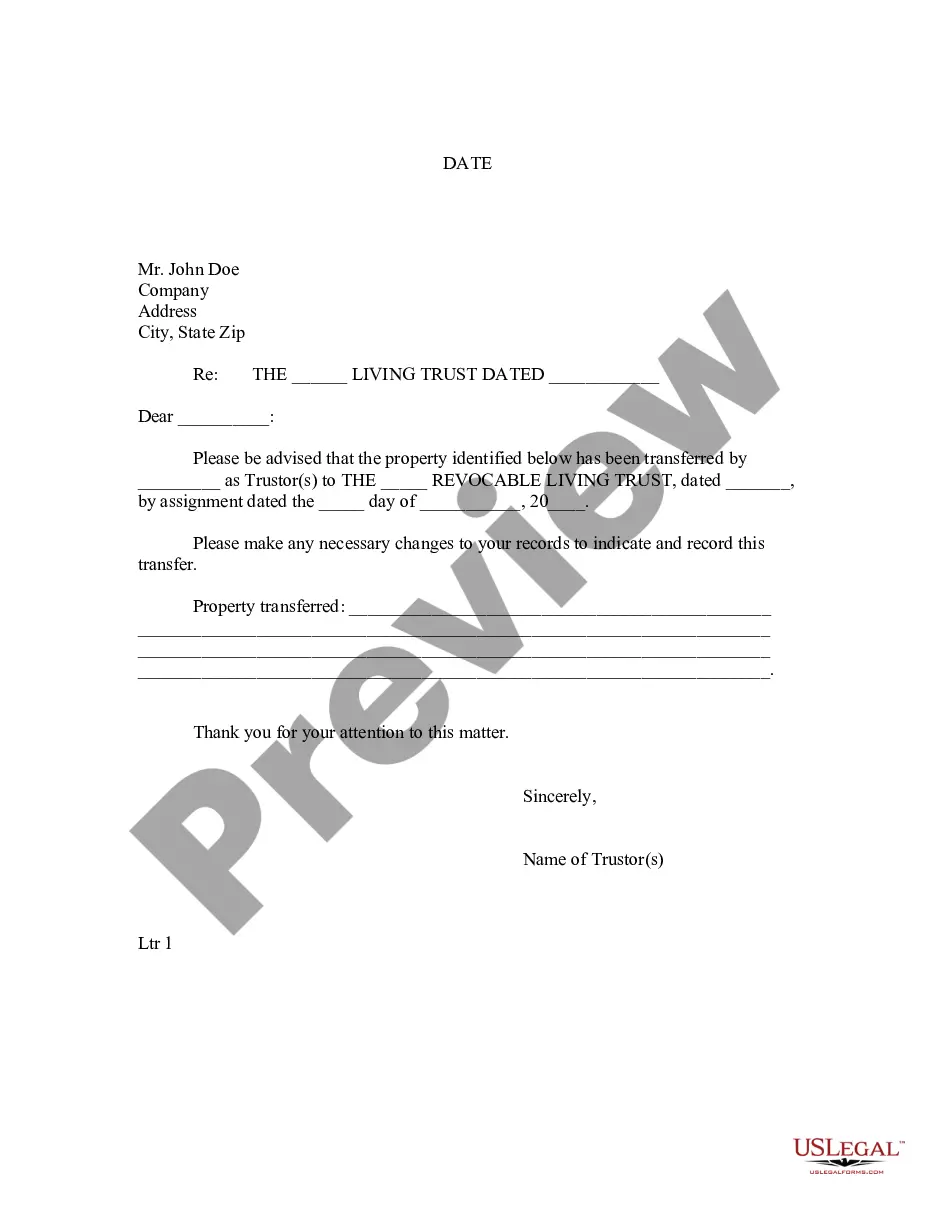
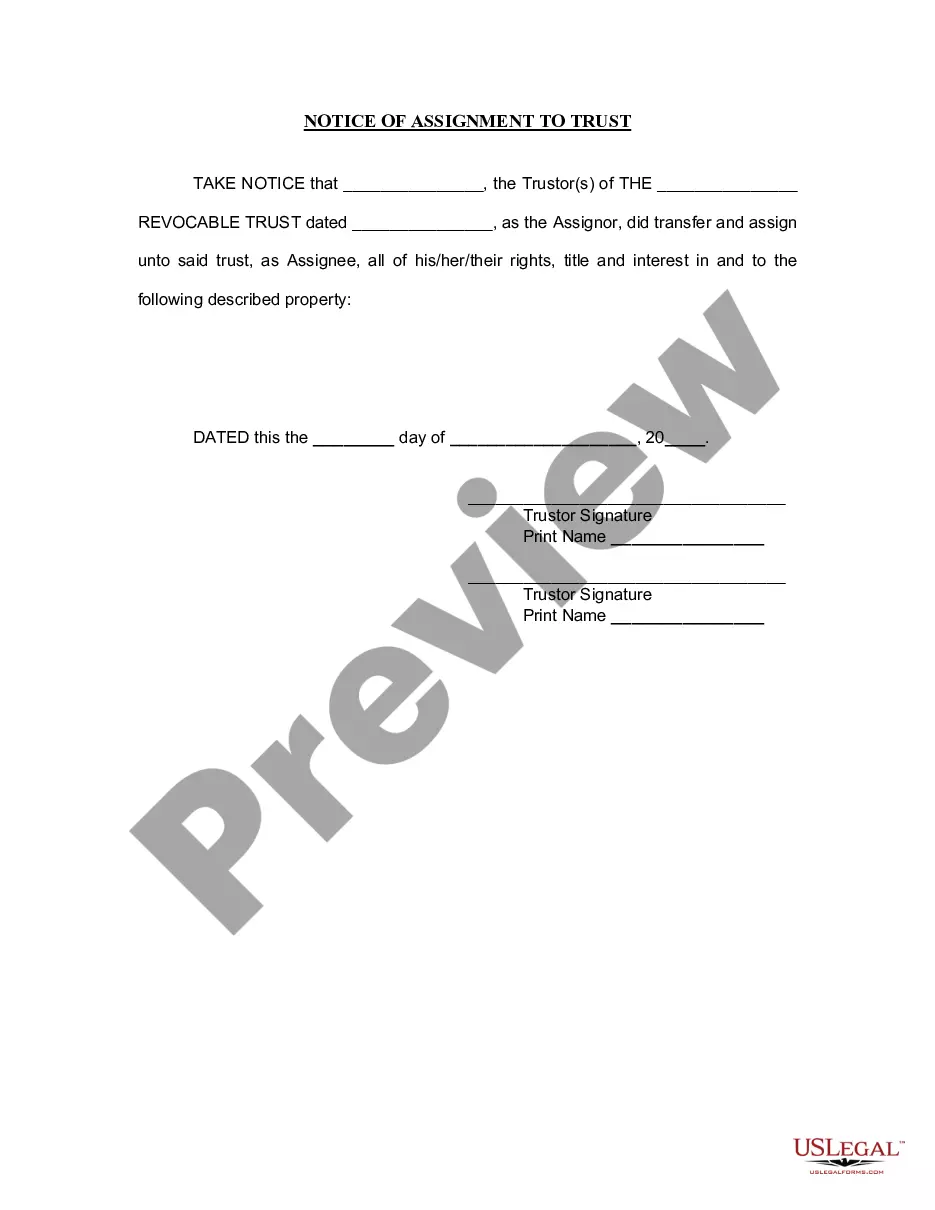
The Letter to Lienholder to Notify of Trust is a formal notification that informs a lienholder about the transfer of property into a living trust. Unlike other notifications, this letter specifically addresses the change in ownership structure due to estate planning measures. Its primary purpose is to ensure the lienholder updates their records to reflect the new title holder, which in this case is the living trust.
Key components of this form
- Date of the letter
- Name and address of the lienholder
- Name of the trust and trustor(s)
- Description of the transferred property
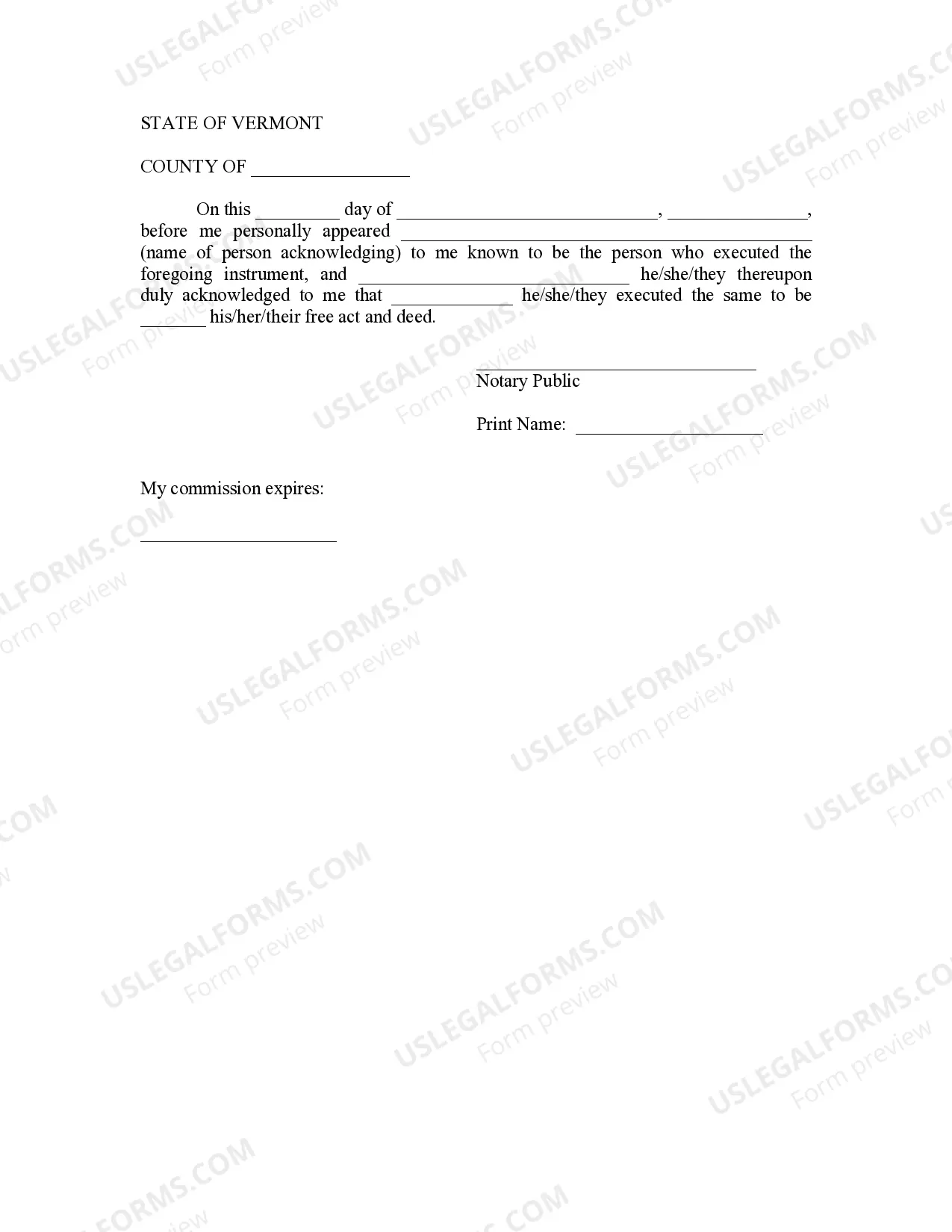
- Notary acknowledgment section
When to use this form
This form is useful in situations where property is being transferred into a living trust, particularly when the property secures a loan or is subject to a lien. For instance, if you establish a living trust to facilitate estate management and want to ensure that your lienholder is aware of this change, using this letter will help clarify ownership and prevent any confusion in future transactions or during estate settlement.
Who can use this document
- Individuals creating a living trust
- Trustors looking to notify lienholders of property transfer
- Estate planners assisting clients with property management
How to prepare this document
- Enter the date at the top of the letter.
- Provide the lienholder's name and address.
- Fill in the name of the living trust and the trustor(s).
- List the property that has been transferred to the trust.
- Sign the letter where indicated and have it notarized.
Notarization requirements for this form
To make this form legally binding, it must be notarized. Our online notarization service, powered by Notarize, lets you verify and sign documents remotely through an encrypted video session.
Get your form ready online
Our built-in tools help you complete, sign, share, and store your documents in one place.
Make edits, fill in missing information, and update formatting in US Legal Forms—just like you would in MS Word.
Download a copy, print it, send it by email, or mail it via USPS—whatever works best for your next step.
Sign and collect signatures with our SignNow integration. Send to multiple recipients, set reminders, and more. Go Premium to unlock E-Sign.
If this form requires notarization, complete it online through a secure video call—no need to meet a notary in person or wait for an appointment.
We protect your documents and personal data by following strict security and privacy standards.

Make edits, fill in missing information, and update formatting in US Legal Forms—just like you would in MS Word.

Download a copy, print it, send it by email, or mail it via USPS—whatever works best for your next step.

Sign and collect signatures with our SignNow integration. Send to multiple recipients, set reminders, and more. Go Premium to unlock E-Sign.

If this form requires notarization, complete it online through a secure video call—no need to meet a notary in person or wait for an appointment.

We protect your documents and personal data by following strict security and privacy standards.
Common mistakes
- Not specifying the full name of the trust.
- Omitting the property description.
- Failing to sign the letter.
Benefits of completing this form online
- Convenient access to legally vetted forms anytime.
- Editable templates that suit individual circumstances.
- Reliable guidance to ensure proper legal compliance.
Legal use & context
- This letter serves as a formal record of property transfer to a trust, which can be crucial in legal matters.
- Proper use of this form can help avoid disputes over property ownership in the future.
- It is important to ensure that all details are accurate to maintain the enforceability of the document.
Looking for another form?
Form popularity
FAQ
Lien Holder Authorization Letter A letter from the lien holder, giving permission for the vehicle to be relocated.
Lien release letters should have a conspicuous title such as Release of Lien at the top of the page. The first paragraph should list the date the lien was placed on the property and the names and addresses of both the lienholder and the owner of the property.
Write your name and return address in the top three lines of the letter. Insert the complete date (month, day, year). Enter the recipient's name, title, company name and address on the next five lines. Greet the reader by writing "Dear (recipient's name):" Skip two lines. State the subject in a subject line.
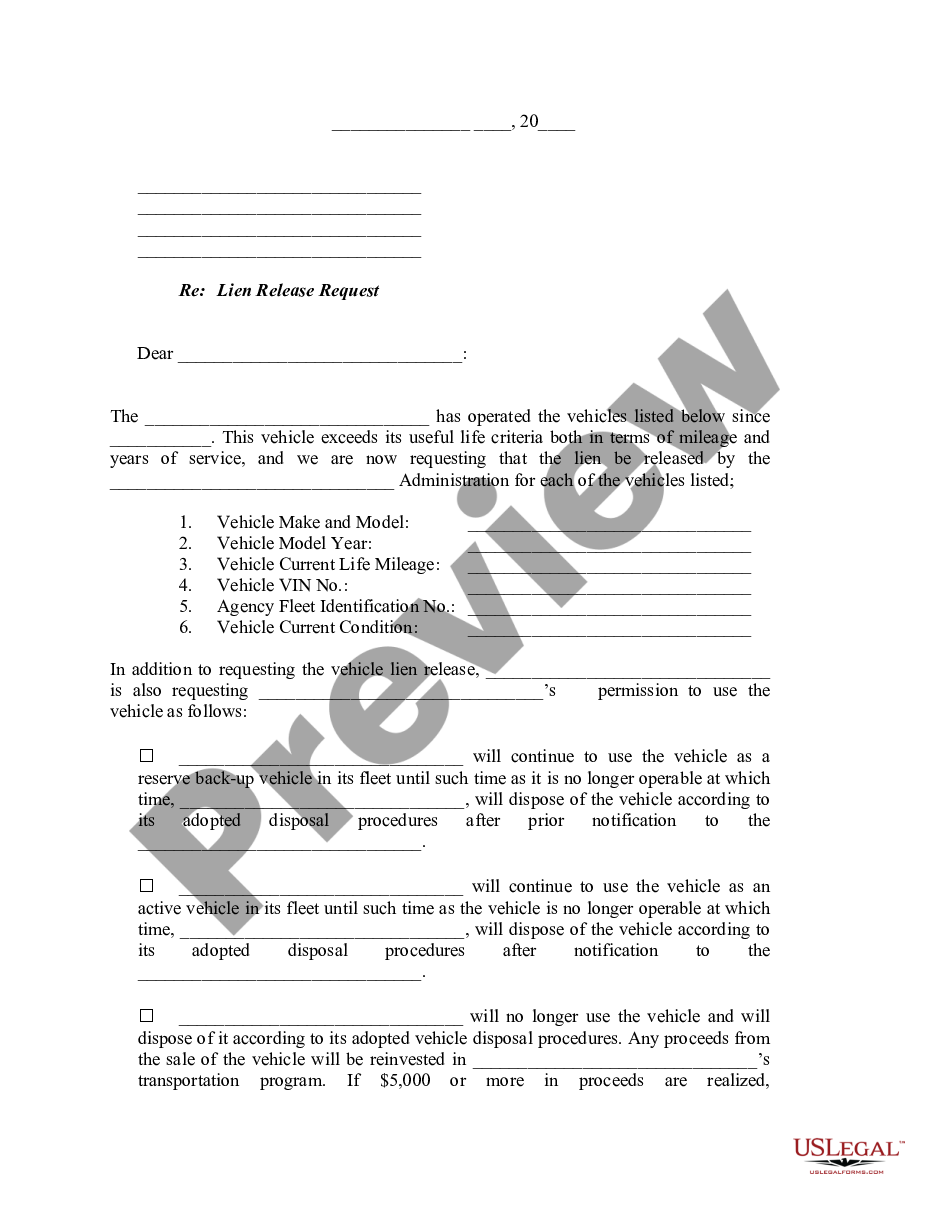
The car (vehicle) lien release form is a document that is used by a lending institution or entity after a borrower has paid the loan in full and the borrower would like to retrieve the title to their vehicle.
A lien is a claim on property to ensure payment of a debt. When you borrow money to purchase a car, the lender files a lien on the vehicle with the state to insure that if the loan defaults, the lender can take the car. When the debt is fully repaid, a release of the lien is provided by the lender.
Your lienholder has the right to repossess the motor vehicle if you stop making your auto loan payments. Once you make your final payment, you have a right to obtain a lien release from the lienholder. When you get a lien released, you can receive a clear title from the DMV.
A lien is a claim on property to ensure payment of a debt. When you borrow money to purchase a car, the lender files a lien on the vehicle with the state to insure that if the loan defaults, the lender can take the car. When the debt is fully repaid, a release of the lien is provided by the lender.