Virginia Construction or Mechanics Lien Package - Individual

What is this form package?
The Virginia Construction or Mechanics Lien Package - Individual is specifically crafted for sole proprietors who provide labor, materials, or services to enhance real property. Its primary purpose is to assist these individuals in recovering unpaid debts through a lien on the improved property. This package includes essential forms and detailed guidance tailored for individual contractors, distinguishing it from other construction lien packages that may cater to business entities or property owners.
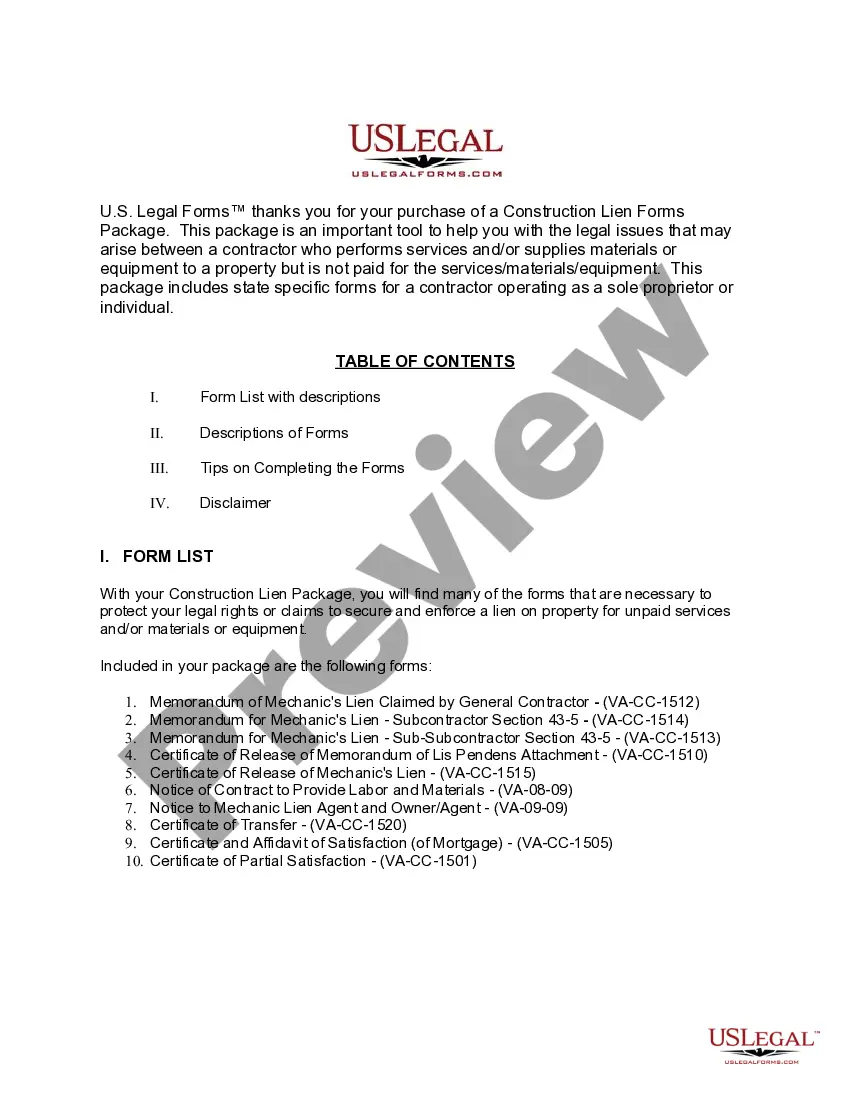
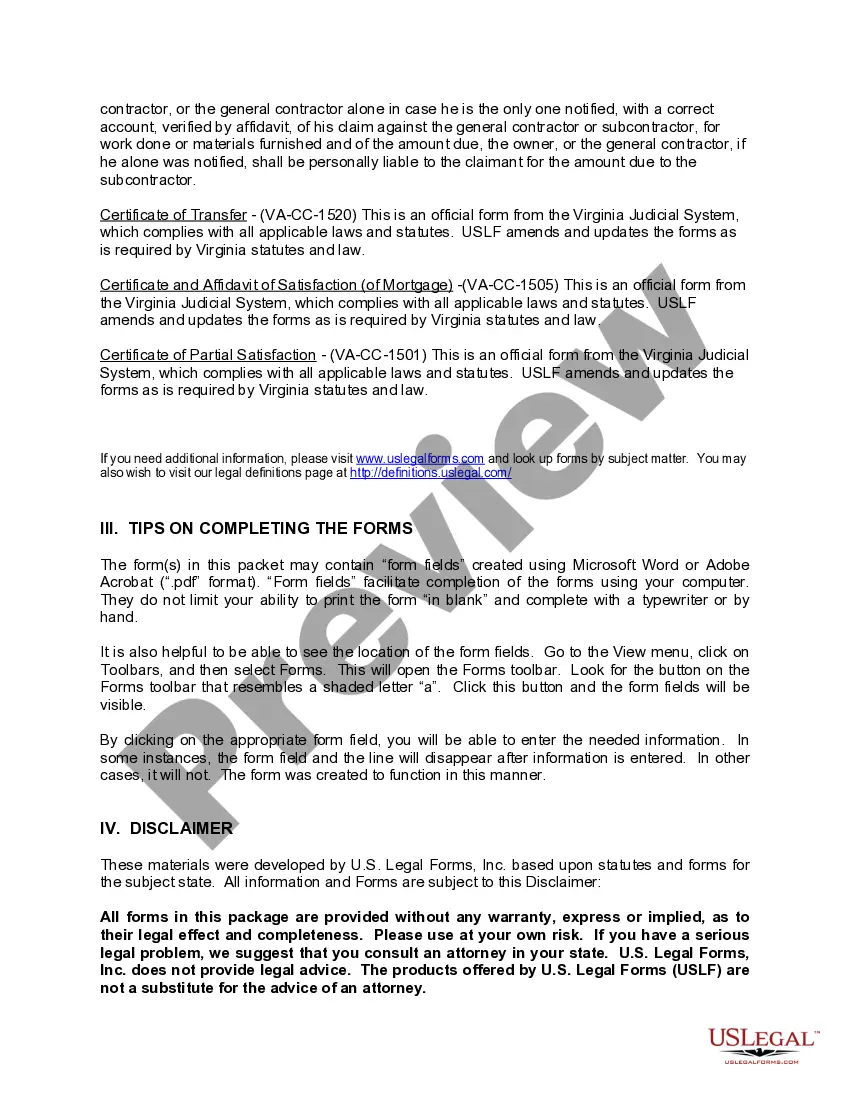
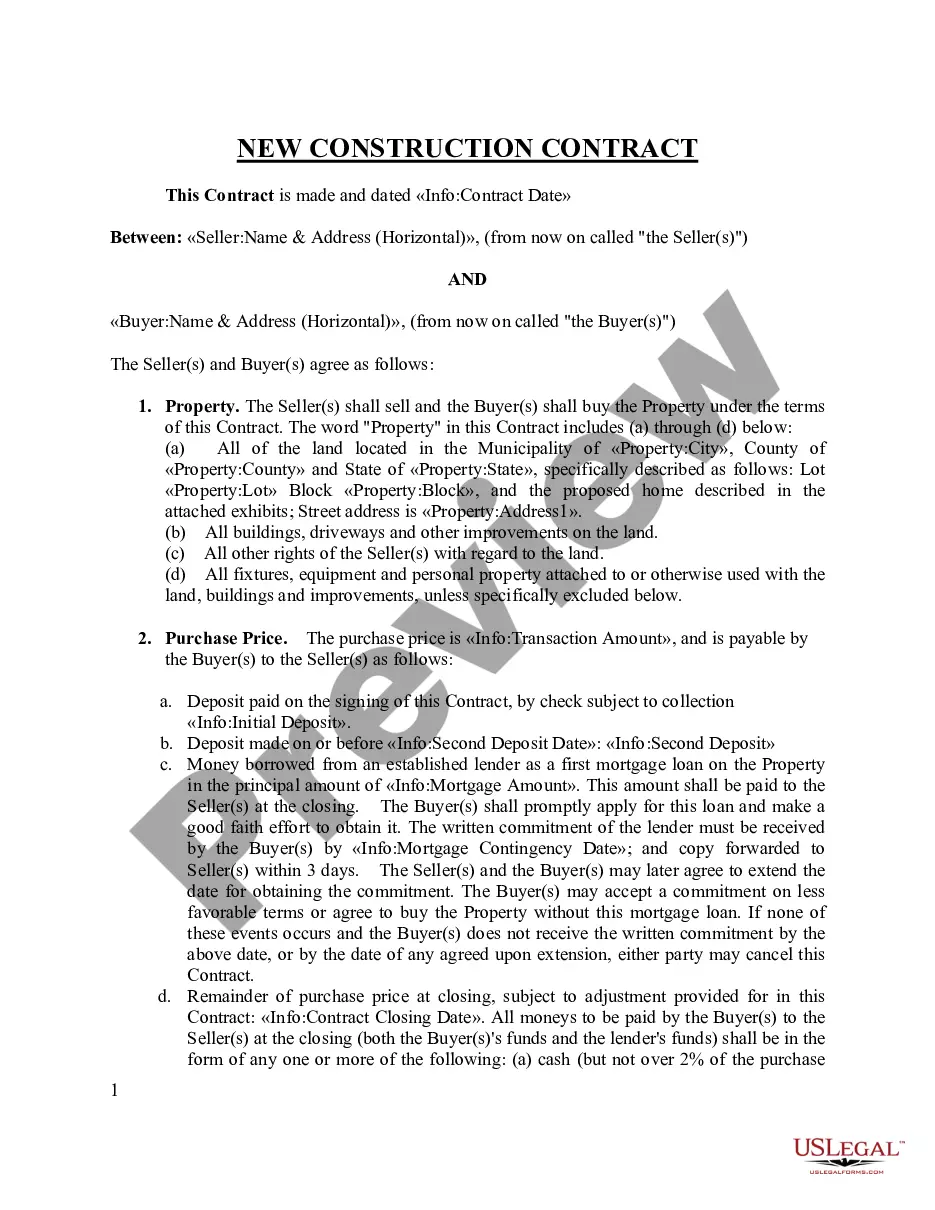
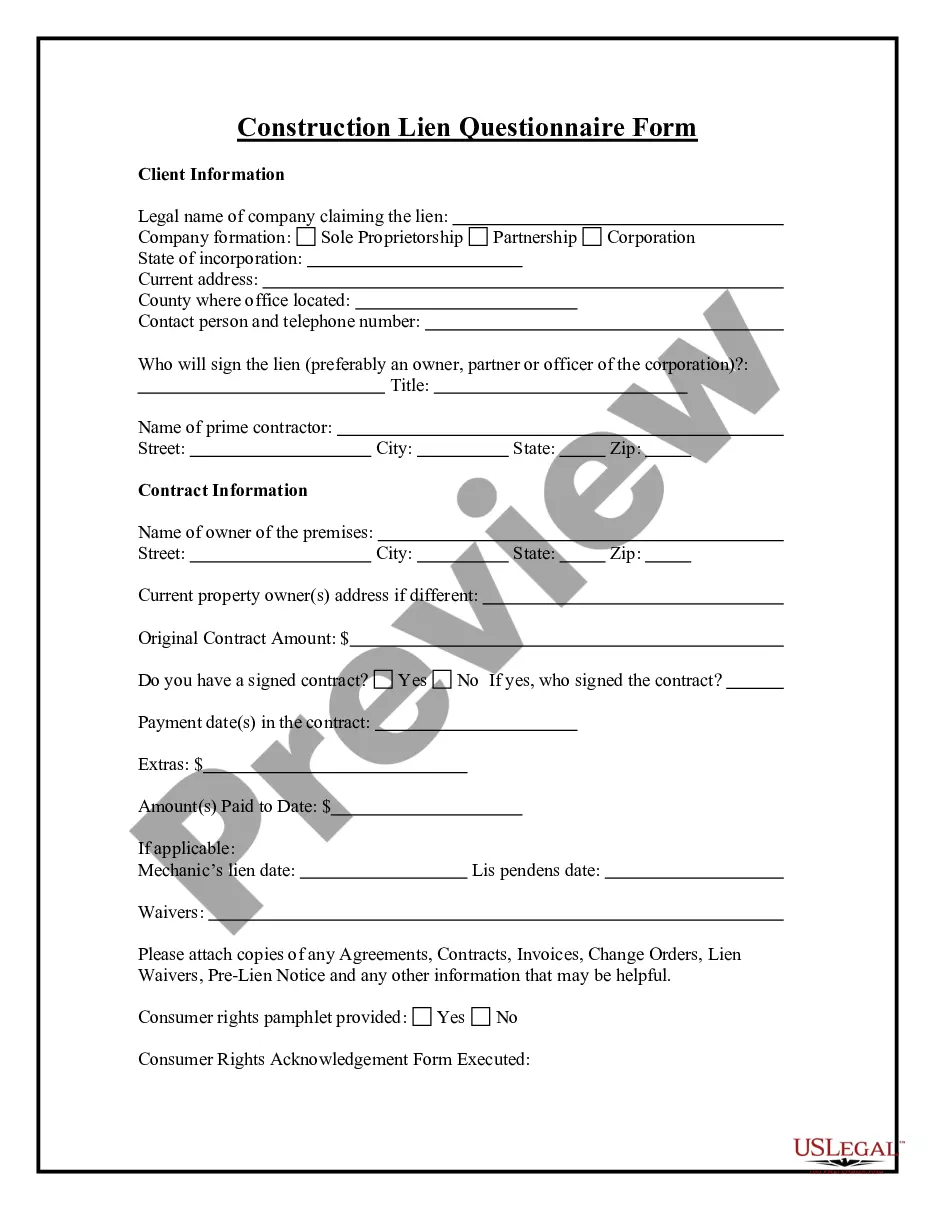
Documents contained in this package
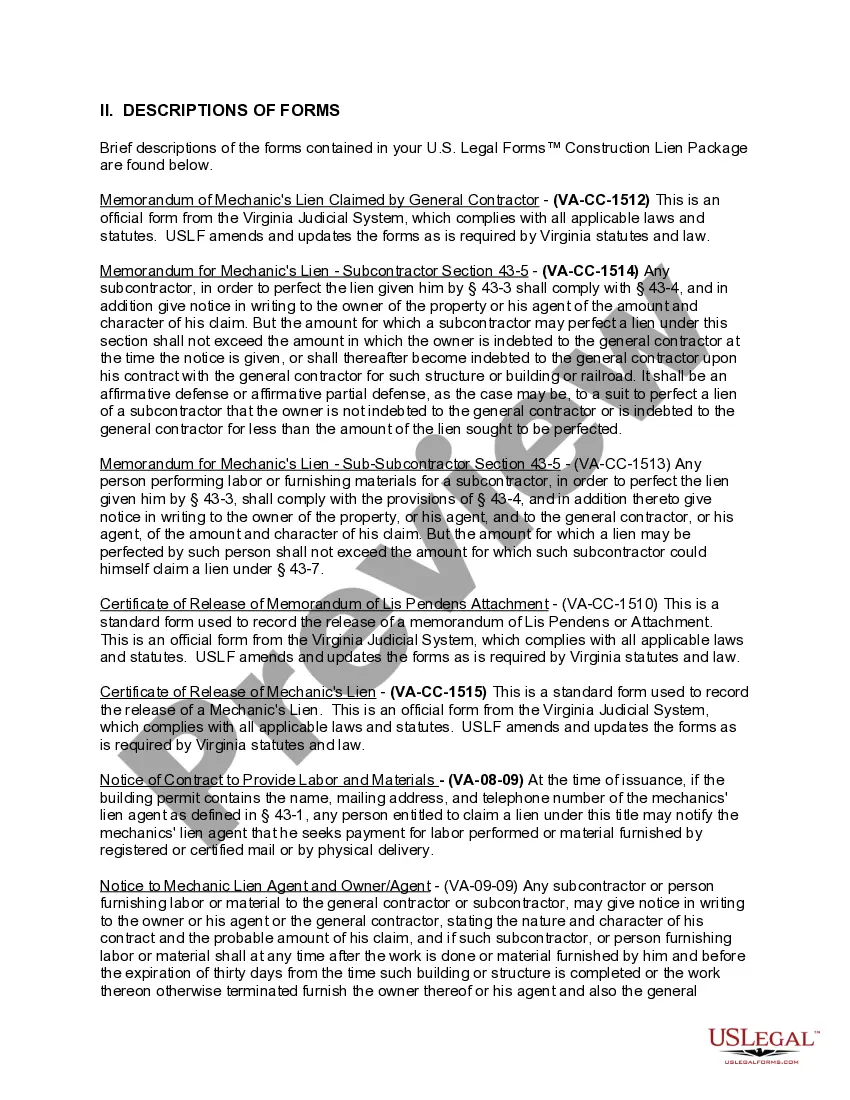
- Notice of Contract to Provide Labor and Materials - Individual
- Notice to Mechanic Lien Agent and Owner/Agent - Individual
- Certificate Of Partial Satisfaction
- Certificate And Affidavit Of Satisfaction
- Certificate Of Release Of Memorandum Of Lis Pendens Attachment
- Memorandum For Mechanics Lien Claimed By General Contractor Under Virginia Code
- Memorandum For Mechanics Lien Claimed By Subcontractor
- Memorandum For Mechanics Lien Claimed By Sub-Subcontractor
- Certificate Of Release Of Mechanics Lien
- Certificate Of Transfer
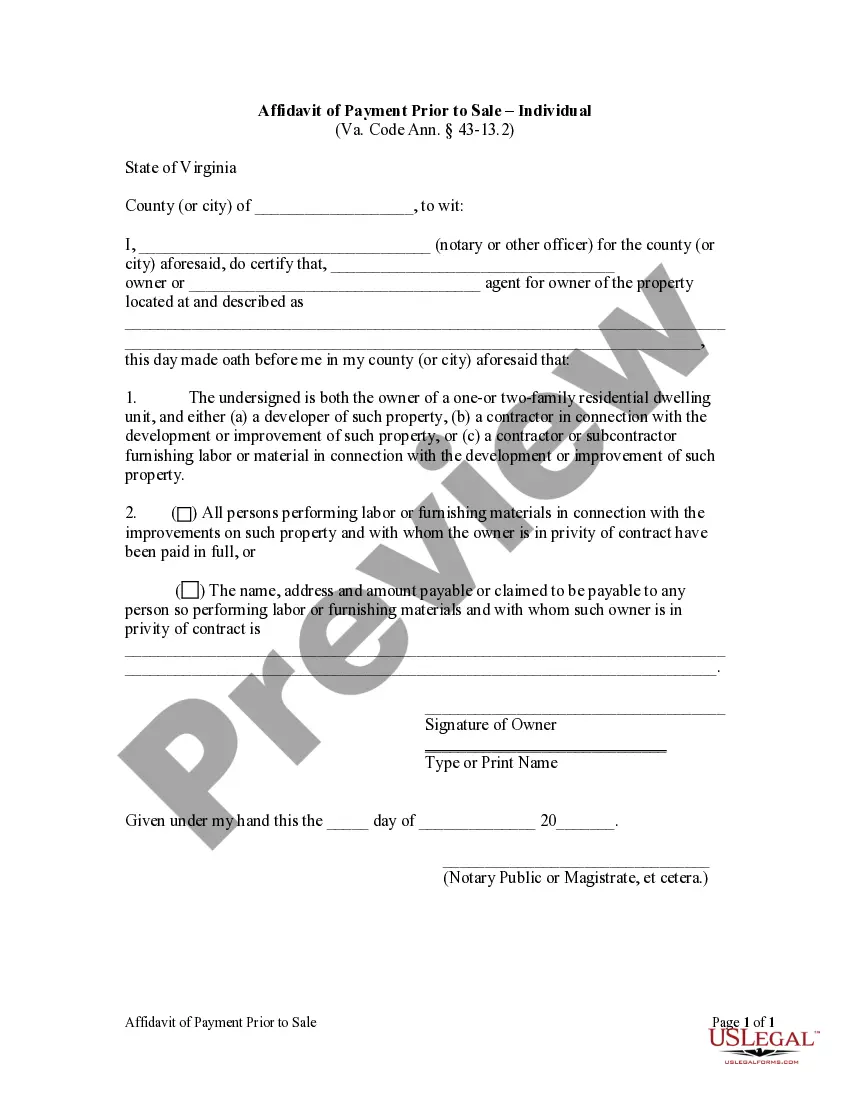
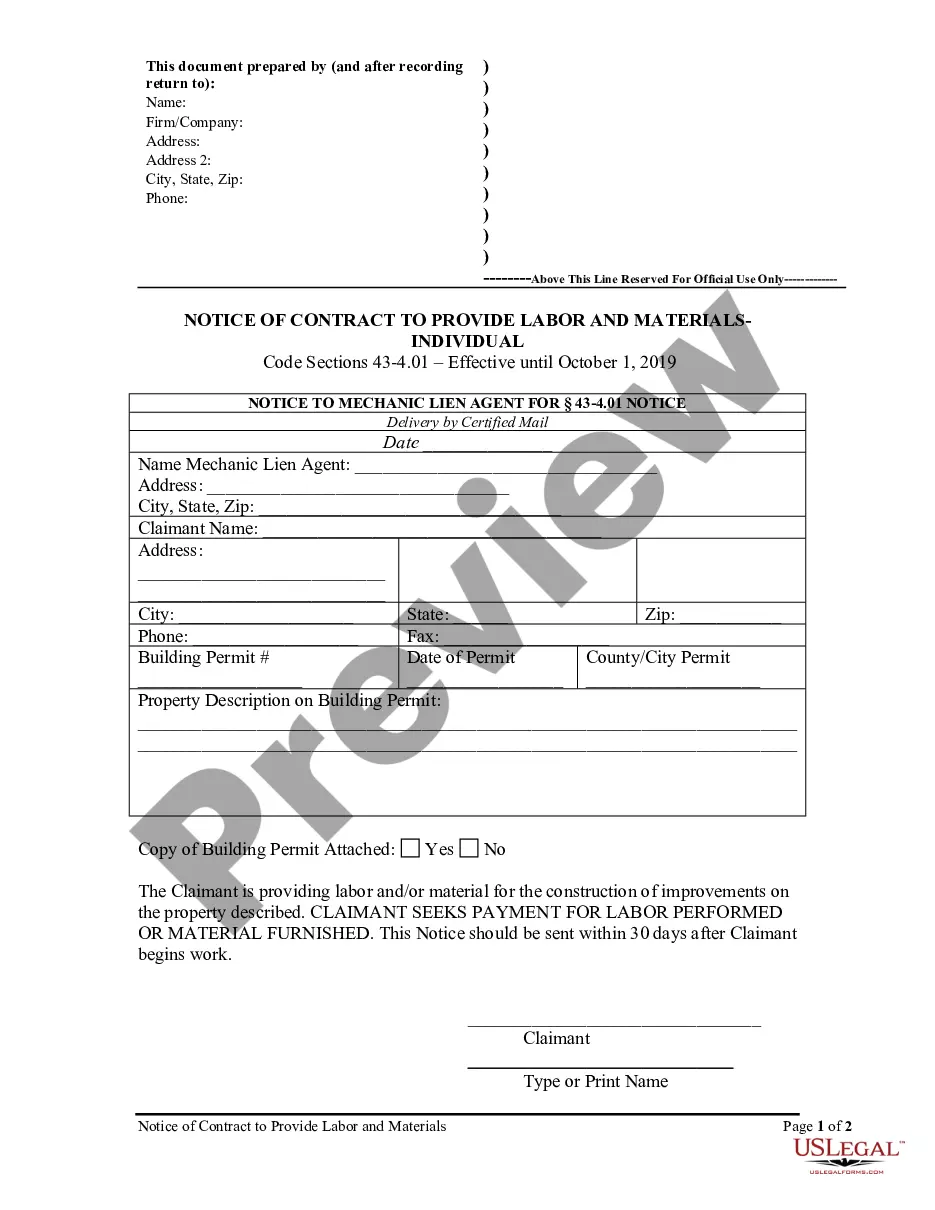
Situations where these forms applies
This form package is applicable in various situations, including:
- When a sole proprietor has completed work or delivered materials but has not received payment.
- If there is a need to secure a lien on a property as a means to enforce payment for services rendered.
- When notifying property owners or general contractors about unpaid balances related to construction or improvement projects.
Who can use this document
- Sole proprietors in the construction or service industry.
- Contractors who supply materials, labor, or services for property improvement.
- Individuals seeking legal recourse for unpaid debts related to construction projects.
Completing these forms step by step
- Review all included forms to understand the necessary documentation.
- Identify the parties involved, including the contractor and property owner.
- Enter the required dates and signatures where indicated.
- Fill in specific details regarding the services provided or materials supplied.
- Follow the tips provided for completing forms digitally or by hand.
Notarization guidance for this package
Forms in this package typically do not require notarization unless required by local law. Review each form carefully to ensure compliance with local regulations.
Get your form ready online
Our built-in tools help you complete, sign, share, and store your documents in one place.
Make edits, fill in missing information, and update formatting in US Legal Forms—just like you would in MS Word.
Download a copy, print it, send it by email, or mail it via USPS—whatever works best for your next step.
Sign and collect signatures with our SignNow integration. Send to multiple recipients, set reminders, and more. Go Premium to unlock E-Sign.
If this form requires notarization, complete it online through a secure video call—no need to meet a notary in person or wait for an appointment.
We protect your documents and personal data by following strict security and privacy standards.

Make edits, fill in missing information, and update formatting in US Legal Forms—just like you would in MS Word.

Download a copy, print it, send it by email, or mail it via USPS—whatever works best for your next step.

Sign and collect signatures with our SignNow integration. Send to multiple recipients, set reminders, and more. Go Premium to unlock E-Sign.

If this form requires notarization, complete it online through a secure video call—no need to meet a notary in person or wait for an appointment.

We protect your documents and personal data by following strict security and privacy standards.
Avoid these common issues
- Failing to provide accurate details about the claim, including amounts owed.
- Not notifying the property owner or general contractor as required.
- Leaving forms incomplete or unsigned.
- Missing deadlines for filing a mechanics lien after work completion.
Why complete this package online
- Convenient access to necessary forms that you can download and complete at your own pace.
- Edit and customize the forms easily using standard software such as Microsoft Word or Adobe Acrobat.
- Reliable forms that are updated according to the latest Virginia laws and regulations.
Legal use & context
- The mechanics lien provides a legal claim against the property to secure payment for services rendered.
- Properly completing and filing these forms is essential for enforcing your rights under Virginia law.
- Failure to adhere to procedural requirements may invalidate your lien claim.
Looking for another form?
Form popularity
FAQ
Who can file a Virginia mechanics' lien Claim? All persons providing labor or materials worth $50 or more for the construction, repair, or improvement or removal of any permanent building or structure next to real estate or railroad is entitled to file a Virginia mechanics' lien .
2. States where the lien law doesn't require a written contract. In these states, contractors and suppliers are generally allowed to file a lien even if they don't have a written contract.These states typically permit parties with verbal, oral, or even implied contracts to claim lien rights.
The people who can file mechanic's liens are identified by state law. A subcontractor or supplier to a subcontractor may not be able to file a lien. Also, unlicensed contractors are often barred from filing a mechanic's lien.
When a carpenter, plumber, roofer, or electrician works on a house, he or she can put a labor lien on the property if they are not paid. To file the lien, you must visit the Recorder of Deeds office in the county where the property is located.
To attach the lien, the creditor records the judgment on the county recorder's lien docket in any Virginia county where the debtor owns property now or may own property in the future.
Someone who is owed money is generally not able to just put a lien on property without first securing a judgment. Securing a judgment requires the creditor to sue the debtor. This may be through circuit court in many jurisdictions. If under a certain dollar amount, this suit may be through the small claims court.
With the judgment in hand, a judgment creditor can place a judgment lien on your real estate and occasionally on personal property depending on the state in which you live.
The simplest way to prevent liens and ensure that subcontractors and suppliers are paid is to pay with joint checks. This is when both parties endorse the check. Compare the contractor's materials or labor bill to the schedule of payments in your contract and the Preliminary Notices.
Filing a construction lien on residential projects requires filing a Notice of Unpaid Balance and Right to File Lien within 90 days of the last day of service. The homeowner must also get a copy of that notice within 10 days of its filing.