Employee Evaluation Form for Sales Executive
What this document covers
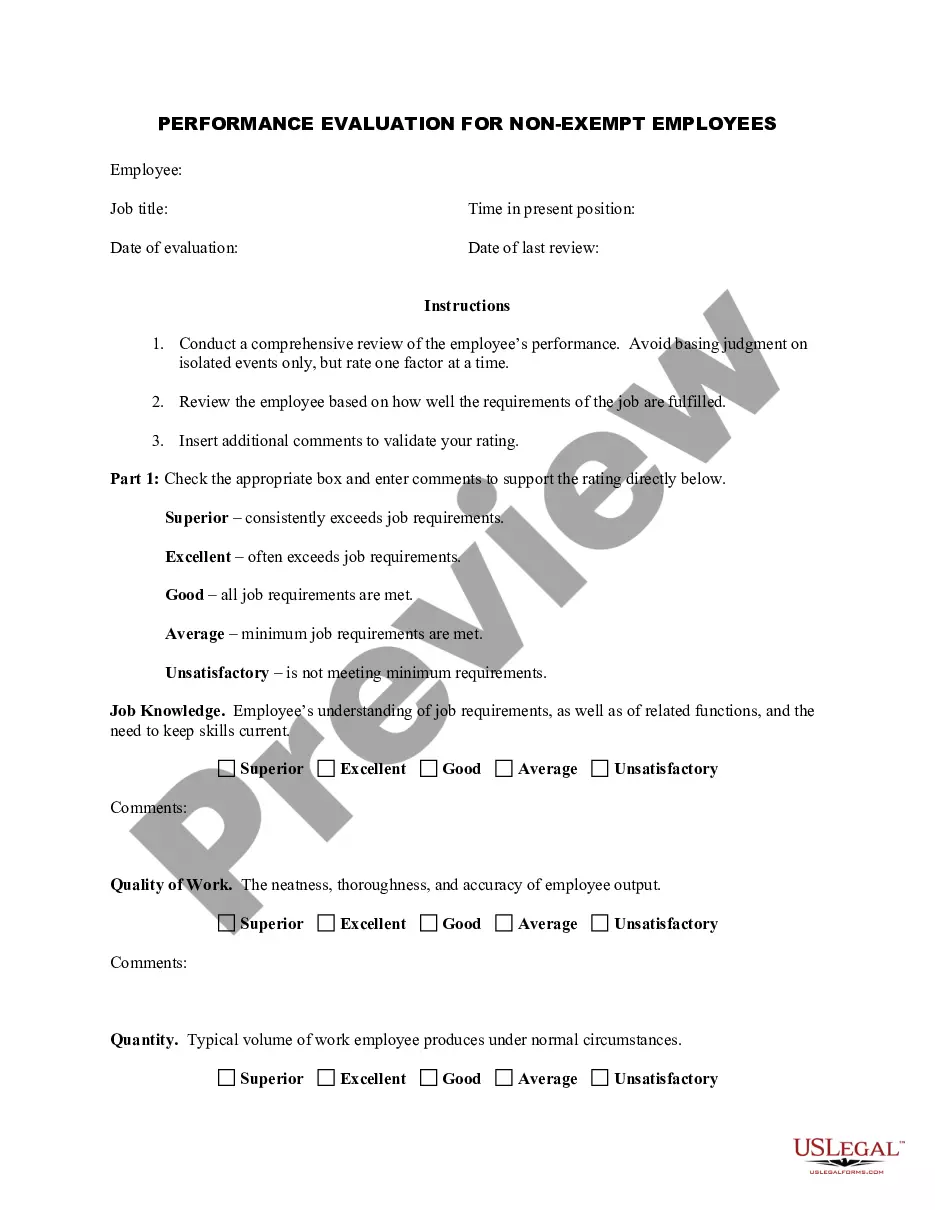
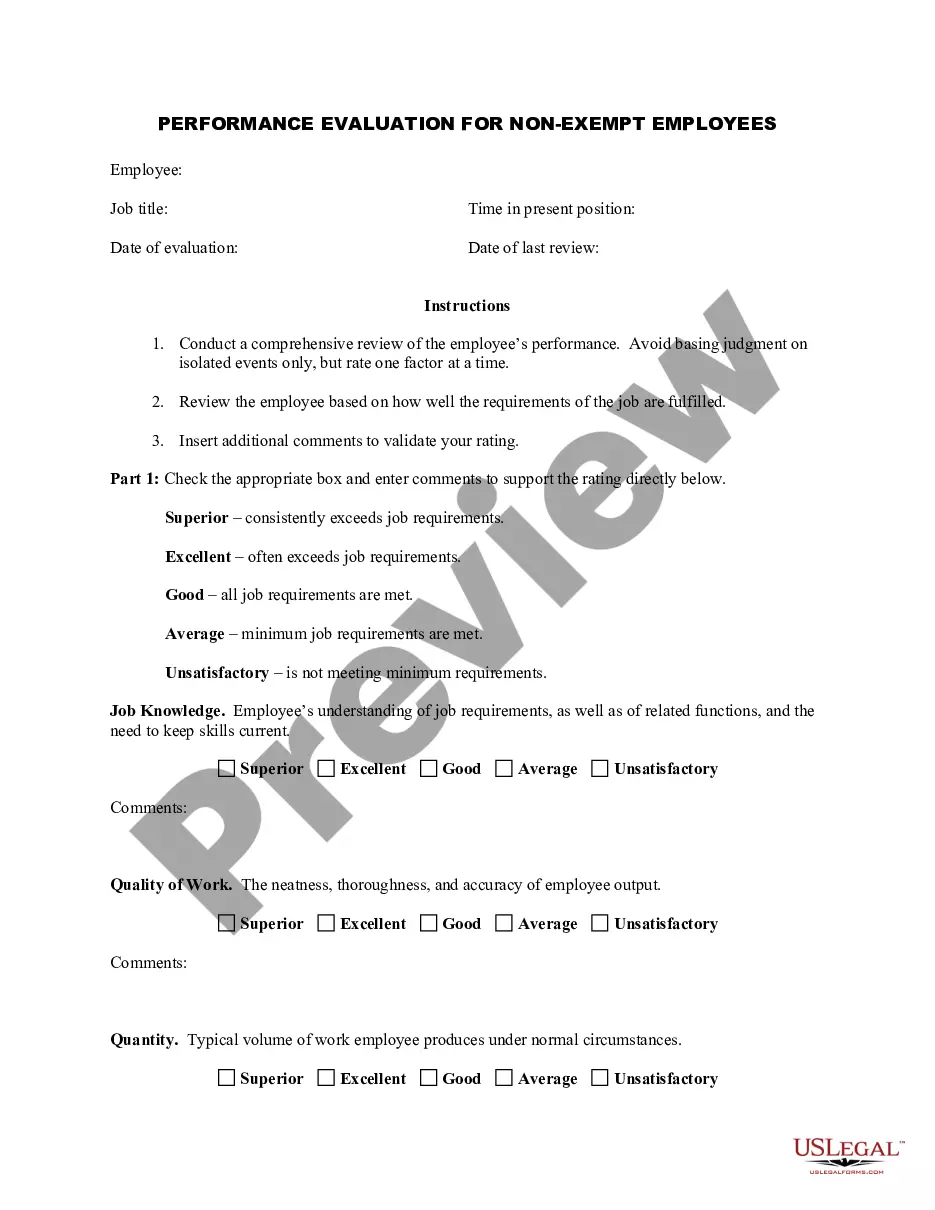
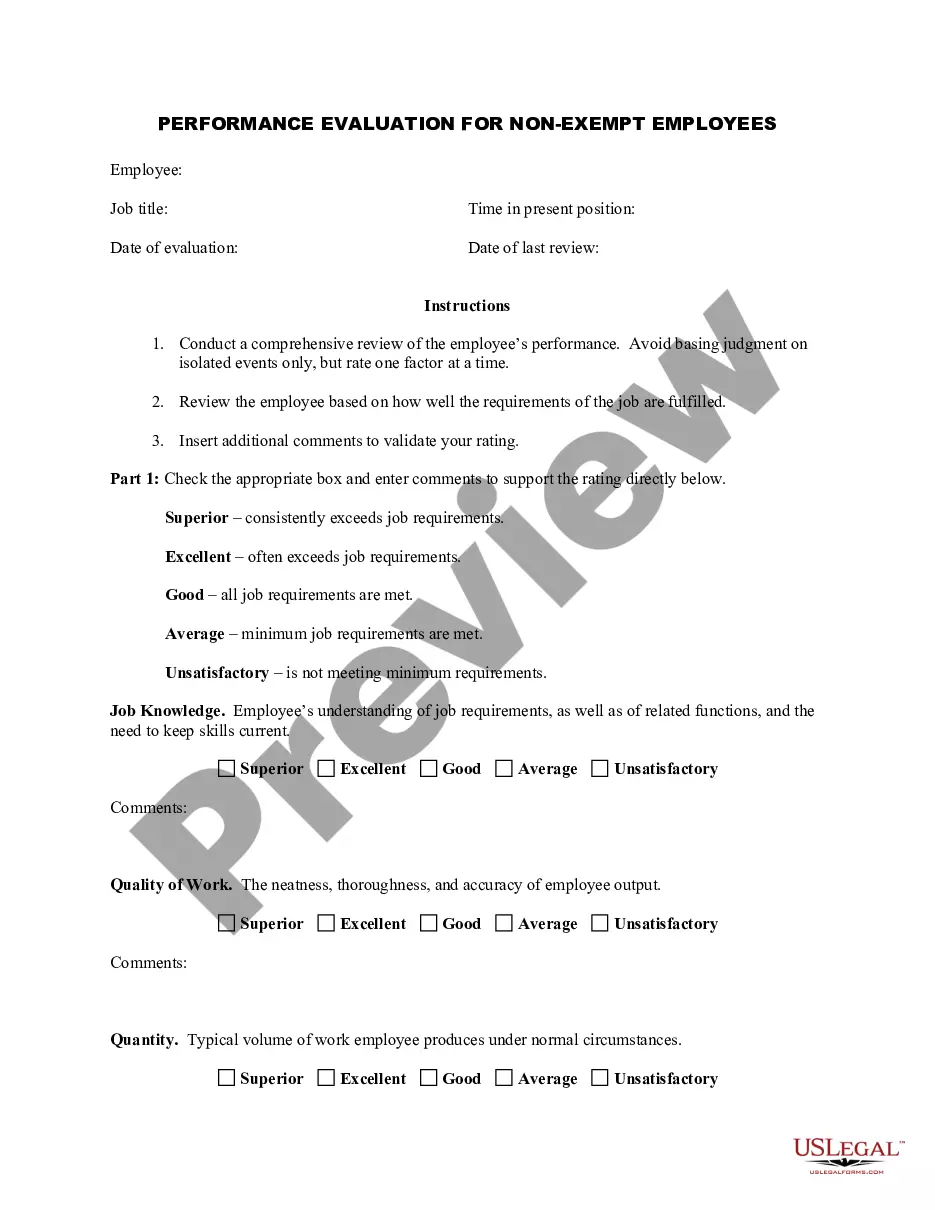
The Employee Evaluation Form for Sales Executive is a structured document used to assess the performance of a sales executive in an organization. It facilitates a comprehensive review based on various criteria relevant to job performance. This form is specifically tailored to evaluate the effectiveness of non-exempt sales employees, distinguishing it from more general employee performance reviews.
Form components explained
- Employee job title and identification details.
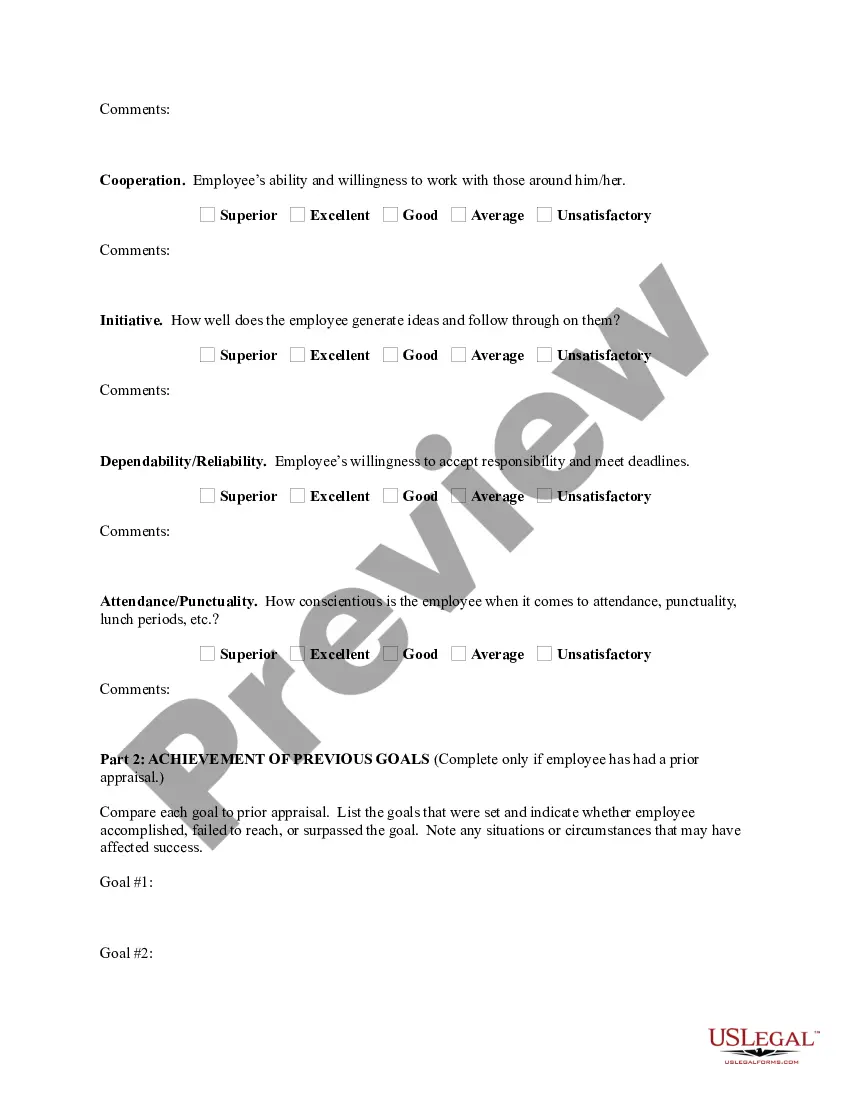
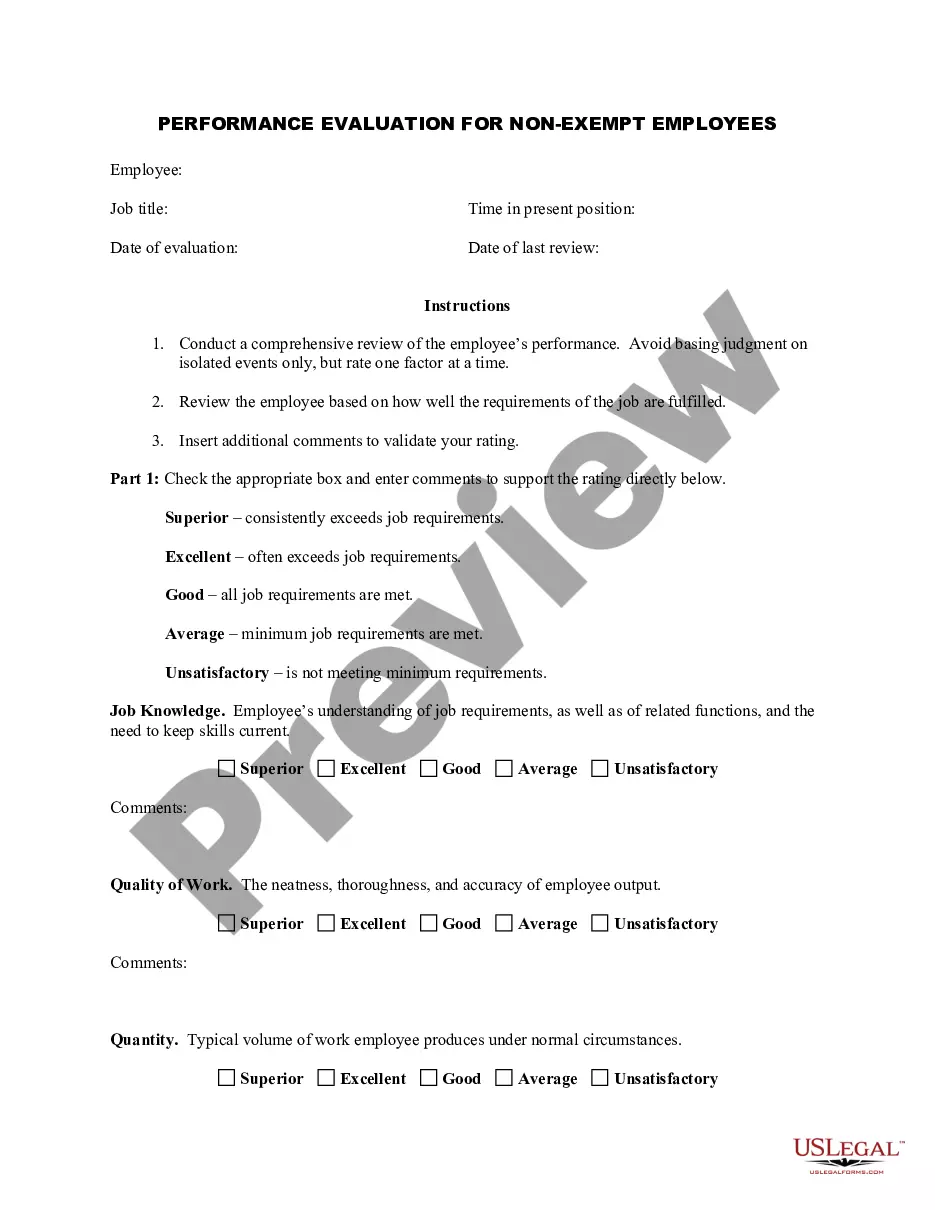
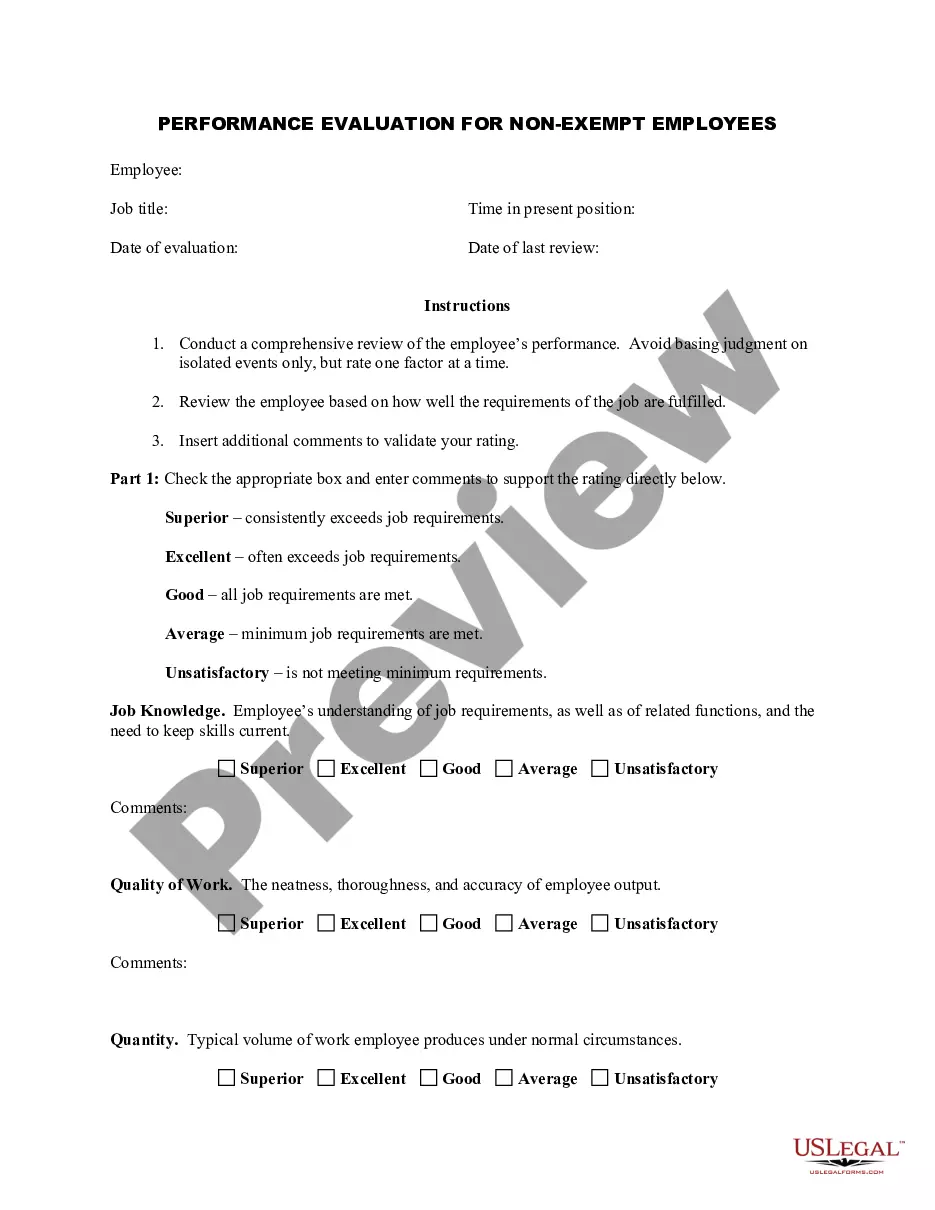
- Performance metrics including job knowledge, quality of work, and quantity of output.
- Rating scale for various performance factors (superior to unsatisfactory).
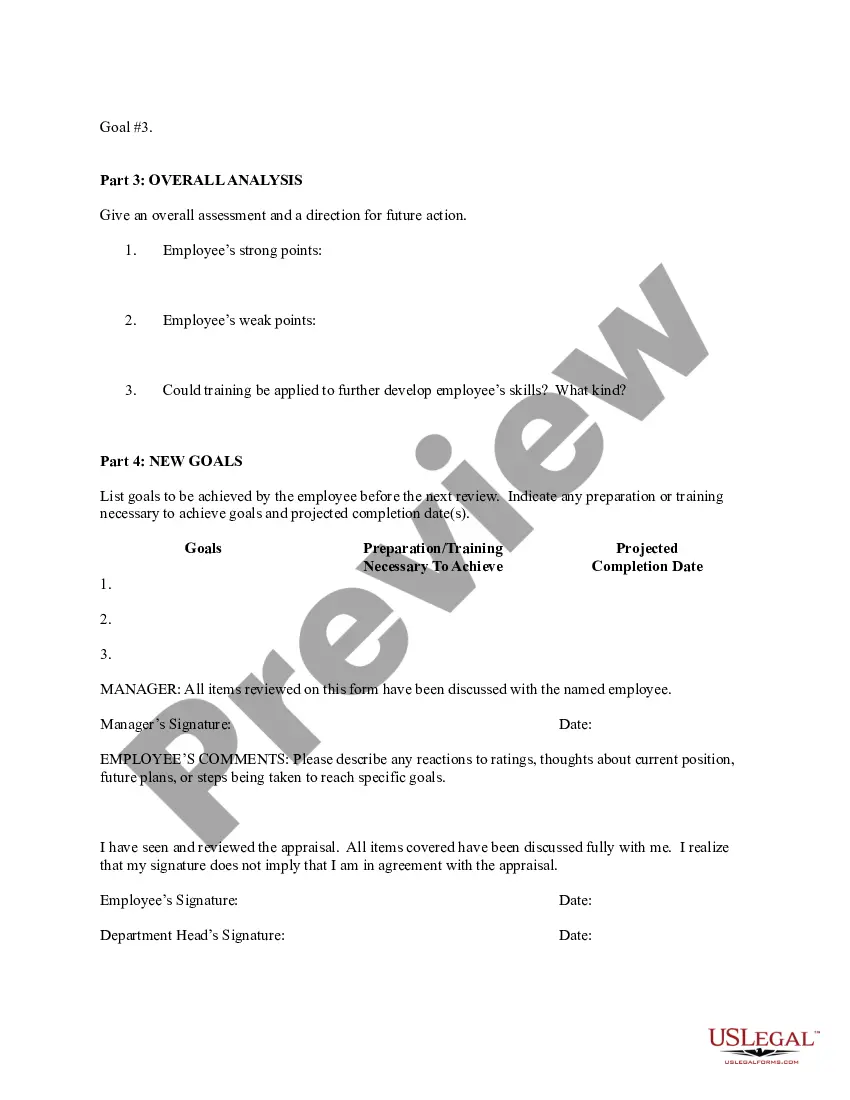
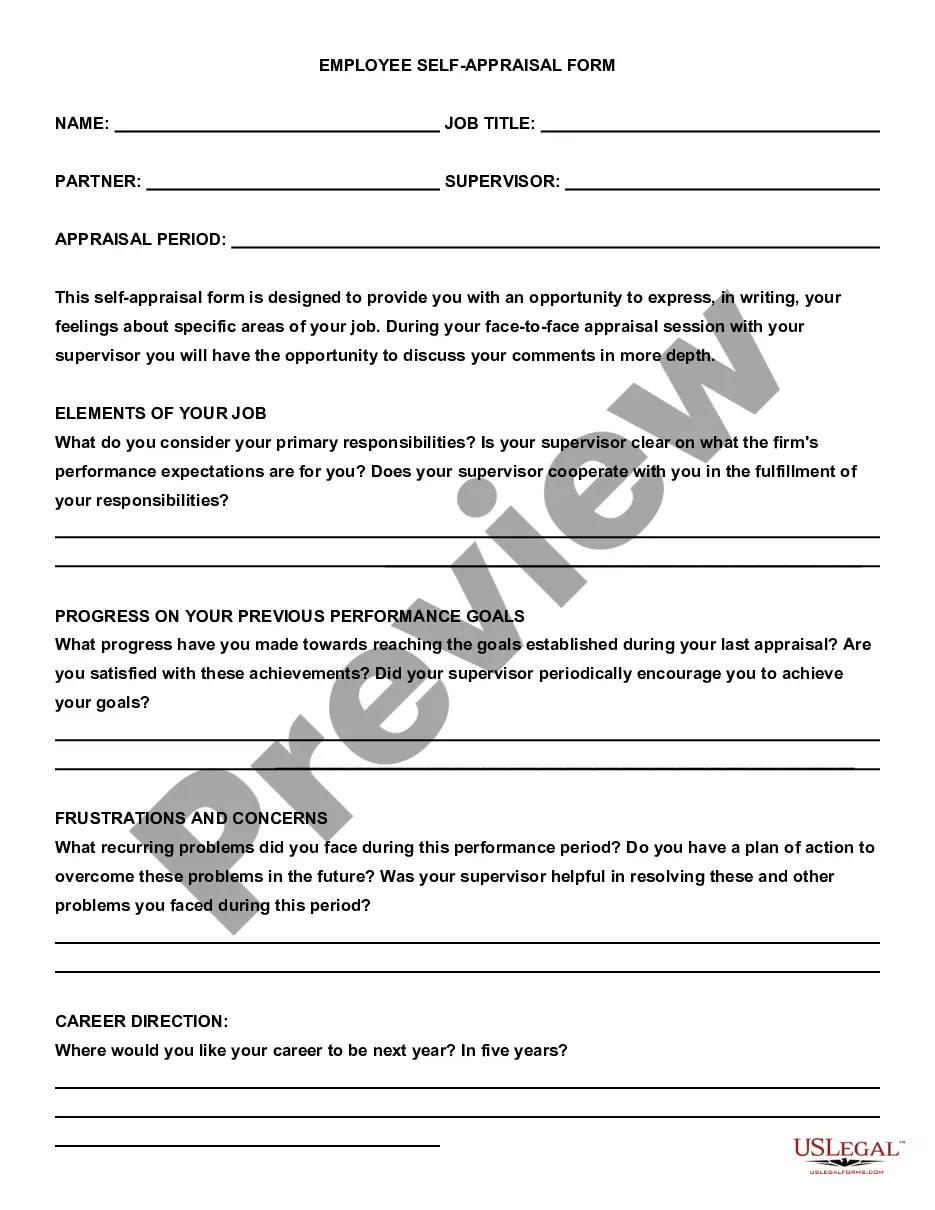
- Sections for comments and feedback from both the manager and the employee.
- Goals from the previous evaluation and new goals for the upcoming review period.
When to use this document
This form should be used during periodic performance reviews of sales executives, typically conducted annually or semi-annually. It is particularly useful when a company wants to formally document an employee's progress, provide constructive feedback, and set new goals. It can also be beneficial in planning future training and development initiatives.
Who this form is for
This form is intended for:
- Managers and supervisors responsible for evaluating the performance of their sales team.
- Human Resources professionals involved in workplace evaluations and performance management.
- Sales executives themselves, for self-assessment or during discussions with their managers.
Steps to complete this form
Follow these steps to accurately fill out the Employee Evaluation Form:
- Begin by entering the employeeâs name, job title, and the date of the evaluation.
- Rate the employee's performance in various categories using the scale provided, and add comments for context.
- Document any goals set during the prior evaluation and assess if they were met, exceeded, or not achieved.
- Discuss the evaluation with the employee, allowing them to provide feedback and comments.
- Finalize the evaluation with signatures from both the manager and the employee to acknowledge understanding.
Notarization guidance
In most cases, this form does not require notarization. However, some jurisdictions or signing circumstances might. US Legal Forms offers online notarization powered by Notarize, accessible 24/7 for a quick, remote process.
Get your form ready online
Our built-in tools help you complete, sign, share, and store your documents in one place.
Make edits, fill in missing information, and update formatting in US Legal Forms—just like you would in MS Word.
Download a copy, print it, send it by email, or mail it via USPS—whatever works best for your next step.
Sign and collect signatures with our SignNow integration. Send to multiple recipients, set reminders, and more. Go Premium to unlock E-Sign.
If this form requires notarization, complete it online through a secure video call—no need to meet a notary in person or wait for an appointment.
We protect your documents and personal data by following strict security and privacy standards.

Make edits, fill in missing information, and update formatting in US Legal Forms—just like you would in MS Word.

Download a copy, print it, send it by email, or mail it via USPS—whatever works best for your next step.

Sign and collect signatures with our SignNow integration. Send to multiple recipients, set reminders, and more. Go Premium to unlock E-Sign.

If this form requires notarization, complete it online through a secure video call—no need to meet a notary in person or wait for an appointment.

We protect your documents and personal data by following strict security and privacy standards.
Mistakes to watch out for
- Inconsistent ratings across different performance factors.
- Failing to provide specific examples in comments to support ratings.
- Not setting clear, measurable goals for the next evaluation period.
- Overlooking feedback from the employee or not discussing performance collaboratively.
Why complete this form online
- Convenience of easy access and editing from any device.
- Allows for faster completion and less paper waste.
- Provides a structured format that helps ensure all necessary elements are included.
- Facilitates secure storage and retrieval for future reference.
Summary of main points
- The Employee Evaluation Form for Sales Executive is crucial for structured performance assessments.
- It helps set clear expectations and document employee achievements over time.
- The form can be tailored for use across multiple states, enhancing its versatility.
Looking for another form?



Form popularity
FAQ
Keep the Feedback Loop Open. An effective salesperson performance review should not contain any surprises. Ask for a Self-Evaluation for the Sales Representative. Review the Goals and Results. Discuss Barriers to Success. Develop a Plan for the Next Year. Don't Forget to Provide Positive Feedback.
Be proud. One major goal of the self-evaluation is to highlight your accomplishments and recollect milestones in your professional development. Be honest and critical. Continuously strive for growth. Track your accomplishments. Be professional.
Make it easy to use. Ensure that the information your evaluation form seeks is clear and concise. Determine the focus of the form. There needs to be a clear purpose. Establish a clearly defined rating scale.
1 Know how the self-evaluation is going to be used. 2 Write out a list of your accomplishments. 3 Gather analytics if you can. 4 Write out a list of your struggles. 5 Narrow your accomplishments list down. 6 Don't forget to align your review with your manager's or team's goals.
Employee evaluation forms are used to formally review and document an employee's performance and get their acknowledgment that the evaluation took place. This is important in establishing a paper trail to support important HR decisions.
Get the stats. You can't simply measure sales wins. Provide regular reports. Don't provide sales data one month, and then let it slide for several months. Make sure they understand the stats. Use the stats to develop training. Set goals. Fine tune your compensation program. Provide ongoing feedback.
Communication. Collaboration and teamwork. Problem-solving. Quality and accuracy of work. Attendance, punctuality and reliability. The ability to accomplish goals and meet deadlines.
Develop an evaluation form. Identify performance measures. Set guidelines for feedback. Create disciplinary and termination procedures. Set an evaluation schedule.
First things first: Identify the need and purpose. Determine who will rate and how often it will be done. Evaluate job-related SMART objectives. Include your organization's core values. Have a follow-up section. Discuss developmental goals and needs. Have clear evaluation parameters. Additional pointers.