Virginia Health Care Directive - Advance Medical Directive - includes Living Will and Health Care Decisions
Overview of this form
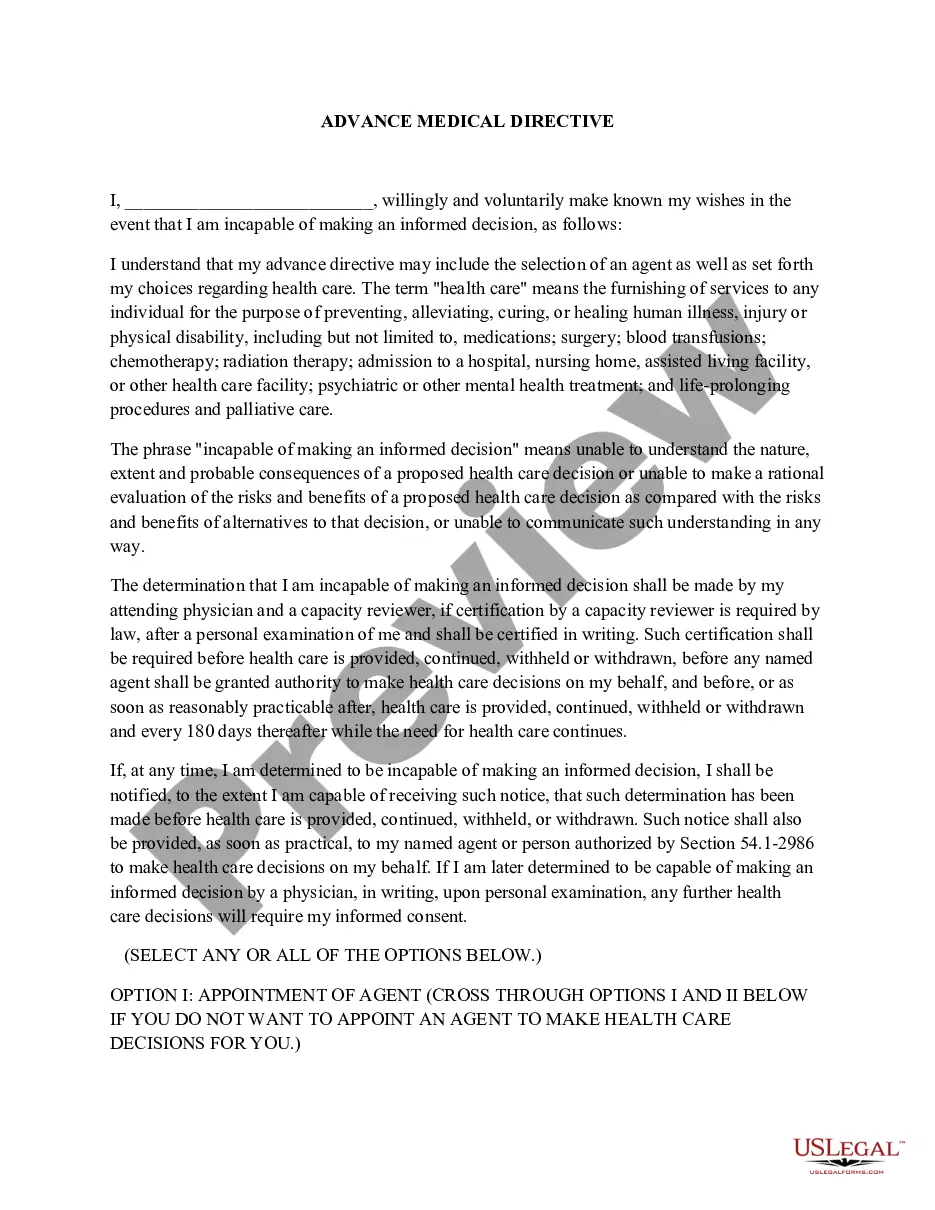
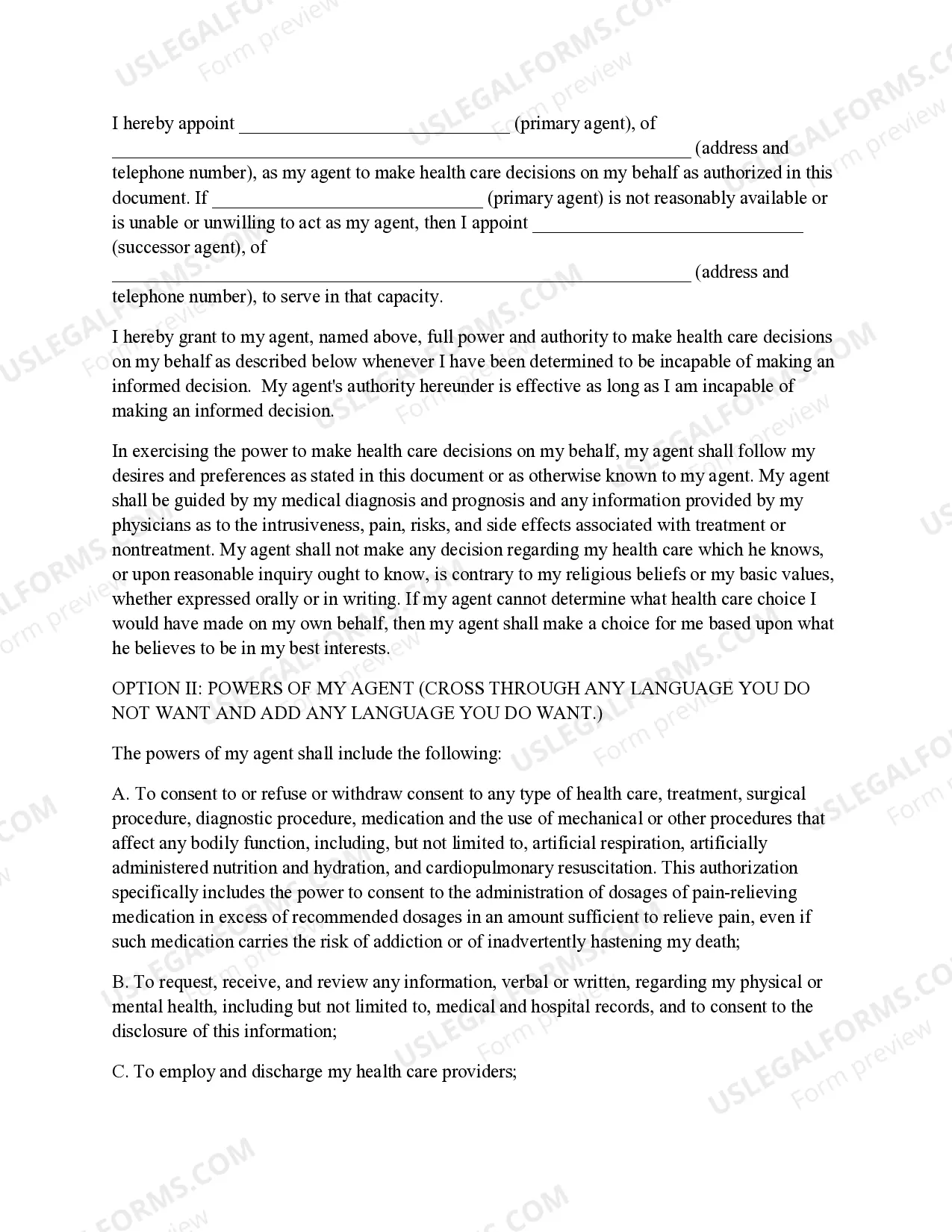
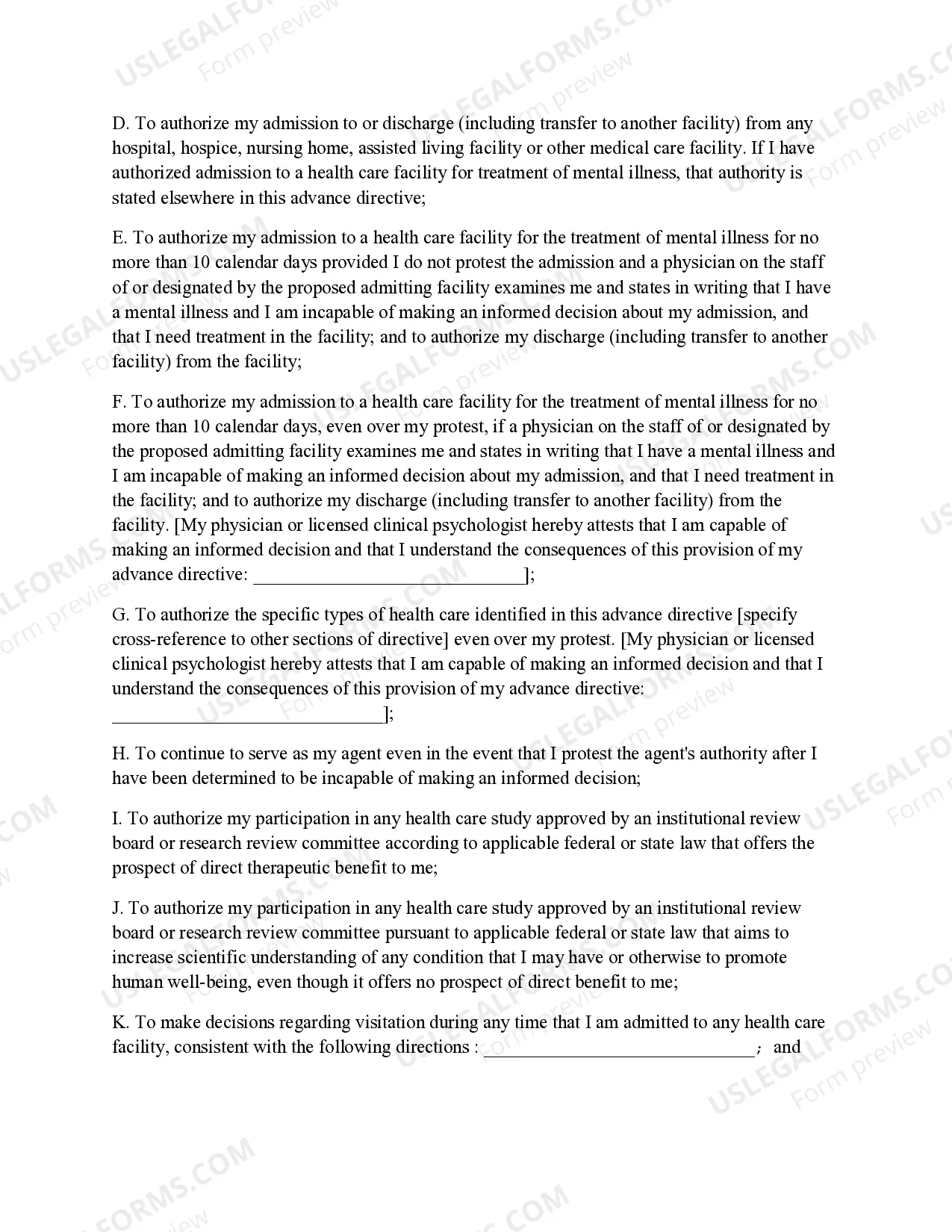
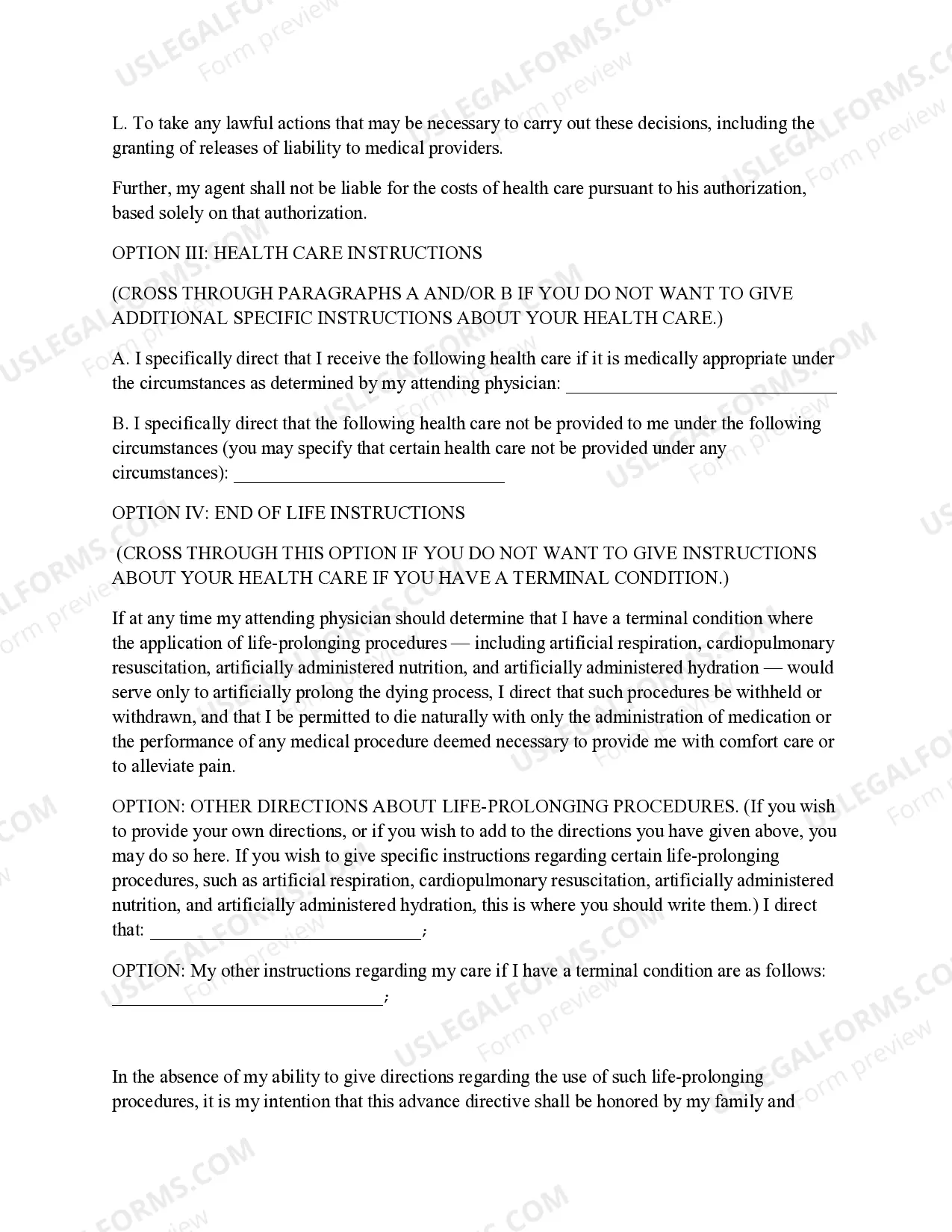
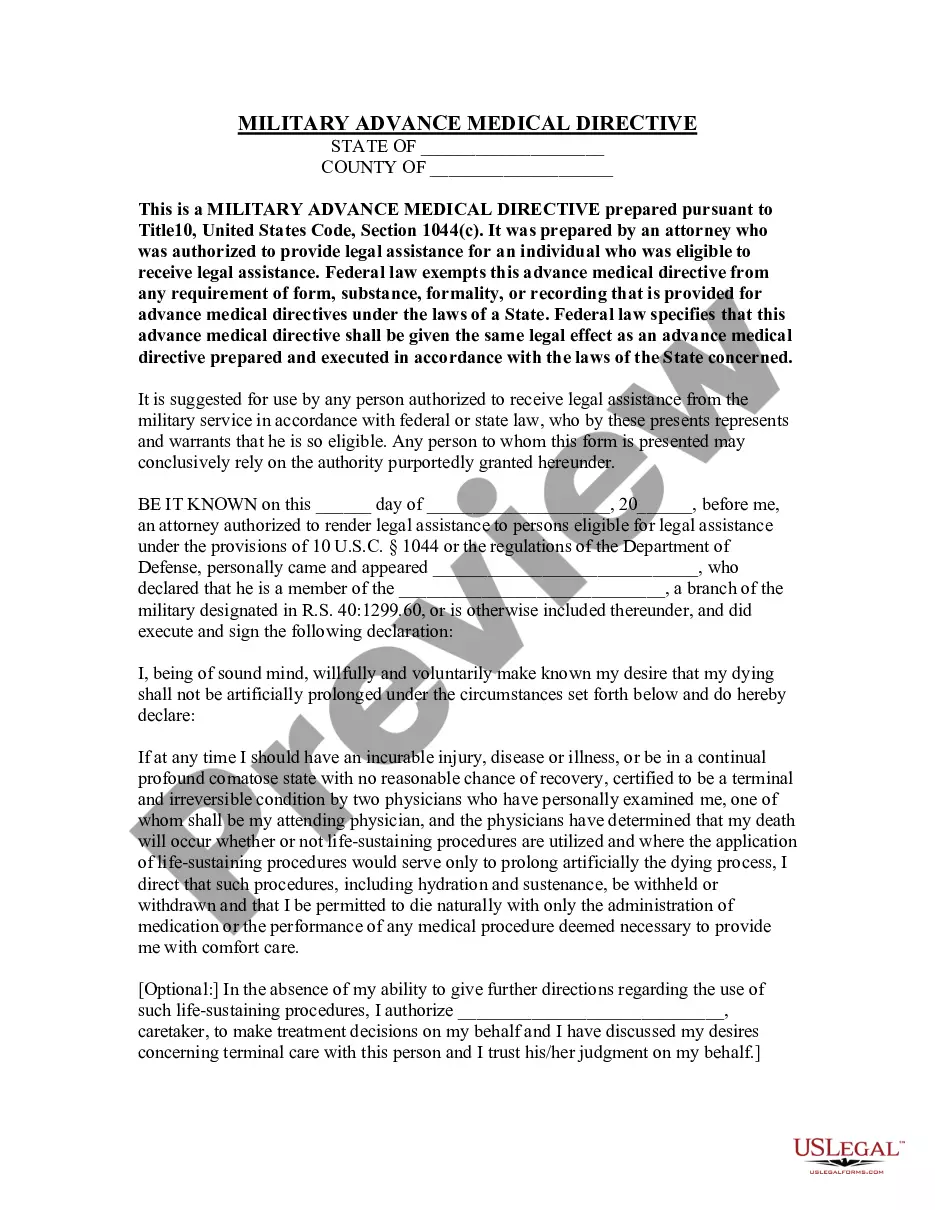
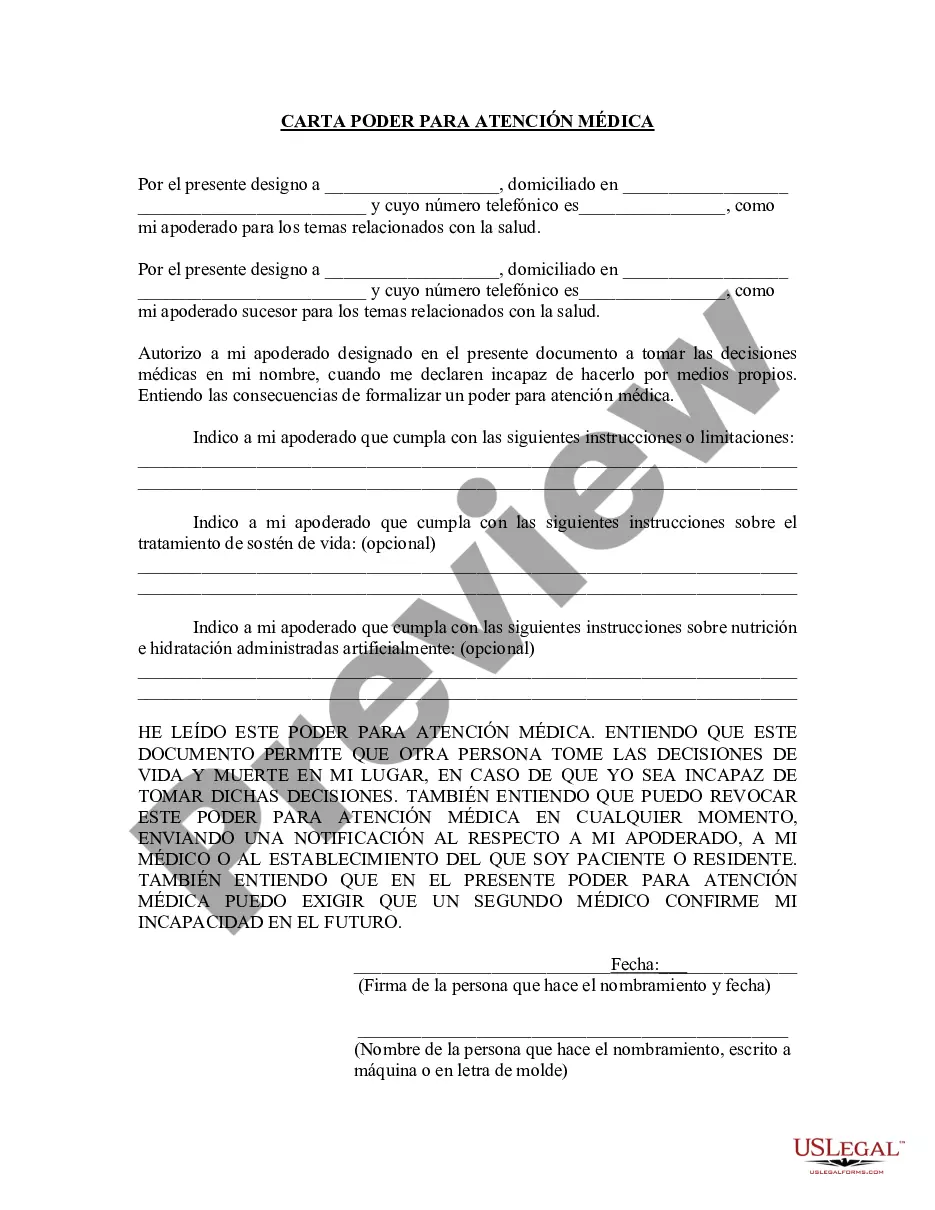
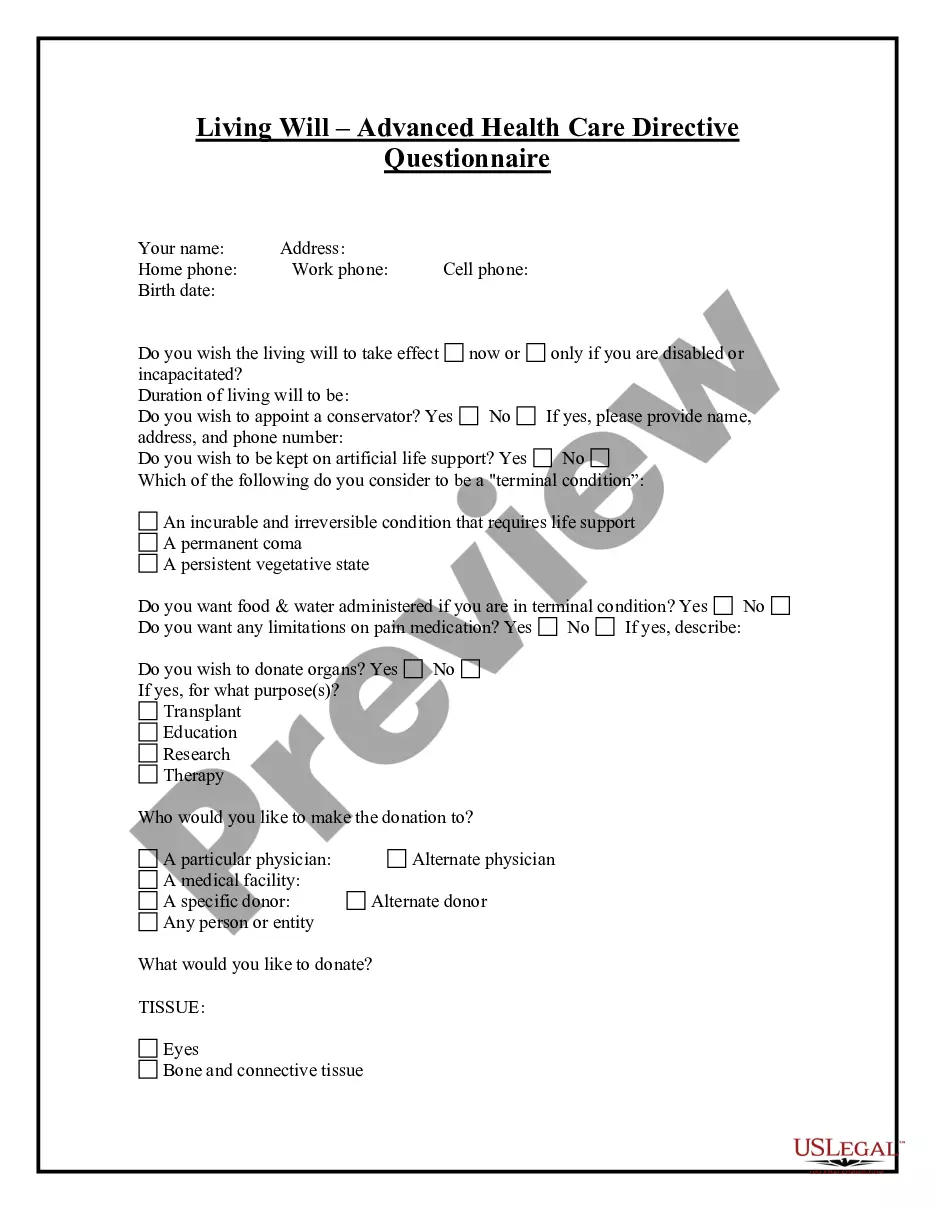
The Health Care Directive - Advance Medical Directive is a legal document that allows individuals to communicate their medical treatment preferences in situations where they may not be able to make decisions for themselves. This directive includes provisions for appointing a health care agent to make decisions on one's behalf and provides guidance on end-of-life care, living wills, and anatomical donations. It ensures that your wishes regarding life-sustaining treatments are respected, differing from other forms such as general powers of attorney by focusing specifically on health care decisions.
Form components explained
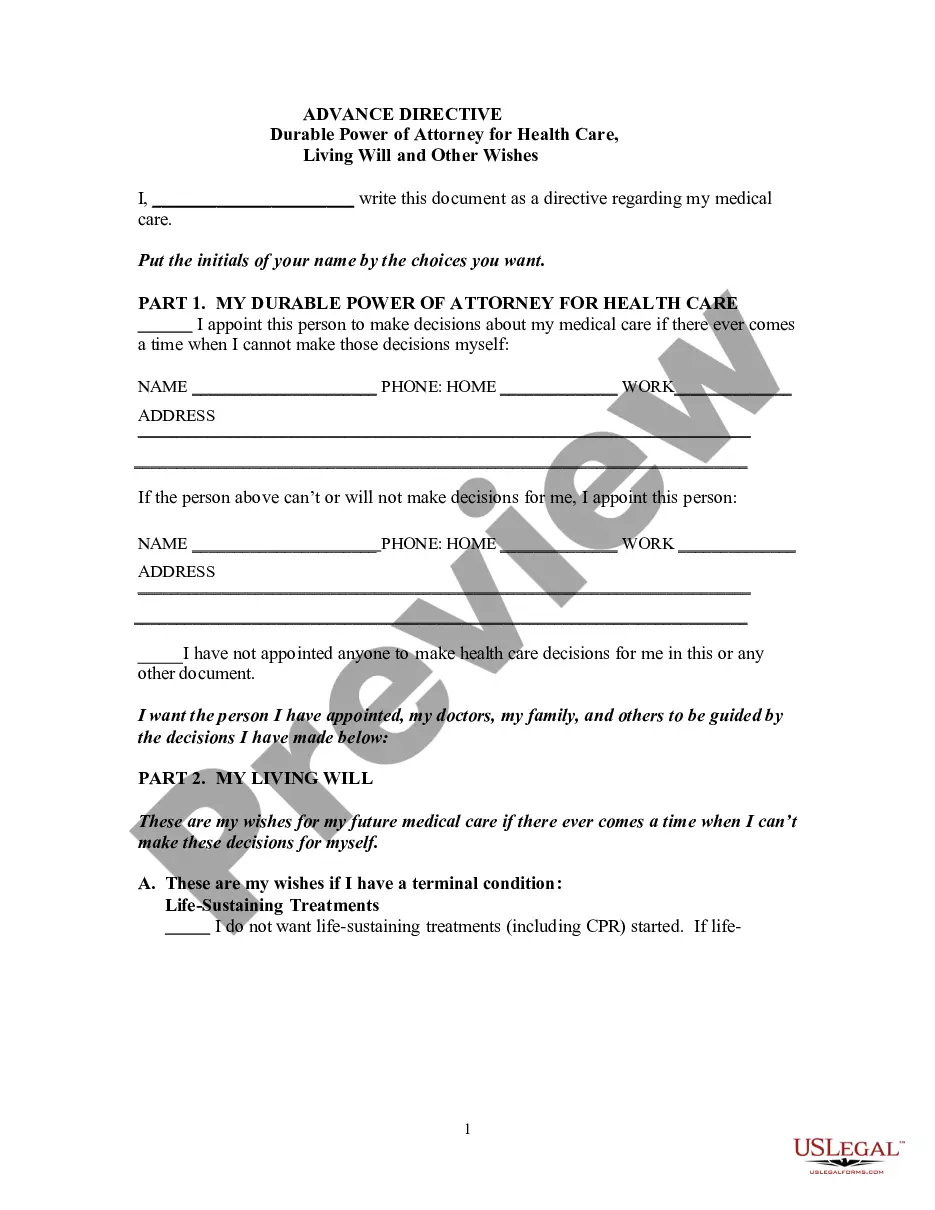
- Designate a primary and a successor health care agent to make decisions on your behalf.
- Specify the types of medical treatments you wish to receive or refuse.
- Include instructions for end-of-life care and life-prolonging procedures.
- Provide for the option of anatomical gifts after your death.
- Affirm the right to revoke the directive at any time.

When to use this document
This form is useful when individuals want to ensure their health care wishes are known and respected in critical situations. You may need this directive if you are undergoing major surgery, have a serious illness, are planning for advanced age, or want to make clear your wishes regarding life-sustaining treatments in case of a medical emergency or incapacity.
Who this form is for
- Any adult wishing to plan for their medical treatment preferences.
- Individuals with chronic health conditions or those facing significant medical procedures.
- Individuals interested in ensuring their end-of-life wishes are communicated clearly.
How to prepare this document
- Fill in your name and contact information at the top of the document.
- Designate a primary health care agent and a backup agent in the appropriate sections.
- Specify your wishes regarding the types of medical treatments you want or do not want.
- Include any instructions for life-prolonging procedures and your preferences for anatomical gifts.
- Sign and date the form in the presence of witnesses to validate the directive.
Does this form need to be notarized?
In most cases, this form does not require notarization. However, some jurisdictions or signing circumstances might. US Legal Forms offers online notarization powered by Notarize, accessible 24/7 for a quick, remote process.
Get your form ready online
Our built-in tools help you complete, sign, share, and store your documents in one place.
Make edits, fill in missing information, and update formatting in US Legal Forms—just like you would in MS Word.
Download a copy, print it, send it by email, or mail it via USPS—whatever works best for your next step.
Sign and collect signatures with our SignNow integration. Send to multiple recipients, set reminders, and more. Go Premium to unlock E-Sign.
If this form requires notarization, complete it online through a secure video call—no need to meet a notary in person or wait for an appointment.
We protect your documents and personal data by following strict security and privacy standards.
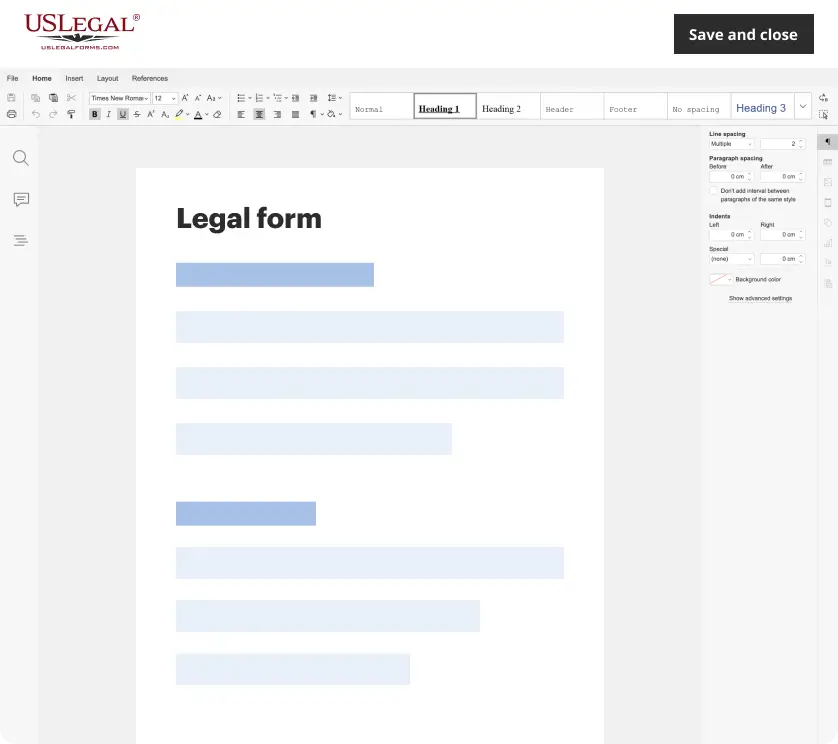
Make edits, fill in missing information, and update formatting in US Legal Forms—just like you would in MS Word.
Download a copy, print it, send it by email, or mail it via USPS—whatever works best for your next step.
Sign and collect signatures with our SignNow integration. Send to multiple recipients, set reminders, and more. Go Premium to unlock E-Sign.

If this form requires notarization, complete it online through a secure video call—no need to meet a notary in person or wait for an appointment.

We protect your documents and personal data by following strict security and privacy standards.
Common mistakes
- Failing to date or sign the document correctly can render it invalid.
- Not appointing a successor agent in case the primary agent is unavailable.
- Leaving sections blank or unclear, which can lead to ambiguity in medical care decisions.
Benefits of using this form online
- Convenient access to a legally compliant template, allowing you to fill it out from home.
- Edit and personalize the document to reflect your specific health care preferences.
- Quickly download and save your directive for both your records and to share with your appointed agents.
Legal use & context
- This document is recognized under Virginia law as a valid means to express healthcare preferences.
- The directive ensures that a person's medical and treatment decisions are respected even when they cannot communicate them.
- Failure to complete this form may result in medical decisions being made without the individual's explicit wishes being considered.
Summary of main points
- The Health Care Directive is crucial for ensuring your medical wishes are followed.
- It allows you to appoint a trusted person to make healthcare decisions on your behalf.
- Complete the form thoughtfully to avoid ambiguity or misunderstandings.
- Regularly review and update your directive as your health status or preferences change.
Looking for another form?
Form popularity
FAQ
A VA Form 10-0137 is used by the Veterans Health Administration (VHA), United States Department of Veterans Affairs. This form is known as a VA Advance Directive: Living Will and Durable Power of Attorney for Health Care.Before filling out this form, consult your medical professional and talk to your loved ones.
Living will. A living will is a written, legal document that spells out medical treatments you would and would not want to be used to keep you alive, as well as your preferences for other medical decisions, such as pain management or organ donation. In determining your wishes, think about your values.
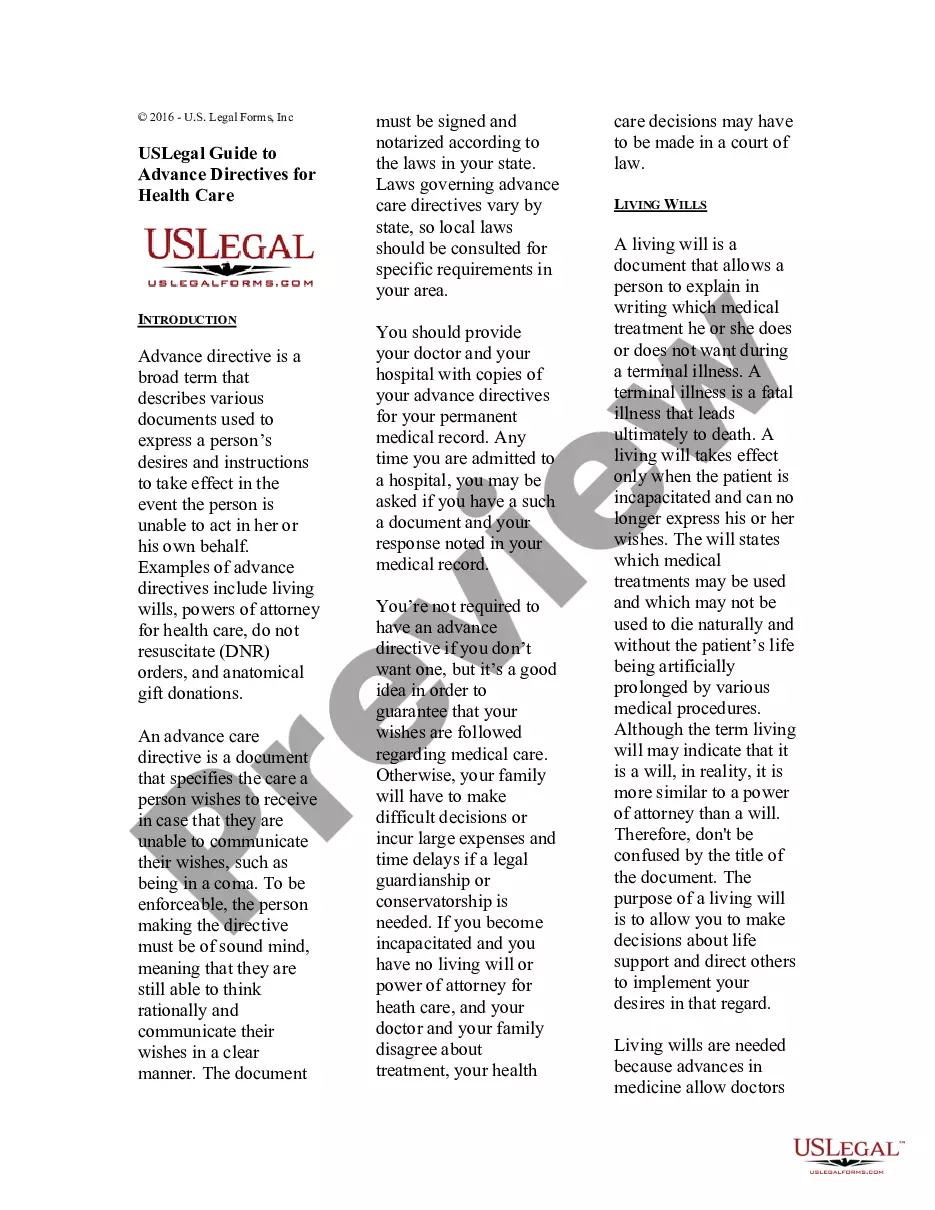
An advance healthcare directive, also known as living will, personal directive, advance directive, medical directive or advance decision, is a legal document in which a person specifies what actions should be taken for their health if they are no longer able to make decisions for themselves because of illness or
Advance directives are oral and written instructions about future medical care should your parent become unable to make decisions (for example, unconscious or too ill to communicate).A living will is one type of advance directive. It takes effect when the patient is terminally ill.
An advance directive is a set of instructions someone prepares in advance of ill health that determines his healthcare wishes. A living will is one type of advance directive that becomes effective when a person is terminally ill.
An advance health care directive or AHCD (otherwise known as a living will, personal directive, or medical directive) is a document that instructs others about your medical care should you be unable to make decisions on your own.
Advance directives generally fall into three categories: living will, power of attorney and health care proxy. LIVING WILL: This is a written document that specifies what types of medical treatment are desired.
There are two main elements in an advance directivea living will and a durable power of attorney for health care. There are also other documents that can supplement your advance directive. You can choose which documents to create, depending on how you want decisions to be made.
Advance directives are oral and written instructions about future medical care should your parent become unable to make decisions (for example, unconscious or too ill to communicate).A living will is one type of advance directive. It takes effect when the patient is terminally ill.