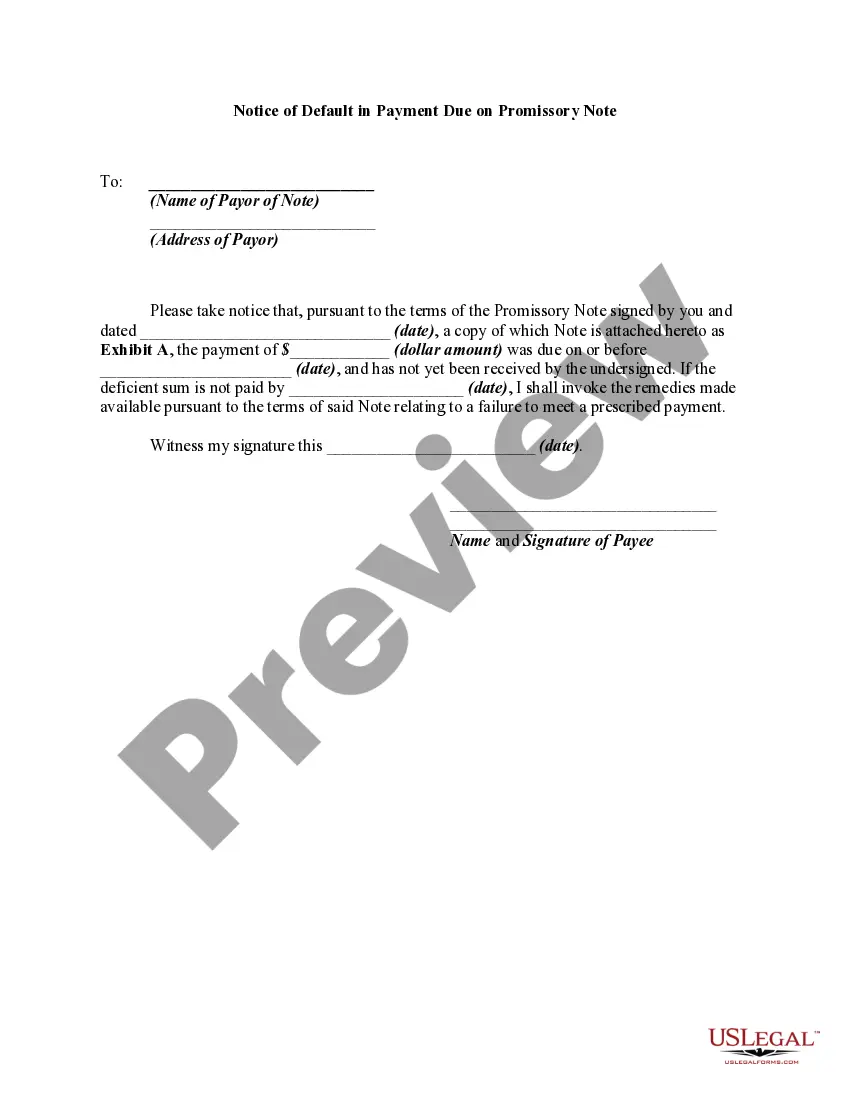
Utah Small Claims Ex Parte Motion for Alternative Service
Overview of this form
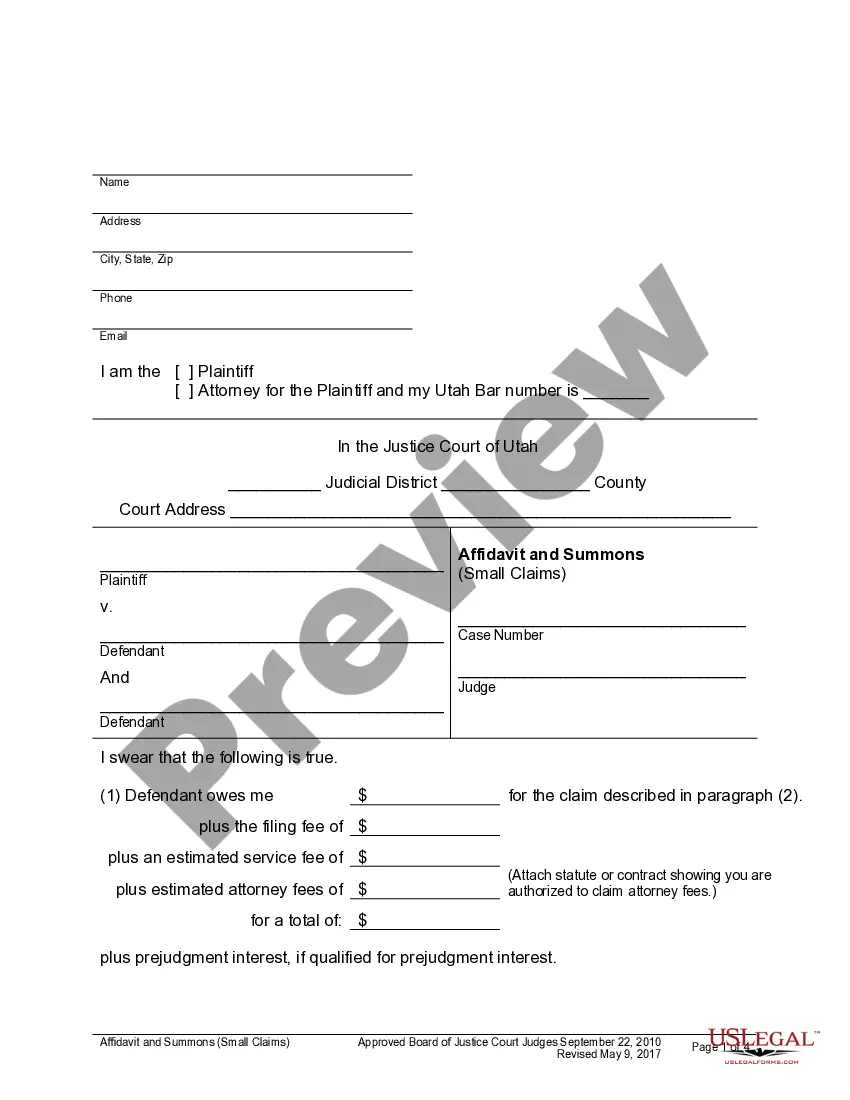
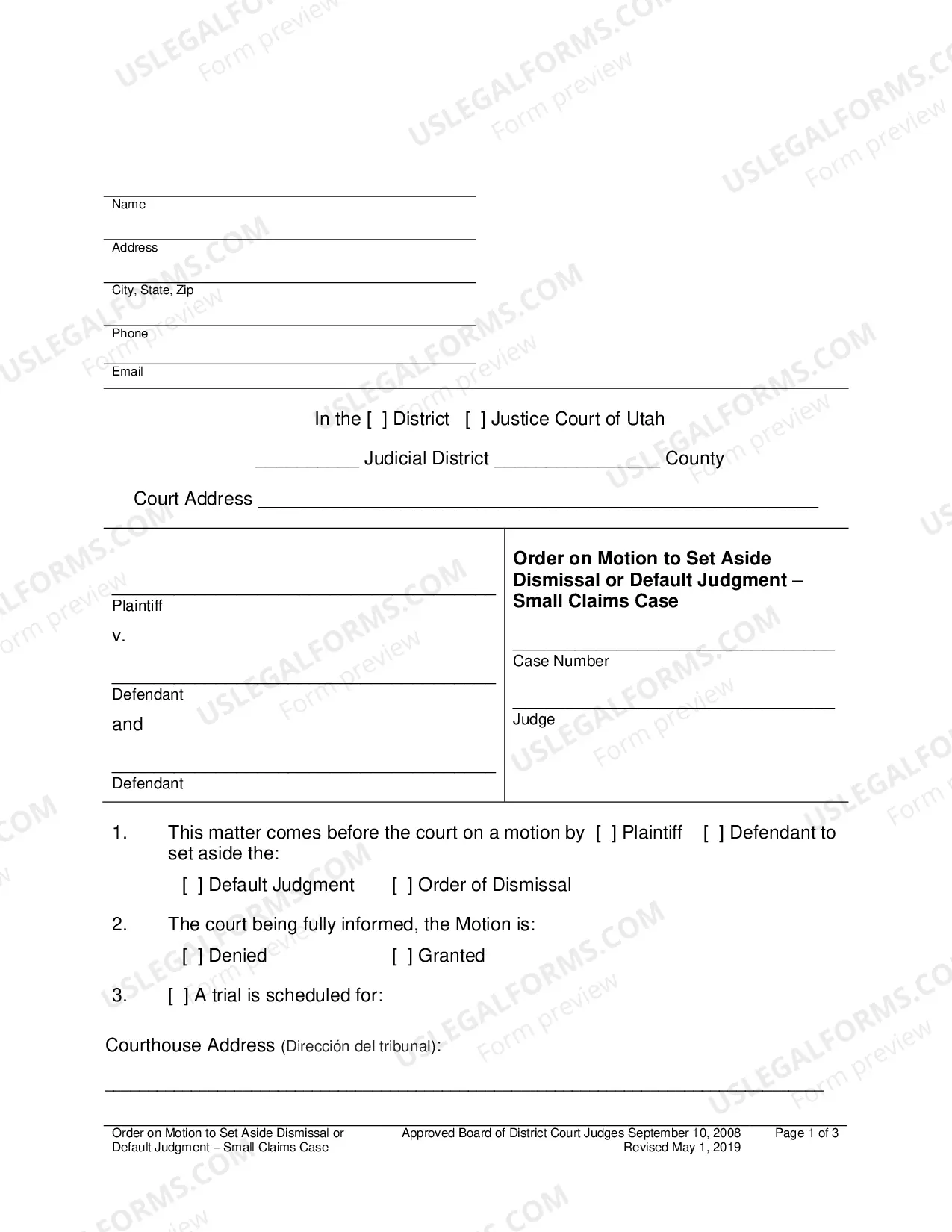
The Small Claims Ex Parte Motion for Alternative Service is a legal document used when a plaintiff (the person filing a claim) needs to serve legal papers to a defendant (the person being sued) but is unable to do so through traditional means. This form allows the plaintiff to request alternative methods of service, ensuring that the defendant receives notice of the claim they are facing, even if they are evading traditional methods of delivery. This form is specifically designed for small claims of $11,000 or less and differs from standard service forms by accommodating situations where the defendant is hard to reach.
Key parts of this document
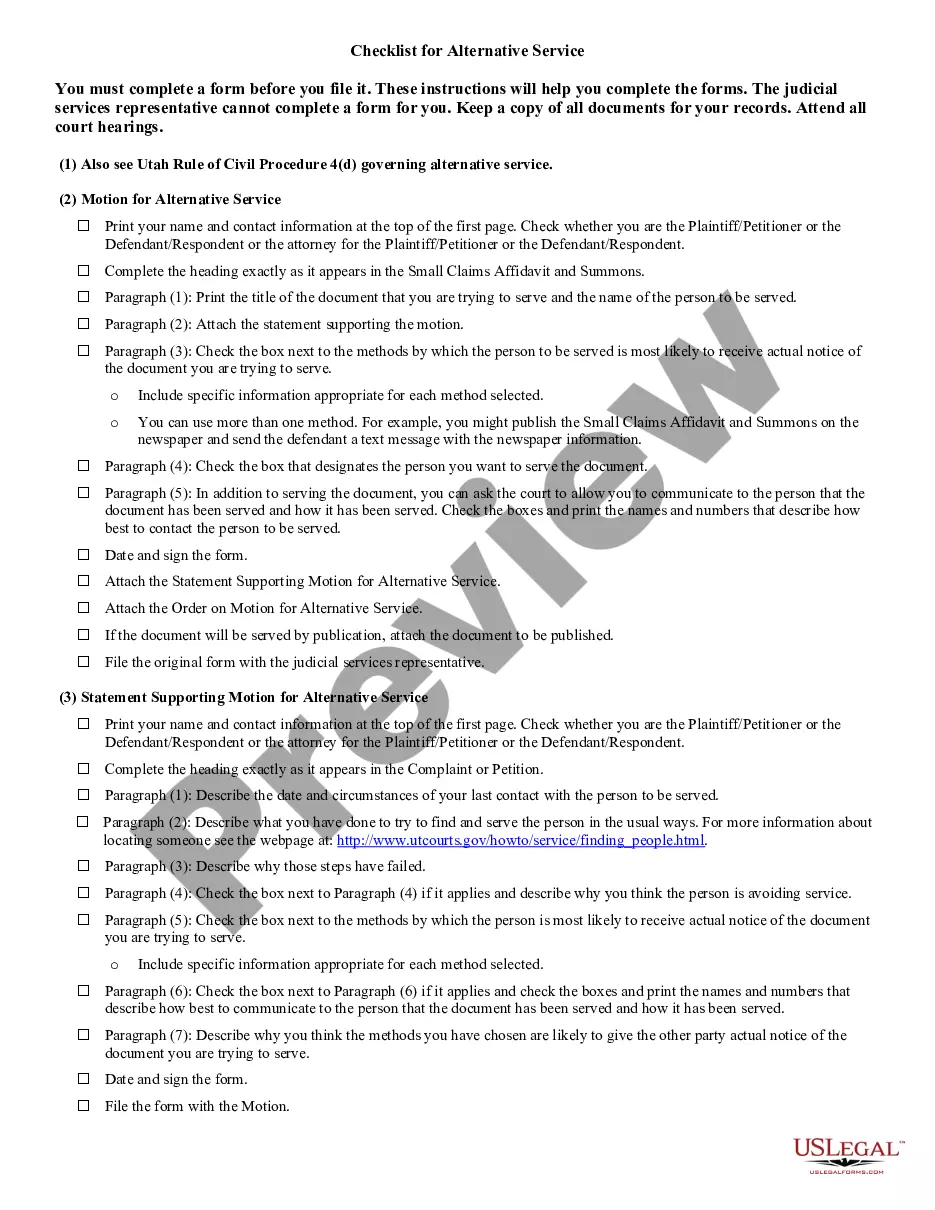
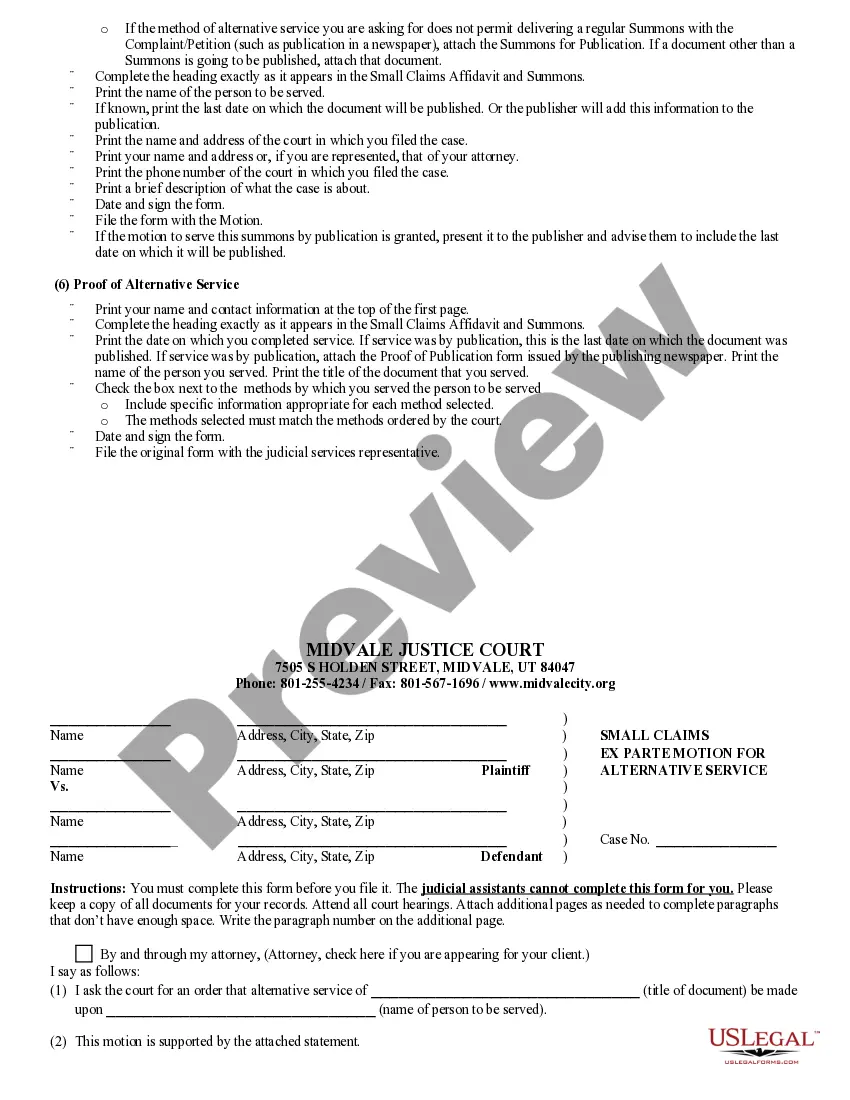
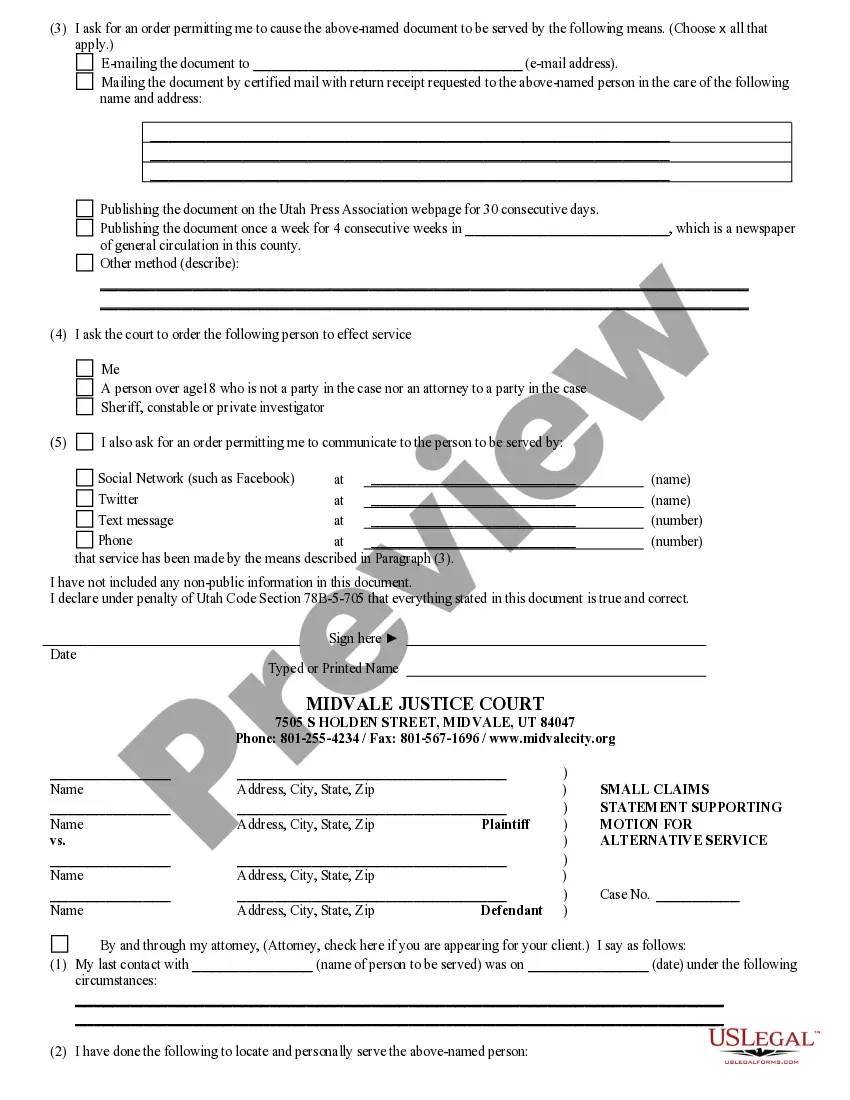
- Motion for Alternative Service: A request detailing the methods proposed for serving the defendant.
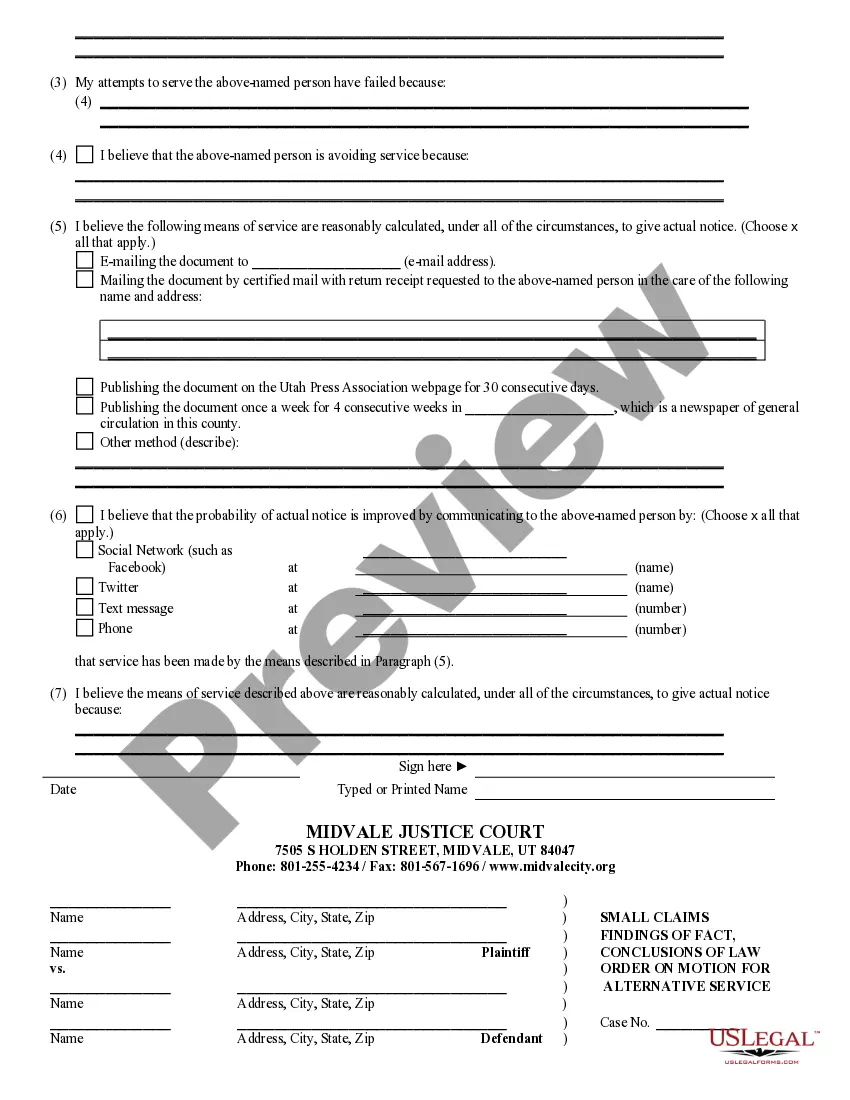
- Statement Supporting Motion: An explanation of the efforts made to locate and serve the defendant.
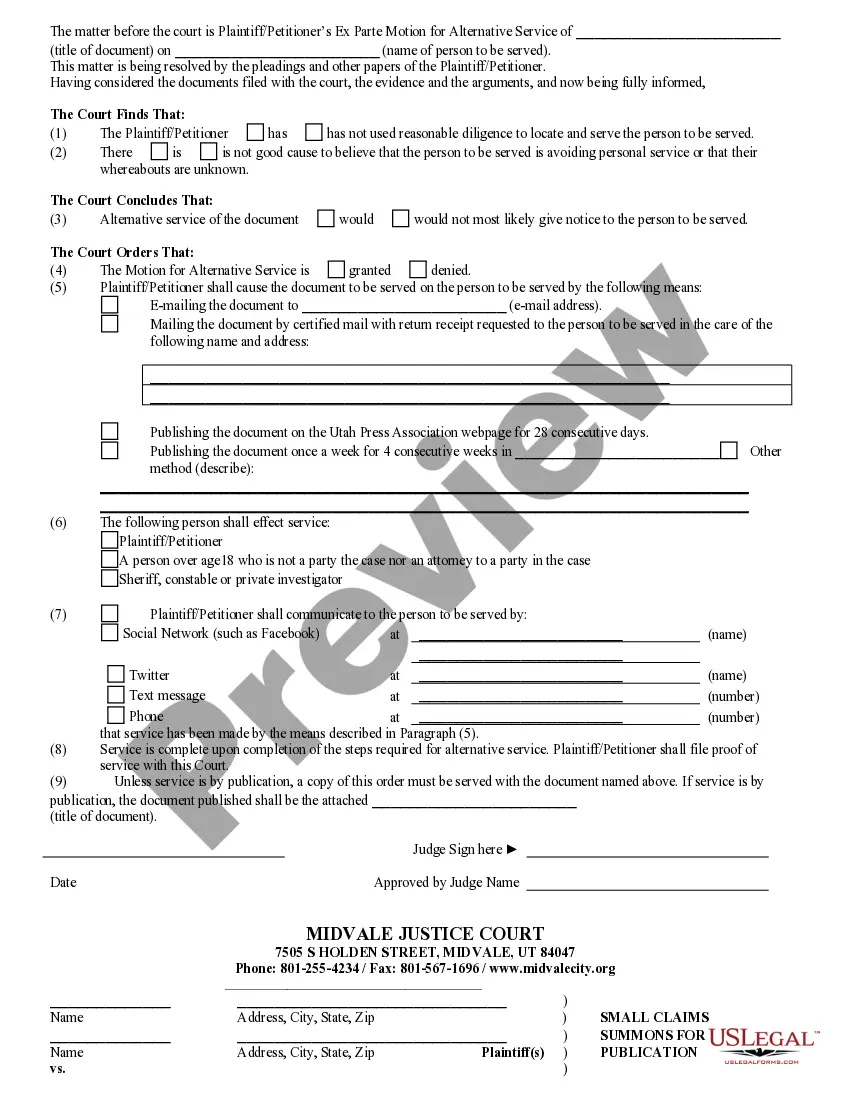
- Order on Motion: The court's decision regarding the motion for alternative service.
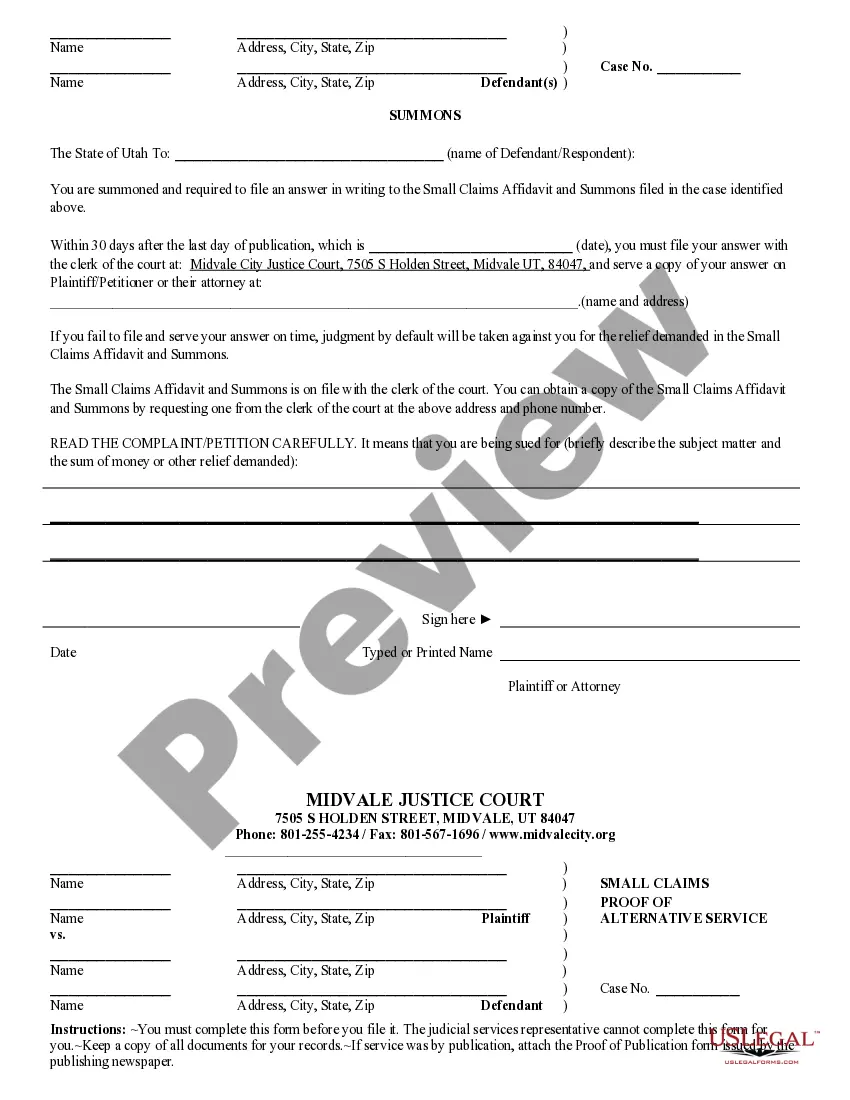
- Summons for Publication: Required if the service is to be done publicly, such as in a newspaper.
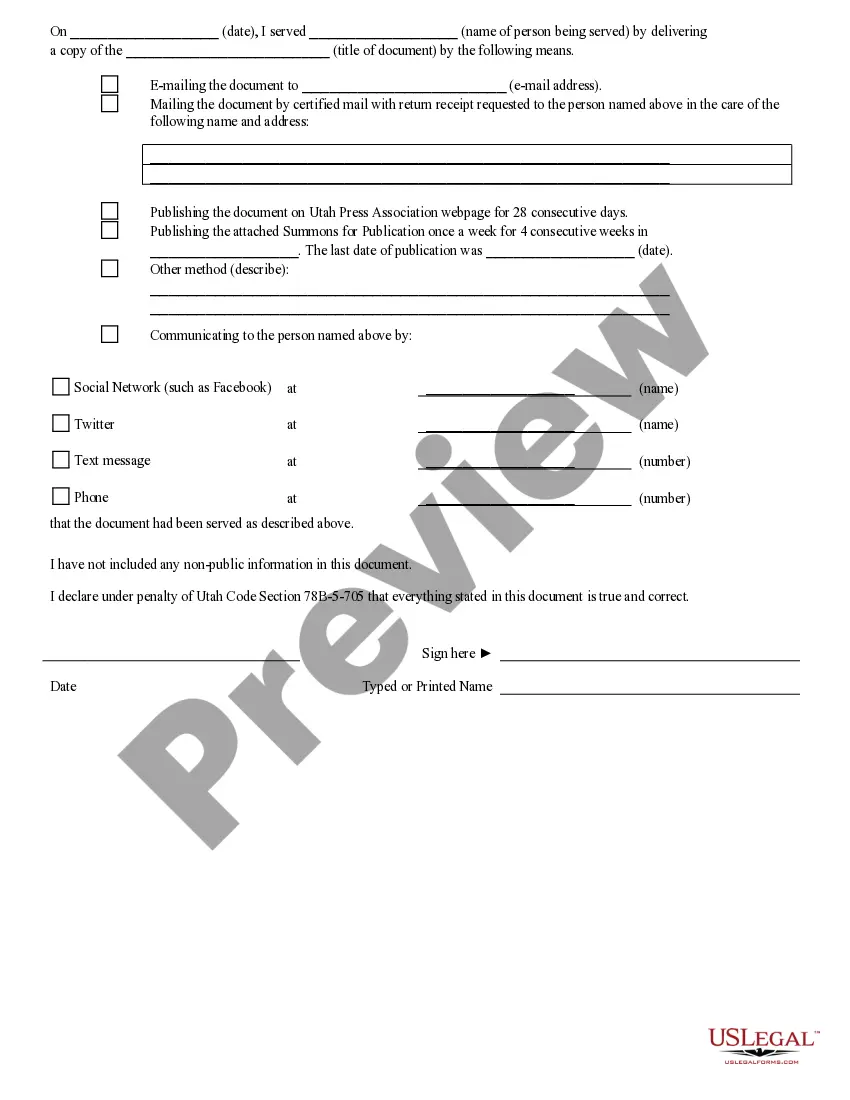
- Proof of Alternative Service: A confirmation that the alternative service methods were executed and successfully delivered.
When this form is needed
You should use the Small Claims Ex Parte Motion for Alternative Service in situations where you have exhausted regular methods of serving legal documents to a defendant. This may include instances where the defendant is avoiding service, has moved without providing forwarding information, or when other attempts at personal service have failed. This form can be particularly helpful when pursuing claims regarding debts, unpaid services, or disputes between individuals or small businesses that fall within the small claims limit.
Who can use this document
- Individuals or businesses filing small claims against defendants who cannot be located.
- Legal representatives acting on behalf of a plaintiff in a small claims case.
- Parties involved in cases where traditional service methods have been unsuccessful.
How to complete this form
- Begin by identifying yourself as either the plaintiff or an attorney, and provide your contact information.
- Complete the heading section to match the Small Claims Affidavit and Summons precisely.
- In Paragraph (1), specify the document you are attempting to serve and provide the name of the individual you are serving.
- State your attempts to serve in Paragraph (2) and explain why traditional service methods have not succeeded.
- Select the proposed alternative service methods in Paragraph (3) and provide supporting information for each.
- Date and sign the form before filing it along with the supporting documents with the court.
Notarization requirements for this form
This form does not typically require notarization unless specified by local law. However, it is important to check if any specific county rules require a signature by a notary public for the submitted documents.
Get your form ready online
Our built-in tools help you complete, sign, share, and store your documents in one place.
Make edits, fill in missing information, and update formatting in US Legal Forms—just like you would in MS Word.
Download a copy, print it, send it by email, or mail it via USPS—whatever works best for your next step.
Sign and collect signatures with our SignNow integration. Send to multiple recipients, set reminders, and more. Go Premium to unlock E-Sign.
If this form requires notarization, complete it online through a secure video call—no need to meet a notary in person or wait for an appointment.
We protect your documents and personal data by following strict security and privacy standards.

Make edits, fill in missing information, and update formatting in US Legal Forms—just like you would in MS Word.

Download a copy, print it, send it by email, or mail it via USPS—whatever works best for your next step.

Sign and collect signatures with our SignNow integration. Send to multiple recipients, set reminders, and more. Go Premium to unlock E-Sign.

If this form requires notarization, complete it online through a secure video call—no need to meet a notary in person or wait for an appointment.

We protect your documents and personal data by following strict security and privacy standards.
Typical mistakes to avoid
- Failing to properly document prior attempts at service, which could weaken the motion.
- Not following the precise naming conventions required in the headings and sections.
- Omitting required attachments, such as the Statement Supporting Motion for Alternative Service.
- Not attending scheduled court hearings, which could affect the outcome of the motion.
Benefits of completing this form online
- Convenient access to legal forms anytime without the need for physical visits.
- Easy to download and edit as needed to fit your case requirements.
- Reliable templates drafted to comply with the latest legal standards.
Summary of main points
- The Small Claims Ex Parte Motion for Alternative Service is essential for reaching defendants who are avoiding traditional service methods.
- Accurate documentation and adherence to proper procedures are critical for a successful filing.
- This form is specifically tailored for small claims disputes not exceeding $11,000.
Looking for another form?

Form popularity
FAQ
A party must state in simple, short and plain terms any defenses to each claim asserted and must admit or deny the statements in the claim. A party without knowledge or information sufficient to form a belief about the truth of a statement must so state, and this has the effect of a denial.
A party may not make a motion in a memorandum opposing a motion or in a reply memorandum. A party who objects to evidence in another party's motion or memorandum may not move to strike that evidence. Instead, the party must include in the subsequent memorandum an objection to the evidence.
If the defendant is present at the initial appearance without counsel, the court must determine if the defendant is capable of retaining the services of an attorney within a reasonable time.
If the nonmoving party files a written opposition, the moving party may file a reply within 7 days of the filing of the opposition to the motion, unless the court sets a different time.
Rule 58A(a) provides, ?Every judgment and amended judgment must be set out in a separate document ordinarily titled 'Judgment'?or, as appropriate, 'Decree.
After a nonjury trial, the court may, on motion for a new trial, open the judgment if one has been entered, take additional testimony, amend findings of fact and conclusions of law or make new ones, and direct entry of a new judgment.
A party against whom a claim, counterclaim, or cross-claim is asserted or a declaratory judgment is sought may move for summary judgment at any time. Unless the court orders otherwise, a party may file a motion for summary judgment at any time no later than 28 days after the close of all discovery.
Rule 7 ? Pleadings allowed (b) Motions and Other Papers. (1) In General. A request for a court order must be made by motion. The motion must: (A) be in writing unless made during a hearing or trial; (B) state with particularity the grounds for seeking the order; and (C) state the relief sought.