Utah Letters of Recommendation Package
Understanding this form package
The Utah Letters of Recommendation Package is a set of professionally drafted forms designed to assist students and professionals in obtaining recommendations for academic admission, scholarships, or employment opportunities. This package stands out due to its comprehensive nature, offering specialized forms tailored for various purposes, ensuring users have the necessary tools to make a strong impression.
Forms included in this package
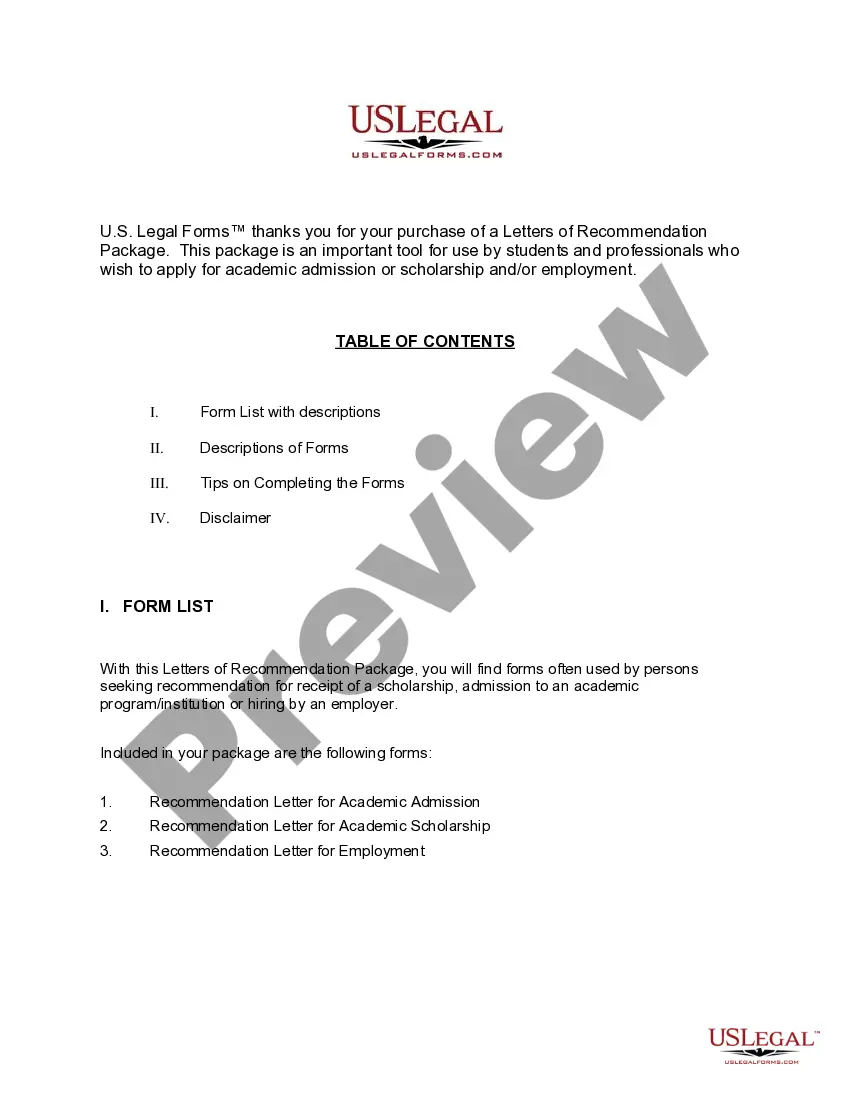
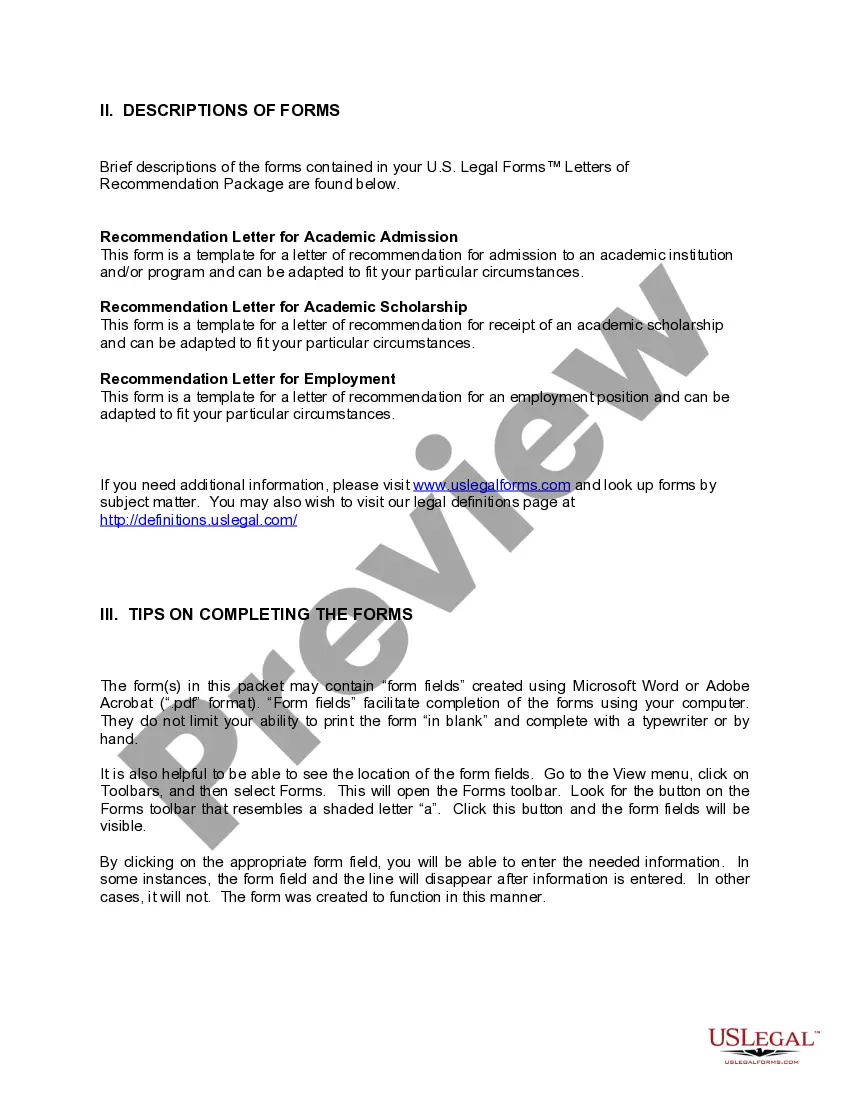
When to use this document
This package is most useful in the following scenarios:
- When applying for admission to an academic institution.
- When seeking financial support through scholarships.
- When applying for a job or professional position and needing a recommendation.
Intended users of this form package
- Students applying for college or advanced degrees.
- Individuals applying for scholarships.
- Professionals seeking job opportunities.
- Anyone who needs a structured way to request or provide letters of recommendation.
Instructions for completing these forms
- Review the included forms to understand their purpose.
- Identify the appropriate type of recommendation letter needed.
- Fill in personal details such as names, addresses, and relevant dates.
- Customize the letter template to reflect the specific achievements or qualifications of the person being recommended.
- Ensure that the letter is signed by the recommender to authenticate it.
Notarization details for included forms
Forms in this package typically do not require notarization. However, certain states or document types may still need it. US Legal Forms provides online notarization powered by Notarize, available 24/7 for your convenience.
Get your form ready online
Our built-in tools help you complete, sign, share, and store your documents in one place.
Make edits, fill in missing information, and update formatting in US Legal Forms—just like you would in MS Word.
Download a copy, print it, send it by email, or mail it via USPS—whatever works best for your next step.
Sign and collect signatures with our SignNow integration. Send to multiple recipients, set reminders, and more. Go Premium to unlock E-Sign.
If this form requires notarization, complete it online through a secure video call—no need to meet a notary in person or wait for an appointment.
We protect your documents and personal data by following strict security and privacy standards.

Make edits, fill in missing information, and update formatting in US Legal Forms—just like you would in MS Word.

Download a copy, print it, send it by email, or mail it via USPS—whatever works best for your next step.

Sign and collect signatures with our SignNow integration. Send to multiple recipients, set reminders, and more. Go Premium to unlock E-Sign.

If this form requires notarization, complete it online through a secure video call—no need to meet a notary in person or wait for an appointment.

We protect your documents and personal data by following strict security and privacy standards.
Avoid these common issues
- Using a generic template without personalization.
- Neglecting to proofread for errors and typos.
- Forgetting to obtain a signature from the recommender.
Benefits of completing this package online
- Quick and convenient access to professionally drafted forms.
- Ability to customize each letter to fit individual needs.
- Downloadable forms for easy printing or sharing.
Looking for another form?
Form popularity
FAQ
Letters of recommendation can help us to learn things about you that aren't available from other application items. And if you do submit them, they will be considered when we review your application. But they are optional, and you will be considered for admission whether you submit letters of recommendation or not.
Overall, a 3.5 GPA is above the average of 3.38. It equates to about an A- average, but is slightly lower (3.67 is an A-). It's not the best GPA, and it doesn't make you competitive for the very best schools, but it's still above average, and you should still be competitive for many schools.
How long does it take to get admitted to the U? The Admissions Office will begin processing your application once all fees and supporting documents have been received. In busy times, processing can take 3 to 4 weeks.
You may submit up to two optional letters of recommendation with your admission application. These letters may be from teachers, mentors, or people who know you well, either within or outside of your high school.
Letters of recommendation cannot be submitted through ApplyTexas; they must be sent directly to the university to which you are applying. All questions about letters of recommendation should be directed to the university admissions office.
ApplyTexas: Letters of recommendation for UT may be submitted via the Document Upload System (which you can access ONLY after submitting your application) or you may use the system to ask someone to submit their recommendation to us directly.
The average GPA at University of Utah is 3.66. With a GPA of 3.66, University of Utah requires you to be above average in your high school class. You'll need at least a mix of A's and B's, with more A's than B's.
ApplyTexas: Letters of recommendation for UT may be submitted via the Document Upload System (which you can access ONLY after submitting your application) or you may use the system to ask someone to submit their recommendation to us directly.
Depending on the type of professional school to which you apply, you may need up to 5 or 6 letters of evaluation. Students applying to medical and dental schools typically require more letters than students applying to other programs.