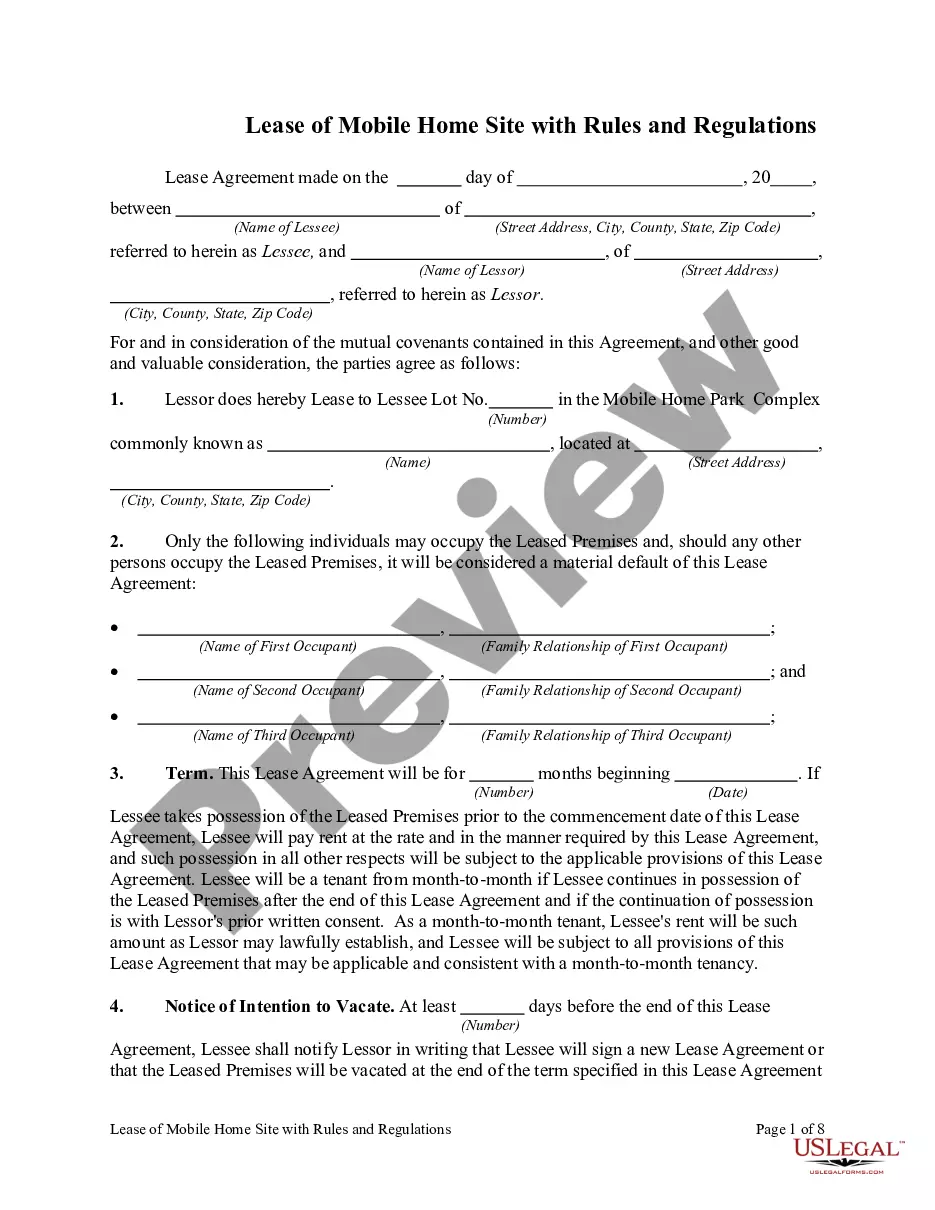
Utah Vehicular Ingress and Egress Agreement
About this form
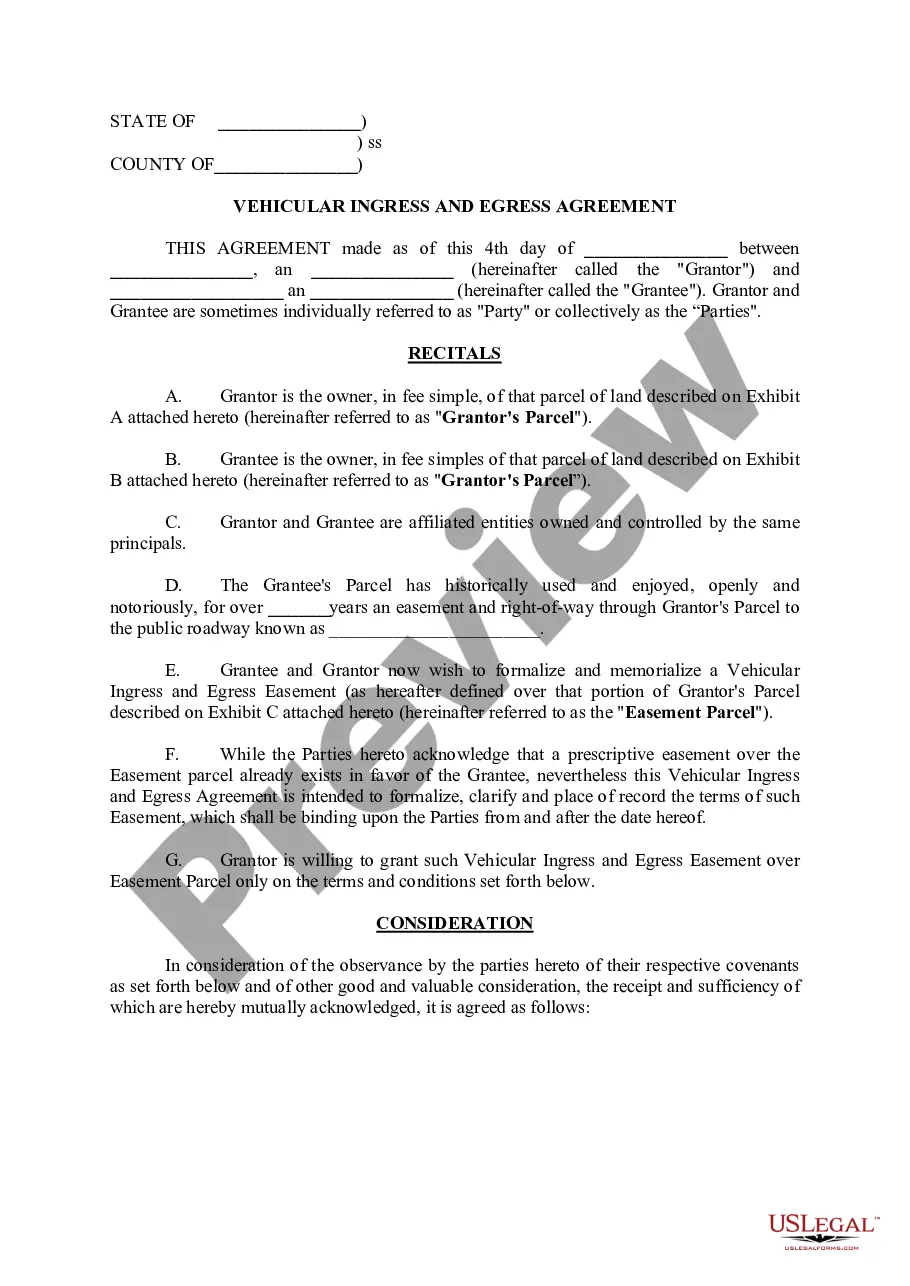
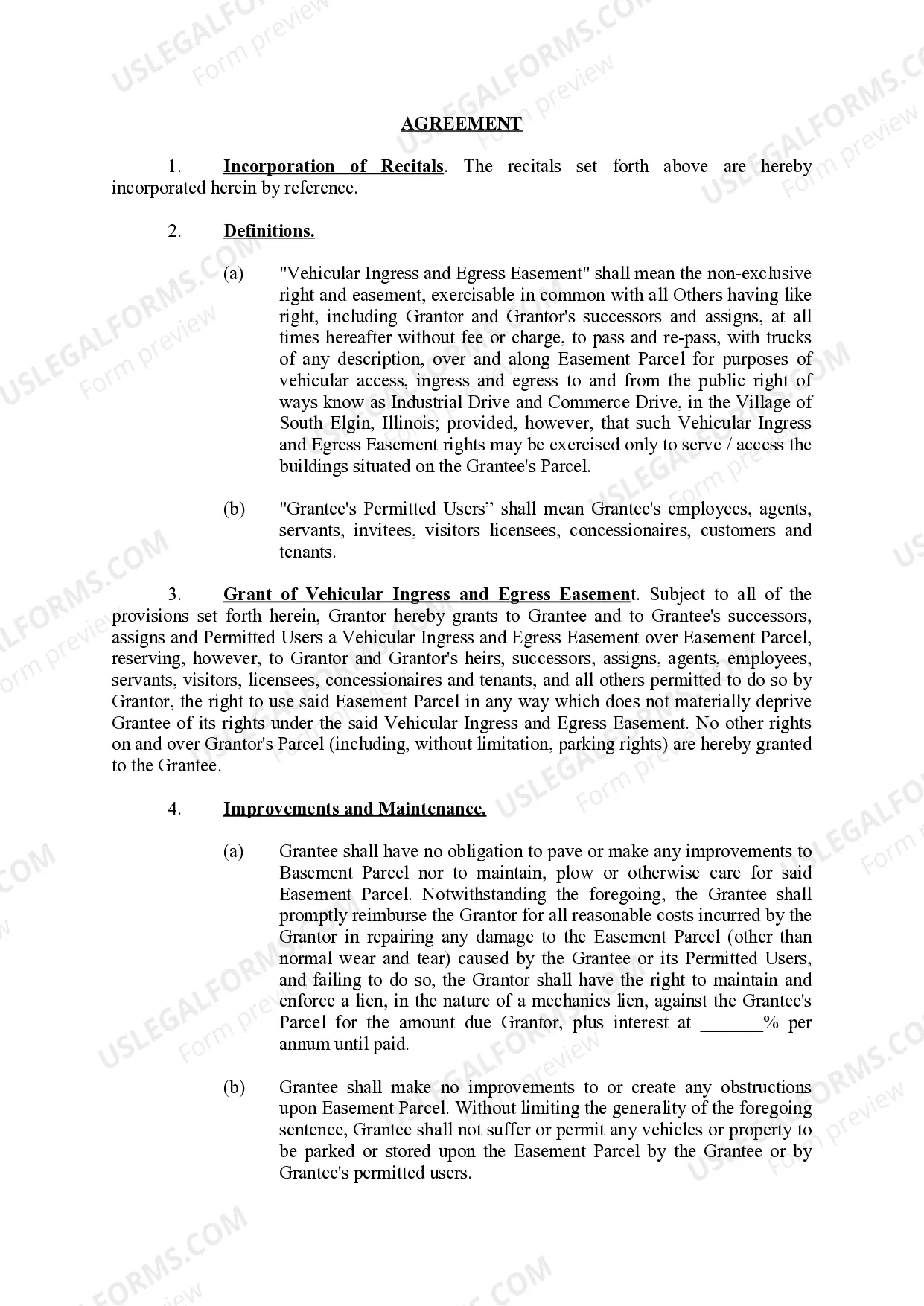
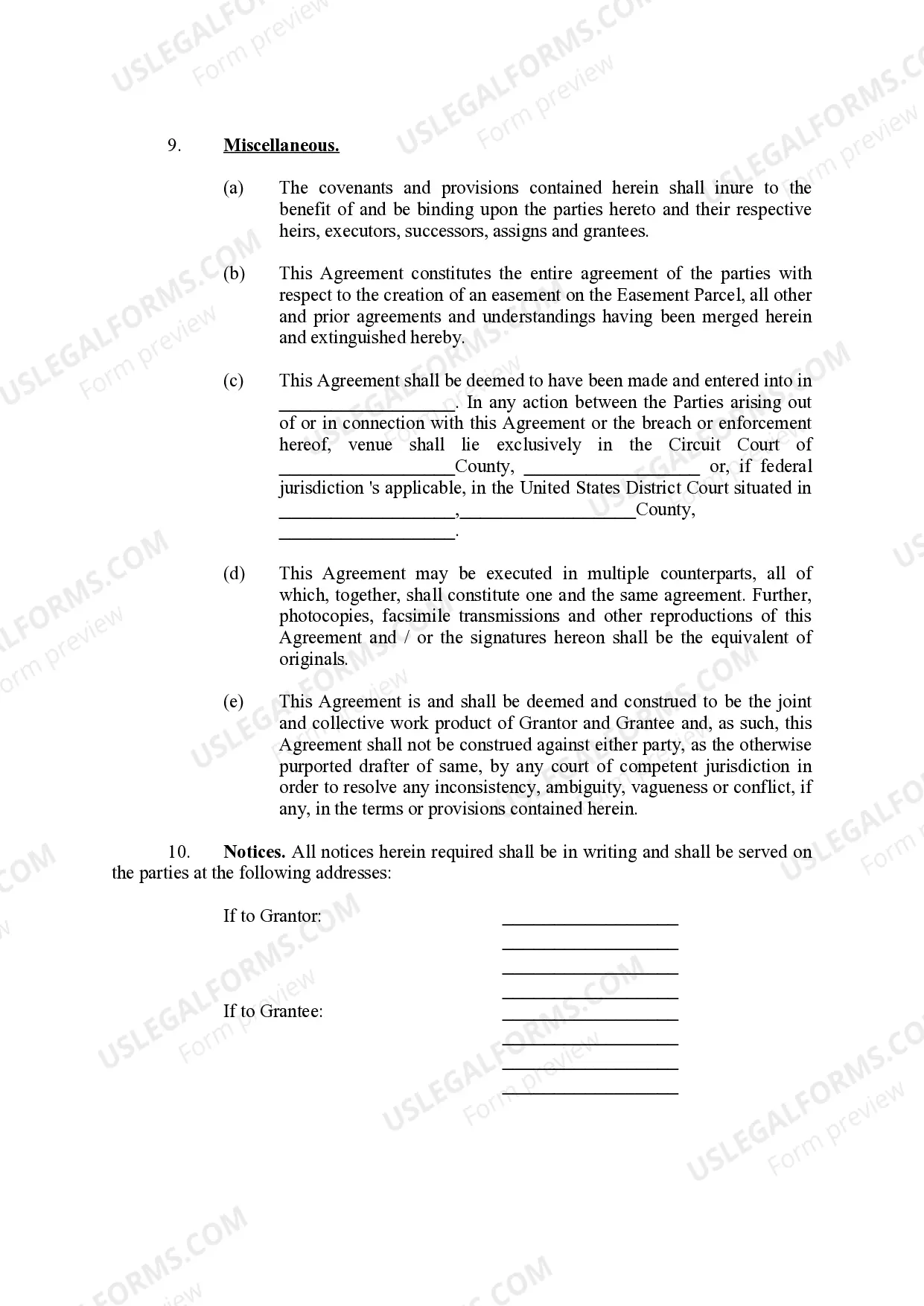
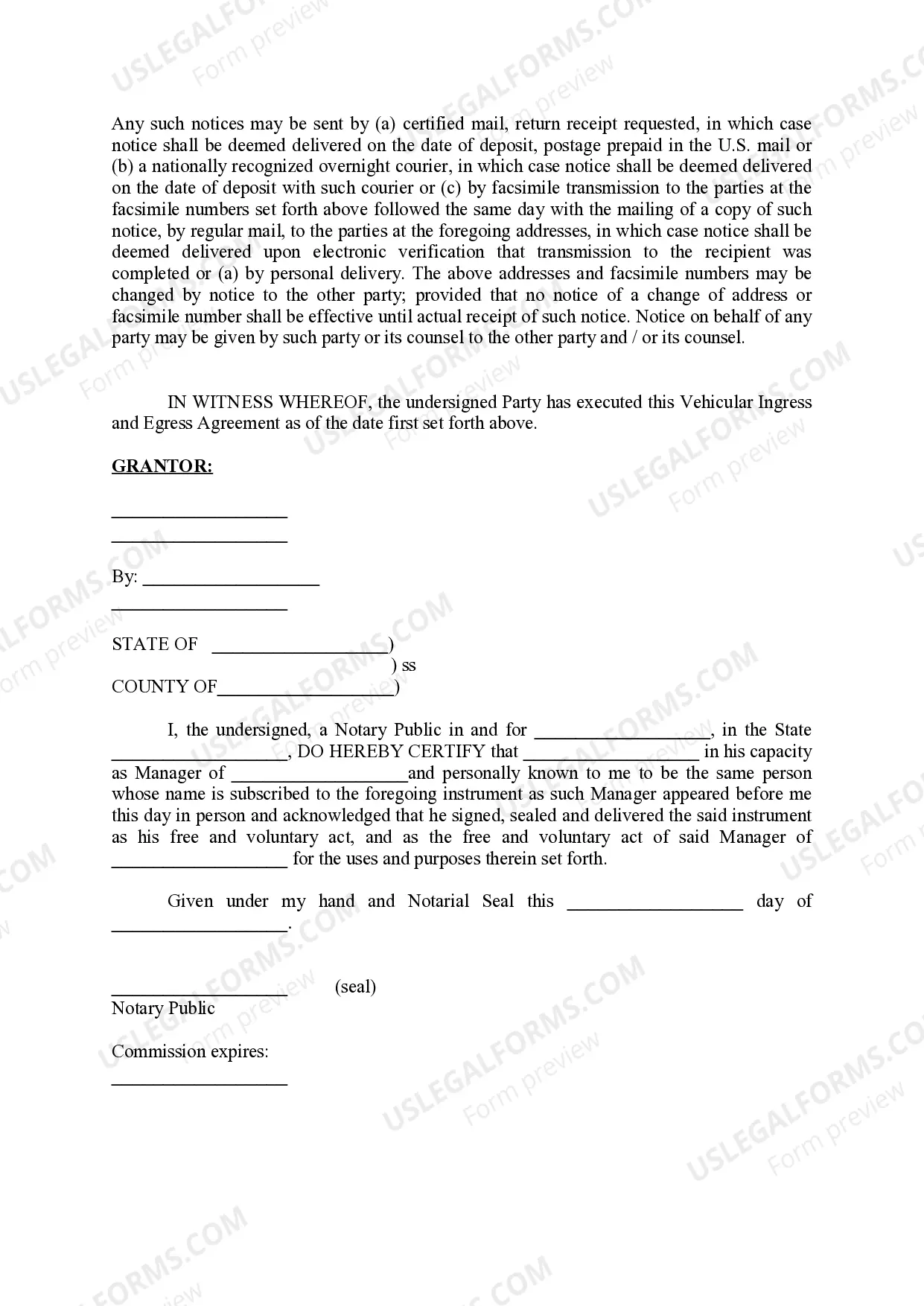
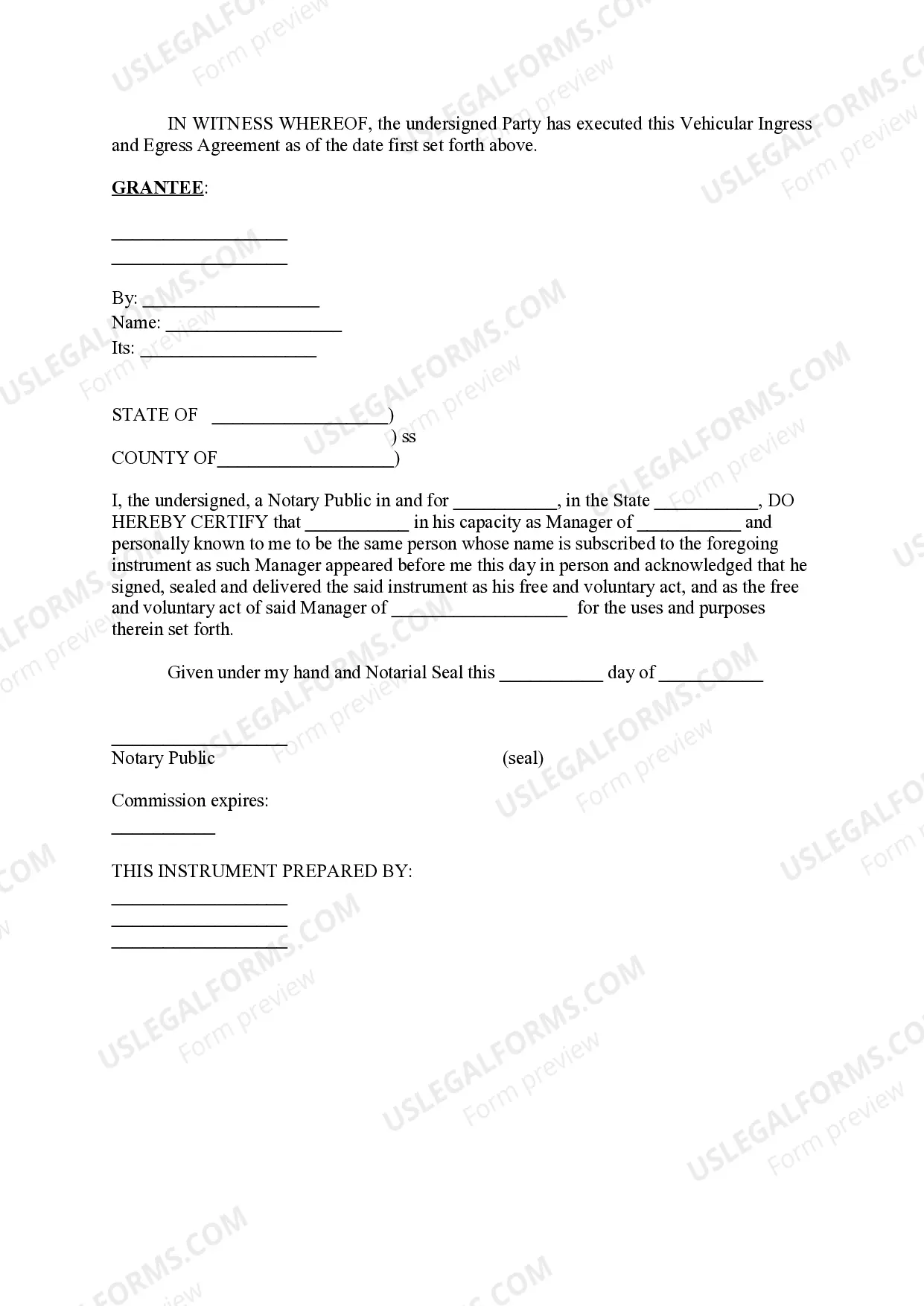
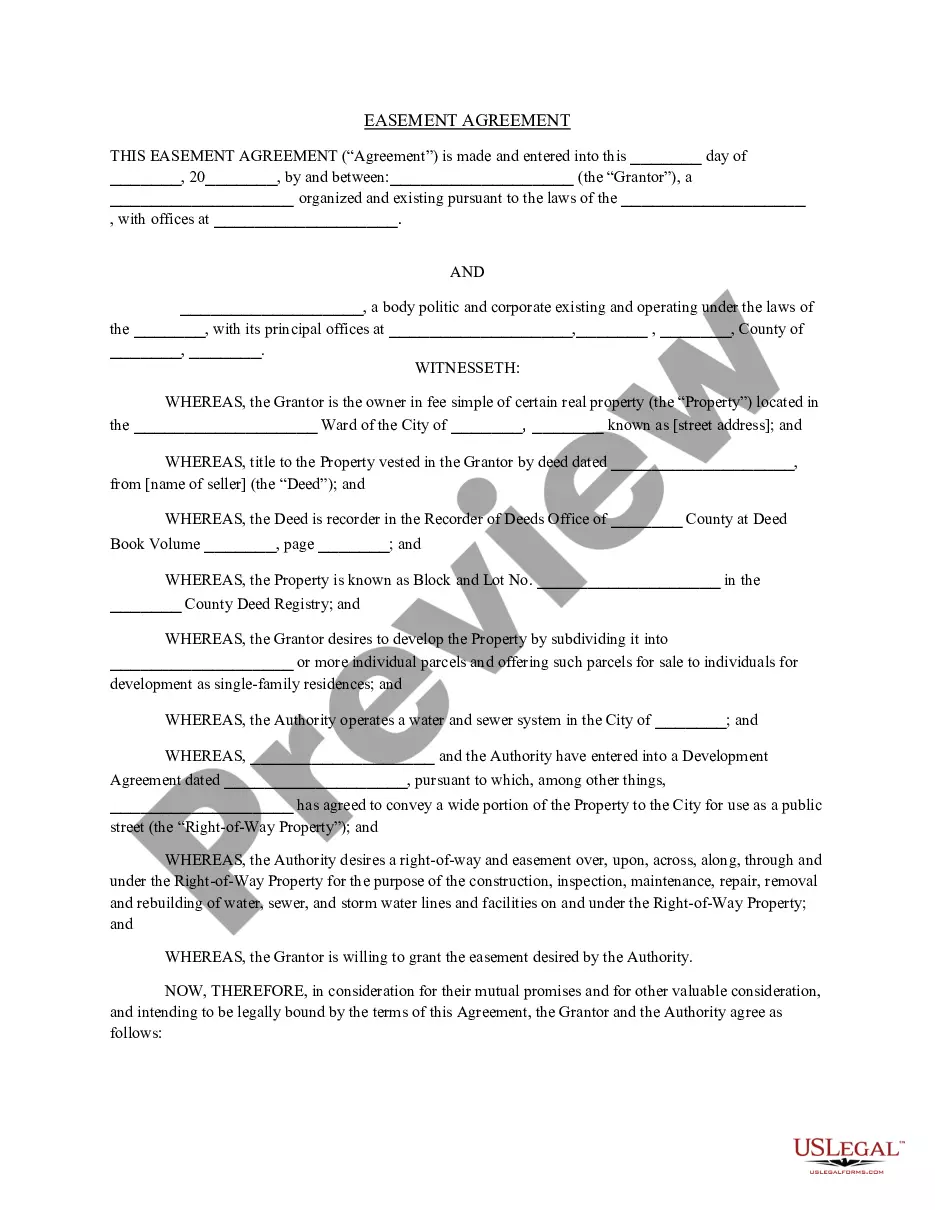
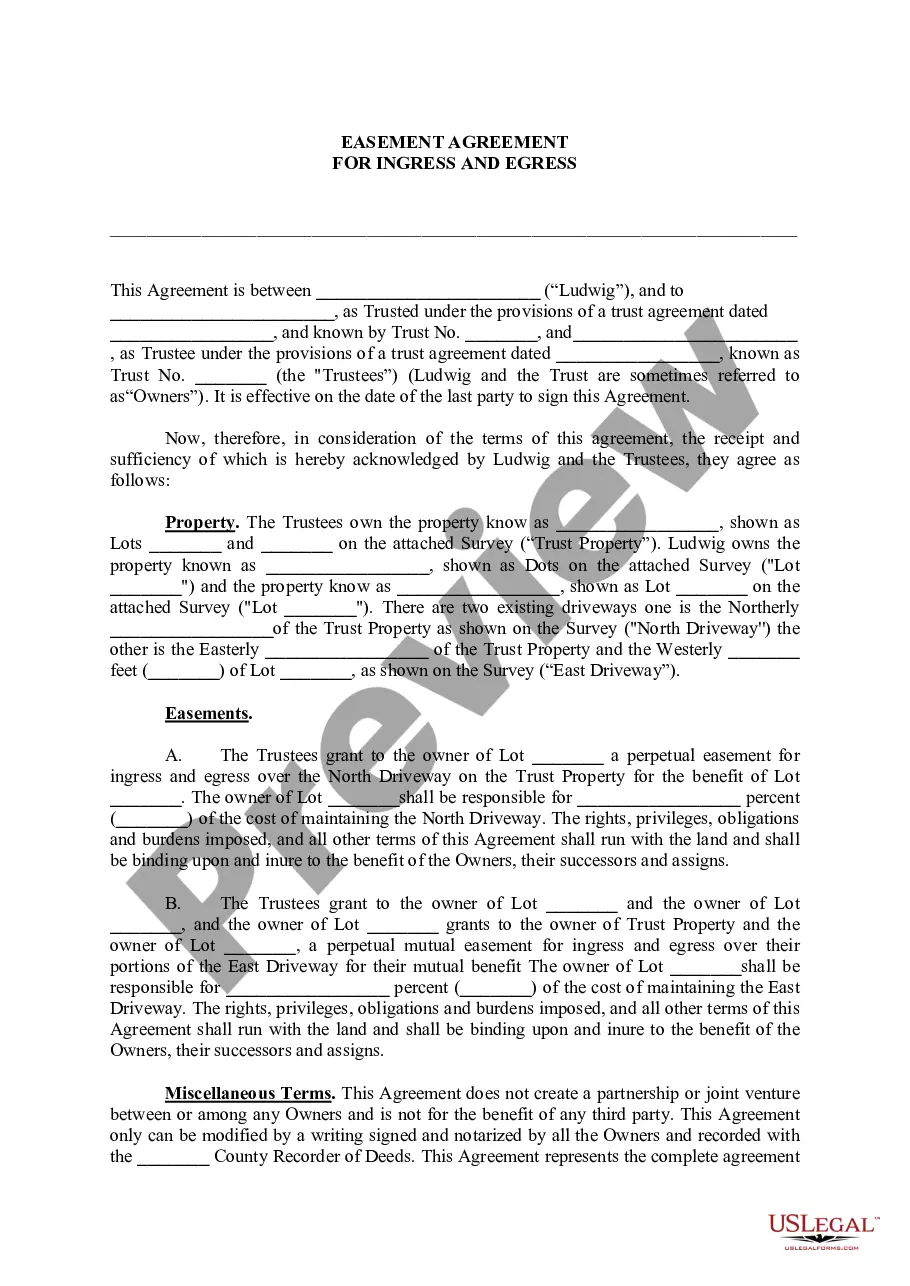
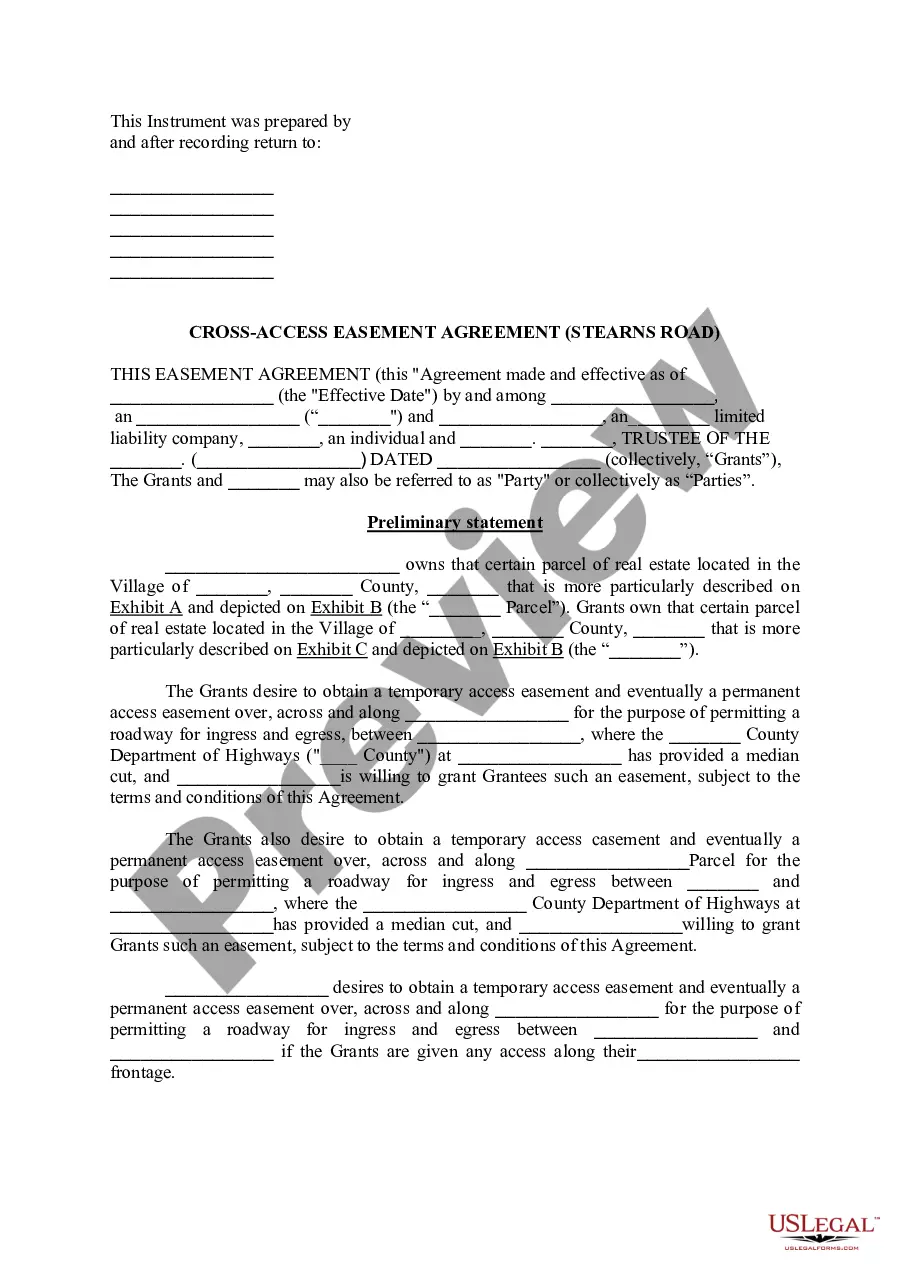
The Vehicular Ingress and Egress Agreement is a legal document that formalizes the rights of one party to access another party's property for vehicular use. It is primarily designed to record the terms of an easement that allows the Grantee to pass over the Grantorâs land. Unlike other property agreements, this specific form is focused solely on vehicular access and is crucial for parties who need to ensure that their right to use a shared road or path is legally recognized and protected.
Key components of this form
- Parties involved: Identification of the Grantor (landowner) and Grantee (user of the easement).
- Recitals: Background information outlining the properties and the historical use of the easement.
- Definitions: Clear definitions of key terms, including the specific easement rights.
- Grant of easement: Detailed description of the vehicular access rights granted to the Grantee.
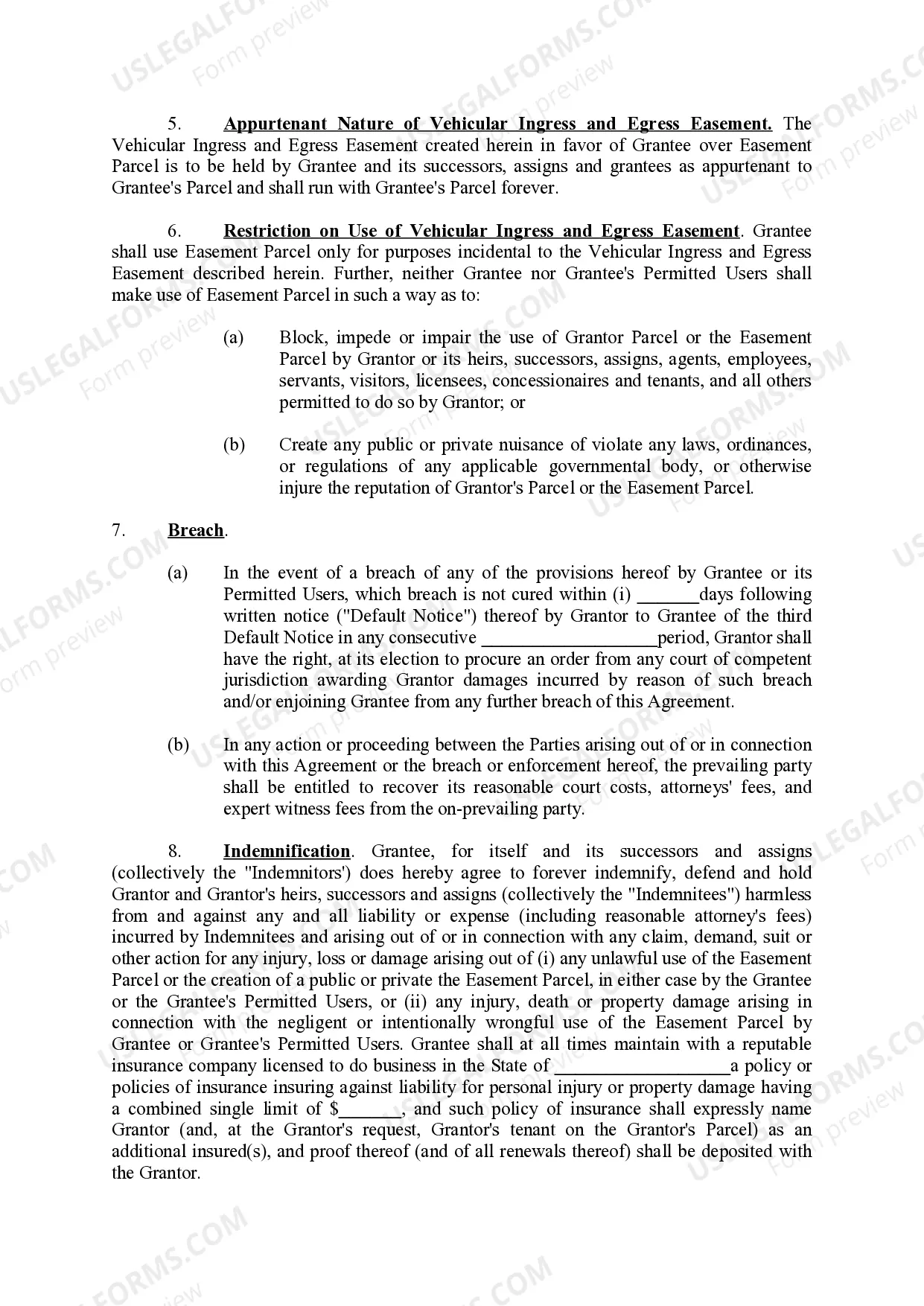
- Maintenance and repairs: Responsibilities for maintaining the easement and costs associated with damages.
- Indemnification: Clauses outlining liability and responsibility for claims arising from use of the easement.
Situations where this form applies
This form should be used when two parties require a clear and enforceable agreement to allow vehicular access across one party's property to another. Typical scenarios might include situations where a property does not have direct access to a public road and needs to legally recognize a shared path or road usage. It is also advisable in circumstances where the historical use of the easement needs formal clarification to avoid future disputes.
Intended users of this form
- Property owners granting vehicular access to their land.
- Individuals or businesses needing reliable access routes across neighboring properties.
- Developers involved in real estate projects requiring easement agreements.
- Entities that seek to prevent disputes over existing access rights.
How to complete this form
- Identify the parties involved: Enter the names and roles of the Grantor and Grantee.
- Provide property descriptions: Include detailed descriptions of the Grantorâs and Granteeâs parcels of land.
- Specify the easement details: Clearly outline the locations and nature of the easement rights granted.
- Fill in the terms of maintenance: State the responsibilities for maintenance and any associated costs.
- Enter the date and signatures: Ensure both parties sign and date the agreement for legal validity.
Does this form need to be notarized?
Yes, this form must be notarized to be legally valid. Notarization provides an additional layer of authenticity and ensures that the identities of both parties are verified. US Legal Forms offers integrated online notarization services that are available 24/7, allowing you to complete the process securely through a video call without the need for travel.
Get your form ready online
Our built-in tools help you complete, sign, share, and store your documents in one place.
Make edits, fill in missing information, and update formatting in US Legal Forms—just like you would in MS Word.
Download a copy, print it, send it by email, or mail it via USPS—whatever works best for your next step.
Sign and collect signatures with our SignNow integration. Send to multiple recipients, set reminders, and more. Go Premium to unlock E-Sign.
If this form requires notarization, complete it online through a secure video call—no need to meet a notary in person or wait for an appointment.
We protect your documents and personal data by following strict security and privacy standards.

Make edits, fill in missing information, and update formatting in US Legal Forms—just like you would in MS Word.

Download a copy, print it, send it by email, or mail it via USPS—whatever works best for your next step.

Sign and collect signatures with our SignNow integration. Send to multiple recipients, set reminders, and more. Go Premium to unlock E-Sign.

If this form requires notarization, complete it online through a secure video call—no need to meet a notary in person or wait for an appointment.

We protect your documents and personal data by following strict security and privacy standards.
Typical mistakes to avoid
- Failing to accurately describe the properties involved in the agreement.
- Not including the required terms for maintenance and repairs.
- Omitting essential definitions that clarify the terms of the easement.
- Neglecting to have both parties sign the document and provide dates.
Benefits of using this form online
- Convenience: Download and fill out the form at your own pace from the comfort of home.
- Editability: Easy to customize terms and conditions specific to your situation.
- Reliability: Access professionally drafted documents that comply with legal standards.
Looking for another form?
Form popularity
FAQ
A non-exclusive easement just means that the easement will run with the land (future owners are subject to the easement). It does not mean that anyone and everyone can use the easement. The only properties that get rights to the easement would be those set forth in the grant of easement.
Generally speaking, an easement is a more serious property right; it is the legal right to use someone else's land for a particular purpose. Easements are often recorded at the county clerk's office and encumber your property's title.Here, however, you probably do not need to take the step of granting an easement.
Ingress refers to the right to enter a property, while egress refers to the right to exit a property. For example, a driveway provides ingress and egress from roadways to houses and businesses.
The Exclusive Easement Explained Most easements are non-exclusive where the person benefitting cannot exclude others from these benefits. Someone with an exclusive easement may stop others from obtaining the benefits even though this individual is not the owner of the land.
Exclusive means that only one party or perhaps a limited number of parties can use that easement. Non-exclusive means that a number of different parties can use the easement. Non-exclusive can also mean that additional parties could be granted the right to use that same easement in the future.
The right of egress is the legal right to exit or leave a property. The right of egress is usually used in conjunction with the right of ingress, which means the legal right to enter a property. Ingress and egress rights are important to homeowners since they allow access to their property.
On appeal, the Court held that an easement for ingress and egress confers only the right to pass over the land, not the right to park on the land. The plain meaning of the terms ingress and egress do not include parking.
Types of Easements An easement may be classified as either an easement appurtenant or an easement in gross. Easement Appurtenant. An easement appurtenant is an easement that benefits one parcel of land, known as the dominant tenement, to the detriment of another parcel of land, known as the servient tenement.
Easement for ingress and egress is a fancy way of saying that an easement allows someone to travel to and from the land. For example, let's say Alice can't get to her property from a public road without crossing over her neighbor Bill's property.