Utah Checklist for Victim's Statement in Petition to Expunge Records
About this form
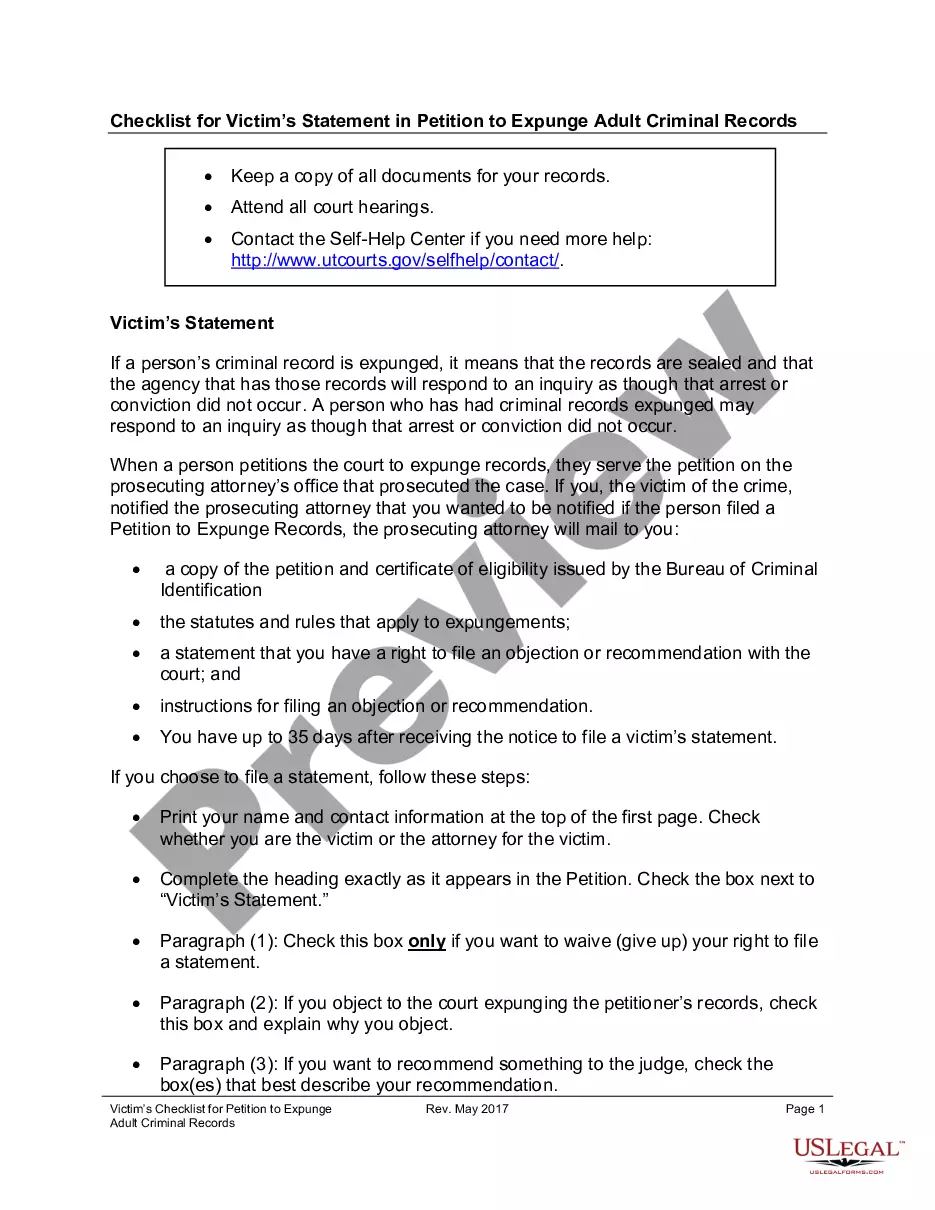
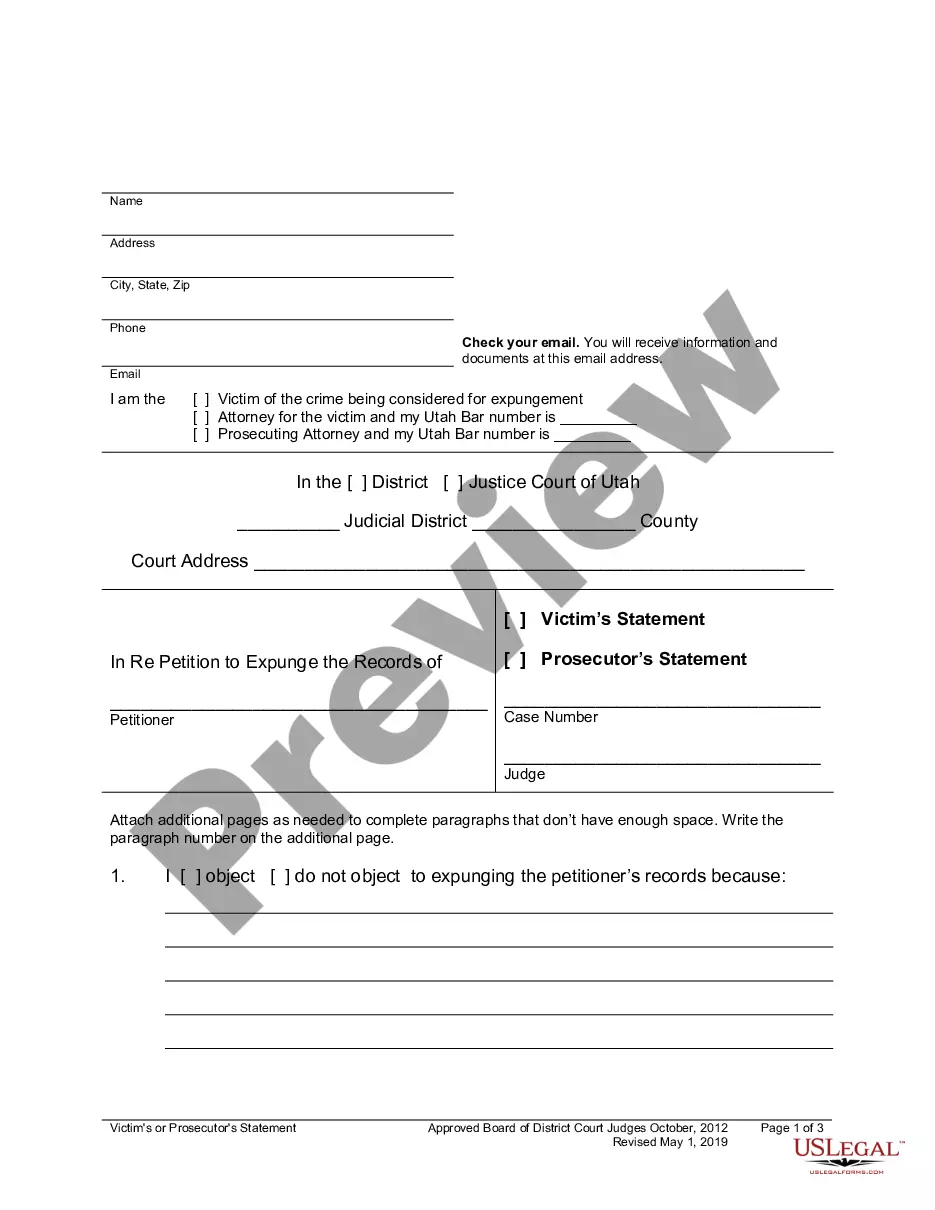
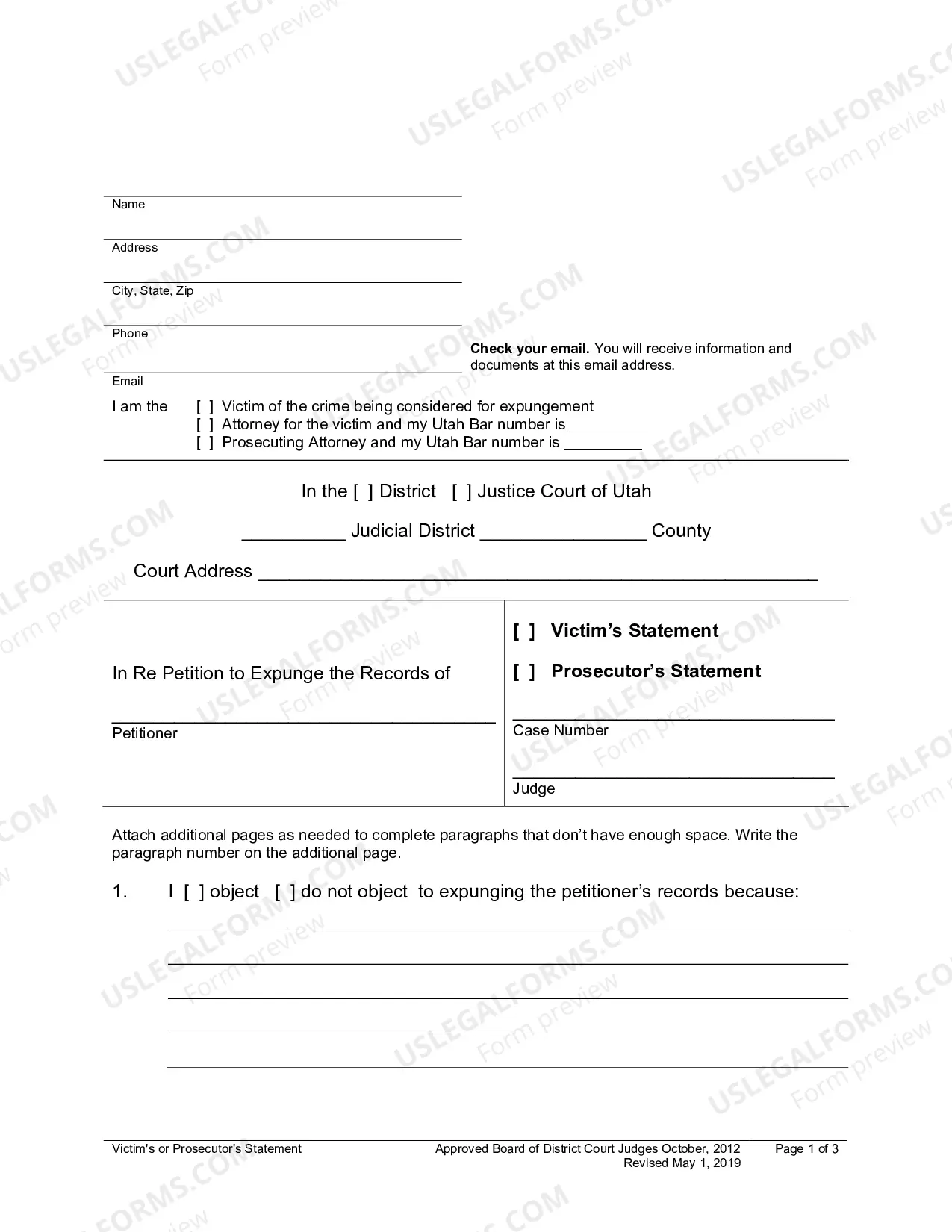
The Checklist for Victim's Statement in Petition to Expunge Records is an official form used in Utah to support victims' rights in the expungement process. This form provides a structured way for victims to give their input regarding the expungement of a criminal record, ensuring that their concerns are considered by the court. Unlike other forms related to expungement, this checklist specifically addresses the victim's statement, allowing them to express objections or recommendations directly related to the sealing of criminal records.
Key components of this form
- Victim's statement section for submitting objections or recommendations.
- Contact information for the victim or their attorney.
- Required checkboxes for indicating the victim's status and intentions.
- Spaces to explain objections or recommendations clearly.
- Instructions for serving the form on relevant parties and filing it with the court.
Common use cases
This form is necessary when a victim has been notified that an individual is petitioning for the expungement of their criminal records. If you are the victim and have expressed a desire to be informed about such petitions, you will need to complete this checklist to file your statement within the specified time frame of 35 days. Use this form to ensure your voice is heard in the legal process of sealing records associated with the crime you were a victim of.
Who needs this form
- Victims of crimes who wish to express their opinion on a pending expungement petition.
- Attorneys representing victims seeking to submit a statement on their behalf.
- Individuals who have been notified by the prosecuting attorney about an expungement petition.
Instructions for completing this form
- Print your name and contact information at the top of the first page.
- Indicate whether you are the victim or the victim's attorney by checking the appropriate box.
- Complete the heading as stated in the petition without modifications.
- Check the box for the Victim's Statement and follow the prompts to indicate your position.
- If objecting, clearly explain your reasons in the provided section.
- Sign and date the form, complete the Certificate of Service, and file with the court.
Does this document require notarization?
In most cases, this form does not require notarization. However, some jurisdictions or signing circumstances might. US Legal Forms offers online notarization powered by Notarize, accessible 24/7 for a quick, remote process.
Get your form ready online
Our built-in tools help you complete, sign, share, and store your documents in one place.
Make edits, fill in missing information, and update formatting in US Legal Forms—just like you would in MS Word.
Download a copy, print it, send it by email, or mail it via USPS—whatever works best for your next step.
Sign and collect signatures with our SignNow integration. Send to multiple recipients, set reminders, and more. Go Premium to unlock E-Sign.
If this form requires notarization, complete it online through a secure video call—no need to meet a notary in person or wait for an appointment.
We protect your documents and personal data by following strict security and privacy standards.

Make edits, fill in missing information, and update formatting in US Legal Forms—just like you would in MS Word.

Download a copy, print it, send it by email, or mail it via USPS—whatever works best for your next step.

Sign and collect signatures with our SignNow integration. Send to multiple recipients, set reminders, and more. Go Premium to unlock E-Sign.

If this form requires notarization, complete it online through a secure video call—no need to meet a notary in person or wait for an appointment.

We protect your documents and personal data by following strict security and privacy standards.
Avoid these common issues
- Not submitting the form within the 35-day window from receipt of notification.
- Including private or protected information, as this form becomes a public record.
- Failing to complete the Certificate of Service before filing.
- Not checking the correct status (victim vs. attorney) at the beginning of the form.
Advantages of online completion
- Immediate access to the form and instructions anytime.
- Editable format allows for easy completion and customization to meet your needs.
- Secure and reliable platform for downloading and storing your completed legal forms.
Legal use & context
- This form provides a legally recognized method for victims to participate in expungement proceedings.
- Submissions on this form are considered part of the public record and may impact court decisions.
Looking for another form?


Form popularity
FAQ
For immigration purposes a criminal conviction will always exist, no matter whether a court expunges your record or not. That said, even if you do have a criminal record expunged, sealed, or not you may still be able to immigrate to the United States.
Always begin the letter with a formal greeting, such as "Dear Judge...", before composing the rest of the letter. Then, write the first paragraph of your letter by explaining why you are writing, what charge you wish to have expunged, and a short description of why you feel it should be expunged.
Online expungement is only available through Maryland expungement.com and not offered by a State or government website. This legal expungement service is particularly convenient for individuals who don't want to have to travel to the courthouse, obtain all the paperwork, drive home.
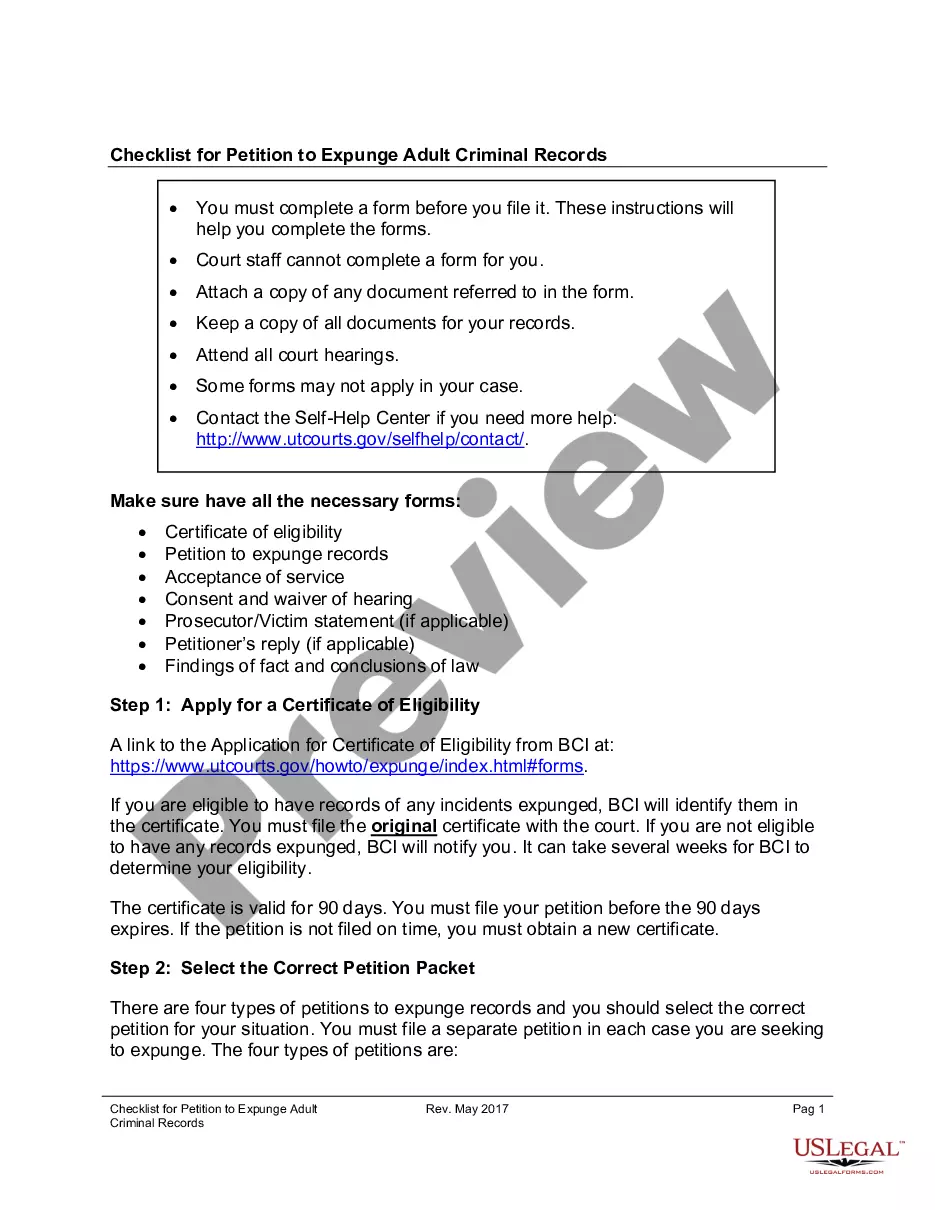
Determine if you are eligible. Apply for a certificate of eligibility from the Utah Bureau of Criminal Investigations. Receive your certificate. Draft the Petition for Expungement. File the petition in the appropriate court. Serve the appropriate prosecutor's office with the required paperwork.
A person seeking to have an arrest or criminal conviction expunged from their record must usually fill out an application or petition, and submit the paperwork to the proper criminal court for a judge's review and decision. In most jurisdictions, a fee must be paid in conjunction with the filing of the application.
7 years for Felonies (except felony drug possession offenses) 5 years for Class A Misdemeanors and felony drug possession offenses. 4 years for Class B Misdemeanors (except DUIs) 3 years for Class C Misdemeanors and Infractions.
Determine if you are eligible. Apply for a certificate of eligibility from the Utah Bureau of Criminal Investigations. Receive your certificate. Draft the Petition for Expungement. File the petition in the appropriate court. Serve the appropriate prosecutor's office with the required paperwork.
Expungement vs. Record Sealing. The key difference between expunging a person's criminal record and sealing it is that a sealed record still exists in both a legal and physical sense, while expungement results in the deletion of any record that an arrest or criminal charge ever occurred.
Expungement and sealing Federal authorities and law enforcement can still view sealed records. This includes the FBI and the U.S. Citizenship and Immigration Services (USCIS).This is the case even if they are expunged or sealed.