Utah Victim's Statement for Expungement Request
What this document covers
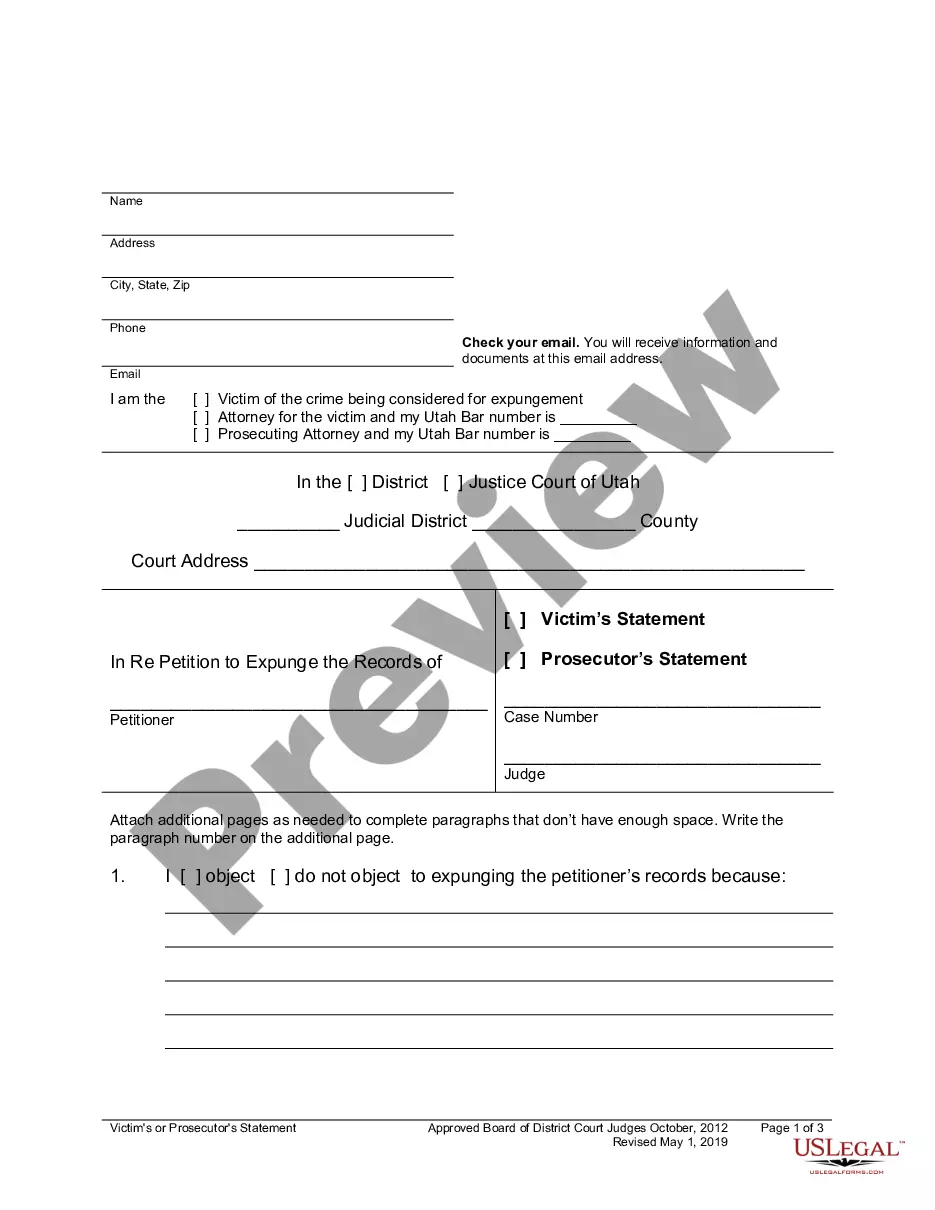
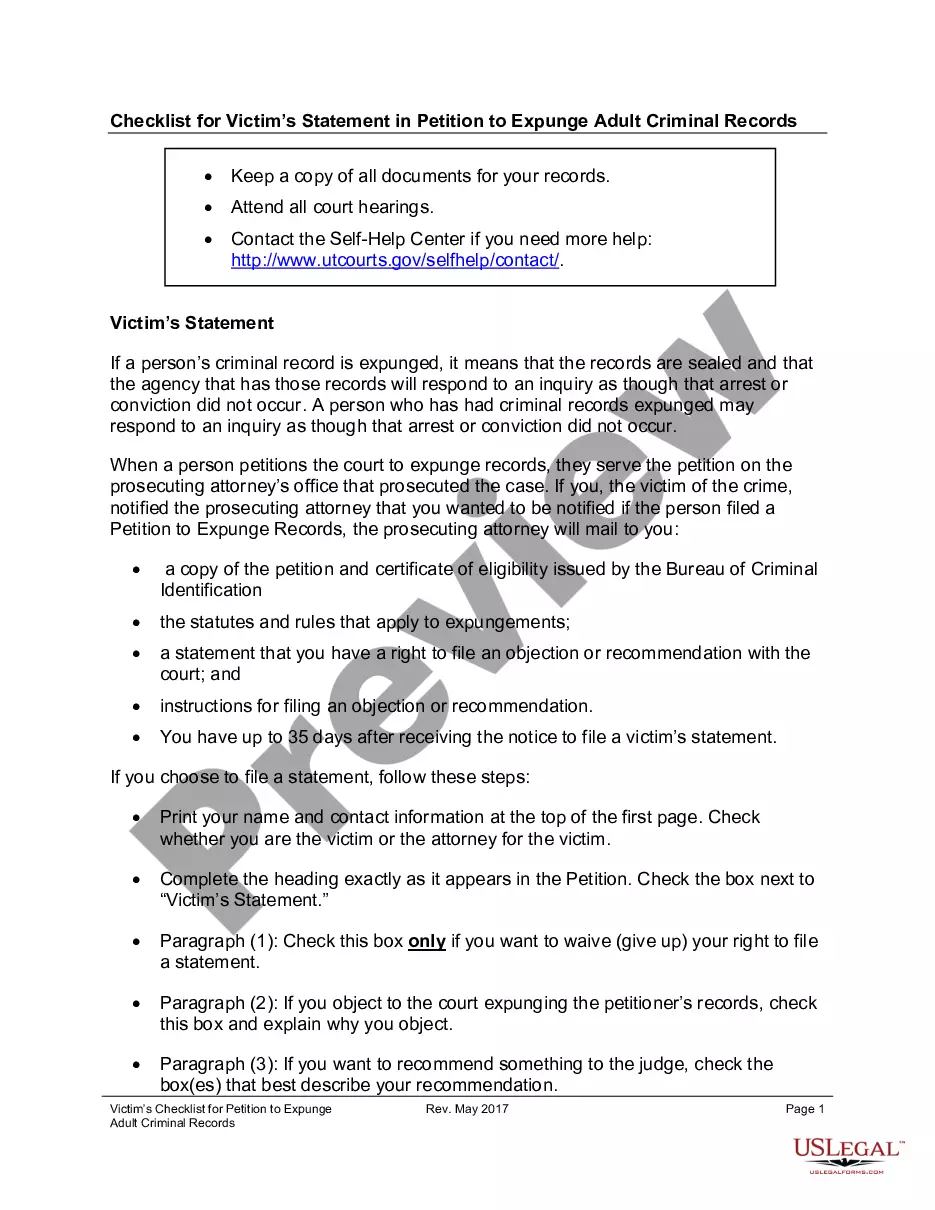
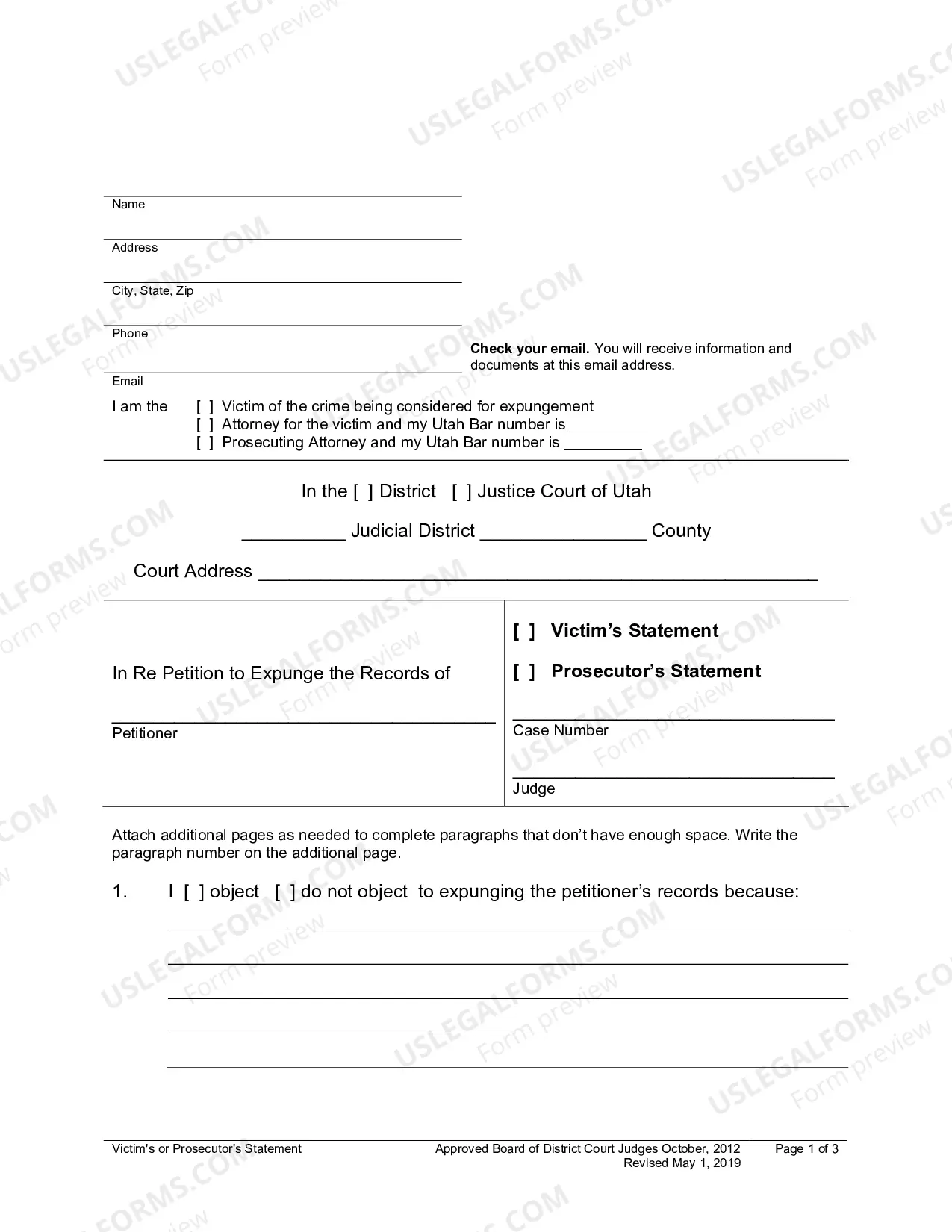
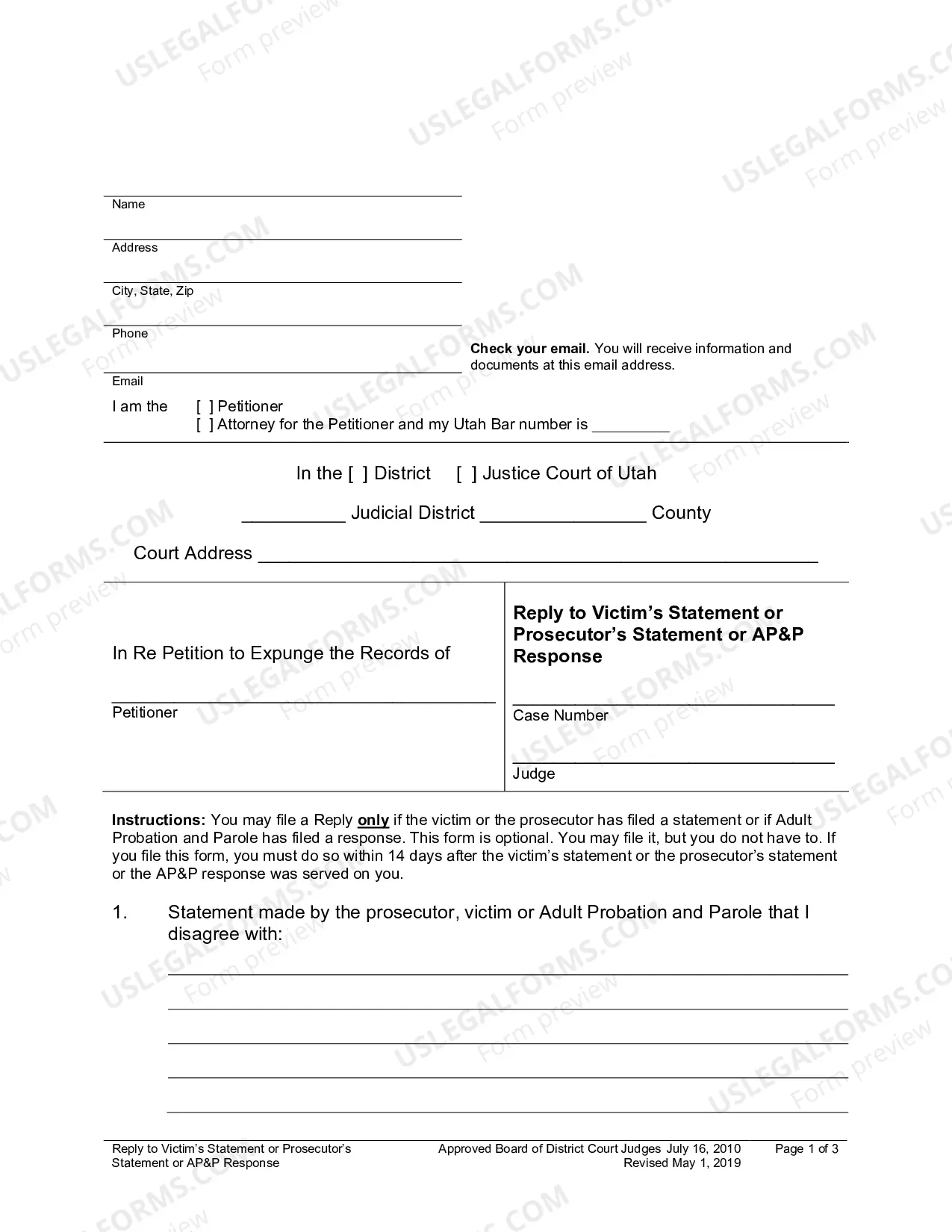
The Victim's Statement for Expungement Request is an official court form utilized in Utah to assist victims in expressing their opinion regarding the expungement of an adult's criminal record. This form is important for ensuring the victim's voice is heard during the legal process of expungement, distinguishing it from similar forms that may not include victim input.
Form components explained
- Identification of the victim, their attorney, and the prosecuting attorney.
- Details about the specific case, including the court name and case number.
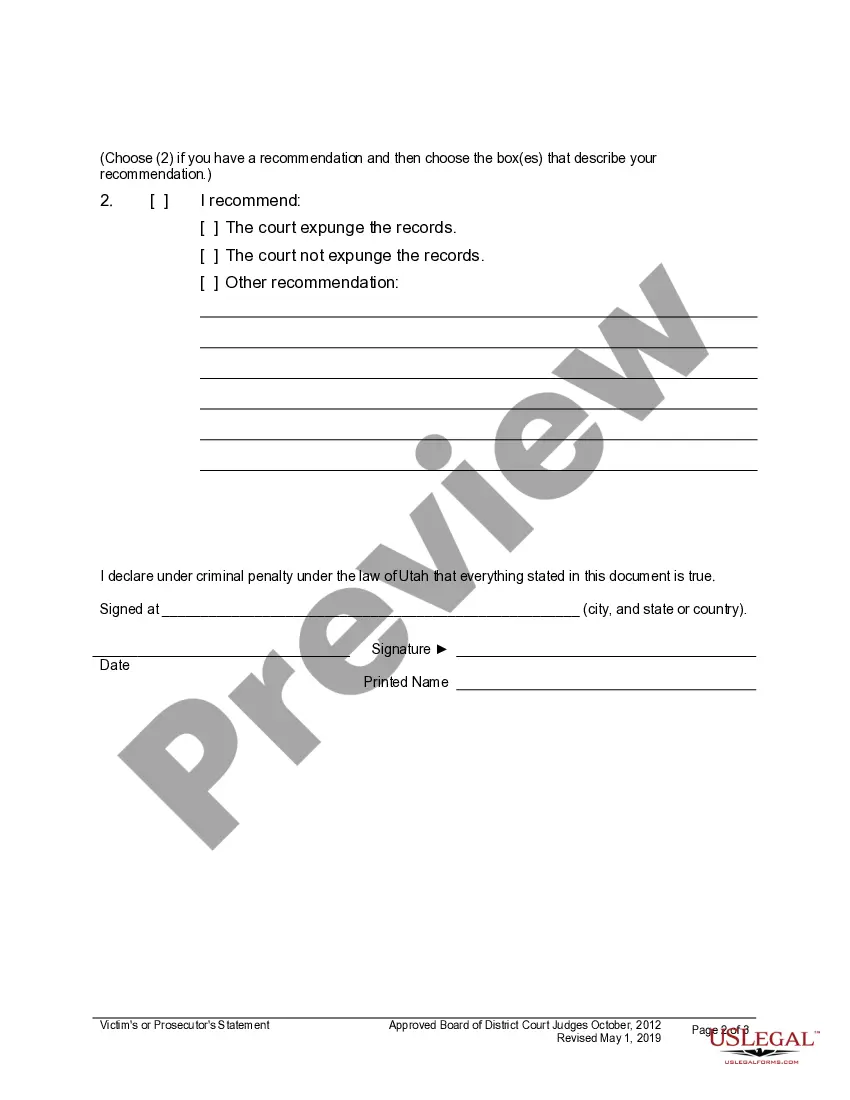
- Sections for the victim to state their objection or recommendation regarding the expungement.
- Signature lines for both the victim and prosecutor, indicating agreement or disagreement.
- Option to attach additional pages if more space is needed for explanations.
When to use this document
This form is necessary when a victim of a crime seeks to present their perspective on a petition for expungement of an adultâs criminal records. This typically occurs when the petitioner believes they have met the conditions for expungement, and the victim has the right to provide feedback to the court regarding the impact of the crime and the appropriateness of granting the request.
Who can use this document
- Victims of crimes for which a petition for expungement is filed.
- Attorneys representing victims in court proceedings.
- Prosecutors involved in the case.
Completing this form step by step
- Fill in your name and specifics as the victim, or indicate if you are the petioner's attorney.
- Provide the court details, including the court address and case number.
- Indicate whether you object or do not object to the expungement and provide supporting reasons.
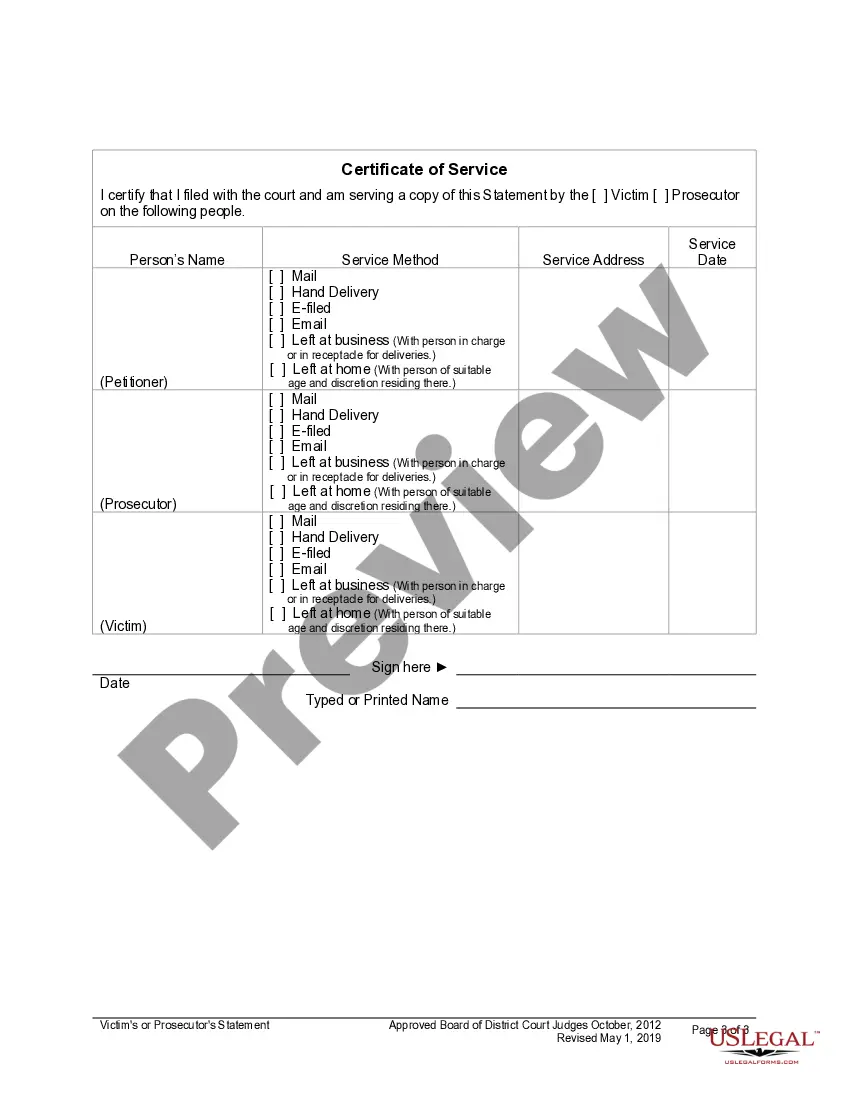
- Sign the form and include your contact method for service of documents.
- If needed, attach additional pages to provide further explanation or recommendations.
Notarization requirements for this form
This form does not typically require notarization unless specified by local law. Always check with the local court rules to ensure compliance.
Get your form ready online
Our built-in tools help you complete, sign, share, and store your documents in one place.
Make edits, fill in missing information, and update formatting in US Legal Forms—just like you would in MS Word.
Download a copy, print it, send it by email, or mail it via USPS—whatever works best for your next step.
Sign and collect signatures with our SignNow integration. Send to multiple recipients, set reminders, and more. Go Premium to unlock E-Sign.
If this form requires notarization, complete it online through a secure video call—no need to meet a notary in person or wait for an appointment.
We protect your documents and personal data by following strict security and privacy standards.

Make edits, fill in missing information, and update formatting in US Legal Forms—just like you would in MS Word.

Download a copy, print it, send it by email, or mail it via USPS—whatever works best for your next step.

Sign and collect signatures with our SignNow integration. Send to multiple recipients, set reminders, and more. Go Premium to unlock E-Sign.

If this form requires notarization, complete it online through a secure video call—no need to meet a notary in person or wait for an appointment.

We protect your documents and personal data by following strict security and privacy standards.
Typical mistakes to avoid
- Failing to include case details, such as the case number or court name.
- Not clearly stating whether you object to the expungement.
- Omitting your contact information for service of documents.
- Not signing the document, which could invalidate the submission.
Why use this form online
- Convenient access to legal forms from anywhere, allowing users to complete them at their own pace.
- Editability ensures users can customize the document to reflect their specific situation.
- Compliance with legal standards, as forms are drafted by licensed attorneys.
Looking for another form?



Form popularity
FAQ
7 years for Felonies (except felony drug possession offenses) 5 years for Class A Misdemeanors and felony drug possession offenses. 4 years for Class B Misdemeanors (except DUIs) 3 years for Class C Misdemeanors and Infractions.
Always begin the letter with a formal greeting, such as "Dear Judge...", before composing the rest of the letter. Then, write the first paragraph of your letter by explaining why you are writing, what charge you wish to have expunged, and a short description of why you feel it should be expunged.
Always begin the letter with a formal greeting, such as "Dear Judge...", before composing the rest of the letter. Then, write the first paragraph of your letter by explaining why you are writing, what charge you wish to have expunged, and a short description of why you feel it should be expunged.
The Limits of Expunging Your Criminal Record. If you've successfully expunged, or sealed, your criminal record, in most situations you can answer No when asked whether you have a record.
It can take several months for BCI to process your request. Once you receive your certificate, you will have 90 days from when it was issued to file it, along with the Petition to Expunge Records, with the court. If the certificate expires, you will have to request a new one.
Online expungement is only available through Maryland expungement.com and not offered by a State or government website. This legal expungement service is particularly convenient for individuals who don't want to have to travel to the courthouse, obtain all the paperwork, drive home.
Determine if you are eligible. Apply for a certificate of eligibility from the Utah Bureau of Criminal Investigations. Receive your certificate. Draft the Petition for Expungement. File the petition in the appropriate court. Serve the appropriate prosecutor's office with the required paperwork.
You must first pay all fines, fees, restitution and interest related to the conviction you are trying to expunge.You cannot expunge records of the following crimes unless you have been pardoned for the offense: a capital felony, first degree felony or violent felony (as defined in Utah Code 76-3-203.5(1)(c)(i));
Expungement vs. Record Sealing. The key difference between expunging a person's criminal record and sealing it is that a sealed record still exists in both a legal and physical sense, while expungement results in the deletion of any record that an arrest or criminal charge ever occurred.