Affidavit of Possession by Tenant
What this document covers
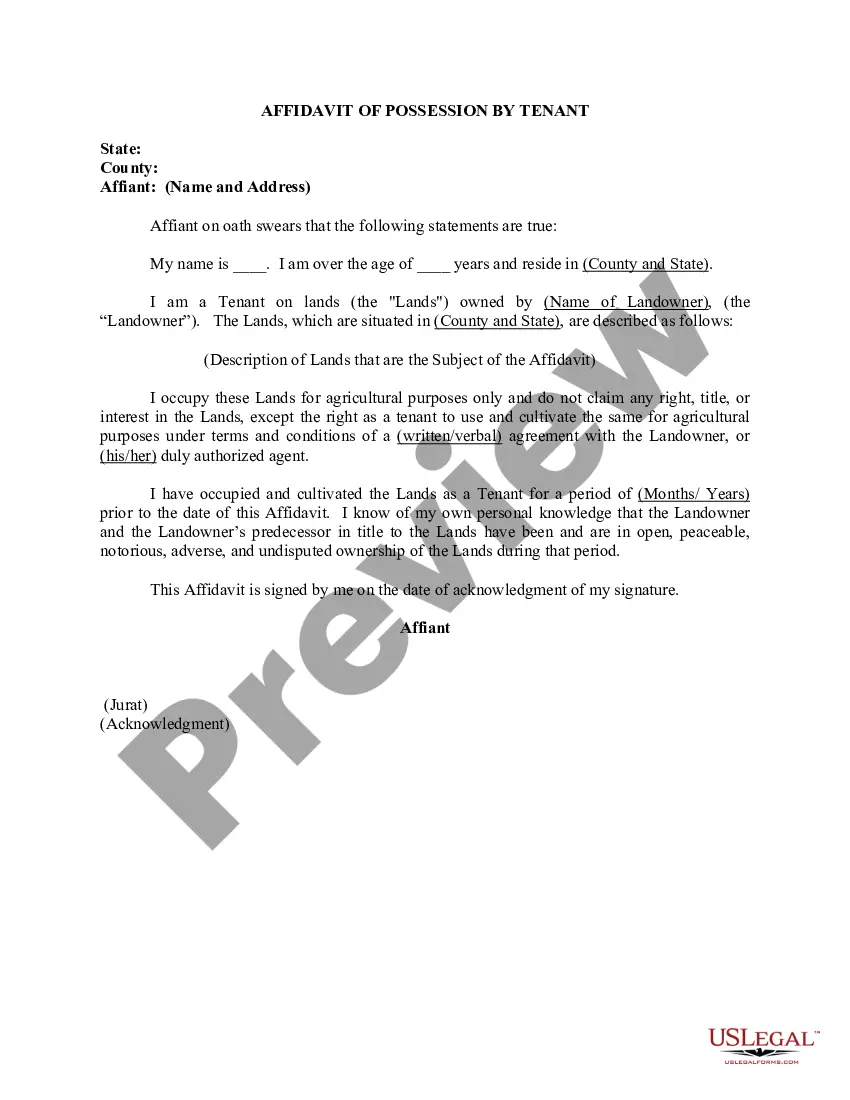
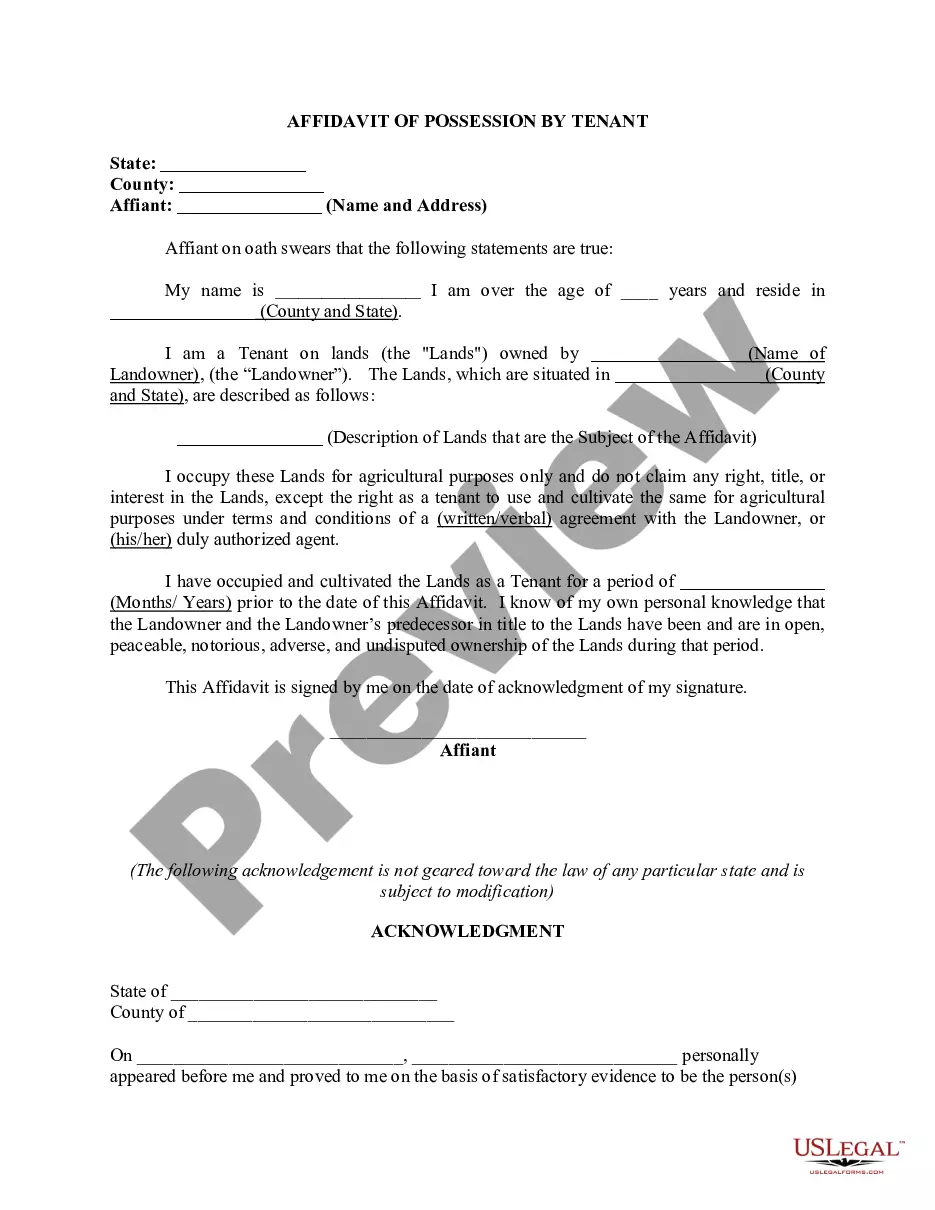
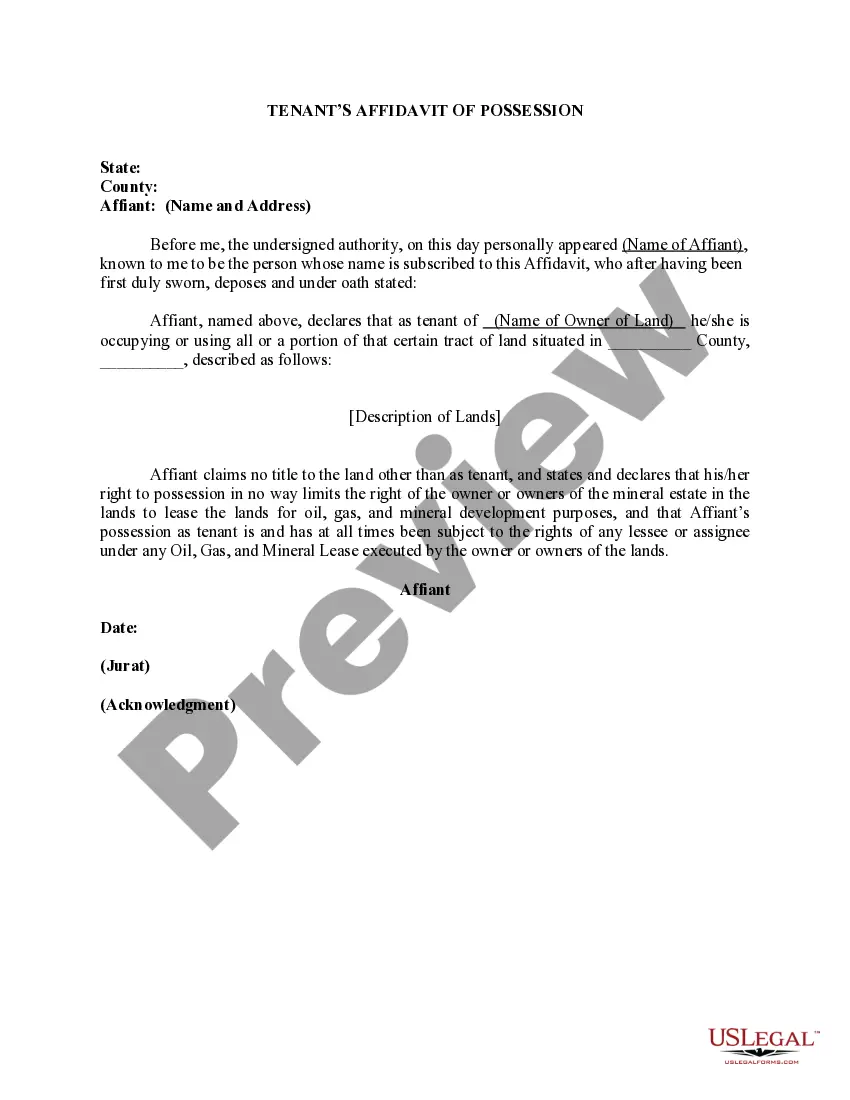
The Affidavit of Possession by Tenant is a legal document affirming that a tenant occupies specific land for agricultural purposes. This affidavit serves as proof that the tenant does not claim ownership of the land and confirms that the landowner retains possession. It is distinct from other forms related to tenancy because it explicitly addresses the rights of the tenant without asserting any ownership claims.
Key parts of this document
- Affiant's name and address
- Declaration of age and residency
- Identification of the owner of the land
- Description of the land being occupied
- Statement of occupancy and terms of use
- Duration of tenancy
- Affirmation of the landowner's possession
- Signature and jurat for acknowledgment
Situations where this form applies
This affidavit is typically used when a tenant wants to formally declare their occupancy of agricultural land. It can be necessary in situations such as resolving disputes over land use, providing evidence for legal matters, or during the process of renewals or negotiations with the landowner. It protects the interests of both the tenant and the owner by clarifying the tenant's lack of ownership claims.
Who should use this form
- Tenants occupying agricultural land
- Landowners needing formal documentation from tenants
- Individuals involved in rental agreements
- Real estate professionals managing agricultural properties
Instructions for completing this form
- Identify the affiant by entering their full name and address.
- State the affiant's age and county of residency.
- Clearly describe the agricultural land involved, including ownership details.
- Specify the duration of tenancy and the agreement with the landowner.
- Affirm the landowner's possession of the land during the tenant's period of use.
- Sign and date the affidavit in the presence of a notary as required.
Is notarization required?
This form needs to be notarized to ensure legal validity. US Legal Forms provides secure online notarization powered by Notarize, allowing you to complete the process through a verified video call, available anytime.
Get your form ready online
Our built-in tools help you complete, sign, share, and store your documents in one place.
Make edits, fill in missing information, and update formatting in US Legal Forms—just like you would in MS Word.
Download a copy, print it, send it by email, or mail it via USPS—whatever works best for your next step.
Sign and collect signatures with our SignNow integration. Send to multiple recipients, set reminders, and more. Go Premium to unlock E-Sign.
If this form requires notarization, complete it online through a secure video call—no need to meet a notary in person or wait for an appointment.
We protect your documents and personal data by following strict security and privacy standards.

Make edits, fill in missing information, and update formatting in US Legal Forms—just like you would in MS Word.

Download a copy, print it, send it by email, or mail it via USPS—whatever works best for your next step.

Sign and collect signatures with our SignNow integration. Send to multiple recipients, set reminders, and more. Go Premium to unlock E-Sign.

If this form requires notarization, complete it online through a secure video call—no need to meet a notary in person or wait for an appointment.

We protect your documents and personal data by following strict security and privacy standards.
Mistakes to watch out for
- Failing to include a detailed description of the land.
- Omitting the duration of occupancy.
- Not having the document notarized, where required.
- Inaccurate or incomplete information about the landowner.
Benefits of using this form online
- Convenient access to the form anytime and anywhere.
- Edit and customize the form to fit specific needs before downloading.
- Reliable templates drafted by licensed attorneys ensure legal accuracy.
- Quick download options save time compared to traditional paper forms.
What to keep in mind
- The Affidavit of Possession by Tenant clarifies occupancy without ownership claims.
- It is essential for protecting tenant rights and ensuring compliance with local agreements.
- Completing the form accurately is vital to avoid legal issues.
- Accessing this form online offers convenience and legal assurance.
Looking for another form?
Form popularity
FAQ
Generally a possession order is enforceable any time up until six years after the possession order was made. After that, you will need to get permission from the court (CPR 83.2(3)(a)).
Be in writing. be signed and dated by you as the property manager, or by your client. be properly addressed to the tenant. give the day on which the residential tenancy agreement is terminated and by which the tenant is required to vacate. where appropriate, give the grounds or reason for the notice.
You should check that the notice to quit or notice seeking possession meets the right legal requirements. For example, it might need to contain certain information. If the notice isn't correct, this could stop or delay your landlord from taking further action.
After you have a possession order (Section 21 or Section 8) Whichever procedure you use, you take the case to court to get the possession order. The court writes to the tenant to order them to leave. Usually this is 14 days later, but may extend up to 42 days if eviction will cause the tenant exceptional hardship.
How long must I wait before removing the tenant's property from the rental unit? After you win an eviction lawsuit in Georgia, the court will issue an order called a writ of possession, allowing you to take back the rental unit and remove the tenant's property. However, you must wait seven days before you act.
Georgia law has no set time frame for how long a landlord must wait after giving the tenant an eviction notice and filing an eviction lawsuit. Best practice for landlords is to wait at least three days before filing the eviction lawsuit, to give the tenant time to pay the rent or move out of the apartment.
After you have a possession order (Section 21 or Section 8) Very few tenants remain in the property after receiving a court order.
It is fairly common in rent arrears cases, for the suspended possession order to include a condition that the possession order will remain suspended as long as the tenant continues to pay the monthly rent, together with a contribution towards the arrears.