Reservation of Additional Interests in Production
What is this form?
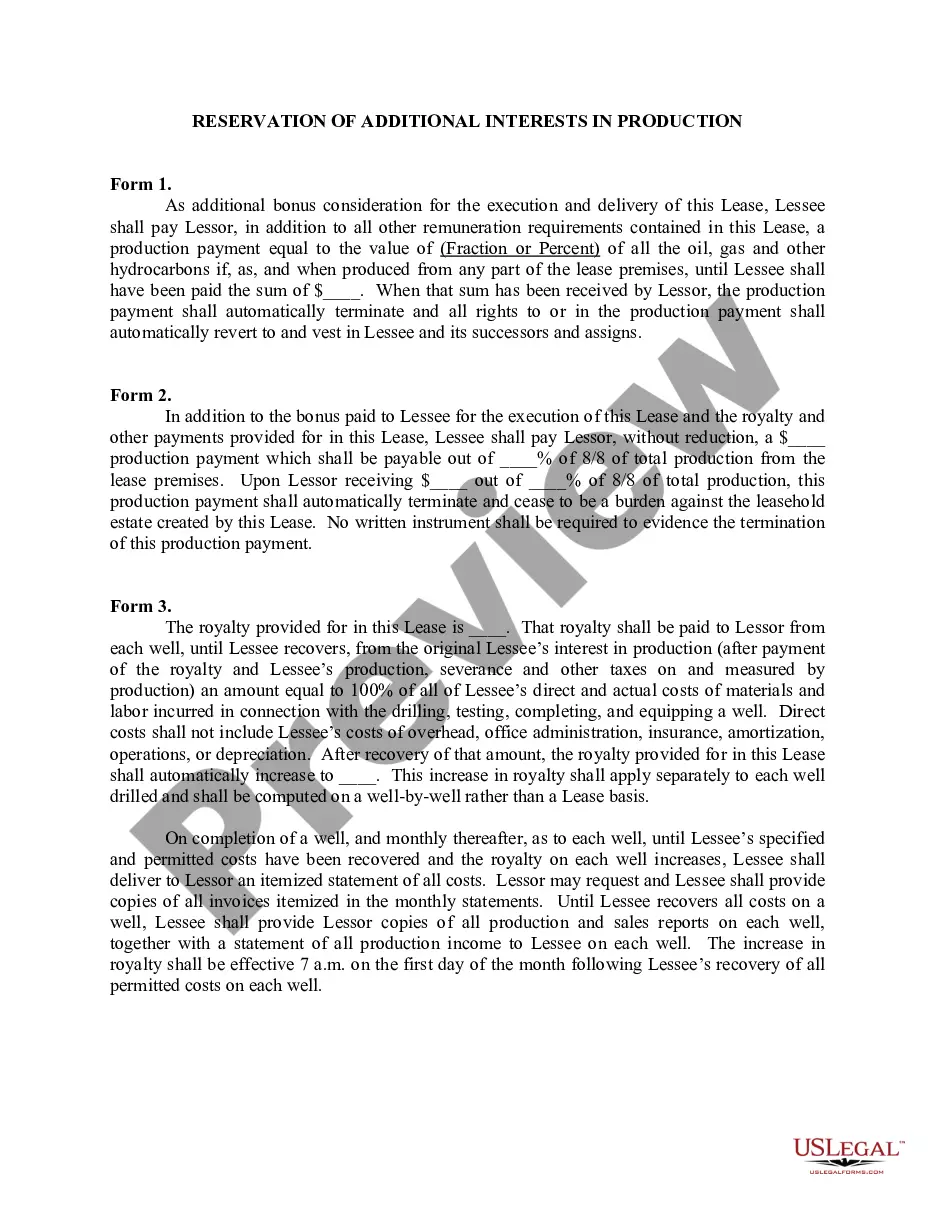
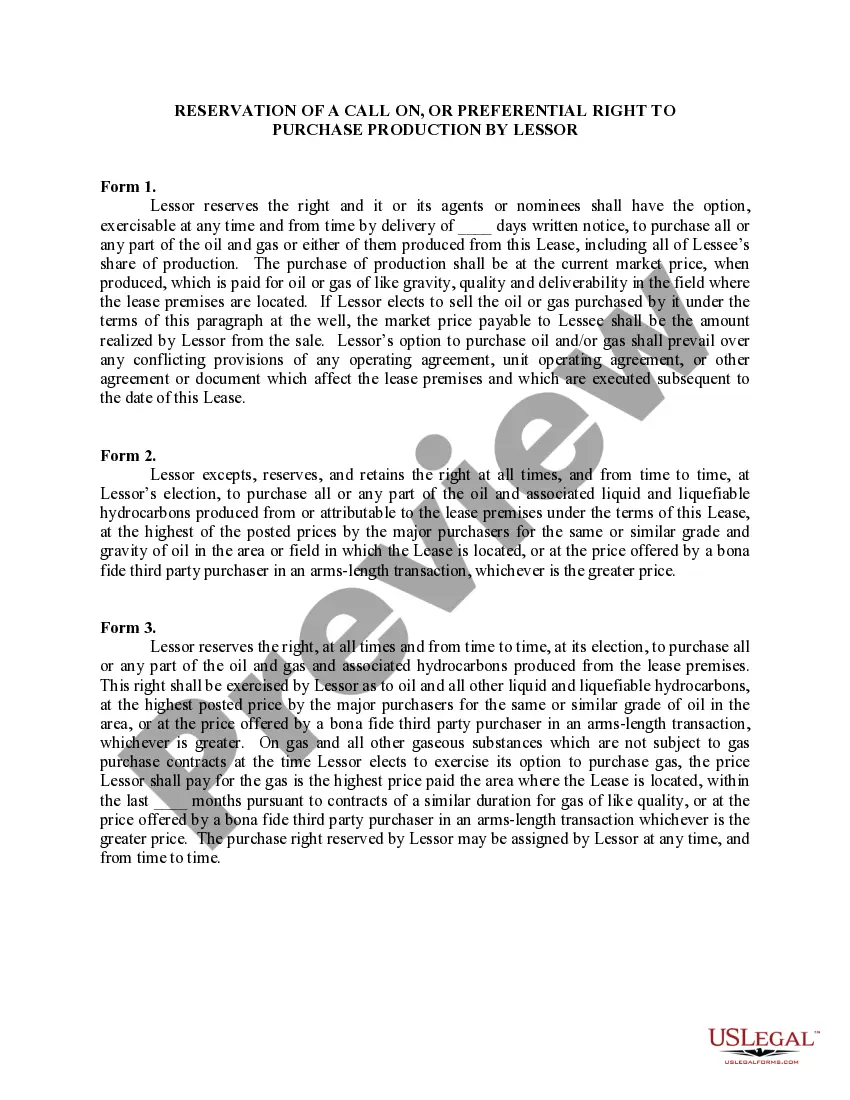
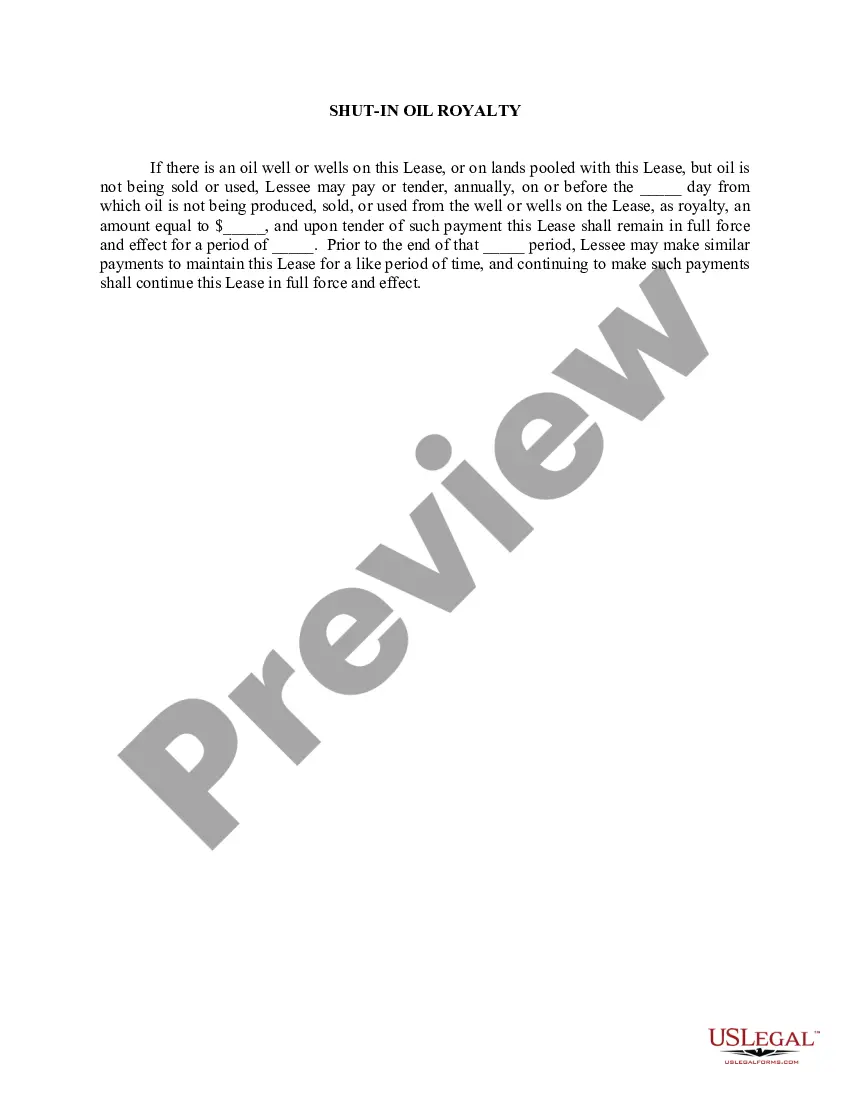
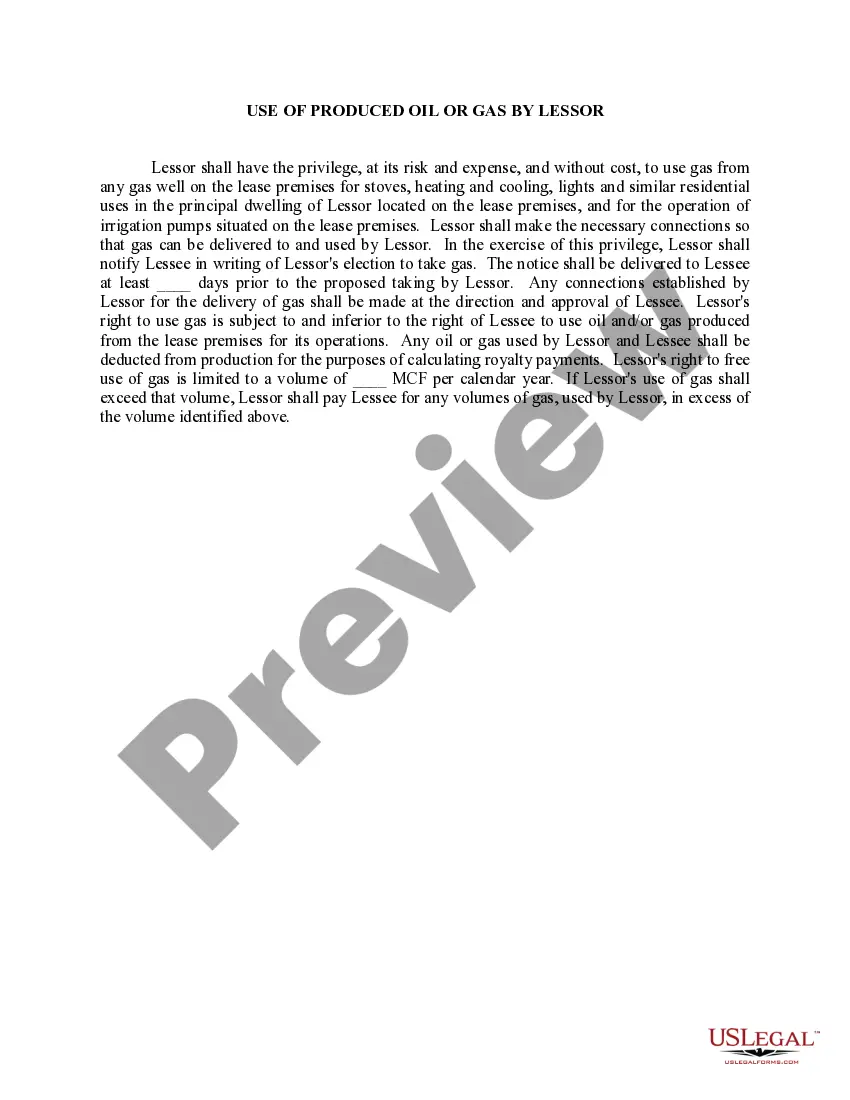
The Reservation of Additional Interests in Production form is a legal document used during lease transactions in the oil and gas industry. This form allows the lessor (landowner) to include specific provisions and limitations within the standard Oil and Gas Lease. By using this form, parties can tailor lease agreements to address their unique concerns and protect the lessor's interests beyond those outlined in the initial lease agreement.
What’s included in this form
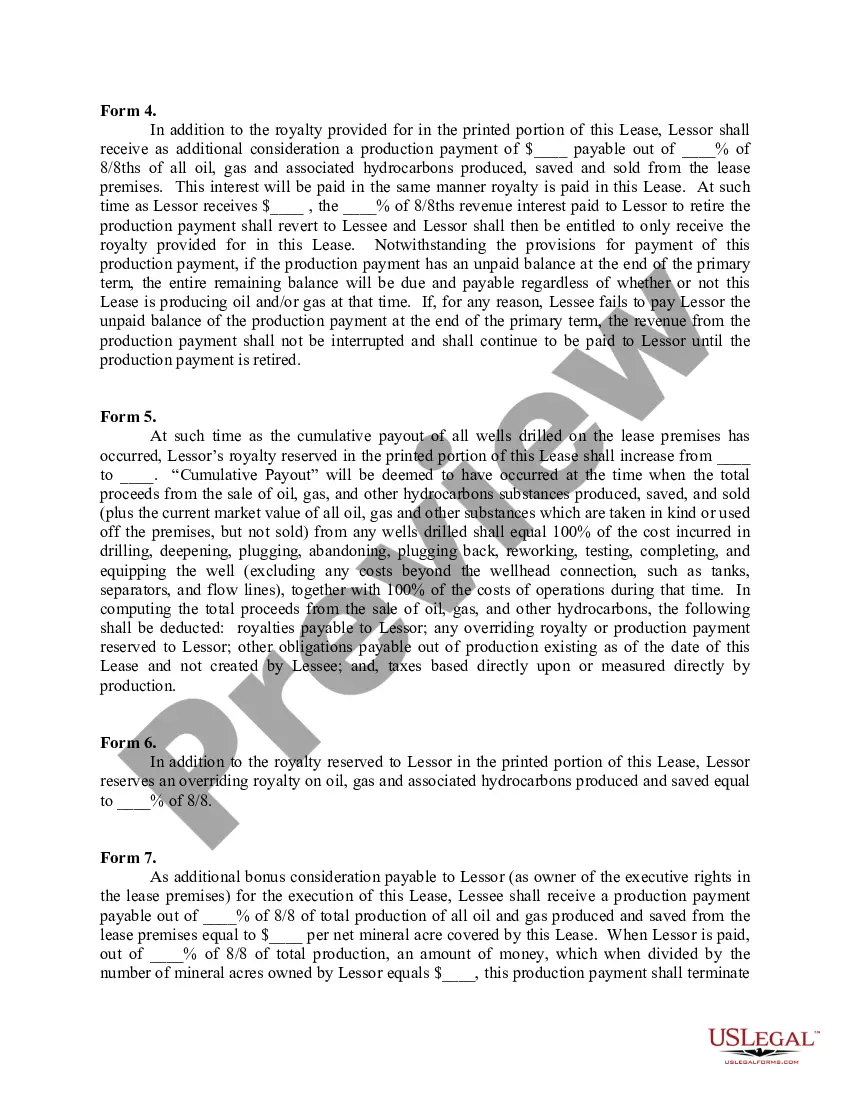
- Production payment clauses detailing payment schedules and termination conditions.
- Royalty payment structures, including conditions for increases based on cumulative payouts.
- Provisions for additional considerations beyond standard lease terms.
- Detailing the costs that can be recovered by the lessee before royalty increases.
- Overriding royalty interests reserved for the lessor.


When to use this document
This form should be used when a lessor enters into an oil and gas lease agreement but desires to reserve additional rights or interests that are not covered in the standard lease templates. Situations may arise such as wanting to secure a higher production payment, set specific terms for royalty increases, or clarify the costs associated with drilling and operations.
Who this form is for
This form is intended for:
- Landowners or lessors who lease their property for oil and gas production.
- Lessee companies seeking to finalize lease agreements while addressing lessor concerns.
- Legal professionals drafting or reviewing oil and gas lease agreements.
Completing this form step by step
- Identify and enter the parties involved in the lease agreement.
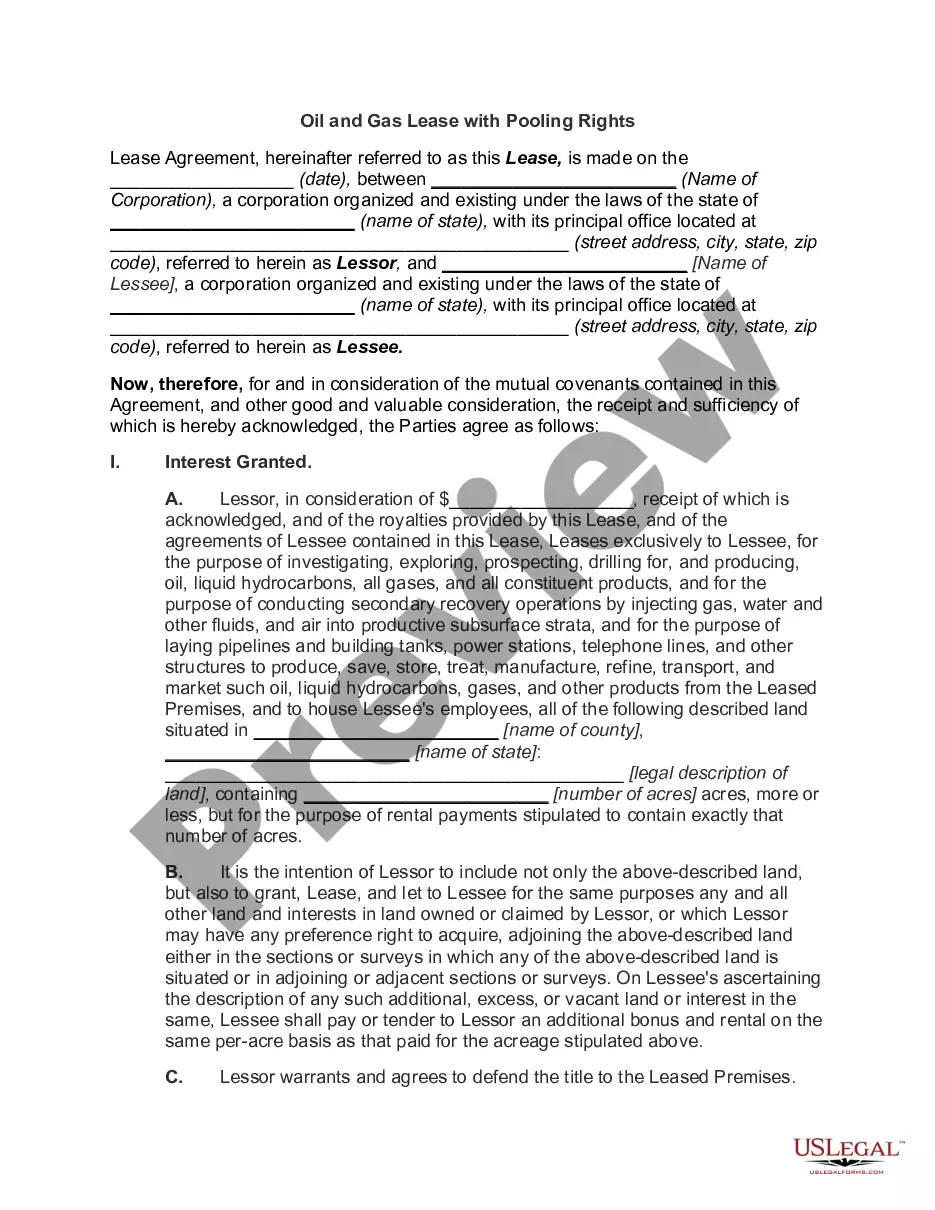
- Specify details about the property being leased, including legal descriptions.
- Fill in production payment values as outlined in the form clauses.
- Outline any specific royalty payment agreements, including the conditions for increases.
- Sign and date the form where indicated, ensuring all parties are in agreement.
Does this form need to be notarized?
In most cases, this form does not require notarization. However, some jurisdictions or signing circumstances might. US Legal Forms offers online notarization powered by Notarize, accessible 24/7 for a quick, remote process.
Get your form ready online
Our built-in tools help you complete, sign, share, and store your documents in one place.
Make edits, fill in missing information, and update formatting in US Legal Forms—just like you would in MS Word.
Download a copy, print it, send it by email, or mail it via USPS—whatever works best for your next step.
Sign and collect signatures with our SignNow integration. Send to multiple recipients, set reminders, and more. Go Premium to unlock E-Sign.
If this form requires notarization, complete it online through a secure video call—no need to meet a notary in person or wait for an appointment.
We protect your documents and personal data by following strict security and privacy standards.

Make edits, fill in missing information, and update formatting in US Legal Forms—just like you would in MS Word.

Download a copy, print it, send it by email, or mail it via USPS—whatever works best for your next step.

Sign and collect signatures with our SignNow integration. Send to multiple recipients, set reminders, and more. Go Premium to unlock E-Sign.

If this form requires notarization, complete it online through a secure video call—no need to meet a notary in person or wait for an appointment.

We protect your documents and personal data by following strict security and privacy standards.
Typical mistakes to avoid
- Failing to clearly define production and royalty payment terms, leading to misunderstandings.
- Not checking local regulations that may affect lease agreements.
- Omitting signatures or failing to date the form, which can nullify the agreement.
Benefits of completing this form online
- Convenience of downloading and completing the form at your own pace.
- Immediate access to legally drafted templates tailored for specific needs.
- Ability to edit the document to suit your unique circumstances.
- Enhanced reliability through clear, standardized language used in the form.
Looking for another form?

Form popularity
FAQ
How to add an interested party. You can add additional interest or interested party or party of interest after you purchase your renters insurance policy. You simply contact your insurance company and say that you want to add an additional interest.
What rights do additional insureds and loss payees have? Both additional insureds and loss payees are entitled to receive insurance benefits along with the named insured. The difference is that additional insureds receive only liability protection whereas loss payees receive only property damage coverage.
How to add an interested party. You can add additional interest or interested party or party of interest after you purchase your renters insurance policy. You simply contact your insurance company and say that you want to add an additional interest.
An additional interest sometimes referred to as an interested party or a party of interest, is a third party who benefits from knowing an insurance policy is in place but doesn't need the coverage. Additional interests that are added to insurance policies are notified when changes to the policy are made.
Analysis: Additional insureds and additional interests are often confused. An 'additional insured' is someone who receives coverage similar to the named insured and can receive liability coverage. An 'additional interest' has a financial interest in the property.
What rights do additional insureds and loss payees have? Both additional insureds and loss payees are entitled to receive insurance benefits along with the named insured. The difference is that additional insureds receive only liability protection whereas loss payees receive only property damage coverage.
Additional interest is simply another name for an interested partysomeone who wants to know whether you have renters insurance. It's common to add your landlord as an additional interest.If you add someone to your policy as an additional insured, it means they are protected by your policy's liability coverage.
Analysis: Additional insureds and additional interests are often confused. An 'additional insured' is someone who receives coverage similar to the named insured and can receive liability coverage. An 'additional interest' has a financial interest in the property.