Letter in Lieu of Transfer Order
What this document covers
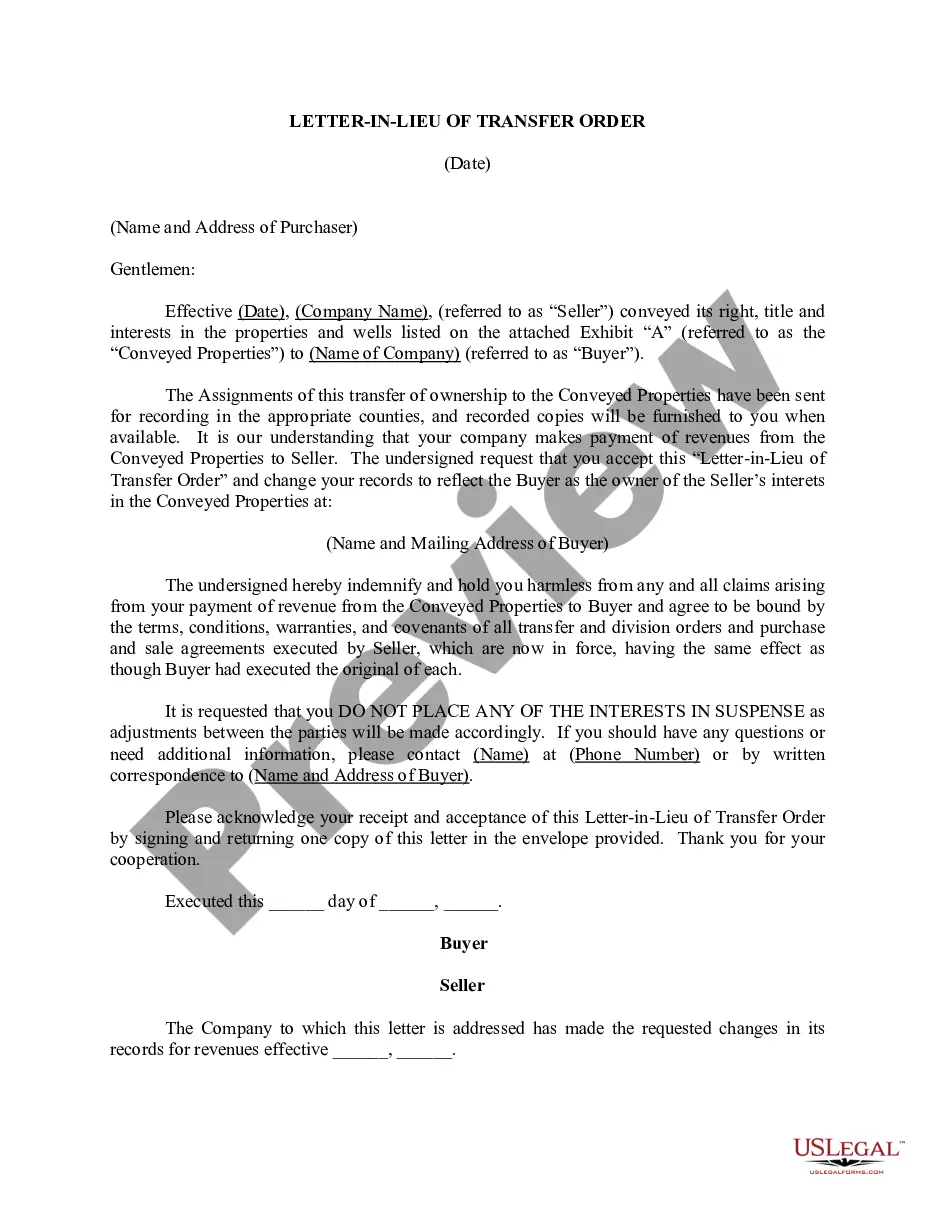
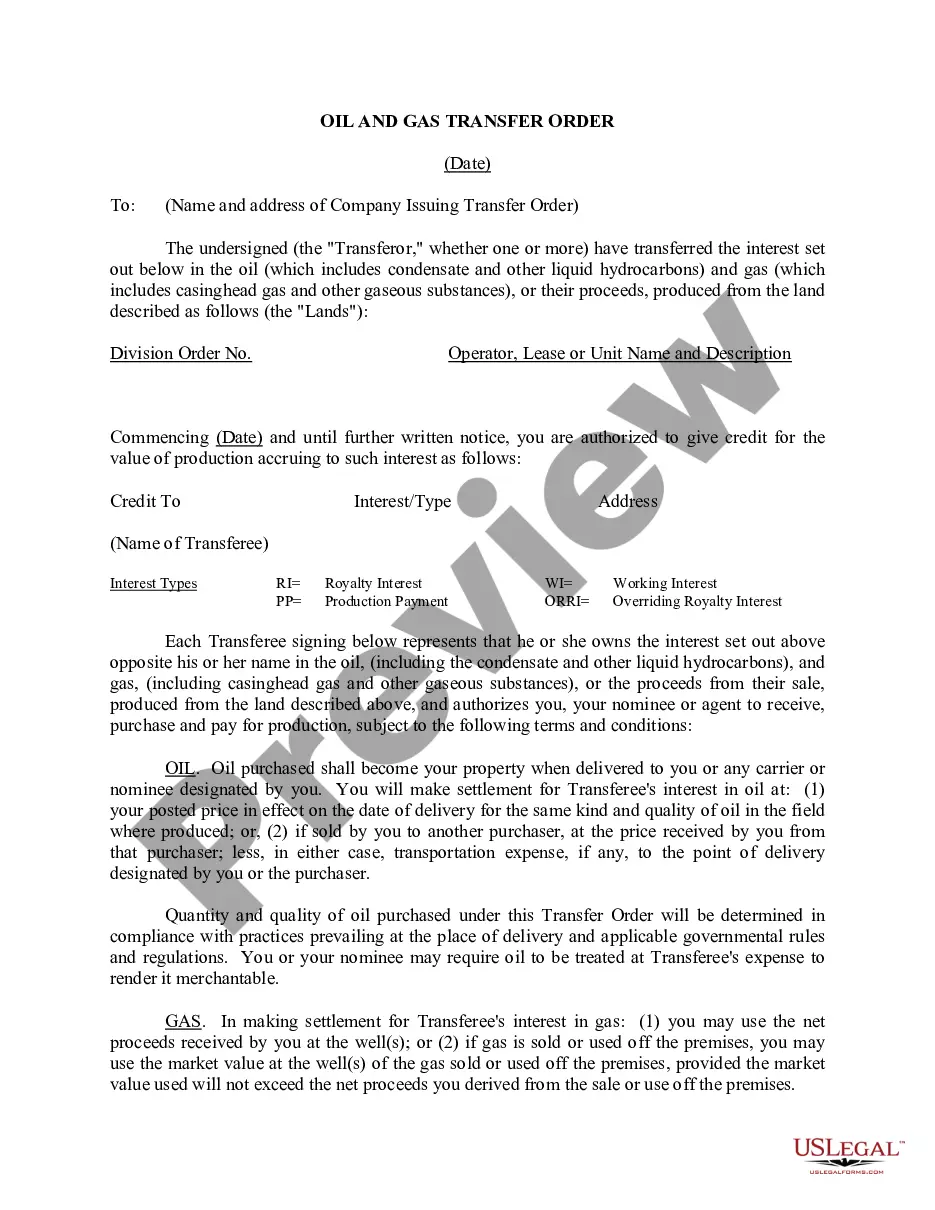
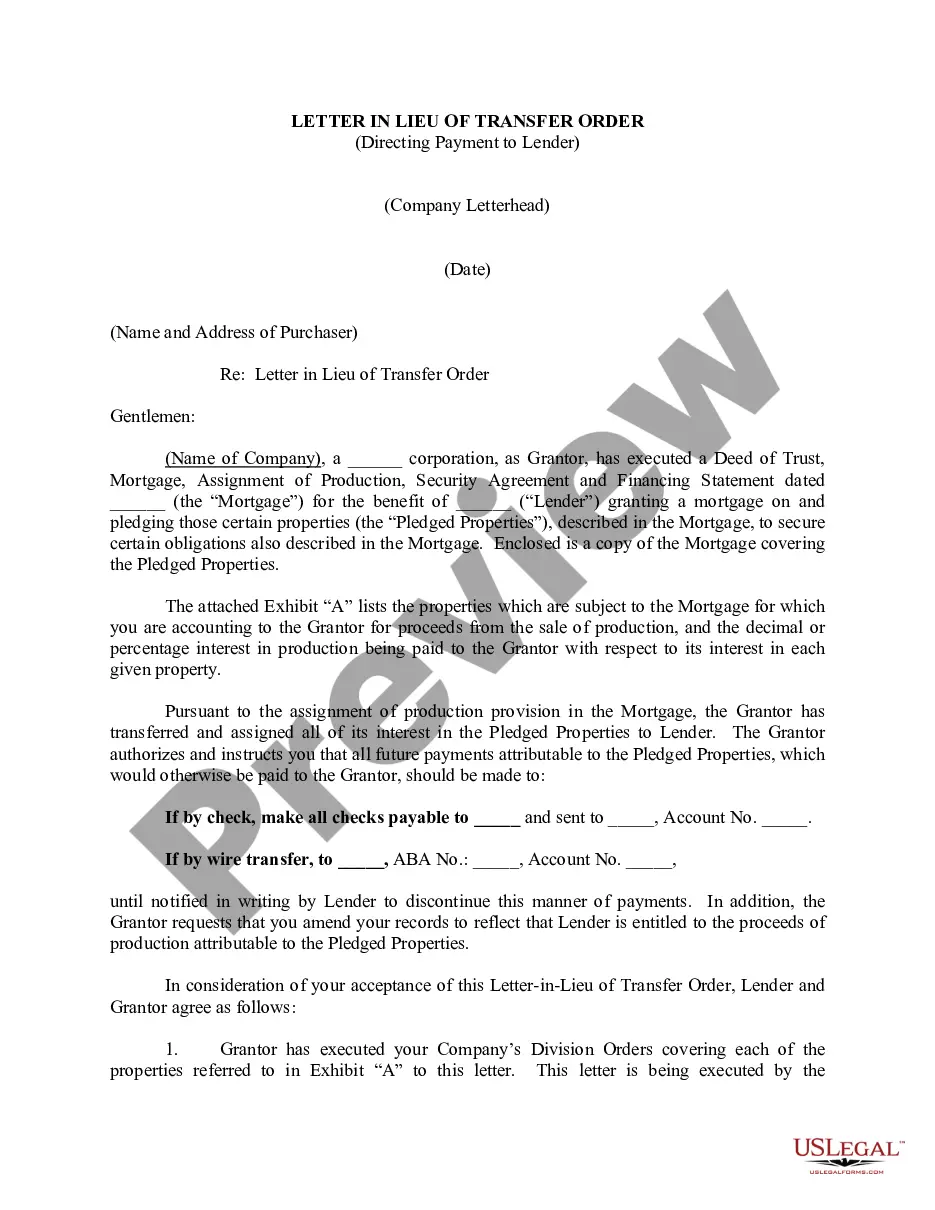
The Letter in Lieu of Transfer Order is a legal document used to formally request a change in a company's records to designate a buyer as the owner of the seller's interest in certain properties. This form is critical in conveying ownership when a property transfer occurs and differs from other forms by specifically addressing the need to update recordkeeping with the seller and buyer's details. It's important for ensuring accurate ownership representation in official records.
Main sections of this form
- Date of the transfer.
- Name and address of the purchaser.
- Identification of the seller and the conveyed properties.
- Indemnification clause outlining responsibilities and claims.
- Instructions not to place interests in suspense.
- Signature lines for both the buyer and seller.

Common use cases
This form is used when a property transfer occurs, and the seller needs to notify a third party of the change in ownership. It is suitable for situations where a change of ownership must be reflected in company records, particularly when revenues are involved. It ensures that all parties understand the transfer and its implications for revenue distribution from the conveyed properties.
Who this form is for
- Property sellers transferring ownership of assets.
- Buyers needing to establish their ownership in company records.
- Companies responsible for managing revenue from conveyed properties.
- Legal representatives overseeing property transactions.
How to complete this form
- Identify and enter the date of the letter.
- Fill in the name and address of the purchaser.
- List the seller's information and the properties being conveyed.
- Include the buyer's details for record purposes.
- Sign the document on behalf of the buyer and seller.
- Return a copy of the signed letter as requested for acknowledgment.
Notarization guidance
This form does not typically require notarization to be legally valid. However, some jurisdictions or document types may still require it. US Legal Forms provides secure online notarization powered by Notarize, available 24/7 for added convenience.
Get your form ready online
Our built-in tools help you complete, sign, share, and store your documents in one place.
Make edits, fill in missing information, and update formatting in US Legal Forms—just like you would in MS Word.
Download a copy, print it, send it by email, or mail it via USPS—whatever works best for your next step.
Sign and collect signatures with our SignNow integration. Send to multiple recipients, set reminders, and more. Go Premium to unlock E-Sign.
If this form requires notarization, complete it online through a secure video call—no need to meet a notary in person or wait for an appointment.
We protect your documents and personal data by following strict security and privacy standards.

Make edits, fill in missing information, and update formatting in US Legal Forms—just like you would in MS Word.

Download a copy, print it, send it by email, or mail it via USPS—whatever works best for your next step.

Sign and collect signatures with our SignNow integration. Send to multiple recipients, set reminders, and more. Go Premium to unlock E-Sign.

If this form requires notarization, complete it online through a secure video call—no need to meet a notary in person or wait for an appointment.

We protect your documents and personal data by following strict security and privacy standards.
Typical mistakes to avoid
- Failing to include all relevant parties in the form.
- Leaving out necessary dates or information about the properties being conveyed.
- Not signing the document properly or omitting signatures.
- Assuming records will automatically update without this formal request.
Advantages of online completion
- Convenient access to legally drafted templates.
- Editability to customize the form according to specific needs.
- Reliable and secure method for completing legal documentation.
- Immediate availability for download and use.
Looking for another form?
Form popularity
FAQ
Working interest is a term for a type of investment in oil and gas drilling operations in which the investor is directly liable for a portion of the ongoing costs associated with exploration, drilling, and production.
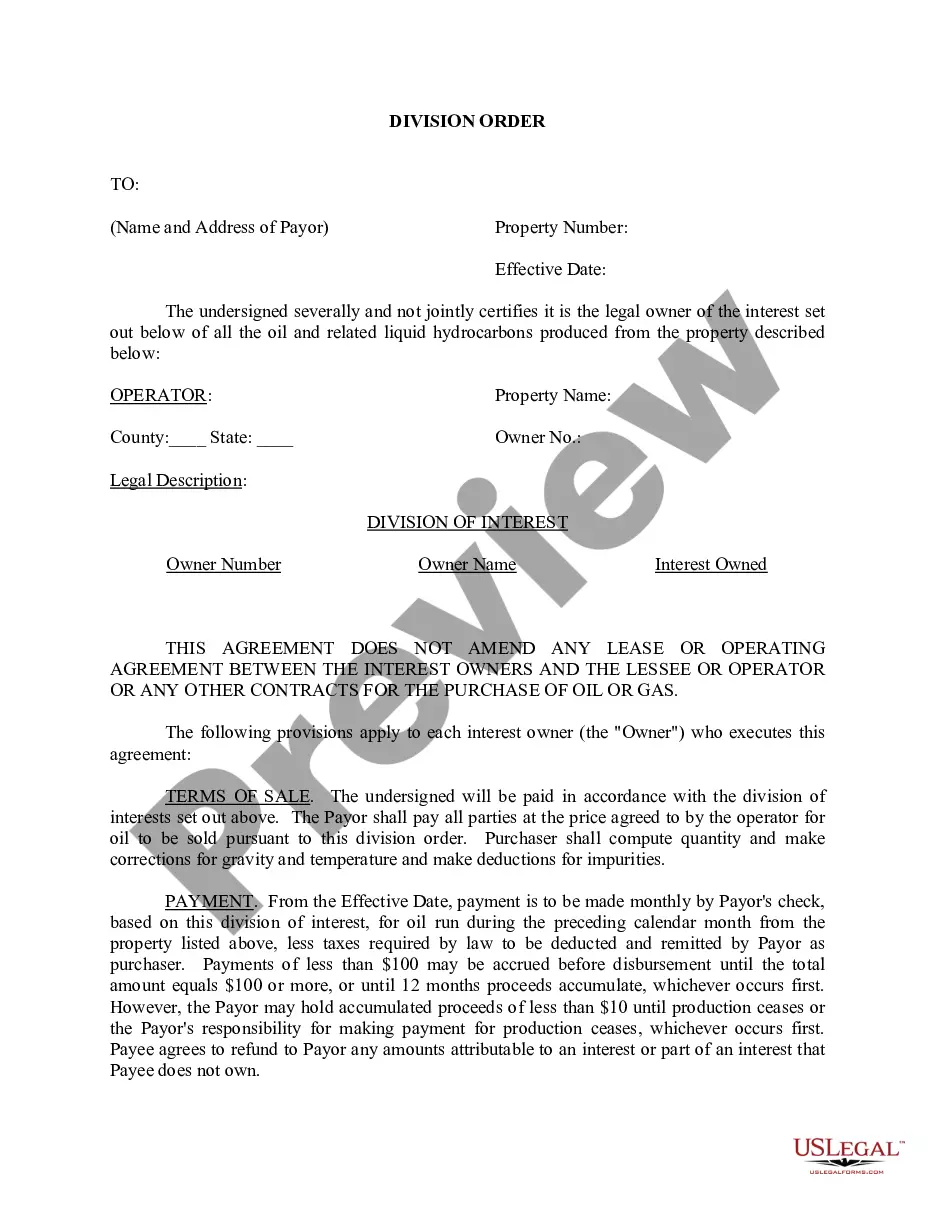
A Division Order (DO's), also known as a Division of Interest (DOI), is the instrument which details the proportional ownership of produced minerals, including oil, liquids, natural gas, etc., in a well or unitized area of production.
Transferring Deeded Oil, Gas or Mineral Rights Into Your Trust. The process is easiest if you own the actual real estate that holds the oil, gas or mineral deposits. You can simply create and sign a new deed transferring ownership of the real estate from your name into that of your trust.
A deed that names the seller/donor and the purchaser/donee. It states and describes the rights being sold or given. Filing of the notarized conveyance in the county government office which is generally the county clerk's office.
Mineral rights are automatically included as a part of the land in a property conveyance, unless and until the ownership gets separated at some point by an owner/seller.Conveying (selling or otherwise transferring) the land but retaining the mineral rights.
You have no idea how troublesome it is to probate wills decades after the person died so that the oil company will pay royalties to the heirs. But if you push they will pay per the state statutes. So, if you had no siblings, your state statute probably says that you inherit from your mother.
A division order is a record of your interest in a specific well. It contains your decimal interest, interest type, well number and well name. Division orders are issued to all that own an interest in a specific well after that well has achieved first sales of either oil or gas.
Call the county where the minerals are located and ask how to transfer mineral ownership after death. They will probably advise you to submit a copy of the death certificate, probate documents (if any), and a copy of the will (or affidavit of heirship if there is no will).