Kansas Warranty Deed from Individual to Corporation
Description
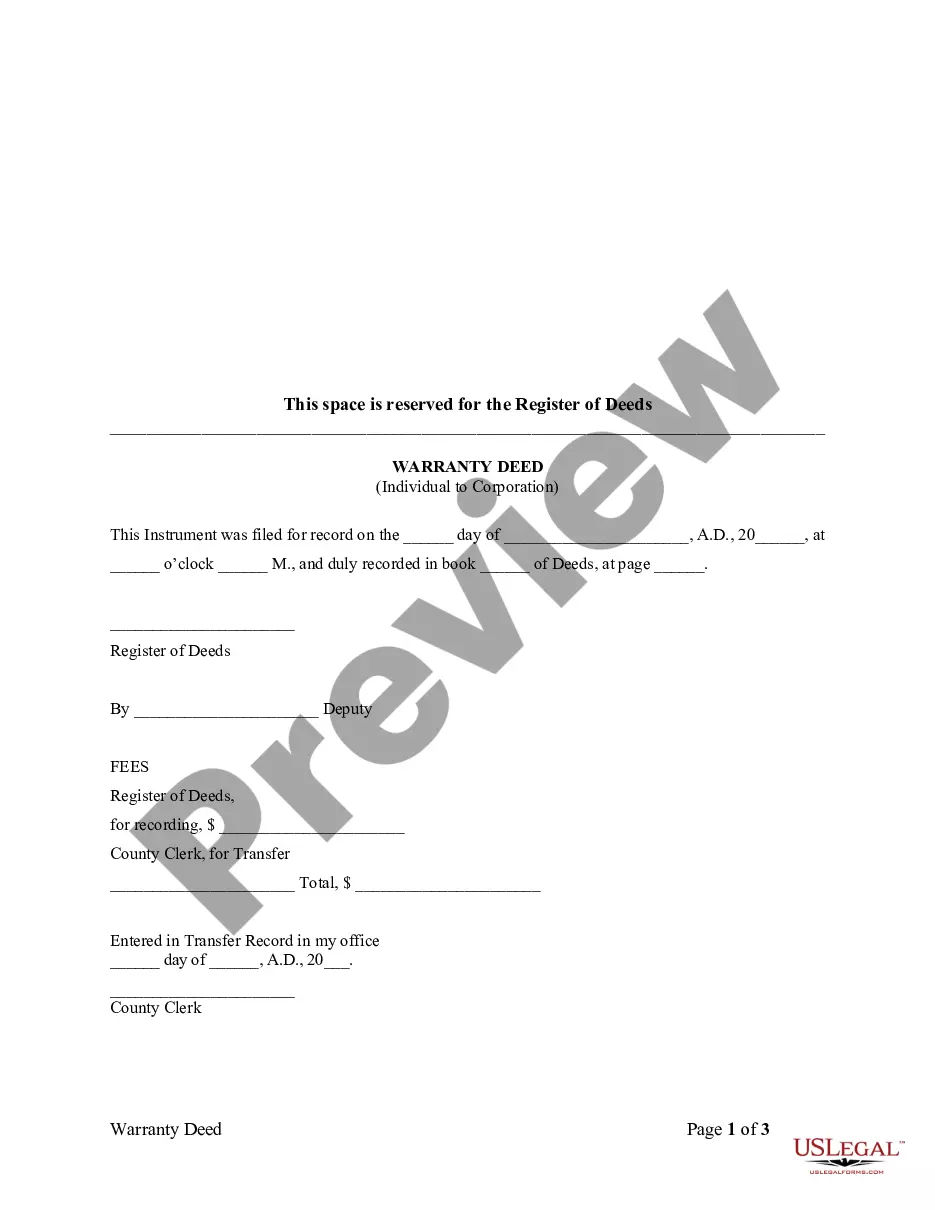
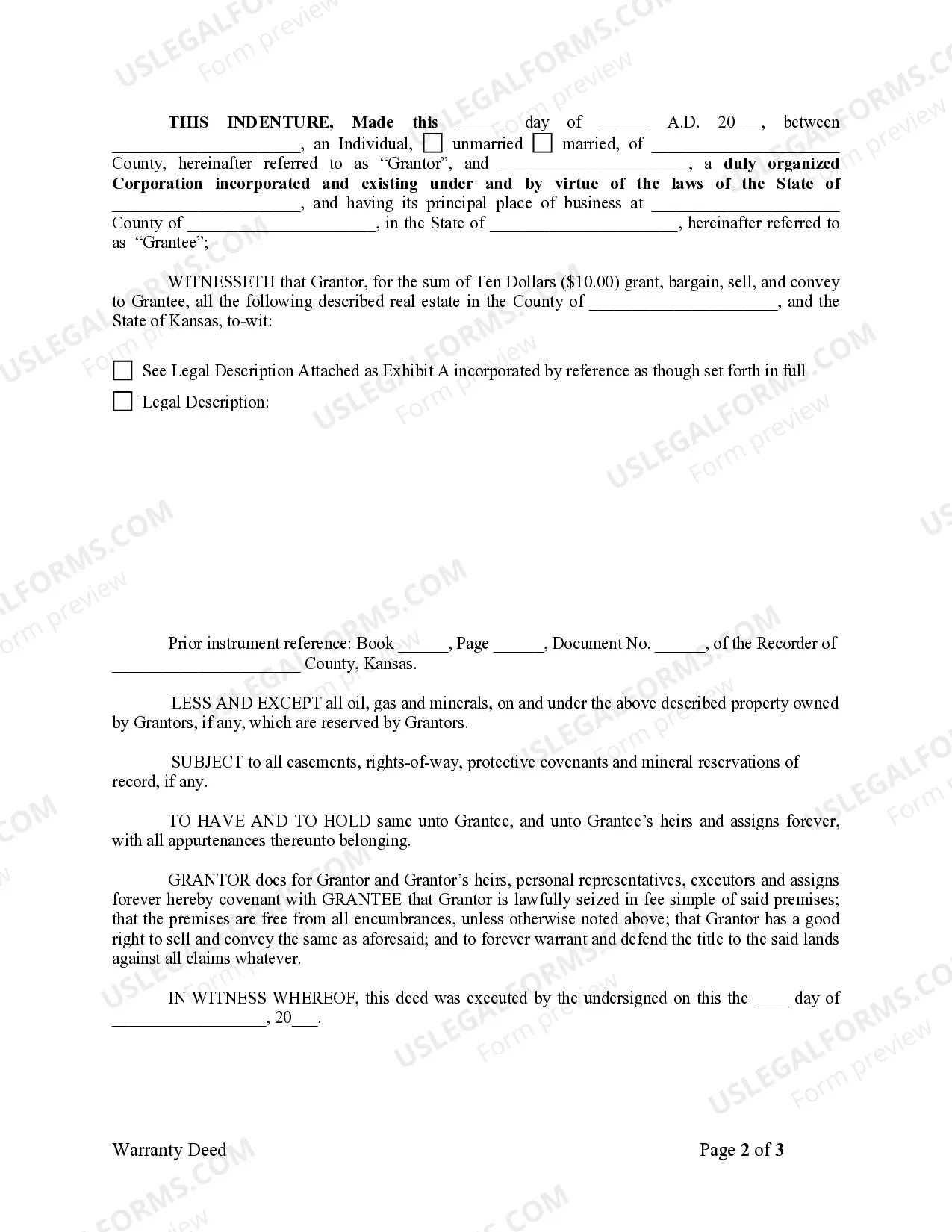
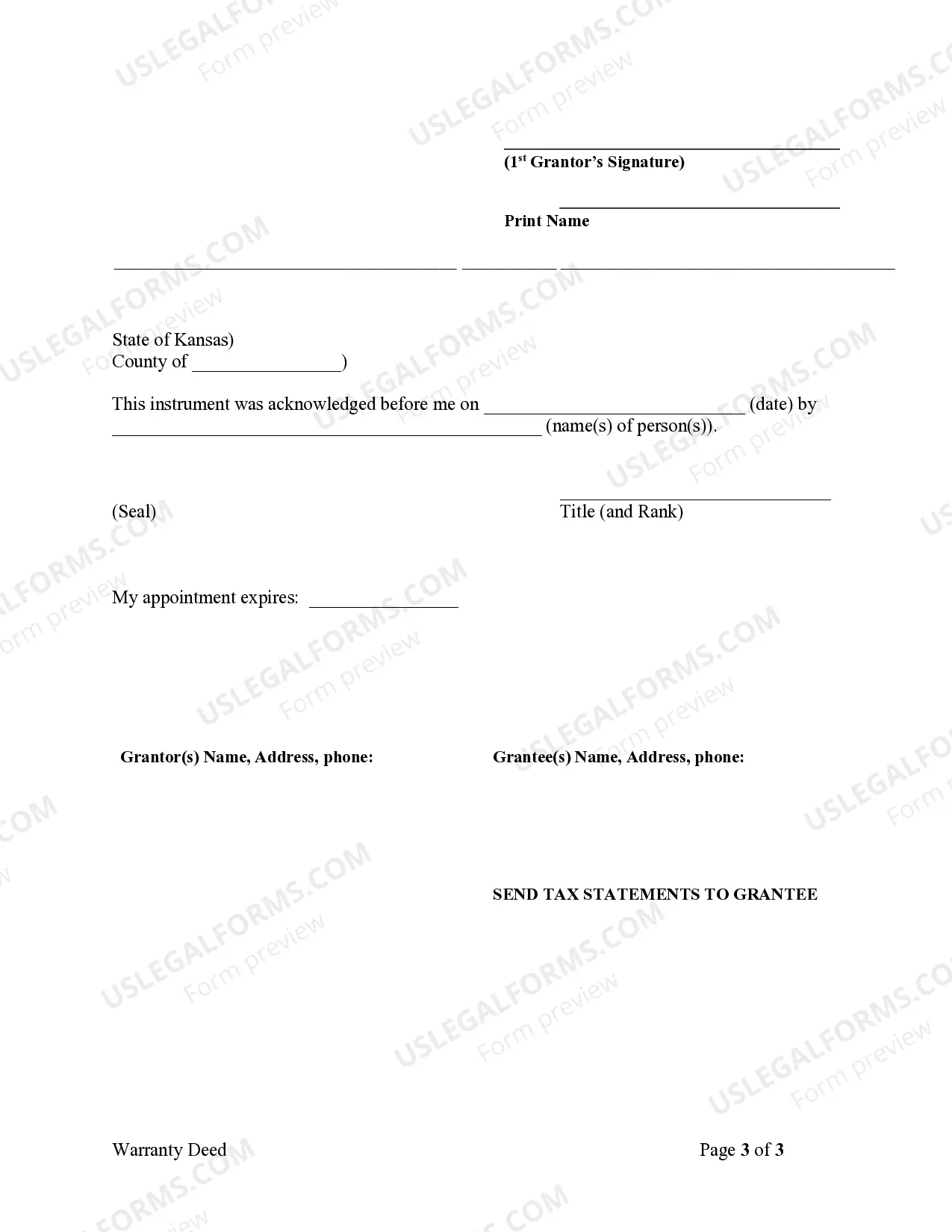




How to fill out Kansas Warranty Deed From Individual To Corporation?
Locating Kansas Warranty Deed from Individual to Corporation examples and completing them can be fairly challenging.
To conserve time, expenses, and effort, utilize US Legal Forms to find the suitable template specifically for your state in just a few clicks.
Our legal professionals prepare all documents, so you only need to complete them. It's truly that easy.
Select your payment option on the pricing page and create an account. Choose whether you want to pay with a credit card or via PayPal. Download the sample in your desired file format. Now you can either print the Kansas Warranty Deed from Individual to Corporation form or fill it out using any online editor. Don’t worry about making mistakes, as your sample can be utilized and submitted, and printed as many times as you wish. Explore US Legal Forms and gain access to over 85,000 state-specific legal and tax documents.
- Log in to your account and navigate back to the form's page to download the document.
- All your saved samples are stored in My documents and are available at any time for future use.
- If you haven’t subscribed yet, you must register.
- Refer to our detailed instructions on how to obtain the Kansas Warranty Deed from Individual to Corporation template in just a few minutes.
- To acquire a qualified sample, verify its relevance for your state.
- Use the Preview feature to view the form if it is available.
- If there is a description, review it to grasp the key points.
- Click on Buy Now if you have found what you were looking for.
Form popularity
FAQ
The original deed is returned to the owner of the property from the office of the recorder after proper entry. The office of the Recorder of Deeds maintains a set of indexes about each deed recorded, for an easy search. Almost all states have a grantor-grantee index including a reference to all documents recorded.
Corporate warranty deeds offer the seller's guarantee to the buyer in regards to the validity of the chain of title. Generally, special warranty deeds only protect against problems occurring since the seller purchased the property.
It's important to note that a warranty deed does not actually prove the grantor has ownership (a title search is the best way to prove that), but it is a promise by the grantor that they are transferring ownership and if it turns out they don't actually own the property, the grantor will be responsible for compensating
A warranty deed, also known as a general warranty deed, is a legal real estate document between the seller (grantor) and the buyer (grantee). The deed protects the buyer by pledging that the seller holds clear title to the property and there are no encumbrances, outstanding liens, or mortgages against it.
Typically, the lender will provide you with a copy of the deed of trust after the closing. The original warranty deeds are often mailed to the grantee after they are recorded. These are your original copies and should be kept in a safe place, such as a fireproof lockbox or a safe deposit box at a financial institution.
A warranty deed is a higher level of protection produced by the seller upon the real estate closing. It includes a full legal description of the property, and confirms the title is clear and free from all liens, encumbrances, or title defects. Most property sales make use of a warranty deed.
A special warranty deed is a deed to real estate where the seller of the propertyknown as the grantorwarrants only against anything that occurred during their physical ownership. In other words, the grantor doesn't guarantee against any defects in clear title that existed before they took possession of the property.
Contrary to normal expectations, the Deed DOES NOT have to be recorded to be effective or to show delivery, and because of that, the Deed DOES NOT have to be signed in front of a Notary Public. However, if you plan to record it, then it does have to be notarized as that is a County Recorder requirement.
A warranty deed is a legal document used to transfer, or convey, rights in real property from a grantor (seller) to a grantee (buyer). For Kansas residential property, the primary methods for holding title in co-ownership are tenancy in common and joint tenancy.