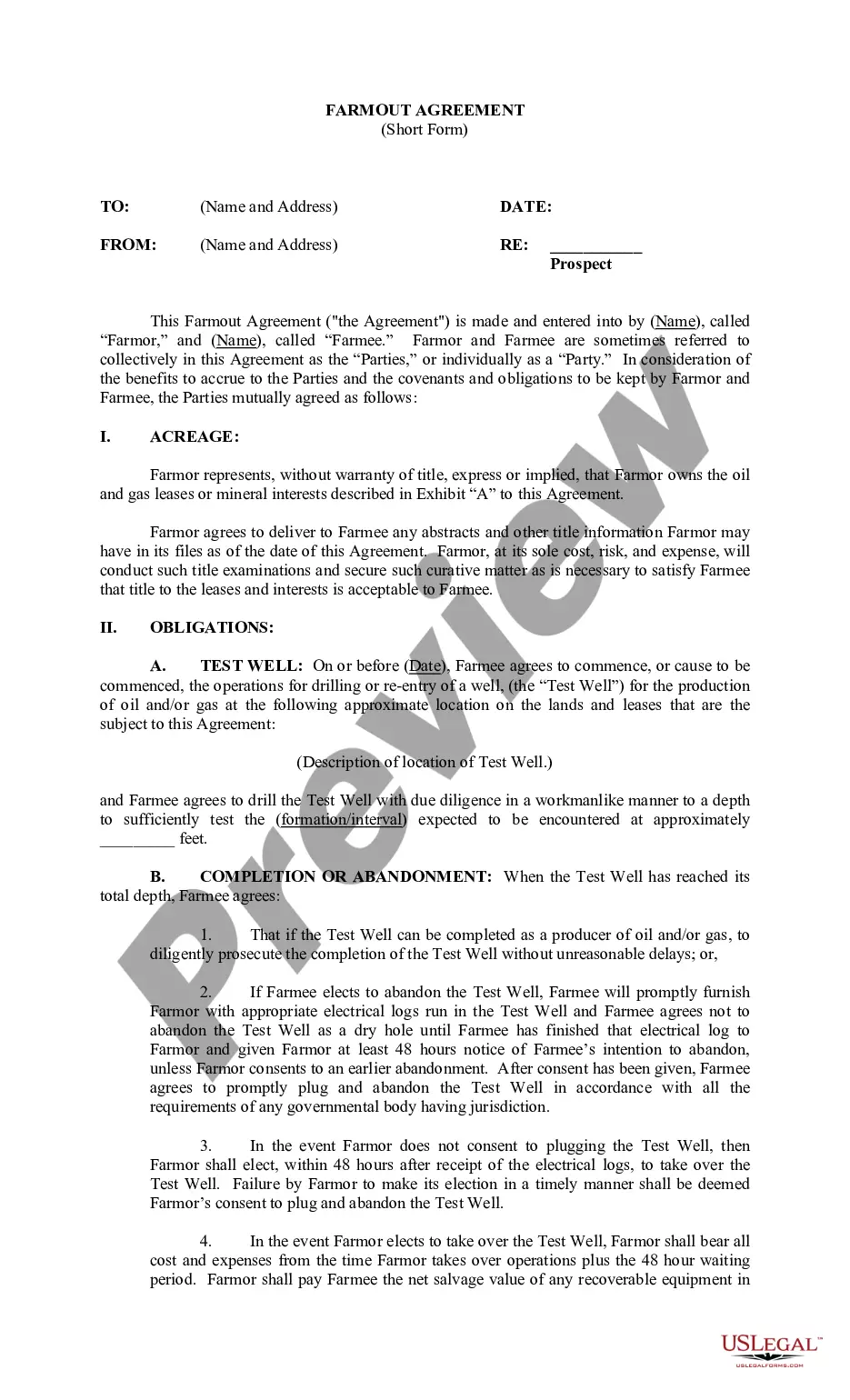
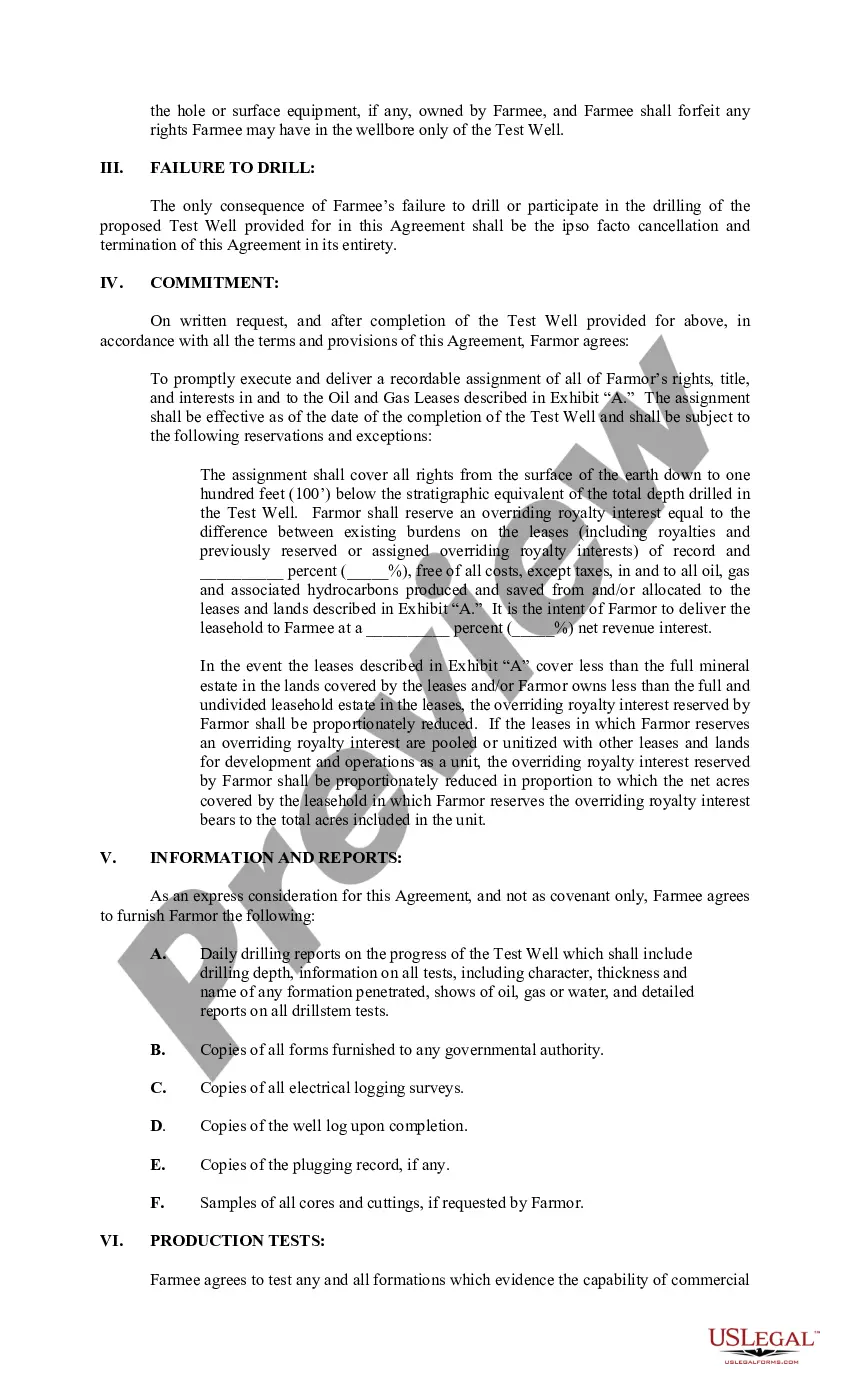
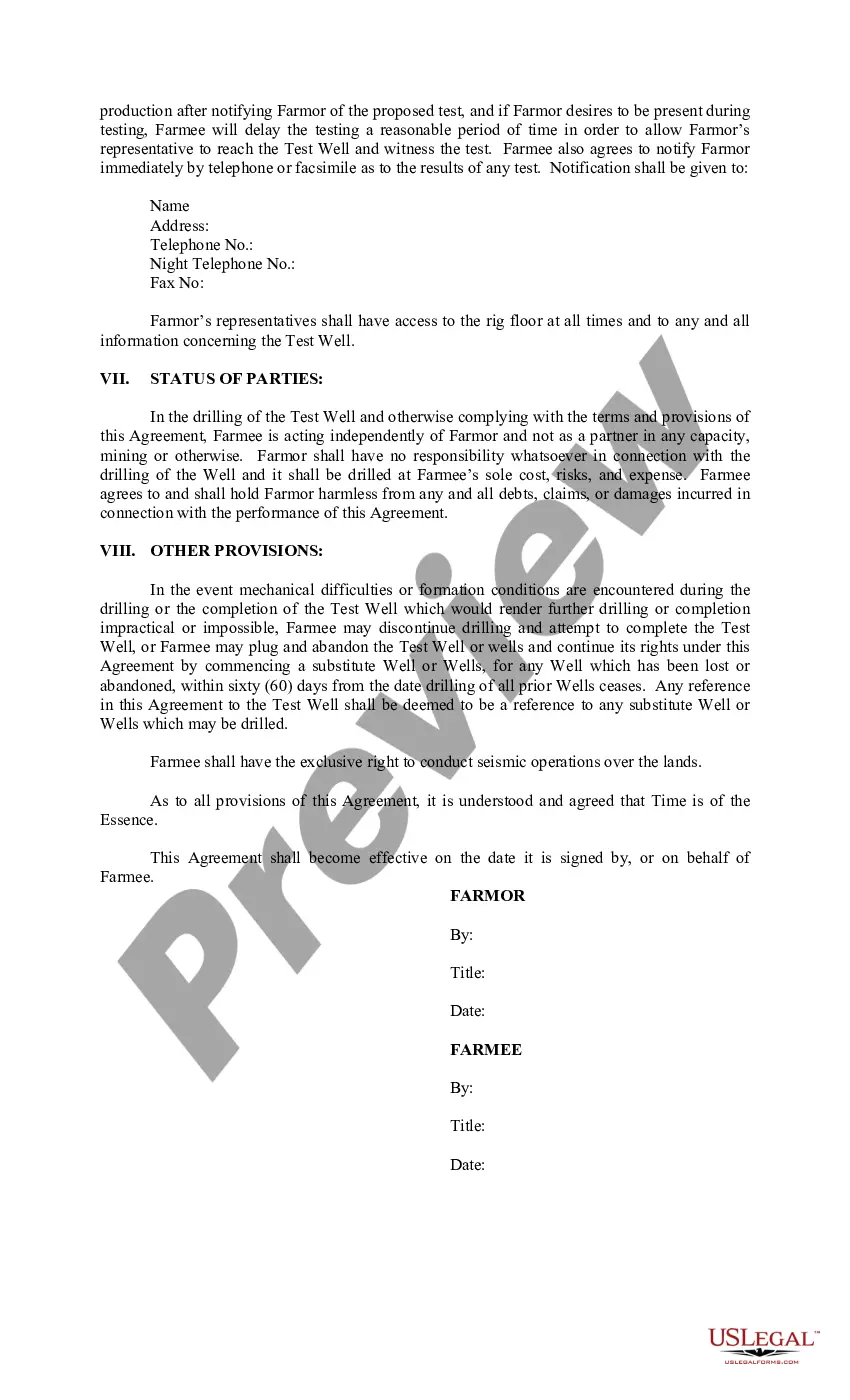
Farmout Agreement - Short Form
What is this form?
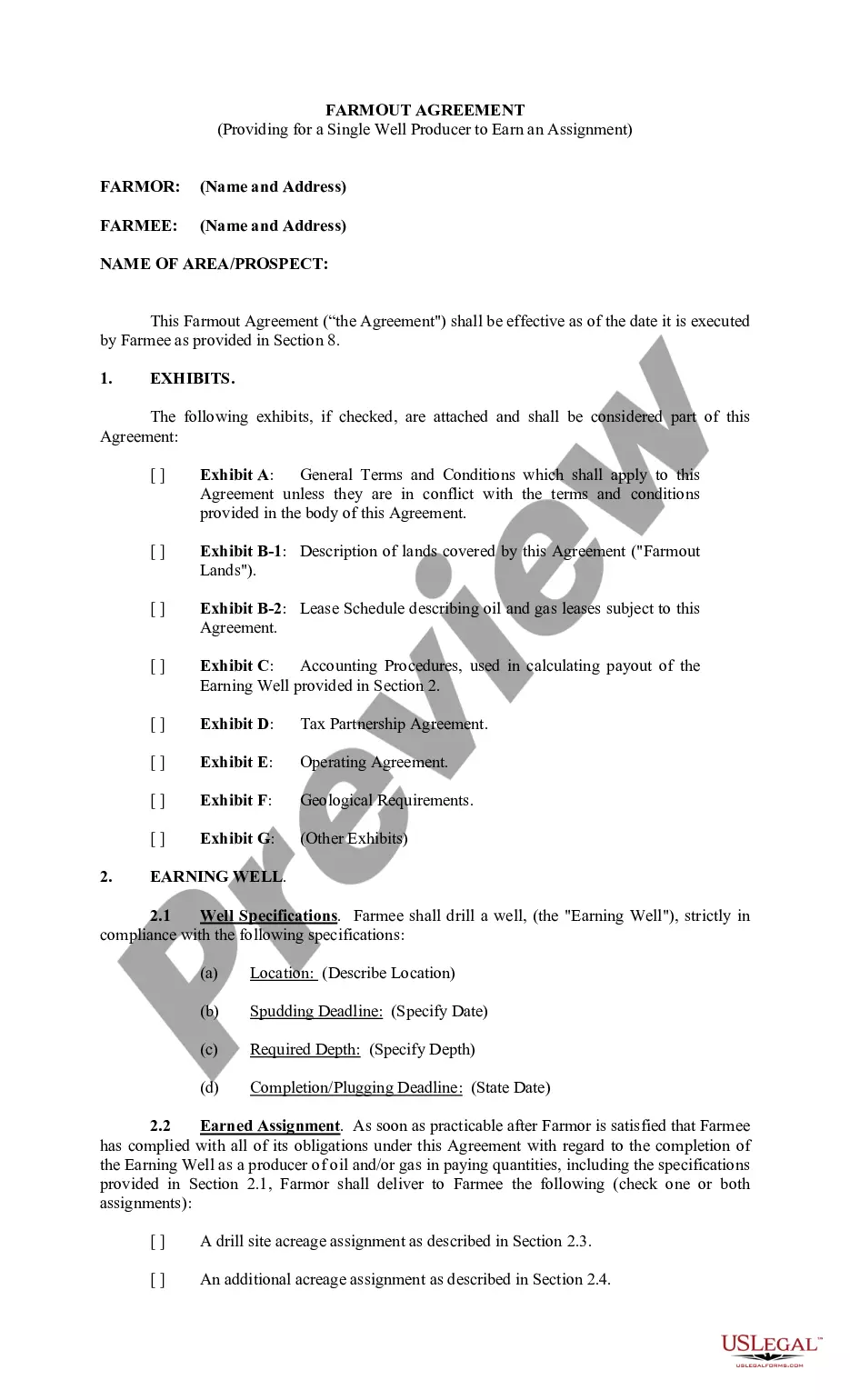
A farmout agreement is a legal document that outlines the terms under which a "farmor" assigns its oil and gas lease rights to a "farmee." In exchange, the farmee agrees to undertake specified drilling and testing obligations on that land. This short form focuses on the essential components of the agreement without unnecessary details, making it easier to understand and complete for those involved in the oil and gas industry.
Key components of this form
- Identification of parties: Clearly names the farmor and farmee involved in the agreement.
- Acreage details: Describes the oil and gas leases or mineral interests being assigned.
- Drilling obligations: Stipulates when the farmee must commence drilling operations and outlines procedures for completion or abandonment.
- Reporting requirements: Details the documentation that the farmee must provide to the farmor throughout the drilling process.
- Royalty interests: Specifies the economic interests retained by the farmor after the transfer of rights.

When to use this form
This form is used when a company or individual (the farmor) wishes to transfer its drilling rights to another party (the farmee) in return for drilling commitments. It is typically utilized in oil and gas exploration scenarios where the farmee needs to fulfill specific obligations before obtaining full lease rights.
Who this form is for
- Oil and gas companies looking to lease exploration rights.
- Landowners interested in granting drilling rights to exploration companies.
- Investors in the oil and gas industry considering partnerships with exploration firms.
Instructions for completing this form
- Identify the parties involved by entering the names and addresses of the farmor and farmee.
- Specify the acreage and any relevant legal descriptions from Exhibit A.
- Determine and input the drilling obligations, including the timeline and location of the Test Well.
- Detail the terms regarding completion or abandonment of the Test Well, including notice requirements.
- Enter all provisions regarding royalty interests and report documentation to be submitted.
Notarization requirements for this form
This form does not typically require notarization unless specified by local law. It is advisable to verify any additional requirements based on jurisdiction to ensure compliance.
Get your form ready online
Our built-in tools help you complete, sign, share, and store your documents in one place.
Make edits, fill in missing information, and update formatting in US Legal Forms—just like you would in MS Word.
Download a copy, print it, send it by email, or mail it via USPS—whatever works best for your next step.
Sign and collect signatures with our SignNow integration. Send to multiple recipients, set reminders, and more. Go Premium to unlock E-Sign.
If this form requires notarization, complete it online through a secure video call—no need to meet a notary in person or wait for an appointment.
We protect your documents and personal data by following strict security and privacy standards.

Make edits, fill in missing information, and update formatting in US Legal Forms—just like you would in MS Word.

Download a copy, print it, send it by email, or mail it via USPS—whatever works best for your next step.

Sign and collect signatures with our SignNow integration. Send to multiple recipients, set reminders, and more. Go Premium to unlock E-Sign.

If this form requires notarization, complete it online through a secure video call—no need to meet a notary in person or wait for an appointment.

We protect your documents and personal data by following strict security and privacy standards.
Typical mistakes to avoid
- Failing to clearly identify all parties involved, which can lead to legal disputes.
- Not specifying critical deadlines for drilling or testing operations, resulting in potential delays.
- Omitting details about the economic interests retained by the farmor, which may cause confusion later on.
Why complete this form online
- Convenient access to a professionally drafted template that saves time.
- Editable format allows customization to fit specific agreements and needs.
- Legal assurance from documents created by licensed attorneys, enhancing reliability.
Legal use & context
- The Farmout Agreement is legally binding once signed by both parties, provided it is executed according to local laws.
- It serves to clarify the expectations and responsibilities of each party, minimizing the risk of disputes during drilling operations.
Summary of main points
- A farmout agreement outlines the assignment of drilling rights for oil and gas exploration.
- Clear communication and documentation are vital for successful partnership between the farmor and farmee.
- Evaluate state-specific requirements to ensure legal validity of the agreement.
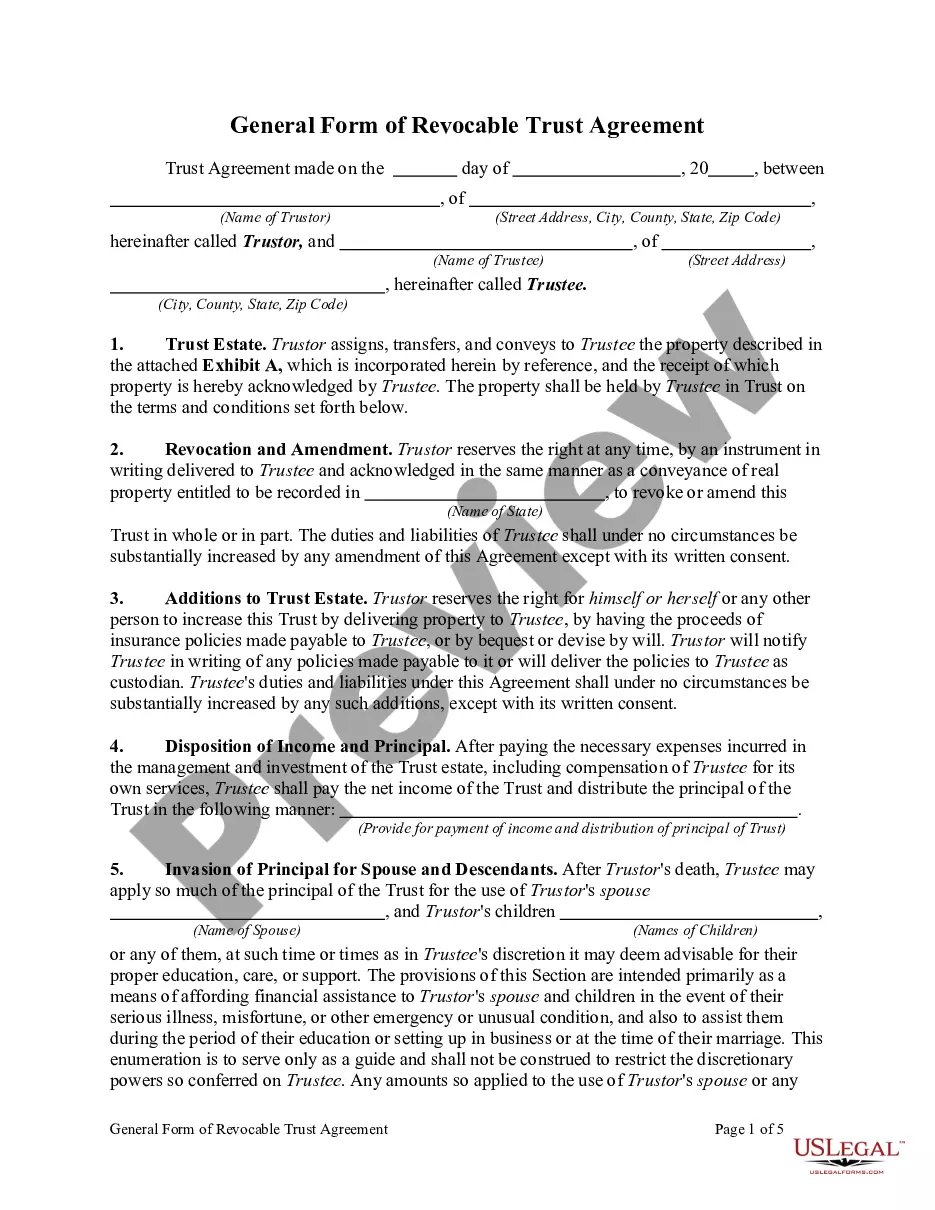
Looking for another form?



Form popularity
FAQ
A Farmout Agreement - Short Form is a legal document that records the terms under which a farmor assigns oil and gas lease rights to a farmee in exchange for drilling and testing obligations. This shorter version focuses on the essential elements—identification of the parties, acreage details, drilling obligations, reporting, and royalty interests—to simplify use in straightforward farmout arrangements.
A short form agreement is a condensed contract that covers only the core terms needed to complete a transaction. For this Farmout Agreement - Short Form, that means it lays out who the parties are, what acreage is affected, the drilling obligations, reporting requirements, and the royalty interests retained by the farmor—enabling quicker execution for straightforward farmouts.
The drilling obligations section of this form sets when the farmee must begin drilling and what happens if drilling is not completed or must be abandoned. It translates the agreement into concrete milestones for drilling activities on the described acreage, helping both parties plan timelines and determine compliance with the farmor’s expectations.
The reporting requirements specify the documents the farmee must supply to the farmor at designated intervals during the drilling process. This can include progress updates, test results, and compliance records to verify adherence to the contract’s drilling obligations and help track performance and fulfillment of commitments.
The royalty interests section identifies the economic interests the farmor retains after the transfer of drilling rights. It defines the portion of production or revenue that remains with the farmor and how those royalties are computed or allocated across the acreage, guiding future income and ownership rights in the project.
This form differs from a full farmout agreement by focusing on essential components only. It omits many detailed provisions found in longer documents and emphasizes concise identification of parties, acreage, drilling obligations, reporting, and royalties, making it quicker to draft and execute for straightforward, multi-state farmout arrangements.