Escrow Agreement Public Offering between Lorelei Corporation and Chase Manhattan Bank
About this form
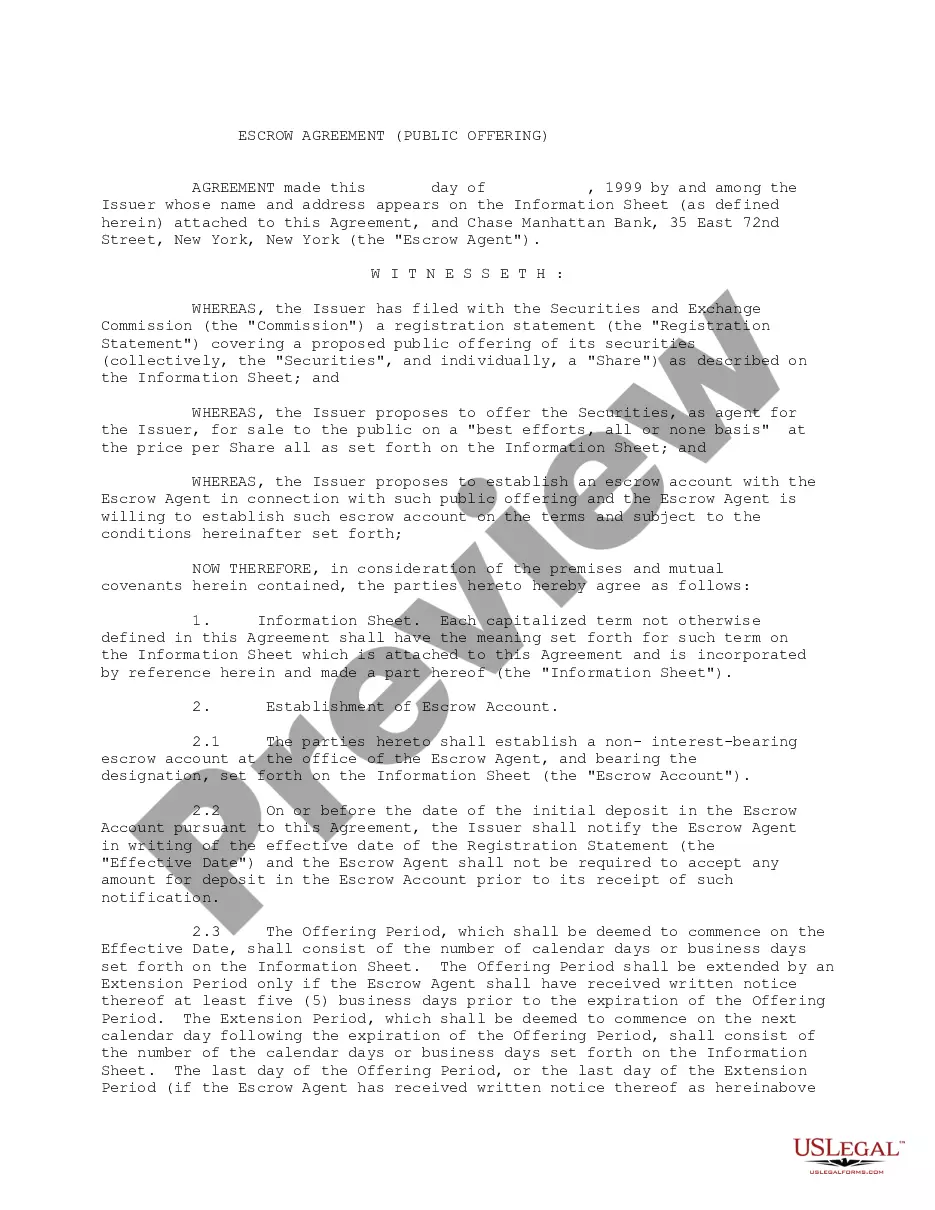
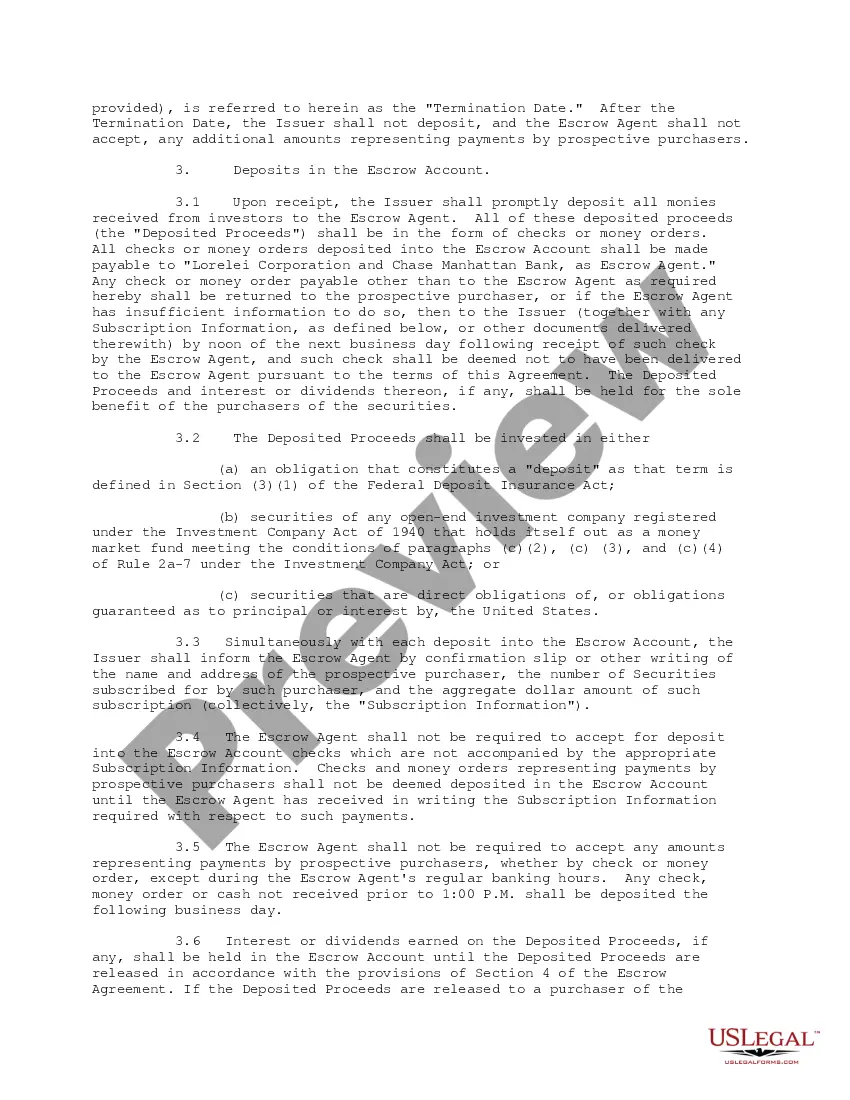
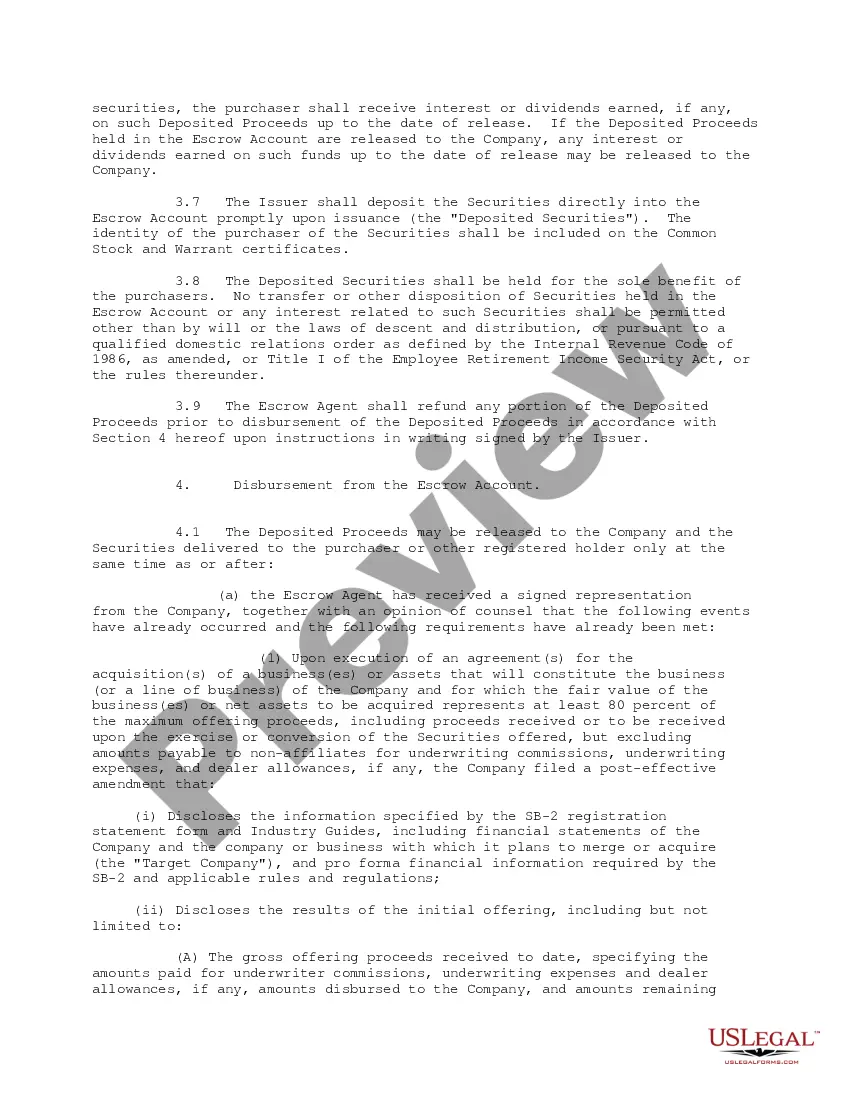
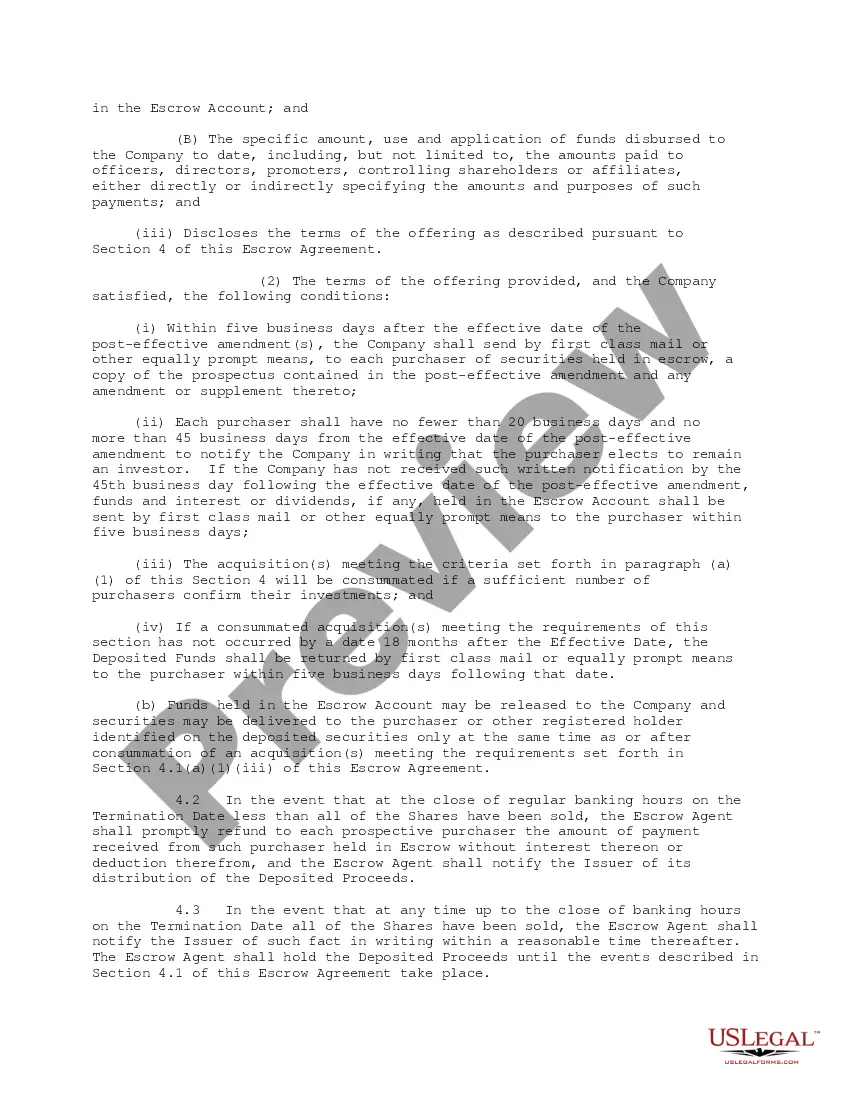
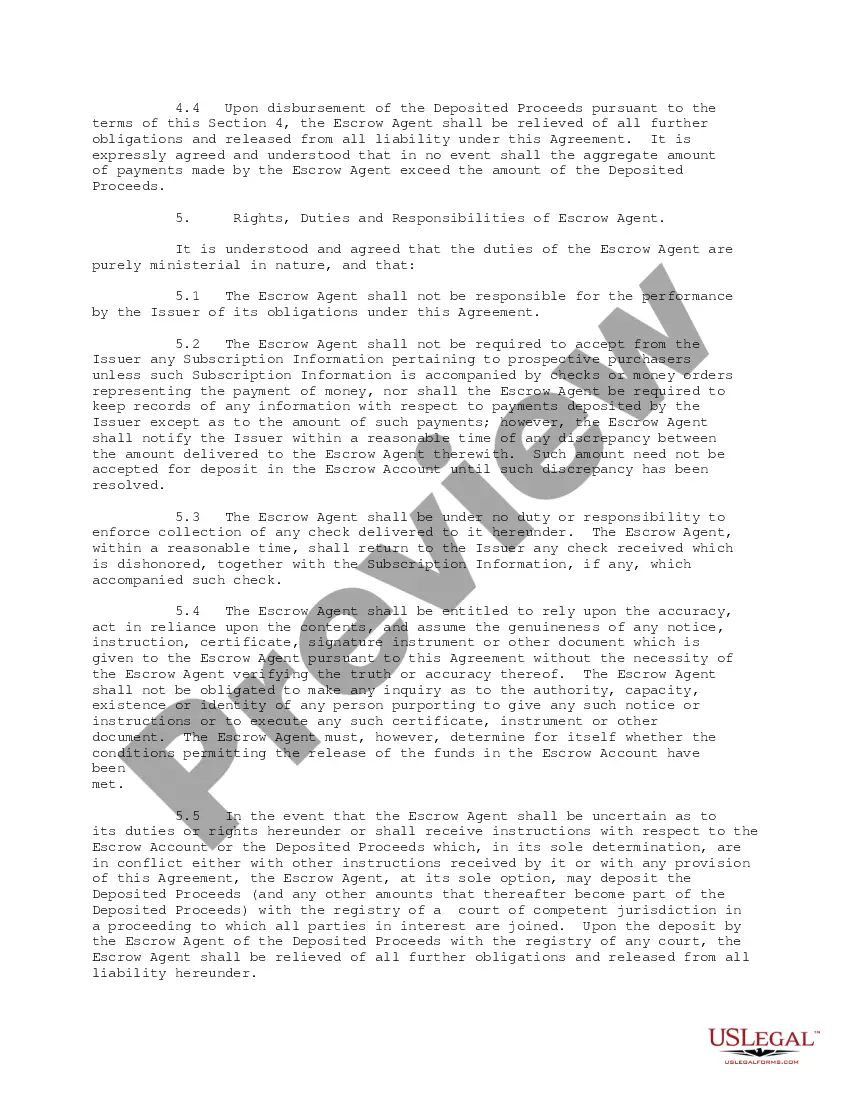
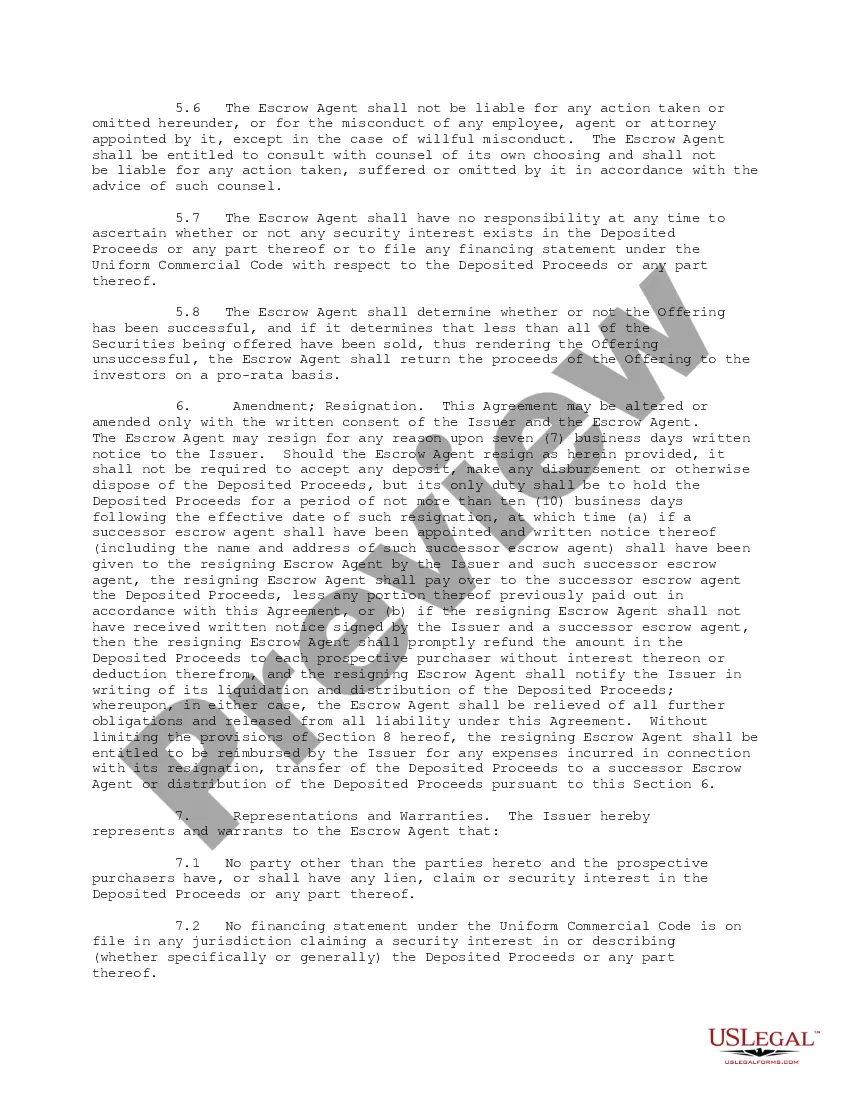
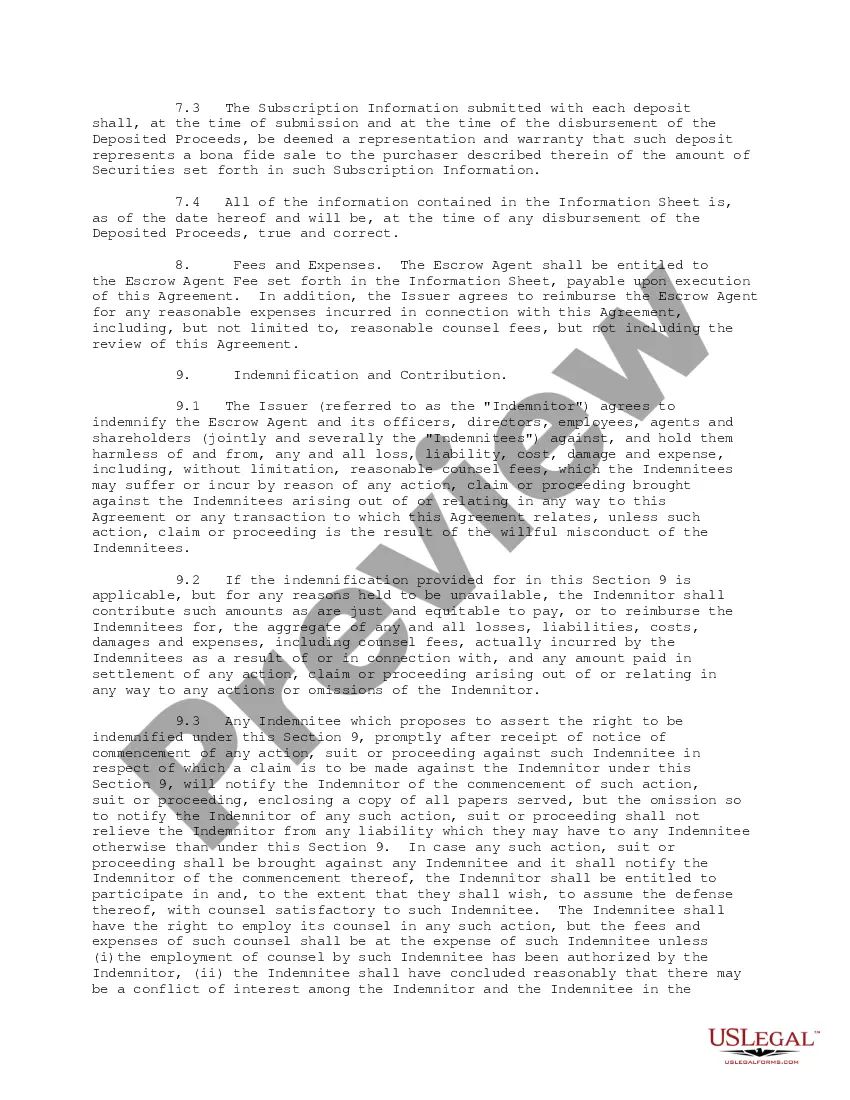
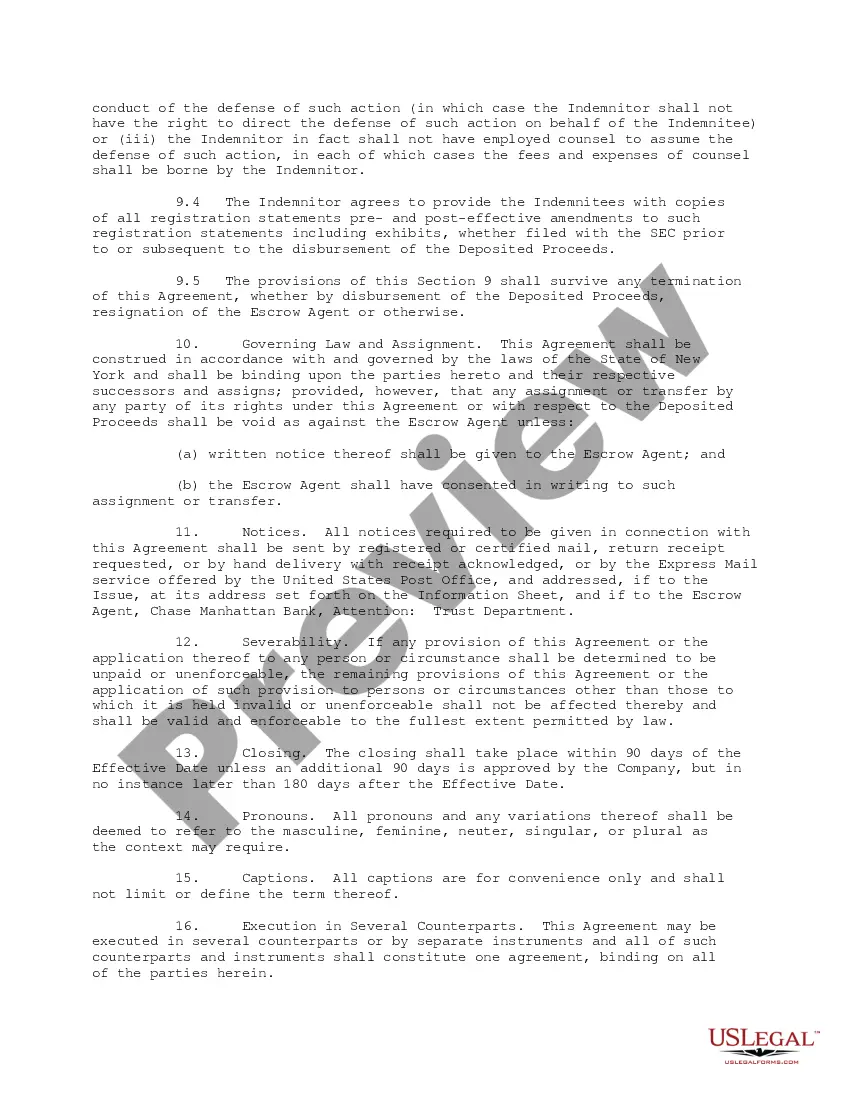
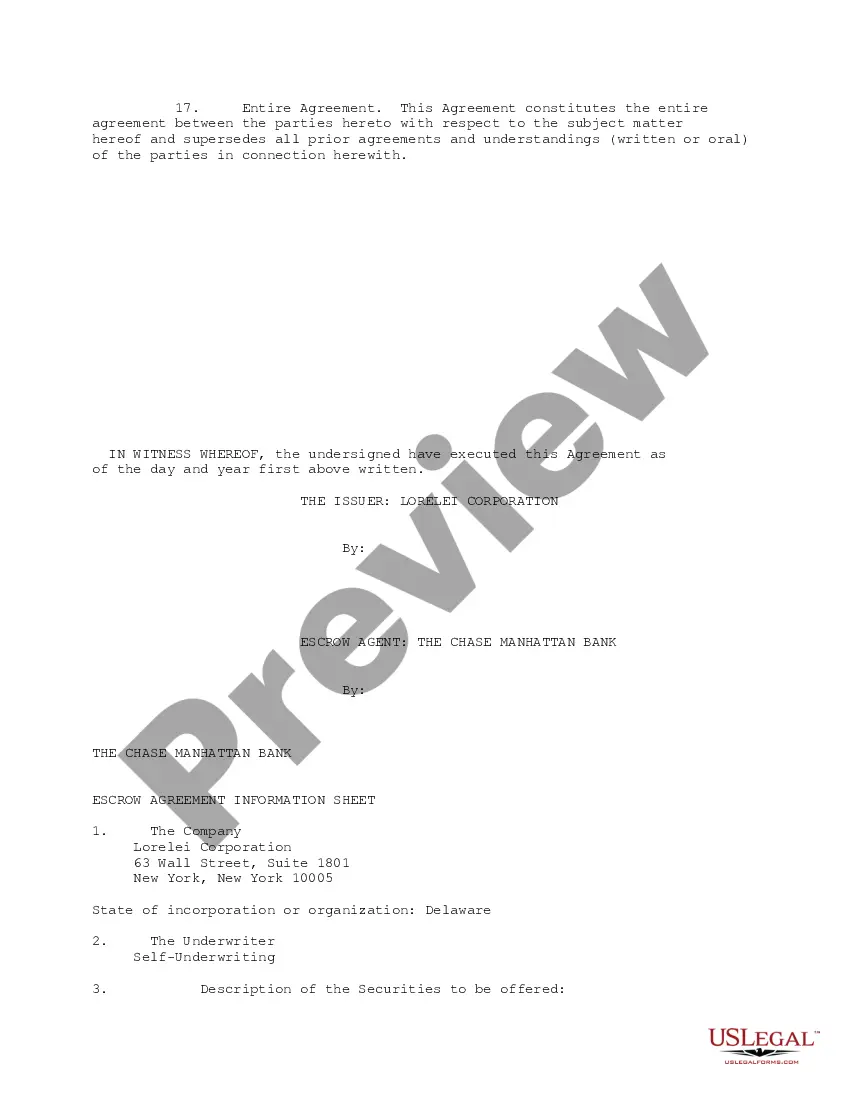
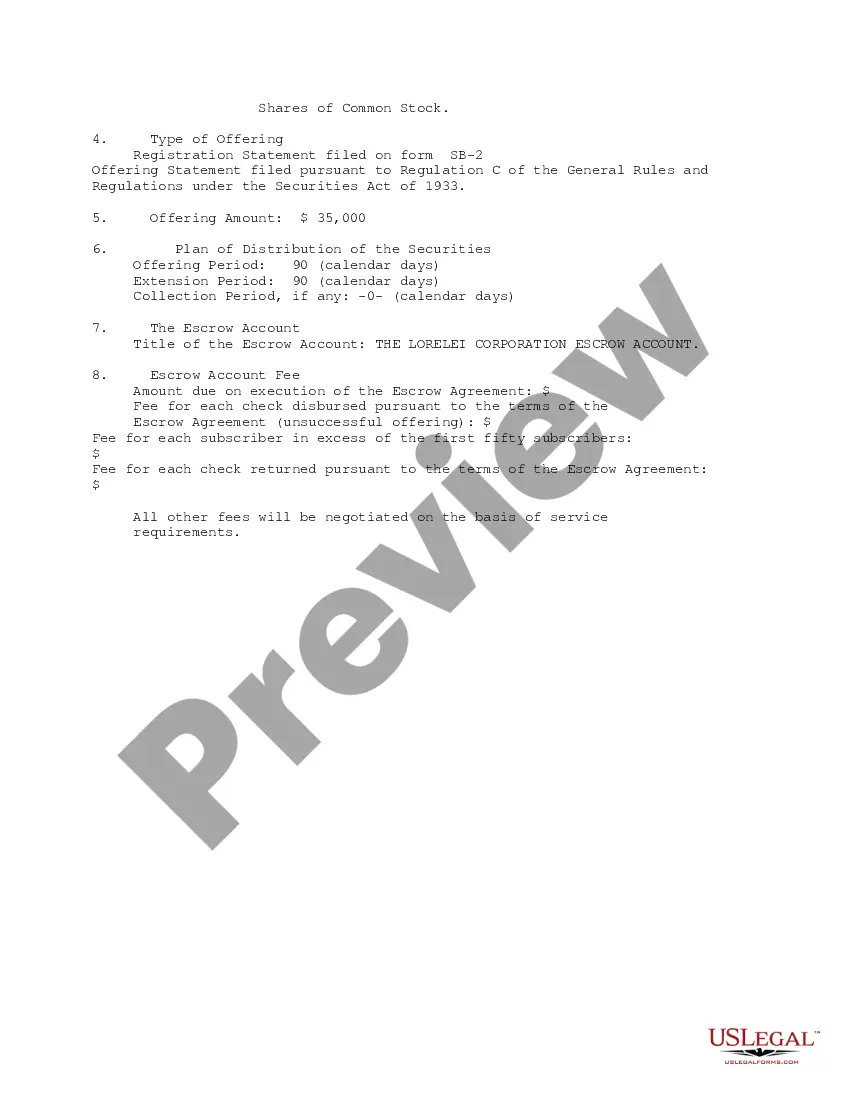
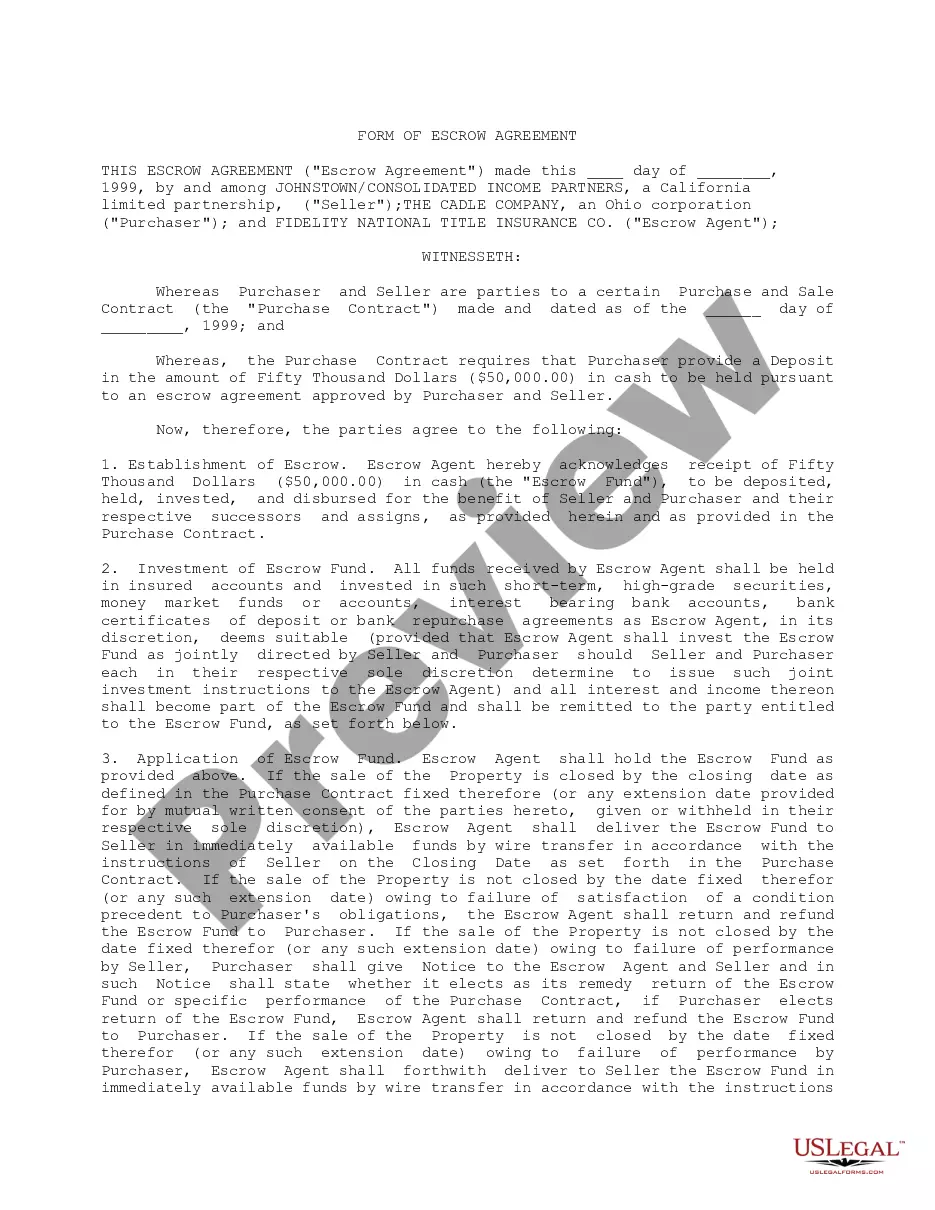
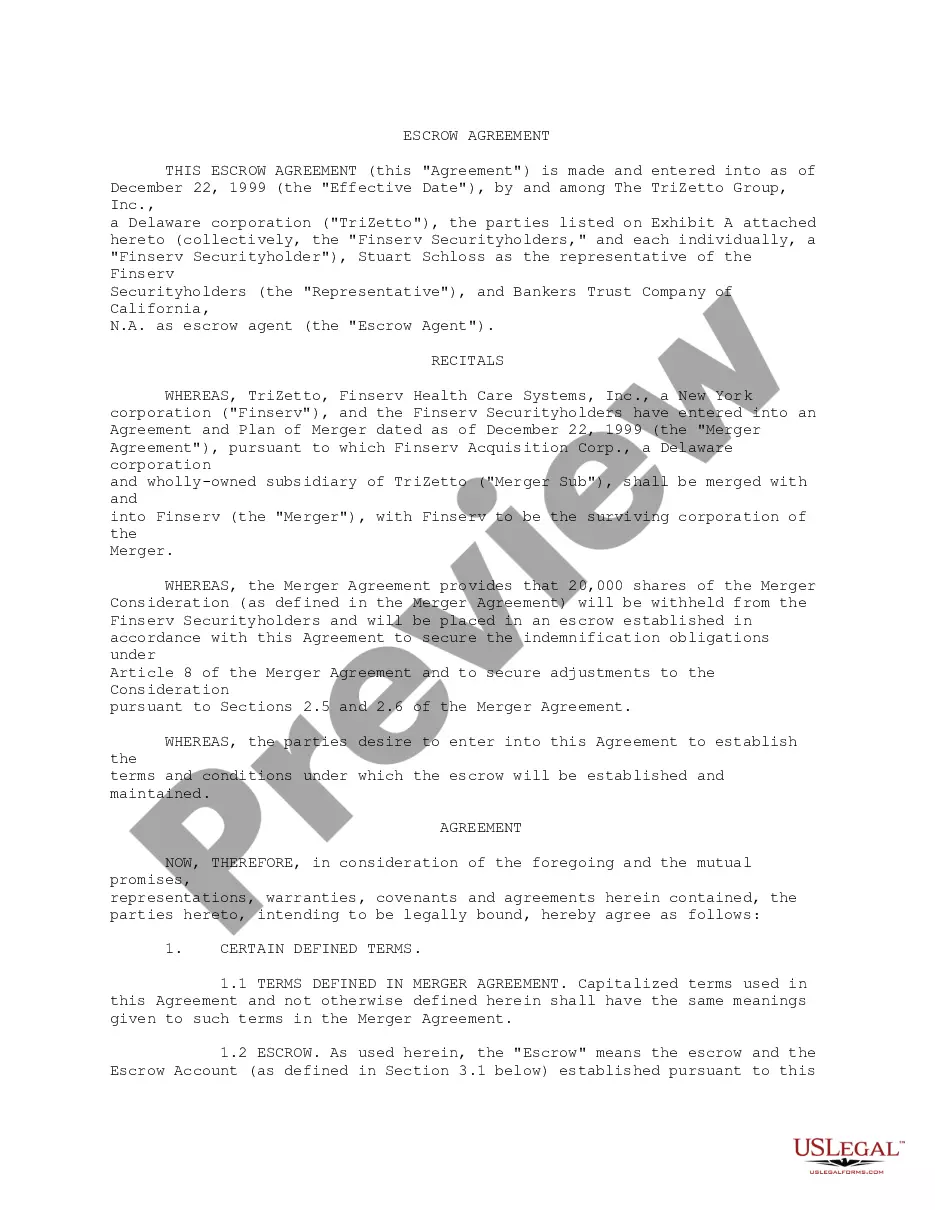
The Escrow Agreement Public Offering between Lorelei Corporation and Chase Manhattan Bank is a legal document that establishes the terms under which funds are held in escrow during a public offering of securities. This agreement ensures that the funds will only be released when specific conditions are met, providing protection for both the issuer and the investors. It differs from other forms of escrow agreements as it specifically addresses public offerings and involves securities, requiring compliance with securities regulations.
Main sections of this form
- Information Sheet: Contains definitions and important details about the parties involved.
- Establishment of Escrow Account: Describes how and when the escrow account is created.
- Deposits in the Escrow Account: Outlines how funds from investors are handled and who must provide information.
- Disbursement from the Escrow Account: Specifies the conditions under which funds can be released.
- Rights and Duties of the Escrow Agent: Clarifies the responsibilities and limitations of the escrow agent.
- Amendment and Termination Terms: Details how the agreement can be modified or terminated.
Situations where this form applies
This Escrow Agreement is necessary when a corporation is conducting a public offering of securities and requires an arrangement to hold investor funds securely until the offering conditions are met. It is typically used when a company aims to manage investor commitments transparently and in compliance with federal regulations, ensuring that funds are only released under specified circumstances, such as successful completion of the offering or acquisition conditions.
Intended users of this form
- Issuers of securities wishing to conduct a public offering.
- Investors participating in a securities offering who want assurance that their funds are protected.
- Legal counsel assisting companies with securities offerings and escrow arrangements.
How to complete this form
- Identify the parties involved clearly, ensuring accurate names and addresses are provided.
- Complete the Information Sheet attached to the agreement with necessary details about the public offering.
- Set the terms for the escrow account, including collection periods and conditions for deposit acceptance.
- Detail the disbursement conditions, specifying what must occur before funds can be released.
- Ensure all signatories are aware of their rights and responsibilities as outlined in the agreement.
Notarization guidance
This form does not typically require notarization to be legally valid. However, some jurisdictions or document types may still require it. US Legal Forms provides secure online notarization powered by Notarize, available 24/7 for added convenience.
Get your form ready online
Our built-in tools help you complete, sign, share, and store your documents in one place.
Make edits, fill in missing information, and update formatting in US Legal Forms—just like you would in MS Word.
Download a copy, print it, send it by email, or mail it via USPS—whatever works best for your next step.
Sign and collect signatures with our SignNow integration. Send to multiple recipients, set reminders, and more. Go Premium to unlock E-Sign.
If this form requires notarization, complete it online through a secure video call—no need to meet a notary in person or wait for an appointment.
We protect your documents and personal data by following strict security and privacy standards.

Make edits, fill in missing information, and update formatting in US Legal Forms—just like you would in MS Word.

Download a copy, print it, send it by email, or mail it via USPS—whatever works best for your next step.

Sign and collect signatures with our SignNow integration. Send to multiple recipients, set reminders, and more. Go Premium to unlock E-Sign.

If this form requires notarization, complete it online through a secure video call—no need to meet a notary in person or wait for an appointment.

We protect your documents and personal data by following strict security and privacy standards.
Common mistakes
- Failing to provide the required Subscription Information with deposits.
- Not clearly defining the conditions for release of funds.
- Inaccurate or incomplete details about the parties involved.
- Neglecting to notify the Escrow Agent of changes to the offering terms in a timely manner.
Advantages of online completion
- Convenient access: Download and complete the form anytime from anywhere.
- Editability: Easily customize sections to fit your specific needs.
- Time-efficient: Save time by using pre-drafted templates tailored by legal professionals.
- Reliability: Forms are prepared in compliance with current legal standards and regulations.
Legal use & context
- This form is legally binding once executed by all parties involved.
- It facilitates compliance with Securities and Exchange Commission regulations for public offerings.
- The escrow agent must follow the terms of the agreement; failure to do so may expose them to liability.
What to keep in mind
- The Escrow Agreement protects both the issuer and investors during public offerings.
- It is crucial to fill out the agreement meticulously to avoid common mistakes.
- Understanding the rights and duties of the escrow agent helps ensure a smooth process.
Looking for another form?


Form popularity
FAQ
Each month, the lender deposits the escrow portion of your mortgage payment into the account and pays your insurance premiums and real estate taxes when they are due. Your lender may require an escrow cushion, as allowed by state law, to cover unanticipated costs, such as a tax increase.
Now, for the first time, merchants and online marketplaces in Australia have the ability to tap into the security and power of Escrow.com, ensuring safe transactions for buyers and no chargebacks, ever, for sellers.
It's a binding agreement between the party who makes the promise and the one to whom the promise is made. Written documents are held in escrow until the underlying agreement is accomplished.Any written document executed in accordance with all the necessary legal formalities may be put into escrow.
Close of escrow and your closing date could be the same day if the seller is there for your closing. However, it could be a different day altogether.Escrow is closed. However, you could close on your mortgage and take possession of the title, deed and keys from the escrow agent on a completely separate day.
Escrow protects all of the relevant parties in a real estate transaction, including the seller, the home buyer, and the lender, by ensuring that no escrow funds from your lender and other property change hands until all of the conditions in the agreement have been met.
Once upon a time, escrow accounts were optional for almost all borrowers. These days, lenders require escrow accounts on all loans with less than 20 percent down.If you do not have an escrow account, but you want one, most lenders are happy to put one in place for you.
Your mortgage lender or servicer is allowed to collect the amount of your homeowners insurance and property tax payments, plus a cushion, month in and month out, in escrow. While it's nice to not have to think about making these payments, this pro can be a con for savers who may be able to put the funds to better use.
Escrows are voluntarily completed by full performance/execution and closing, or the escrow may be terminated by mutual consent. The termination of the sale escrow is accomplished by cancellation of the escrow, and by rescission or cancellation of the residential purchase agreement, or other form of agreement of sale.
In real estate, escrow is typically used for two reasons: To protect the buyer's good faith deposit so the money goes to the right party according to the conditions of the sale. To hold a homeowner's funds for taxes and insurance.