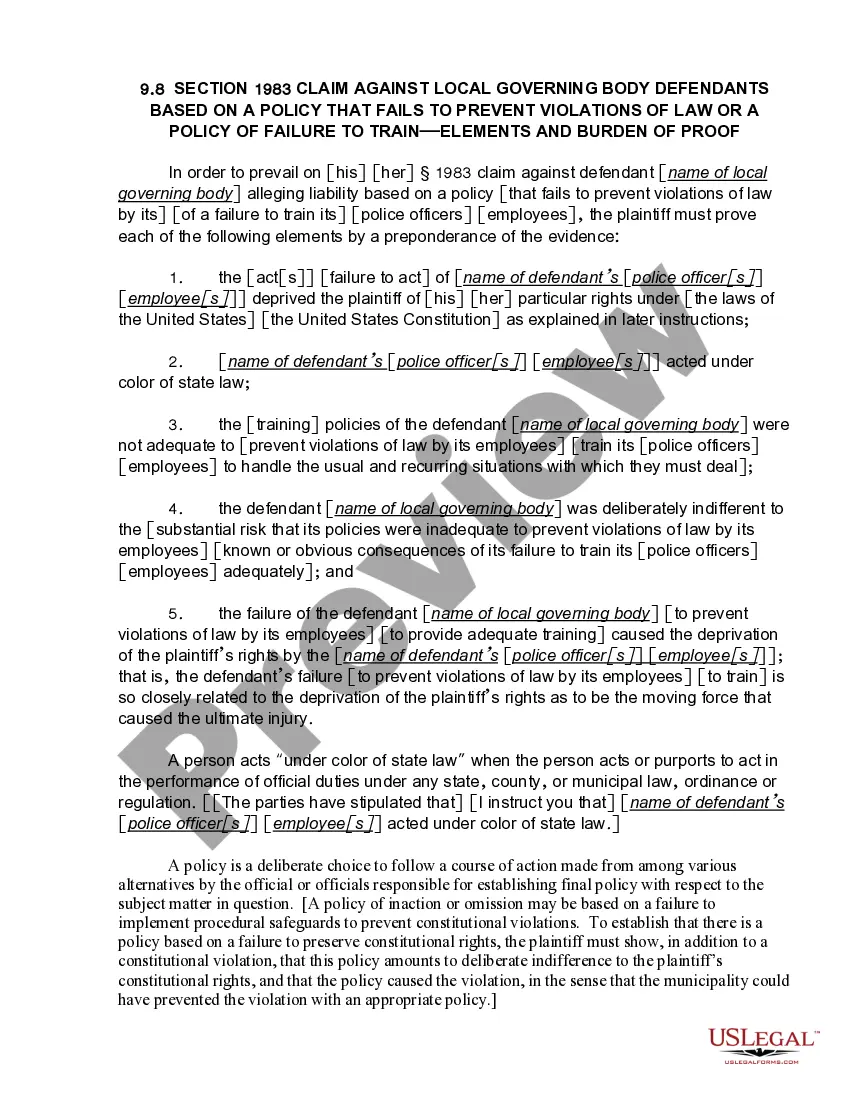
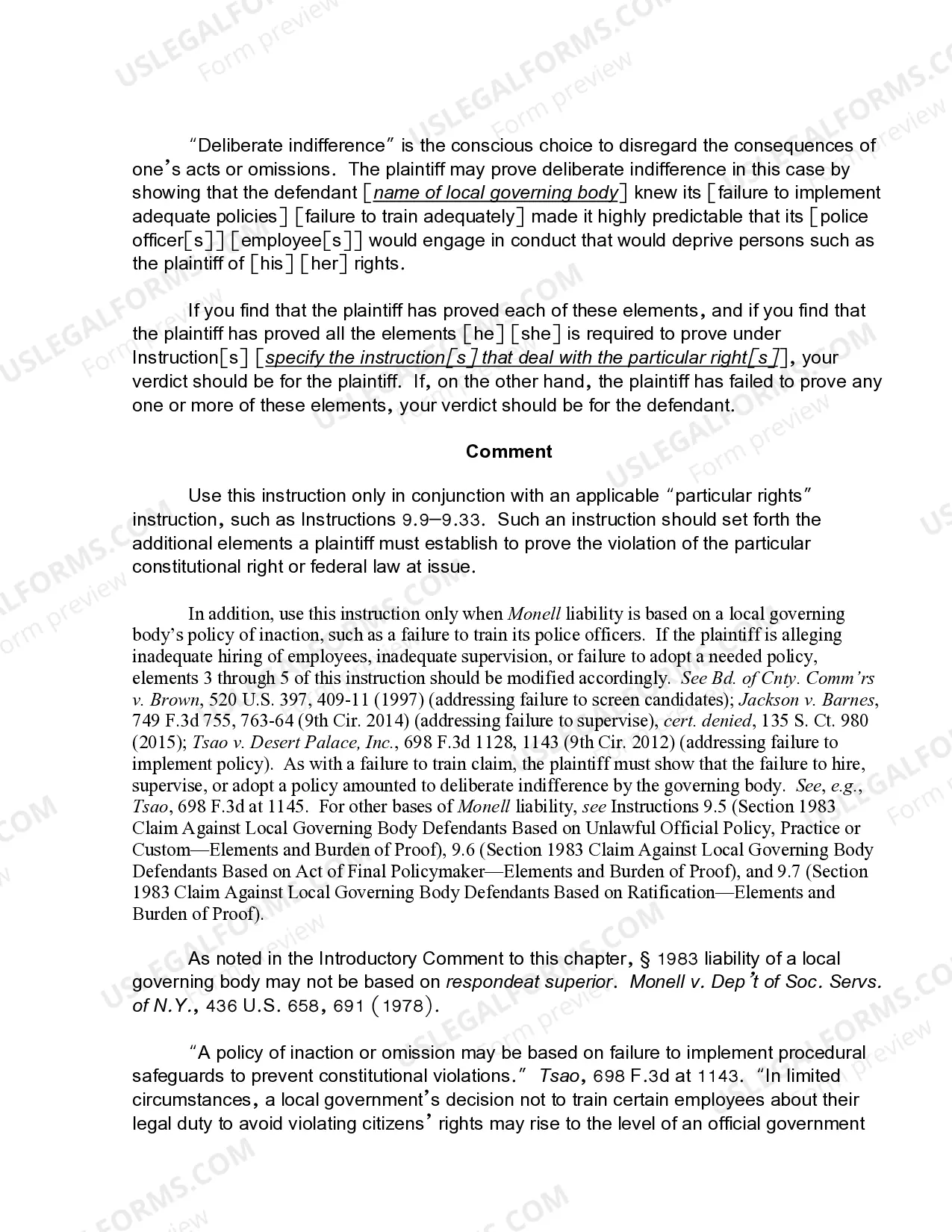
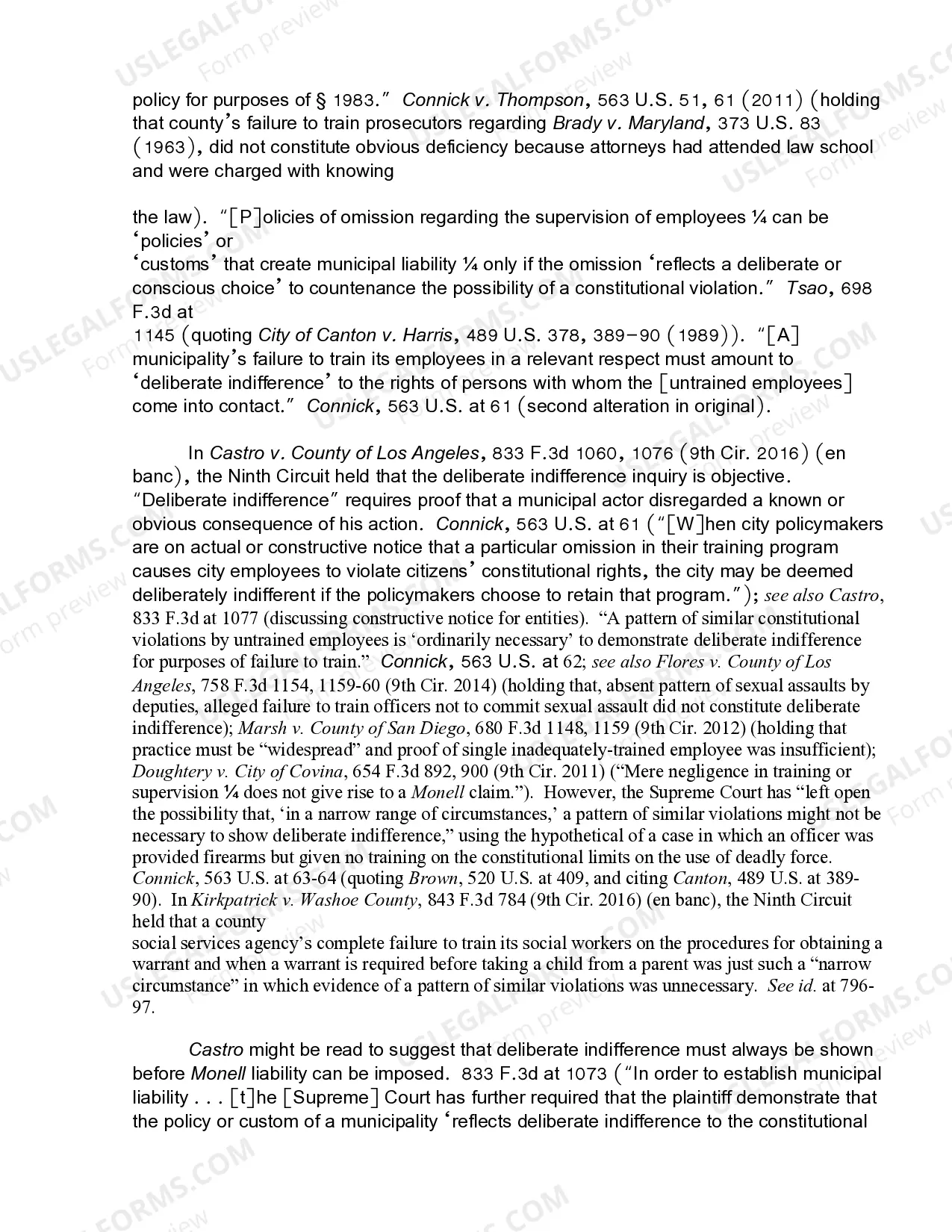
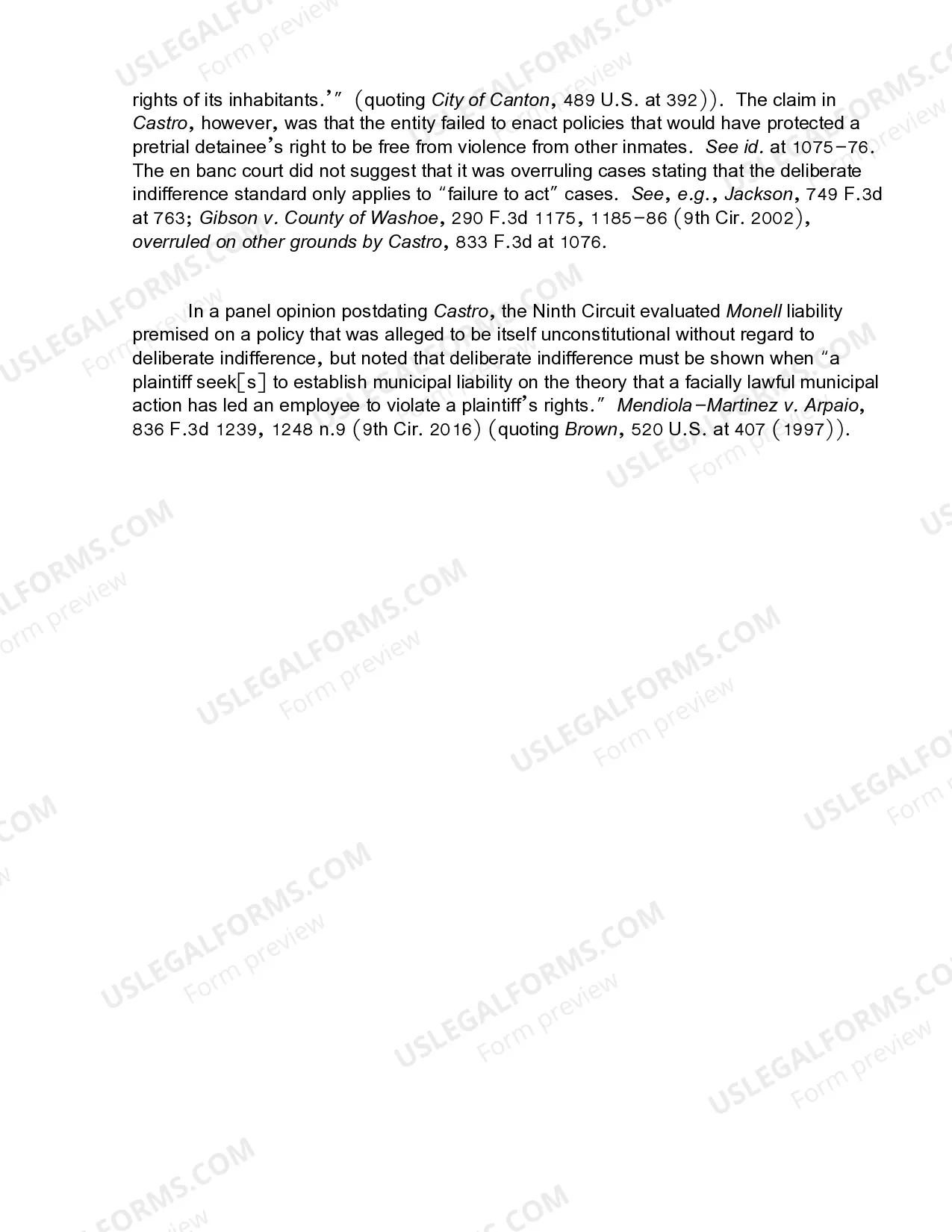
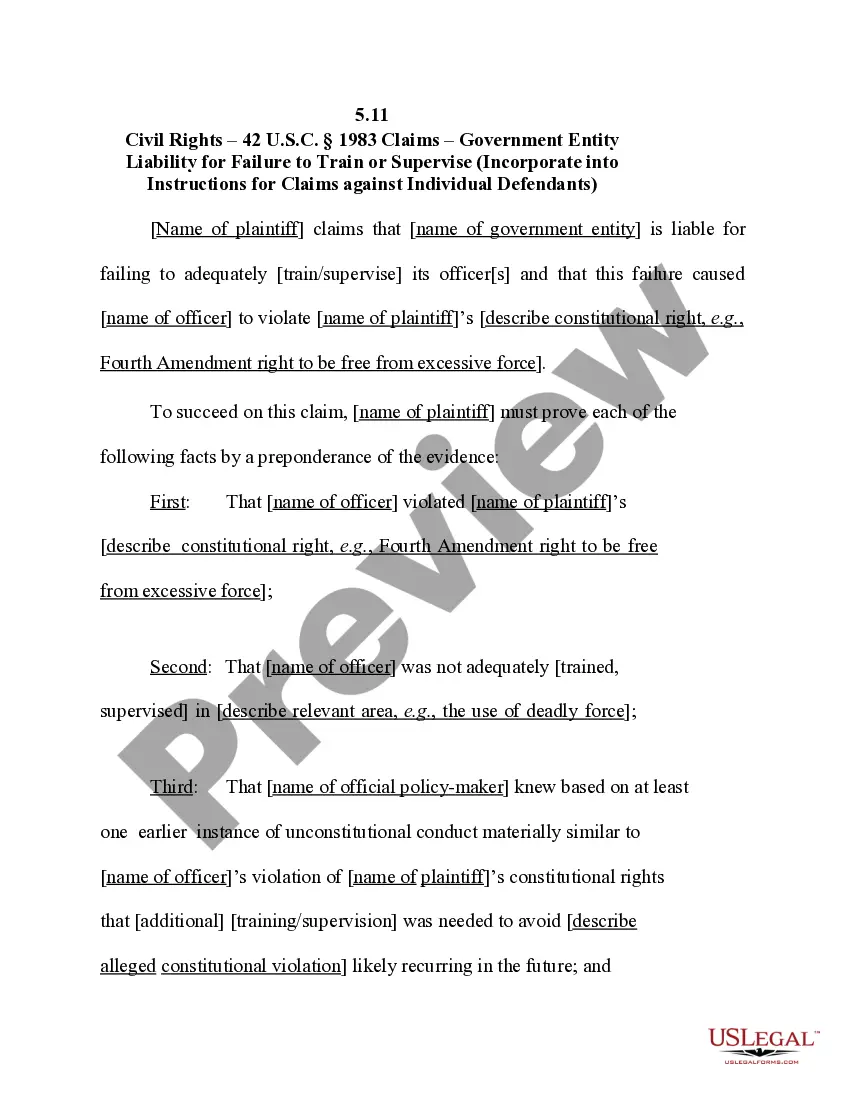
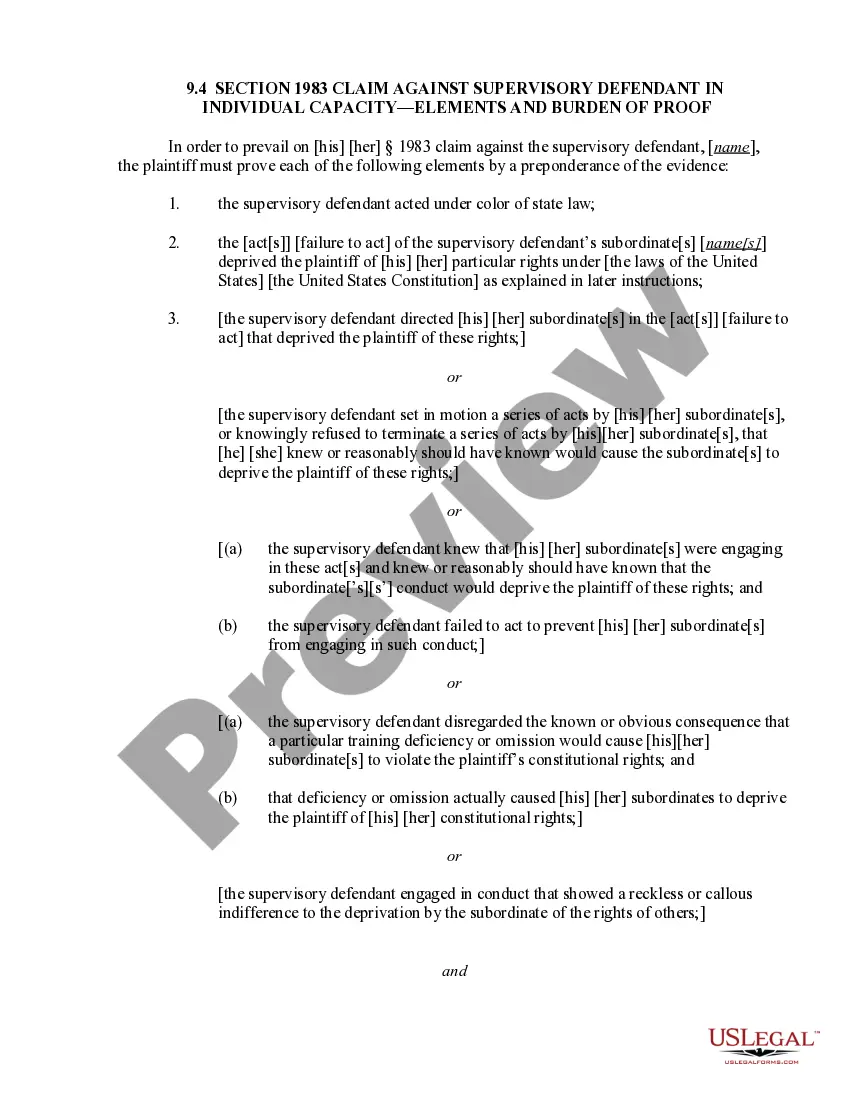
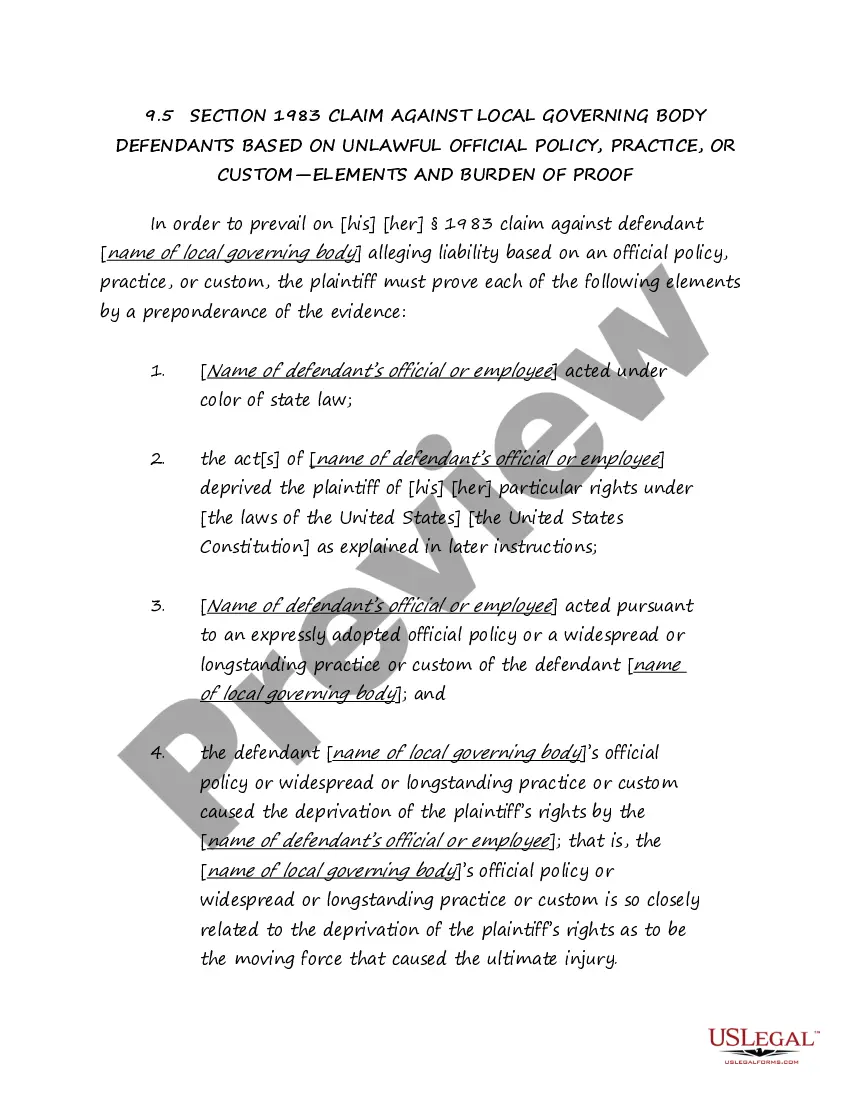
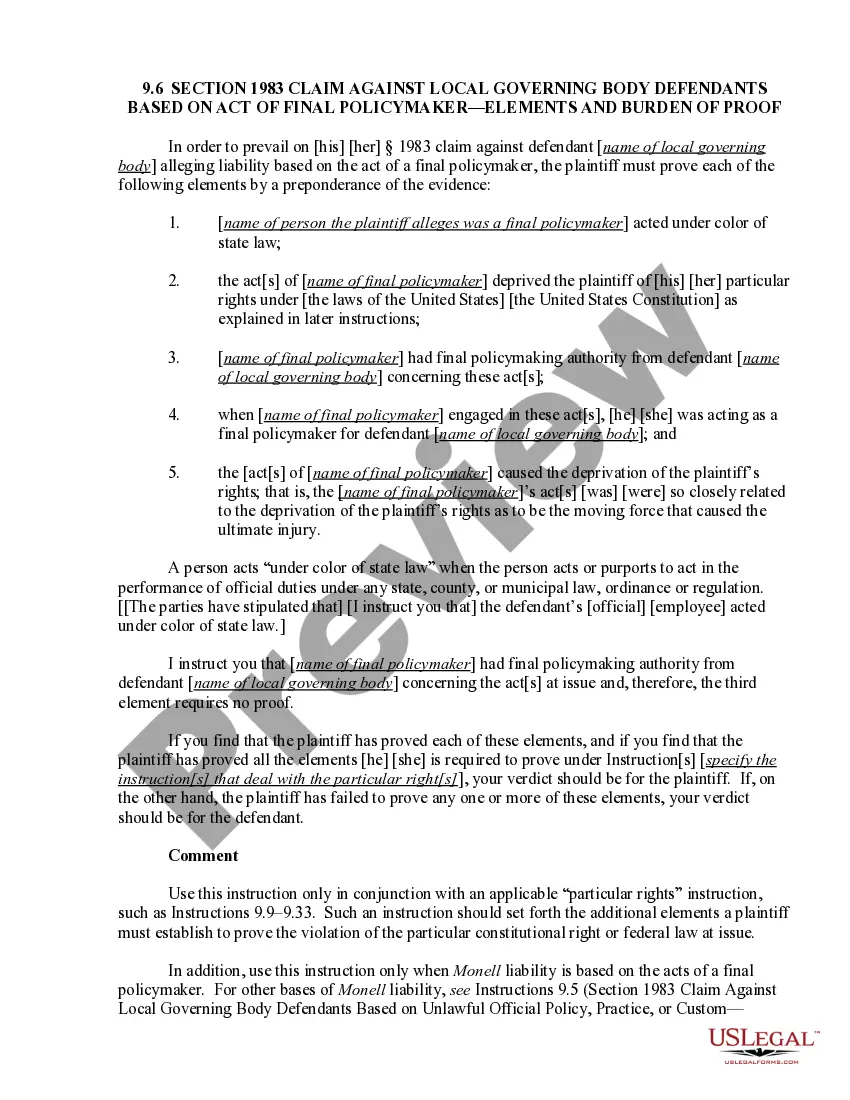
9.8 Section 1983 Claim Against Local Governing Body Defendants Based on a Policy that Fails to Prevent Violations of Law or a Policy of Failure to Train-Elements and Burden of Proof
Notarization guidance
Notarization is not commonly needed for this form. However, certain documents or local rules may make it necessary. Our notarization service, powered by Notarize, allows you to finalize it securely online anytime, day or night.
Get your form ready online
Our built-in tools help you complete, sign, share, and store your documents in one place.
Make edits, fill in missing information, and update formatting in US Legal Forms—just like you would in MS Word.
Download a copy, print it, send it by email, or mail it via USPS—whatever works best for your next step.
Sign and collect signatures with our SignNow integration. Send to multiple recipients, set reminders, and more. Go Premium to unlock E-Sign.
If this form requires notarization, complete it online through a secure video call—no need to meet a notary in person or wait for an appointment.
We protect your documents and personal data by following strict security and privacy standards.

Make edits, fill in missing information, and update formatting in US Legal Forms—just like you would in MS Word.

Download a copy, print it, send it by email, or mail it via USPS—whatever works best for your next step.

Sign and collect signatures with our SignNow integration. Send to multiple recipients, set reminders, and more. Go Premium to unlock E-Sign.

If this form requires notarization, complete it online through a secure video call—no need to meet a notary in person or wait for an appointment.

We protect your documents and personal data by following strict security and privacy standards.
Looking for another form?
Form popularity
FAQ
The elements of a § 1983 claim are (1) the action occurred ?under color of state law? and (2) the action resulted in the deprivation of a constitutional right or federal statutory right.
To state a section 1983 claim, a person must show: that the conduct complained of was committed by a person acting under color of state law; and. that the conduct deprived the person of a constitutional right.
What are the elements of a section 1983 claim? a person subjected the plaintiff to conduct that occurred under color of state law, and. this conduct deprived the plaintiff of rights, privileges, or immunities guaranteed under the U.S. Constitution or federal law.
S 1983, which provides private citizens with a federal remedy when state officers deprive individuals of their constitutional rights. Battered women's section 1983 claims typically allege that the failure of the police to intervene in domestic violence situations resulted in a liberty deprivation.
Section 1983 provides an individual the right to sue state government employees and others acting "under color of state law" for civil rights violations. Section 1983 does not provide civil rights; it is a means to enforce civil rights that already exist.
What are some examples of lawsuits under section 1983 of the United States Code? Brown v. Board of Education, in which the Supreme Court held that racial segregation in public schools violated the Equal Protection Clause of the Fourteenth Amendment; Plessy v.Gideon v.Miranda v.Engle v.
There are 3 basic awards that may come out of a Section 1983 claim against police officers ? compensatory damages, punitive damages, and attorney's fees. Typically, plaintiffs receive compensatory damages when they prevail on their claim.
What Is a Section 1983 Lawsuit? A Section 1983 lawsuit is a civil remedy. It applies when someone acting "under color of" state-level or local law has deprived a person of rights created by the U.S. Constitution or federal statutes.