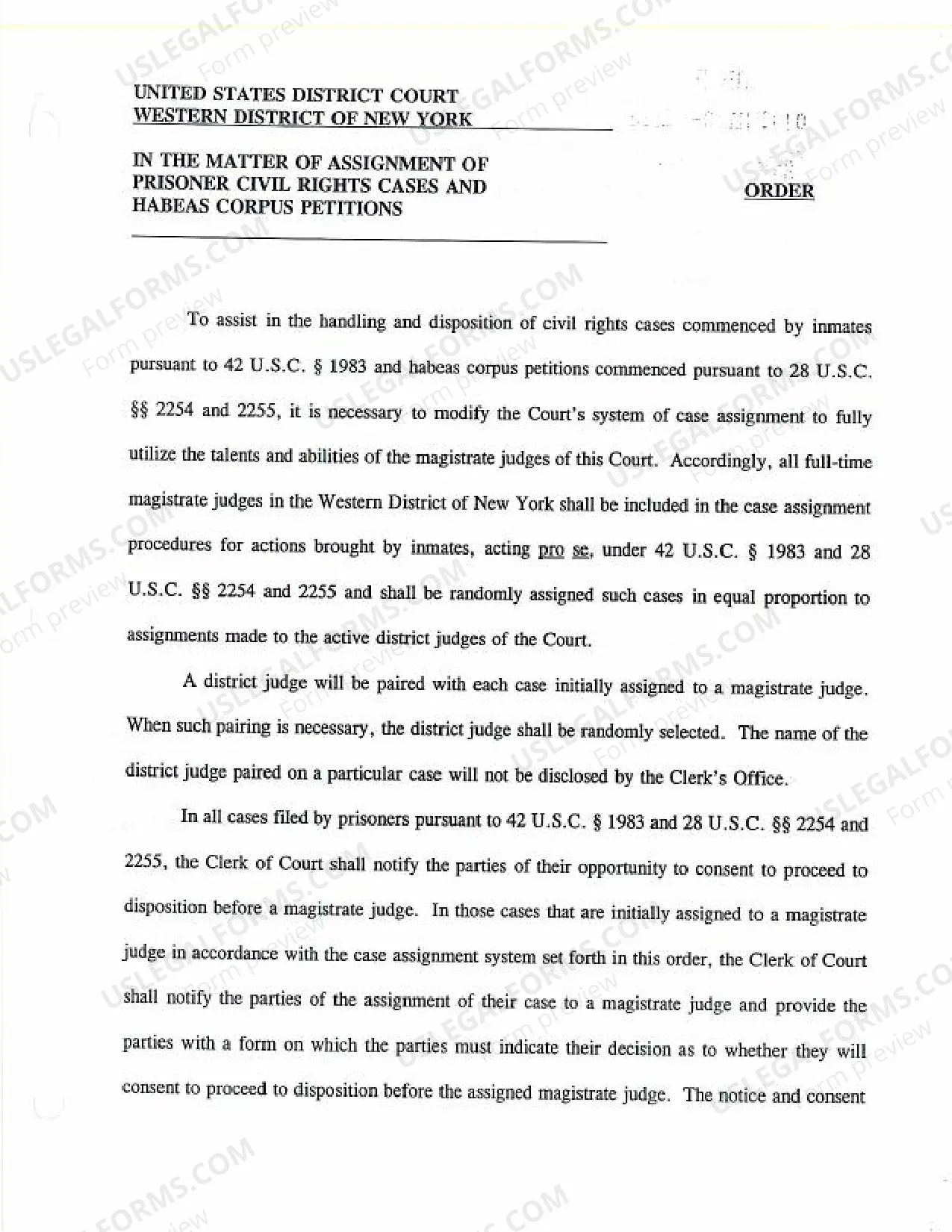
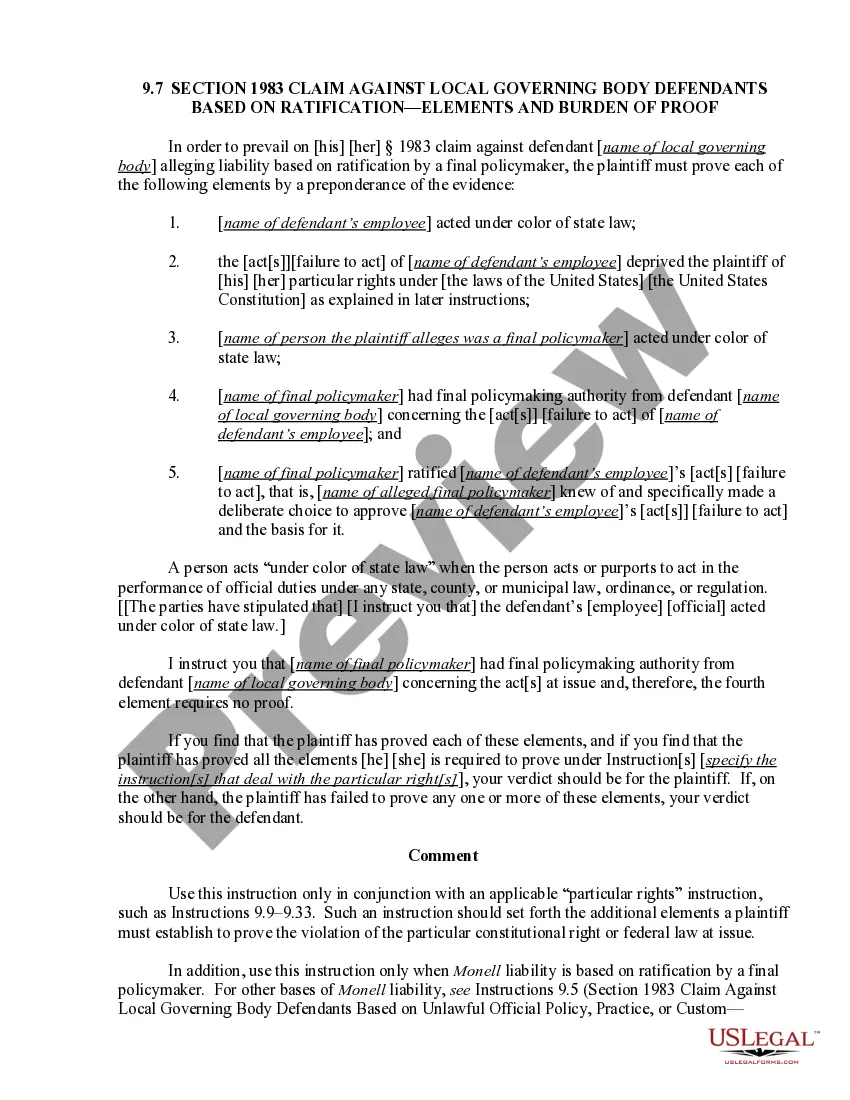
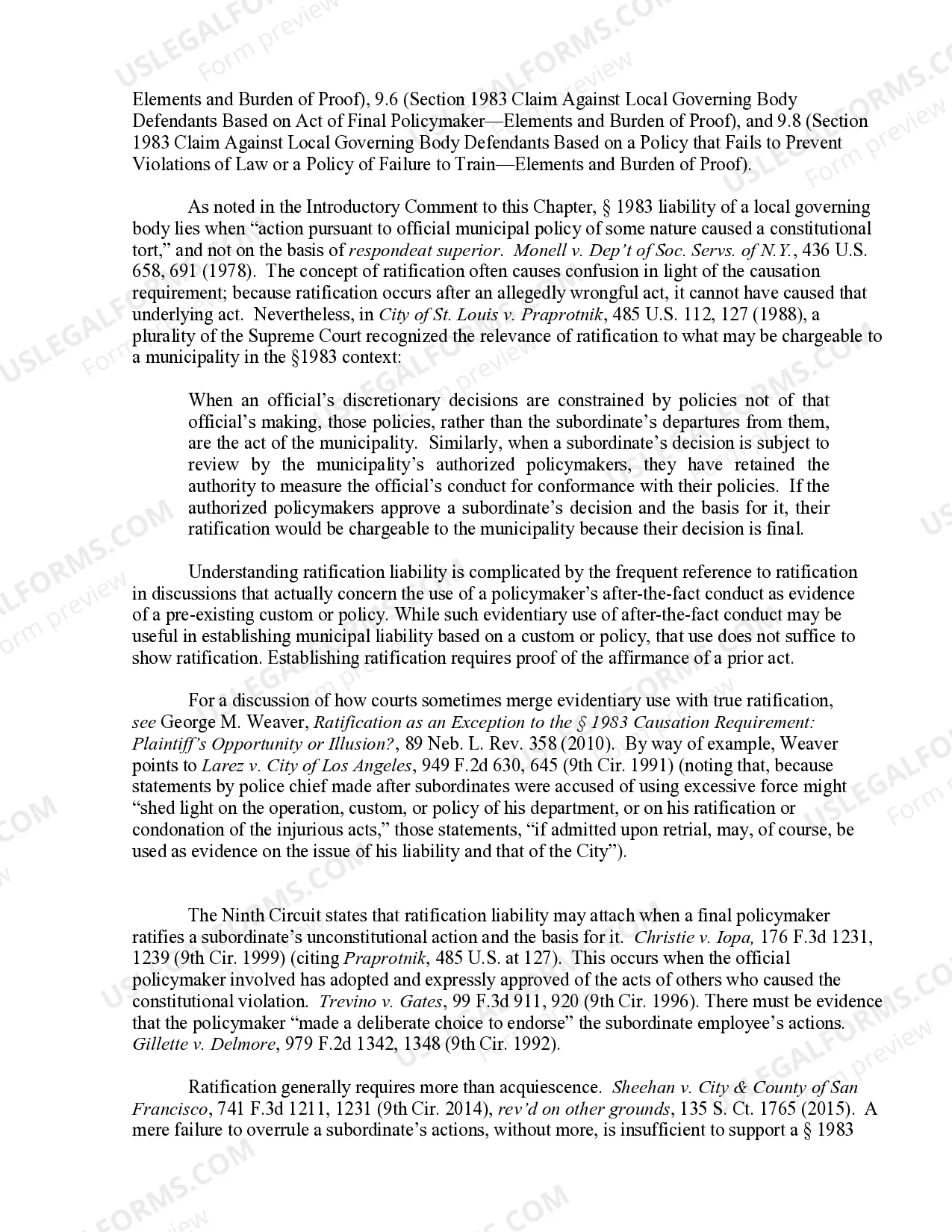
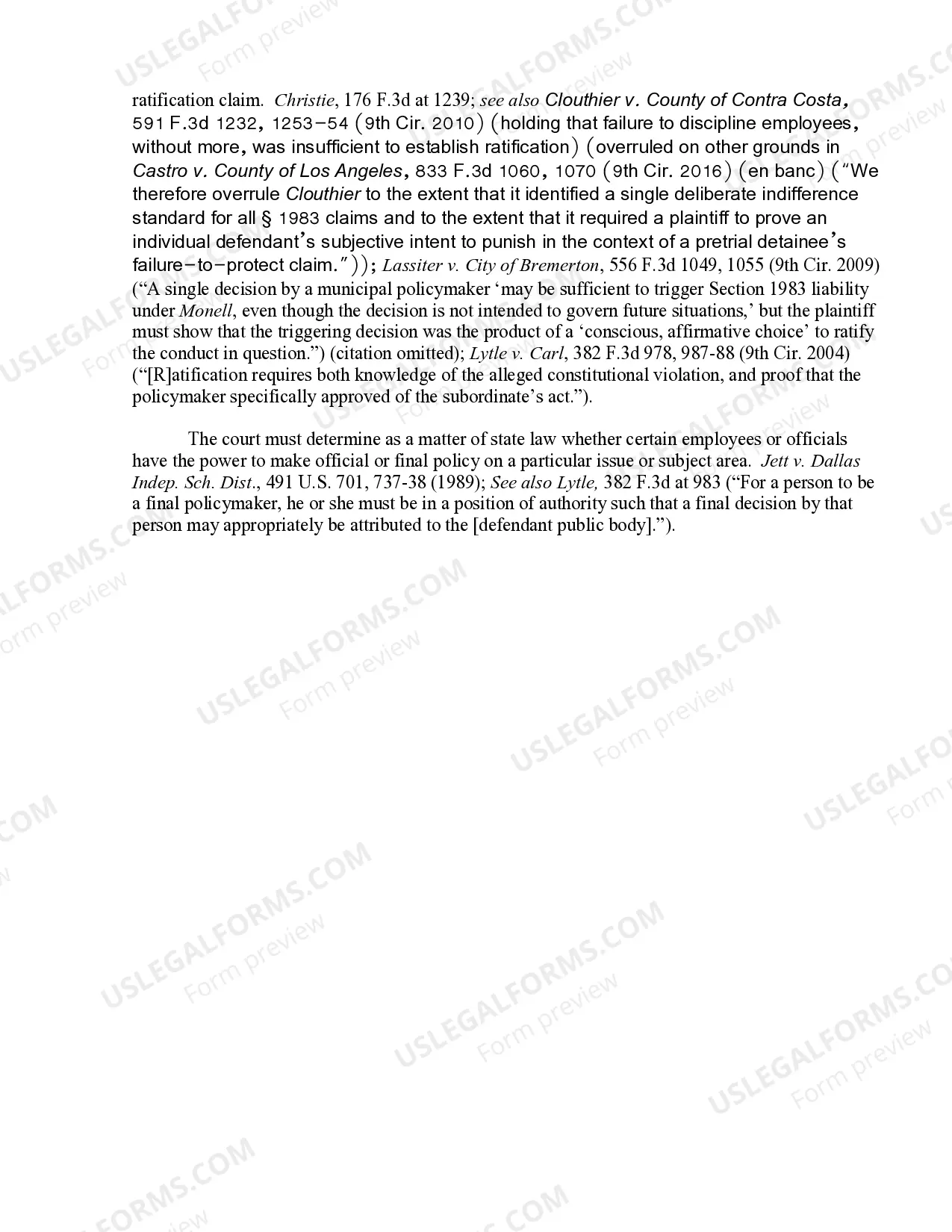
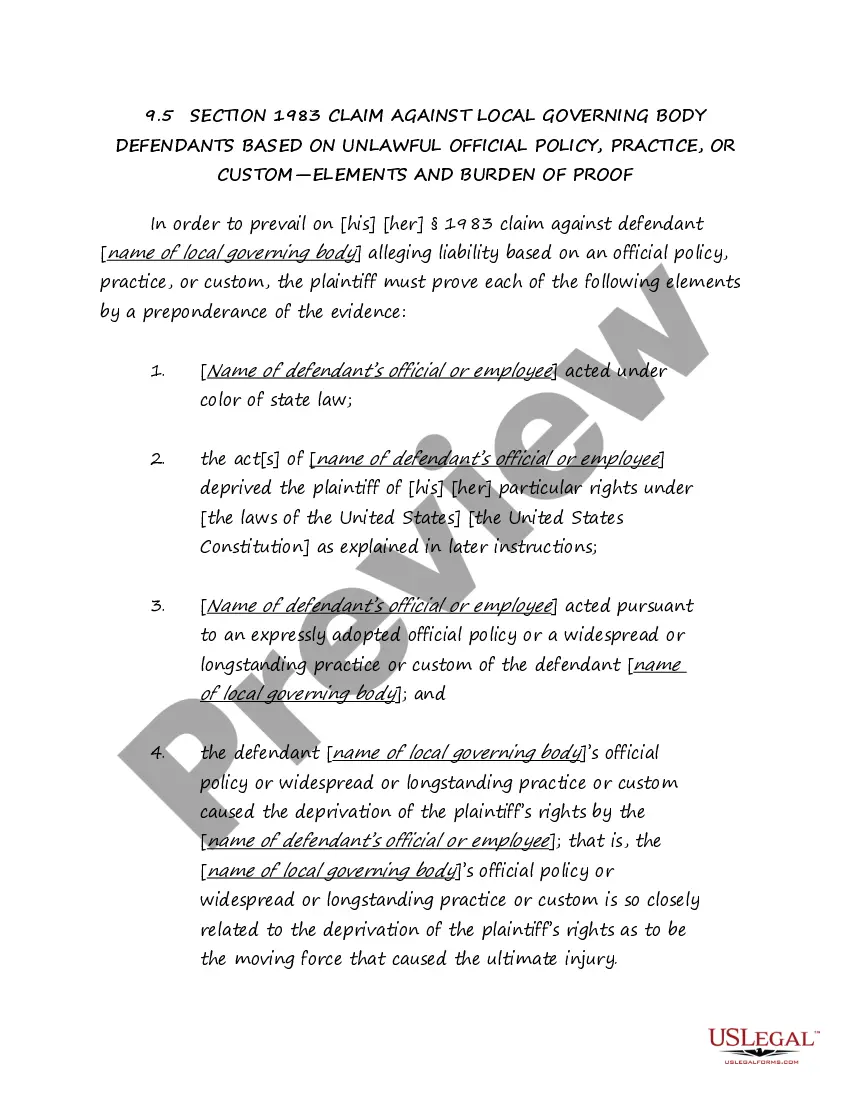
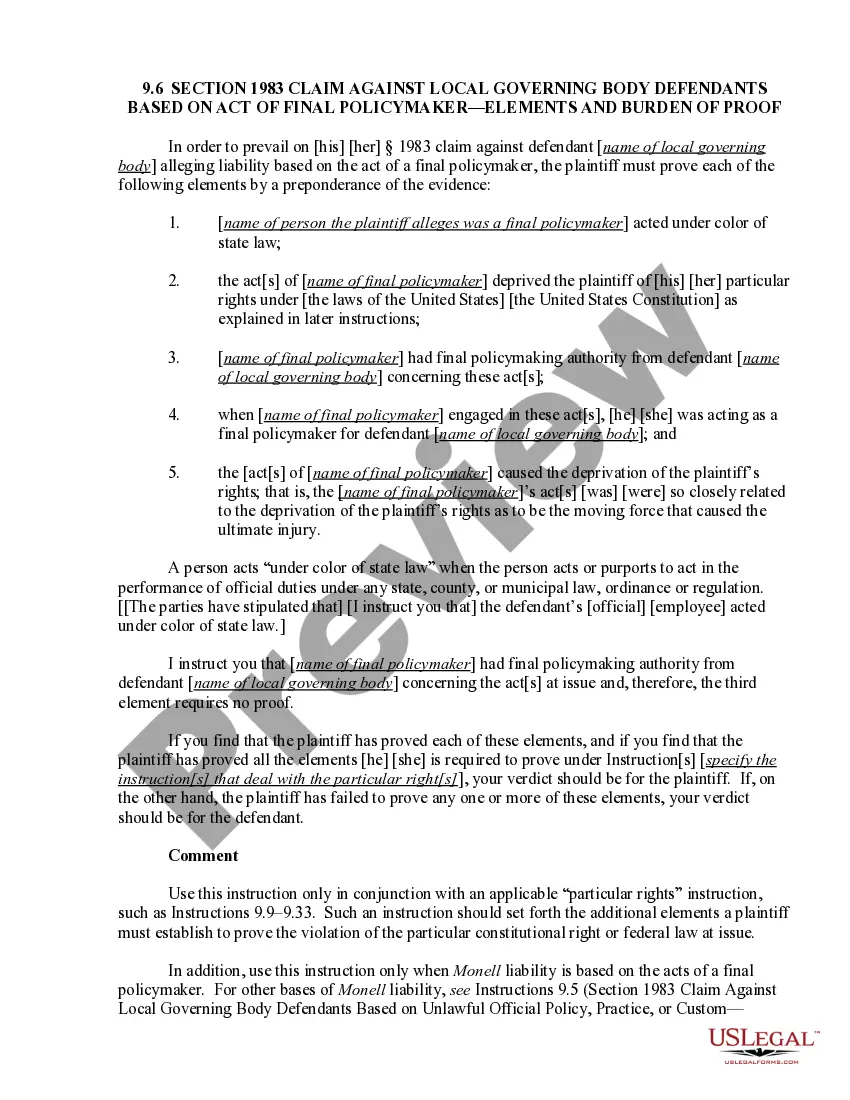
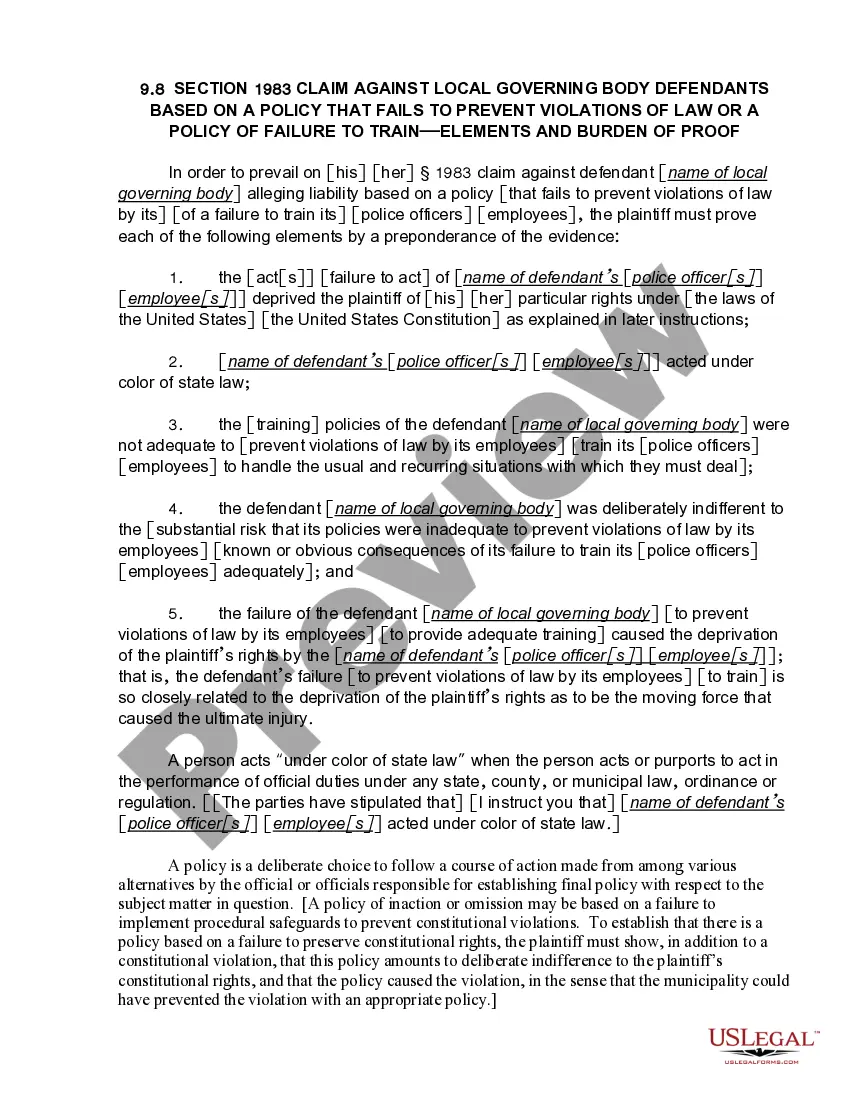
9.7 Section 1983 Claim Against Local Governing Body Defendants Based on Ratification-Elements and Burden of Proof
Does this document require notarization?
This form usually doesn’t need to be notarized. However, local laws or specific transactions may require it. Our online notarization service, powered by Notarize, lets you complete it remotely through a secure video session, available 24/7.
Get your form ready online
Our built-in tools help you complete, sign, share, and store your documents in one place.
Make edits, fill in missing information, and update formatting in US Legal Forms—just like you would in MS Word.
Download a copy, print it, send it by email, or mail it via USPS—whatever works best for your next step.
Sign and collect signatures with our SignNow integration. Send to multiple recipients, set reminders, and more. Go Premium to unlock E-Sign.
If this form requires notarization, complete it online through a secure video call—no need to meet a notary in person or wait for an appointment.
We protect your documents and personal data by following strict security and privacy standards.

Make edits, fill in missing information, and update formatting in US Legal Forms—just like you would in MS Word.

Download a copy, print it, send it by email, or mail it via USPS—whatever works best for your next step.

Sign and collect signatures with our SignNow integration. Send to multiple recipients, set reminders, and more. Go Premium to unlock E-Sign.

If this form requires notarization, complete it online through a secure video call—no need to meet a notary in person or wait for an appointment.

We protect your documents and personal data by following strict security and privacy standards.
Looking for another form?


Form popularity
FAQ
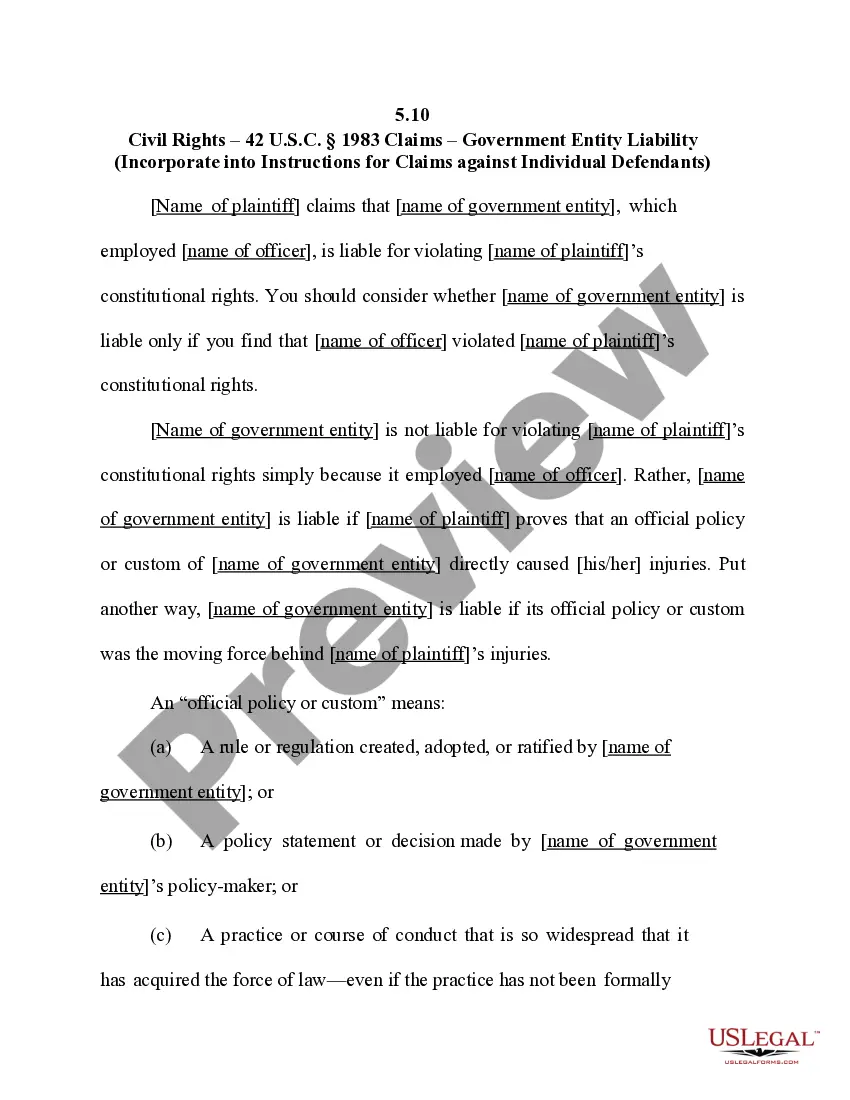
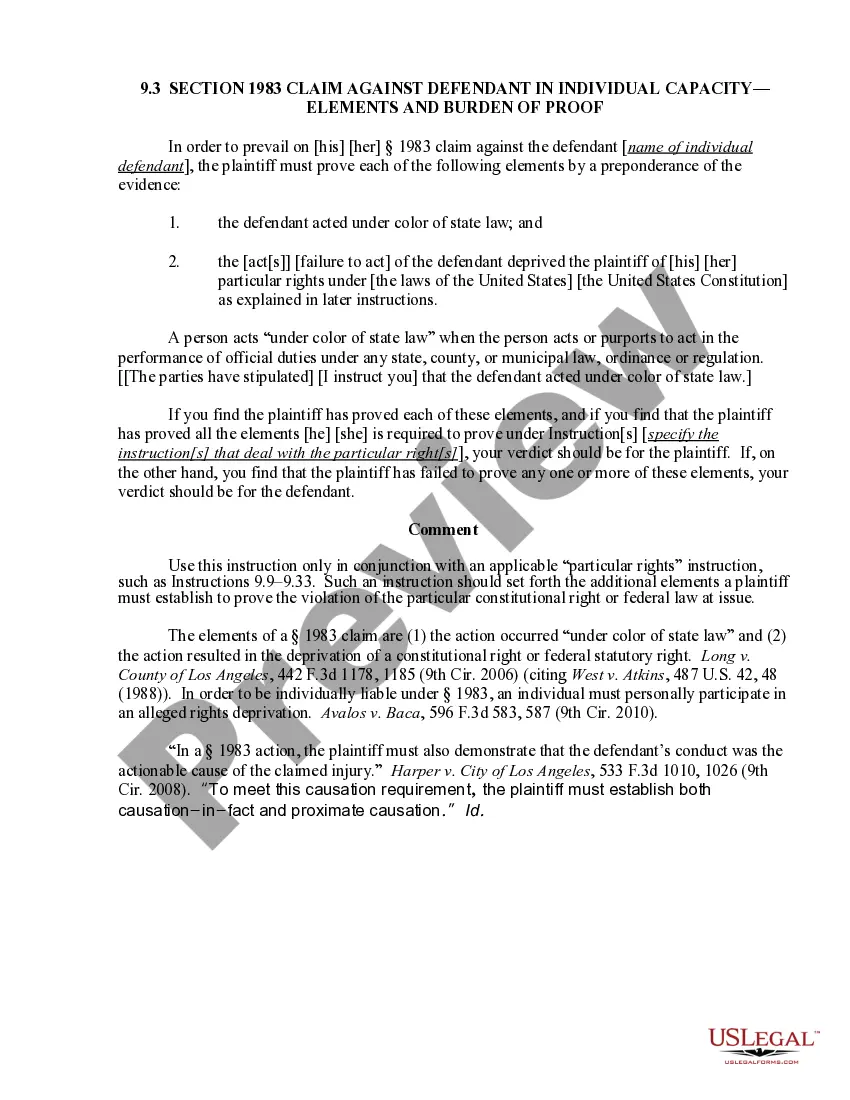
To establish a claim pursuant to Section 1983, a plaintiff must ?demonstrate a violation of a right secured by the Constitution and the laws of the United States and that alleged deprivation was committed by a person acting under the color of state law.? Id.
The elements of a § 1983 claim are (1) the action occurred ?under color of state law? and (2) the action resulted in the deprivation of a constitutional right or federal statutory right.
What are the elements of a section 1983 claim? a person subjected the plaintiff to conduct that occurred under color of state law, and. this conduct deprived the plaintiff of rights, privileges, or immunities guaranteed under the U.S. Constitution or federal law.
Section 1983 allows defendants to be found liable only when they have acted ?under color of any statute, ordinance, regulation, custom, or usage, of any State or Territory or the District of Columbia.? 42 U.S.C.
To succeed on a Section 1983 claim, a plaintiff must prove that his constitutional rights were violated, and that the violation was caused by a person acting under color of law. West v. Atkins, 487 U.S. 4242 (1988).
To state a section 1983 claim, a person must show: that the conduct complained of was committed by a person acting under color of state law; and. that the conduct deprived the person of a constitutional right.
A. In order to prevail on a § 1983 claim, a Plaintiff must prove that (1) the conduct was committed by a person acting under color of state law and (2) as a result of this conduct he or she was deprived of rights, privileges or immunities secured by the Constitution or the laws of the United States.
To succeed on a Section 1983 claim, a plaintiff must prove that his constitutional rights were violated, and that the violation was caused by a person acting under color of law.