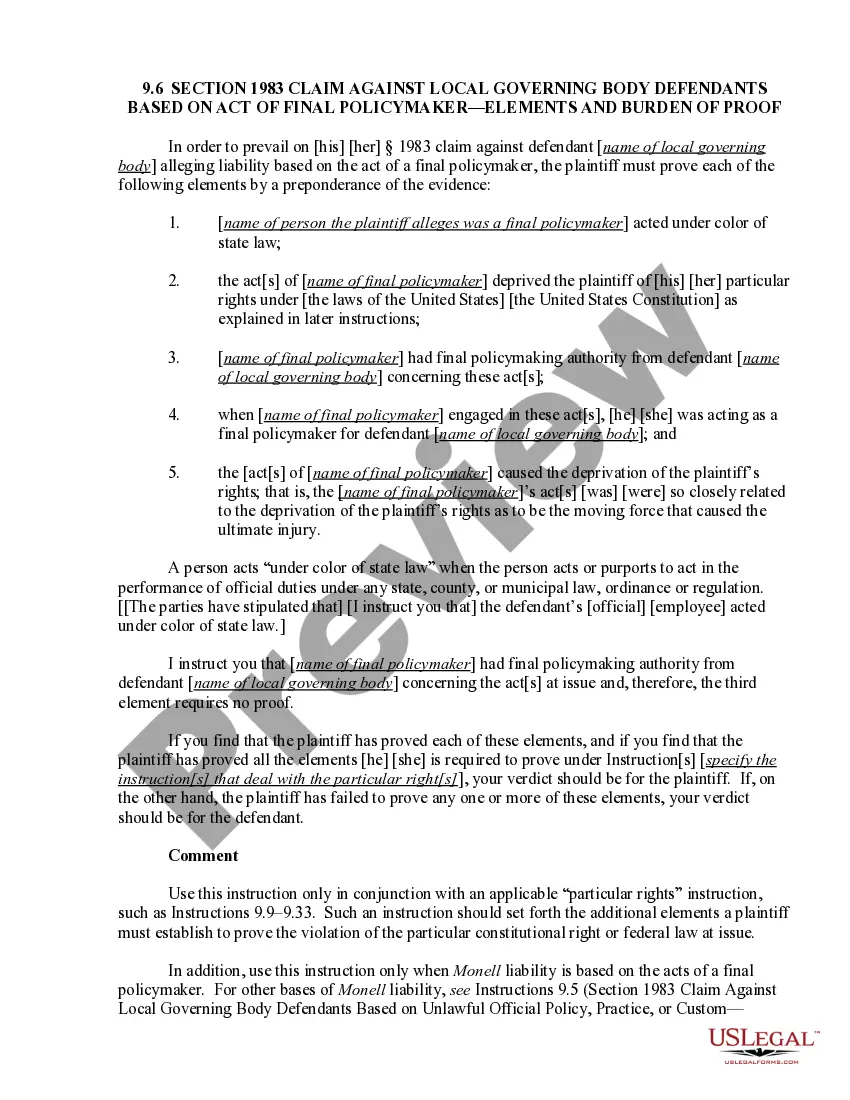
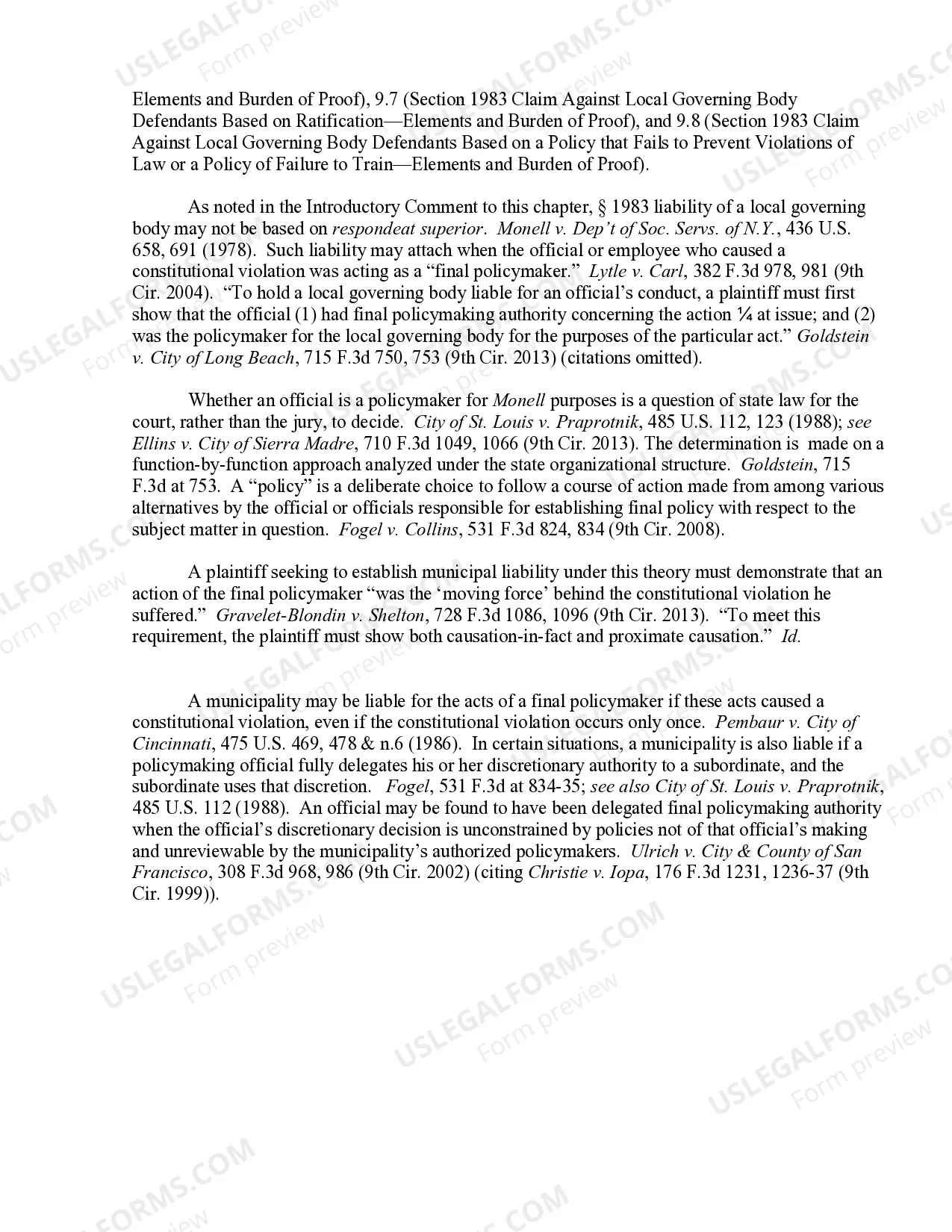
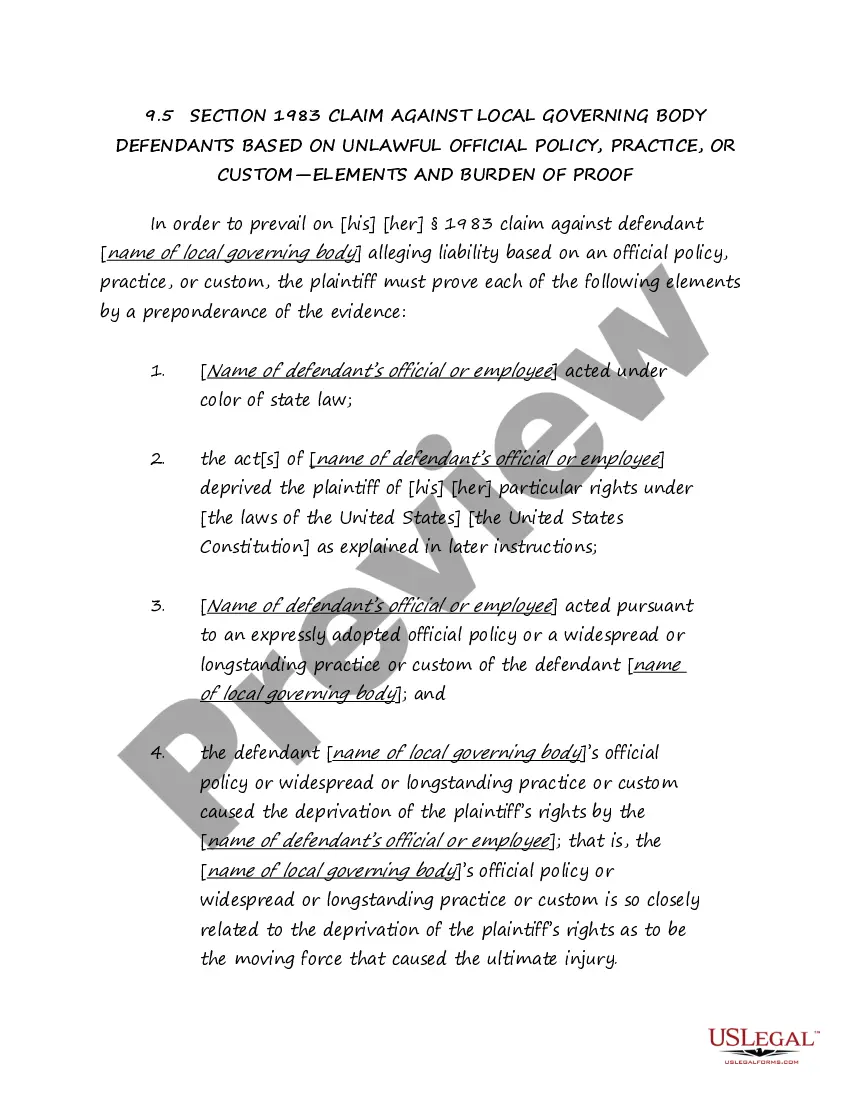
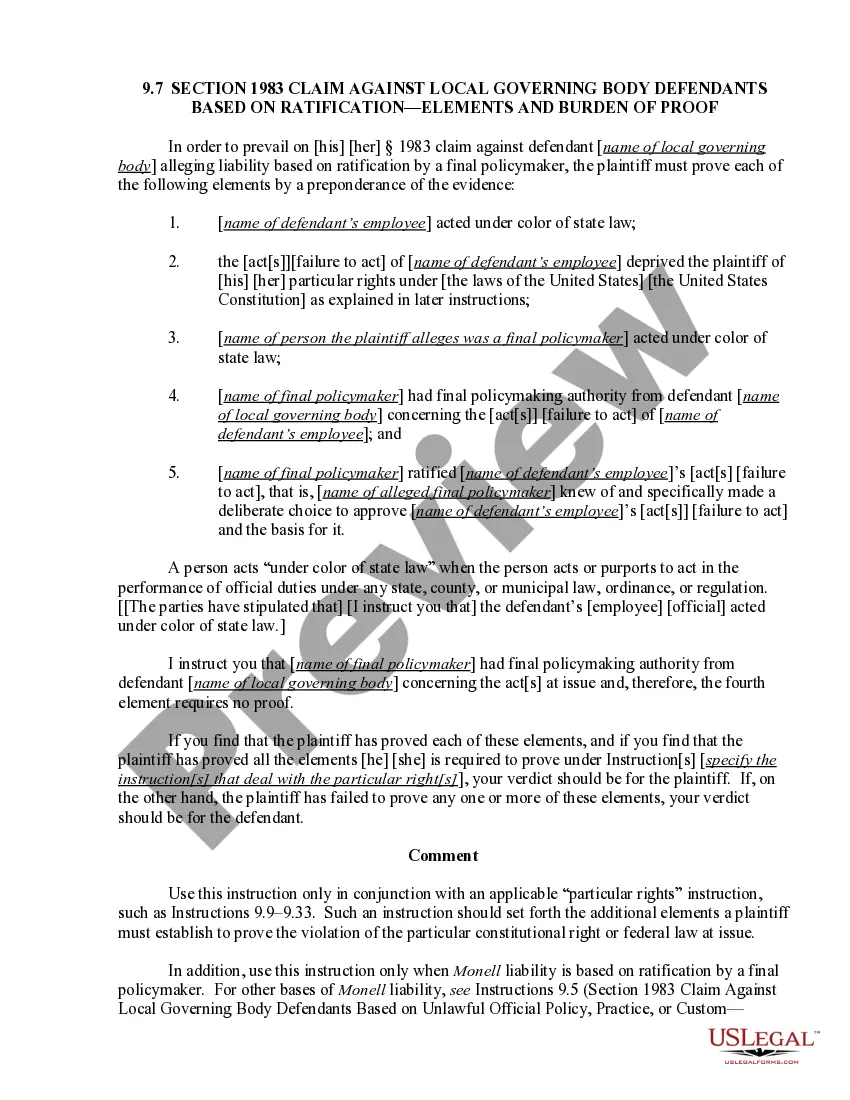
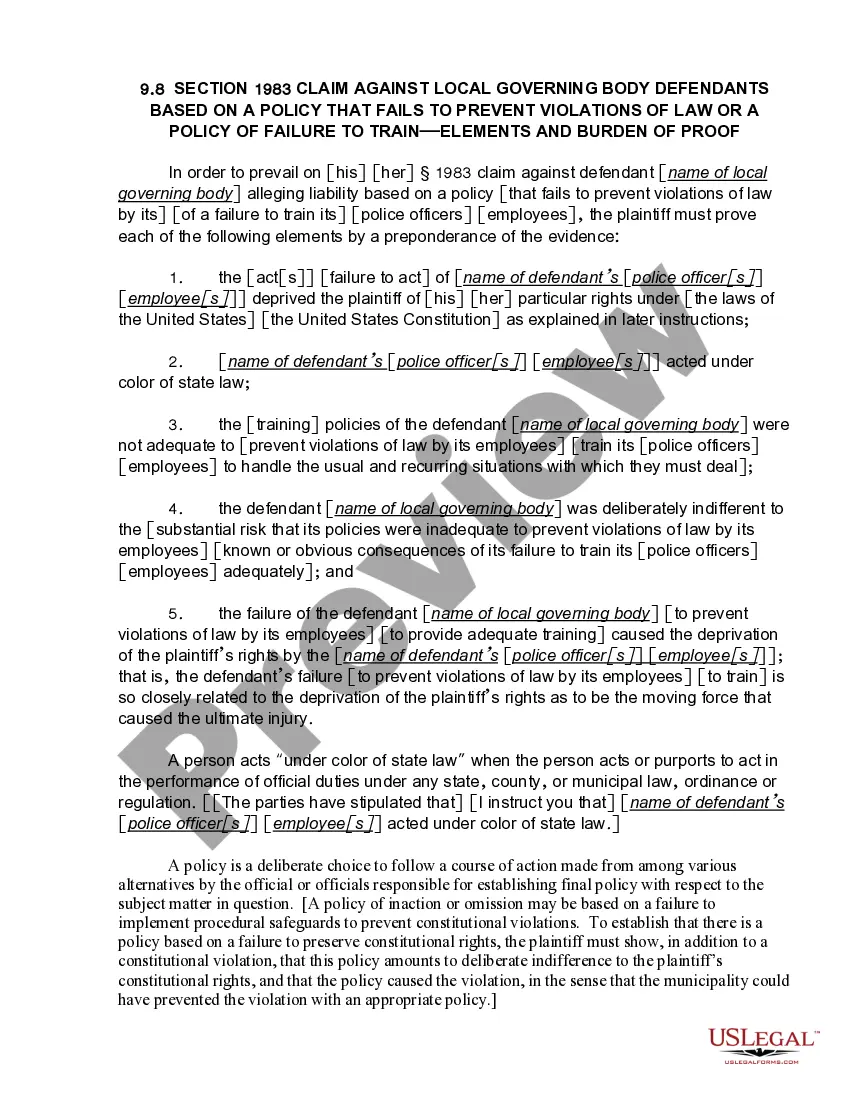
9.6 Section 1983 Claim Against Local Governing Body Defendants Based on Act of Final Policymaker-Elements and Burden of Proof
Is notarization required?
Notarization is not commonly needed for this form. However, certain documents or local rules may make it necessary. Our notarization service, powered by Notarize, allows you to finalize it securely online anytime, day or night.
Get your form ready online
Our built-in tools help you complete, sign, share, and store your documents in one place.
Make edits, fill in missing information, and update formatting in US Legal Forms—just like you would in MS Word.
Download a copy, print it, send it by email, or mail it via USPS—whatever works best for your next step.
Sign and collect signatures with our SignNow integration. Send to multiple recipients, set reminders, and more. Go Premium to unlock E-Sign.
If this form requires notarization, complete it online through a secure video call—no need to meet a notary in person or wait for an appointment.
We protect your documents and personal data by following strict security and privacy standards.

Make edits, fill in missing information, and update formatting in US Legal Forms—just like you would in MS Word.

Download a copy, print it, send it by email, or mail it via USPS—whatever works best for your next step.

Sign and collect signatures with our SignNow integration. Send to multiple recipients, set reminders, and more. Go Premium to unlock E-Sign.

If this form requires notarization, complete it online through a secure video call—no need to meet a notary in person or wait for an appointment.

We protect your documents and personal data by following strict security and privacy standards.
Looking for another form?
Form popularity
FAQ
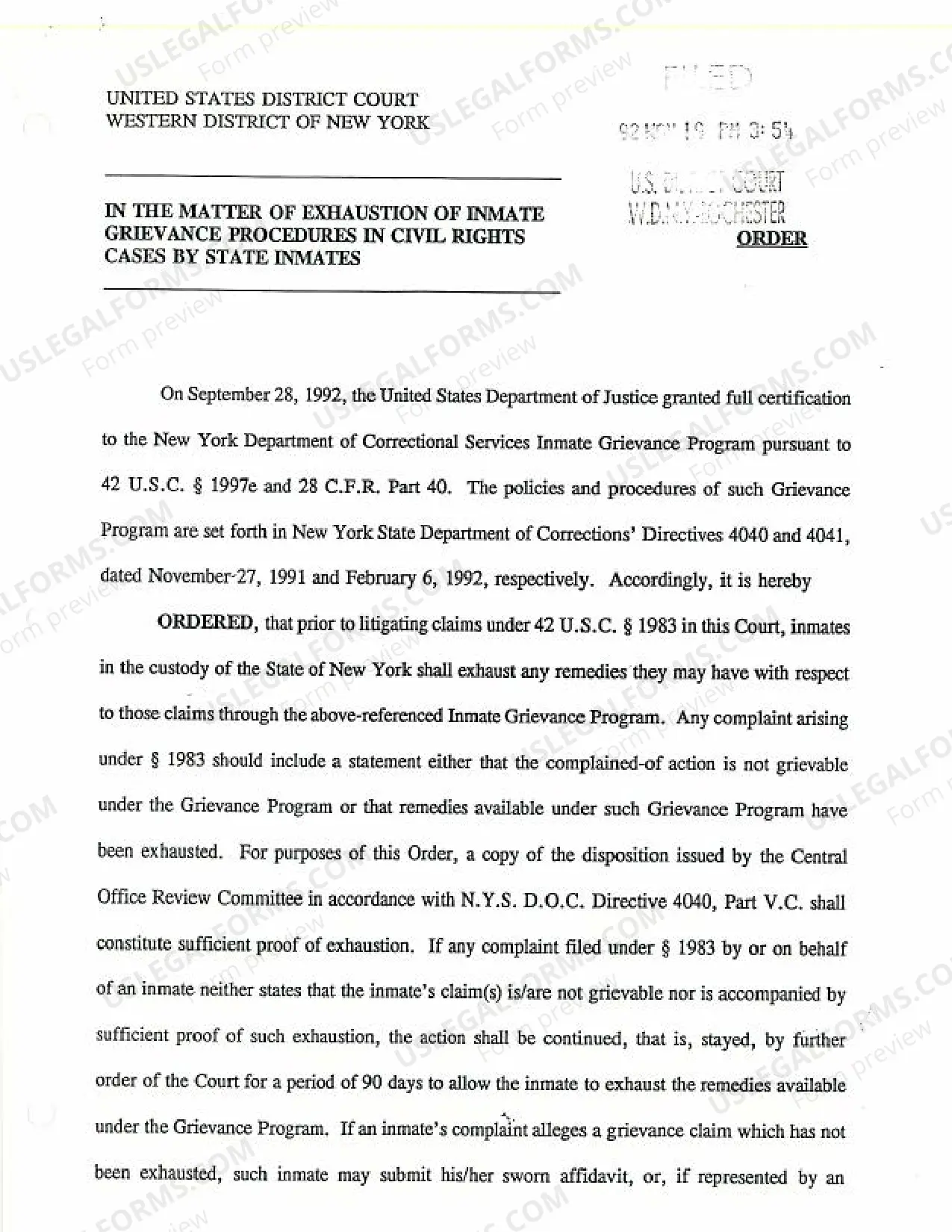
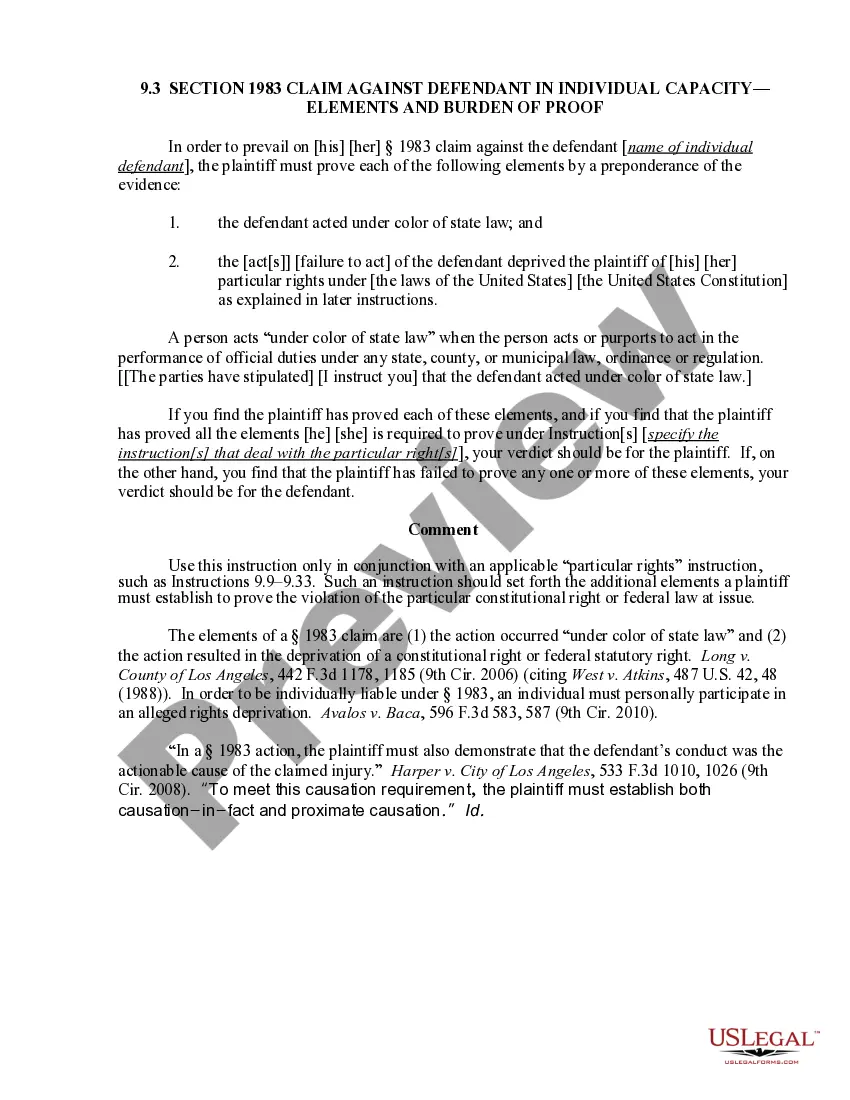
Section 1983 allows defendants to be found liable only when they have acted ?under color of any statute, ordinance, regulation, custom, or usage, of any State or Territory or the District of Columbia.? 42 U.S.C.
The elements of a § 1983 claim are (1) the action occurred ?under color of state law? and (2) the action resulted in the deprivation of a constitutional right or federal statutory right.
The elements of a § 1983 claim are (1) the action occurred ?under color of state law? and (2) the action resulted in the deprivation of a constitutional right or federal statutory right.
To state a section 1983 claim, a person must show: that the conduct complained of was committed by a person acting under color of state law; and. that the conduct deprived the person of a constitutional right.
A Section § 1983 lawsuit permits you to seek financial compensation for violations of your constitutional rights by state and local government officials, such as police officers or prison guards, while they were acting under color of law.
To succeed on a Section 1983 claim, a plaintiff must prove that his constitutional rights were violated, and that the violation was caused by a person acting under color of law.
What are some examples of lawsuits under section 1983 of the United States Code? Brown v. Board of Education, in which the Supreme Court held that racial segregation in public schools violated the Equal Protection Clause of the Fourteenth Amendment; Plessy v.Gideon v.Miranda v.Engle v.
3. ?Class of One? claims: A Section 1983 plaintiff may bring an equal protection claim, even if he or she does not allege membership in a protected class or group if he or she is intentionally treated differently than others similarly situated and there is no rational basis for the disparate treatment.