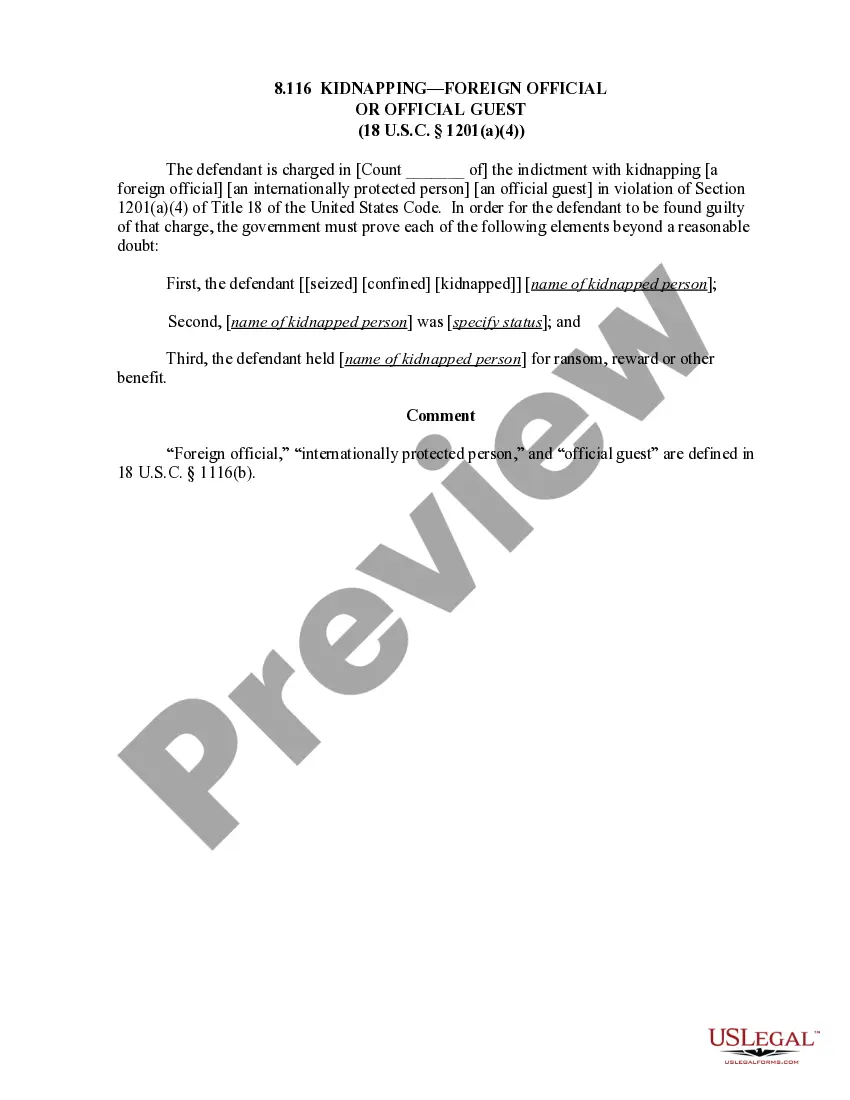
8.116 Kidnapping-Foreign Official or Official Guest (18 U.S.C. Sec. 1201(a)(4))

Notarization requirements for this form
Notarization is generally not required for this form. However, certain states or situations might demand it. You can complete notarization online through US Legal Forms, powered by Notarize, using a verified video call available anytime.
Get your form ready online
Our built-in tools help you complete, sign, share, and store your documents in one place.
Make edits, fill in missing information, and update formatting in US Legal Forms—just like you would in MS Word.
Download a copy, print it, send it by email, or mail it via USPS—whatever works best for your next step.
Sign and collect signatures with our SignNow integration. Send to multiple recipients, set reminders, and more. Go Premium to unlock E-Sign.
If this form requires notarization, complete it online through a secure video call—no need to meet a notary in person or wait for an appointment.
We protect your documents and personal data by following strict security and privacy standards.

Make edits, fill in missing information, and update formatting in US Legal Forms—just like you would in MS Word.

Download a copy, print it, send it by email, or mail it via USPS—whatever works best for your next step.

Sign and collect signatures with our SignNow integration. Send to multiple recipients, set reminders, and more. Go Premium to unlock E-Sign.

If this form requires notarization, complete it online through a secure video call—no need to meet a notary in person or wait for an appointment.

We protect your documents and personal data by following strict security and privacy standards.
Looking for another form?

Form popularity
FAQ
States treat all kidnapping offenses as serious crimes. At the minimum, people convicted of this offense will likely face custody in state prison for up to five years. Aggravated kidnapping convictions can result in a prison sentence of between 20 years to life.
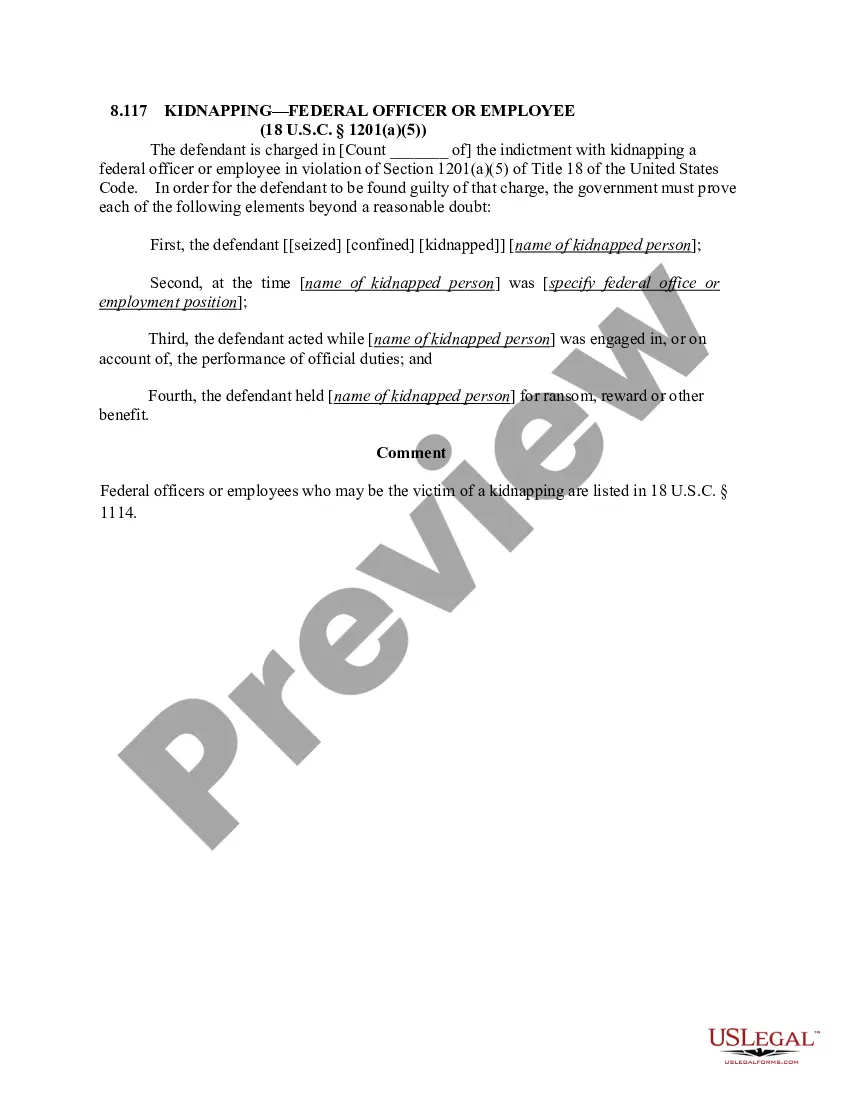
§ 1201(a)(5) The kidnapping of any of the Federal officers and employees described in 18 U.S.C. § 1114 is made a Federal crime under 18 U.S.C. § 1201(a)(5).
Ing to 18 U.S.C. Section 1201, a federal kidnapping conviction carries a sentence of 20 years to life in prison. The sentence will be based on the circumstances of the case, as well as any prior convictions. The death penalty or life in prison could apply if the kidnapping results in the death of a victim.
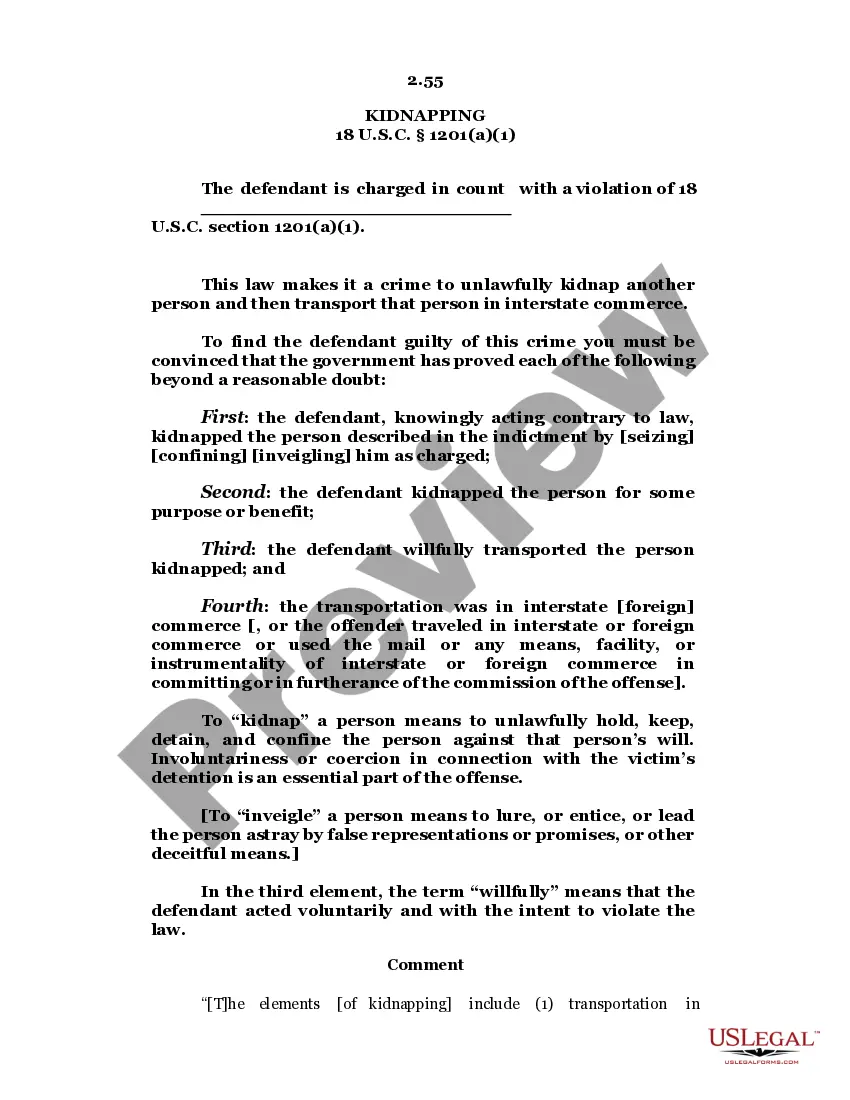
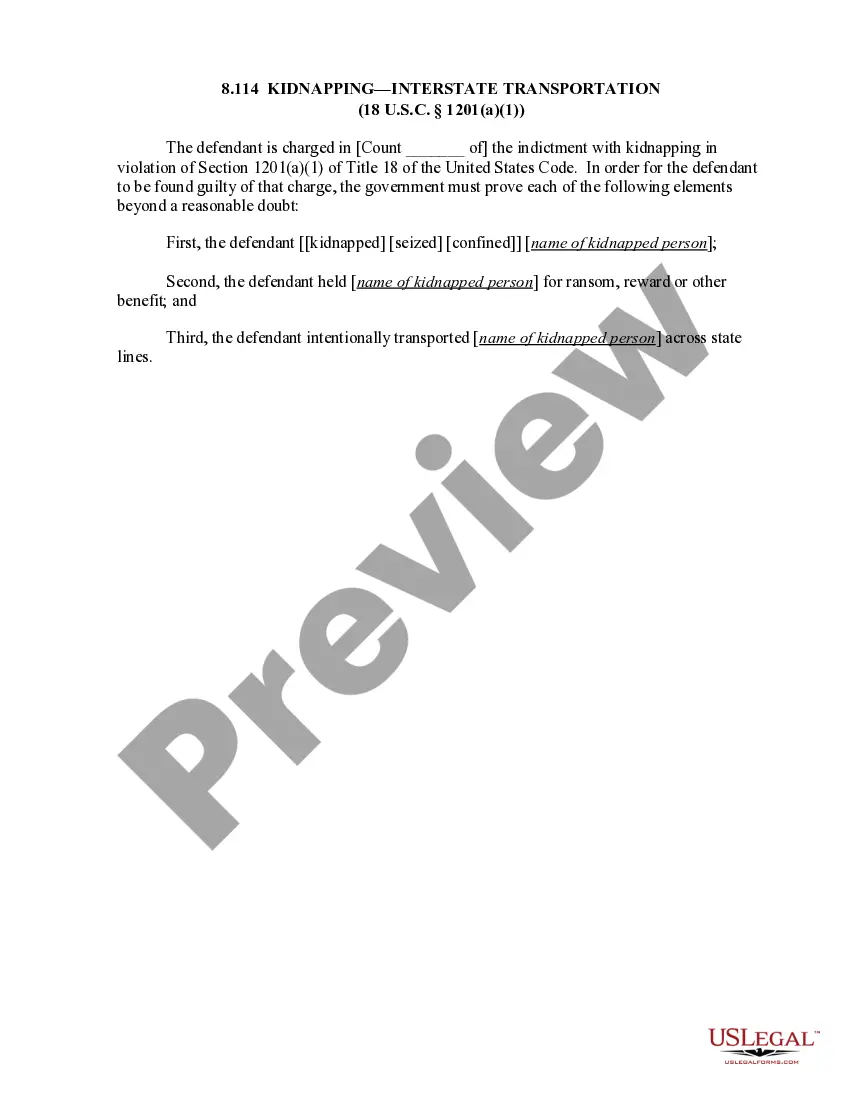
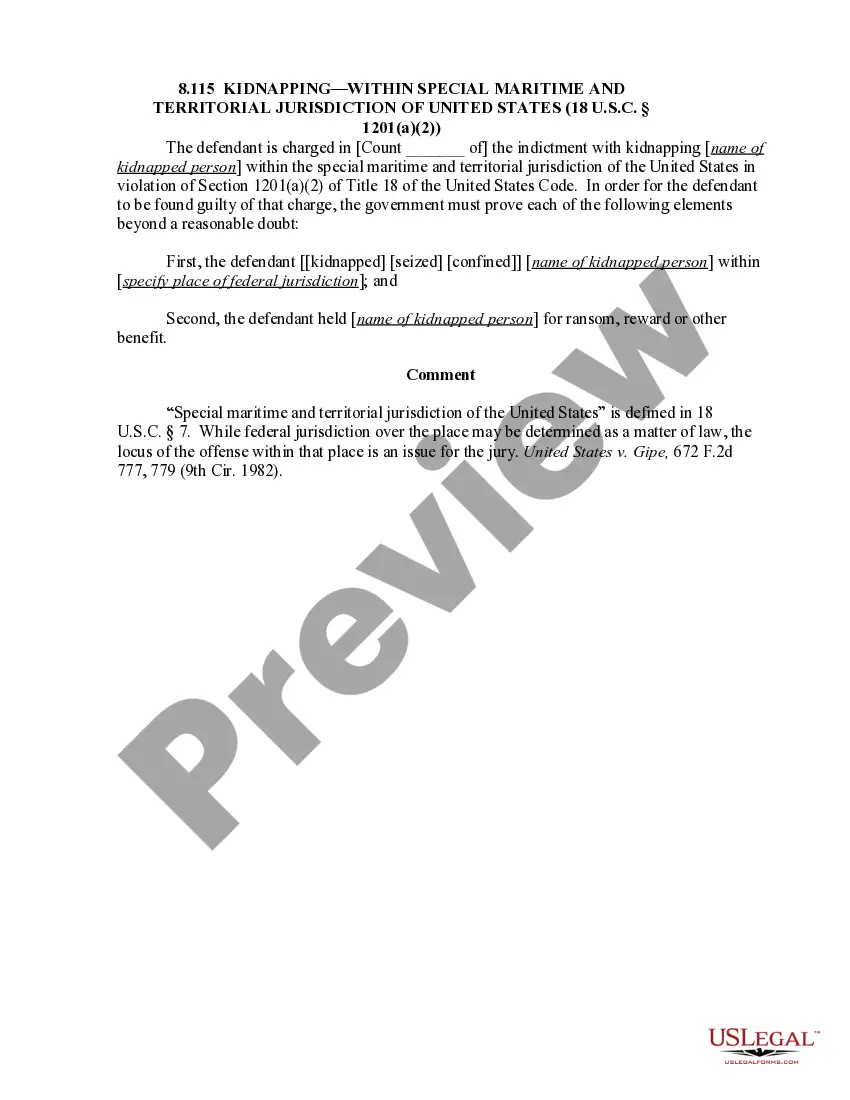
Federal jurisdiction over kidnapping extends to the following situations: (1) kidnapping in which the victim is willfully transported in interstate or foreign commerce; (2) kidnapping within the special maritime and territorial jurisdiction of the United States; (3) kidnapping within the special aircraft jurisdiction
If the kidnapping is actually accomplished, the maximum punishment is life in federal prison. If anyone is killed as a result of the act, the maximum punishment is the death penalty. The person killed under 18 U.S.C. § 1201 to trigger this sentencing enhancement does not have to be the victim.
If the kidnapping is actually accomplished, the maximum punishment is life in federal prison. If anyone is killed as a result of the act, the maximum punishment is the death penalty. The person killed under 18 U.S.C. § 1201 to trigger this sentencing enhancement does not have to be the victim.
Under 18 USC 1201, a person is guilty of kidnapping who "unlawfully seizes, confines, inveigles, decoys, kidnaps, abducts, or carries away and holds for ransom or reward or otherwise any person."
Kidnapping is usually accompanied with a ransom for money or other gains. However, a crime of abduction is considered to be when a person has been taken away from his or her original location by persuading him or her, by some act of fraud or with a forceful way that may include violence.