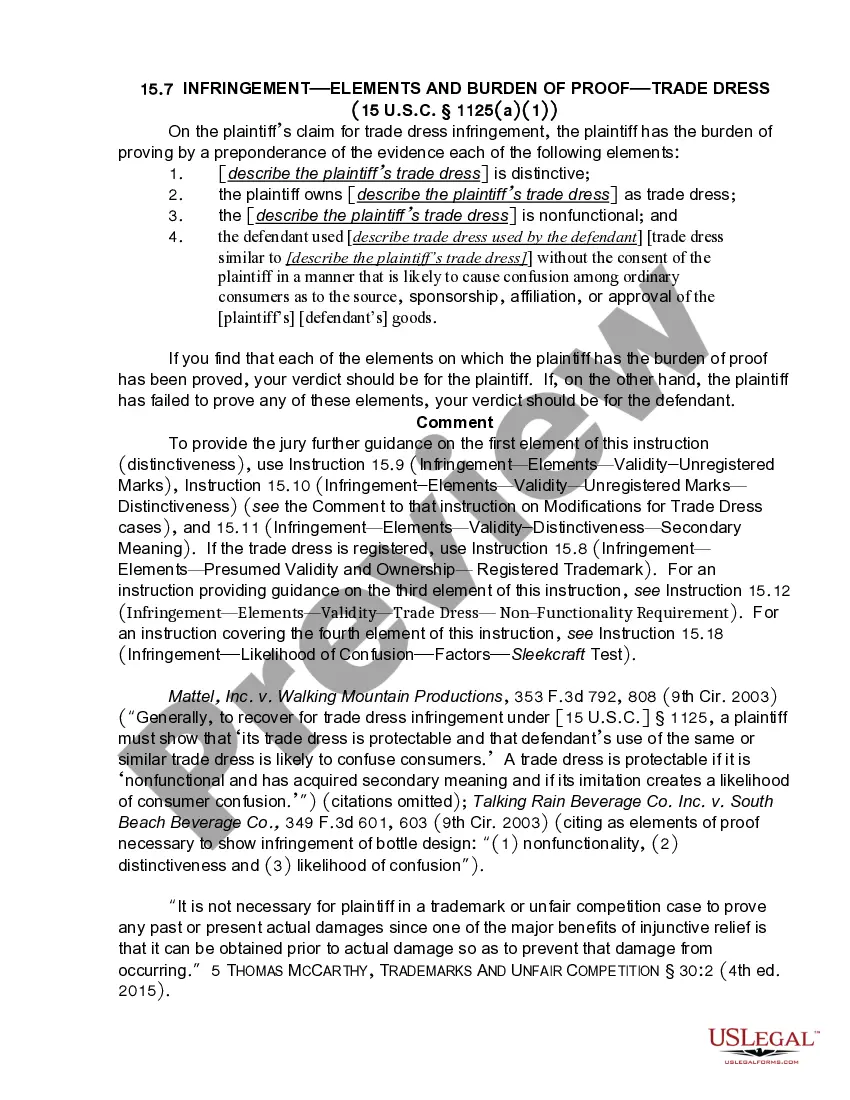
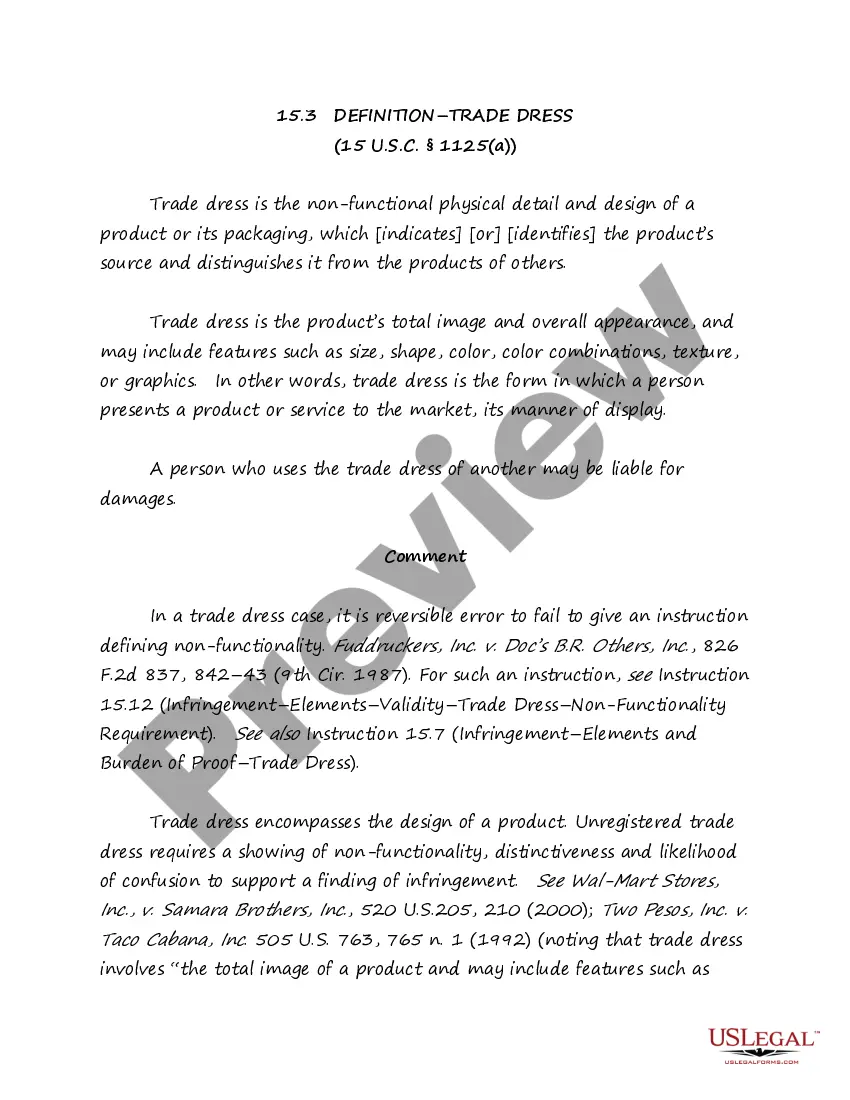
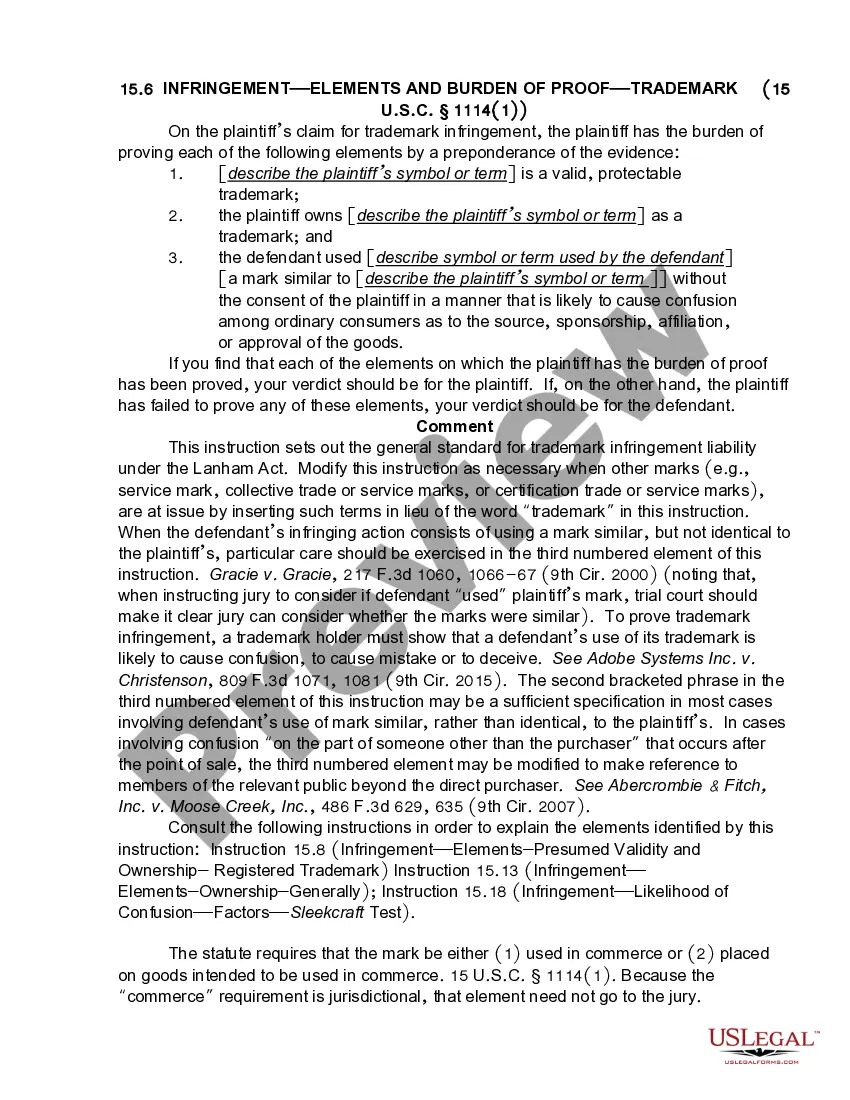
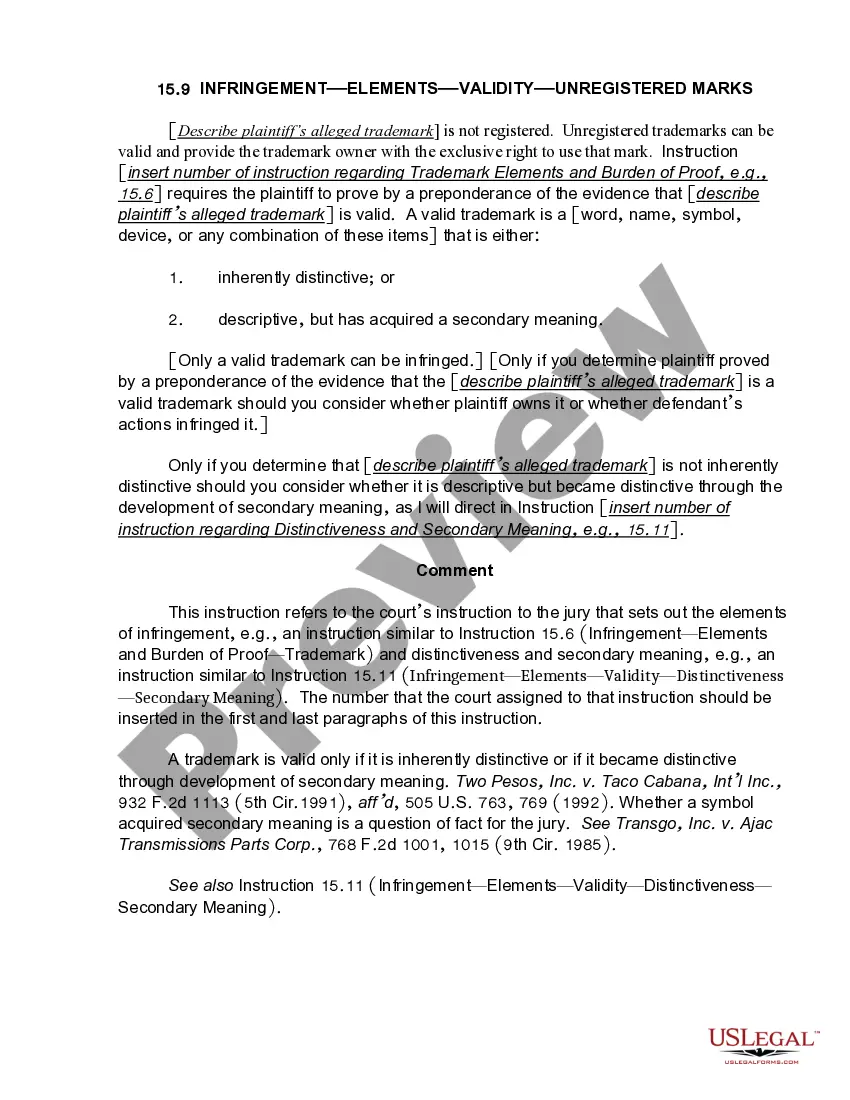
15.7 Infringement-Elements and Burden of Proof-Trade Dress

Is notarization required?
This form does not typically require notarization to be legally valid. However, some jurisdictions or document types may still require it. US Legal Forms provides secure online notarization powered by Notarize, available 24/7 for added convenience.
Get your form ready online
Our built-in tools help you complete, sign, share, and store your documents in one place.
Make edits, fill in missing information, and update formatting in US Legal Forms—just like you would in MS Word.
Download a copy, print it, send it by email, or mail it via USPS—whatever works best for your next step.
Sign and collect signatures with our SignNow integration. Send to multiple recipients, set reminders, and more. Go Premium to unlock E-Sign.
If this form requires notarization, complete it online through a secure video call—no need to meet a notary in person or wait for an appointment.
We protect your documents and personal data by following strict security and privacy standards.

Make edits, fill in missing information, and update formatting in US Legal Forms—just like you would in MS Word.

Download a copy, print it, send it by email, or mail it via USPS—whatever works best for your next step.

Sign and collect signatures with our SignNow integration. Send to multiple recipients, set reminders, and more. Go Premium to unlock E-Sign.

If this form requires notarization, complete it online through a secure video call—no need to meet a notary in person or wait for an appointment.

We protect your documents and personal data by following strict security and privacy standards.
Looking for another form?
Form popularity
FAQ
What is a trademark, and what is a trade dress? A trademark is a recognizable identifier, such as words, designs, logos or colors associated with your business, while trade dress encompasses the visual appearance of your goods or services and packaging.
Trade dress is generally protected through common law rights, but like with any other trademark products, it can be registered for legal protection in federal court should your product be infringed on. Such as with other trademark products, registration occurs through the U.S. Patent and Trademark Office (USPTO).
In a nutshell, a plaintiff in a trademark case has the burden of proving that the defendant's use of a mark has created a likelihood-of-confusion about the origin of the defendant's goods or services. To do this, the plaintiff should first show that it has developed a protectable trademark right in a trademark.
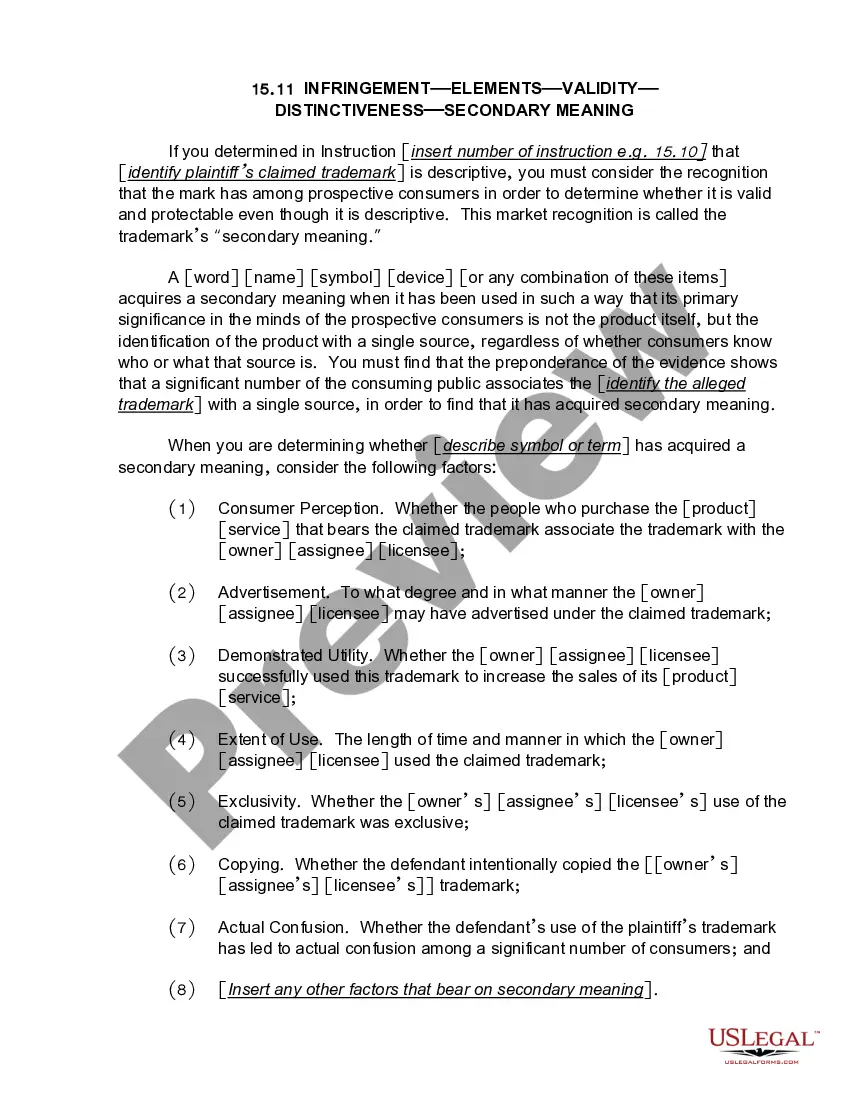
To sue for infringement of trade dress, you must be able to articulate and prove that your trade dress is inherently distinctive, or has acquired secondary meaning, and that the junior use is likely to cause consumer confusion.
Trade dress is generally protected through common law rights, but like with any other trademark products, it can be registered for legal protection in federal court should your product be infringed on. Such as with other trademark products, registration occurs through the U.S. Patent and Trademark Office (USPTO).
§ 1125(a), the plaintiff must demonstrate that (1) it has a valid and legally protectable mark; (2) it owns the mark; and (3) the defendant's use of the mark to identify goods or services causes a likelihood of confusion.
If the court finds that the trade dress infringement in question involved willful use of counterfeit trade dress, it can award statutory damages of up to $2 million per counterfeit trade dress per type of goods or services sold or distributed.
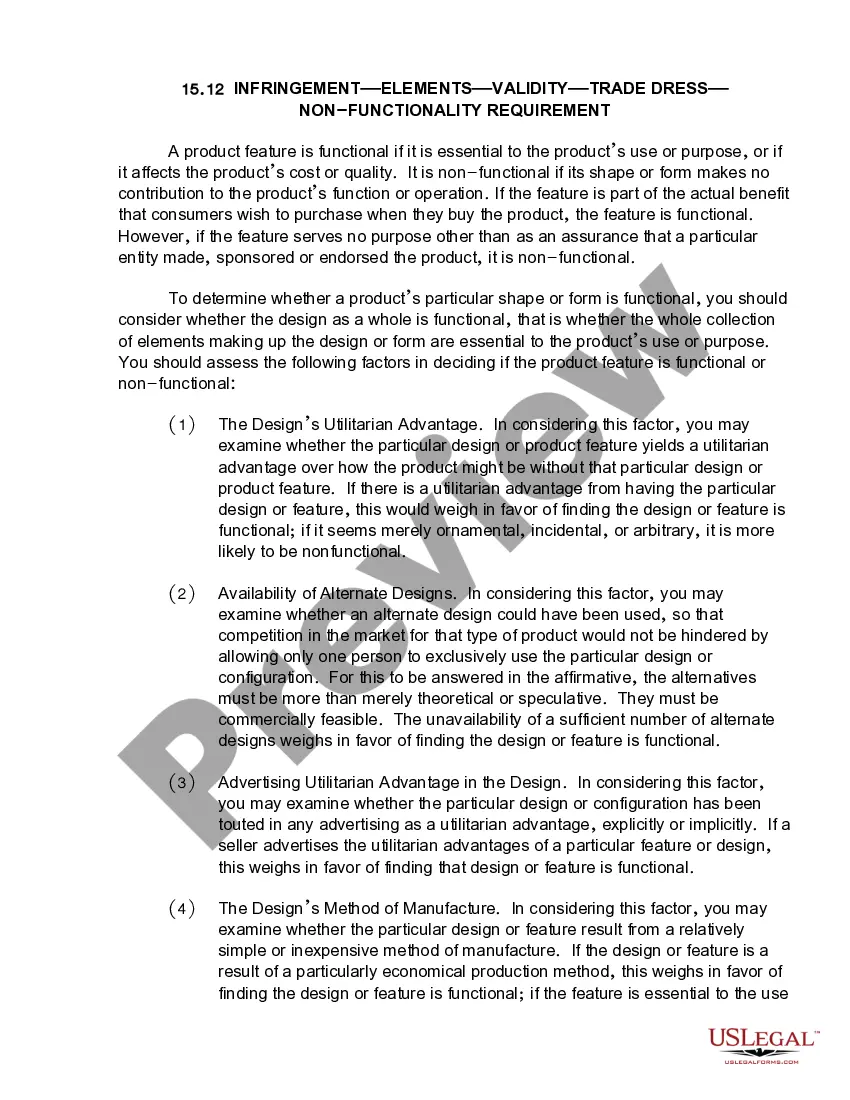
There are four elements that are typically examined in trade dress infringement cases: Definition; Functionality; Distinctiveness; and. Likelihood of confusion.