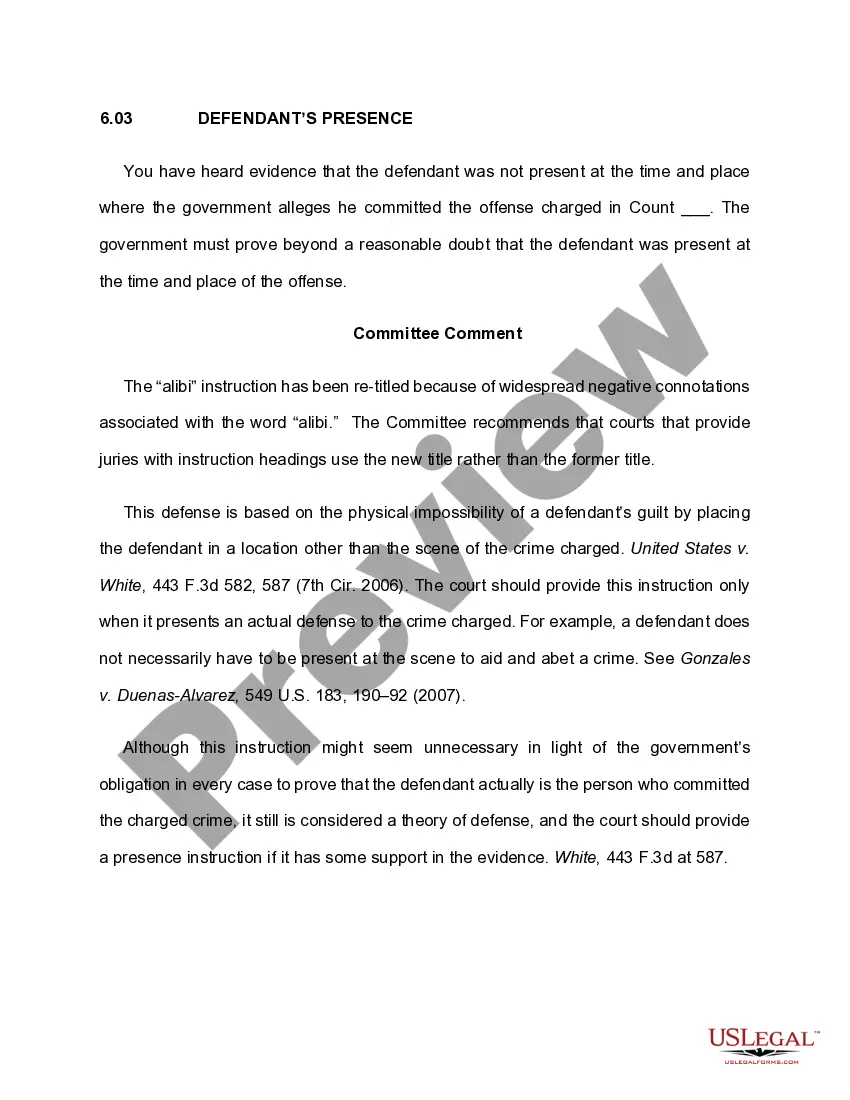
6.03 DEFENDANT'S PRESENCE
About this form
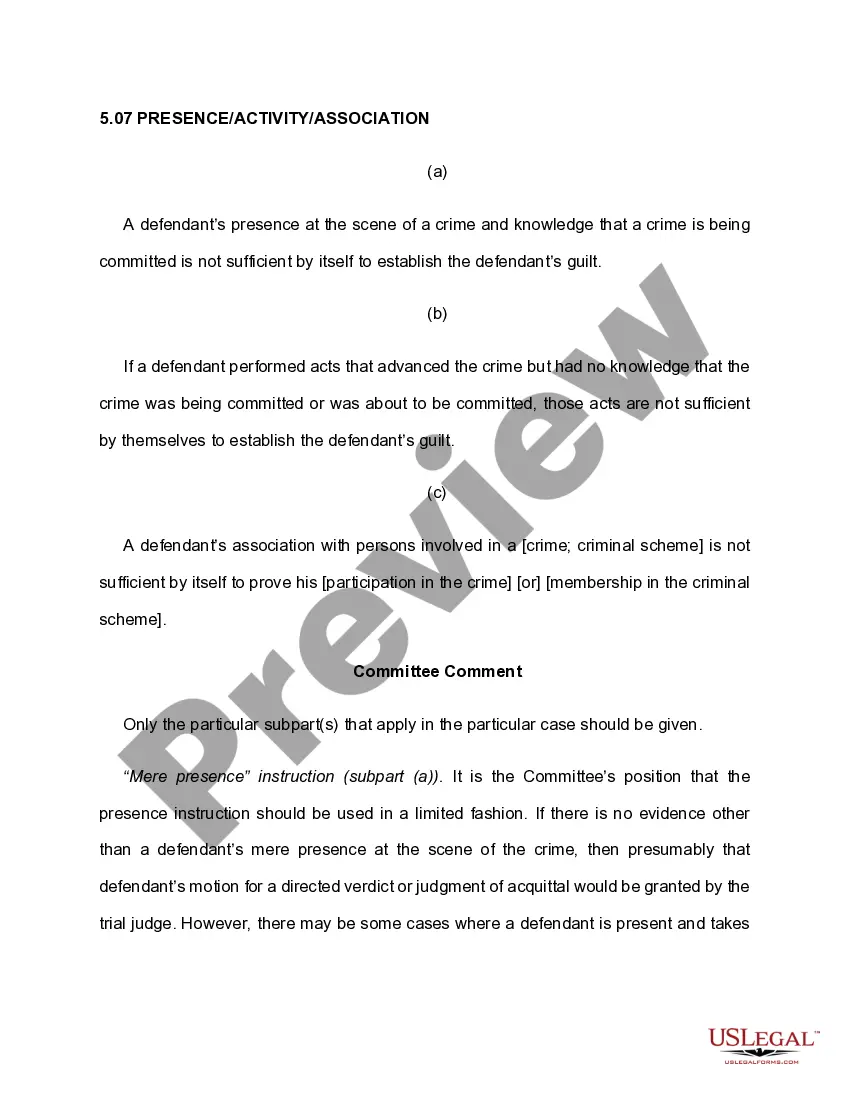
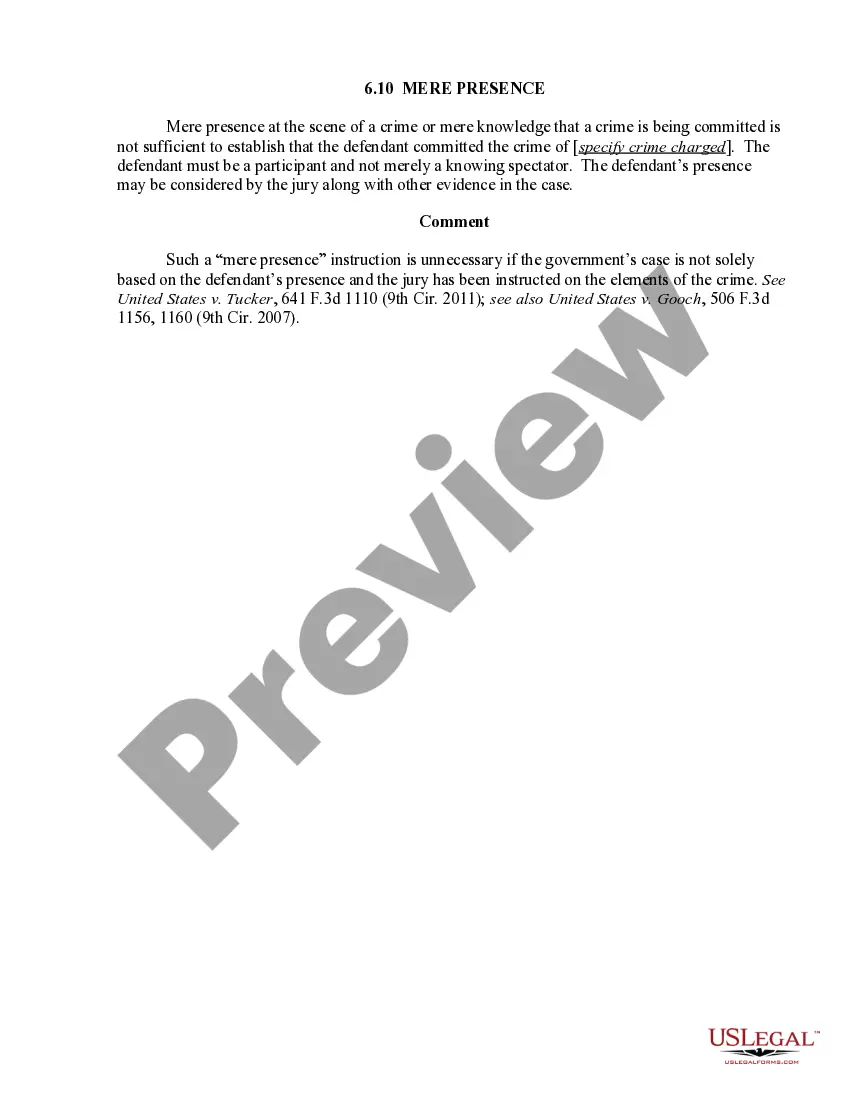
The 6.03 Defendant's Presence form is an official jury instruction used in criminal cases, specifically within the Federal 7th Circuit Court. Its purpose is to clarify the governmentâs burden of proof regarding a defendant's presence at the scene of the alleged crime. Unlike general alibi defenses, this form specifically addresses situations where a defendant claims they could not have committed the charged offense due to being elsewhere. It is critical for ensuring that juries understand the importance of proving a defendant's physical presence during the incident in question.
Form components explained
- Description of the government's obligation to prove the defendant's presence at the alleged crime scene.
- Clarification on the distinction between physical presence and participation in a crime.
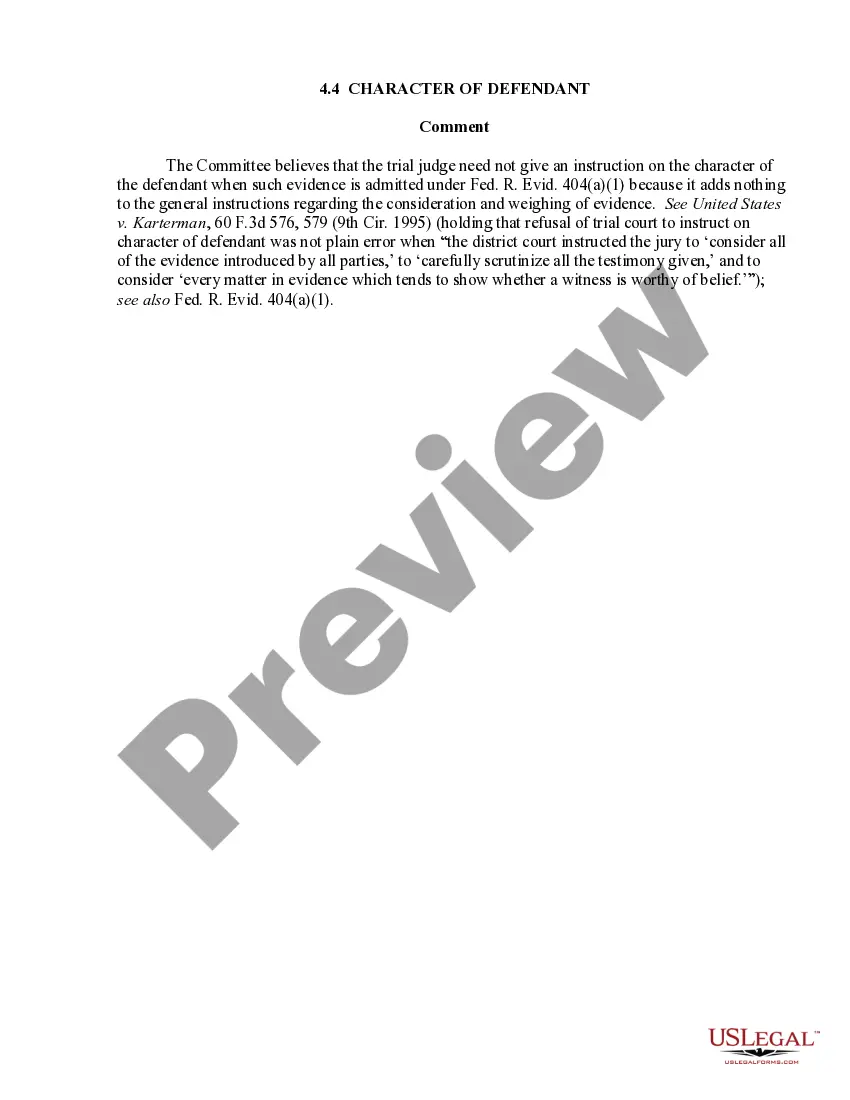
- References to case law supporting the use and necessity of this instruction.
- Guidance on when to provide this instruction based on the evidence presented.
When to use this document
This form is necessary in criminal trials when there is evidence indicating the defendant was not present at the location where the crime allegedly occurred. It is used to support a defense aimed at establishing that the defendant's guilt cannot be confirmed based solely on allegations of presence. This scenario typically arises in cases where witnesses or physical evidence may support a narrative that contradicts the government's claims.
Who this form is for
Eligibility for this form includes:
- Defendants in a criminal trial who have valid evidence supporting their absence from the crime scene.
- Attorneys representing defendants in criminal cases, particularly those involving complex defense strategies.
- Judges and legal practitioners who need to instruct juries regarding issues of presence and burden of proof.
How to complete this form
- Identify the relevant Count that alleges the offense.
- Gather and present evidence demonstrating the defendant's physical absence at the time the crime occurred.
- Specify details to support the arguments against the defendant's presence, referencing case law if necessary.
- Consult with legal counsel to ensure the instruction aligns with the overall defense strategy.
Is notarization required?
This form does not typically require notarization to be legally valid. However, some jurisdictions or document types may still require it. US Legal Forms provides secure online notarization powered by Notarize, available 24/7 for added convenience.
Get your form ready online
Our built-in tools help you complete, sign, share, and store your documents in one place.
Make edits, fill in missing information, and update formatting in US Legal Forms—just like you would in MS Word.
Download a copy, print it, send it by email, or mail it via USPS—whatever works best for your next step.
Sign and collect signatures with our SignNow integration. Send to multiple recipients, set reminders, and more. Go Premium to unlock E-Sign.
If this form requires notarization, complete it online through a secure video call—no need to meet a notary in person or wait for an appointment.
We protect your documents and personal data by following strict security and privacy standards.

Make edits, fill in missing information, and update formatting in US Legal Forms—just like you would in MS Word.

Download a copy, print it, send it by email, or mail it via USPS—whatever works best for your next step.

Sign and collect signatures with our SignNow integration. Send to multiple recipients, set reminders, and more. Go Premium to unlock E-Sign.

If this form requires notarization, complete it online through a secure video call—no need to meet a notary in person or wait for an appointment.

We protect your documents and personal data by following strict security and privacy standards.
Typical mistakes to avoid
- Failing to provide adequate evidence to support claims of absence, which may weaken the defense.
- Misunderstanding the courtâs requirements for presenting this defense in relation to other evidence.
- Not distinguishing between physical presence and being an accomplice in a crime.
Why complete this form online
- Convenient access to legally vetted templates drafted by licensed attorneys.
- Editable format allows for customizations to fit specific case details without hassle.
- Immediate download options ensure quick availability when needed.
Legal use & context
- This jury instruction is a crucial aspect of the defense strategy for proving absence in criminal cases.
- It helps ensure the defendant receives a fair trial by clarifying the standard of evidence needed for proof of presence.
- Using the proper legal framework enhances the overall strength of the defense and can impact trial outcomes.
Key takeaways
- The form is crucial for defendants claiming they were absent at the crime scene.
- It reinforces the principle that the prosecution must prove guilt beyond a reasonable doubt.
- Understanding the form's structure and usage is vital for both defendants and legal representatives in criminal trials.
Looking for another form?
Form popularity
FAQ
United States v. McAllister, 64 M.J. 248 (just as an accused has the right to confront the prosecution's witnesses for the purpose of challenging their testimony, he has the right to present his own witnesses to establish a defense; this right is a fundamental element of due process of law).
A defendant need not be present under any of the following circumstances: (1) Organizational Defendant. The defendant is an organization represented by counsel who is present. (2) Misdemeanor Offense.
The Due Process Clause of the Fourteenth Amendment guarantees every litigant the right ?to present his case and have its merits fairly judged.? Logan v. Zimmerman Brush Co. (1982). As the brief explains, this right must include the right to present evidence necessary to establish a constitutional claim.
The right to have an attorney when you are accused of a crime is found in the Constitution's 6th Amendment. Specifically, it holds that ?in all criminal prosecutions, the accused shall?have the Assistance of Counsel for his defense.? This right does not apply in civil cases.
Once an indictment or information has been filed with the trial court, the accused is scheduled for arraignment. At the arraignment, the accused is informed of the charges, advised of the rights of criminal defendants, and asked to enter a plea to the charges.
?The right to offer the testimony of witnesses, and to compel their attendance, if necessary, is in plain terms the right to present a defense, the right to present the defendant's version of the facts as well as the prosecution's to the jury so it may decide where the truth lies.
Rule 43 of the Federal Rules of Criminal Procedure deals with the presence of the defendant during the proceedings against him. It presently permits a defendant to be tried in absentia only in non-capital cases where the defendant has voluntarily absented himself after the trial has begun.
The Sixth Amendment to the U.S. Constitution not only guarantees criminal defendants the right to an attorney, but the right to "adequate representation." This is true whether the defendant is indigent and has a court-appointed lawyer, or if the defendant hired their own lawyer.