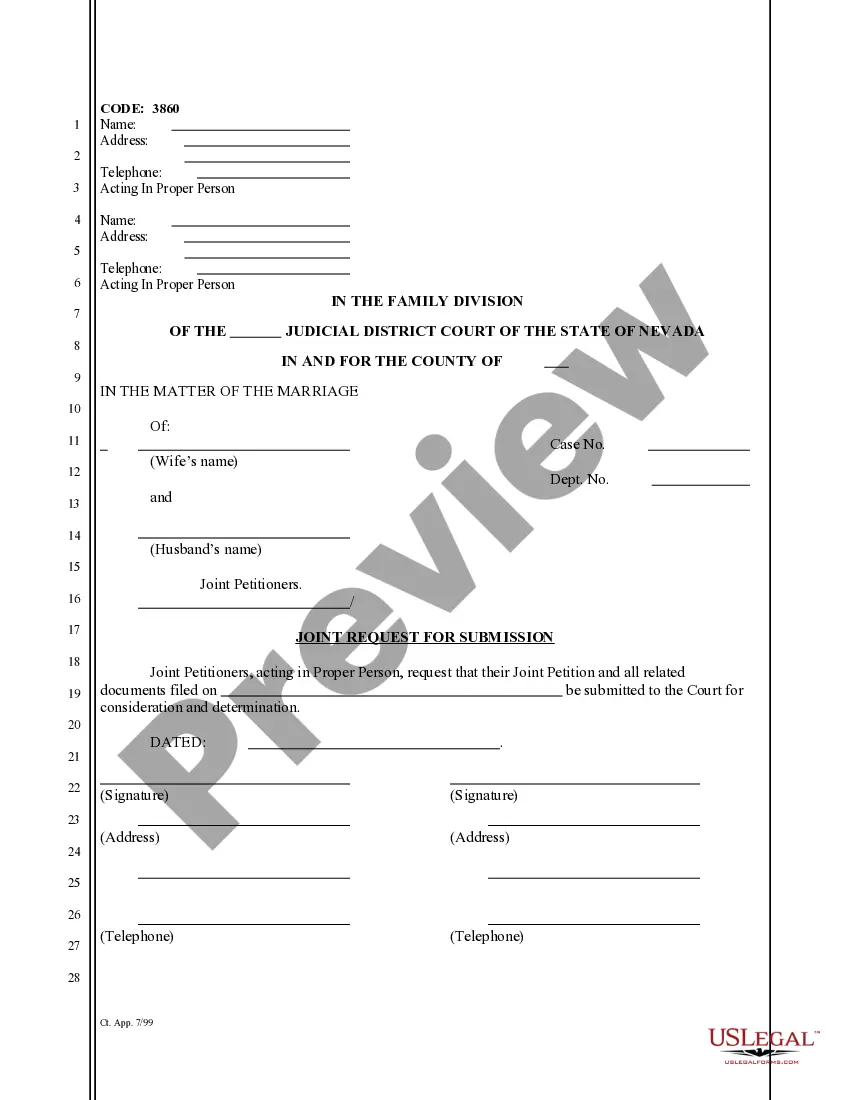
JOINT POSSESSION
Understanding this form
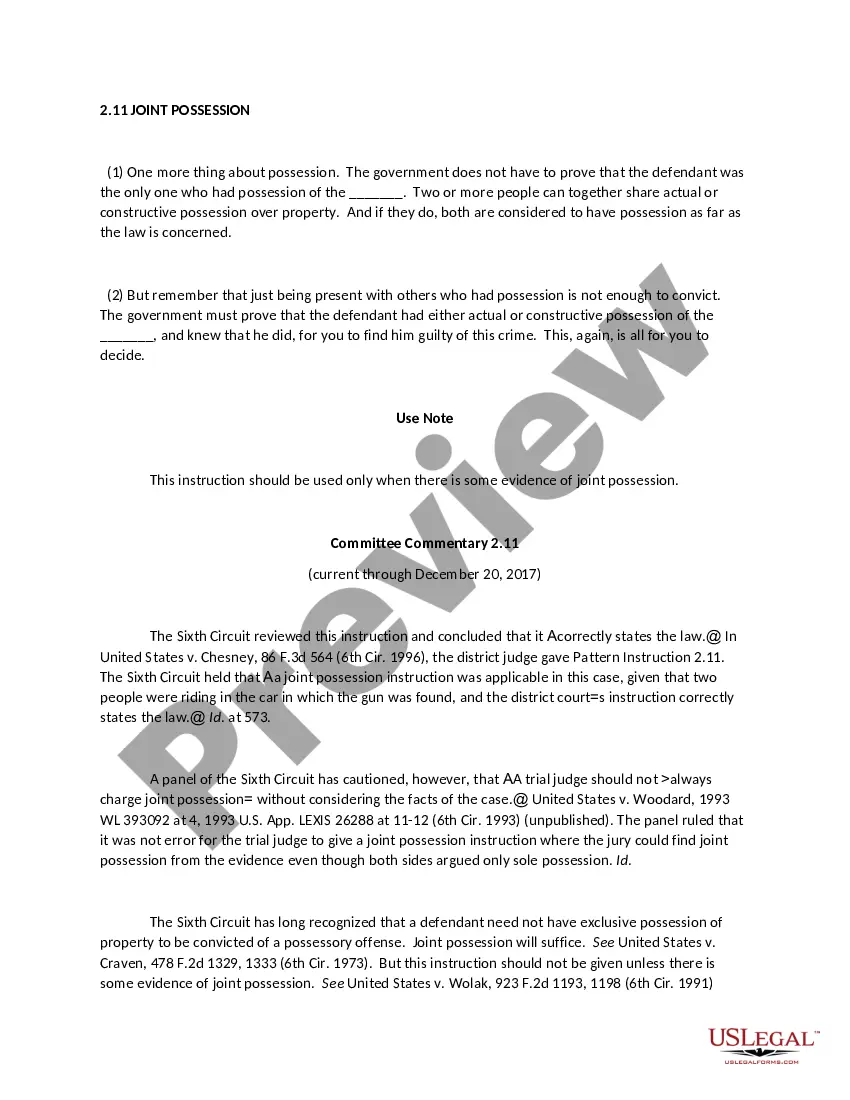
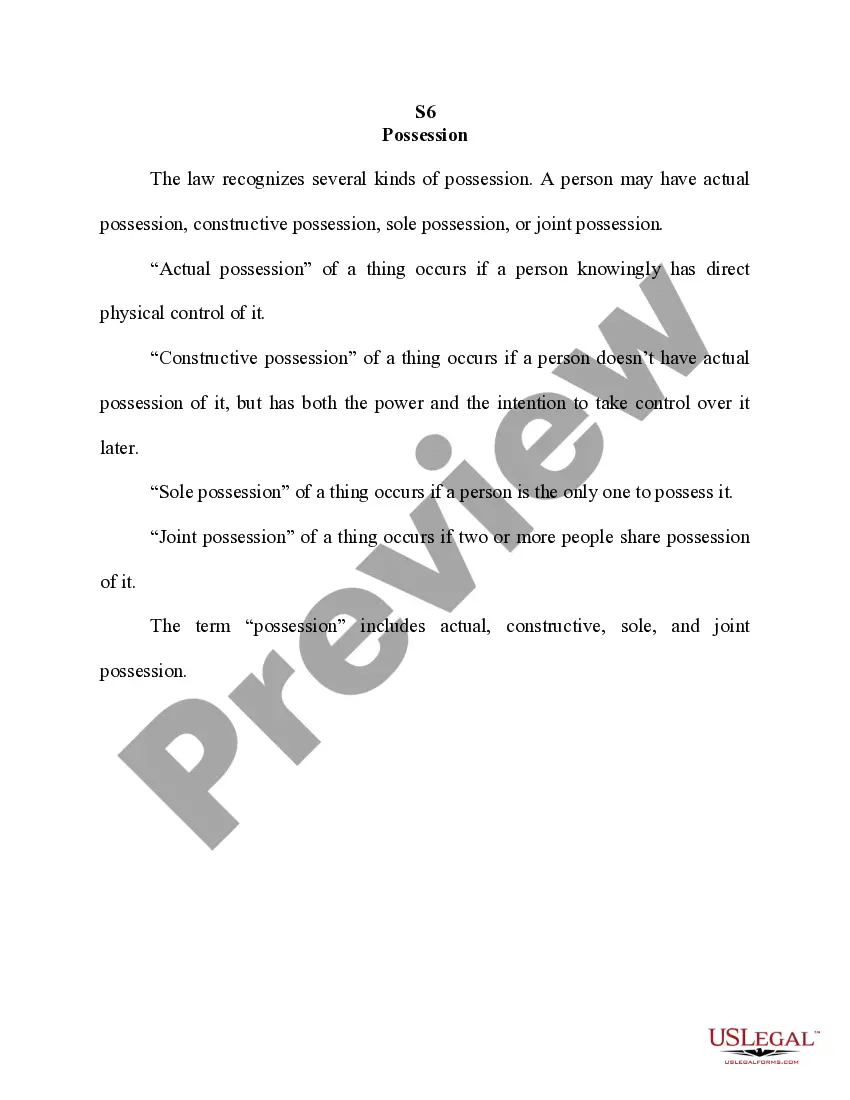
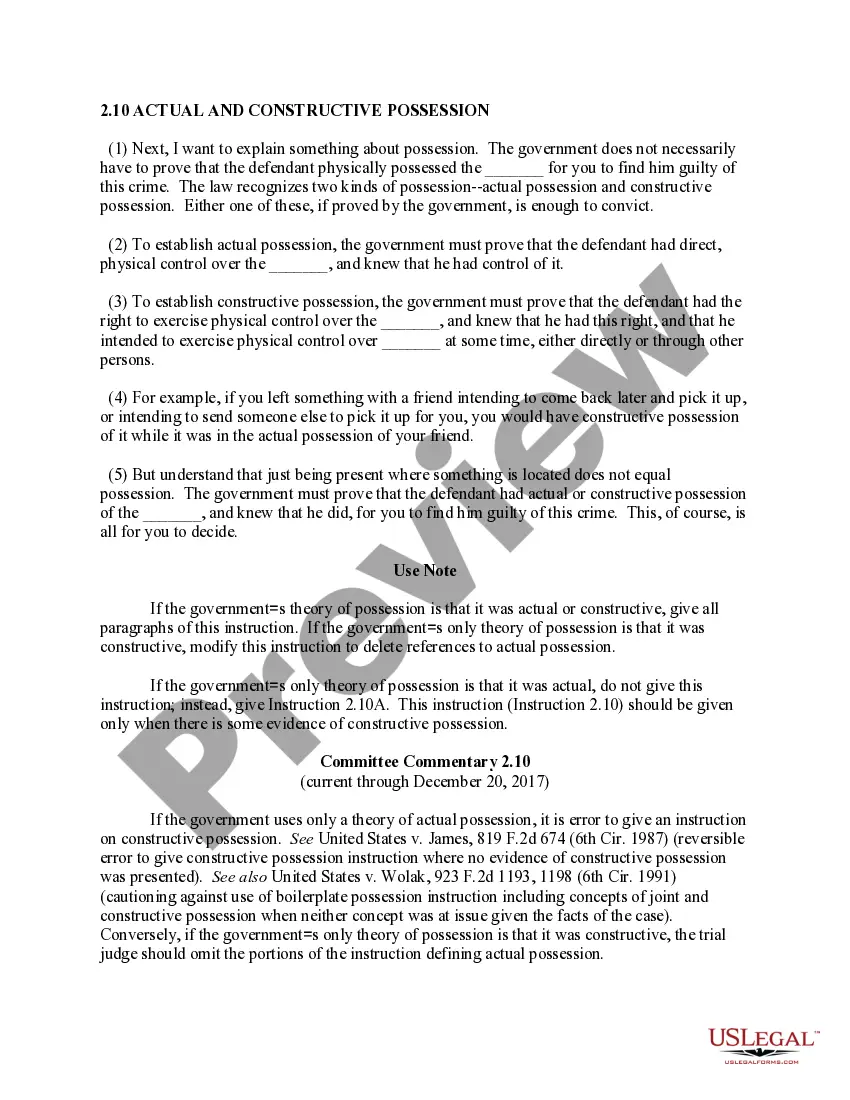
The Joint Possession form outlines the legal principles surrounding shared possession of property by two or more individuals. It specifies that shared possession can be actual or constructive, meaning that the government does not need to prove exclusive possession for a conviction. This form highlights the circumstances under which a defendant can be found guilty of possession, even if they were not the only person in control of the property.
Key parts of this document
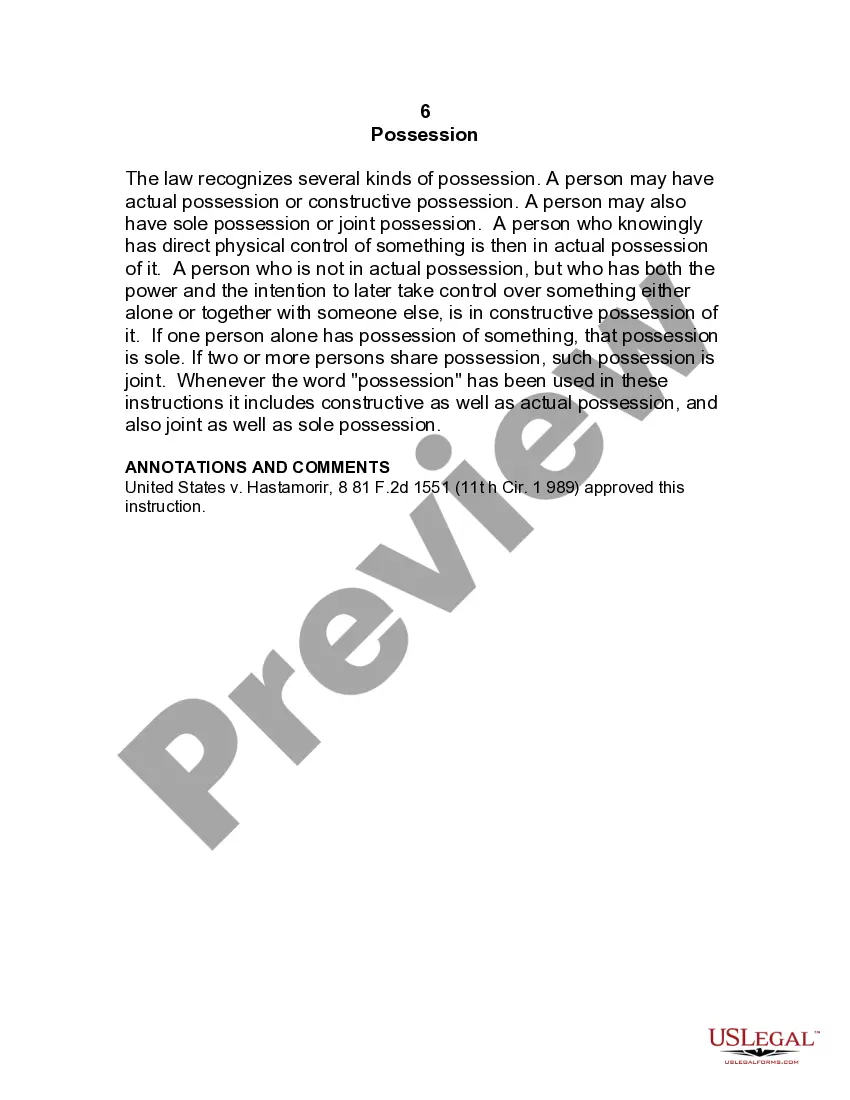
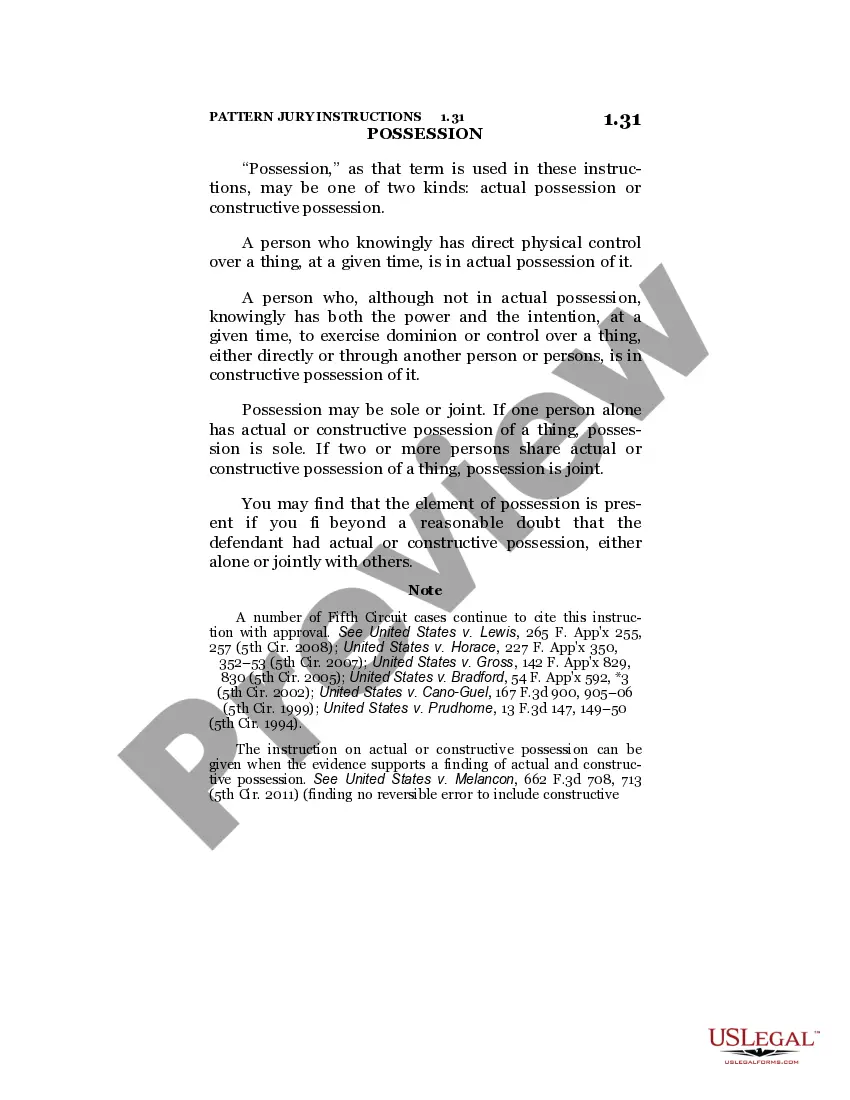
- Definition of joint possession, including actual and constructive possession.
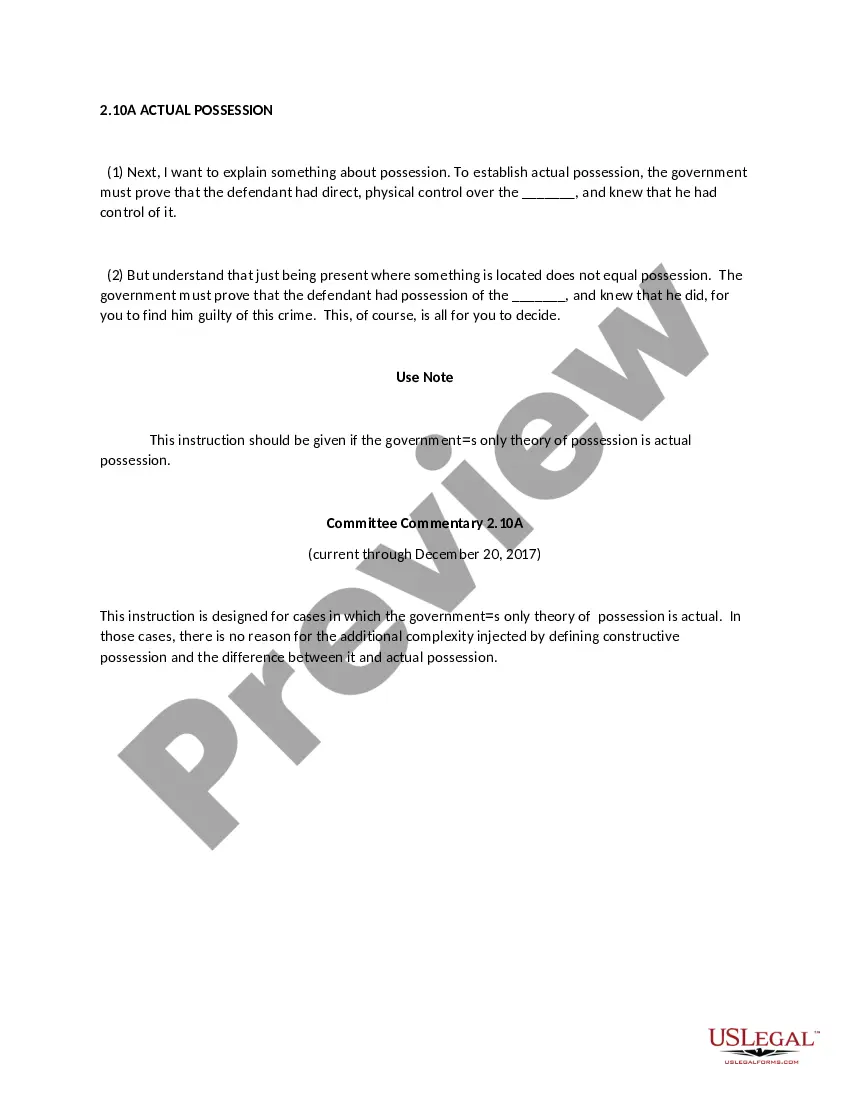
- Requirements for proving possession, emphasizing that mere presence is insufficient.
- Instruction for judges on when to apply this form in legal proceedings.
- References to relevant case law supporting the definition and application of joint possession.

When to use this document
This form is used in legal cases where joint possession of property is implicated, such as in drug-related offenses or situations where shared control over a firearm or vehicle is involved. It can serve as a guideline for judges to educate juries about the criteria necessary for establishing joint possession and its implications for legal outcomes.
Who needs this form
- Judges overseeing criminal cases involving joint possession allegations.
- Prosecutors seeking to clarify possession charges against defendants.
- Defense attorneys representing clients facing possession-related charges.
- Law students or legal professionals studying criminal law related to property possession.
How to complete this form
- Identify the parties involved in the case, including the defendant and any co-defendants.
- Specify the property subject to joint possession, such as vehicles, firearms, or controlled substances.
- Outline the legal standards for proving joint possession, referencing relevant case law.
- Prepare a factual summary that supports claims of actual or constructive possession.
- Include any pertinent details regarding the context of the joint possession situation.
Does this form need to be notarized?
This form usually doesn’t need to be notarized. However, local laws or specific transactions may require it. Our online notarization service, powered by Notarize, lets you complete it remotely through a secure video session, available 24/7.
Get your form ready online
Our built-in tools help you complete, sign, share, and store your documents in one place.
Make edits, fill in missing information, and update formatting in US Legal Forms—just like you would in MS Word.
Download a copy, print it, send it by email, or mail it via USPS—whatever works best for your next step.
Sign and collect signatures with our SignNow integration. Send to multiple recipients, set reminders, and more. Go Premium to unlock E-Sign.
If this form requires notarization, complete it online through a secure video call—no need to meet a notary in person or wait for an appointment.
We protect your documents and personal data by following strict security and privacy standards.

Make edits, fill in missing information, and update formatting in US Legal Forms—just like you would in MS Word.

Download a copy, print it, send it by email, or mail it via USPS—whatever works best for your next step.

Sign and collect signatures with our SignNow integration. Send to multiple recipients, set reminders, and more. Go Premium to unlock E-Sign.

If this form requires notarization, complete it online through a secure video call—no need to meet a notary in person or wait for an appointment.

We protect your documents and personal data by following strict security and privacy standards.
Mistakes to watch out for
- Failing to provide adequate evidence that supports claims of joint possession.
- Overlooking the need to differentiate between actual and constructive possession.
- Assuming joint possession applies in all cases without evaluating the specific facts.
- Neglecting to reference relevant case law that may support or contradict the notion of joint possession.
Advantages of online completion
- Convenience of instant access to a legally drafted template tailored for joint possession cases.
- Ability to edit and customize the form as needed based on specific case circumstances.
- Reliable source of legal language drafted by licensed attorneys, ensuring accuracy and compliance.
Looking for another form?


Form popularity
FAQ
Page 1. Definition of Possession. POSSESS means to have physical possession or otherwise to exercise dominion or control over tangible property.
She came into possession of a rare silver coin. The family lost all of its possessions in the fire. This ring was my mother's most precious possession. The defendant was charged with heroin possession.
"Criminal possession" is the holding of property which it is illegal to possess such as controlled narcotics, stolen goods or liquor by a juvenile.
Generally, for a court to find that a person had constructive possession of an object, the person must have had knowledge of the object, and as well as the ability to control it. For example, someone with keys to a safe deposit box may have constructive possession to the contents of that box.
To establish joint possession there must be: knowledge of the object, consent of the accused, and a degree of control over it.
Types of Possession Actual Possession. You have actual possession when you have physical control over something.Constructive Possession. You have constructive possession when something is not immediately accessible to you, but you have control or the right to control over a thing 3.Joint Possession.
Joint possession of drugs is a form of drug possession in which more than one person can be in possession or custody of the drugs at the same time.
While they're often used synonymously, possession and ownership are precisely not the same thing. Possession means physically having or being in control of something, while ownership means something belongs to you, and you have all rights to it.