False Statement Regarding Federal Workers' Compensation Benefits
About this form
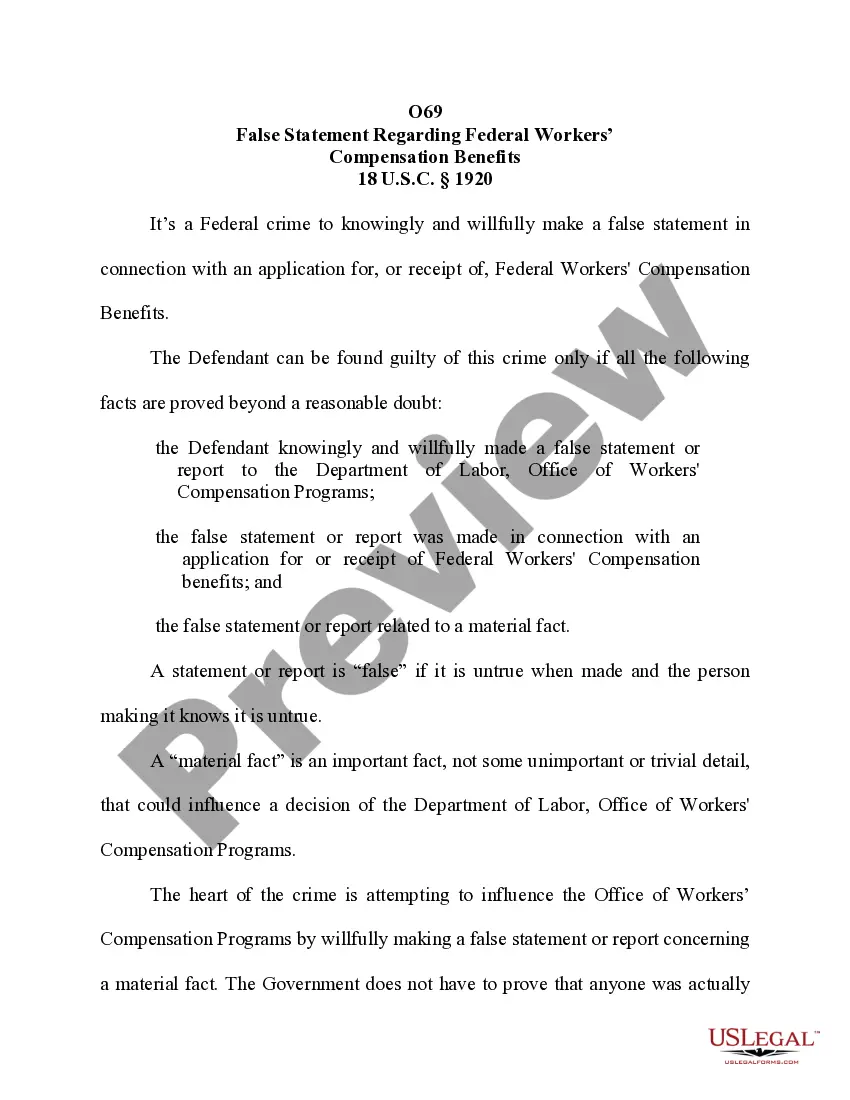
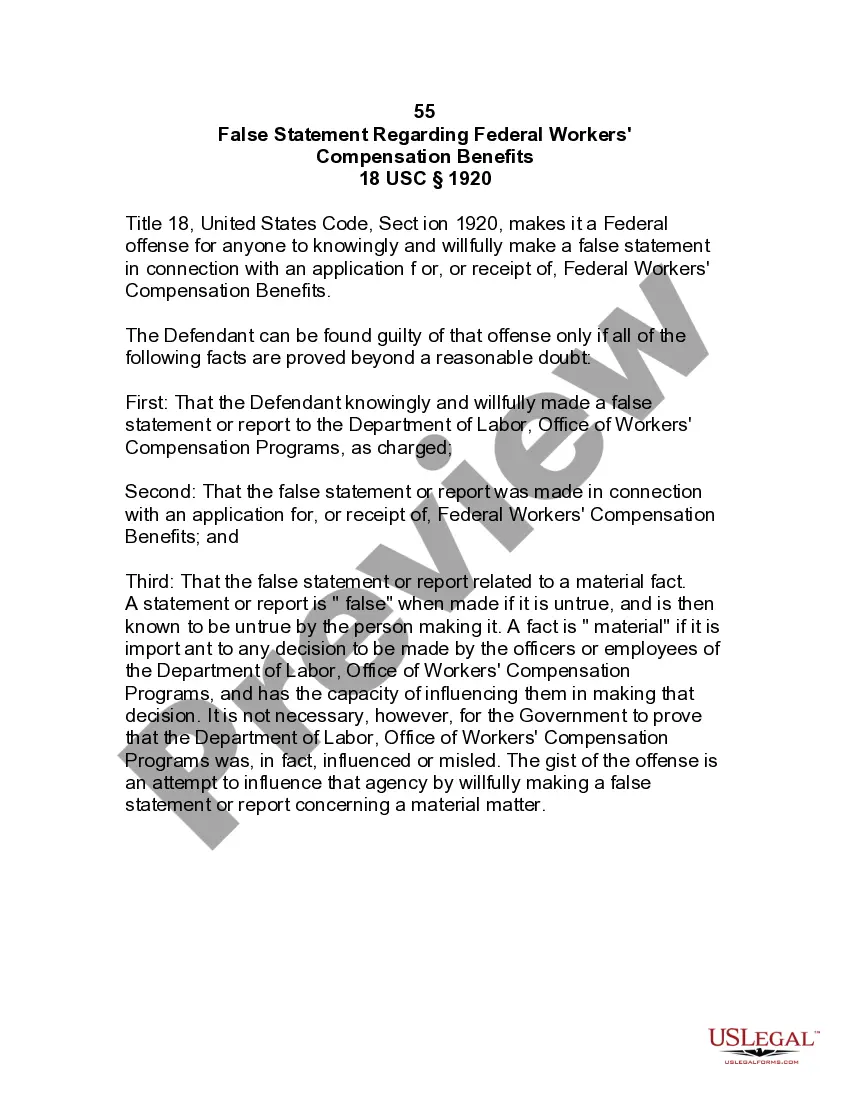
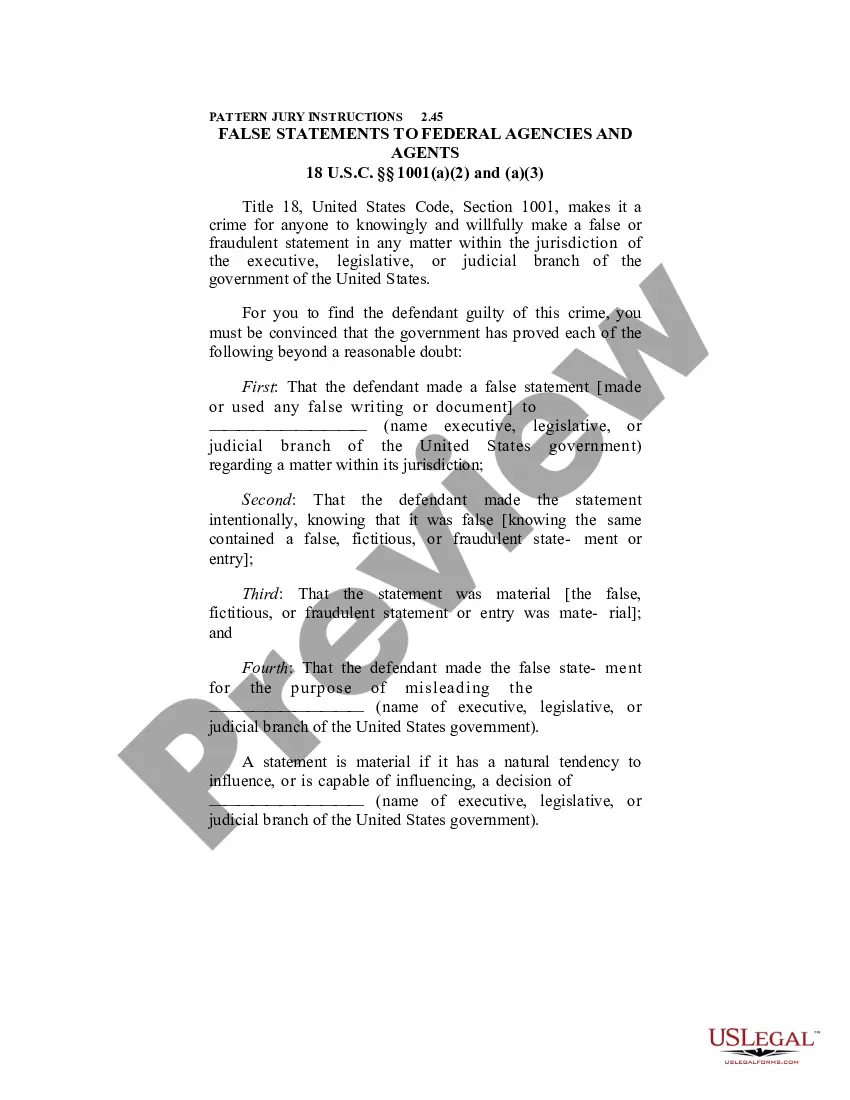
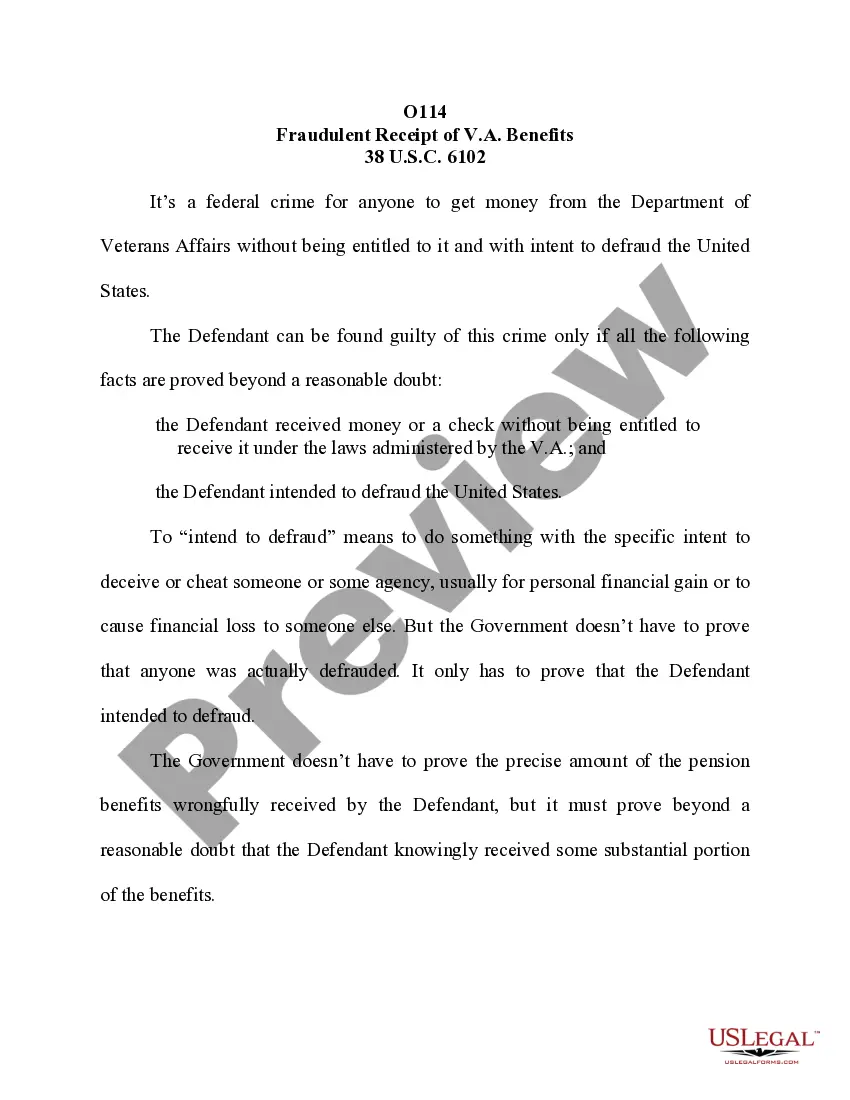
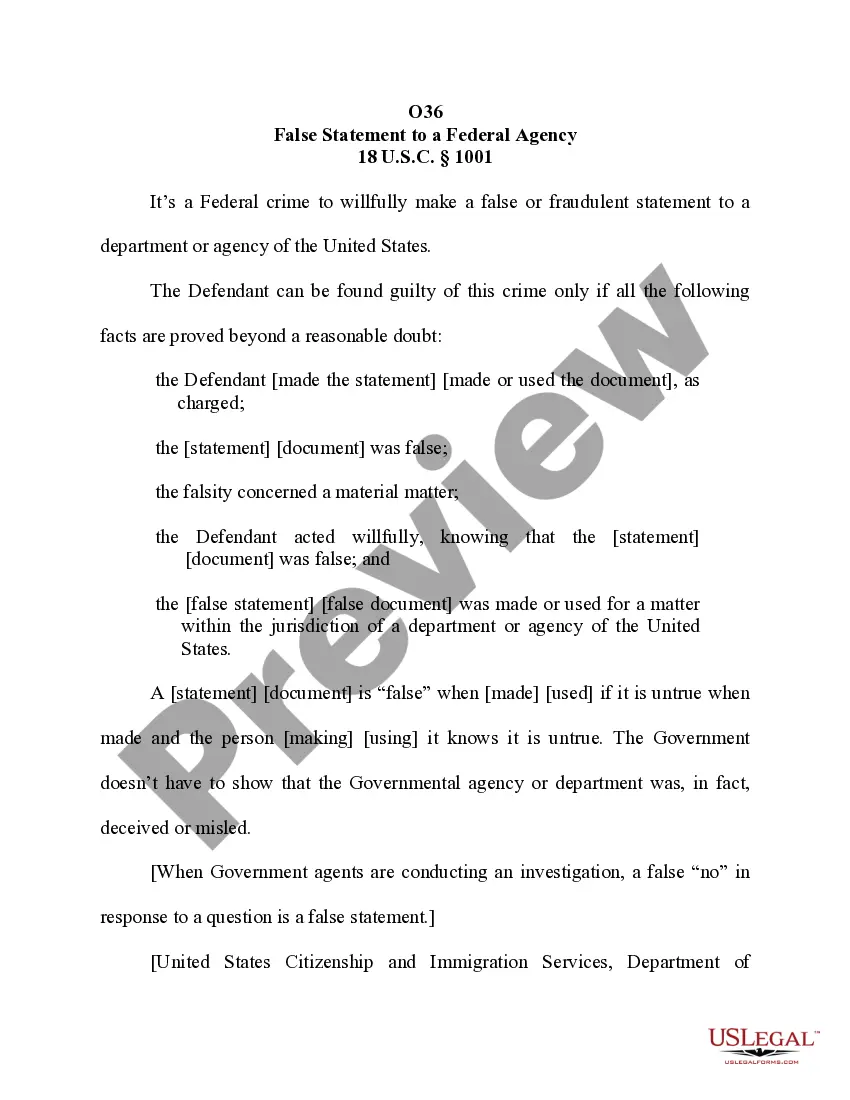
The False Statement Regarding Federal Workers' Compensation Benefits form is a legal document used to address the consequences of making false claims related to Federal Workers' Compensation benefits. This form outlines the legal standards under which a person may be charged with a federal crime for knowingly submitting false information while applying for or receiving these benefits. It serves as a critical reminder of the importance of honesty in legal matters related to workers' compensation.
Main sections of this form
- Definition of a false statement related to Federal Workers' Compensation benefits.
- Criteria for proving guilt beyond a reasonable doubt.
- Explanation of what constitutes a material fact.
- Clarification that influencing any decision is not necessary for liability.

When to use this form
This form should be utilized in cases where an individual is accused of making false statements in connection with their Federal Workers' Compensation benefits. It is necessary to understand the implications and legal standards involved when facing allegations of fraud or misrepresentation in such claims.
Who should use this form
This form is intended for individuals who:
- Have applied for or are receiving Federal Workers' Compensation benefits.
- Are facing accusations of making false statements regarding their claims.
- Need to understand the legal repercussions of submitting fraudulent information.
Completing this form step by step
- Review the instructions on the form thoroughly to understand its definitions and criteria.
- Identify any statements made in connection with your application for benefits.
- Assess if any of those statements could be deemed false or misleading.
- Gather any evidence that supports the truthfulness of your statements.
- Consult with a legal professional if you are unsure about any part of the process.
Notarization guidance
In most cases, this form does not require notarization. However, some jurisdictions or signing circumstances might. US Legal Forms offers online notarization powered by Notarize, accessible 24/7 for a quick, remote process.
Get your form ready online
Our built-in tools help you complete, sign, share, and store your documents in one place.
Make edits, fill in missing information, and update formatting in US Legal Forms—just like you would in MS Word.
Download a copy, print it, send it by email, or mail it via USPS—whatever works best for your next step.
Sign and collect signatures with our SignNow integration. Send to multiple recipients, set reminders, and more. Go Premium to unlock E-Sign.
If this form requires notarization, complete it online through a secure video call—no need to meet a notary in person or wait for an appointment.
We protect your documents and personal data by following strict security and privacy standards.

Make edits, fill in missing information, and update formatting in US Legal Forms—just like you would in MS Word.

Download a copy, print it, send it by email, or mail it via USPS—whatever works best for your next step.

Sign and collect signatures with our SignNow integration. Send to multiple recipients, set reminders, and more. Go Premium to unlock E-Sign.

If this form requires notarization, complete it online through a secure video call—no need to meet a notary in person or wait for an appointment.

We protect your documents and personal data by following strict security and privacy standards.
Common mistakes
- Failing to accurately assess the honesty of statements made in the benefits application.
- Not understanding the importance of material facts in the context of the application.
- Underestimating the legal consequences of submitting false information.
Why complete this form online
- Convenient access to legal information anytime, anywhere.
- Edit and customize the form based on individual circumstances.
- Reliable templates drafted by licensed attorneys.
Legal use & context
- This form aligns with 18 U.S.C. § 1920, outlining federal law related to workers' compensation fraud.
- Understanding this form is crucial for maintaining compliance with legal standards.
Key takeaways
- This form addresses the seriousness of making false statements regarding Federal Workers' Compensation benefits.
- Accuracy and honesty are essential when dealing with federal claims.
- Consulting with legal counsel can help navigate complex situations associated with this form.
Looking for another form?


Form popularity
FAQ
Intentional acts: When a worker intentionally causes their workplace injuries or illnesses, they are not covered under a workers' comp insurance policy. Illegal activities: Employee injuries due to illegal activities at the worksite are not covered by an organization's workers' compensation insurance policy.
An employee of the U.S. government who suffers a work-connected disability has no right of action against the U.S. government for the effects of injury other than the benefits the employee may receive under the provisions of 5 U.S.C. 8101 ? 5 U.S.C. 8150. It is the employee's sole recourse for compensation.
The Federal government does not require employees to contribute to worker's compensation insurance.
It provides compensation benefits to civilian employees of the United States for disability due to personal injury sustained while in the performance of duty or to employment-related disease. The FECA also provides for the payment of benefits to dependents if the injury or disease causes the employee's death.
Pain and suffering are not covered under Workers' Compensation.
Injuries from repetitious mental trauma. Injuries suffered during participation in an off-duty recreational activity. Injuries suffered when an employee's conduct violates company policy. Injuries suffered while a worker was committing a serious crime.
Most state laws also list specific types of employment excluded from workers' compensation coverage. Typical examples of excluded workers include: part-time domestic workers, such as maids and nannies. part-time gardeners or maintenance workers employed in the home to perform specific work.
However, employers' liability insurance does not cover legal costs from employee lawsuits charging discrimination, sexual harassment, or wrongful termination. To cover these situations, an employer would need to purchase a separate type of policy called employment practices liability insurance (EPLI).