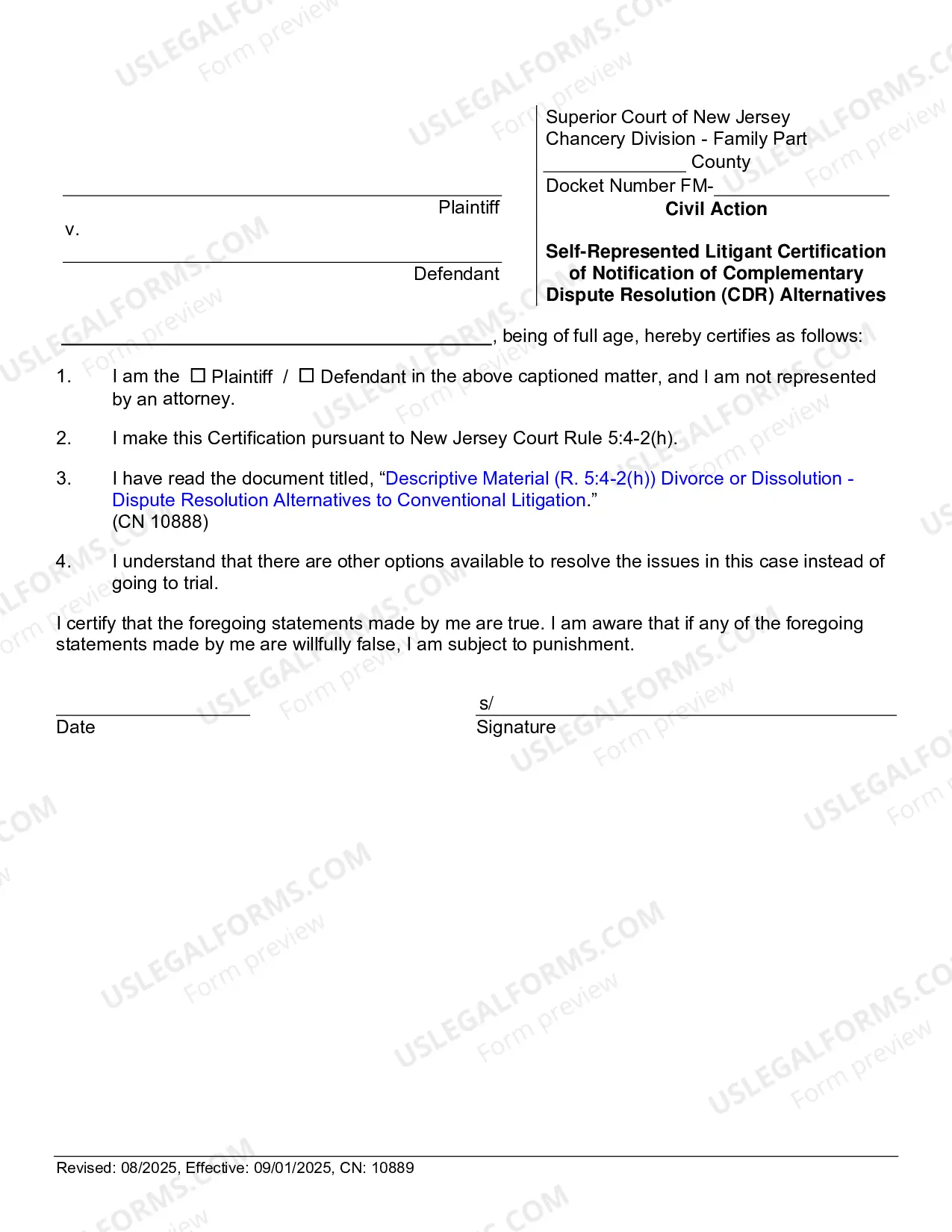
Copyright - Infringement - Substantial Similarity
About this form
The Copyright - Infringement - Substantial Similarity form is designed to help determine if one work is substantially similar to another in terms of copyright infringement. It is particularly useful in legal cases where a plaintiff claims that their creative work, such as a piece of art or literature, has been unlawfully copied by a defendant. This form differentiates itself by focusing specifically on the concept of substantial similarity, which considers both qualitative and quantitative aspects of the copied material.
Main sections of this form
- Definition of substantial similarity: Explains how works can be considered similar based on an ordinary observer's perspective.
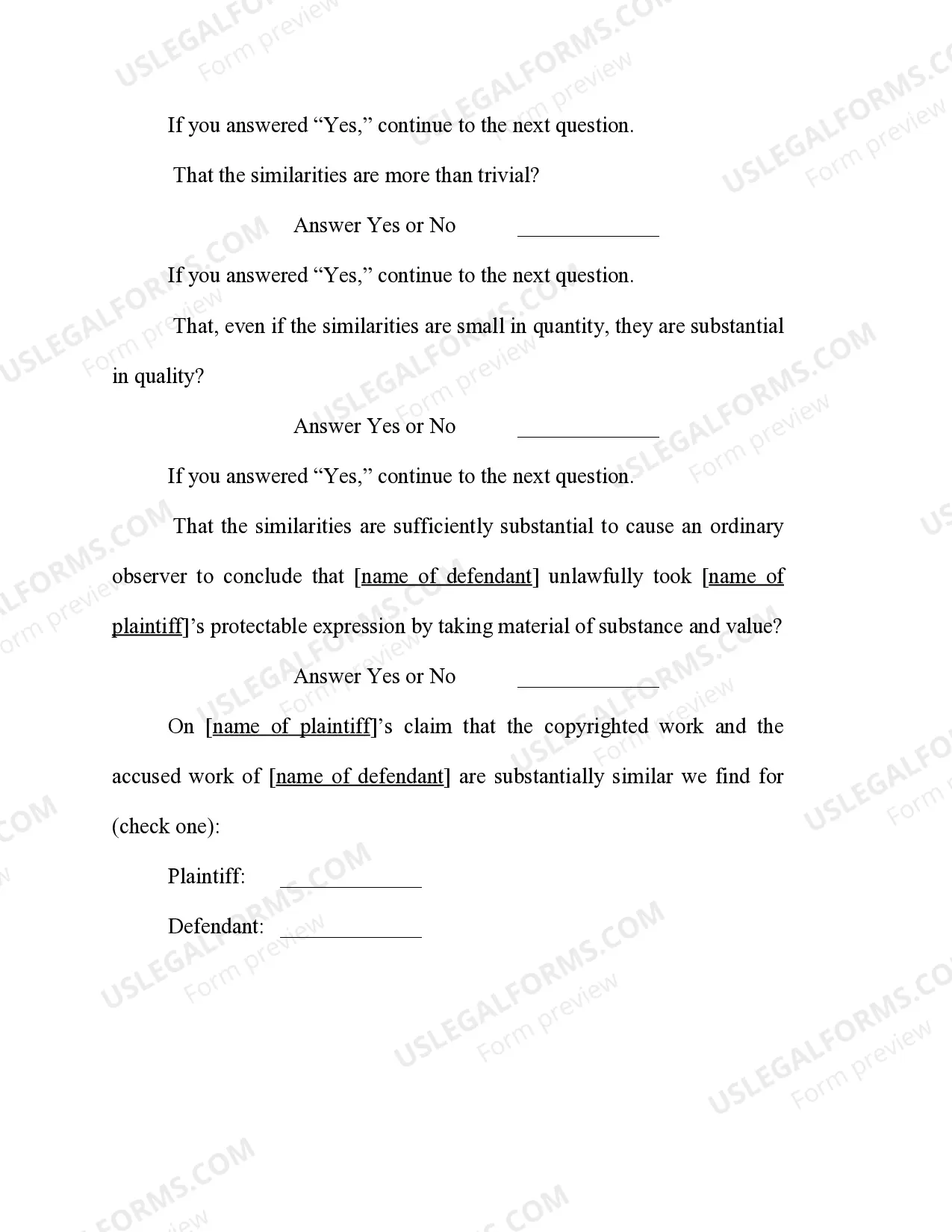
- Criterias for assessment: Includes questions that the jury must answer regarding the level of similarity between the works.
- Special interrogatories: Specific questions for the jury to determine if infringement occurred based on evidence presented.
- Plaintiff vs. defendant outcome: Designated sections to record the jury's findings for either party.
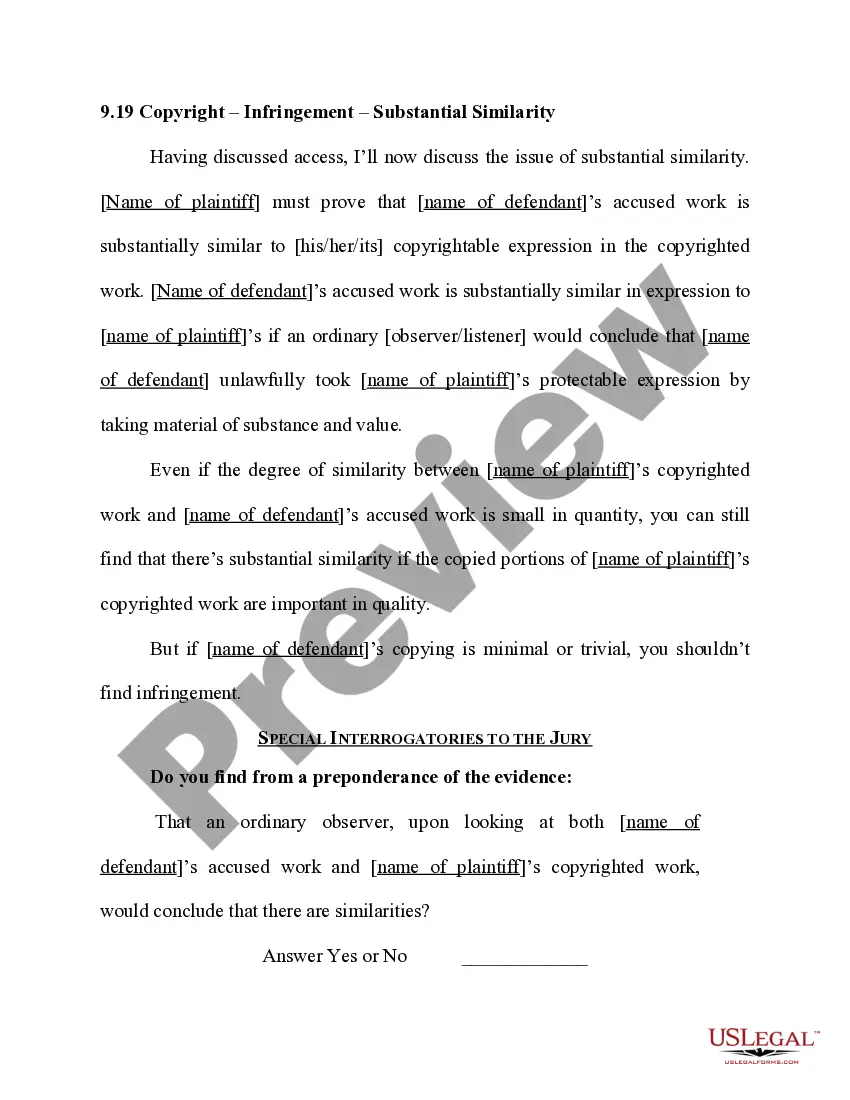
When to use this form
This form should be used in legal settings where a claim of copyright infringement is made based on the alleged substantial similarity between two works. It is applicable in scenarios involving disputes over artistic works, music, literature, and other copyrightable expressions, especially when the plaintiff believes that their work has been unlawfully replicated or derived from.
Intended users of this form
- Individuals or entities who hold copyright for a work and suspect infringement by another party.
- Lawyers representing clients in copyright infringement cases.
- Juries or judicial bodies evaluating copyright disputes related to substantial similarity claims.
Instructions for completing this form
- Identify the parties involved: Clearly specify the names of the plaintiff and defendant in the appropriate sections.
- Review and summarize the copyrighted work: Provide a brief description of the plaintiff's work that is allegedly infringed upon.
- Assess the accused work: Summarize the defendant's work that is under scrutiny for similarity.
- Answer the special interrogatories: Follow the jury instructions and answer the questions regarding similarity.
- Check the verdict: Indicate whether the jury finds for the plaintiff or the defendant based on the responses.
Does this document require notarization?
This form does not typically require notarization to be legally valid. However, some jurisdictions or document types may still require it. US Legal Forms provides secure online notarization powered by Notarize, available 24/7 for added convenience.
Get your form ready online
Our built-in tools help you complete, sign, share, and store your documents in one place.
Make edits, fill in missing information, and update formatting in US Legal Forms—just like you would in MS Word.
Download a copy, print it, send it by email, or mail it via USPS—whatever works best for your next step.
Sign and collect signatures with our SignNow integration. Send to multiple recipients, set reminders, and more. Go Premium to unlock E-Sign.
If this form requires notarization, complete it online through a secure video call—no need to meet a notary in person or wait for an appointment.
We protect your documents and personal data by following strict security and privacy standards.

Make edits, fill in missing information, and update formatting in US Legal Forms—just like you would in MS Word.

Download a copy, print it, send it by email, or mail it via USPS—whatever works best for your next step.

Sign and collect signatures with our SignNow integration. Send to multiple recipients, set reminders, and more. Go Premium to unlock E-Sign.

If this form requires notarization, complete it online through a secure video call—no need to meet a notary in person or wait for an appointment.

We protect your documents and personal data by following strict security and privacy standards.
Avoid these common issues
- Failing to clearly define the works being compared, leading to confusion.
- Neglecting to address all the questions presented in the special interrogatories.
- Overlooking the distinction between substantial and trivial similarities in the analysis.
Why complete this form online
- Instant access: Download the form anytime without the need for physical paperwork.
- Editability: Easy to fill out and modify to meet specific case requirements.
- Reliability: Created by licensed attorneys, ensuring legal correctness and relevance.
Legal use & context
- This form assists in legal evaluations of copyright infringement based on substantial similarity.
- It serves as a guideline for juries to assess the validity of copyright claims.
- Infringement claims based solely on minor similarities may not hold up legally, making this form crucial for jury instruction.
Looking for another form?
Form popularity
FAQ
Infringement of the Right of Reproduction: Copyright owners maintain the exclusive right to reproduce their work in any fixed form. As a result, copying and selling a work constitutes an infringement of the owner's right to reproduce.
Whether it was copied on purpose or by accident does not matter when determining copyright infringement, only whether you copied a substantial amount of an original work. But sometimes copying an original work is intentional?and allowed.
As explained below, probative similarity and striking similarity are analytical tools to determine whether factual copying has occurred, whereas substantial similarity is the test used to determine whether factual copying, once established, is legally actionable.
The three basic elements of copyright: originality, creativity, and fixation. There are three basic elements that a work must possess in order to be protected by copyright in the US: Originality: To get a copyright, a work must be the original work of the author.
Under the doctrine of substantial similarity, a work can be found to infringe copyright even if the wording of text has been changed or visual or audible elements are altered.
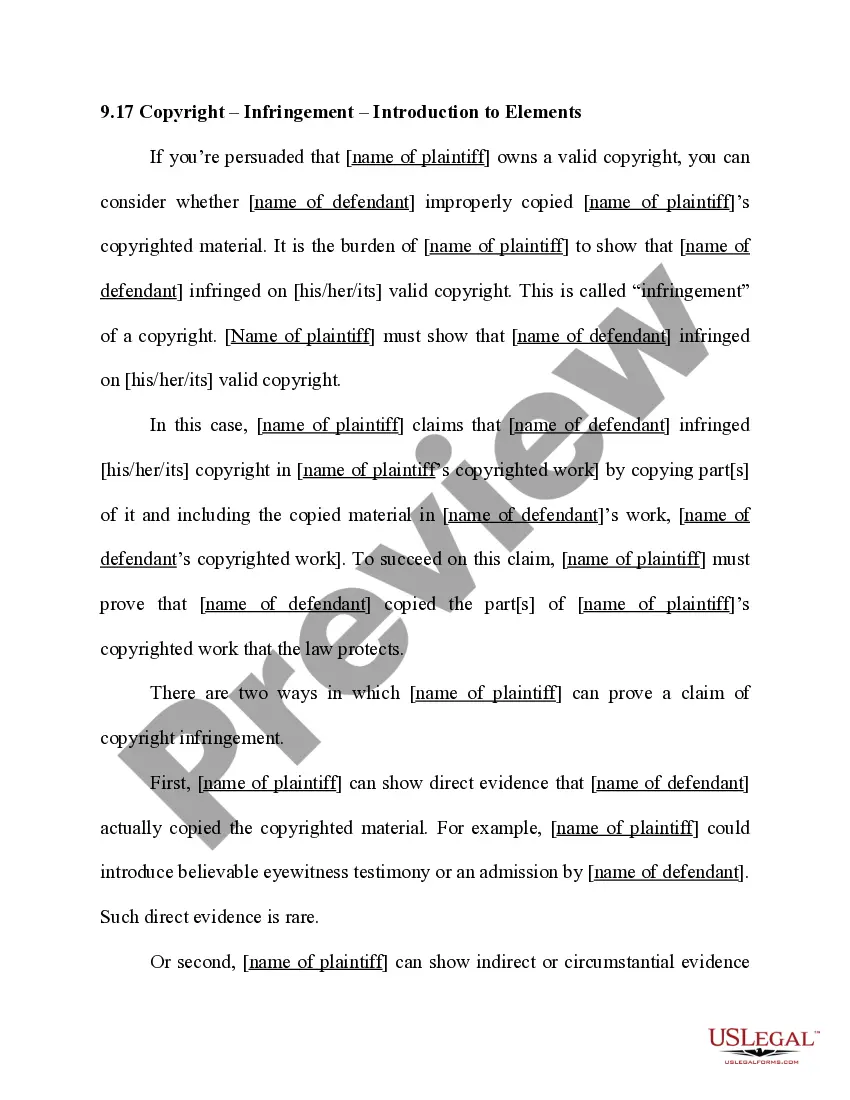
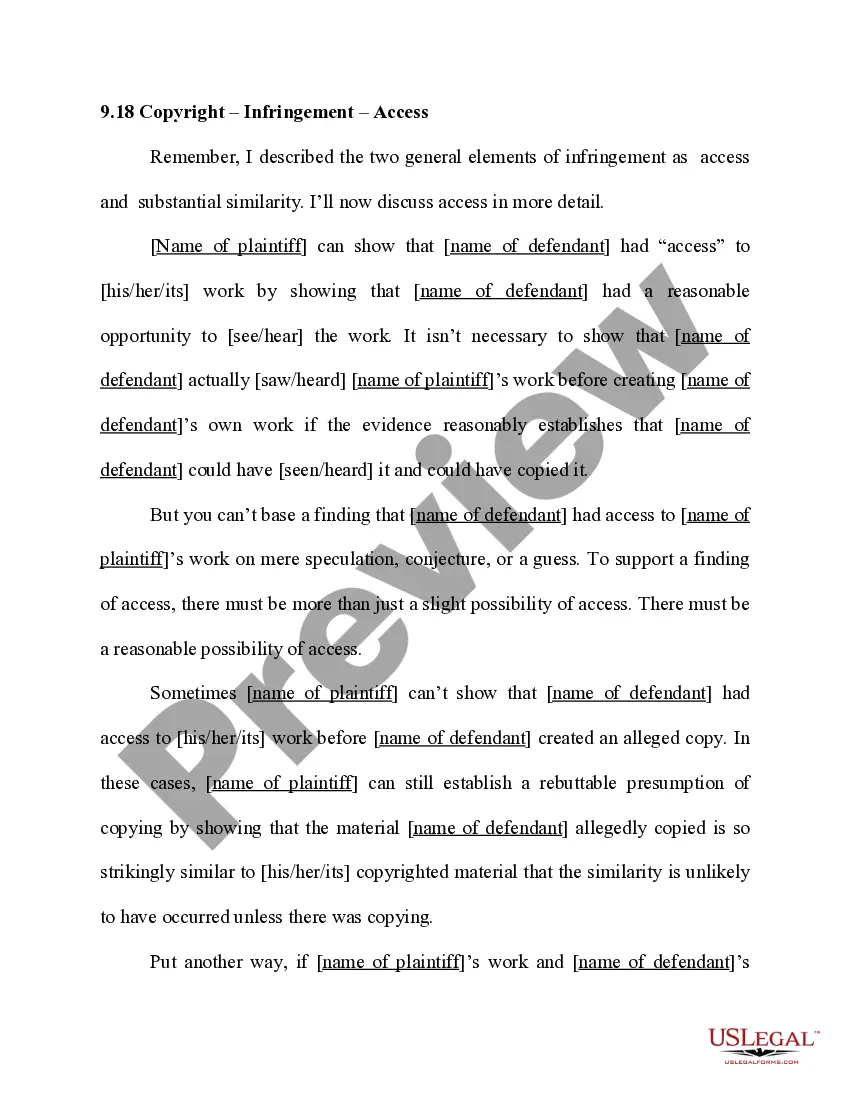
To prove copyright infringement, the plaintiff must show (1) that the defendant had access to the plaintiff's work and (2) that the defendant's work is substantially similar to protected aspects of the plaintiff's work.
As a general matter, copyright infringement occurs when a copyrighted work is reproduced, distributed, performed, publicly displayed, or made into a derivative work without the permission of the copyright owner.