WITHDRAWAL INSTRUCTION
What is this form?
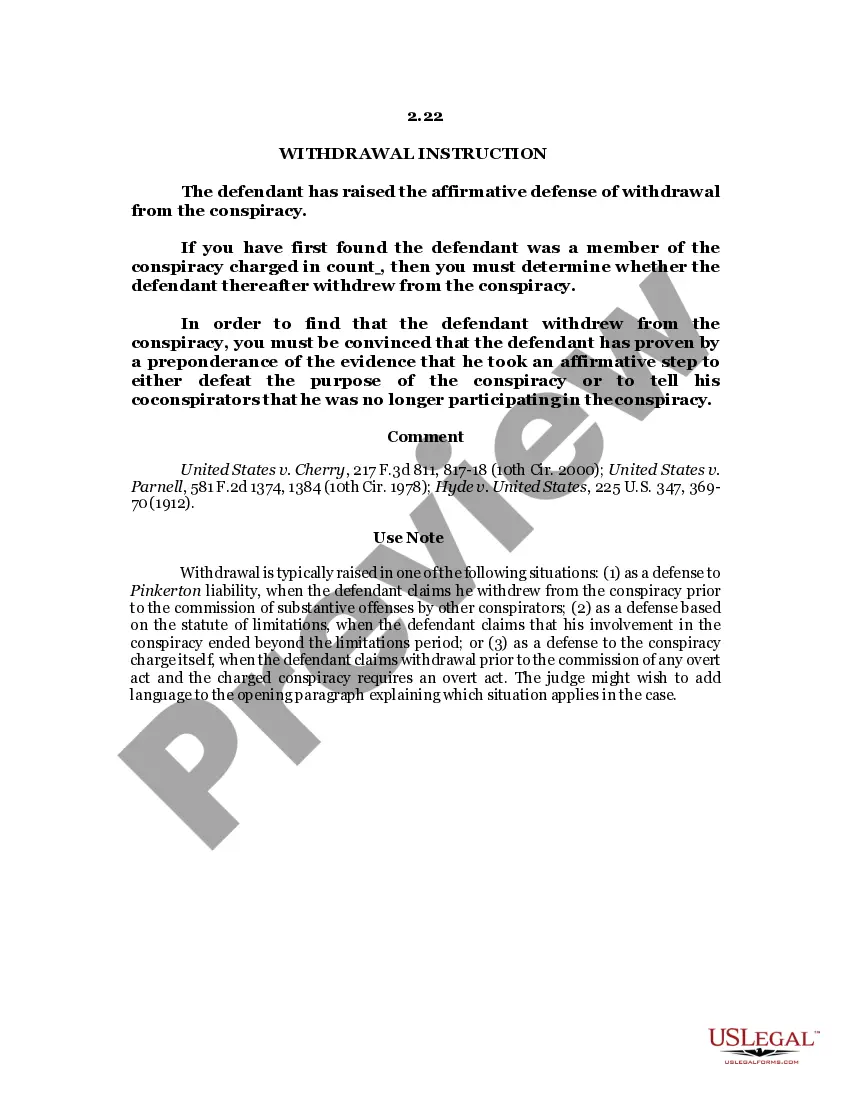
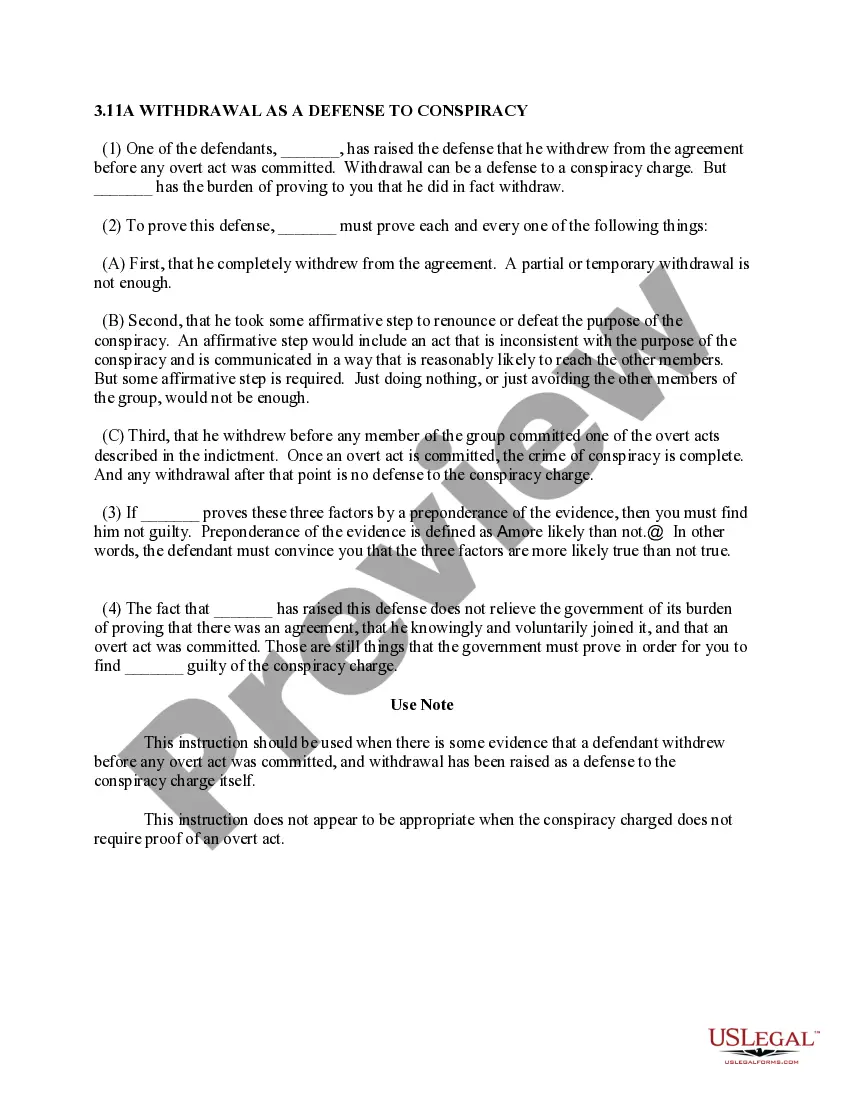
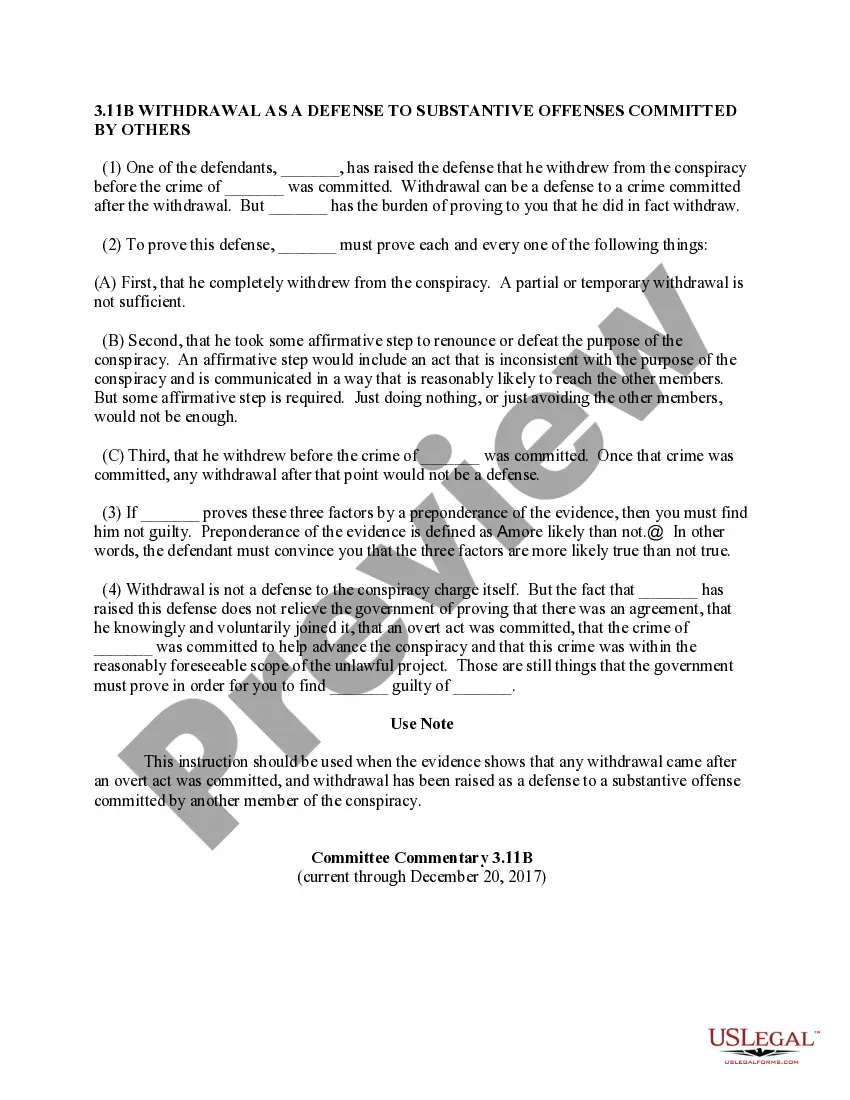
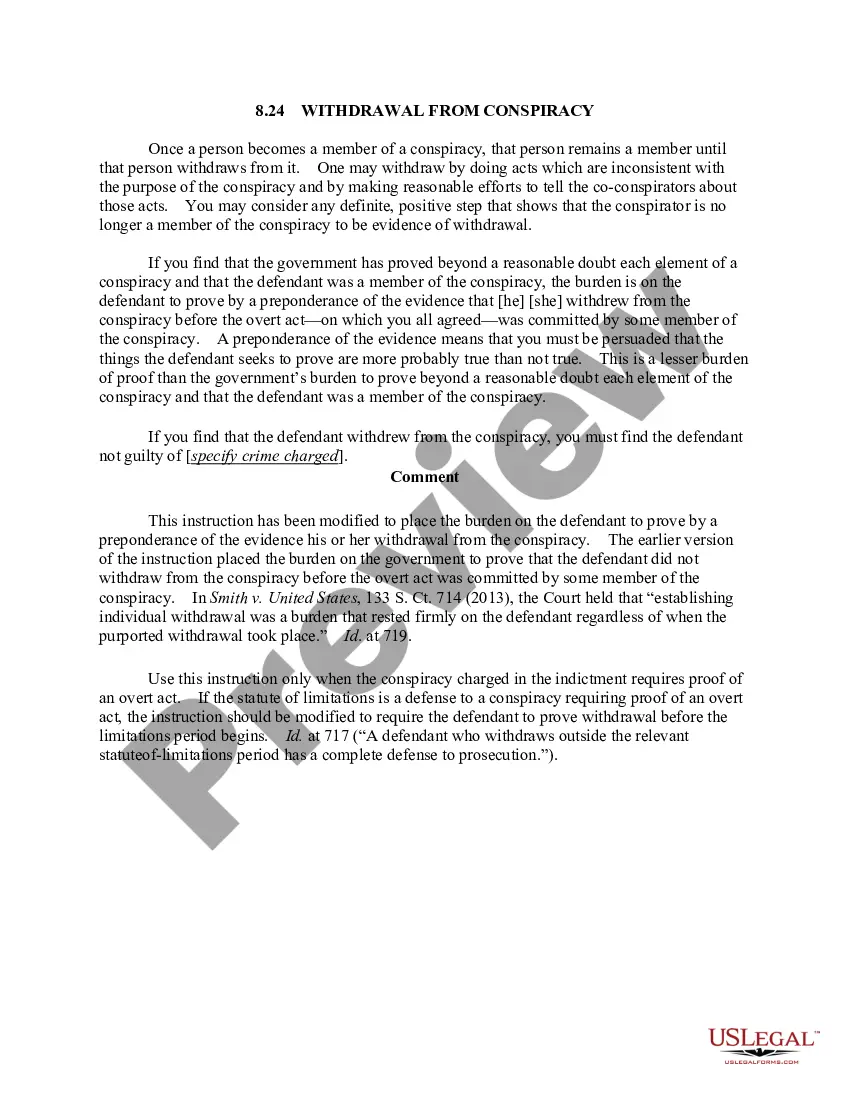
The Withdrawal Instruction form is used in legal proceedings to assess whether a defendant has effectively withdrawn from a conspiracy. This form serves to establish the criteria for this withdrawal and ensures that defendants can present their affirmative defense, which differs from general conspiracy charges. By using this form, defendants can clarify their involvement in the conspiracy and the actions taken to disassociate themselves from it.
Key parts of this document
- Affirmative defense introduction: Outlines the defendant's claim of withdrawal from the conspiracy.
- Criteria for withdrawal: Details what constitutes an effective withdrawal, including affirmative steps to defeat the purpose of the conspiracy.
- Legal precedents: Cites relevant court cases that support the principles behind withdrawal from conspiracy.
- Situational notes: Provides guidelines for judges on how to explain applicable situations of withdrawal specific to the case.
Situations where this form applies
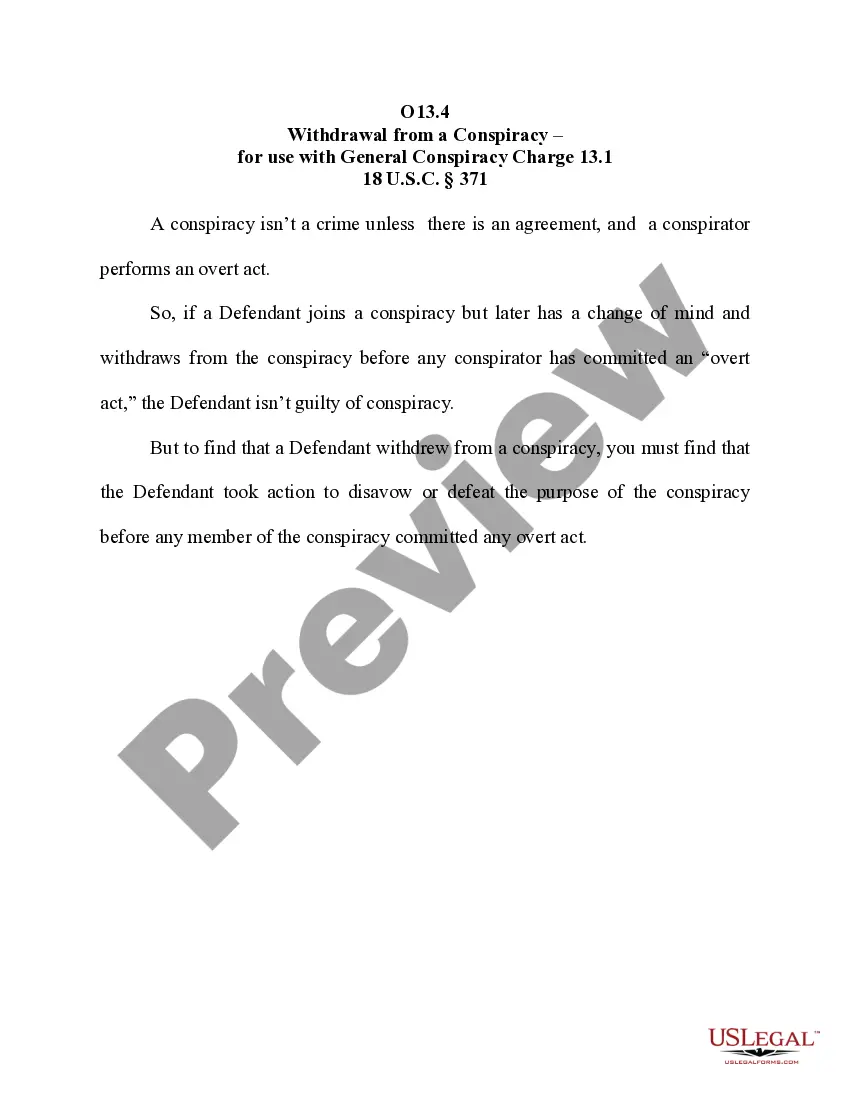
This form is essential in several legal scenarios, including when a defendant seeks to dismiss conspiracy charges based on withdrawal. It is applicable when: (1) the defendant claims to have withdrawn before any substantive offenses occurred, (2) the defendant asserts that their involvement in the conspiracy ended before the statute of limitations, or (3) the defendant indicates they withdrew prior to any overt act specific to the charged conspiracy.
Who this form is for
- Defendants in criminal conspiracy cases who wish to assert withdrawal as a defense.
- Legal representatives preparing a defense for clients involved in conspiracy charges.
- Judges who need guidelines on how to explain withdrawal defenses.
How to complete this form
- Identify the defendant and the conspiracy charge being contested.
- Clearly outline the affirmations regarding withdrawal, specifying the actions taken to withdraw.
- Provide evidence or statements that support the claim of withdrawal.
- Include references to any relevant case law that backs the withdrawal claim.
- Submit the form during the designated legal proceedings and ensure all parties are informed of the withdrawal assertion.
Does this form need to be notarized?
This form does not typically require notarization unless specified by local law. It is advisable to check jurisdiction-specific requirements prior to submission.
Get your form ready online
Our built-in tools help you complete, sign, share, and store your documents in one place.
Make edits, fill in missing information, and update formatting in US Legal Forms—just like you would in MS Word.
Download a copy, print it, send it by email, or mail it via USPS—whatever works best for your next step.
Sign and collect signatures with our SignNow integration. Send to multiple recipients, set reminders, and more. Go Premium to unlock E-Sign.
If this form requires notarization, complete it online through a secure video call—no need to meet a notary in person or wait for an appointment.
We protect your documents and personal data by following strict security and privacy standards.

Make edits, fill in missing information, and update formatting in US Legal Forms—just like you would in MS Word.

Download a copy, print it, send it by email, or mail it via USPS—whatever works best for your next step.

Sign and collect signatures with our SignNow integration. Send to multiple recipients, set reminders, and more. Go Premium to unlock E-Sign.

If this form requires notarization, complete it online through a secure video call—no need to meet a notary in person or wait for an appointment.

We protect your documents and personal data by following strict security and privacy standards.
Typical mistakes to avoid
- Failing to provide sufficient evidence of withdrawal, which is crucial for the defense.
- Not citing applicable legal precedents that support the claim.
- Missing deadlines for submitting the withdrawal instruction in court.
Benefits of completing this form online
- Convenient access: Easily download and complete the form from anywhere.
- Editability: Modify the form as necessary to fit specific legal circumstances.
- Reliable templates: Forms are drafted by licensed attorneys to ensure compliance with legal standards.
Legal use & context
- Withdrawal from conspiracy can be a valid defense strategy that may significantly affect the outcome of a trial.
- Understanding the nuances of this defense is important to ensure that the defendantâs rights are protected throughout legal proceedings.
What to keep in mind
- The Withdrawal Instruction form is crucial for asserting a defense in conspiracy cases.
- Proven withdrawal must be backed by substantial evidence of actions taken.
- Defendants and legal representatives should be aware of relevant local laws regarding withdrawal defenses.
Looking for another form?


Form popularity
FAQ
Example Sentences The general authorized the withdrawal of troops from the fields. She made a withdrawal from her checking account. He underwent rehab to help him through his withdrawal from heroin. She experienced symptoms of nicotine withdrawal after she quit smoking.
Unless your bank has set a withdrawal limit of its own, you are free to take as much out of your bank account as you would like. It is, after all, your money. Here's the catch: If you withdraw $10,000 or more, it will trigger federal reporting requirements.
1. + object : to remove (money) from a bank account.
Differences Between a Deposit and Withdrawal. If you're wondering what is the difference between a deposit and a withdrawal, the truth is that they are exact opposites: A deposit is money put into a bank account for safekeeping until you need it. A withdrawal is money that's taken out of your account.
A withdrawal slip is a written order to your bank instructing it to withdraw funds from your account. Withdrawal slips vary from bank to bank.
A withdrawal involves removing funds from a bank account, savings plan, pension, or trust. In some cases, conditions must be met to withdraw funds without a penalty.
Countable noun. A withdrawal is an amount of money that you take from your bank account.
: to take back or away : draw away : remove. withdraw money from the bank.