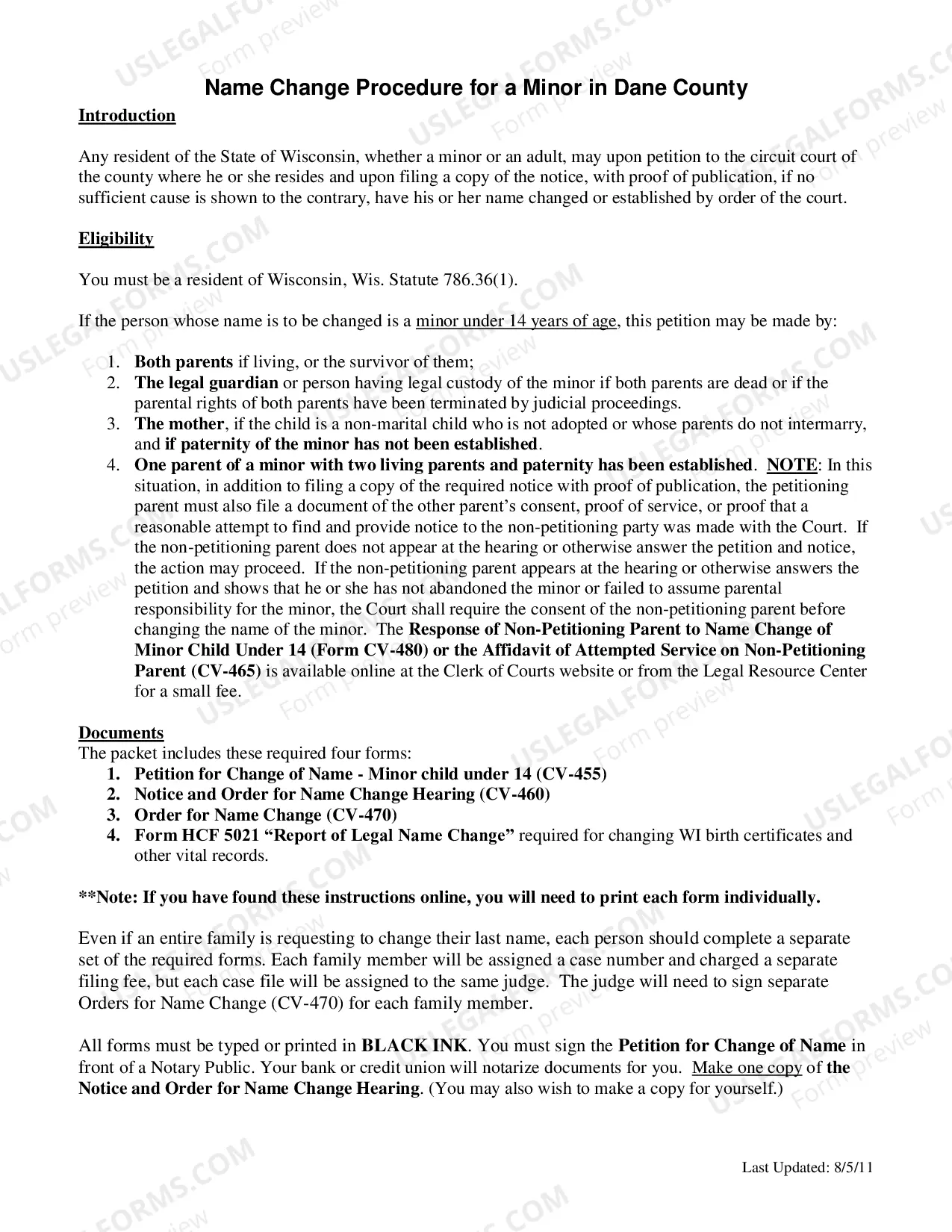
CAUTIONARY INSTRUCTION DURING TRIAL
What is this form?
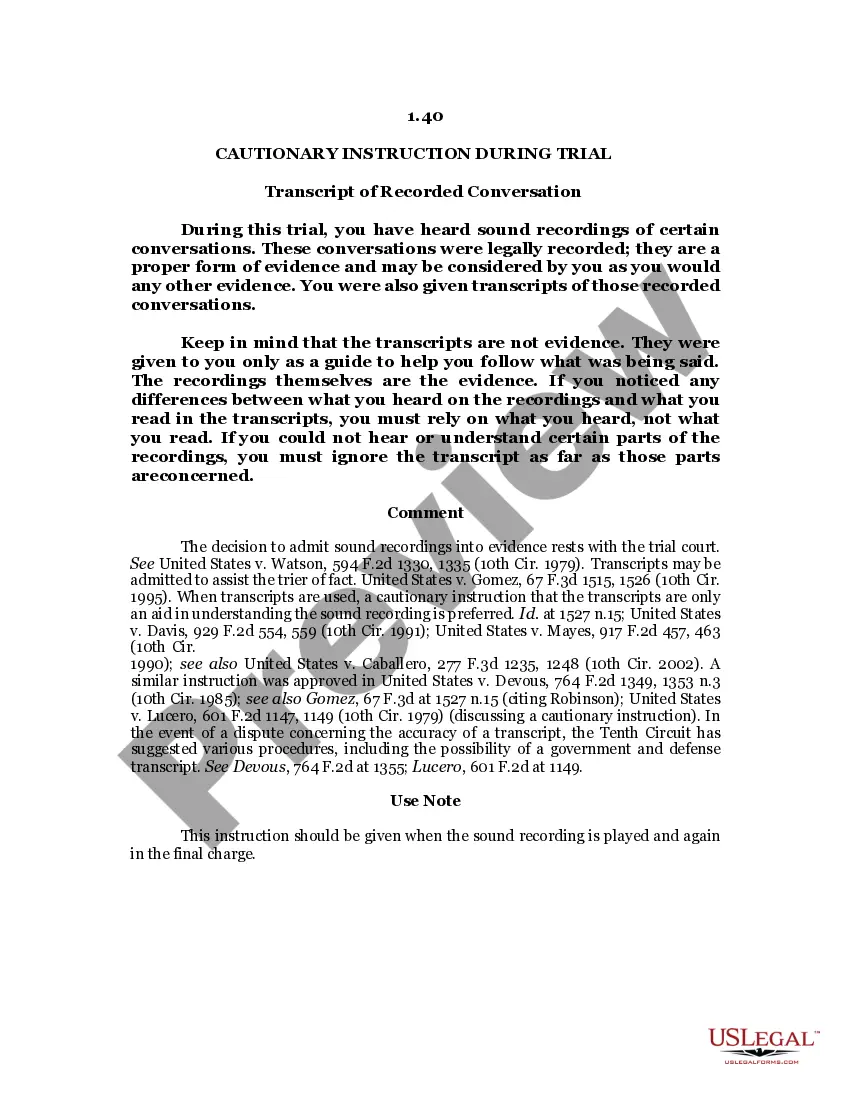
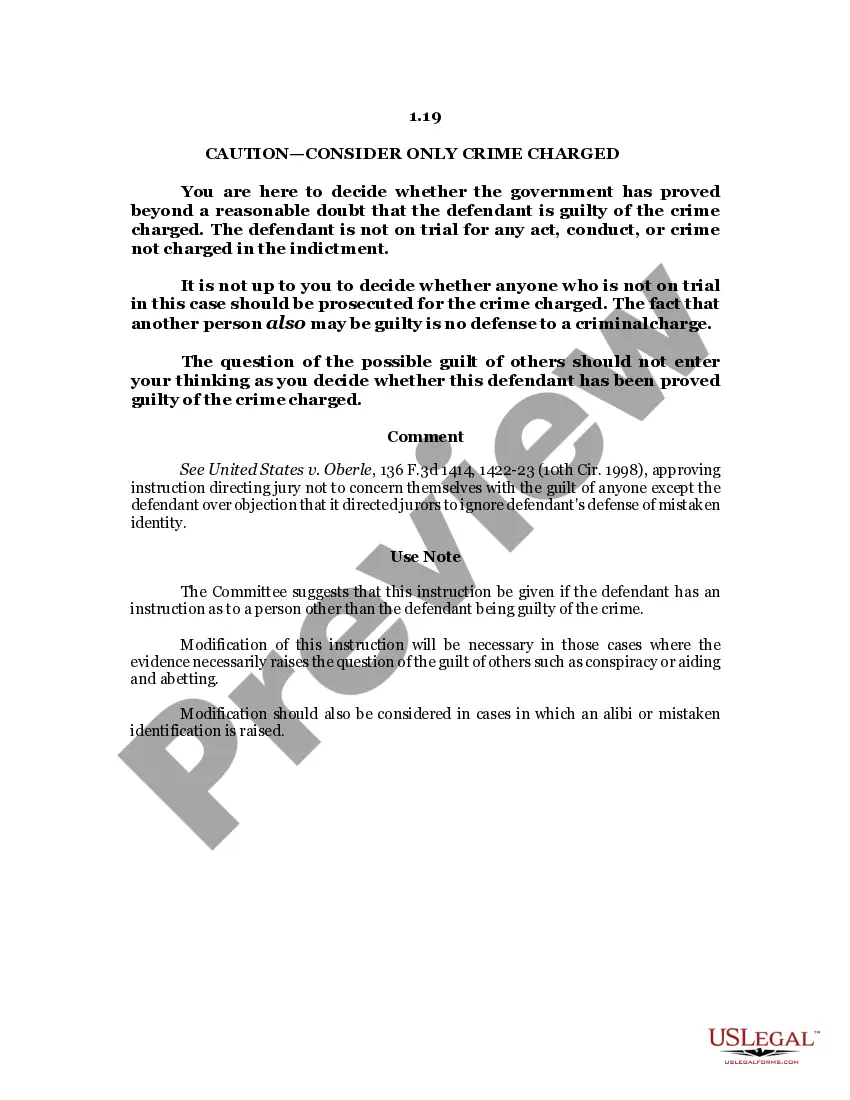
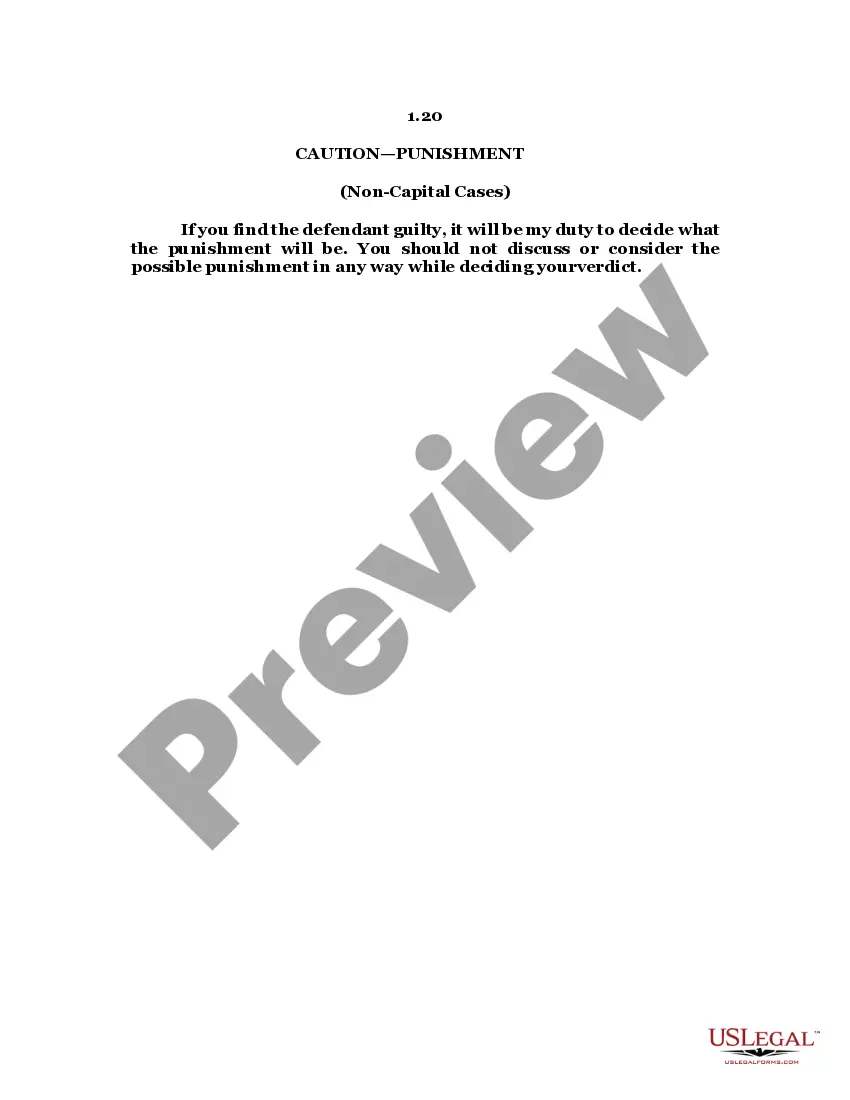
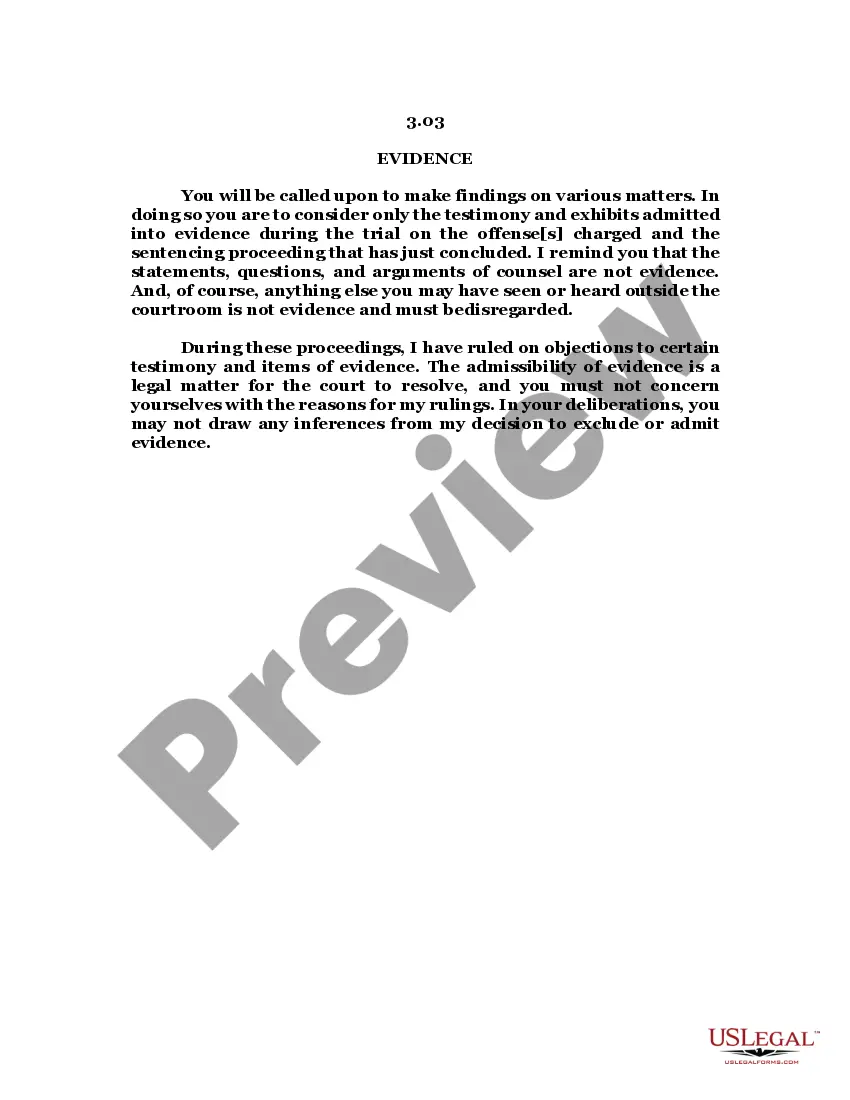
The Cautionary Instruction During Trial is a legal directive used in court proceedings related to the evaluation of sound recordings as evidence. This form serves to clarify that while transcripts of recorded conversations may assist jurors in understanding the evidence, the recordings themselves are the primary source of truth. The purpose of this instruction is to prevent any misinterpretation or reliance on the transcripts, ensuring that jurors understand their role in evaluating the actual audio evidence presented during the trial.
Key parts of this document
- Clarification that sound recordings are admissible evidence.
- Statement explaining that transcripts are not evidence but aids for understanding.
- Instruction to rely on recorded audio if discrepancies arise between the recording and the transcript.
- Guidance for jurors on ignoring certain parts of the transcript if they could not hear or understand the recordings.
- Notes on when this instruction should be provided during the trial.
When this form is needed
This instruction should be utilized during trial proceedings when sound recordings and their corresponding transcripts are introduced as evidence. It is crucial during jury deliberations to ensure jurors properly interpret the recordings rather than the transcripts, especially when differences exist.
Who should use this form
This form is intended for:
- Judges presiding over court trials.
- Jury members handling cases that involve sound recordings as evidence.
- Attorneys representing defendants or plaintiffs in trials involving audio evidence.
How to prepare this document
- Determine when sound recordings will be played during the trial.
- Instruct jurors on the role of transcripts as aids, not as the primary evidence.
- Emphasize that jurors must rely on the actual recordings if they differ from the transcripts.
- Provide this instruction both when the recordings are played and again during final jury instructions.
- Address any disputes regarding the accuracy of transcripts if they arise.
Notarization guidance
This form does not typically require notarization to be legally valid. However, some jurisdictions or document types may still require it. US Legal Forms provides secure online notarization powered by Notarize, available 24/7 for added convenience.
Get your form ready online
Our built-in tools help you complete, sign, share, and store your documents in one place.
Make edits, fill in missing information, and update formatting in US Legal Forms—just like you would in MS Word.
Download a copy, print it, send it by email, or mail it via USPS—whatever works best for your next step.
Sign and collect signatures with our SignNow integration. Send to multiple recipients, set reminders, and more. Go Premium to unlock E-Sign.
If this form requires notarization, complete it online through a secure video call—no need to meet a notary in person or wait for an appointment.
We protect your documents and personal data by following strict security and privacy standards.

Make edits, fill in missing information, and update formatting in US Legal Forms—just like you would in MS Word.

Download a copy, print it, send it by email, or mail it via USPS—whatever works best for your next step.

Sign and collect signatures with our SignNow integration. Send to multiple recipients, set reminders, and more. Go Premium to unlock E-Sign.

If this form requires notarization, complete it online through a secure video call—no need to meet a notary in person or wait for an appointment.

We protect your documents and personal data by following strict security and privacy standards.
Mistakes to watch out for
- Jurors relying on transcripts instead of the actual recordings.
- Failure to repeat the cautionary instruction during the final charge to jurors.
- Not clarifying differences between the recordings and transcripts during deliberations.
Benefits of using this form online
- Easy access to a standardized legal instruction template.
- Quickly downloadable and editable to match specific case needs.
- Reliability backed by legal standards and practices.
Looking for another form?

Form popularity
FAQ
In its current form, Rule 30 requires that the court instruct the jury after the arguments of counsel. In some districts, usually where the state practice is otherwise, the parties prefer to stipulate to instruction before closing arguments.
If a judge gives the jury the wrong legal standards to apply or otherwise improper instructions, they may find a defendant guilty when they should have reached a different verdict. If the judge in your case gave the jury incomplete or incorrect instructions, you may appeal your conviction and seek a new trial.
In its current form, Rule 30 requires that the court instruct the jury after the arguments of counsel. In some districts, usually where the state practice is otherwise, the parties prefer to stipulate to instruction before closing arguments.
As explained above, the closing argument is the time when the parties may forcefully argue their cases. The parties may summarize the evidence, point out discrepancies, and extensively argue how the law applies in their favor. Rather than tell a story, the closing argument is just that ? an argument.
Jury instructions, also known as charges or directions, are a set of legal guidelines given by a judge to a jury in a court of law.
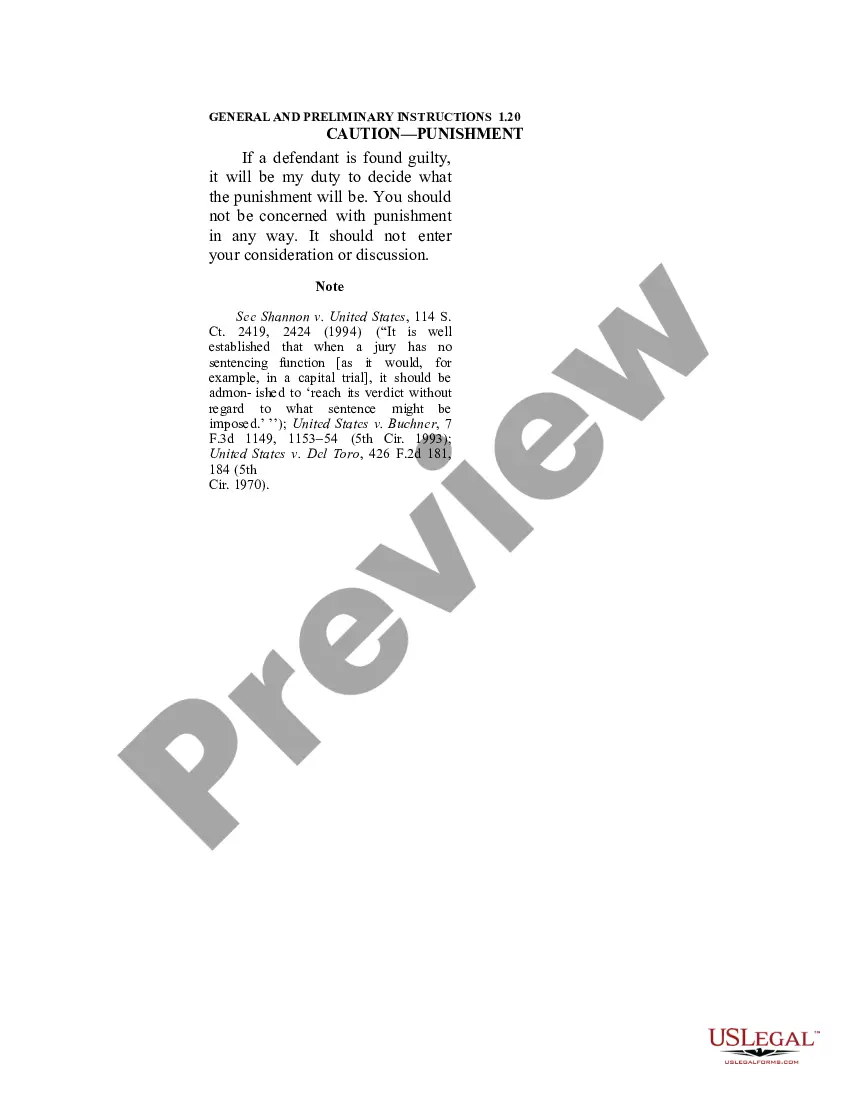
A cautionary instruction is a direction or guideline that a judge gives to a jury concerning the law of the case. It is usually given to warn the jury about certain evidence or to instruct them not to be influenced by outside factors.
General Order (Where Defendant Introduces Evidence). provide the first closing argument, defendant then provides its full closing argument, and plaintiff then offers a rebuttal of defendant's argument.
Following the closing arguments, the judge ?charges the jury,? or informs them of the appropriate law and of what they must do to reach a verdict.