Housecleaning Services Contract - Self-Employed
Understanding this form
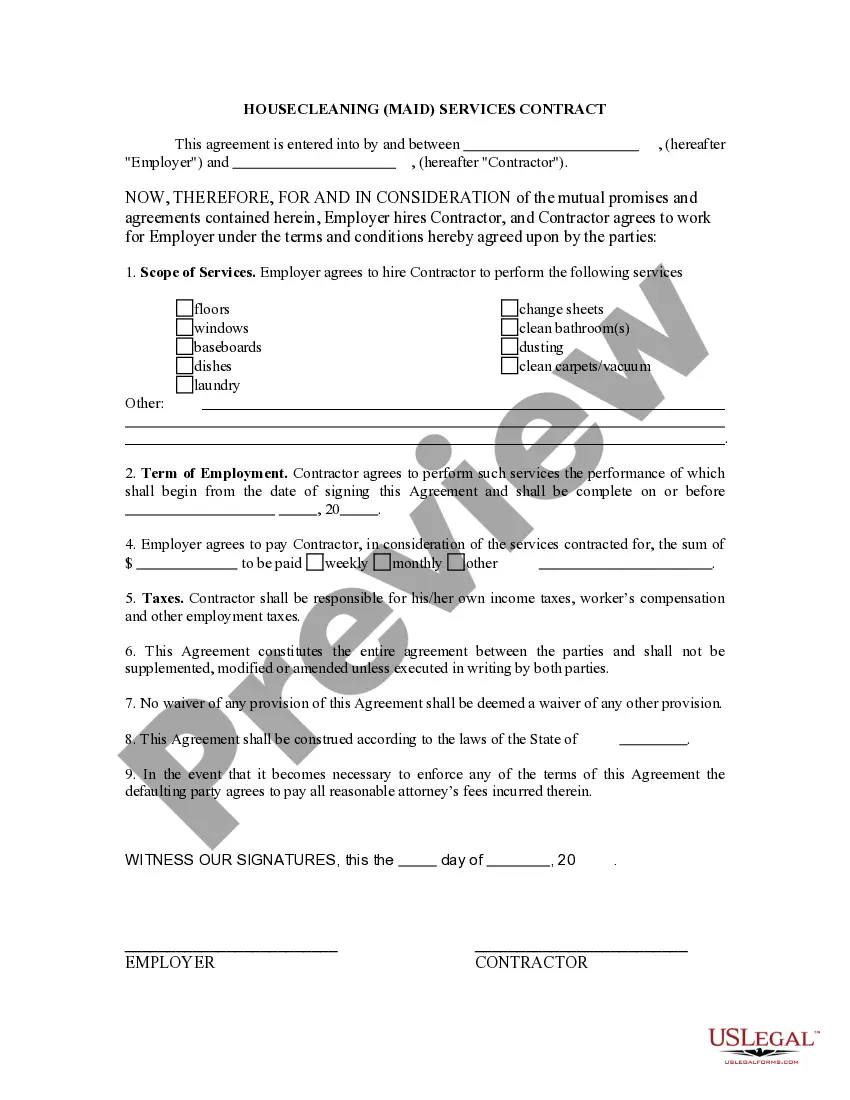
The Housecleaning Services Contract - Self-Employed is a legal agreement between a homeowner and a cleaning service. This contract establishes the terms of cleaning services provided, or it can serve to define the relationship between an employer and an independent maid. Unlike other cleaning agreements, this form specifically delineates the contractor's responsibilities and the homeowner's expectations, ensuring clarity and prevent potential disputes.
Key components of this form
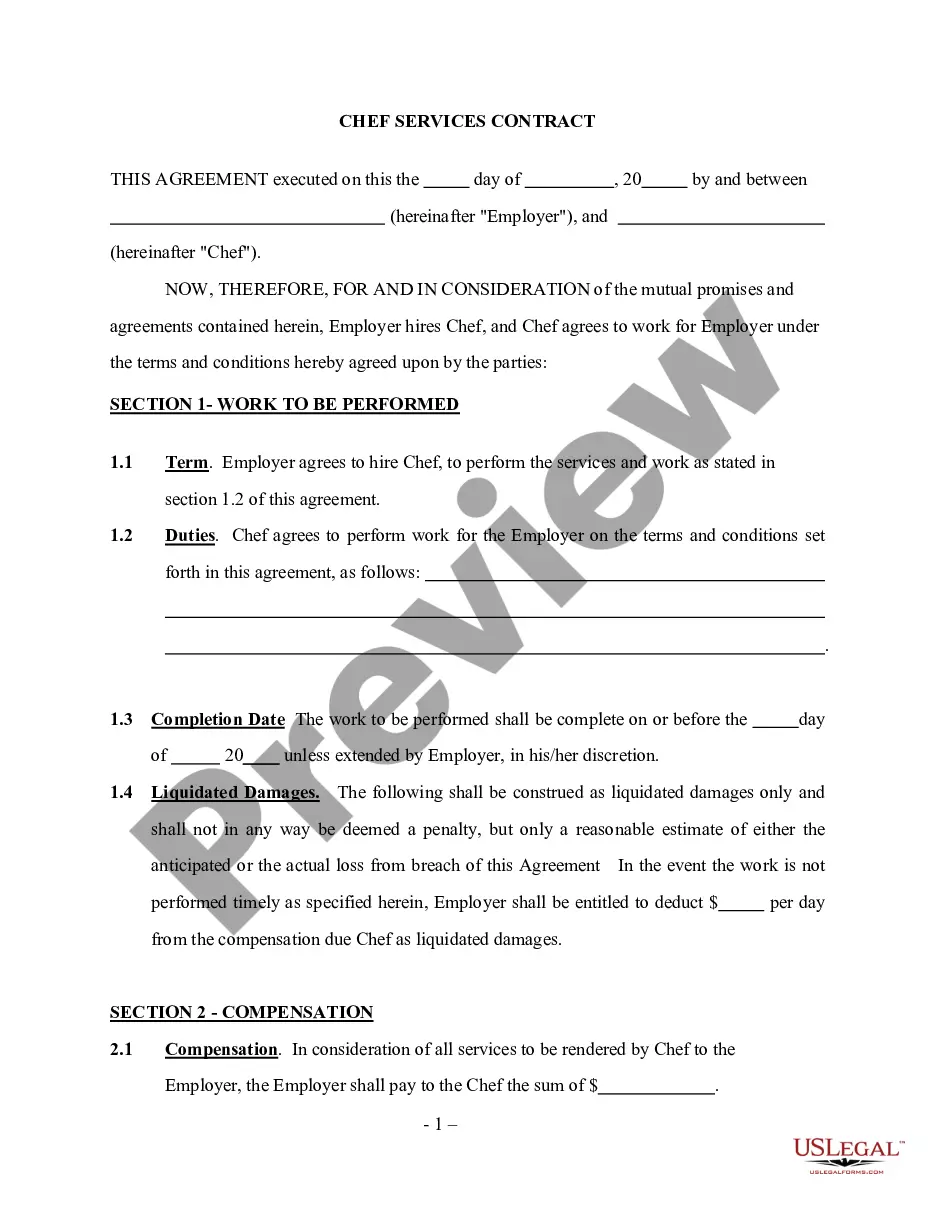
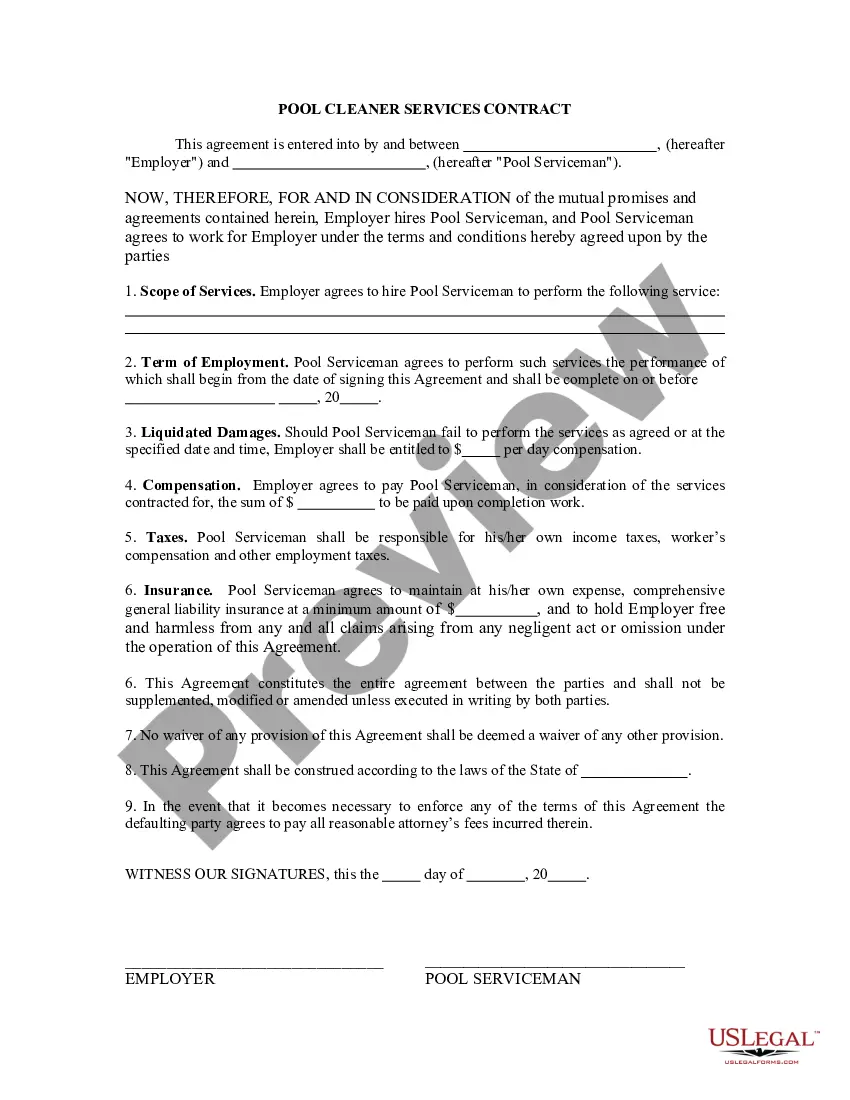
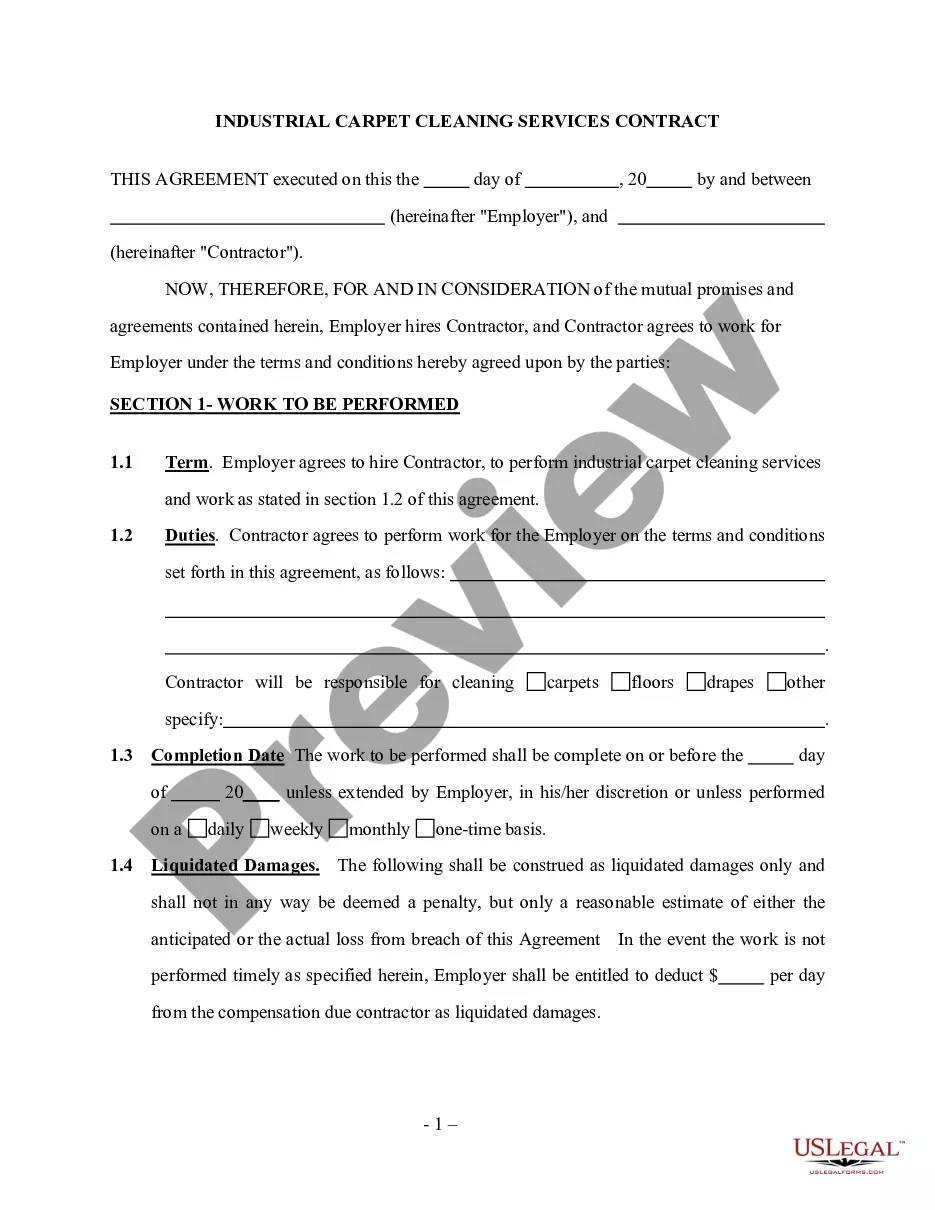
- Scope of Services: Clearly outlines the specific cleaning tasks to be performed by the Contractor.
- Terms of Payment: Details how and when the contractor will be paid for their services.
- Duration of Contract: Specifies the length of time the agreement is valid.
- Termination Clause: Outlines the conditions under which either party may terminate the agreement.
- Liability Waivers: Addresses responsibilities related to damages or injuries that may arise during service.
When to use this form
This form is useful when a homeowner wants to hire a self-employed cleaning service for residential cleaning tasks. It is particularly beneficial when it is essential to define the nature of the services to be provided, the associated fees, and the expectations of both parties involved in the contract.
Who can use this document
- Homeowners looking to hire independent cleaning services.
- Self-employed individuals providing housecleaning services.
- Property managers seeking formal agreements with cleaning contractors.
How to complete this form
- Identify the parties involved: Provide full names and addresses of the homeowner and the contractor.
- Specify the services: Clearly list all cleaning tasks the contractor is obligated to perform.
- Enter payment details: Include the payment amount and frequency of payments.
- Determine the contract duration: State the start and end dates for the cleaning services.
- Sign the agreement: Ensure both parties sign and date the contract to validate it.
Notarization requirements for this form
In most cases, this form does not require notarization. However, some jurisdictions or signing circumstances might. US Legal Forms offers online notarization powered by Notarize, accessible 24/7 for a quick, remote process.
Get your form ready online
Our built-in tools help you complete, sign, share, and store your documents in one place.
Make edits, fill in missing information, and update formatting in US Legal Forms—just like you would in MS Word.
Download a copy, print it, send it by email, or mail it via USPS—whatever works best for your next step.
Sign and collect signatures with our SignNow integration. Send to multiple recipients, set reminders, and more. Go Premium to unlock E-Sign.
If this form requires notarization, complete it online through a secure video call—no need to meet a notary in person or wait for an appointment.
We protect your documents and personal data by following strict security and privacy standards.

Make edits, fill in missing information, and update formatting in US Legal Forms—just like you would in MS Word.

Download a copy, print it, send it by email, or mail it via USPS—whatever works best for your next step.

Sign and collect signatures with our SignNow integration. Send to multiple recipients, set reminders, and more. Go Premium to unlock E-Sign.

If this form requires notarization, complete it online through a secure video call—no need to meet a notary in person or wait for an appointment.

We protect your documents and personal data by following strict security and privacy standards.
Mistakes to watch out for
- Not clearly defining the scope of services, leading to misunderstandings.
- Failing to include payment terms, which can cause disputes later.
- Neglecting to specify the duration of the contract.
- Overlooking necessary signatures which can invalidate the agreement.
Why complete this form online
- Easy access to professionally drafted templates by licensed attorneys.
- Convenient downloading options for immediate use.
- Editability to customize the contract according to specific needs.
- Support to ensure compliance with local legal standards.
Looking for another form?


Form popularity
FAQ
Housecleaning Services Contract - Self-Employed is a written agreement between a homeowner and a self-employed cleaner. It defines scope of services, payment terms, contract duration, termination conditions, and liability waivers for damages or injuries. Used when hiring an independent contractor to perform residential cleaning, it clarifies duties and expectations to help prevent disputes.
Use this standard form to create a written cleaning contract. It guides you to fill in the Scope of Services to specify tasks, Terms of Payment to set how and when to pay, the Duration of the Contract, the Termination Clause, and Liability Waivers. Both homeowner and contractor should sign and keep a copy.
For self-employed housecleaners, this contract template is appropriate. It formalizes the relationship with homeowners by detailing Scope of Services, payment terms, contract duration, how either party can terminate, and liability waivers. It helps protect both sides by clarifying duties and expectations and can be customized for residential cleaning engagements.
The form doesn't set rates; it has a Terms of Payment section to document the agreed price and payment schedule. Whether $50 per hour is appropriate depends on local market rates and job specifics. Use the contract to record the agreed hourly rate and timing of payments so both parties understand the arrangement.
This form is a contract template rather than a formal service level agreement. It defines the specific work, payment terms, duration, termination, and liability waivers for a self-employed housecleaner. If you need performance metrics, place them in the Scope of Services section to ensure enforceable expectations between homeowner and contractor.
This form explicitly designates the contractor as self-employed and focuses on an independent contractor relationship. It relies on the five components—Scope of Services, Terms of Payment, Duration of Contract, Termination Clause, and Liability Waivers—to set duties and liability. An employee-based contract would address payroll and employment-law issues not covered here.