Auctioneer Services Contract - Self-Employed Independent Contractor
What this document covers
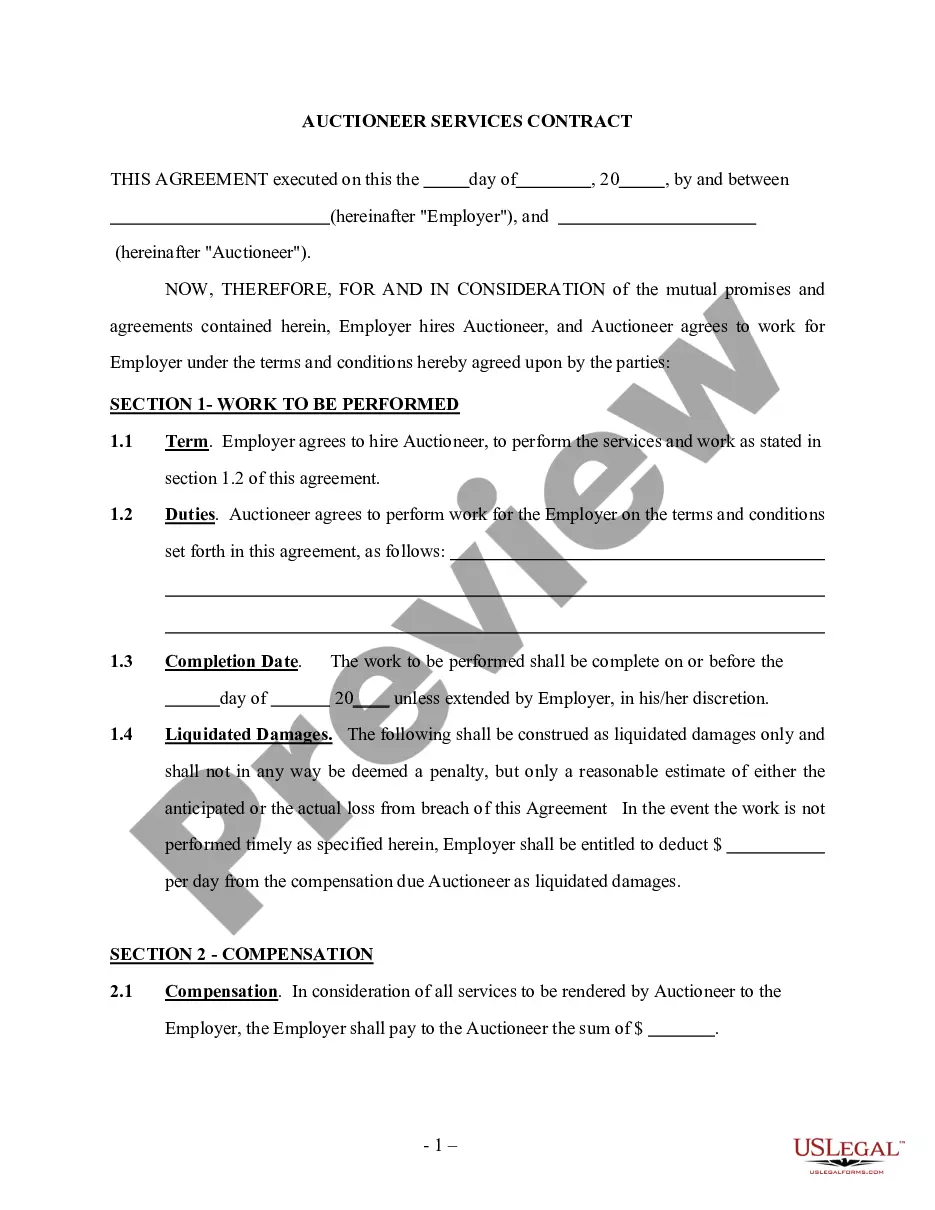
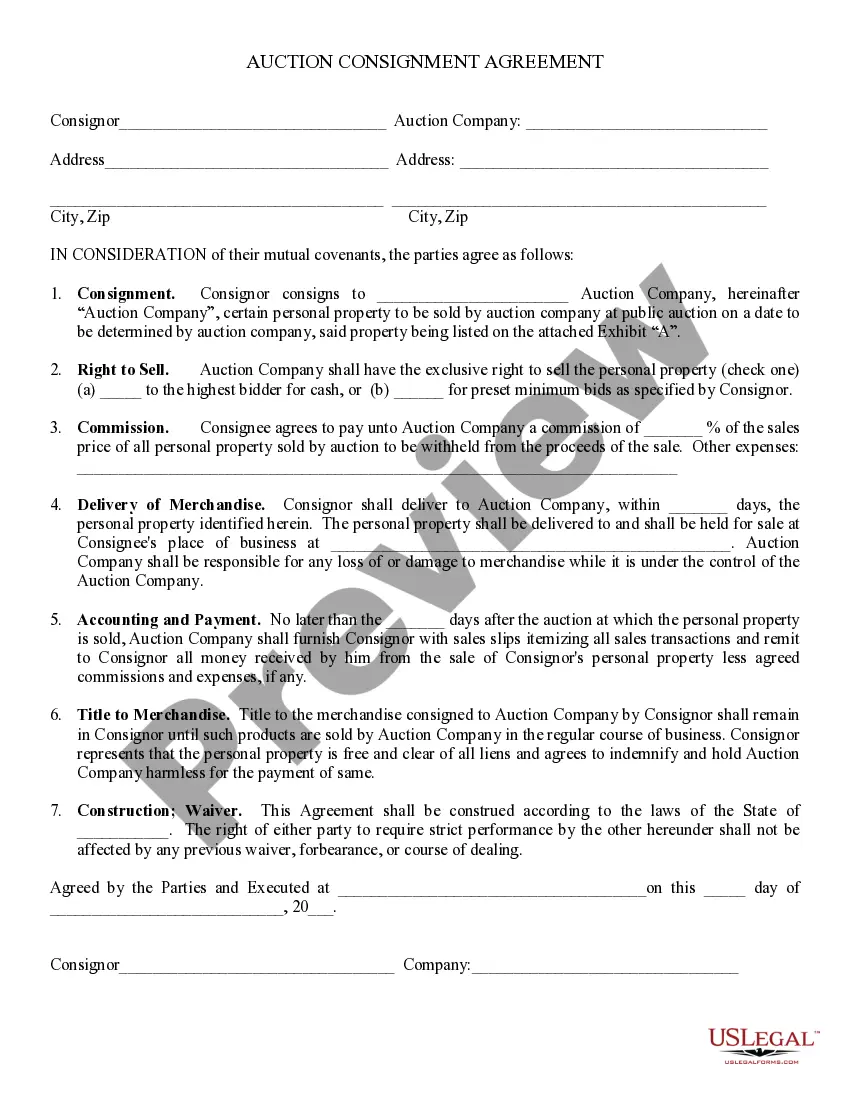
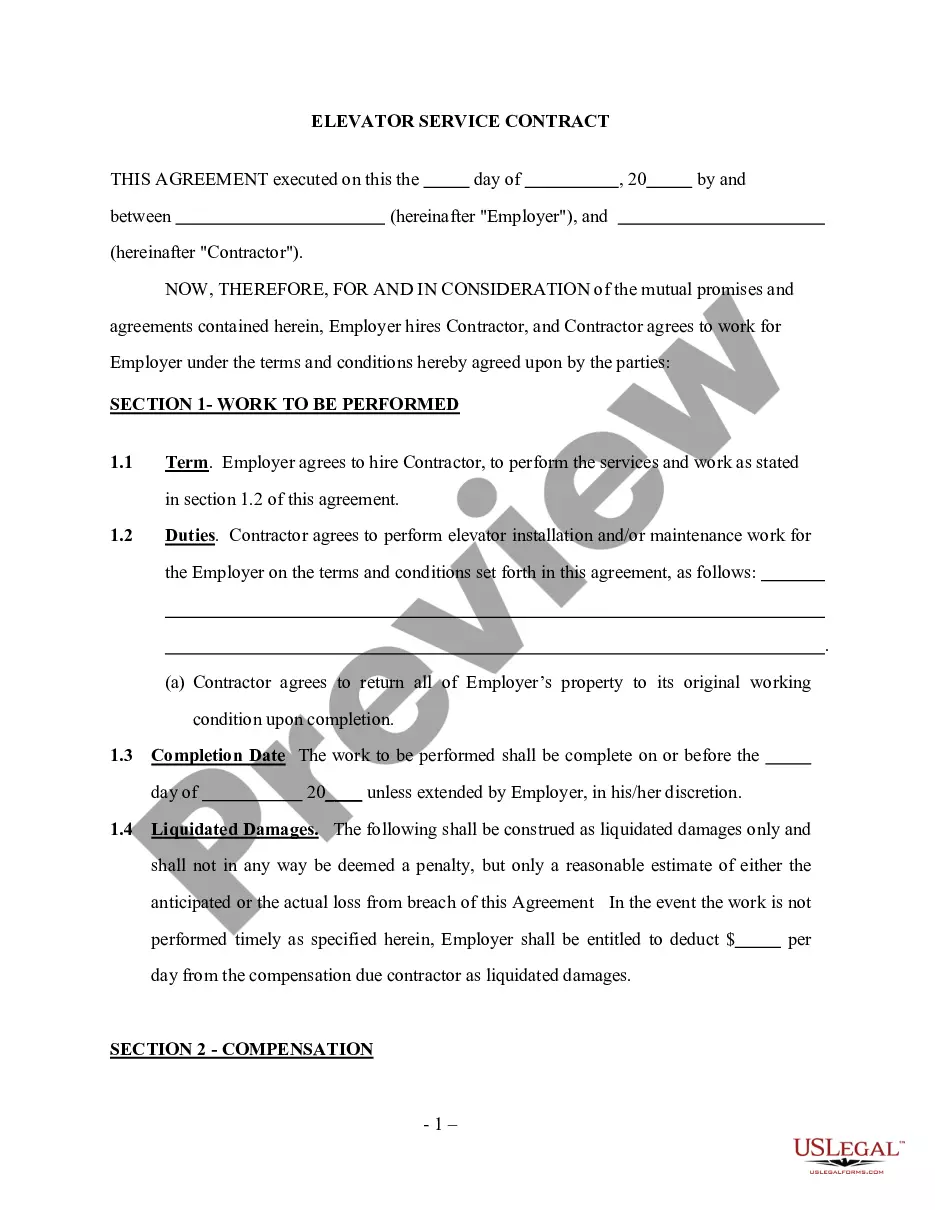
The Auctioneer Services Contract - Self-Employed Independent Contractor is a legally binding agreement between an auction house and an auctioneer. This document outlines the specific services to be performed by the auctioneer as an independent contractor. This contract clarifies the nature of the relationship, ensuring that the auctioneer is not considered an employee or agent of the auction house, which is crucial for both parties in terms of liability and obligations.
Main sections of this form
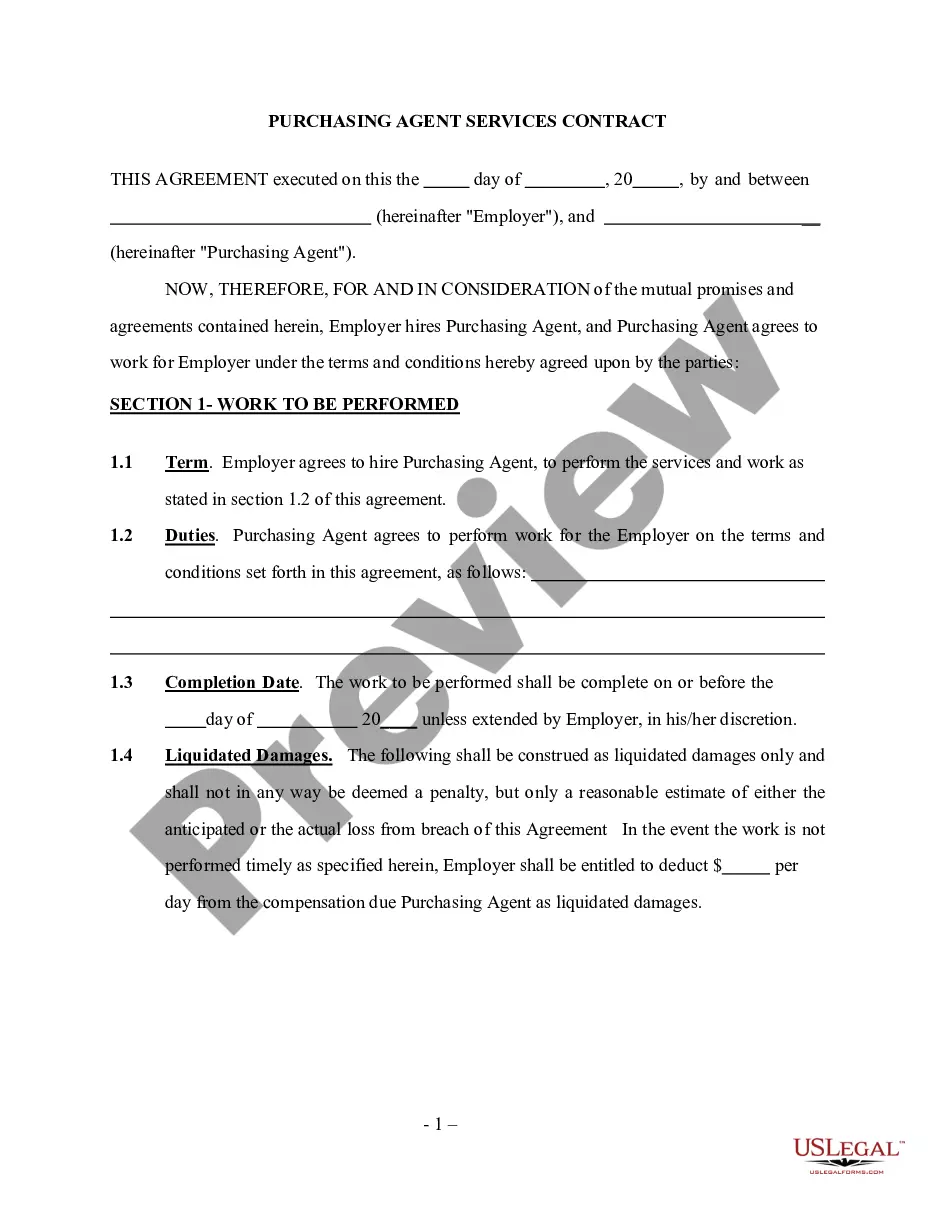
- Work to be performed: Describes the specific services the auctioneer will provide.
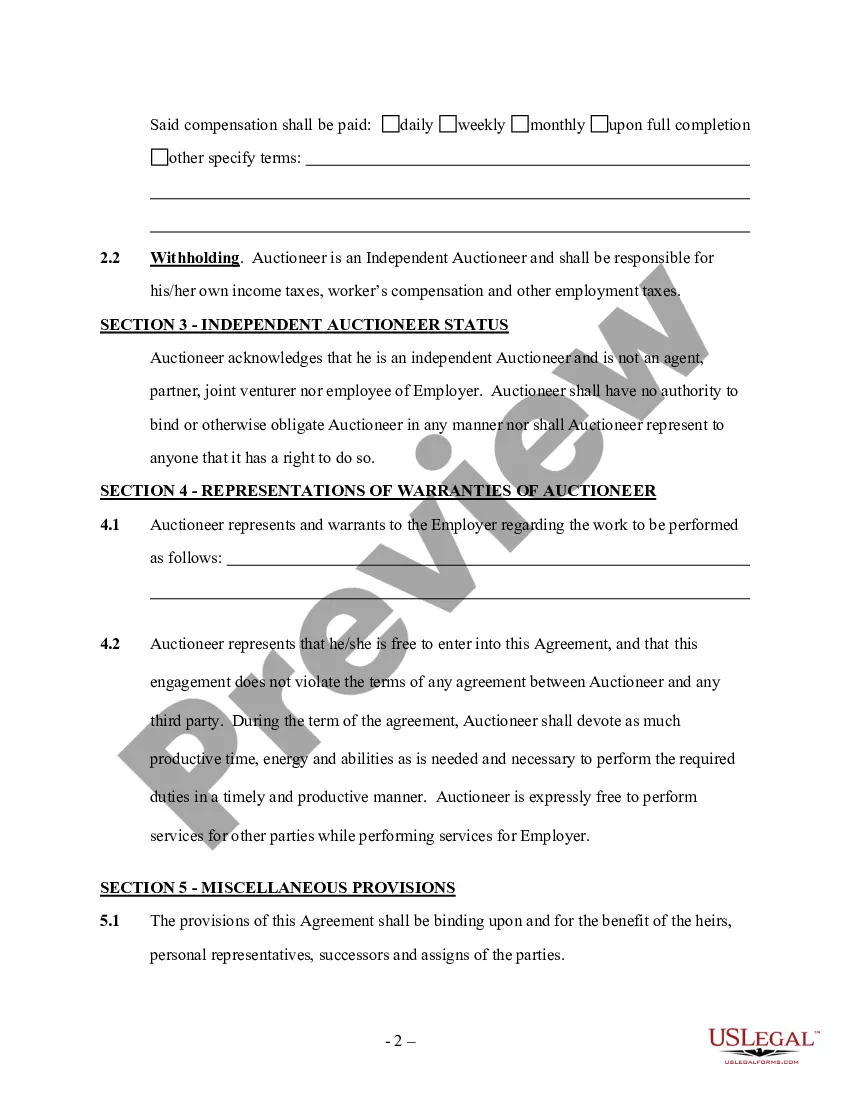
- Independent contractor status: Confirms that the auctioneer operates independently and specifies limitations on authority.
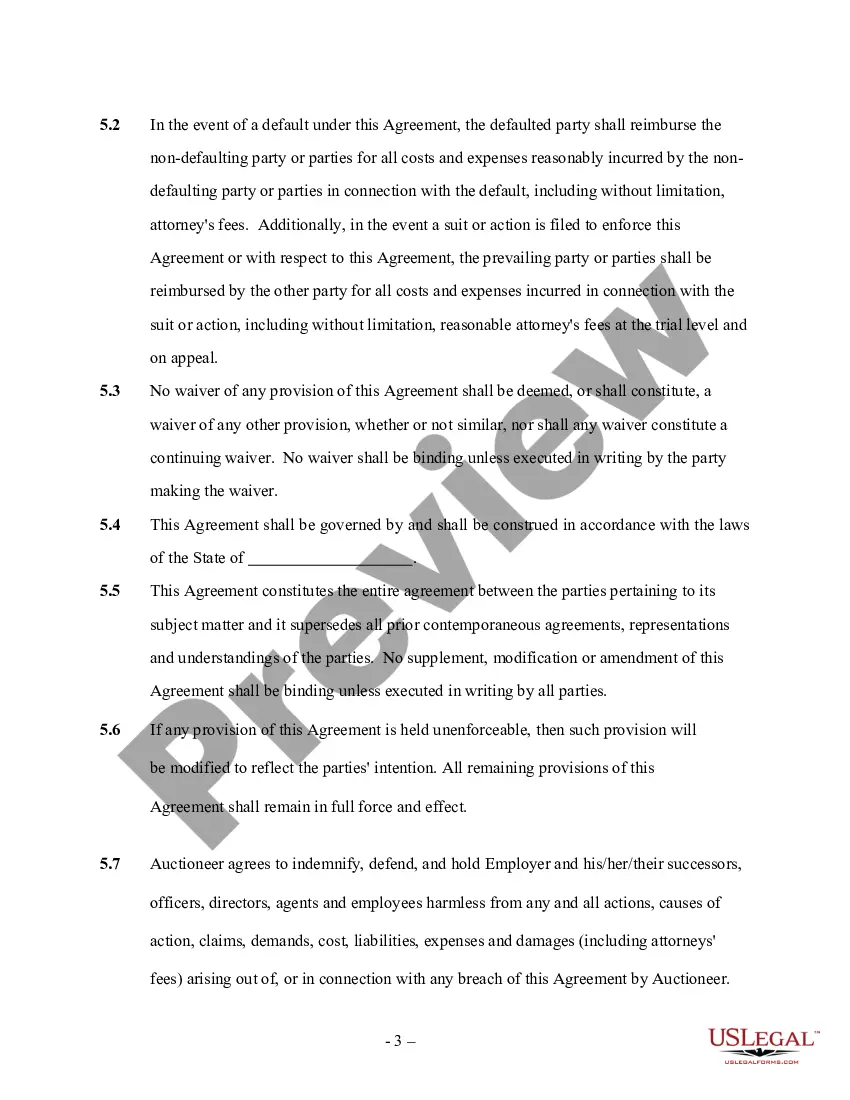
- Mischellaneous provisions: Includes clauses on waivers, enforceability, and indemnification.
- Default and enforcement: Outlines the procedures in the event of a breach of contract, including cost reimbursement.
When this form is needed
This form is ideal when an auction house wishes to engage the services of an auctioneer as an independent contractor. It should be used in situations where the auctioneer will be promoting and conducting auctions without being an employee, helping to delineate responsibilities and prevent liability issues. Utilizing this contract helps establish clear expectations for both parties.
Who should use this form
- Owners or managers of auction houses seeking to hire auctioneers on an independent basis.
- Independent auctioneers looking to formalize their agreements with auction houses.
- Business professionals in the auction industry requiring a clear contract to define their relationship.
How to prepare this document
- Identify the parties: Clearly list the names and contact information of the auction house and the auctioneer.
- Define the services: Specify the auctioneer's responsibilities and the services to be performed.
- Enter contract terms: Include start and end dates, payment details, and any other conditions as required.
- Review independent contractor status: Ensure the agreement emphasizes the auctioneer's independent status.
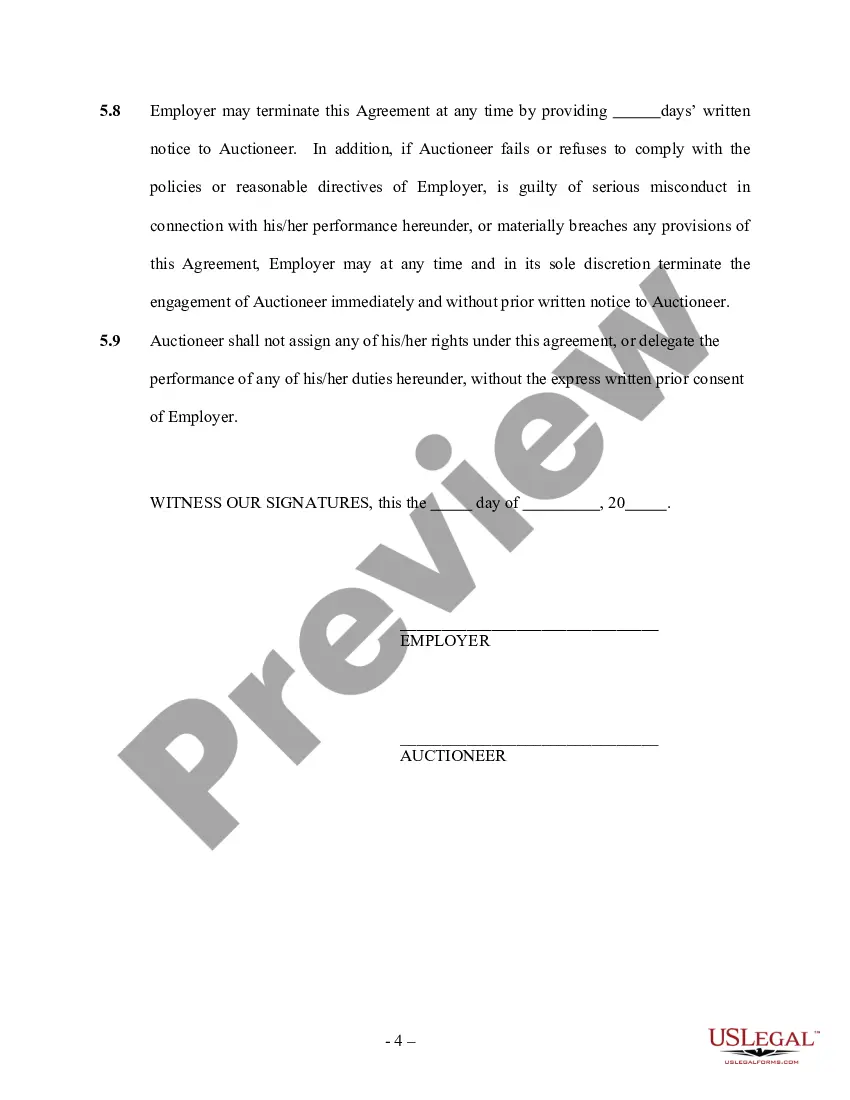
- Sign and date: Both parties should sign and date the contract to formalize the agreement.
Does this document require notarization?
Notarization is generally not required for this form. However, certain states or situations might demand it. You can complete notarization online through US Legal Forms, powered by Notarize, using a verified video call available anytime.
Get your form ready online
Our built-in tools help you complete, sign, share, and store your documents in one place.
Make edits, fill in missing information, and update formatting in US Legal Forms—just like you would in MS Word.
Download a copy, print it, send it by email, or mail it via USPS—whatever works best for your next step.
Sign and collect signatures with our SignNow integration. Send to multiple recipients, set reminders, and more. Go Premium to unlock E-Sign.
If this form requires notarization, complete it online through a secure video call—no need to meet a notary in person or wait for an appointment.
We protect your documents and personal data by following strict security and privacy standards.

Make edits, fill in missing information, and update formatting in US Legal Forms—just like you would in MS Word.

Download a copy, print it, send it by email, or mail it via USPS—whatever works best for your next step.

Sign and collect signatures with our SignNow integration. Send to multiple recipients, set reminders, and more. Go Premium to unlock E-Sign.

If this form requires notarization, complete it online through a secure video call—no need to meet a notary in person or wait for an appointment.

We protect your documents and personal data by following strict security and privacy standards.
Typical mistakes to avoid
- Failing to clearly define the services provided, leading to misunderstandings.
- Not including a term for the contract's duration.
- Neglecting to clarify the independent contractor status, potentially resulting in misclassification.
Why use this form online
- Convenience: Easily download the form anytime without needing to visit a lawyer.
- Editability: Customize the contract to fit your specific needs.
- Reliability: Assurance that the form is crafted by licensed attorneys specific to your requirements.
Looking for another form?
Form popularity
FAQ
According to IRS guidelines, it is possible to have a W-2 employee who also performs work as a 1099 independent contractor so long as the individual is performing completely different duties that would qualify them as an independent contractor.
An independent contractor is a self-employed person or entity contracted to perform work foror provide services toanother entity as a nonemployee. As a result, independent contractors must pay their own Social Security and Medicare taxes.
The earnings of a person who is working as an independent contractor are subject to Self-Employment Tax. If you are an independent contractor, you are self-employed.You are not an independent contractor if you perform services that can be controlled by an employer (what will be done and how it will be done).
Simply put, being an independent contractor is one way to be self-employed. Being self-employed means that you earn money but don't work as an employee for someone else. An independent contractor is someone who provides a service on a contractual basis.
Yes, if you have 1099 income you are considered to be self-employed, and you will need to pay self-employment taxes (Social Security and Medicare taxes) on this income.
Termination of the Contract Because this is a contract with an independent contractor, not an employee, the contract should state that either party can terminate the agreement with or without notice, depending on the circumstances.
Simply put, being an independent contractor is one way to be self-employed. Being self-employed means that you earn money but don't work as an employee for someone else.An independent contractor is someone who provides a service on a contractual basis.
1099 employees are self-employed independent contractors. They receive pay in accord with the terms of their contract and get a 1099 form to report income on their tax return.The employer withholds income taxes from the employee's paycheck and has a significant degree of control over the employee's work.
Contractors can also be self-employed, but they perform tasks on a contractual basis, rather than selling any products or rolling, bookable services. For example, a plumber would work for a client according to an agreed, one-off contract.