Stockholder Approval of Indemnification Agreements
What this document covers
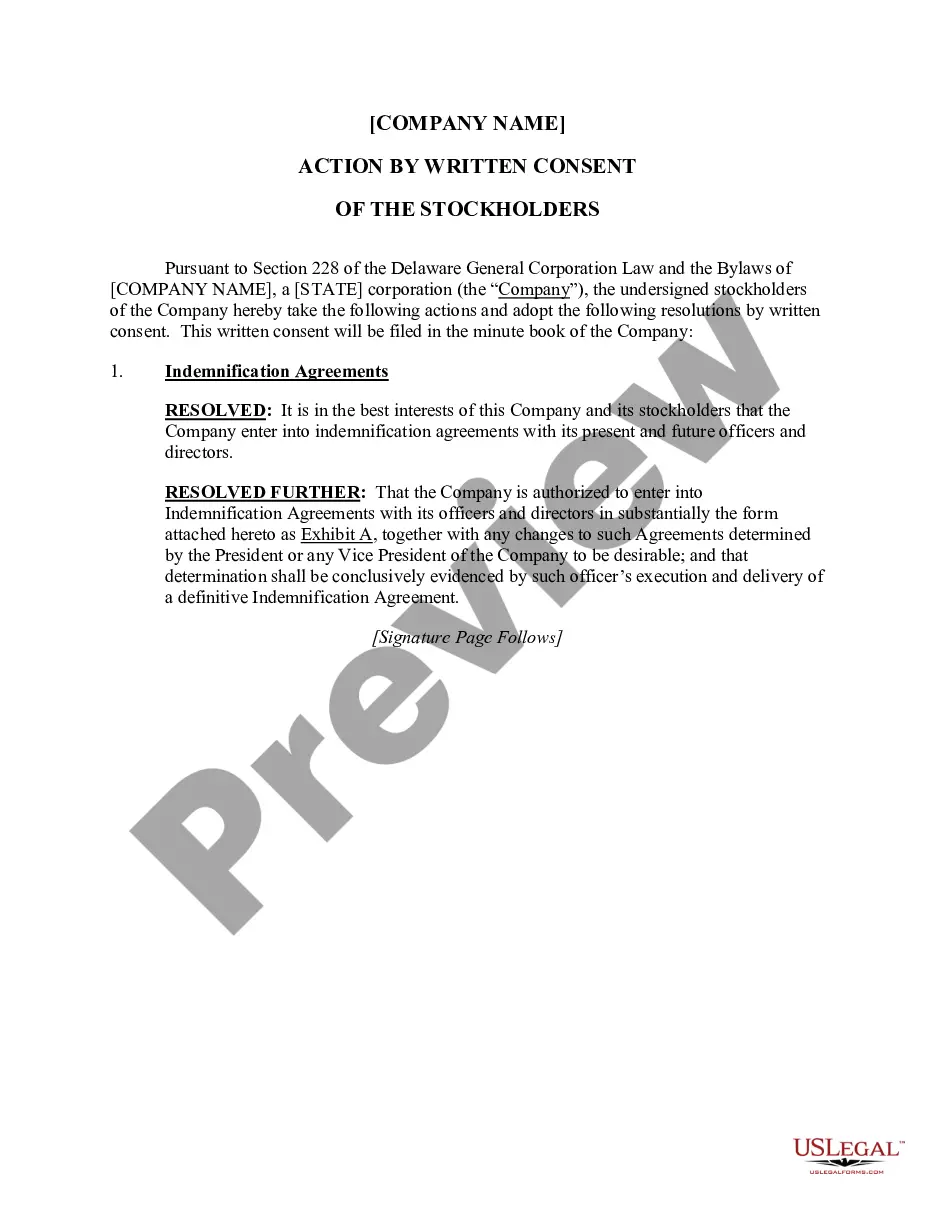
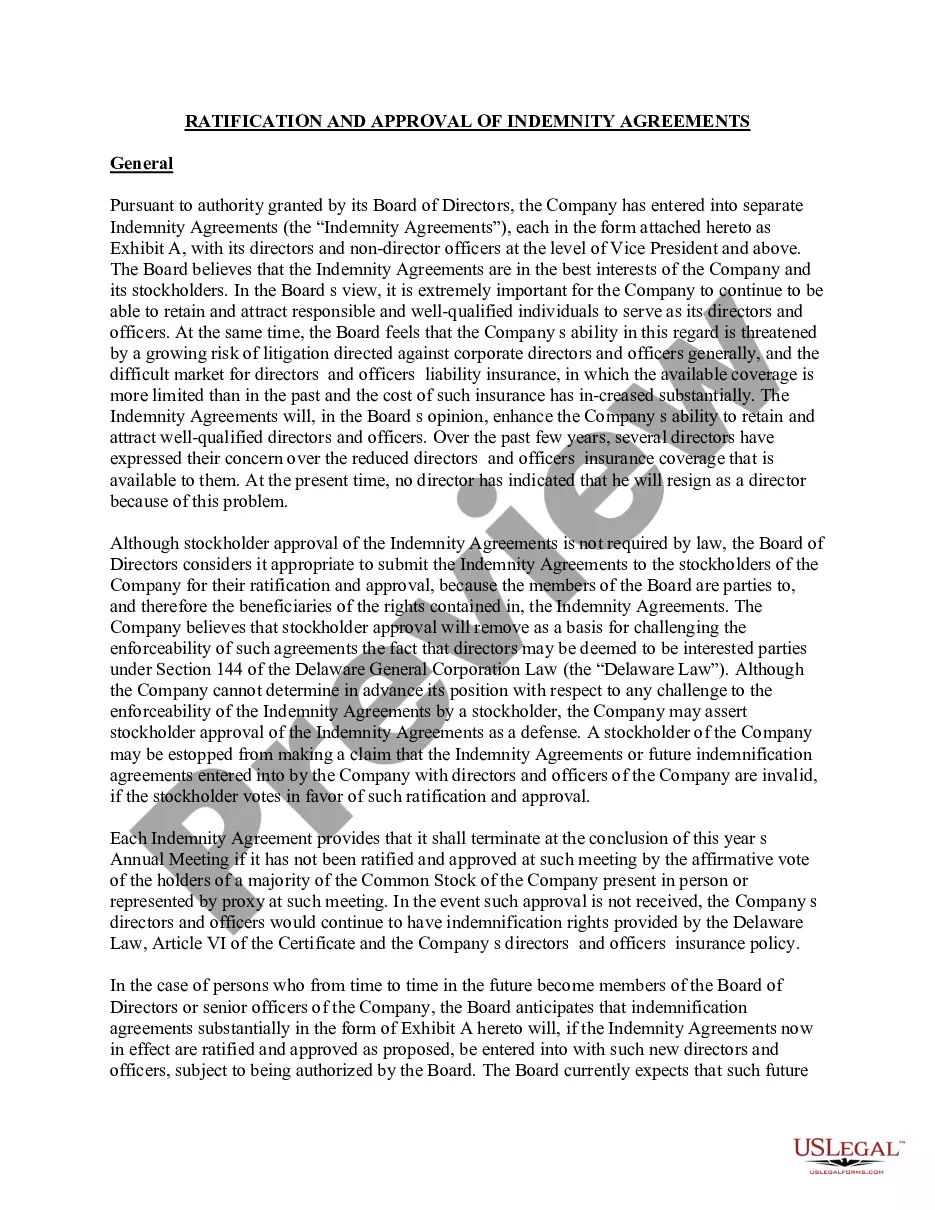
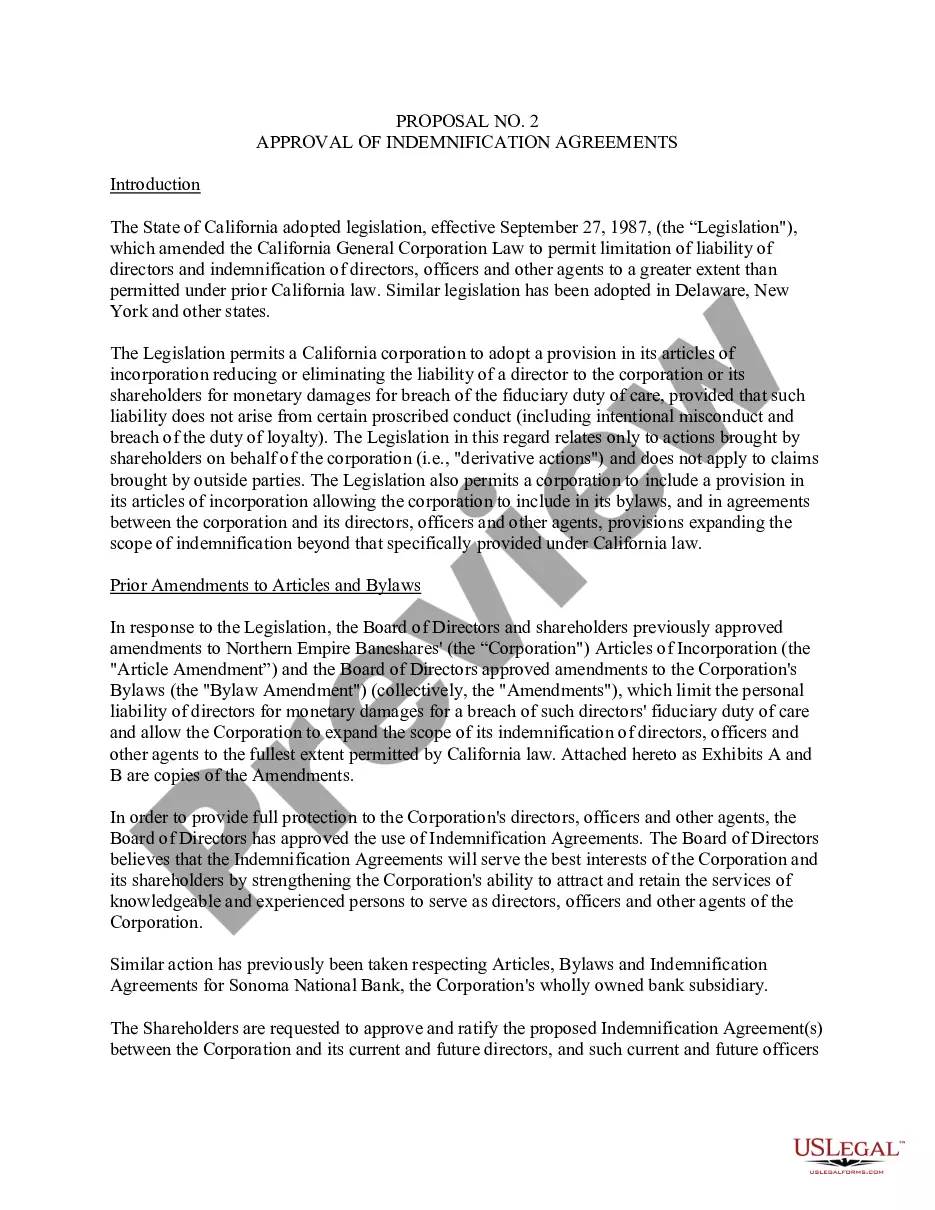
The Stockholder Approval of Indemnification Agreements form is a legal document used by companies to establish indemnification agreements with their officers and directors. This form serves to protect those individuals from personal liability arising from their actions taken in their official capacity, ensuring they are held harmless for any losses or damages incurred while performing their duties. Unlike standard contracts, this form is specifically tailored for corporate governance and is necessary for fulfilling regulatory obligations under state laws, such as those outlined in the Delaware General Corporation Law.
Key components of this form
- Action by written consent of stockholders, allowing for decisions without a formal meeting.
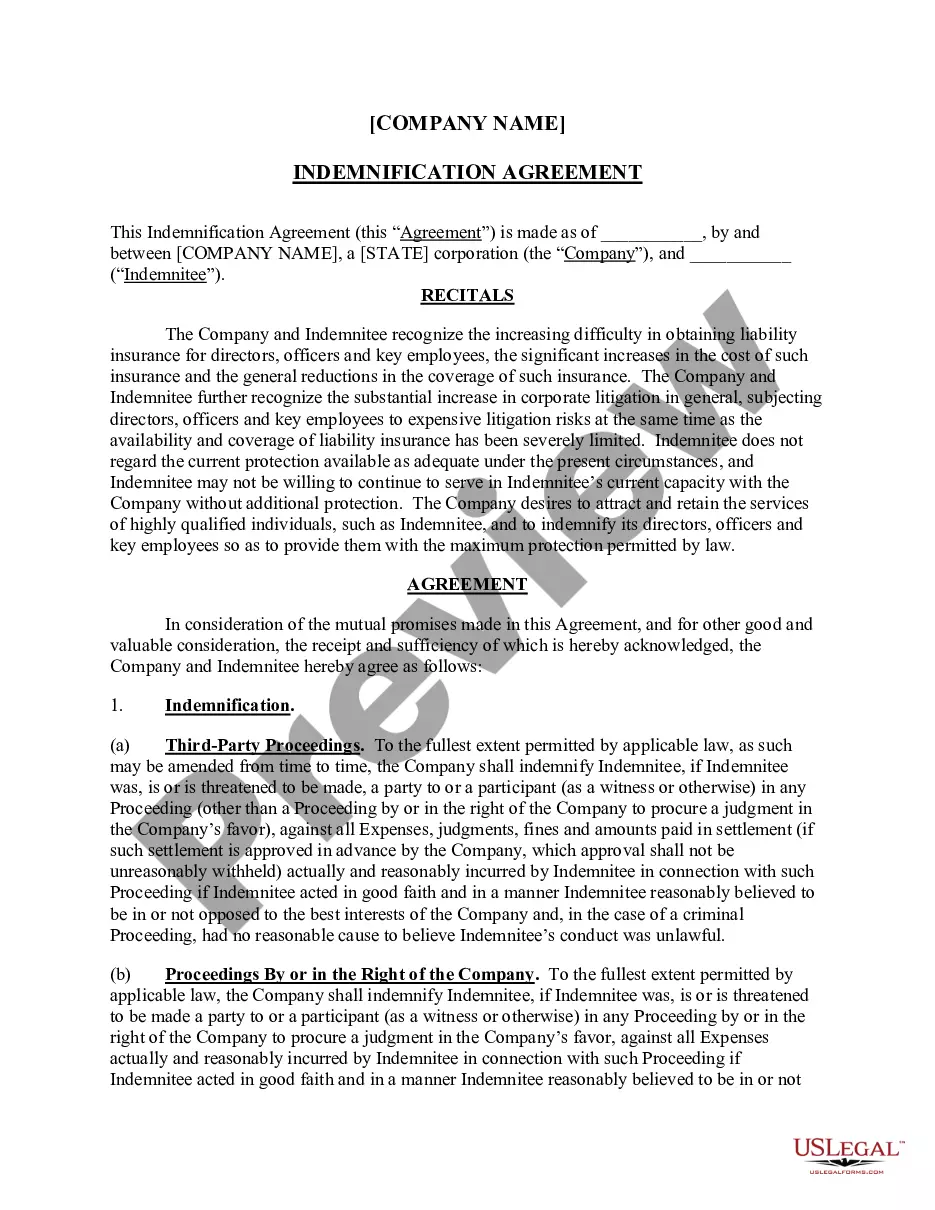
- Authorization for the company to enter into indemnification agreements with its current and future officers and directors.
- Resolution stating it is in the best interests of the company and its stockholders to have these agreements.
- Signature section for stockholders to provide their consent.
- Exhibit A, which contains the form of the indemnification agreement being adopted.


Common use cases
This form should be utilized when a corporation wants to formally approve indemnification agreements for its officers and directors. It is essential when the company wants to mitigate potential risks and safeguard its leadership against legal actions related to their official duties. Situations that may arise include complex financial transactions, litigation of corporate affairs, or other decisions that may expose officers and directors to personal liability.
Who this form is for
This form is intended for:
- Corporations organized in Delaware or governed by its laws.
- Current and prospective stockholders of a corporation.
- Corporate officers and directors seeking protection from personal liability.
Completing this form step by step
- Gather all stockholders for the written consent process.
- Review the proposed indemnification agreements outlined in Exhibit A.
- Draft and sign the necessary resolutions to approve the indemnification agreements.
- Ensure all stockholders provide their signatures on the action by written consent.
- File the completed written consent in the company's minute book for official records.
Notarization guidance
This form does not typically require notarization unless specified by local law. It is advisable to check with legal counsel for any specific requirements related to your jurisdiction.
Get your form ready online
Our built-in tools help you complete, sign, share, and store your documents in one place.
Make edits, fill in missing information, and update formatting in US Legal Forms—just like you would in MS Word.
Download a copy, print it, send it by email, or mail it via USPS—whatever works best for your next step.
Sign and collect signatures with our SignNow integration. Send to multiple recipients, set reminders, and more. Go Premium to unlock E-Sign.
If this form requires notarization, complete it online through a secure video call—no need to meet a notary in person or wait for an appointment.
We protect your documents and personal data by following strict security and privacy standards.

Make edits, fill in missing information, and update formatting in US Legal Forms—just like you would in MS Word.

Download a copy, print it, send it by email, or mail it via USPS—whatever works best for your next step.

Sign and collect signatures with our SignNow integration. Send to multiple recipients, set reminders, and more. Go Premium to unlock E-Sign.

If this form requires notarization, complete it online through a secure video call—no need to meet a notary in person or wait for an appointment.

We protect your documents and personal data by following strict security and privacy standards.
Common mistakes
- Failing to obtain the required number of stockholder signatures.
- Not reviewing the indemnification agreements carefully before approval.
- Neglecting to file the signed consent in the company minute book.
Why use this form online
- Quick access to professionally drafted legal templates, saving time and effort.
- Easy to customize the document to fit specific company needs and circumstances.
- Ensures compliance with relevant state laws, reducing legal risks.
Legal use & context
- This form is essential for protecting corporate officers and directors against personal liability.
- Indemnification agreements enhance the ability to attract and retain quality leadership in a corporation.
- Compliance with Delaware law is crucial, as it is a common jurisdiction for corporate governance.
Looking for another form?

Form popularity
FAQ
An agreement whereby the first party (the indemnitor) agrees to hold a second party (the indemnitee) harmless from tort liability arising out of the indemnitor's negligent act or omission.
Shareholder shall indemnify, defend and hold harmless the Company and its officers, directors, employees, agents, affiliates and permitted assigns (each, a ?Company Indemnitee?) from and against any and all losses, claims, damages, liabilities, judgments, costs and expenses (including reasonable attorneys' fees)
Three basic types of Hold Harmless Agreements are used: limited, intermediate, and broad. These forms are often seen in contracts in the construction industry.
Contractors often add hold harmless agreements to their contracts to protect their businesses against potential liability arising from their work. For example, a contractor hired to add a deck to a private home may add a clause to preempt a lawsuit if an injury occurs on the deck at a later date.
What is a letter of indemnity? A letter of indemnity is a form that registrars need shareholders to fill in before a replacement share certificate can be issued.
A hold harmless clause is used as a release of liability in a contract that protects one party from injury or property damage caused by another party. By signing the clause, the other party is agreeing not to hold business owners legally responsible for the risks involved in certain services.
A hold harmless clause provides that an organization or individual will not be held liable for any injuries or damages caused to the other party. Indemnification assures that one party will insulate another party from loss or damages.
An example of a hold harmless clause that uses indemnity language is one stating that one party shall "indemnity, defend, and hold harmless" the other "from and against claims, damages, losses, and expenses, including but not limited to attorney's fees, arising out of or resulting from negligence or misconduct in